Toxic silence: when silence becomes torture
No word, no explanation, no look: how deliberately ignoring someone hurts – and leaves its mark on many people from childhood.
By Charlotte Wilke

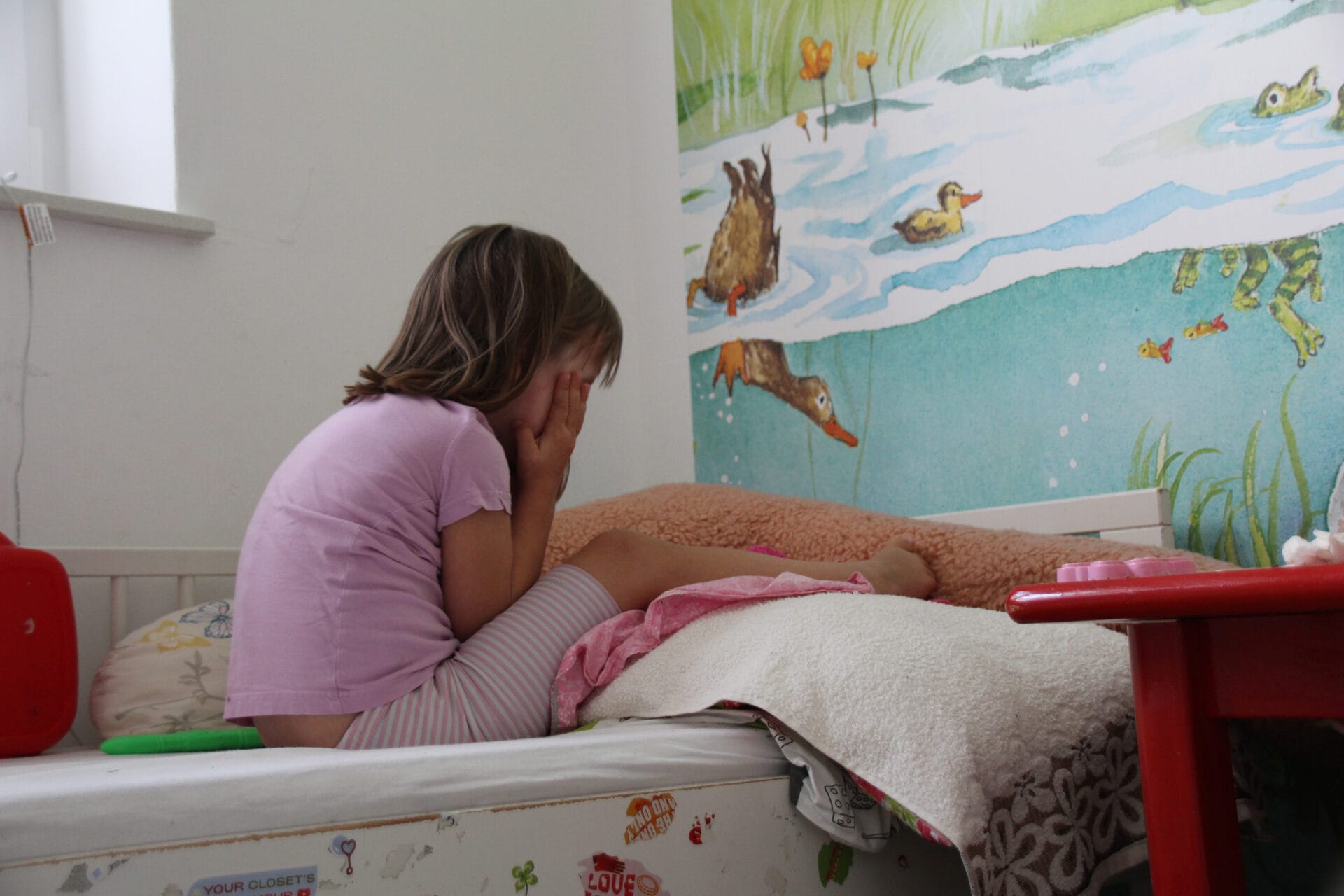
‘Silent treatment’, or toxic silence, is a negative communication strategy in which one person deliberately stops talking to another in order to exert power or control. The American psychologist Harriet Braiker identifies the silent treatment as a form of manipulative punishment.
But how does toxic silence affect the development of children and young people? ‘Ignoring is a terrible way to punish a child,’ says child and adolescent therapist Ulrich Müller, head of the master’s programme ‘Therapeutic Work with Children and Adolescents’ at Hochschule Hannover. Yet there are many parents who use this parenting strategy and deliberately meet conflict with silence.
This is borne out on various online platforms, where many of those affected share and discuss their experiences. ‘My mother always gave me the silent treatment. Often I didn’t even know why,’ Julie comments under a post on the website TollaBea. Debora describes similar experiences: ‘It usually went on for days, sometimes even weeks. The other people in the house were treated normally – only I was thin air.’
A baby doesn’t understand what its parents are saying, but it does understand the attention and affection conveyed through language.
 Prof. Ulrich Müller
 Prof. Dr Ulrich Müller, head of the master’s programme ‘Therapeutic Work with Children and Young People’ at Hochschule Hannover
Communication plays a crucial role in a young person’s development. It is even important to talk to your child when they are a baby. ‘A baby doesn’t understand what its parents are saying, but it does understand the attention and affection conveyed through language,’ explains Ulrich Müller. On the one hand, he says, it is important for a child to learn to express feelings and inner states in words; on the other hand, it is just as important for them to receive a response to what they feel.
Whether a child grows up in an environment where feelings and thoughts are communicated openly can often be seen in their behaviour. ‘Many children act aggressively in arguments because they can’t express what makes them angry,’ says Leah Senghas. The 20-year-old nursery teacher closely observes the behaviour of the children in her kindergarten. ‘With children who have learned to express their needs, resolving conflicts works much better and more easily than with children for whom it is a taboo subject at home,’ she says. Recently a four-year-old boy told her that another child had pushed him and that this was very frustrating for him. ‘It makes me really proud when my children talk openly about their feelings and ask for help. I always encourage them then and tell them how great I think it is,’ says the nursery teacher.
My mother always gave me the silent treatment. Often I didn’t even know why.
Ulrich Müller’s practice also sees children from homes where feelings are rarely talked about. ‘You always have to take the parents’ history into account too,’ the psychotherapist explains. Many of them were never shown anything different themselves, he says. He does not consider the silent treatment a sensible parenting strategy, and for him toxic silence falls under the term ‘black pedagogy’.
In an interview with the Kölner Stadt-Anzeiger, sociologist Heike Wiemert describes the silent treatment as ‘psychological violence’ that triggers great fears in children. Many of those affected agree. ‘You feel as if your own mother no longer loves you and you are worthless,’ writes one user on the TollaBea website. Another user also describes fear and stress: ‘When I came home, I crept into my room and listened out for every sound. Pure constant stress.’ Another describes her feelings like this: ‘I felt insecure and abandoned. Alone.’
Ulrich Müller understands them. Refusing to speak to people and isolating them is a form of contempt, he says: ‘It signals: you are nothing to me.’ Accordingly, those affected often have low self-esteem and still struggle with the consequences as adults. ‘I still cry today when the memory comes over me,’ writes Debora. Another user replies, saying that her husband grew up with the silent treatment as a child. ‘He uses it in our relationship too; it’s the only way he knows to respond to anger and dissatisfaction.’
Black pedagogy
According to the Brandenburg State Agency for Civic Education, ‘black pedagogy’ refers to parenting methods based on punishment, control, violence, humiliation or intimidation – with the intention of subjugating children and young people completely. These are often closely linked to abuse of power or the intention of placing oneself above children and young people.
Many a time I would rather have been hit than be made to feel I was thin air.
Psychologists led by Selma Rudert of the University of Basel and Kipling Williams of Purdue University in Lafayette show in a study in the journal Personality and Social Psychology Bulletin that people react gratefully to any word at all. According to the authors, we feel a need to belong and to be noticed and accepted by others. The study’s conclusion: negative feedback is better than none at all. The study is borne out by the experience of Kari, who was affected herself. She writes: ‘Many a time I would rather have had a brief thunderstorm – and yes, even been hit – than be made to feel I was thin air.’ Ulrich Müller can understand that. But hitting is never a solution, he says. The psychotherapist explains it like this: ‘Even when there is a big argument involving strong emotions, the interaction at least maintains the connection between parent and child. When there is no talking at all, it is a dramatic breakdown of the relationship.’
So ignoring conflicts and staying silent about them does not seem to be a solution. How do you get it right? ‘Sometimes it’s good to interrupt an argument and take a break,’ says Ulrich Müller. But it is very important, he says, to communicate that a clarifying conversation will follow. Leah Senghas also has a clear answer. It is important to convey that feelings should not be suppressed. ‘You matter, your needs matter, you’re allowed to show your feelings, and when we talk about it together, we always find a solution,’ says the nursery teacher. Ulrich Müller wants to give the patients in his practice a safe space to express their feelings – and to show them that they are listened to and get a response.