‘Are you afraid of your anger?’
We stopped people in the street and asked them to face their own anger. One experiment, eighteen people, a whole range of reactions.
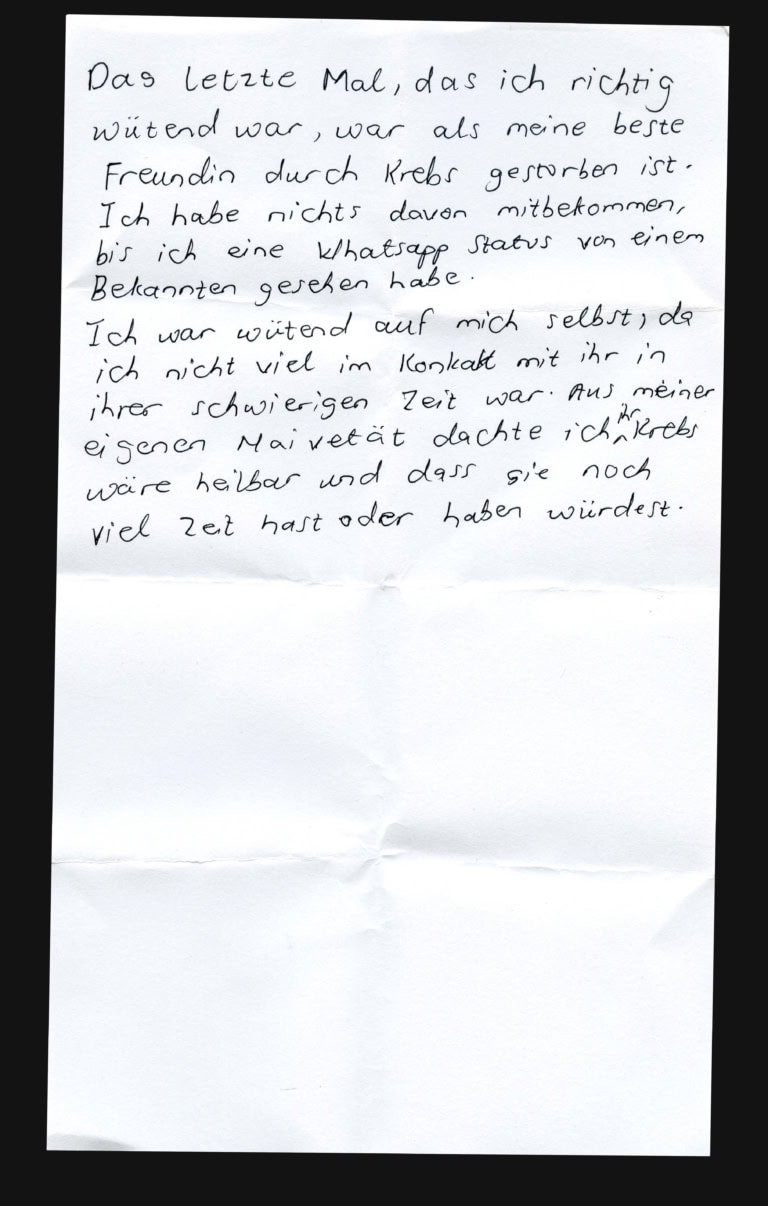
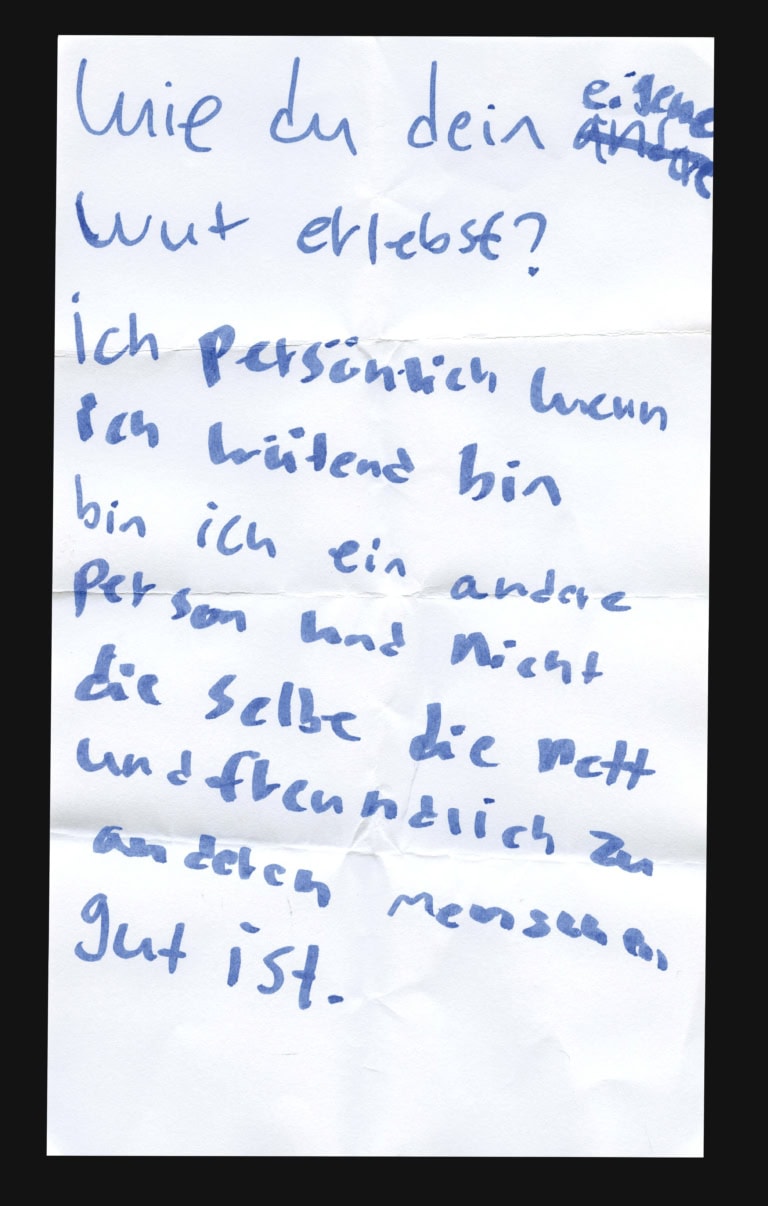
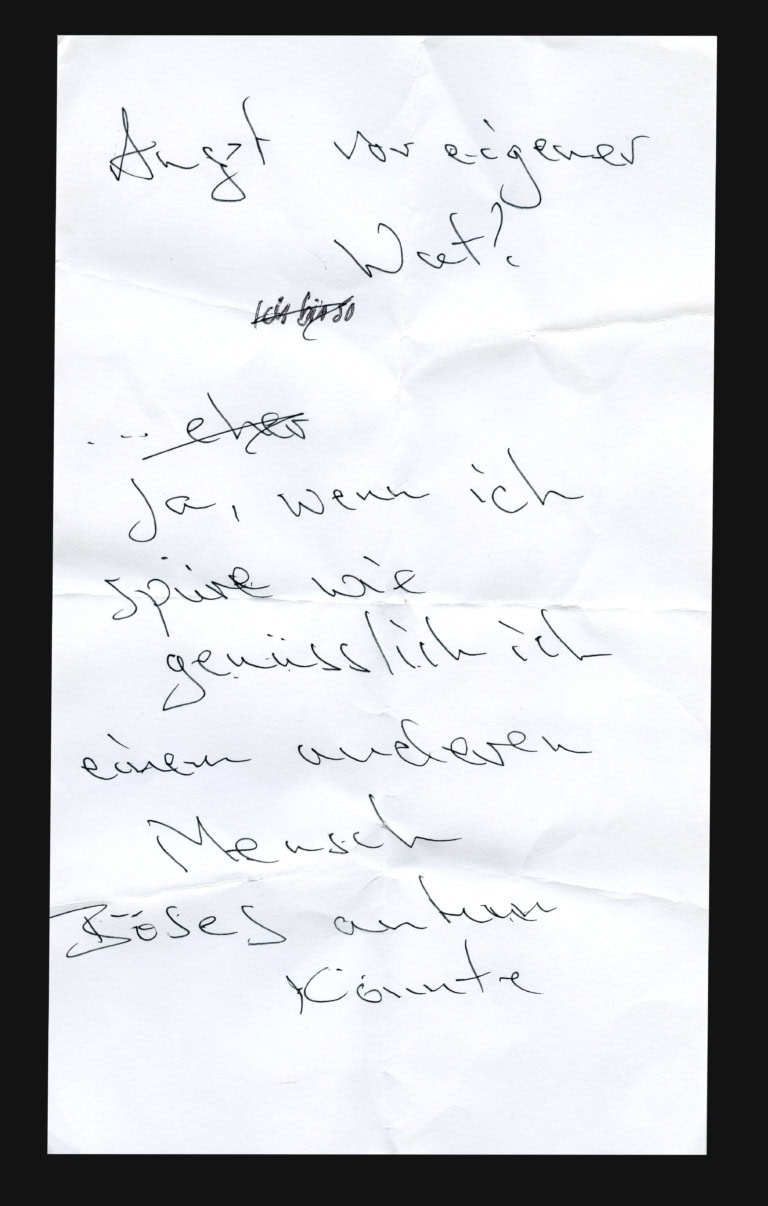
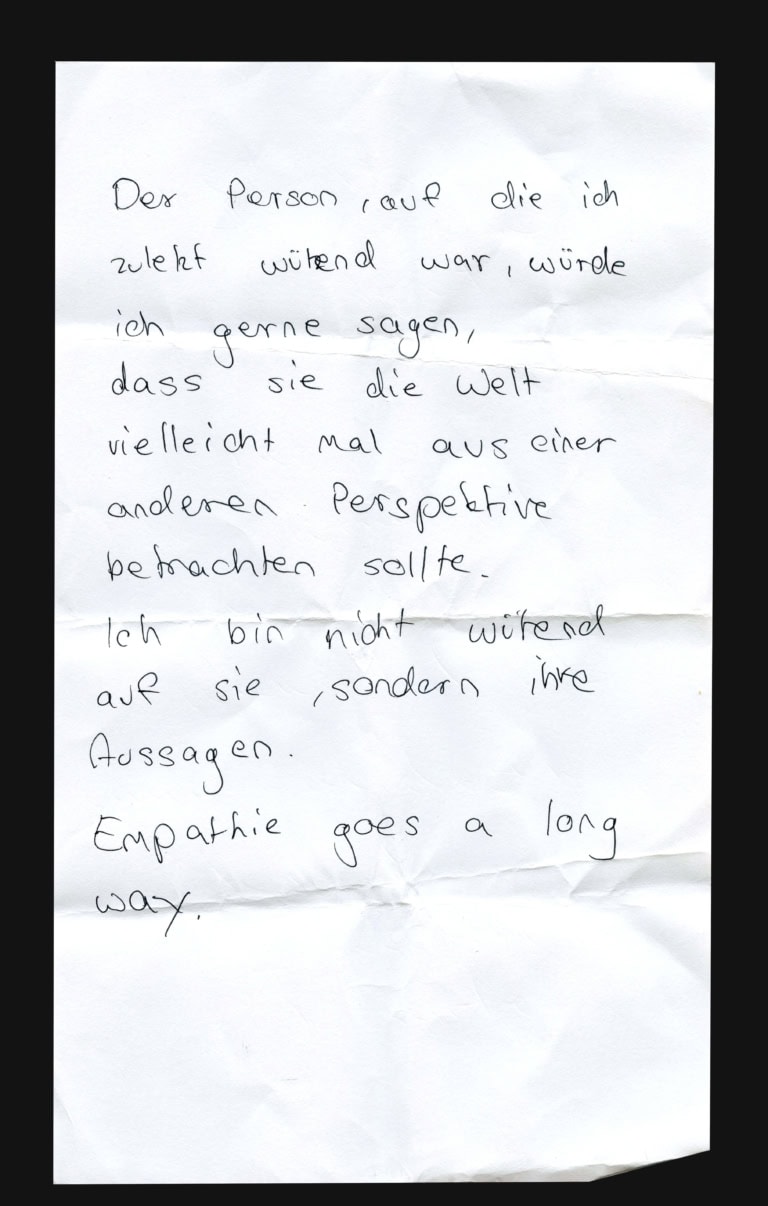
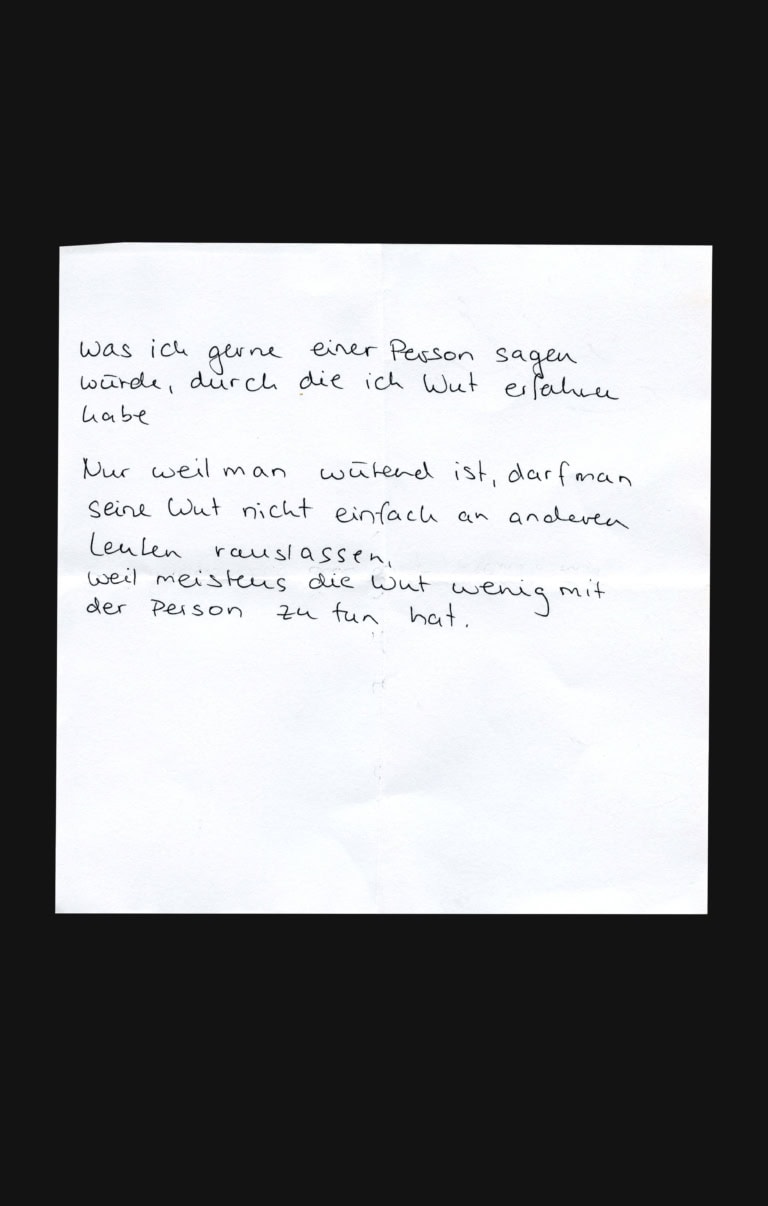
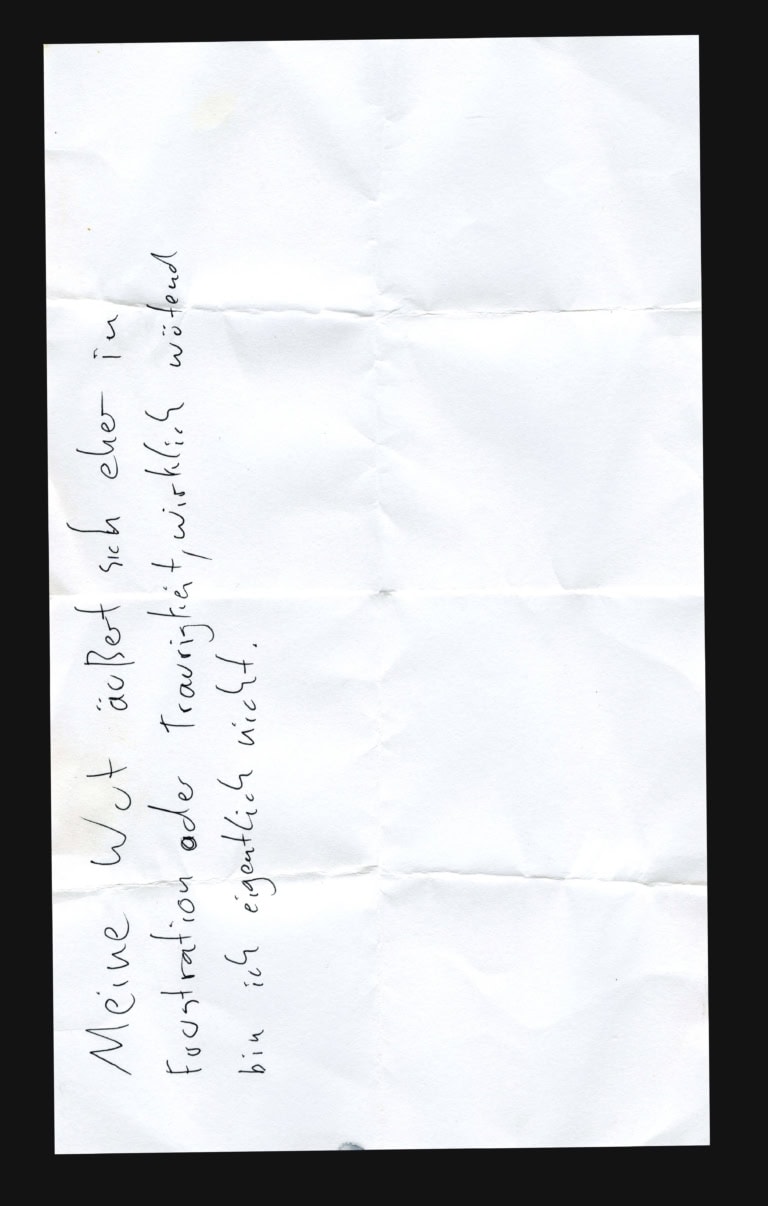
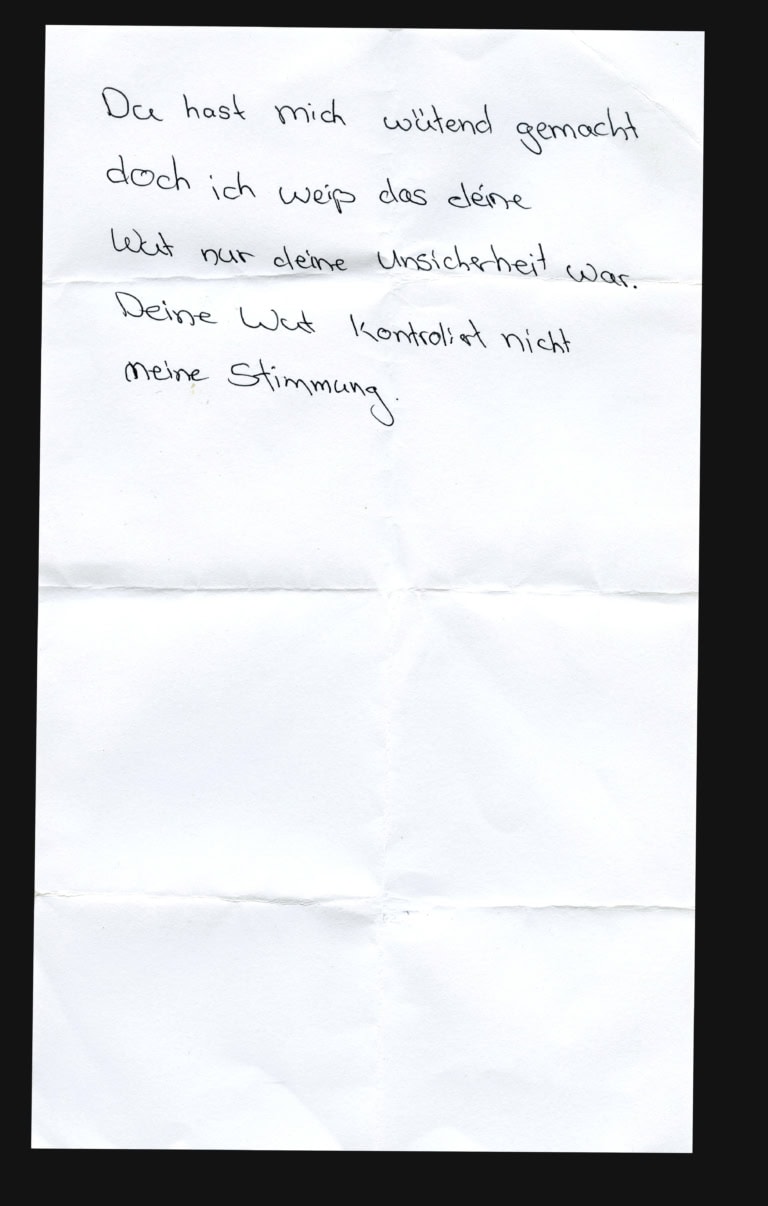
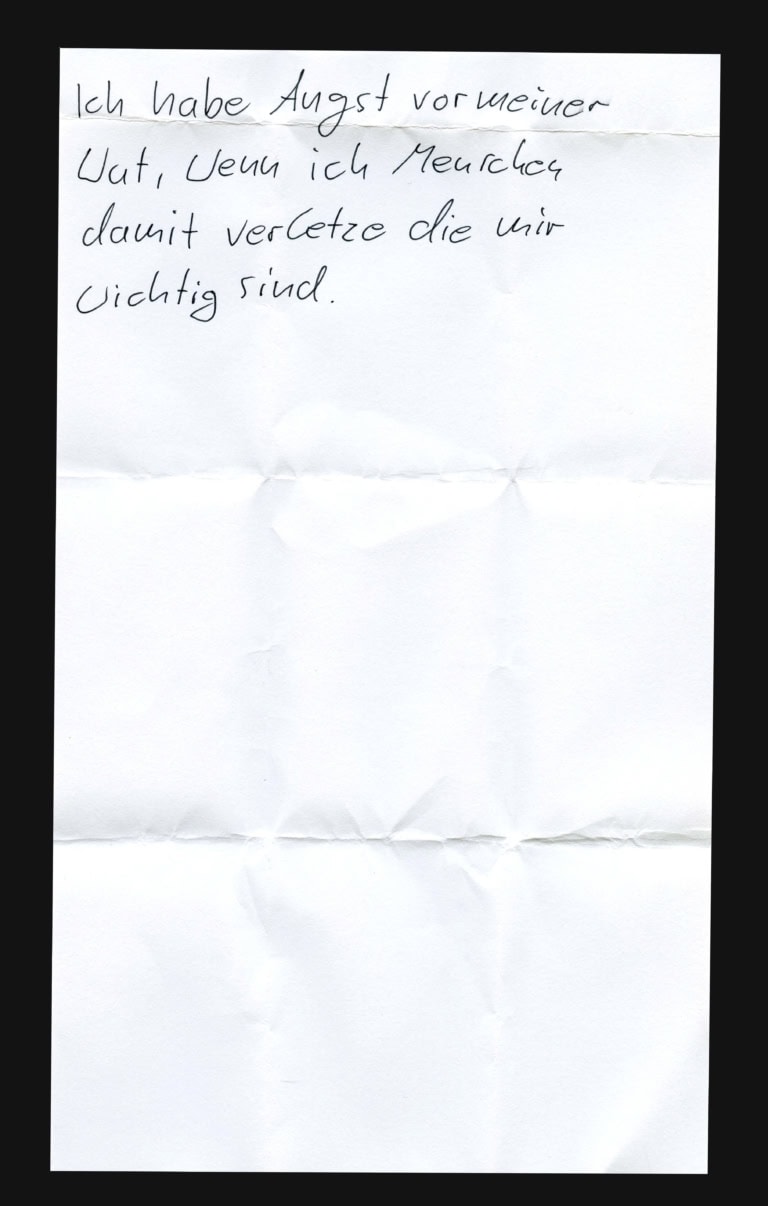
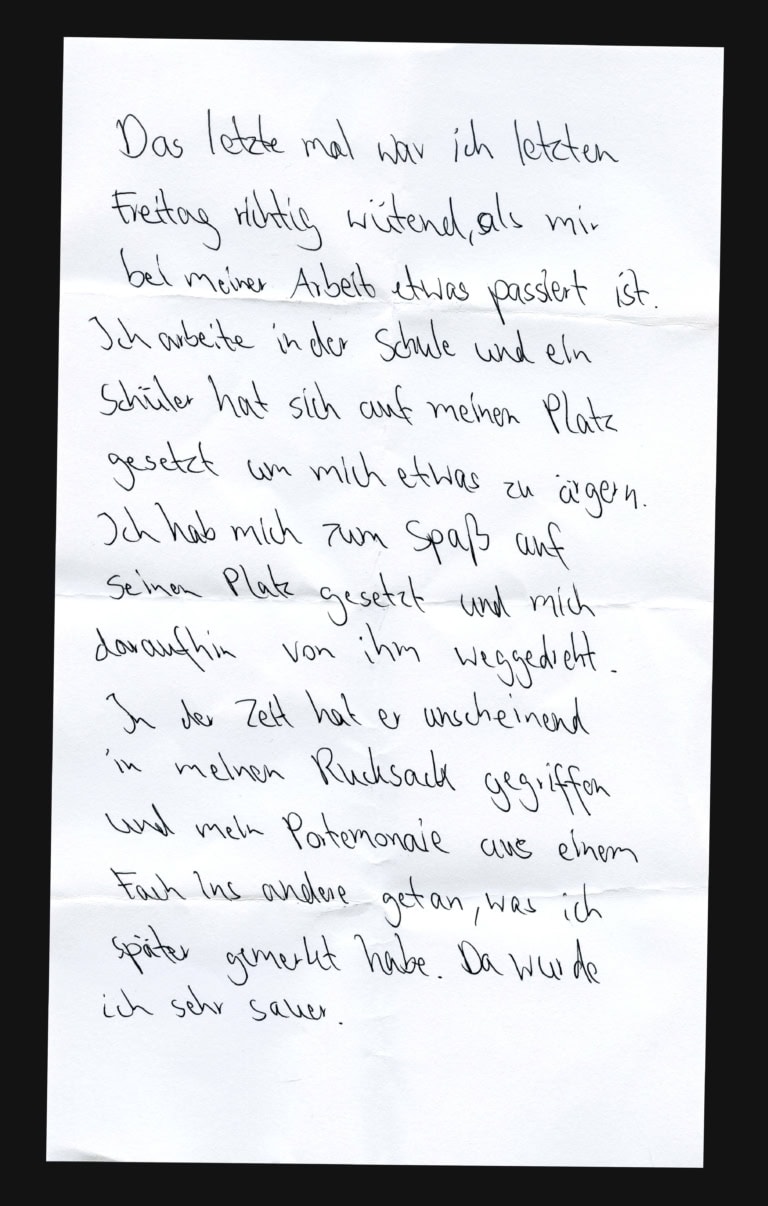
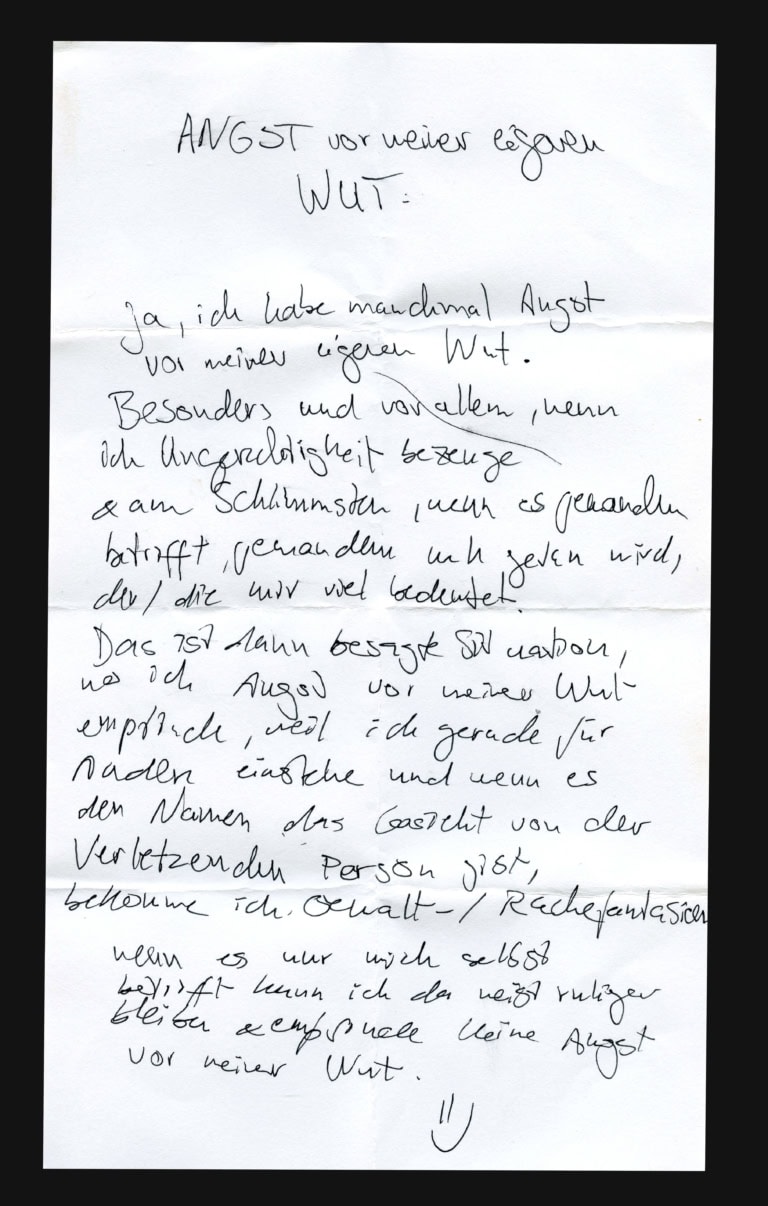
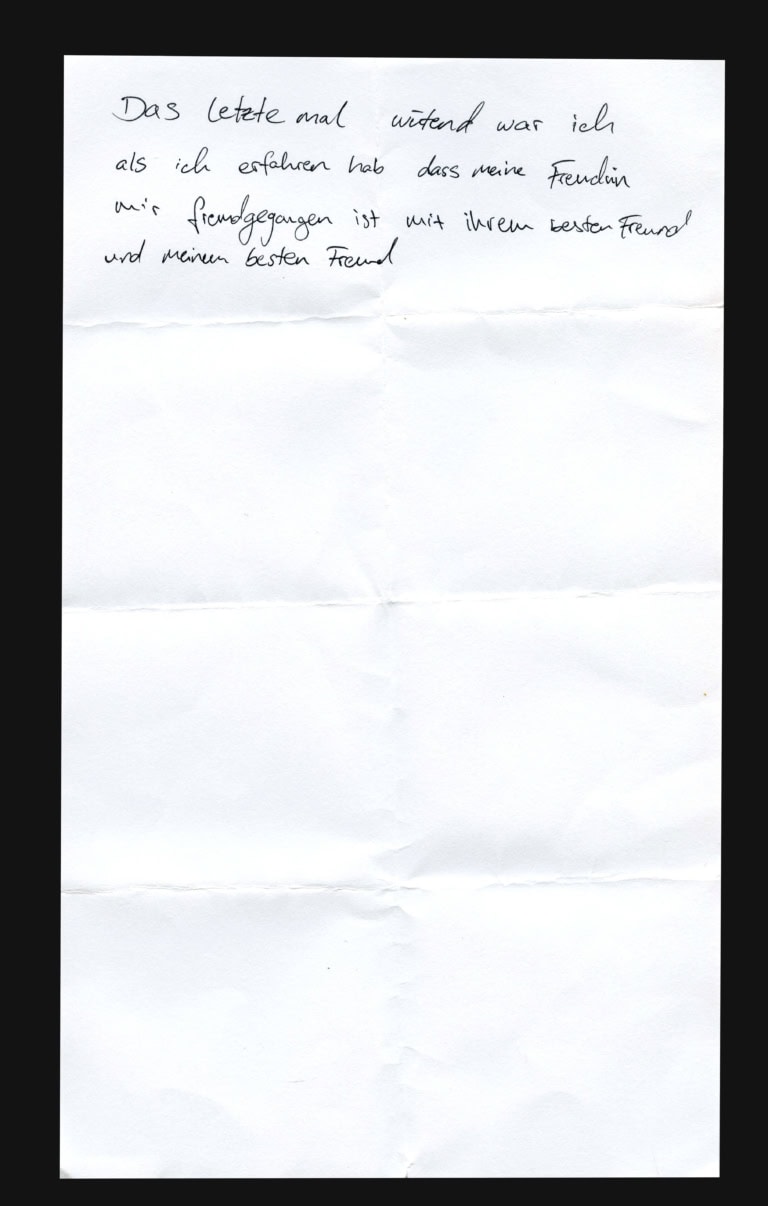
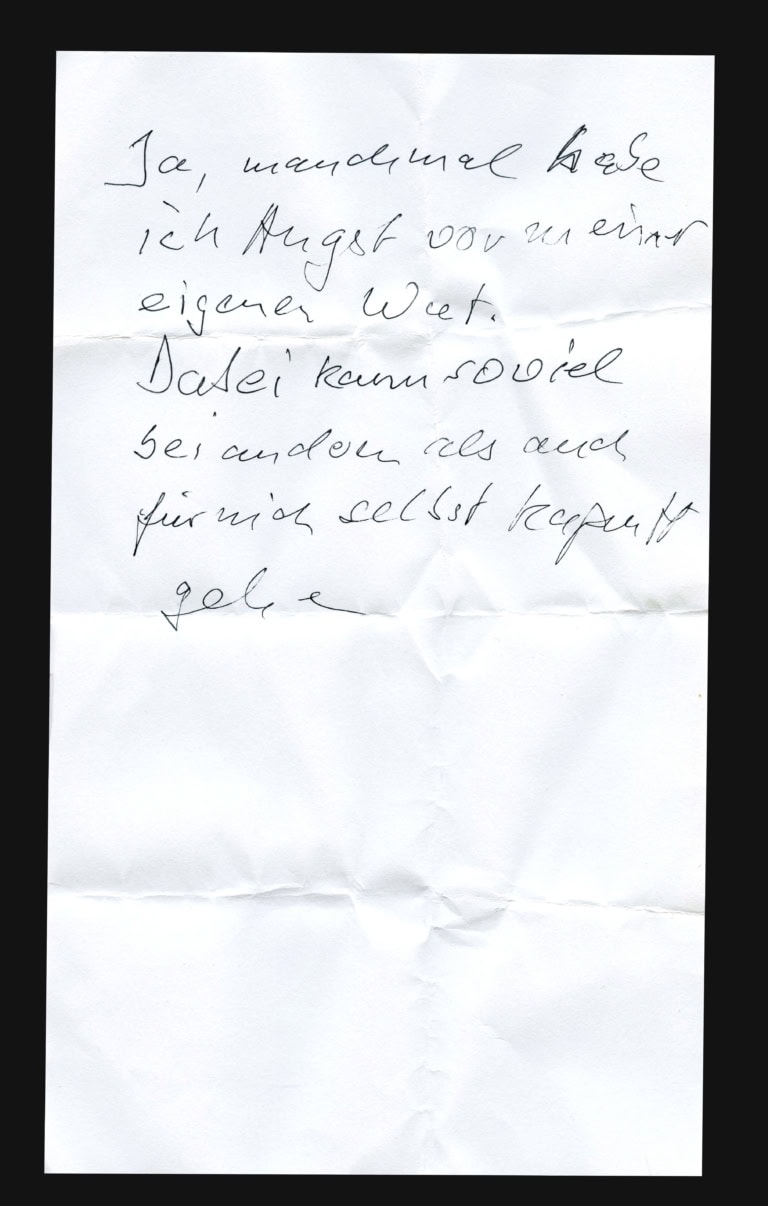
We set up our wooden table in central Hannover. We want to talk to people about anger. Many of the passers-by we approach have no time; others hesitate for a moment and then walk on. Talking to strangers about anger turns out to be harder than it sounds. But some of them do sit down with us. In front of them lies an open notebook with four questions: When were you last angry? What does your anger look like? Are you afraid of your own anger? What would you like to say to someone you are angry with, or whose anger you have had to endure?
We ask them to write down an answer to whichever question speaks to them most. Some need a while to think before putting pen to paper. Others start writing straight away. They drop their slips of paper into a large jar. Then comes the second part of the experiment: drawing a slip, reading a stranger’s words out loud and responding to them.
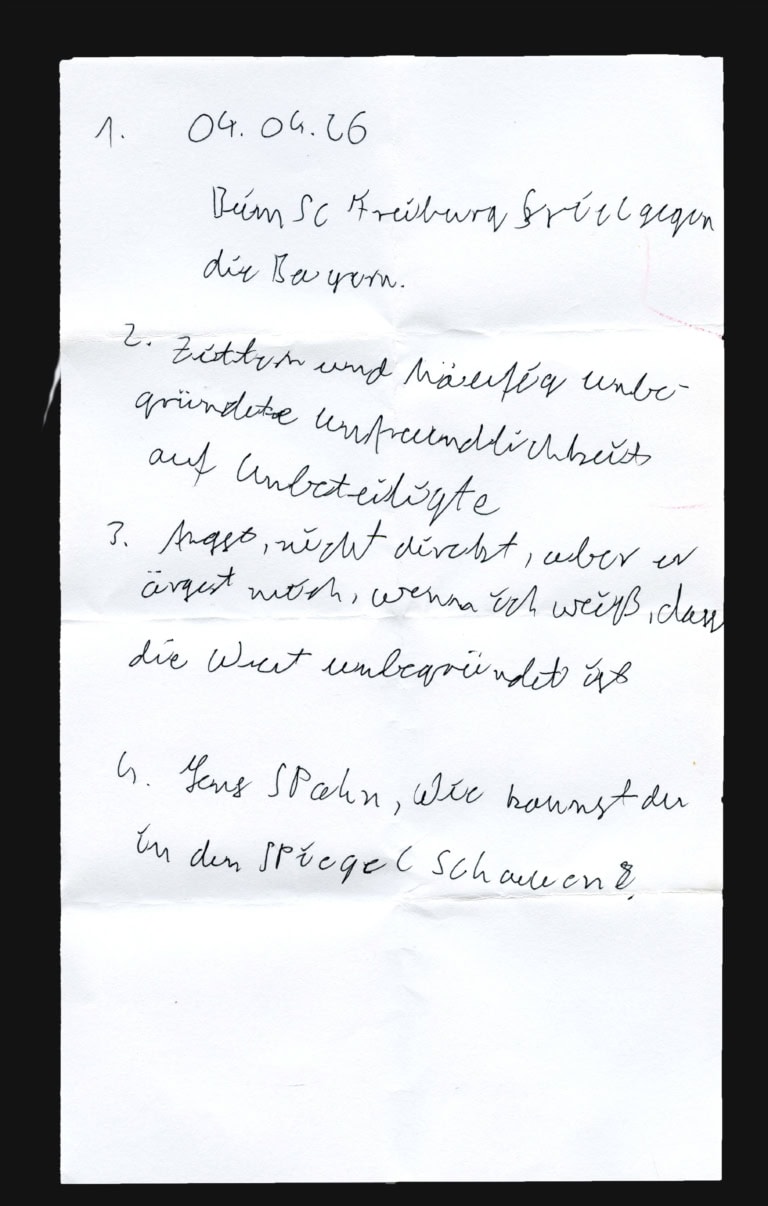
Eighteen people took part in all. Amid the bustle of the city there were moments of silence and reflection. But there were funny moments too – such as when one participant read out an answer to the question ‘When were you last angry?’ It said: ‘On 4 April 2026, at the Freiburg match against Bayern.’
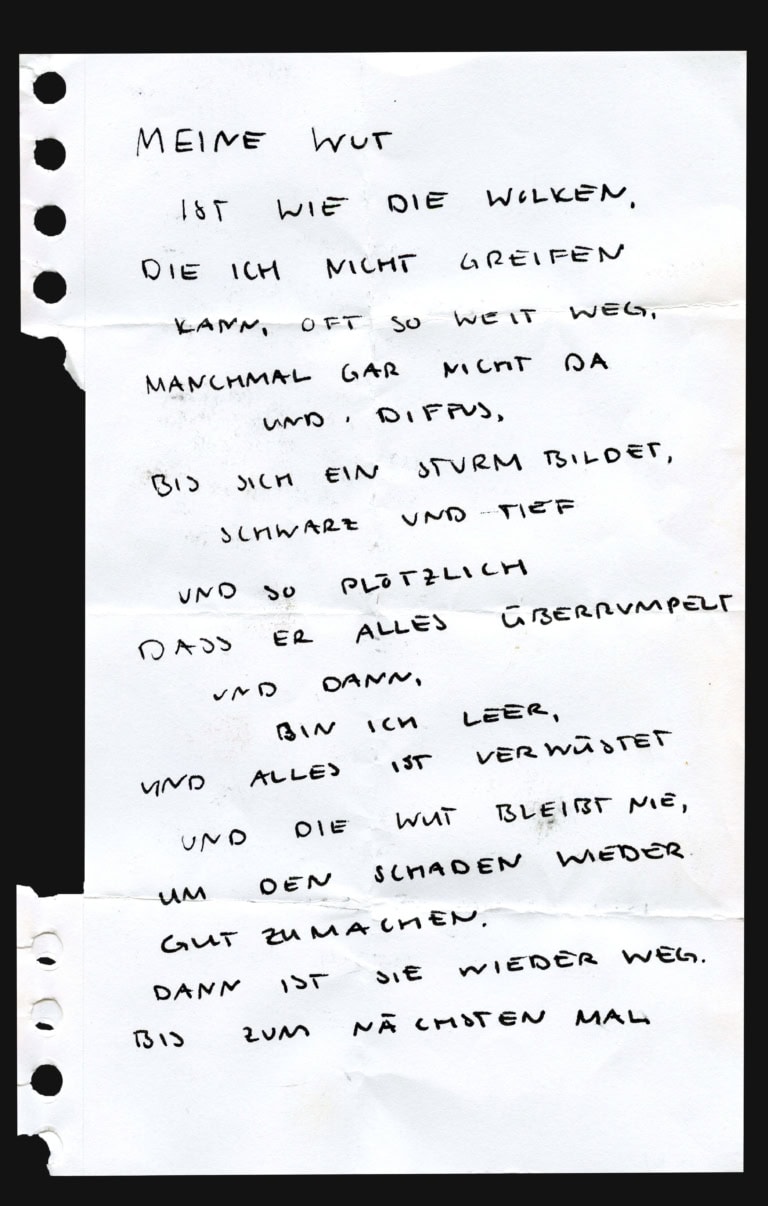
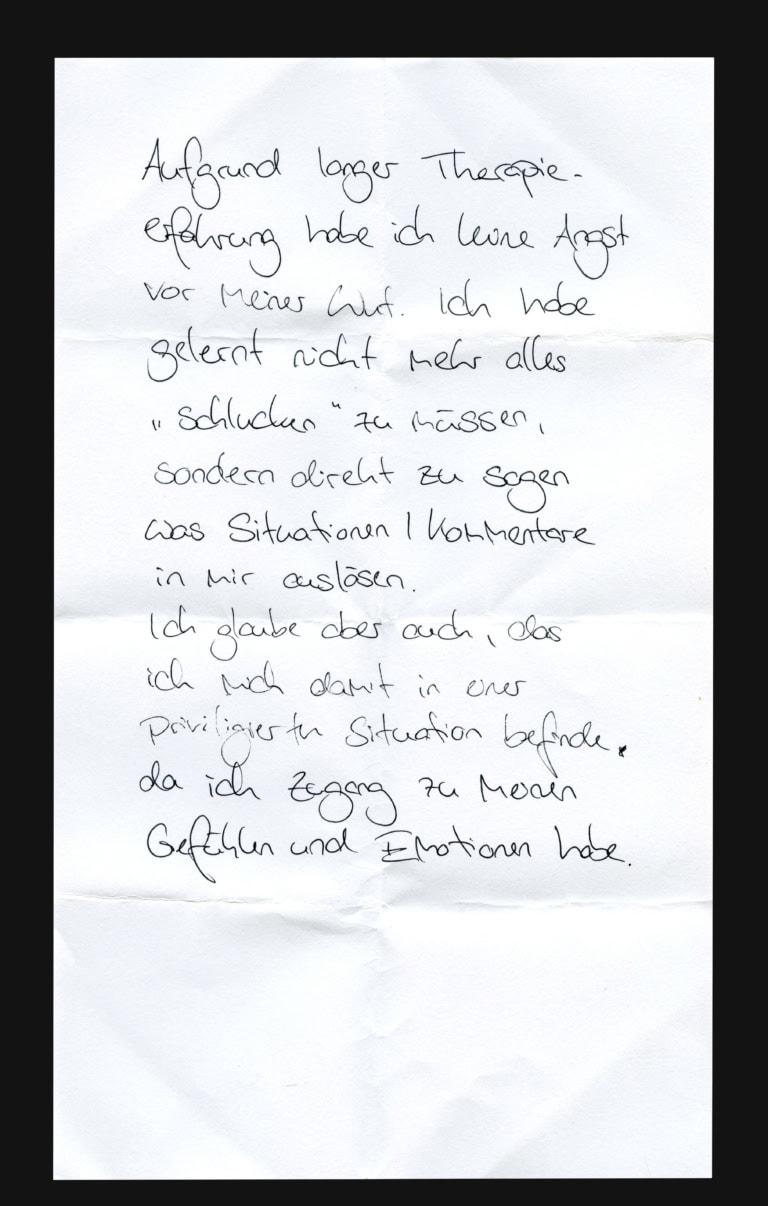
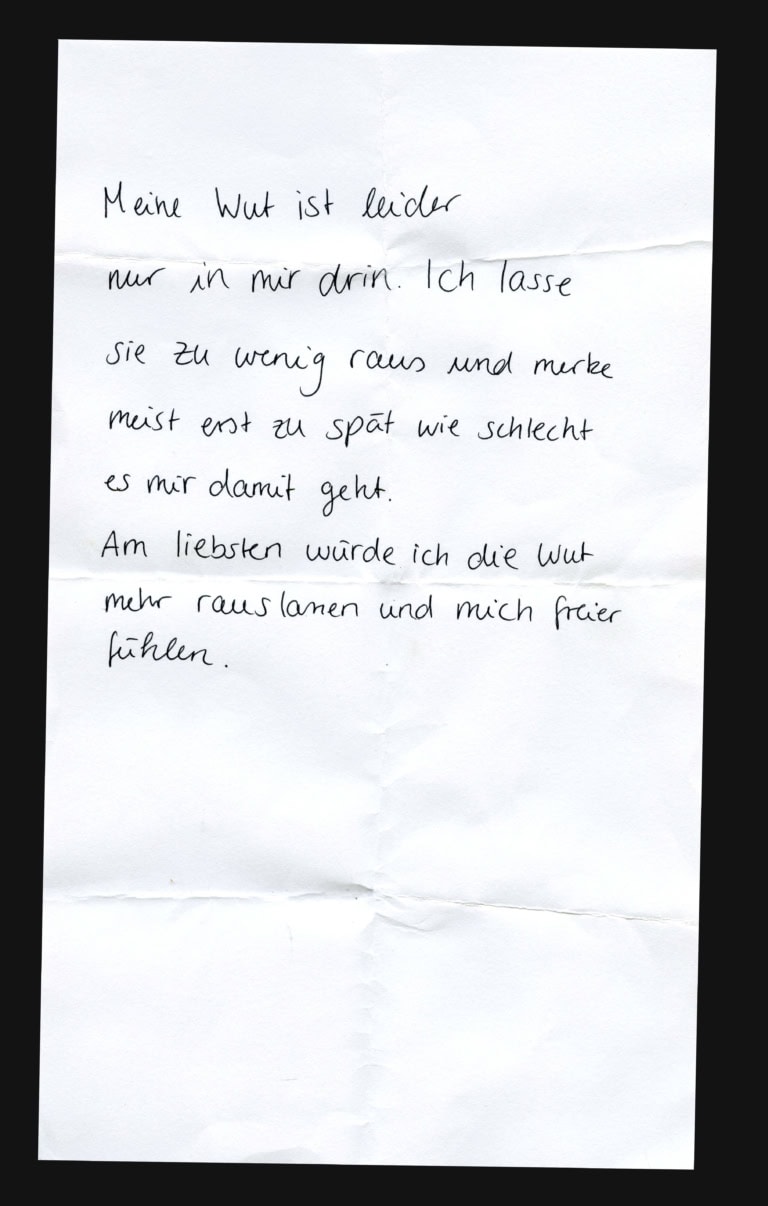
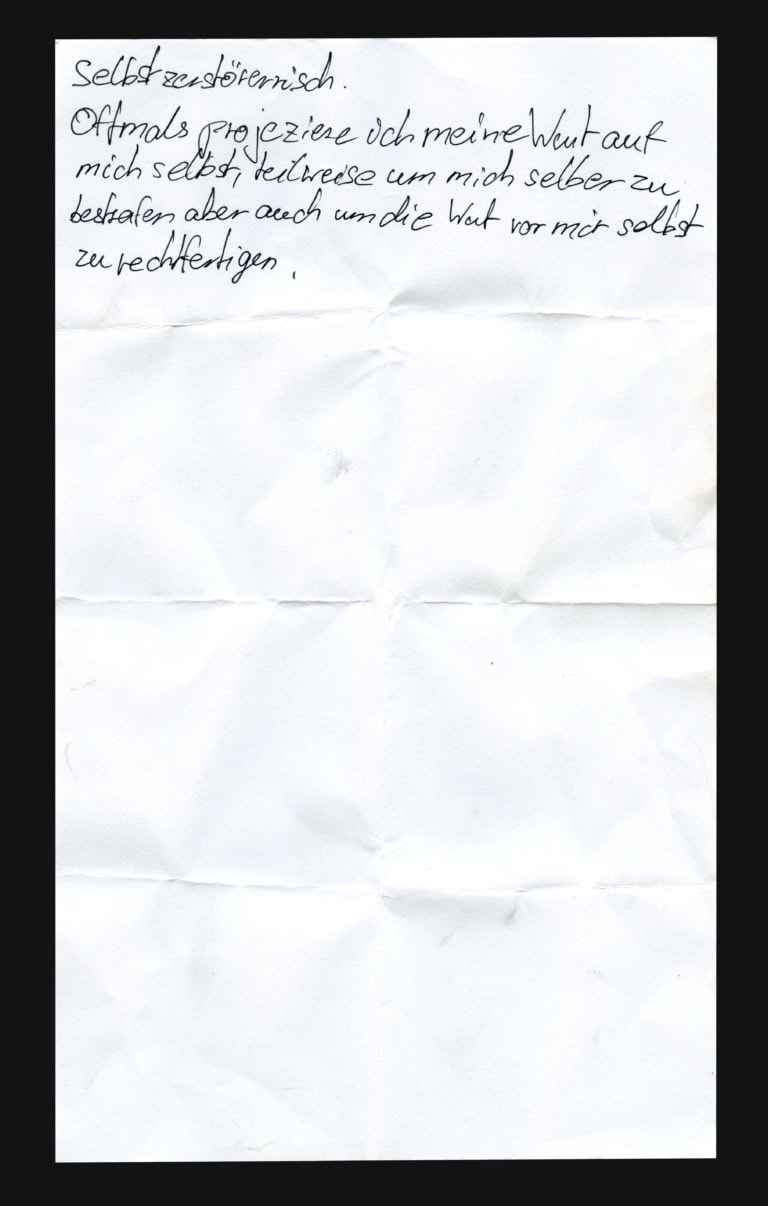
What runs through many of the answers is anger that has been bottled up, swallowed, suppressed. ‘Unfortunately my anger just stays inside me. I don’t let it out enough, and I usually only notice much later how bad it makes me feel. I’d love to let it out more and feel freer,’ reads one slip. Another person explains why anger needs an outlet: ‘Ever since I built up so much anger at work that I couldn’t bring myself to go in any more, I’ve known that letting it out is important. Otherwise I explode and implode at the same time.’
Suppressed anger is like a ball you’re holding under water. You need both hands to keep it down. Otherwise it keeps bobbing up on one side or the other.
 Hanna Tielker
, a psychotherapist we spoke to before the experiment, knows this pattern well. Anyone who tries to keep their anger at bay while carrying on as normal, she says, risks the pent-up pressure eventually erupting uncontrollably – sometimes with more force than if the anger had been allowed to surface in the first place. That can be dangerous both for the person themselves and for those around them.
Anger can be destructive – in abusive families, in relationships where people are not on an equal footing, or when it is unleashed under the influence of disinhibiting substances such as alcohol. People who have experienced anger like this, as an existential threat, often internalise the belief: ‘Anger is bad and dangerous. I have to avoid it.’ From a therapeutic point of view, however, Tielker says, anger is a valuable and healthy emotion – as long as it does not become so overwhelming that the destructive urge to act takes over.




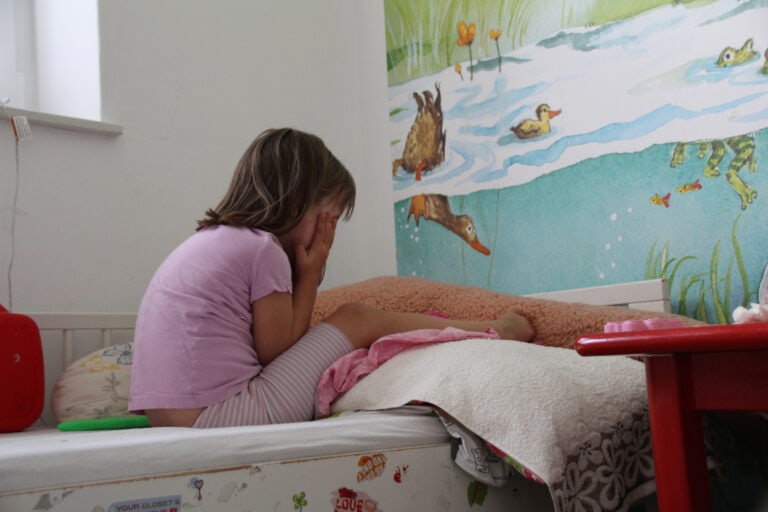
How we deal with anger is something we usually learn in childhood. That is why, Tielker stresses, it matters so much that parents teach their children the difference between feeling angry and acting on it: ‘You’re angry, and that’s completely fine. You’re allowed to stamp your feet. But it’s not OK to hit your sister.’
Tielker recommends channelling the energy that anger produces – into exercise, for example. ‘The physical processes are there; you can’t rationalise them away,’ she says. Sometimes it also helps to put things into perspective: is the anger actually proportionate to the situation? That alone, she says, can make a difference. One participant says much the same: ‘I think you should try to understand what makes you angry. I’m not afraid of my own anger, because I can handle it well – and I’d know who to turn to if I ever couldn’t.’
So what is anger?
Anger is a basic emotion that comes with a physical reaction, which can be very strong. It is usually triggered when people feel that they themselves, those close to them or sometimes even strangers are being treated unfairly or threatened. Frustration and having your boundaries crossed can also set it off. Anger often creates an urge to act, which can lead to very different responses – from withdrawing from the situation to some form of attack or (verbal) self-defence.
Basic emotions are those that are innate and shared by all human beings, regardless of culture. They have evolutionary roots and were once essential for survival. Besides anger, the basic emotions include joy, sadness, fear, disgust and surprise.
How can I deal with strong emotions?
Strong emotions are normal reactions to certain situations and serve important purposes. Accepting your emotions and making sense of them can help you work out how best to pursue your own interests and goals. Handling emotions is something you can learn. It can help to distinguish between the emotion itself and the action that might follow from it. How you react is something you can shape and regulate yourself.

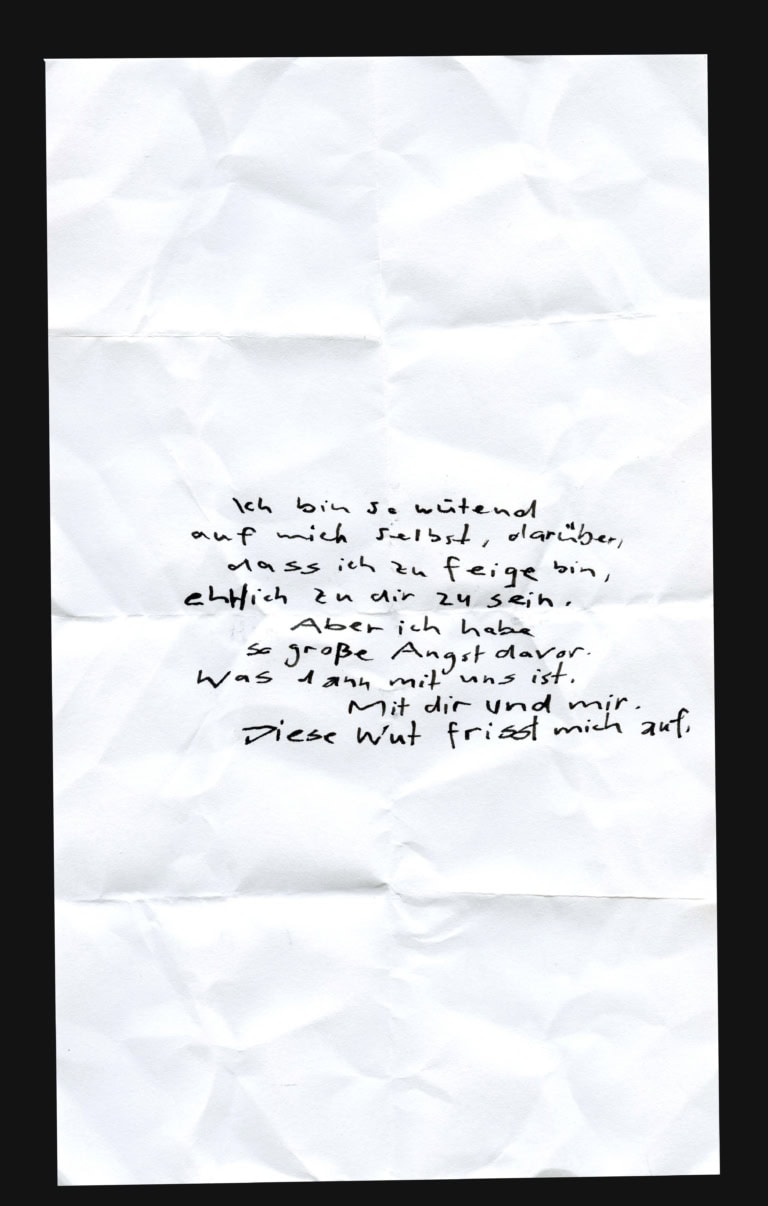
By the end of our experiment, hardly anyone had answered the question ‘What would you like to say to someone you are angry with, or whose anger you have had to endure?’ Perhaps it was simply too intimate. Or perhaps people were worried that the person the note was meant for might one day read our article and realise it was about them. One person, however, wrote: ‘I’m so angry with myself for being too much of a coward to be honest with you. But I’m so scared of what will happen to us then. To you and me. This anger is eating me up.’ Another participant, reading this slip out loud, paused for a long time. Then he said quietly: ‘This person is eating themselves up and it will destroy them one day. That’s awful.’
While filming, we saw how differently people experience anger. There is no single truth to be found in their answers. But one participant, we think, found just the right words: ‘As long as you don’t go completely off the rails, it’s part of being human.’
Helplines and support for people affected by aggression and violence
Counselling for people who use violence: https://www.bag-taeterarbeit.de/beratungsstellen/
Violence against women helpline (Hilfetelefon Gewalt gegen Frauen): 116 016
Violence against men helpline (Hilfetelefon Gewalt an Männern): 0800 1239900
Weißer Ring (support for victims of crime and violence): 116 006