360-degree video in journalism: how to produce immersive reportage. 360-degree video puts the audience right in the middle of the action. We show you how to produce immersive reportage – from the technology to the edit – and tell stories from every angle.
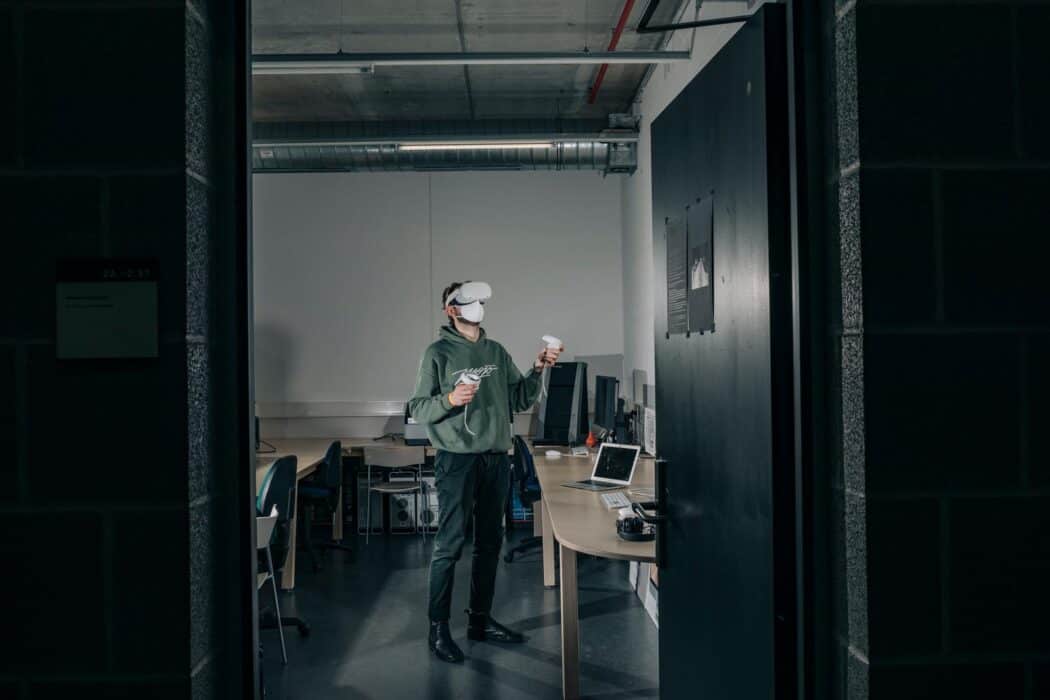 In our workrooms in the basement of the Design Center, students can produce 360° films. Photo: Rafael Heygster
Virtual reality opens up new ways of visual storytelling. Instead of watching, the audience immerses itself in a world of its own. 360-degree video production in particular offers journalism new opportunities. This article shows what VR expert Felix Gaedtke pays attention to.
What is a 360-degree video?
Virtual reality (VR) replaces real space with computer-generated environments or 360-degree videos. An omnidirectional camera records a spherical panorama that covers horizontal and vertical perspectives. Viewers have ‘three degrees of freedom’ (3DoF): they can look around in every direction. In volumetric productions they even have ‘six degrees of freedom’ (6DoF) – they can move freely through the virtual environment.
Immersive storytelling as a calling

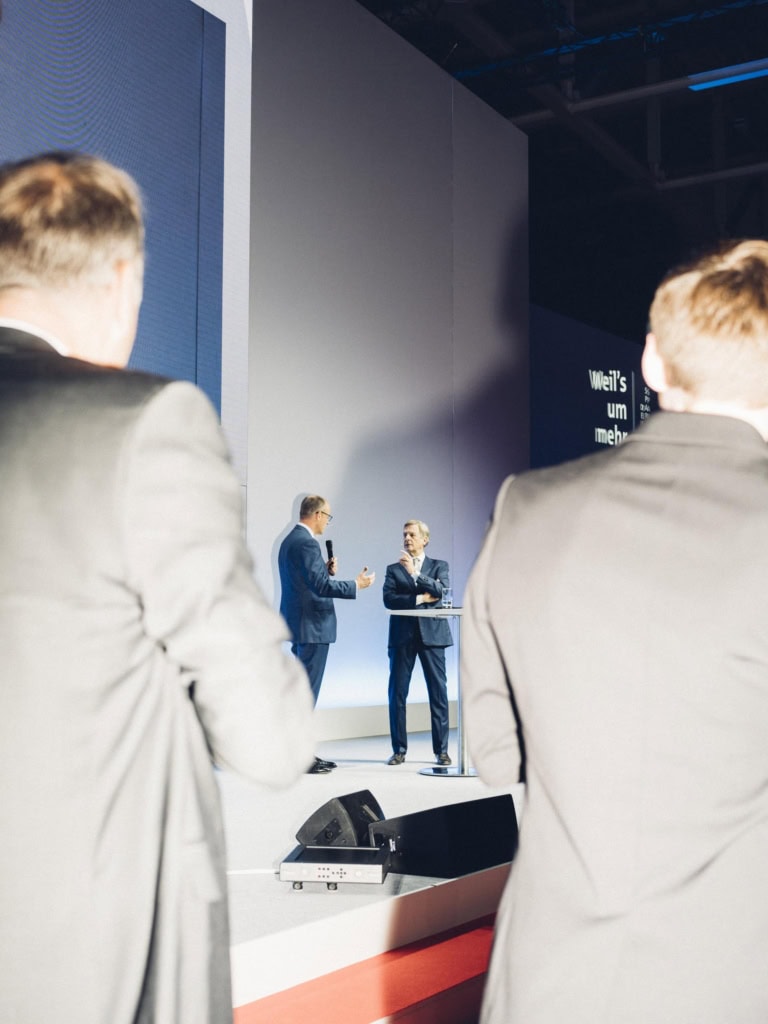
Felix Gaedtke is an Emmy®-nominated and Peabody Award-winning director and producer. Known for his work in immersive storytelling, he is regarded as a pioneer of 360° video production.
He is co-founder of the studio NowHere Media, which gives a hearing to voices under-represented in mainstream discourse. The team develops immersive experiences, mainly in non-fiction – including virtual and augmented reality, 360° films, audio workshops and installations.
Since the 2024/25 winter semester, Felix Gaedtke has taught the seminar ‘Immersive Journalism’ at Hochschule Hannover as a visiting lecturer.
Borrow, don’t buy: omnidirectional cameras and spatial audio
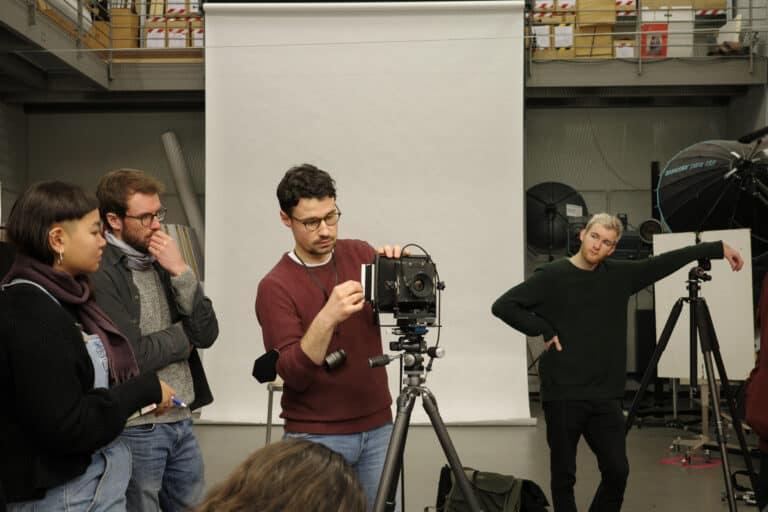
360-degree videos are usually recorded with omnidirectional cameras. They have several lenses and capture different angles at the same time, which are then combined into a complete panorama in a process called ‘stitching’. Felix Gaedtke recommends borrowing the equipment rather than buying it – it goes out of date quickly. Sound should also be recorded in 360 degrees so that the experience feels immersive. This spatial sound is called spatial audio. Two common formats are Ambisonics, which captures sound from all directions and responds dynamically to head movements, and binaural audio, which uses two microphones to create a realistic sense of space through headphones.
 Photos: Carsten Seidler, Thomas Müller-Vahl
Strengths and weaknesses of VR
Felix Gaedtke stresses that VR is a format in its own right and fundamentally different from conventional film. It creates a fully immersive experience that holds users’ attention without distraction. Producers can deliberately transport the audience into situations or places.
At the same time, VR brings challenges. People often experience it in isolation, because they consume the content alone. Uncomfortable headsets and immature technology make access even harder. And VR remains out of reach for many, because 360-degree films work almost exclusively with VR headsets.
With a 360-degree camera on a container ship

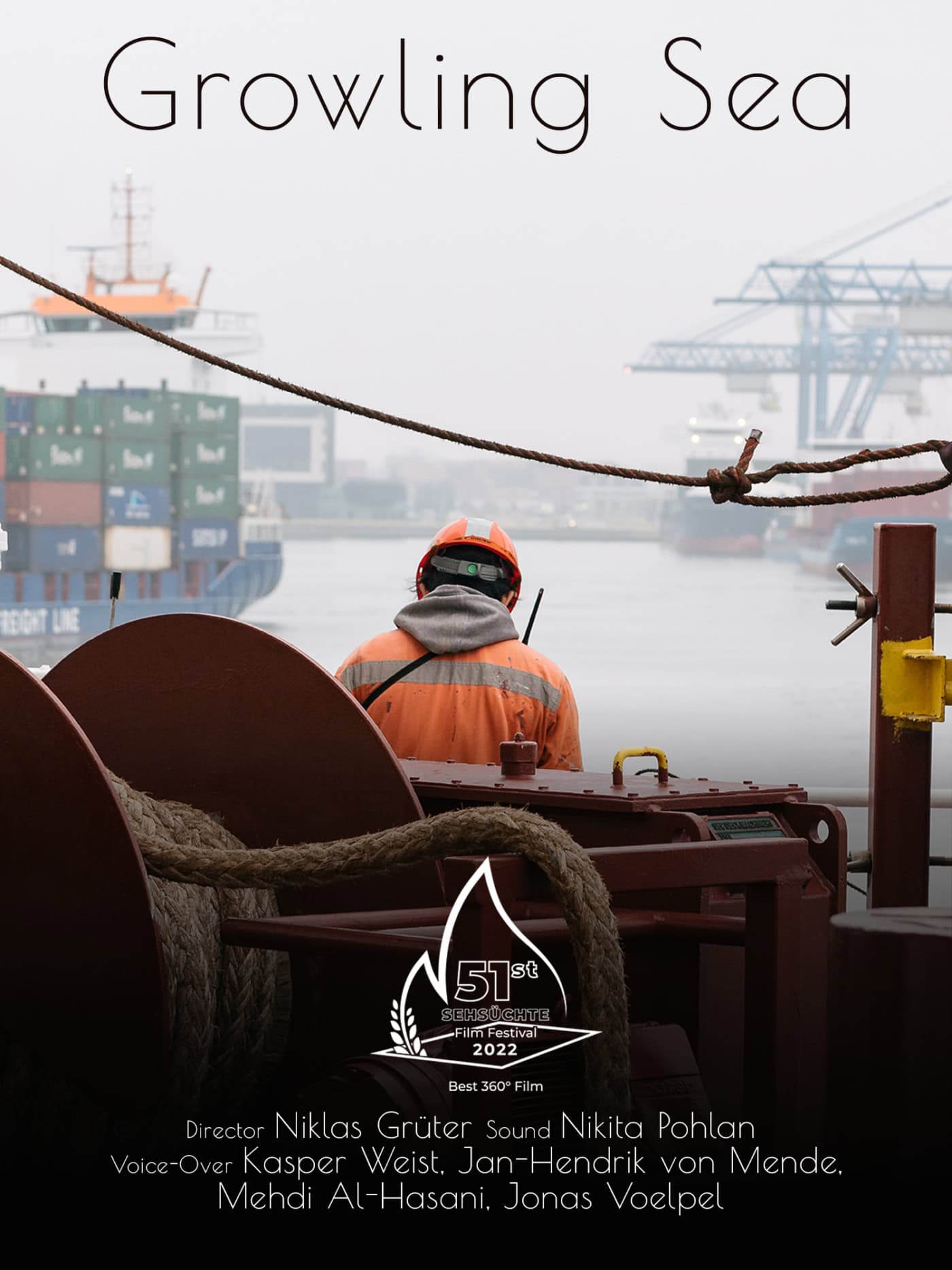
Niklas Grüter is 28 and completed his bachelor’s degree in Visual Journalism and Documentary Photography at Hochschule Hannover in 2022 with the multimedia project ‘Growling Sea’. After graduating, he worked at 2470.media in Berlin and is now a video producer at the national office of the environmental organisation BUND (Friends of the Earth Germany).
In his bachelor’s project ‘Growling Sea’, Niklas Grüter looks at the working conditions of seafarers. Around 90 per cent of the world’s goods are transported by ship – and many crew members suffer from depression, isolation and long separations from their families. Virtual reality lets viewers experience the dimensions of a container ship and the crew’s perspective vividly. The audience gets up close to their living and working conditions.
Niklas Grüter sees this as a key advantage of 360° video production: ‘In a fast-moving world, you can focus entirely on one thing.’ The audience becomes emotionally immersed and gains a direct connection to the working environment. Although VR was still uncharted territory during his studies, the Hannover degree programme, with its focus on storytelling and its equipment loan service, gave him a solid basis.
Handling the ‘Insta360 Pro 2’ camera with its 5.1 microphone system proved difficult, though. Cramped spaces and swinging ropes caused unexpected problems. Even so, Niklas created an immersive video that gained extra emotional depth from letters by real seafarers read aloud.
‘Growling Sea’ won him first prize in the VR category at the Sehsüchte festival in Babelsberg, and he presented the project in Bremen, Berlin and at the Human Rights Film Festival. Today, the shipping company uses the 360° video to get young people interested in working at sea.
From virtual tours to war documentaries: 360° video in action
360-degree videos are used in many fields: in tourism for virtual tours, at events such as concerts and trade fairs, in education with interactive learning environments, and in marketing for product presentations and immersive campaigns.
In journalism, 360-degree video production makes the audience an active part of events. It strengthens the feeling of being ‘on the spot’ and creates a deeper emotional bond. People who interact stay attentive for longer and engage more intensively with the content. Felix Gaedtke emphasises that VR offers personal access to places and people. Even abstract or complex subjects – from the universe to processes in the body – can be shown vividly.
The New York Times was one of the first to use 360° video regularly. From 2016, its format ‘The Daily 360’ showed historical events, cultural highlights and current news every day. In 2023, Felix Gaedtke’s NowHere Media released the documentary ‘YOU DESTROY. WE CREATE. The war on Ukraine’s culture’. The 25-minute film takes viewers into war-ravaged Ukraine, ‘where artists and cultural workers are busy protecting, rebuilding and creating art’. Gaedtke and his team combined 360-degree footage with 180-degree 3D material to take the audience on an immersive journey.
Viewers become an active part of the story
Storytelling in 360° video differs markedly from the linear narratives of conventional productions. The audience actively chooses its own perspective and thus shapes parts of the story. It doesn’t just see the story – it experiences it.
One option in 360-degree video production is to involve the audience in the action as a member of the team. That way, viewers feel they are right there, explore details for themselves and form their own picture. The production team can speak directly to the audience, show them things and take them along on the journey. The BBC used this technique in ‘Damming the Nile’: its behind-the-scenes team became part of the action – and with it, the viewers. To imagine better where the audience might later stand, the filmmakers even gave the camera a name. This anchoring intensifies the immersion.
But you don’t always need a narrator. Felix Gaedtke stresses that the audience must still understand why it is in a place and whose perspective it is taking. Often the camera position alone answers these questions subtly. ‘If I ride the underground with a camera, I’m a guest on the train. But if I put the camera on the tracks and let the train run over it, a dramatic situation arises immediately.’ So the camera position has a decisive effect.
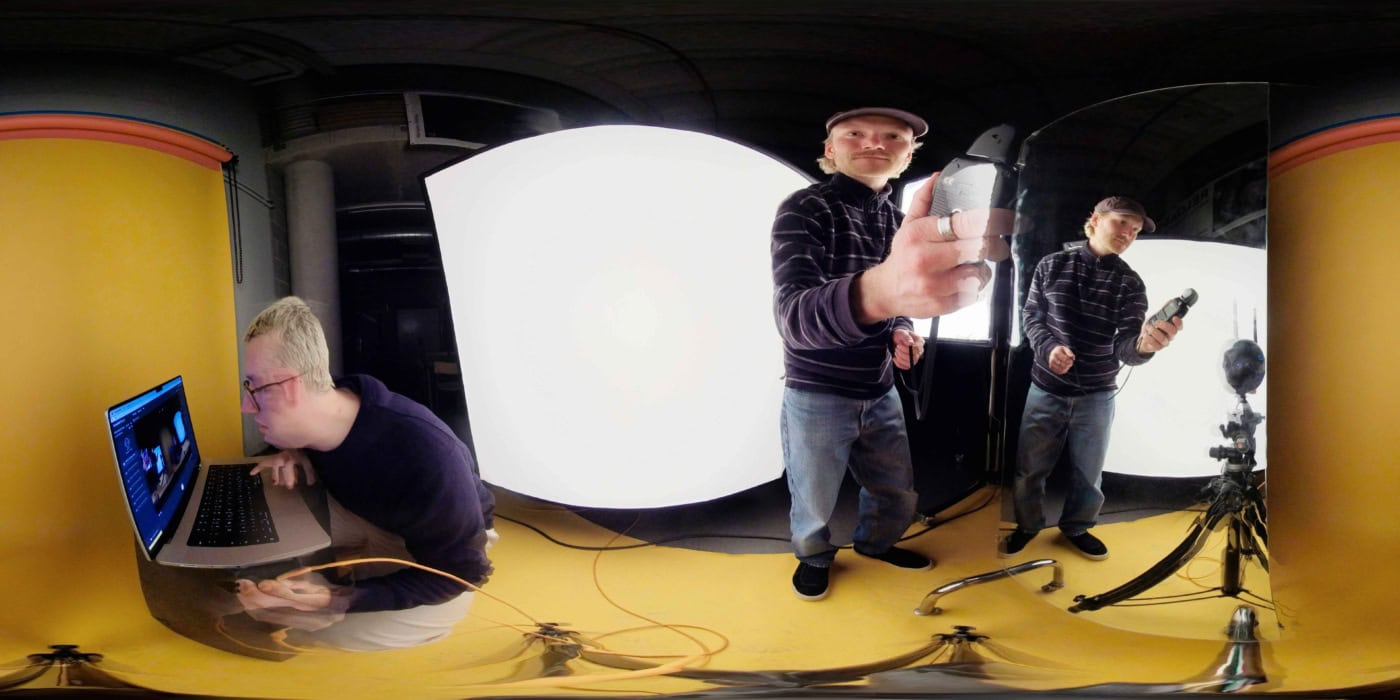 Photos: Carsten Seidler, Thomas Müller-Vahl
Virtual reality really transports the audience to a new place and situation.
 Felix Gaedtke
The onion principle: building scenes in 360° films
Post-production in 360-degree video begins with stitching: the individual camera recordings are combined into a spherical image. This material can be edited like conventional video – but it requires particular care.
Cuts should be made slowly, so that the audience has time to explore a scene. Felix Gaedtke compares his method to an ‘onion’: each scene is layered over the next. What matters is that the focus of one scene flows smoothly into the next. Viewers who aren’t looking at the focal point at first must be guided back to it by deliberate movement in the picture. Only then does a coherent, immersive experience emerge.
The voices of Muslim women in 360 degrees
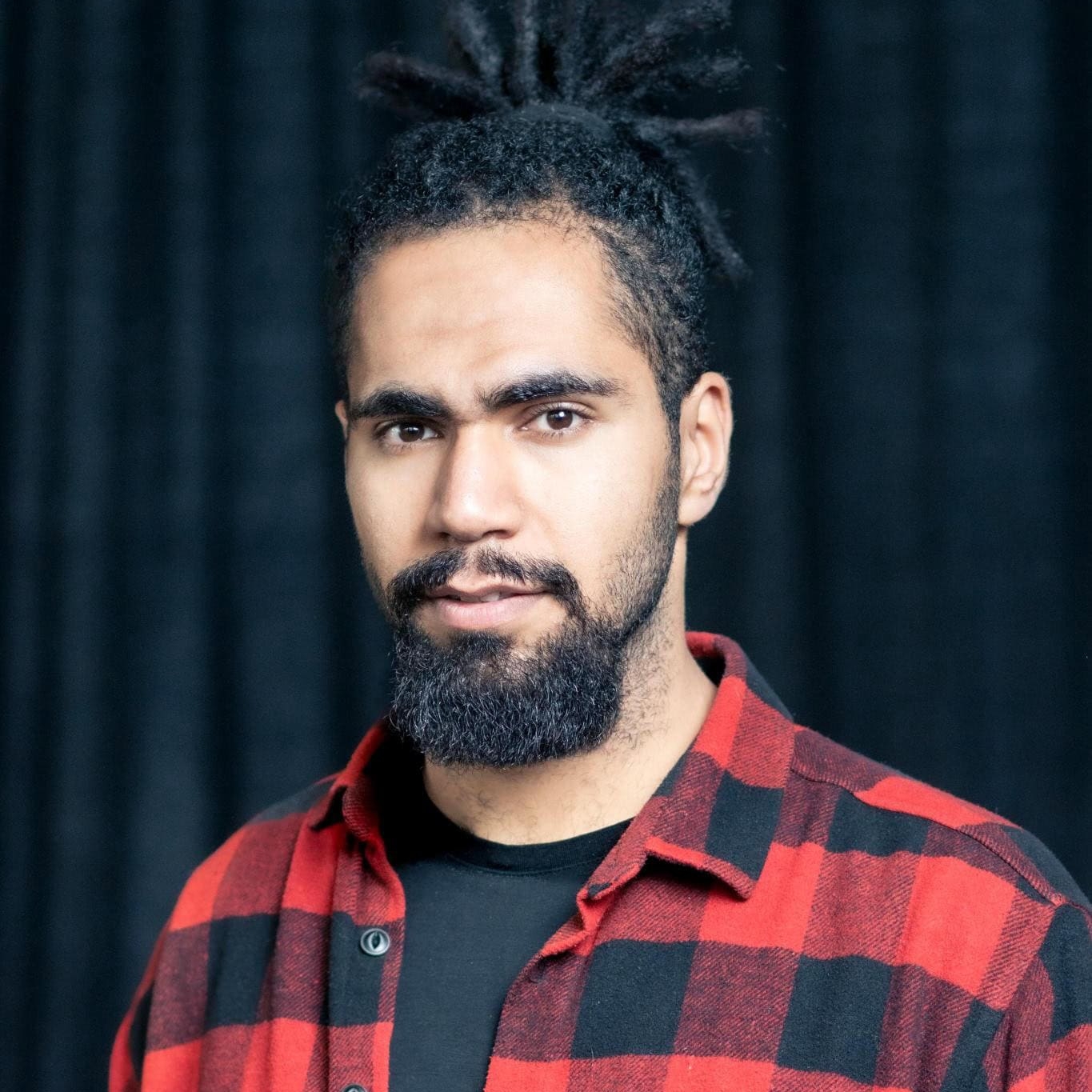
Momen Mostafa was born in Giza in 1998 and is a documentary photographer based in Berlin. His work deals with the challenges faced by people living on different continents. His path began in Cairo and led via Khartoum, Istanbul and Ankara to Hannover and Dhaka.
In his bachelor’s project on the Visual Journalism and Documentary Photography programme at Hochschule Hannover, Momen Mostafa explored the voices of Muslim women. He deliberately chose 360° video production to minimise his own influence on how they were portrayed. Viewers were to experience the women directly – as they talk about their stories, their challenges, Islam and feminism. The format lets the audience form their own view and hear the stories up close.
The work was both rewarding and demanding. Momen was pleased to try out a new format and to see his approaches confirmed in practice. At the same time, he had to handle a lot on his own and had little time for technical preparation – a risk that always comes with new formats.
Conclusion
360-degree video production is more than a technical effect – it is a narrative format in its own right. It works when camera position and sound provide orientation, the edit allows time and the story justifies being in the space. Examples from the New York Times to NowHere Media, from the BBC to students at Hochschule Hannover, show that VR can create closeness, make complex issues tangible and deepen journalistic research.
Costs and technology are still holding back its spread. But anyone who gives it a try will discover a medium that puts viewers right in the middle of the action. 360° video opens up spaces that conventional pictures cannot reach – and that is exactly where its fascination lies.