Fair travel photography: how to photograph people respectfully on the road. A click is quick; consideration doesn’t always come so easily. With these tips on fair travel photography, you can photograph people respectfully on your travels – and get real consent rather than just a smile.
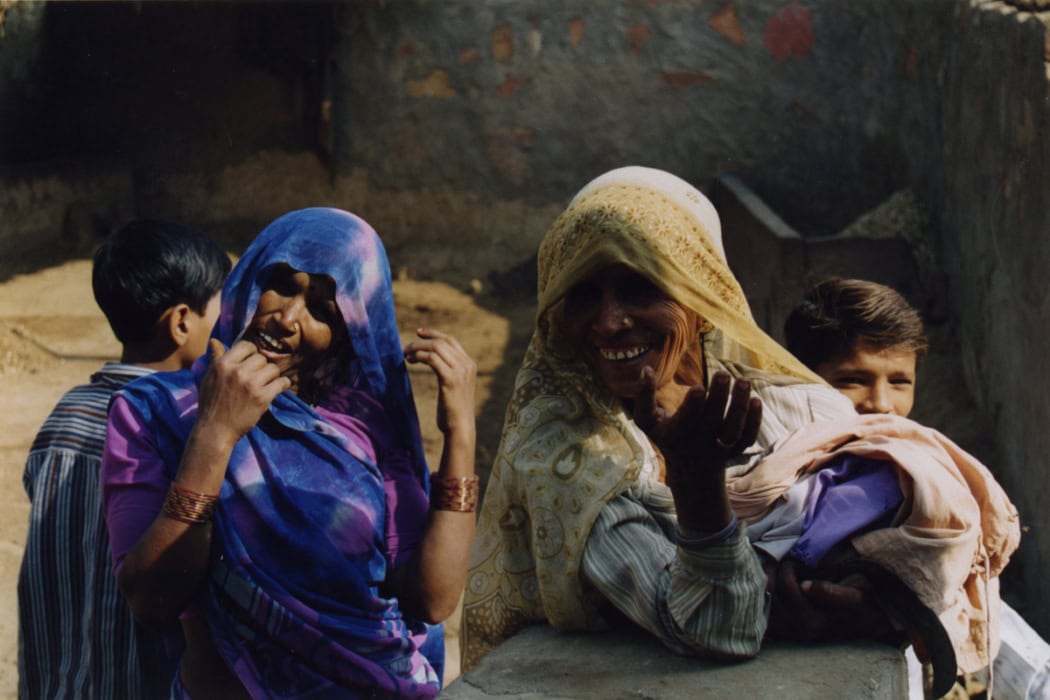 India, 2002
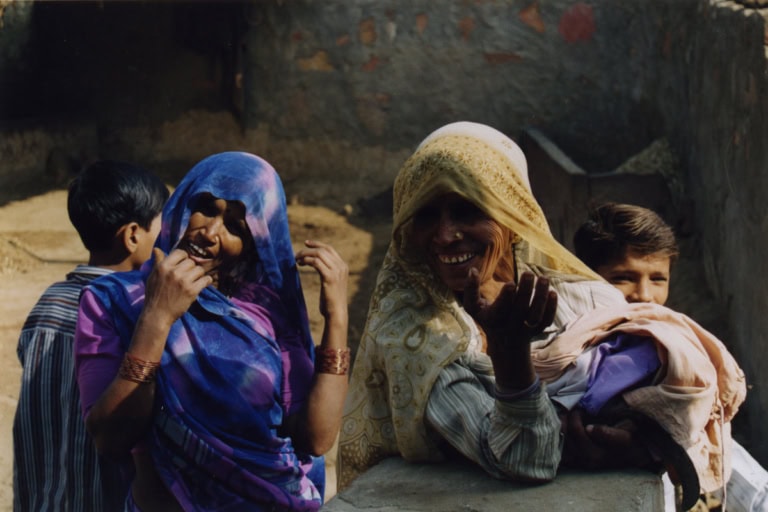
With these two women, who waved to me as my bus drove past, I had the feeling that they weren’t rejecting my camera. But is their smile really consent and an invitation to photograph them?
In 2002, at the age of 17, I travelled to India on a school exchange. Before we arrived at our host families in Pune, we spent a week touring the north of the country. I had my analogue SLR with me all the time. Completely naively, I photographed everything that came in front of my lens: street scenes, animals, houses and, of course, people. On one of my wanderings, I took a travel photo of an old woman who eyes me sceptically, almost dismissively.
I still remember how proud I was when I held the developed photo in my hands. The people I showed it to back then were full of praise and encouragement. I had obviously taken a great travel photo. I could already see myself striding towards a career at National Geographic. Today, in 2025, at the age of 40, I question whether it really is a good photo. Is it because of the lack of approval, the unknown name? I hadn’t asked the woman for permission to take her portrait, and I hadn’t spoken to her to find out more about her and her life. What stereotypes did I reproduce through the way I looked at her? I am using this personal experience as a starting point to draw more attention to stereotypes in photography and to make you more aware of stereotypical depictions.
All the photographs used in this article were taken on my trip to India in 2002. I thought long and hard about whether it was justifiable to publish these travel photos in this context. In the end, I decided to do so in order not to have to fall back on stereotypical pictures from a stock image library. This is the first and only time these pictures are being published, and I am using them deliberately in this critical context as a form of self-reflection.
What is a stereotype?
In general, a stereotype is understood as a generalising negative or positive image of an individual that is based not on the individual’s characteristics but on their membership of a group. In other words, an individual is put into a particular category because they belong to a particular group. […] Added to this is the attribution or naming of certain negative or positive characteristics, roles or behaviours (= prejudices). A stereotype is culturally bound and changes over time. It can relate to any social group and is not necessarily directed at minorities.
Source: https://www.bpb.de/themen/medien-journalismus/medienpolitik/500745/stereotyp/ (Federal Agency for Civic Education, in German)
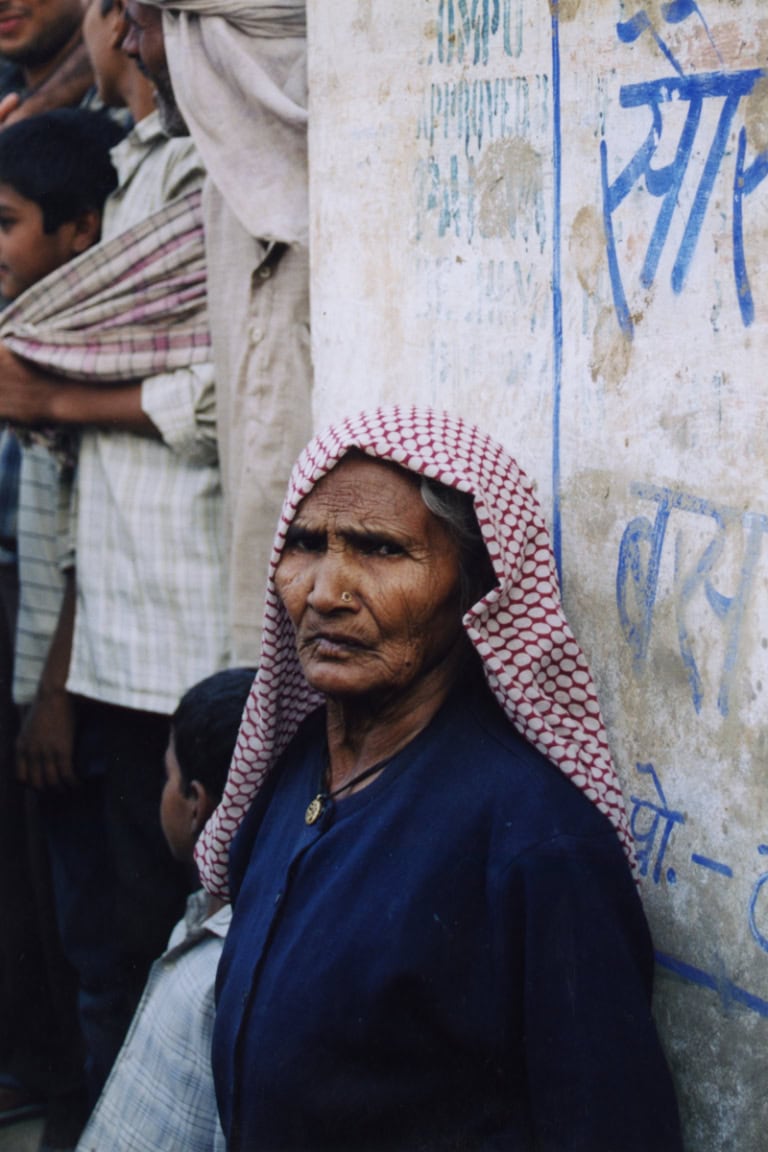 India, 2002
On a wander through the streets of Agra, I saw an older woman standing in the street. She looked sceptically at my camera, but I pressed the shutter anyway. Today, I would no longer take a photo like this without the woman’s consent.
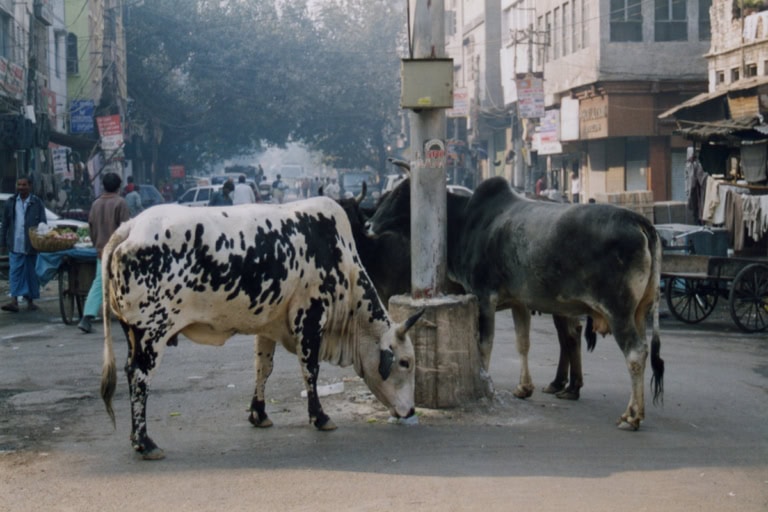 India, 2002
A crossroads in Delhi. As with the photo of the dromedary cart, I feel very comfortable with this picture – perhaps because I didn’t invade anyone’s privacy, but pointed my camera at two representatives of what are presumably sacred cows.
Stereotypes in travel photography – how can we get better at not reproducing them?
The problem of stereotypes in travel photography is closely linked to the way pictures tell stories. Photographs are powerful tools that can evoke emotions and create associations. But they are never neutral. Every photographic gaze – conscious or unconscious – is shaped by cultural, social and personal experiences and assumptions. This often means that stereotypical ideas are reproduced, even if that isn’t the photographer’s intention.
A 2022 study by researchers at the University of Sussex examined how stereotypes are reinforced in the images used by global aid organisations. The analysis shows that such pictures often put suffering and poverty in the foreground. They neglect the dignity and individuality of the people pictured, and complex realities are reduced to simple narratives. Of course, aid organisations want the pictures they use to get more people to donate money and do good. And in their eyes, that works better if you show starving children rather than children playing happily. But such depictions reproduce existing power relations and help reduce complex realities to simple narratives – and the people pictured to nothing more than the suffering they have experienced.
These findings raise the question: ‘How can we as photographers work more consciously and responsibly?’ Taking travel photography as an example, the following section sets out five approaches that will help you reproduce fewer stereotypes in your photography.
Travel photography – a particular challenge
Taking non-stereotypical pictures becomes particularly difficult when you travel with your camera. You often have only limited opportunities to find deep and respectful access to people and places. Time pressure, cultural differences and language barriers can lead you to fall back on clichés in order to capture visually ‘memorable’ scenes. The power gap between you as a photographer who can afford to travel and people living in less wealthy regions also plays a role. Your photography can thus easily become an instrument of a Western, exoticising view – often unintentionally, but no less problematic for that. One example I know from my own travels in South America is people in tourist areas posing in traditional dress for money, to live up to the ideas of ‘authenticity’ that we as tourists expect. But such pictures rarely convey the complex reality of everyday life, and they reduce people to a symbolic representation of their culture.
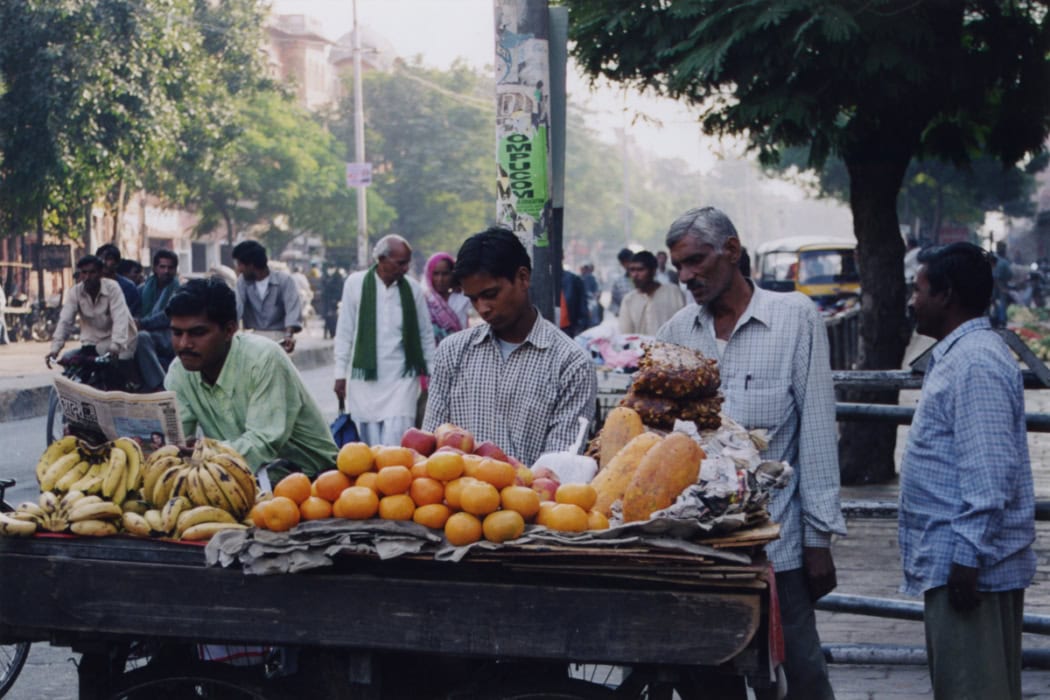 India, 2002
A typical morning scene in the streets of Delhi. Everyone in the picture is absorbed in what they are doing. I use the moment to take a photo unnoticed. I wonder what the men would have said if they had noticed me.
1. Dialogue instead of distance in travel photos
One often overlooked aspect of photographing people on your travels is consent. Just because someone is standing in the street, working at a market stall or would, in your eyes, simply make a good subject doesn’t mean you automatically have the right to photograph them. Getting consent from the person you want to photograph is not only a question of respect but also an essential part of ethical photography. But how do you deal with situations where communication is difficult? One option is to use gestures: a smile, a nod or pointing at the camera can signal that you’d like to take the person’s picture. If they react negatively, always respect that – no matter how ‘perfect’ the scene is or how much you’d like to take the picture. If the person is willing to be photographed, try to build a relationship and establish trust. Find out what they want to say about themselves. By giving the people in your pictures room to help shape their story, you avoid objectifying them and create pictures that are respectful and authentic. A collaborative approach may not be possible in every case, but you should never take a photo without the person’s consent.
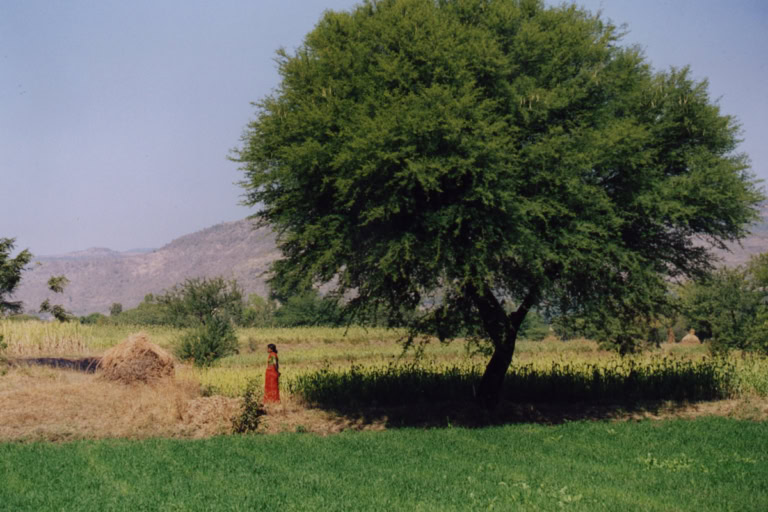 India, 2002
I spotted the woman in the red sari from some distance away. The combination of colours and the contrast between the tree and its shadow fascinated me immediately.
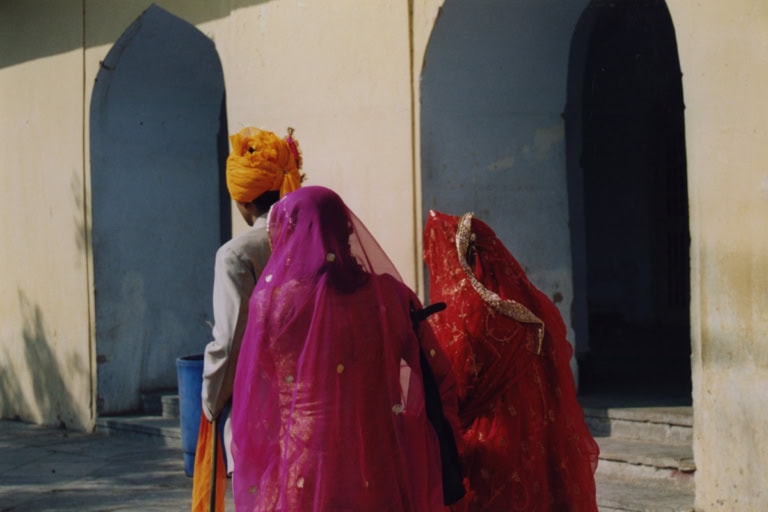 India, 2002
Is a photo taken from behind less problematic than one showing people’s faces? I can no longer ask these three, because our encounter was more than 20 years ago.
2. Show context rather than simplifying
Stereotypical depictions on the road often arise when context is missing. Taking non-stereotypical pictures takes time and suitable background information, which you should gather through research beforehand. Avoid photographing an ‘isolated’ scene: the child with big eyes, the old woman with a striking face, a person in traditional dress posing for the camera. Such pictures can be fascinating (I know what I’m talking about), but they only tell a fraction of the story. One approach is to photograph more than just that one person. Look around and take in the surroundings. What does the scene say about this person’s life? Including the surroundings can give pictures more depth and convey more complex stories. If you feel you don’t understand a situation, ask. Show genuine interest in the realities of local people’s lives and listen to them. That way you gain important information that can enrich your photographs. Even though this is a photography guide, I’d encourage you to leave your camera in your bag when you first make contact and to focus entirely on the moment with the people around you. When the time is right, you can politely ask whether the person would like to be photographed. I’m sure you’ll end up with more meaningful pictures this way.
3. Question your own perspective
Another important aspect is reflecting on your own standpoint – and afterwards on the photographs you have taken. Before you pick up your camera, ask yourself why you are photographing this scene. What do you expect from this picture? What story are you telling, and what are you leaving out? These questions are crucial for recognising your own prejudices and stereotypes. I wish I had already been this reflective and thoughtful on my trip to India. I certainly wouldn’t have taken many of the pictures I chose for this article, and the others slumbering in my archive – or I would have taken them differently. Once you have taken your pictures, look at your travel photos and ask yourself whether you are happy with them. It’s also worth thinking about where you show them. Are they just for your private travel album, or do you want to share them on social media, for example? If you choose the latter, ask yourself: ‘If I met a stranger at home, would I post their photo on my Instagram account without a second thought?’ This thought experiment helps you recognise inappropriate power relations and exoticising depictions – and avoid reproducing them by sharing them online.
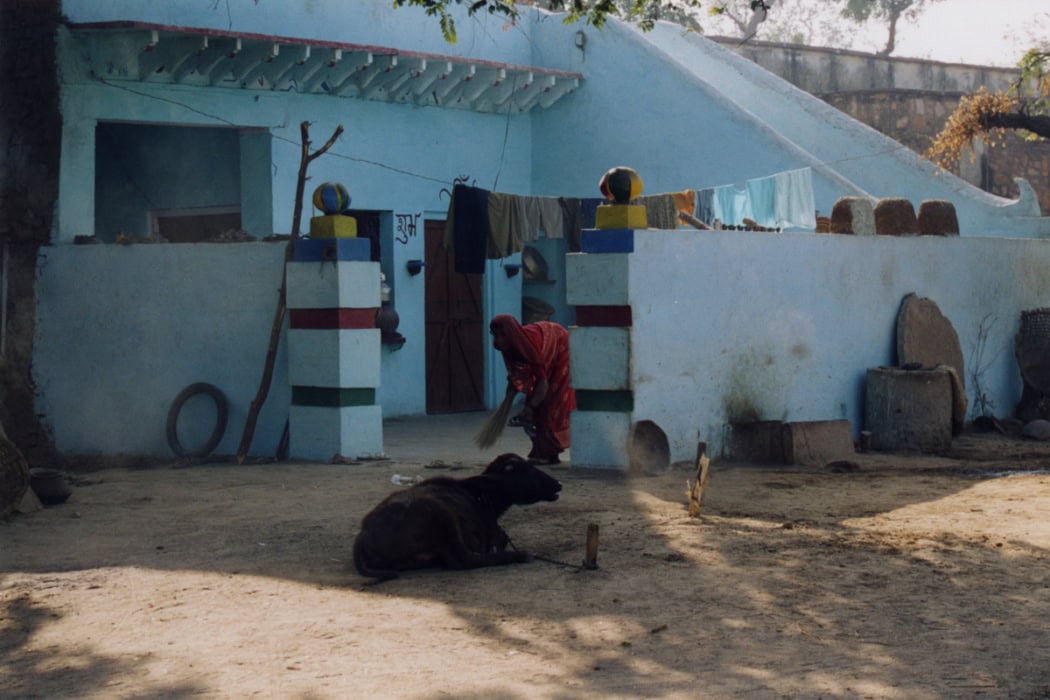 India, 2002
I came across this street scene in northern India. I wonder whether I would also have photographed someone sweeping in front of their terraced house in Germany.
If you met a stranger at home, would you post their photo on your Instagram account without a second thought?
4. Diversity in representation
Countering stereotypes also requires us to actively seek out pictures that show diversity and complexity. The people in front of your camera should not be reduced to a single characteristic – whether gender, ethnicity, age or socio-economic status. Instead, we can deliberately promote depictions that show several facets of an individual or a community. If you reflect consciously on your visual language, you can avoid clichés in a targeted way. Ask yourself: ‘Is this picture really unique, or could it just as well appear in a travel brochure?’ Develop the courage to capture moments that don’t exoticise but are authentic. One initiative dedicated to this goal is the ‘Everyday Africa’ project. Photographers from the African continent show everyday life in African countries – far from the crisis images and clichéd travel pictures that otherwise dominate Western media. Projects like this can help you broaden your view and develop alternative visual languages.
5. Keep learning and raising your awareness – in travel photography too
Finally, it is essential that we as photographers keep learning and raising our awareness – whether amateur photographers, photography students or professionals. The Cameo Kollektiv e.V. workshop ‘Sind alle im Bild?’ (Is everyone in the picture?) on diversity-sensitive photography is a good starting point for anyone who takes photographs or works with them and wants to handle them sensitively and achieve fairer representation. Looking at photographic work that engages critically with issues also helps you build up a broad visual memory of your own. Reading literature and texts such as Susan Sontag’s essay ‘Regarding the Pain of Others’, and talking to other photographers, can also help you recognise and overcome stereotypical thought patterns. If you like podcasts, ‘The Photo Ethics Podcast’ from the Photography Ethics Centre is an excellent recommendation for learning more about ethical photography.
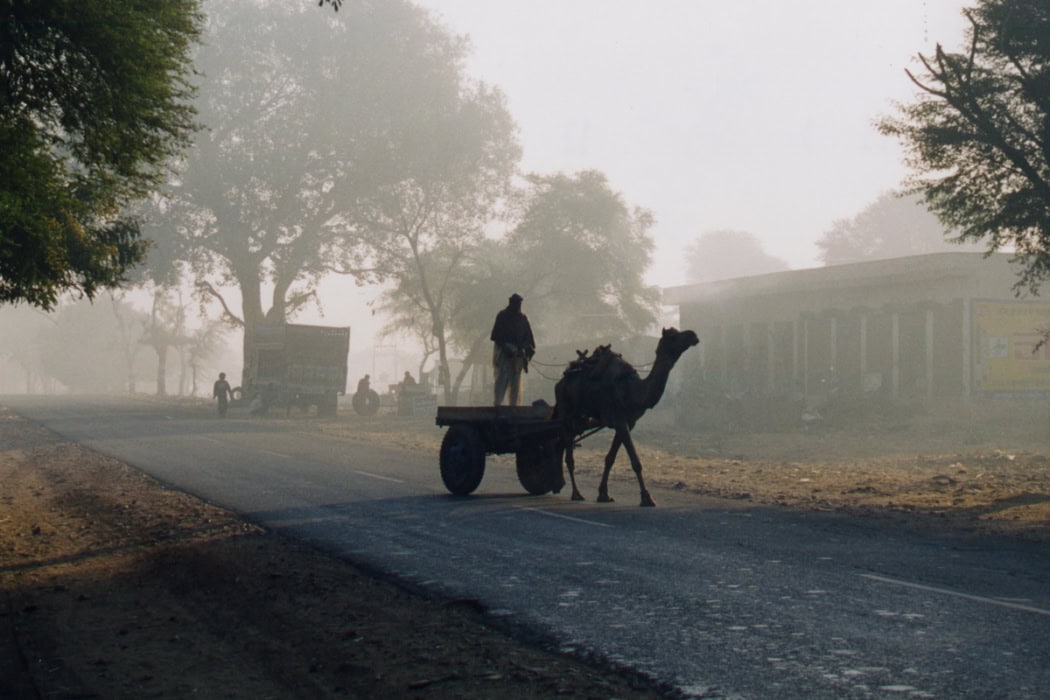 India, 2002
The dromedary cart in the morning mist is still one of my favourite pictures today – perhaps because you can’t recognise the person on it, so I don’t feel I crossed a line.
Conclusion
Avoiding stereotypes in travel photography requires a high degree of awareness, empathy and responsibility. On the road or in unfamiliar cultures in particular, we face the challenge of overcoming power gaps and clichés. But by building relationships with the people we photograph, looking for context and diversity, following ethical principles and reflecting self-critically, we can contribute to a more respectful visual language. It also helps to engage with other people’s criticism. Show your photographs to people who know about non-stereotypical visual language – you can find them in workshops or on social media, for example. Another good resource online is the Code of Ethics for Visual Journalists. The debate about stereotypical travel photography isn’t static; it is constantly evolving. We have to take an active stance to curb the reproduction of stereotypes. That is what National Geographic did in 2018 when it described its own past coverage as partly racist. Inform yourself and be self-critical. In the end, your travel photography should not only tell stories but also treat the people it depicts with dignity and respect.