Habibi Funk: on exploitation and musical heritage
What does cultural responsibility mean in the music business? A Berlin label is giving forgotten Arabic music a stage – and asking who that heritage belongs to.
By Bahriye Tatli

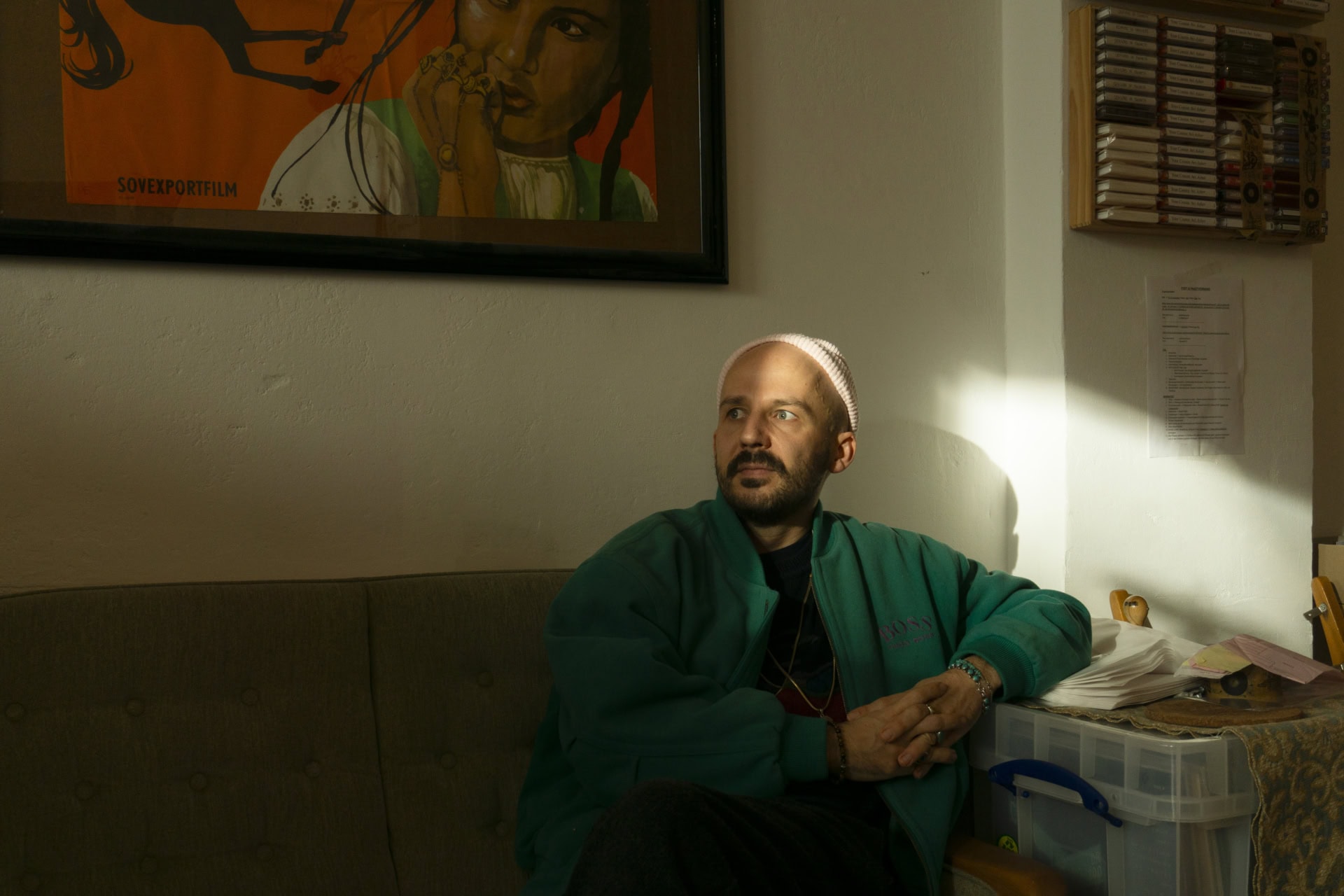
‘We license everything properly and split the income fifty-fifty.’ That’s how Jannis Stürtz describes the principle behind his label Habibi Funk. From Berlin, he collects and releases music from South-West Asia and North Africa that had almost been lost – soul, funk and jazz.
The songs released by Habibi Funk come from small scenes, forgotten archives and old cassettes. They are sounds that long stood in the shadow of Western pop culture. Habibi Funk wants to change that. The label brings to light musicians whose recordings have hardly been heard until now. It’s about visibility, fairness and handling cultural heritage in the right way.
Because in music especially, styles flow into one another. There’s a fine line between cultural appreciation and appropriation. So where does appreciation end – and where does appropriation begin? Photographer Bahriye Tatli visited Jannis Stürtz in Berlin and talked to him about responsibility, respect and the sound of a different history.
What does ‘cultural appropriation’ mean?
Cultural appropriation is the adoption of elements of one culture by another (usually dominant) culture, often under unequal power relations and with links to colonialism and exploitation. It can reproduce racism, strip things of their context, commercialise them and obscure their origins. ‘Cultural appreciation’, by contrast, describes engaging with other cultures in a respectful way.
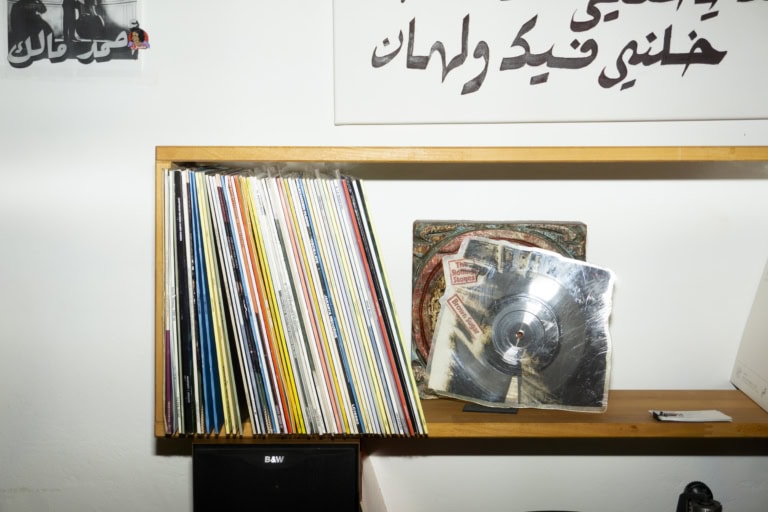
For us, looking after relationships isn’t an extra – it’s essential, and for that you need people on the ground.
What motivates you to reissue music from the SWANA region (South-West Asia and North Africa)?
It was actually pretty simple. Back then, on Jakarta Records, we’d made a record with a Ghanaian rapper who played in Morocco about eight or nine years ago. I was there as tour manager. After the gig I stayed on in Casablanca for two or three days. There I happened to come across a record by Fadoul and was completely blown away. At the time there was next to nothing about him online. If you’re just into music and you find a record like that with no information about it, you don’t think about releasing it. But because I was already part of a label and knew how distribution and production work, it seemed possible. That’s how it all started.
Who is the team behind Habibi Funk?
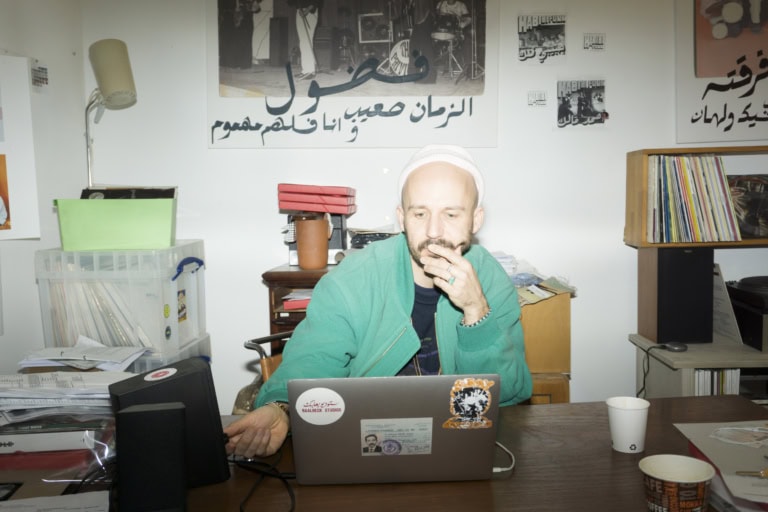
Besides the team in Berlin, for the past year and a half we’ve had a colleague in Libya. Having local contacts matters to us. Our projects don’t work through online communication alone – especially not with older musicians who don’t use WhatsApp or email. Meeting in person is central for us, because that’s where trust is built. For us, looking after relationships isn’t an extra – it’s essential, and for that you need people on the ground.
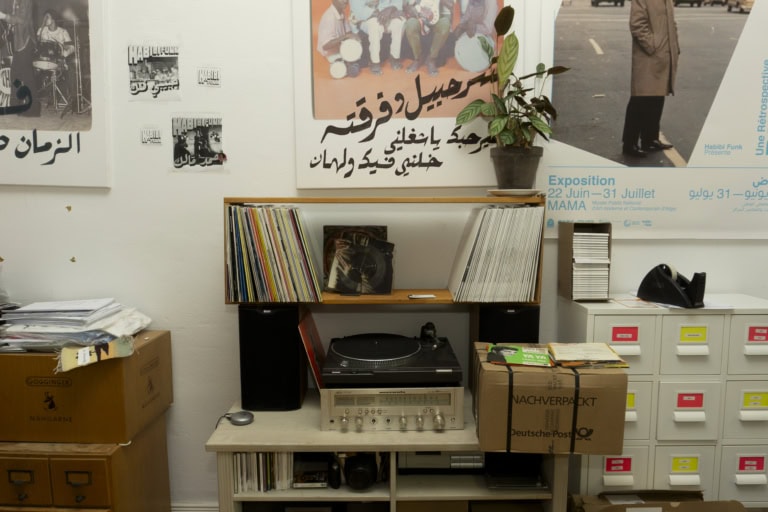

No pyramids, no belly dancers, no exoticising kitsch.
Do you have a responsibility to provide context, especially as a white person commercialising this music?
I do think there’s a responsibility there. When we post something political, it’s because the issue really matters to us – especially on subjects like Palestine. Of course, taking a stance like ours in Germany also means saying goodbye to certain funding pots. But that comes with the territory. For us it’s only logical to speak out on issues that affect the regions whose culture we release. I don’t think you can profit from that culture on the one hand and stay silent on certain political questions on the other. For me, that just doesn’t add up.
People are often surprised that Habibi Funk was founded by a white person. Is it important to point that out, or does it not matter?
There are two sides to it. Sure, information about me is easy to find online, but in the context of Habibi Funk it isn’t the key point. We’re a label, and it’s primarily about the music, not about me. Of course the Habibi Funk name brings visibility, and that helps the artists, because a record that once existed on just 60 cassettes suddenly sells 1,000 LPs. But what matters is that the label doesn’t become bigger than the music itself. That’s why I keep a fairly low profile on Instagram. It shouldn’t be about me. Personal stories can help spark interest, of course. But I see our role as amplifiers.
What criteria do you use to choose music for Habibi Funk?
Musically, we’re interested in artists who combine outside influences – often African American sounds such as soul, funk, jazz and disco – with their own cultural roots. But that’s not all: in Sudan you can also hear Ethiopian or Congolese motifs. Spreading that particular mix is at the heart of what Habibi Funk is about. We’re interested in music that came out of a genuine engagement with other cultures. Of course you can always talk about power relations, and appropriation does exist. But the music we find exciting is based on appreciation – on the attempt to turn influences into something of your own.
How do you try to counter Orientalist structures?
When we started the label, it was clear that we wanted to do things differently. At the time, lots of reissues were simply put out without much concern for rights or fair deals. That was never an option for us. We license everything properly and split the income fifty-fifty – a classic indie deal. The master rights always stay with the artists or the original labels; we’re just the licensees. The same goes for the visual side: it was important to us not to reproduce the same mechanisms of exploitation that existed historically, precisely because we’re a European label working with music from regions with a colonial past. That’s why we deliberately avoid Orientalist clichés: no pyramids, no belly dancers, no exoticising kitsch.