Nordhorn Range: ‘There’s nothing we can do about it, in court or otherwise’
For years, residents in south-western Lower Saxony have been protesting against low-flying jets and bombing practice – and keep coming up against limits.
By Sophie Boyer (text, photos), Conrad Fröhlich, Louisa Hertz (text)


Since 2001, the Nordhorn air-to-ground range has been the Bundeswehr’s last and only bombing range in Germany. NATO combat aircraft carry out training manoeuvres here day and night. The ‘Nordhorn Range’, as the site is also known, is a peripheral area in the far south-west of Lower Saxony covering around 2,300 hectares – more than 3,200 football pitches. In 2000, under the command of the British Royal Air Force, more than 8,000 target runs took place. At that time in particular, local people strongly criticised the use of the range because of aircraft noise.
In the years that followed, things became somewhat quieter. By 2018 there were only 784, but the number of target runs has been rising again since then; in 2022, NATO units carried out 2,686. Since the neighbouring ‘Engdener Wüste’ nature reserve was extended in 2002, half of the range has been protected. With its large area, it borders four municipalities in the region.
The Notgemeinschaft Nordhorn action group has now been campaigning against the range for more than 50 years. Its criticisms: environmental damage, noise and safety concerns. ‘Back then, together with the people living here in and around Nordhorn, we occupied the site. We were simply fed up with having to put up with the noise of the fighter jets,’ says Günter Roelofs, acting managing spokesperson of the Notgemeinschaft Nordhorn-Range.
 21.12.2022
Coordinating the training flights of the combat aircraft in one of the three control towers.
The action group represents the concerns of the residents affected, makes demands of the military and calls for protests. Although the range is still in active use, this has borne fruit: ‘The no-fly period in the summer holidays was increased from four to six weeks. There were also recuperation trips to the Baltic coast for schoolchildren.’ The acting managing director also mentions funding for quadruple glazing.
In this way, the action group tries to make the situation more bearable for residents. Especially with Russia’s war of aggression against Ukraine in mind, it seems unrealistic that the Bundeswehr will give up the range in Nordhorn. That would, after all, require a majority of members of the Bundestag: ‘That’s not going to happen,’ Roelofs believes. The Bundeswehr simply holds the upper hand. ‘They just say “no”, and there’s nothing we can do about it, in court or otherwise.’
 21.12.2022
The area of the air-to-ground range could hold 3,200 football pitches.
Yet even this avowed opponent of the range can understand how politicians and the Bundeswehr are acting in the context of Russia’s war: ‘With a war going on in Ukraine right now, it is of course an awkward position for us to say the range has to go now. I can understand the arguments that NATO and the Bundeswehr need to train at the moment.’
That does not, however, deter Günter Roelofs from his overall goal: ‘Our mission and our will is for the range to be given up without replacement. Others shouldn’t have to feel the burden we have had to bear either.’
‘I experienced the noise terror for twelve years. I once told the Bundeswehr that my hearing had been damaged by the noise, and I gave reasons for that. There are also people who have been psychologically affected by it,’ says the managing director. ‘I also do this for the local population. What happens, for example, if young people somehow get onto the site and find leftover munitions? There was even one case that ended fatally for a teenager. Even today you can still get onto the site illegally if you want to.’ Roelofs makes it clear that the military has tightened safety measures, but says a residual risk cannot be ruled out: ‘A few years ago an aircraft took off with practice rockets under its wings. Two rockets were lost, and to this day no one knows where they are.’
The action group’s critical stance on one side, the Bundeswehr’s needs on the other – you might expect entrenched positions. ‘The last two range commanders we had were friendly to us. They were open-minded and you could talk to them. But of course they have their guidelines and can’t make any concessions to us,’ Roelofs explains.
What the Bundeswehr says:
Ralf Wieland, lieutenant colonel and commander of the air-to-ground range, responds in writing to criticism of the Nordhorn Range.
 20.01.2023
On the grounds of the air-to-ground range. A dummy convoy of vehicles serves as a target.
What do you think about residents’ complaints about aircraft noise?
That it is good to live in a country where every citizen is allowed to complain about excessive burdens such as noise. But noise is a subjective perception. 100 dB(A) from a pneumatic drill is disturbing; 100 dB(A) of my favourite music is great! I therefore see it as my job to explain the role and function of the Nordhorn Range, with all its advantages and disadvantages, to residents and make it clear to them. I cannot prevent sound pressure, but with understanding or a positive attitude towards the Bundeswehr it is easier to live with. At least for the Nordhorn Range, I can say that the number of complaints is falling.
How does the Bundeswehr accommodate residents?
We keep residents informed. Since 2002, a dedicated aircraft noise commission has met every year for this purpose. Representatives of the municipalities and the action group can submit specific questions in advance, and during the meeting they are informed about flight operations over the past years. This includes operating and firing times as well as periods without firing.
Does the Bundeswehr pay for physical harm some residents suffer because of the noise?
Residents are compensated in accordance with the Aircraft Noise Act and the noise protection zones defined for the area around the Nordhorn Range.
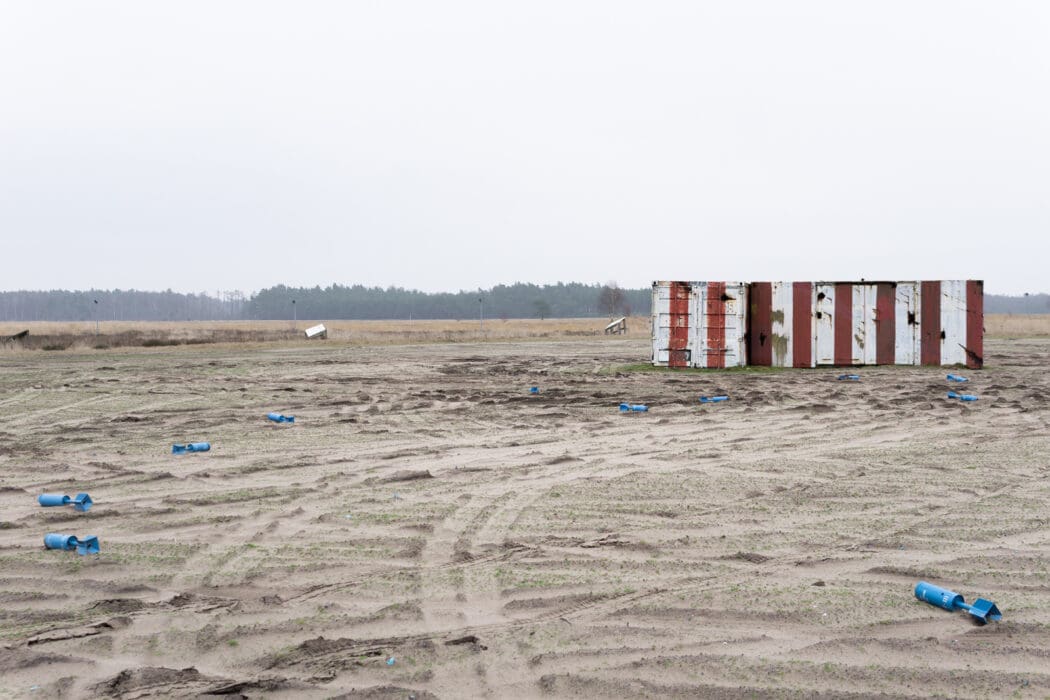 20.01.2023
Target ‘Target 2 – INDIA’ for air-dropped munitions by day and night and for laser target designation by JTAC.
Why does the Bundeswehr need the range in Nordhorn?
For the Bundeswehr to fulfil its mission of protecting the population, it must be able to train in the use and handling of all weapons systems on land, at sea and in the air. What is not practised beforehand will not work when it really matters. The Nordhorn Range is the Bundeswehr’s only and last air-to-ground range. That rules out any alternatives!
Russia is currently waging war against Ukraine, including from the air. Will this increase the number of Bundeswehr training flights?
That cannot be answered seriously at present; it depends heavily on how the fighting develops and on the primacy of politics.
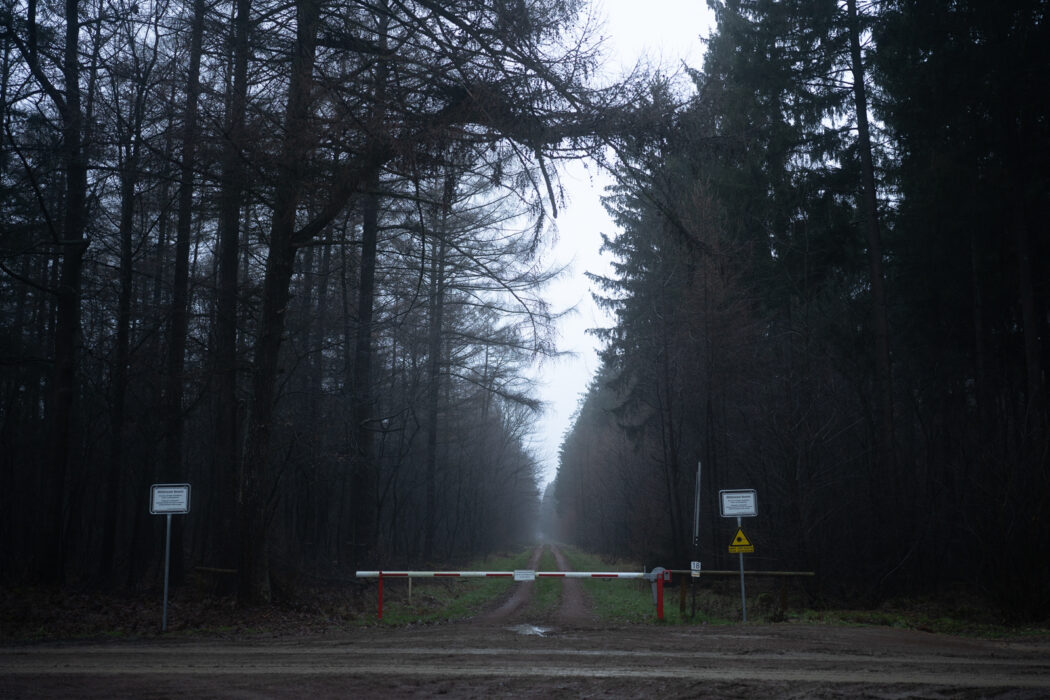 22.12.2022
The edge of the air-to-ground range, clearly secured with ‘Military area’ warning signs.