Unexploded bombs beneath the city: the dangerous job of bomb disposal experts
Millimetre-perfect work with lethal stakes: a look at a job where every move has to be right.
By Henryc Fels (photos), Sophie Boyer and Etienne Dötsch (text)


In the space of 50 minutes on 24 July 1943, the Allies drop tens of thousands of incendiary and high-explosive bombs on Hamburg. Thousands of them bury themselves in the ground without exploding. Today, aerial photo analysts sometimes need hours to pinpoint where a single dud from that July night struck.
At the Aschberg in Hamburg, the air smells of freshly dug earth, damp mortar and machine oil. Where for decades families swam in the pool in summer, wellies now sink ankle-deep in mud. Only the whirr of the excavator’s hydraulics breaks the morning silence. For hours, two men have been staring intently at the material trickling from the digger bucket. Any find could be dangerous – and call for immediate bomb disposal. At any moment a decaying stick incendiary could turn up, hidden among the soil and rubble – a British incendiary bomb that burns at 2,400 degrees Celsius when ignited and is hard to tell apart from scrap metal. The Allies dropped them on Hamburg in their tens of thousands.
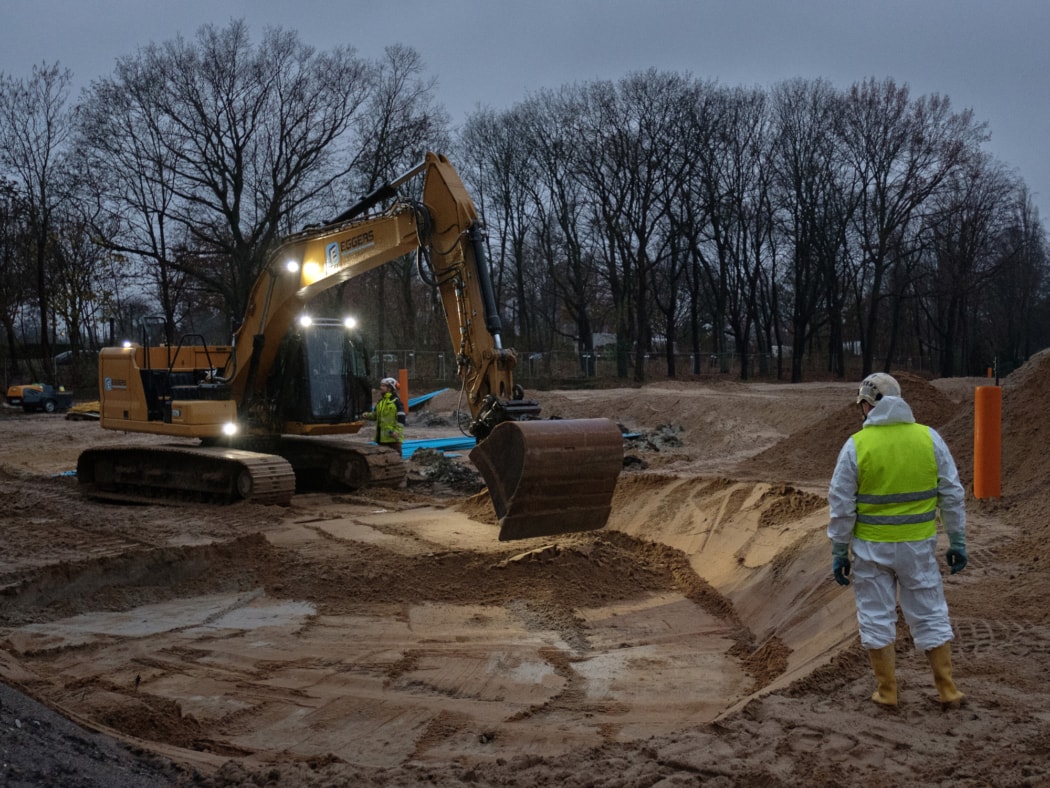 Hamburg, 13 December 2023
Volume clearance at the clearance site of the former Aschberg outdoor pool in Hamburg-Hamm: in this surface inspection method, an excavator carefully removes layers of soil several centimetres thick and tips them out on an open area under the supervision of the explosives expert and a clearance assistant. Remnants of ammunition can then be spotted visually.
The danger posed by these remnants of war is still ever-present. Eighty years after the end of the Second World War, unexploded bombs remain a serious threat. Every year, one or two pieces of ordnance detonate spontaneously in Germany. An estimated 100,000 tonnes of undiscovered bombs and ammunition still lie underground. The danger is particularly great in Germany’s large cities, where the ground is heavily contaminated with ordnance.
Before converting or building, property owners therefore have to ask the authorities whether the site needs to be surveyed. But rivers and beaches are often affected too. The sea washes ordnance ashore. These shells and bombs are often so corroded that they wash up in pieces, frequently releasing phosphorus, which is easily mistaken for amber and causes severe skin burns.
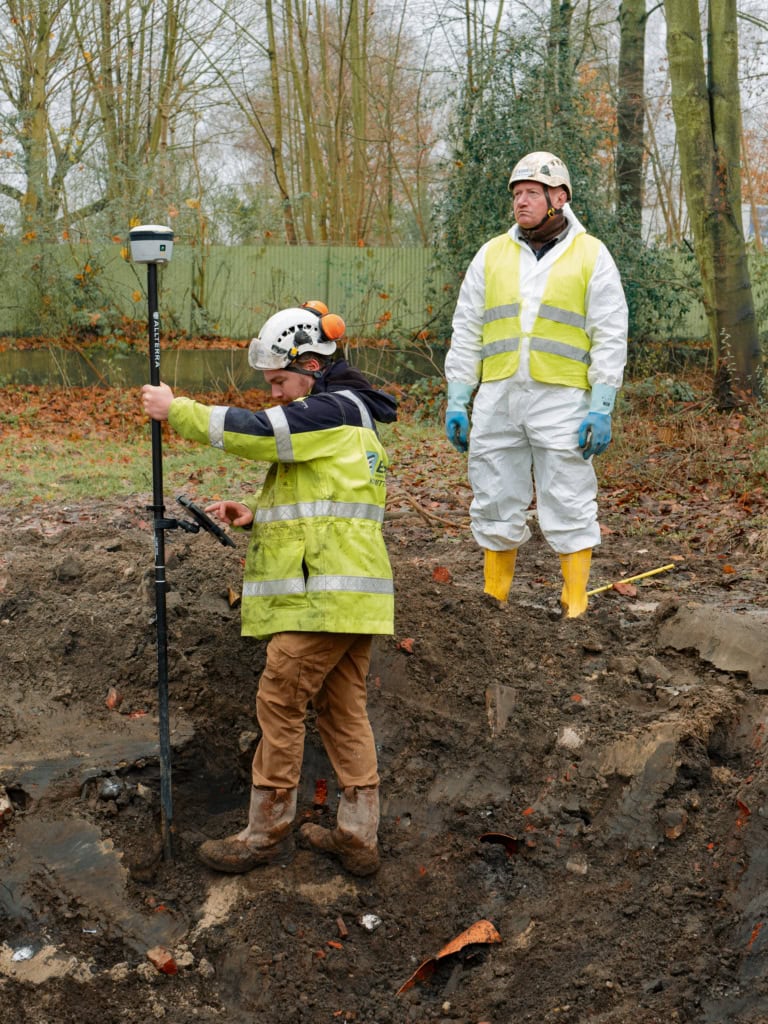 Hamburg, 13 December 2023.
Explosives expert Steffen Kausch (left) and a clearance assistant (right) at the former Aschberg outdoor pool in Hamburg-Hamm. In German, ammunition specialists are known as ‘Feuerwerker’; their job is to locate and remove ordnance.
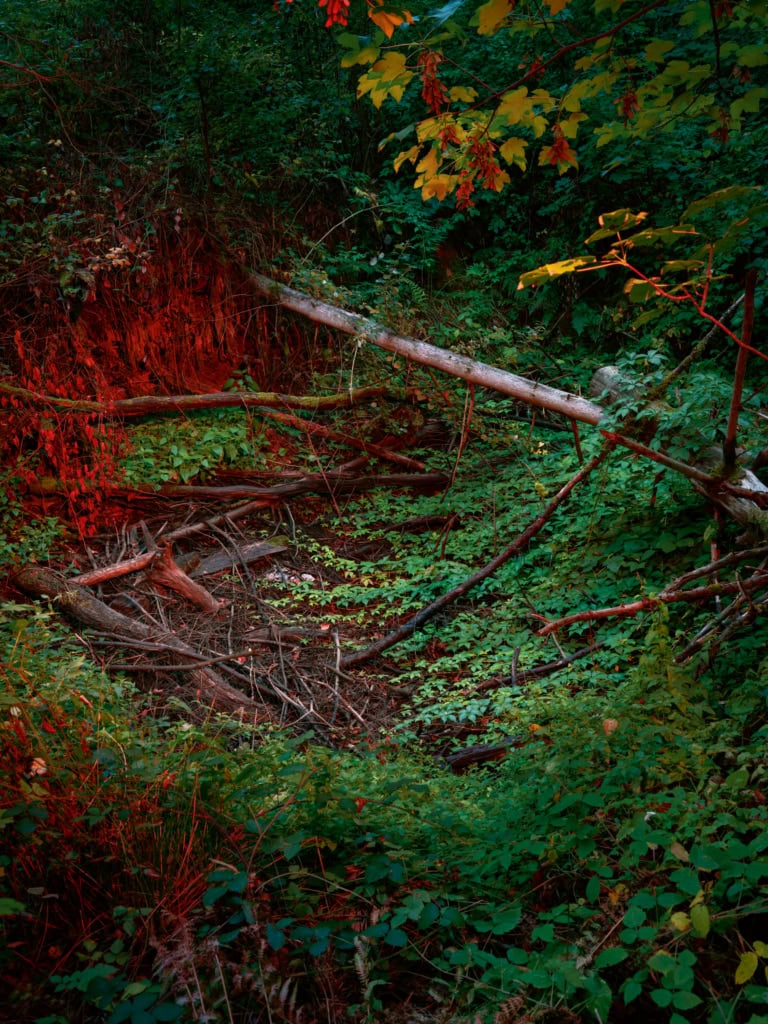 Forest between Nidda-Harb and Kohde, 15 September 2026.
Explosion crater in a patch of woodland in the Wetteraukreis district of Hesse. Unexploded Second World War bombs detonated spontaneously here in 2009 and 2019. From 1936 to 1945, the Nidda-Harb military airfield, which the Allies bombed repeatedly, lay nearby.
 Hamburg, 23 July 2024.
Stefanie Niediek, geoscientist and aerial photo analyst at the Hamburg fire brigade’s Hazard Investigation and Suspected Ordnance Unit.
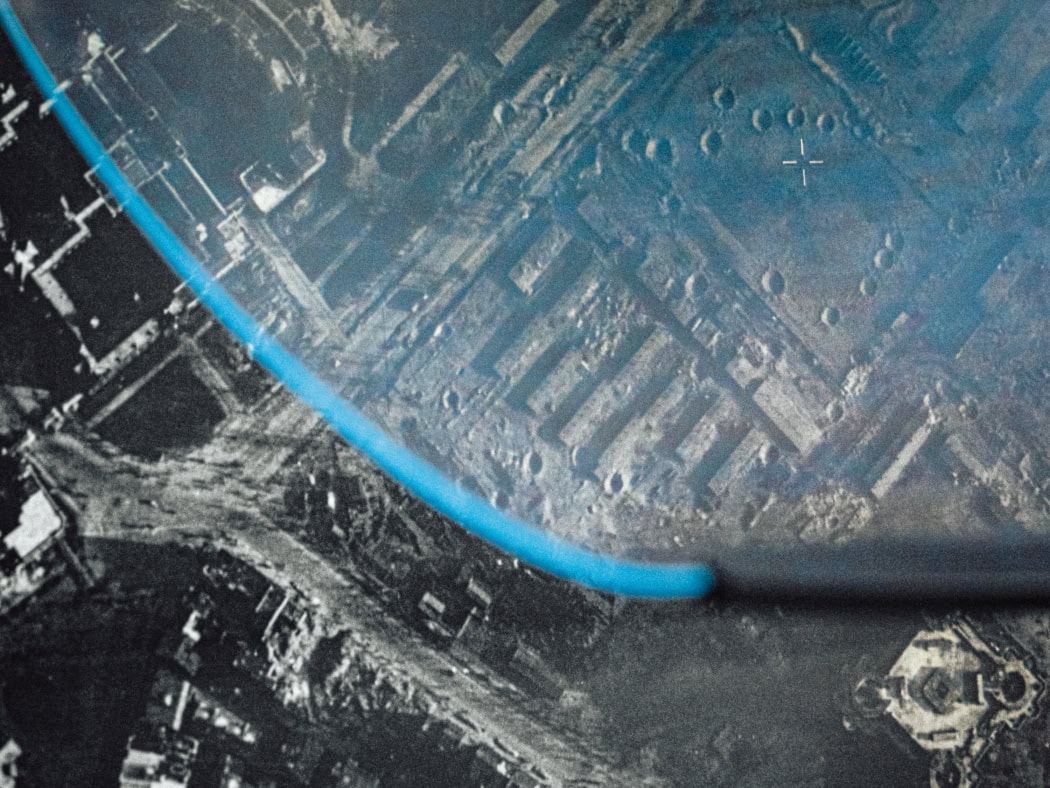 Hamburg, 23 July 2024.
Historical aerial photograph of the Heiligengeistfeld after bombing raids in the Second World War. For analysis, stereoscopic pairs of vertical images are displayed on a special monitor, which allows a three-dimensional view. Impact craters left by unexploded bombs are hard to identify: they are much smaller than explosion craters and easily mistaken for other features of the terrain.
 Kiel, 17 January 2024.
Markings for the borehole grid on the grounds of the University Hospital Schleswig-Holstein.
 Hamburg, 13 December 2023.
Sandy soil is filled back in after volume clearance at the site of the former Aschberg outdoor pool in Hamburg-Hamm.
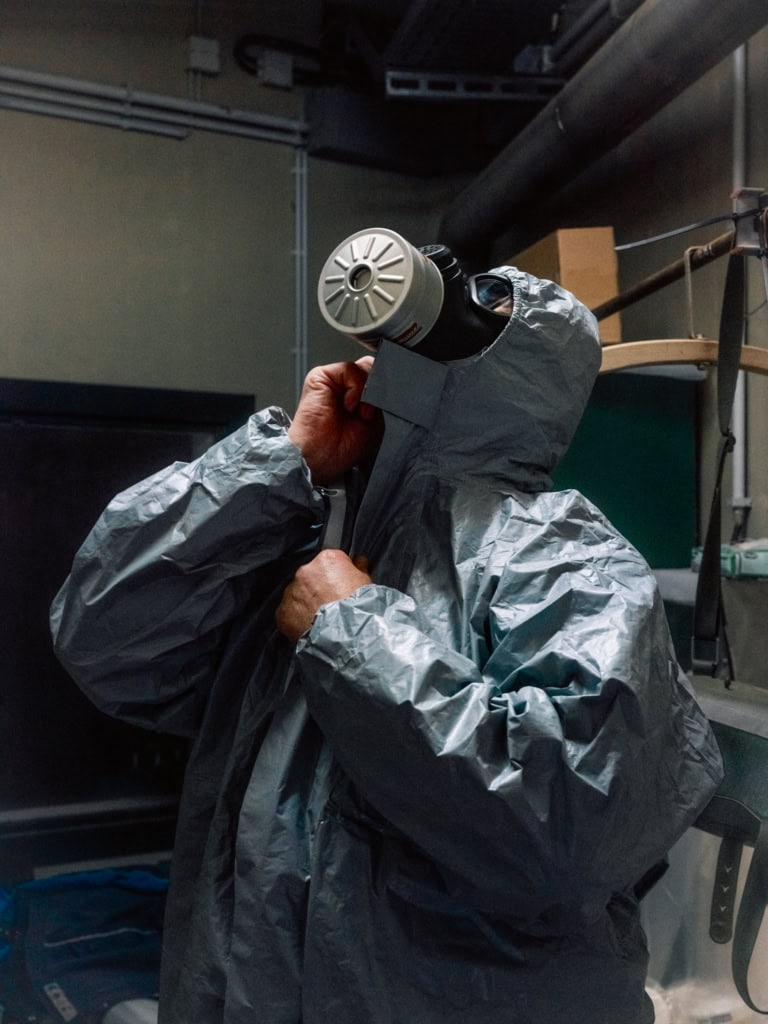 Munster, 29 January 2025.
An employee of GEKA, the state-owned company that disposes of chemical warfare agents and legacy munitions, puts on a chemical protection suit before storing delivered chemical munitions.
How dangerous is bomb disposal really?
Specialised survey methods help to find and recover the remains of bombs. In Hamburg, the fire brigade’s Hazard Investigation and Suspected Ordnance Unit uses old maps and aerial photographs to find bomb craters and locate danger spots. Where ordnance is suspected close to the surface, an excavator removes the soil layer by layer, and experts carefully examine the contents of the bucket so that the bombs can be made safe.
One excavator operator recalls an incident in which ammunition ignited in the digger bucket and flew just past the cab. Incidents like this show how dangerous bomb disposal work can be. That is why the excavators have a reinforced floor plate and a bulletproof windscreen.
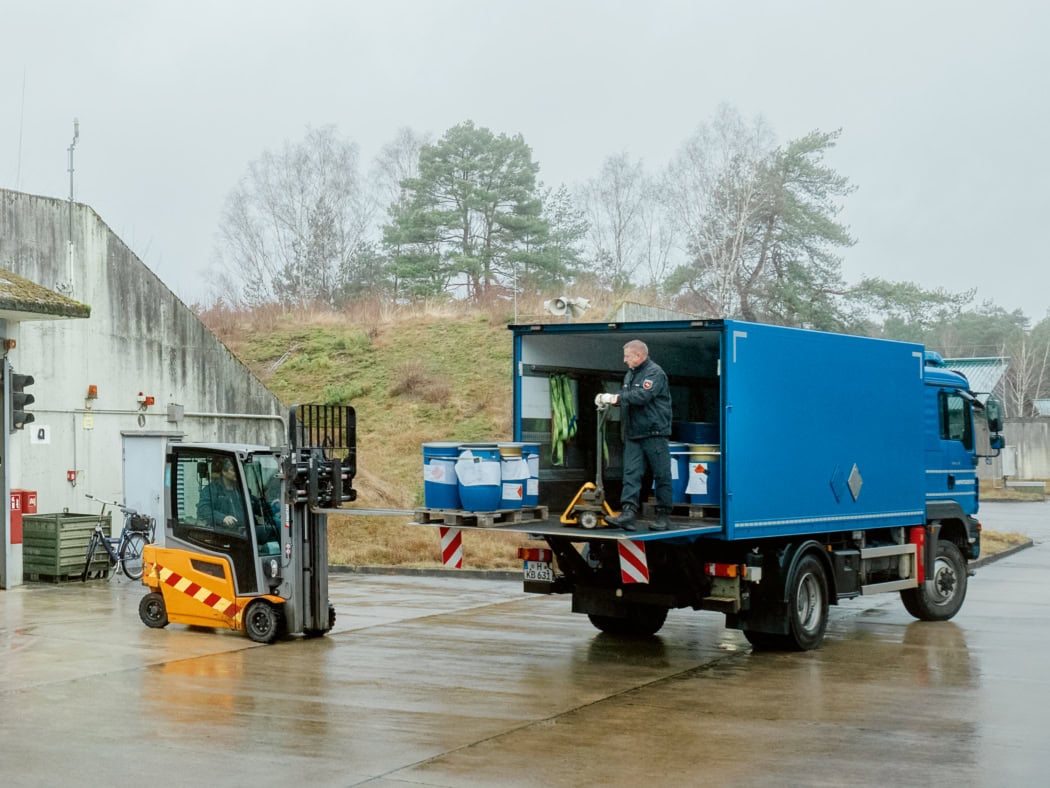 Munster, 29 January 2025.
Delivery of recovered munitions to GEKA by Lower Saxony’s ordnance disposal service. Among other things, the barrels contain British 30 lb flame bombs from the Second World War.
 Kiel, 17 January 2024.
Clearance assistant on the grounds of the University Hospital Schleswig-Holstein.
 Munster, 29 January 2025.
Warning signs and a statue of Saint Barbara of Nicomedia, patron saint of artillerymen and explosives experts, at the entrance to the dismantling station on the GEKA site.
Some ordnance is not removed because it lies too deep. Bombs more than ten metres down are often left where they are if an open space, such as a sports pitch, is created above them. Nor is ordnance cleared if an existing house would have to be demolished.
Old ordnance can be lethal. The condition of the fuse is especially critical, as the explosive on its own is usually harmless. Bomb disposal therefore requires the utmost care and expertise. The risks of ordnance clearance became tragically clear in Göttingen in 2010, when three explosives experts died while defusing an aerial bomb with a delayed-action fuse. Ammunition remnants are normally burned or detonated in a controlled way. That is the job of the ordnance disposal service, not of the Feuerwerker.
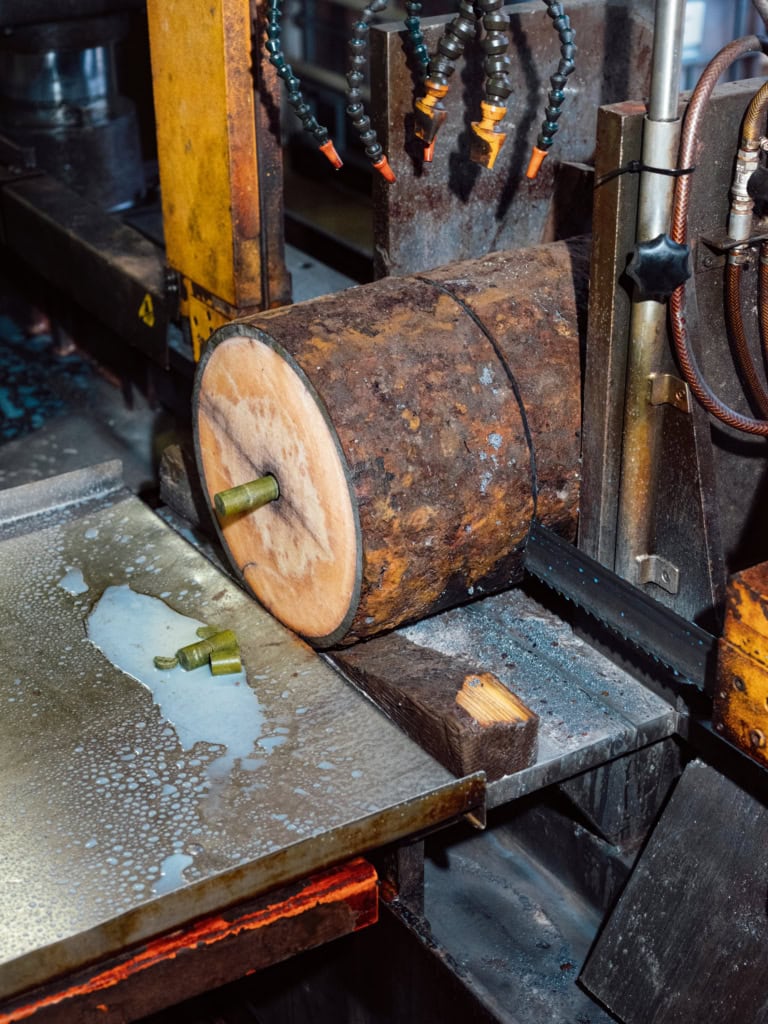 Munster, 29 January 2025.
Dismantling a US 500 lb aerial bomb from the Second World War on the GEKA site. The bomb casing is sawn into 20 cm sections, exposing the corroded steel shell, the main charge (yellowish, e.g. TNT) and the booster charge (greenish). The explosive is then removed by hand.
 Dresden, 11 June 2024.
Erik Bräuer, lecturer in ordnance clearance at the Dresden blasting school.
 Berlin, 13 January 2025.
Police chief inspector and explosives expert E. Flamme in front of the study collection of the Berlin State Criminal Police Office’s ordnance disposal service.
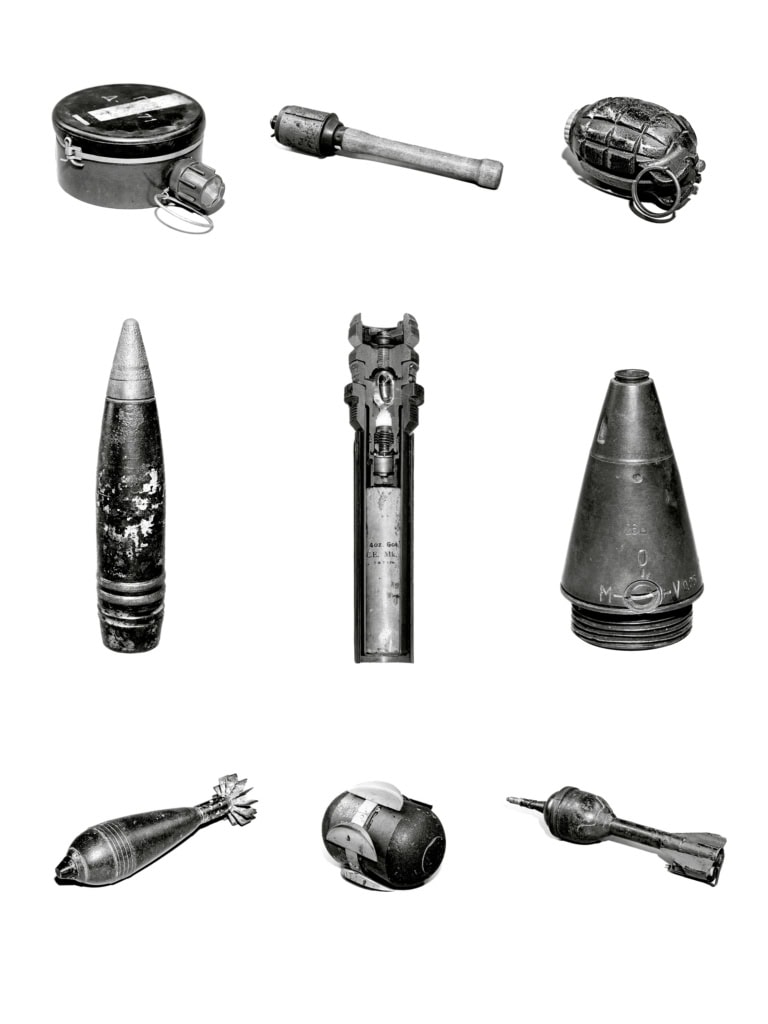 Dresden, 11 June 2024.
Munitions and fuses found in Germany, laid out in a grid. The traces of time are visible on the various munitions. In the centre is a cross-section of a chemical delayed-action fuse – a frequent cause of unexploded bombs detonating on their own.
 Munster, 29 January 2025.
Incineration plant with detonation furnace for destroying chemical and conventional munitions on the GEKA site. Since a goods train loaded with warfare agents exploded here in 1919, parts of the ground have remained contaminated with munitions remnants.
Award
With ‘Blindgänger’ (‘Unexploded Ordnance’), Henryc Fels reached the final of the VGH Photo Prize 2026.
He describes his project as follows: an estimated 100,000 tonnes of unexploded ordnance still lie beneath the ground across Germany. Between heavy machinery and delicate handwork, the specialists who clear and destroy it are in constant danger of their lives.
Taking Germany’s legacy of wartime munitions as its example, the project shows the challenges it poses across generations. It offers a glimpse of the future for societies affected by today’s wars, which will be clearing deadly remnants from their land for decades to come.
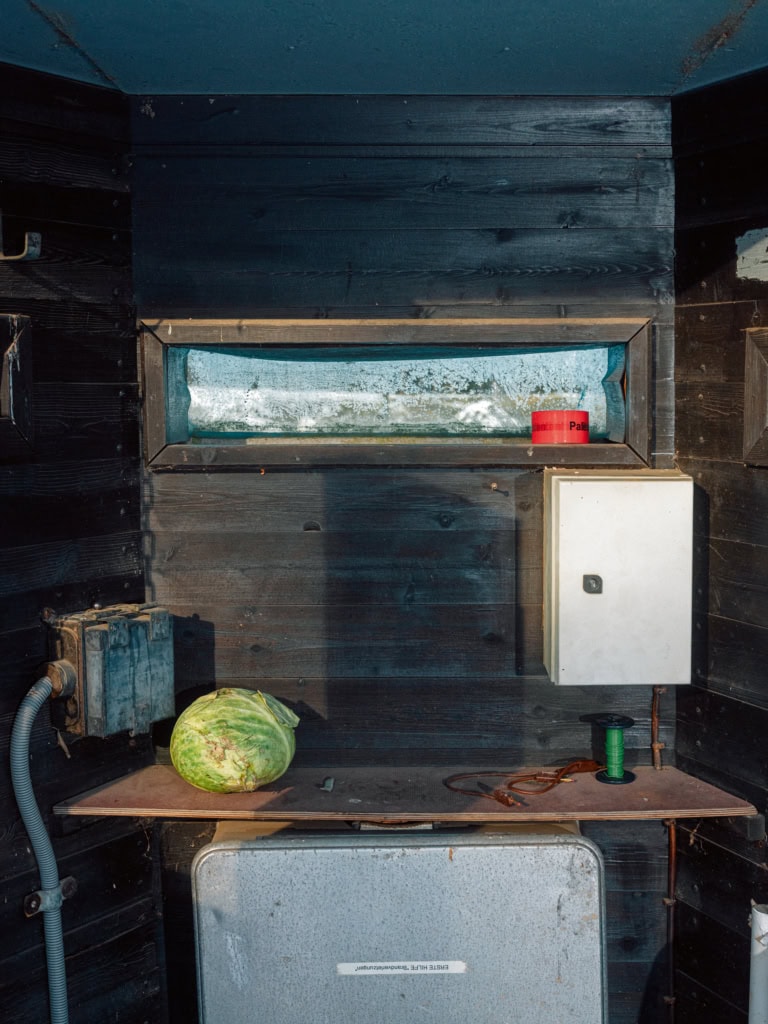 Germany, 13 January 2025.
Observation post on a blasting site in Germany. White cabbage is used during detonations to demonstrate the effect of explosives.
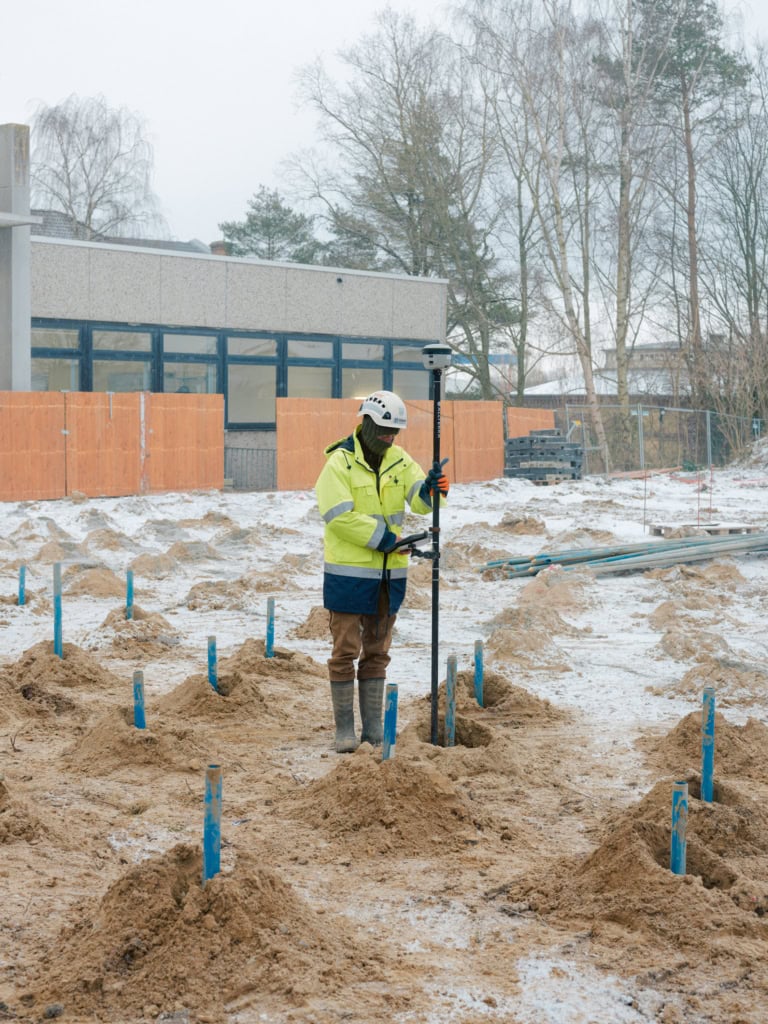 Kiel, 17 January 2024.
Borehole grid on the grounds of the University Hospital Schleswig-Holstein. 40 mm PVC pipes are inserted into the boreholes, which are almost six metres deep, so that a precise deep survey can then be carried out with a three-axis magnetometer.
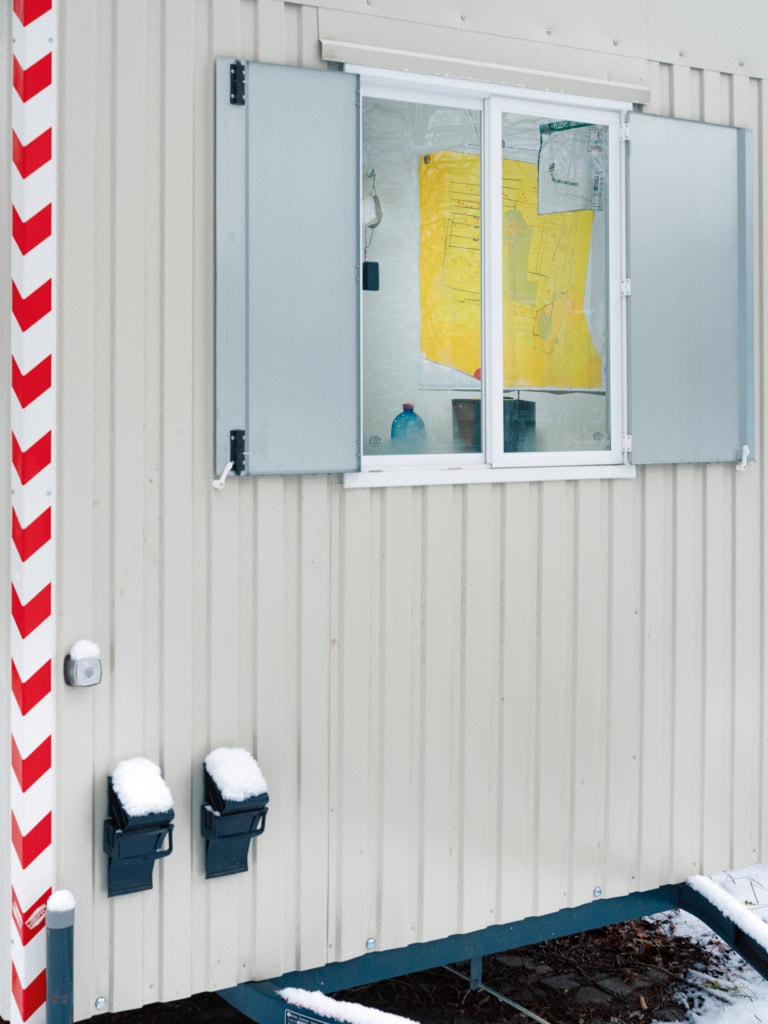 Hamburg, 16 January 2024.
Heated site trailer with a site map at the clearance site of the former Aschberg outdoor pool in Hamburg-Hamm. The suspected bomb location is marked in red on the map.
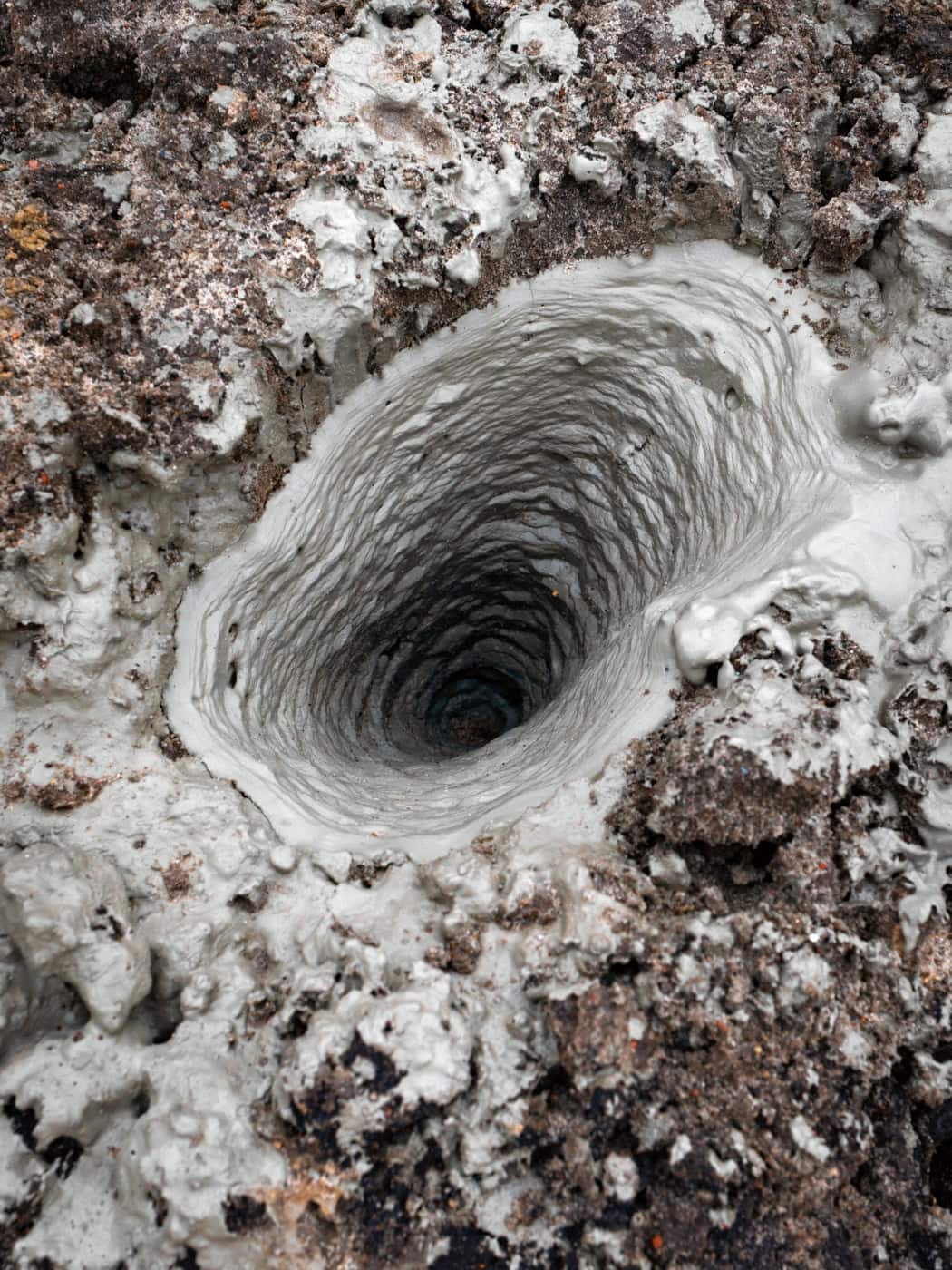 Hamburg, 13 December 2023.
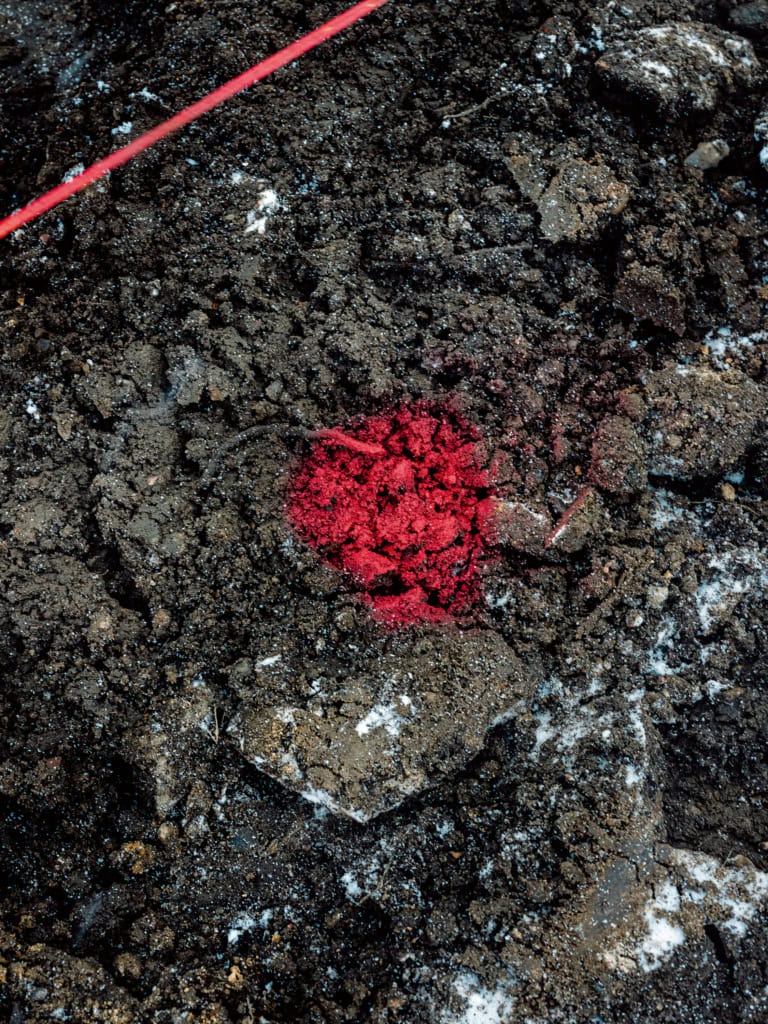
Borehole filled with sealing grout at the clearance site of the former Aschberg outdoor pool in Hamburg-Hamm. This prevents surface water from seeping through the deep borehole into the groundwater.
Created in the Visual Journalism and Documentary Photography programme at Hochschule Hannover. About the programme · Portfolio review
Newsletter
Every two weeks, one outstanding piece from our magazine – and the people behind it. In German and English, free to your inbox.