Queer footballers: ‘It can break a player very quickly’
Why no active Bundesliga professional has come out – even though clubs, associations and fans have long been flying the rainbow colours. By Amelie Arras

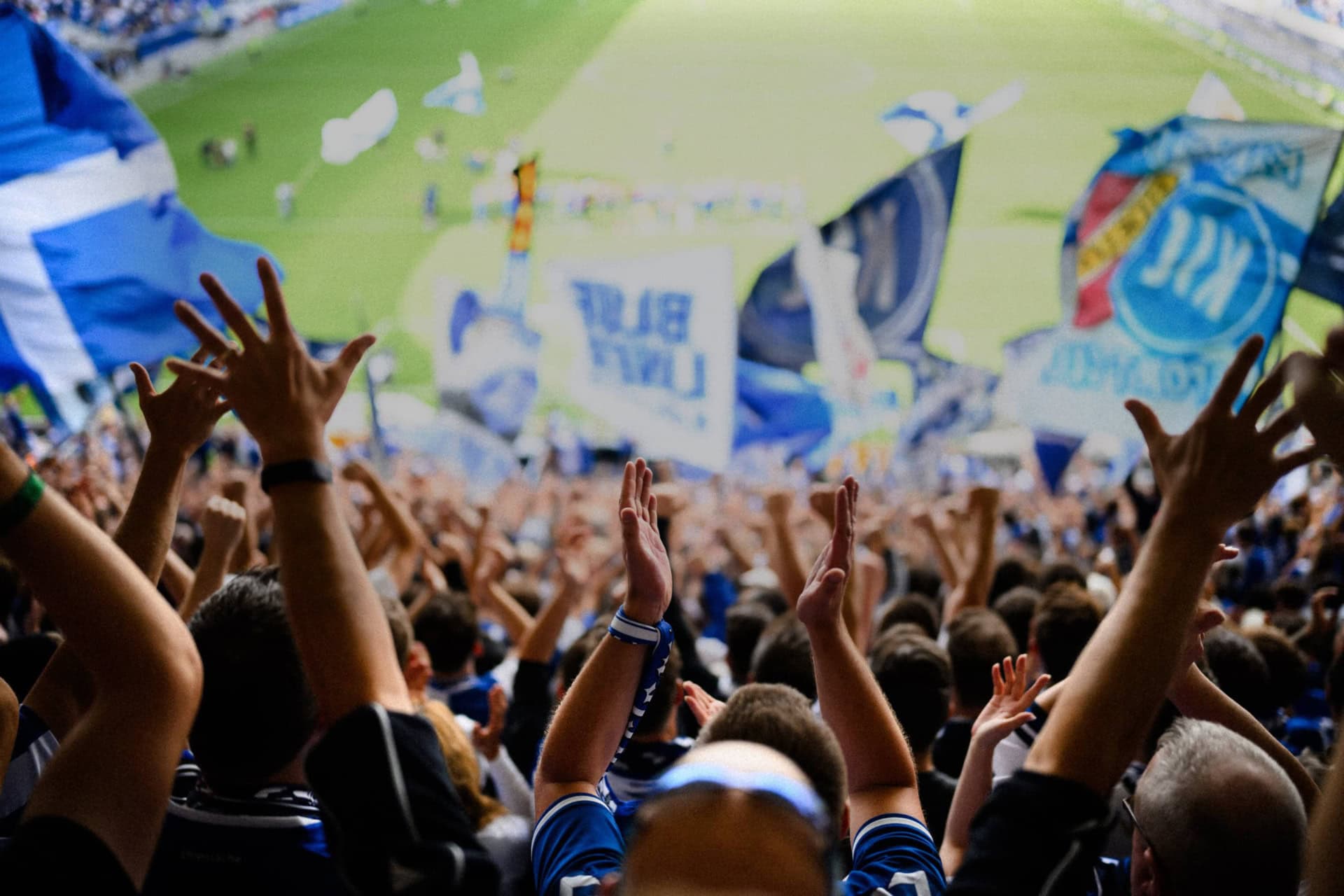
It’s Friday evening, and Hannover 96 are playing Karlsruher SC. The floodlights of the Heinz-von-Heiden-Arena are blazing and the stands are sold out. Hannover 96 in their red and black home kit, KSC in white and blue. Before kick-off, twenty-two players of different backgrounds and skin colours shake hands. Football brings people together – or so you would think.
Yet homosexuality is still taboo in German men’s professional football. Despite loud calls for equality on social media, not a single active player was publicly known to be part of the LGBTQ+ community in 2025. Thomas Hitzlsperger and Marcus Urban are the only German players to have come out – and only after their playing careers had ended. So the question is: why are there no queer footballers? The answer: there are – they just don’t go public about their sexuality.
Professional sport wants hard men
For Thorsten Blank of the queer fan organisation ‘Volkspark Junxx’, one of the core problems is the traditional image of masculinity that still dominates football. ‘For many professional footballers, projecting masculinity is incredibly important, so that they aren’t seen as soft – and therefore as supposedly weaker.’ In professional sport, the prevailing image is one of strength, of rough, tough men.
Gay men are often said to behave in a more feminine way than straight men, he says. This supposedly more feminine manner could then be associated with weakness – and therefore with poorer performance on the pitch. But this image of masculinity is not only found in football or in sport generally. ‘Professional football is only ever one part of society as a whole,’ says Blank. In women’s football, on the other hand, it is not unusual for a player to come out as a lesbian and be open about her sexuality. This, too, shows that the traditional image of masculinity makes things harder for queer men in football.
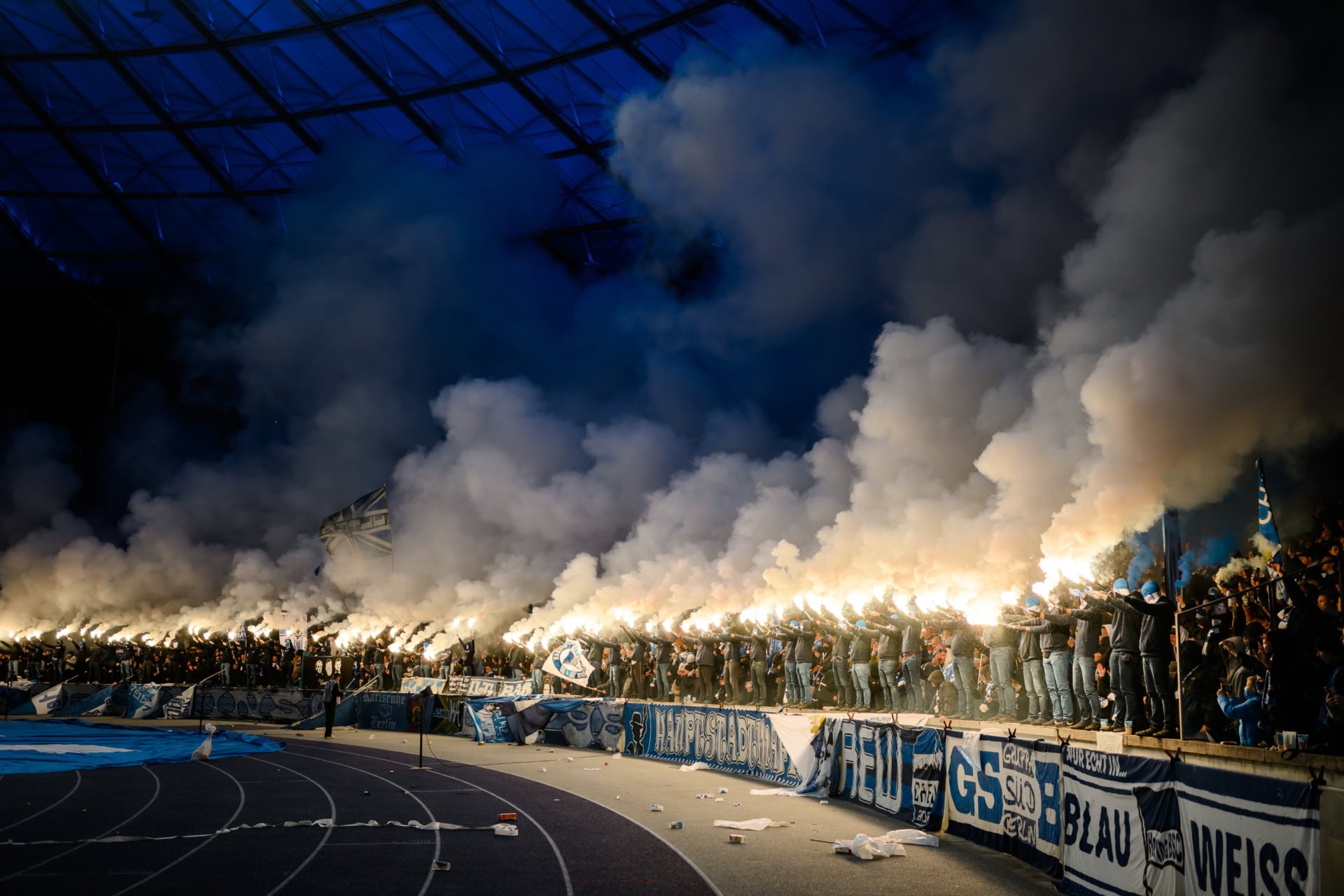
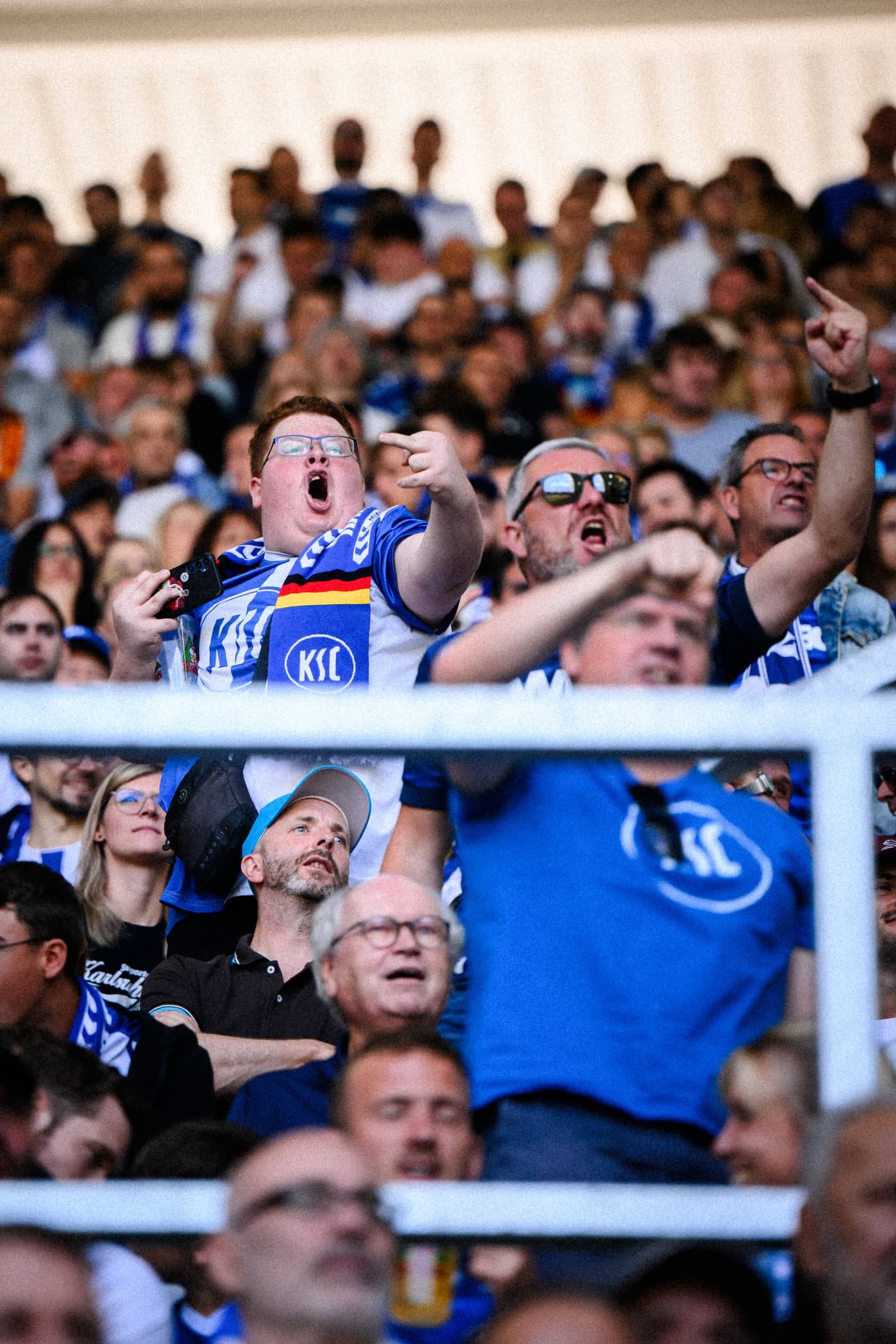 Karlsruher SC vs Eintracht Braunschweig. Photo: Marvin Ibo Güngör
Fear of the terraces
Besides traditional gender roles, the players concerned may also fear how fans would react to them coming out. In the Bundesliga and 2. Bundesliga in particular, clubs have huge fan bases that support their team with a passion. But these fans also exert a certain influence over clubs and players.
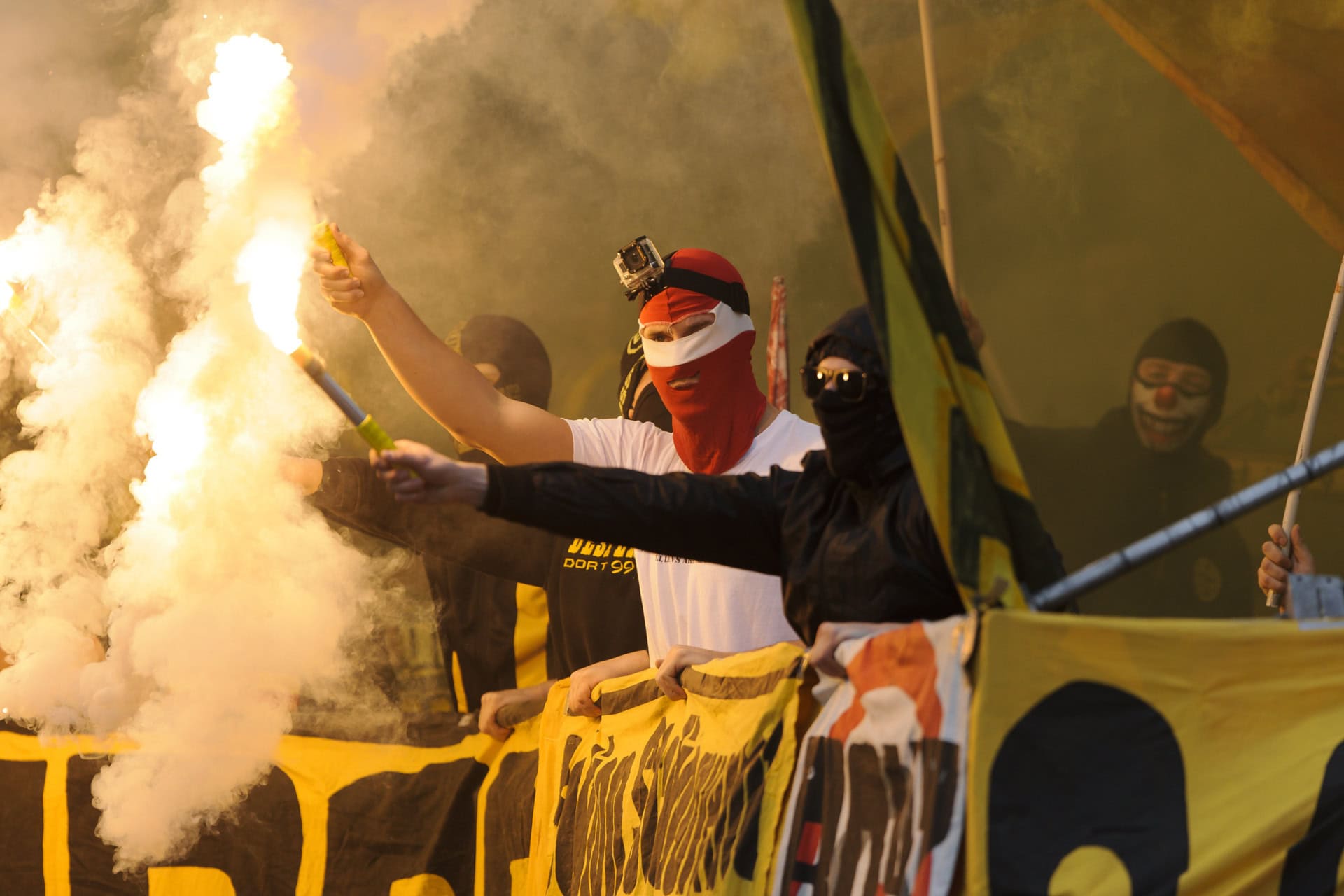
Queerphobic messages keep surfacing: at Eintracht Frankfurt’s match against FC St. Pauli in January 2025, for example, a banner in the Frankfurt end read ‘CBD statt CSD’ (‘CBD instead of CSD’ – a jibe at Pride, known in Germany as Christopher Street Day). The incident was strongly criticised by clubs, associations and the public, but it shows that homophobic statements are still being made in stadiums.
According to Thorsten Blank, queer players are afraid of how fans would react: ‘Especially from the away fans, you’d expect abusive chants and other hostility – we already see some of that.’ Nor would players be safe from their own supporters. ‘The moment a player hits a bad patch and plays terribly, his own fans would quickly be tempted to target his sexuality with their insults too. Abusing someone because he’s playing badly is normal in a stadium.’
Active players are often young people, roughly between 20 and 30. At this early stage of life and personal development, Thorsten sees coming out publicly in front of an audience of millions as a huge challenge. ‘Putting so much pressure on a player in his early twenties that he can openly say, “I want to live the way I feel,” while a whole end turns against him – that can break a player very quickly,’ says Thorsten Blank.
The media as a source of pressure
A Bundesliga player who came out as gay or queer would above all attract enormous media attention. ‘The fact is that as soon as a player comes out, the media put him on a pedestal. Which is actually strange, because we live in times when it’s completely normal to see people of different sexual orientations in public life too,’ notes Juri Sladkov, Head of Sustainability and CSR at Hannover 96. ‘You have it in politics, in show business, in everyday life. But in football it’s still made into something special,’ he says.
Treating the subject as normal would make it easier to come out. The way the media report on a topic inevitably affects their audience, too. ‘If we manage as a society to make different ways of life a matter of course, that would have an effect on football too. But at the moment there are political currents that are making it harder,’ says Thorsten Blank.
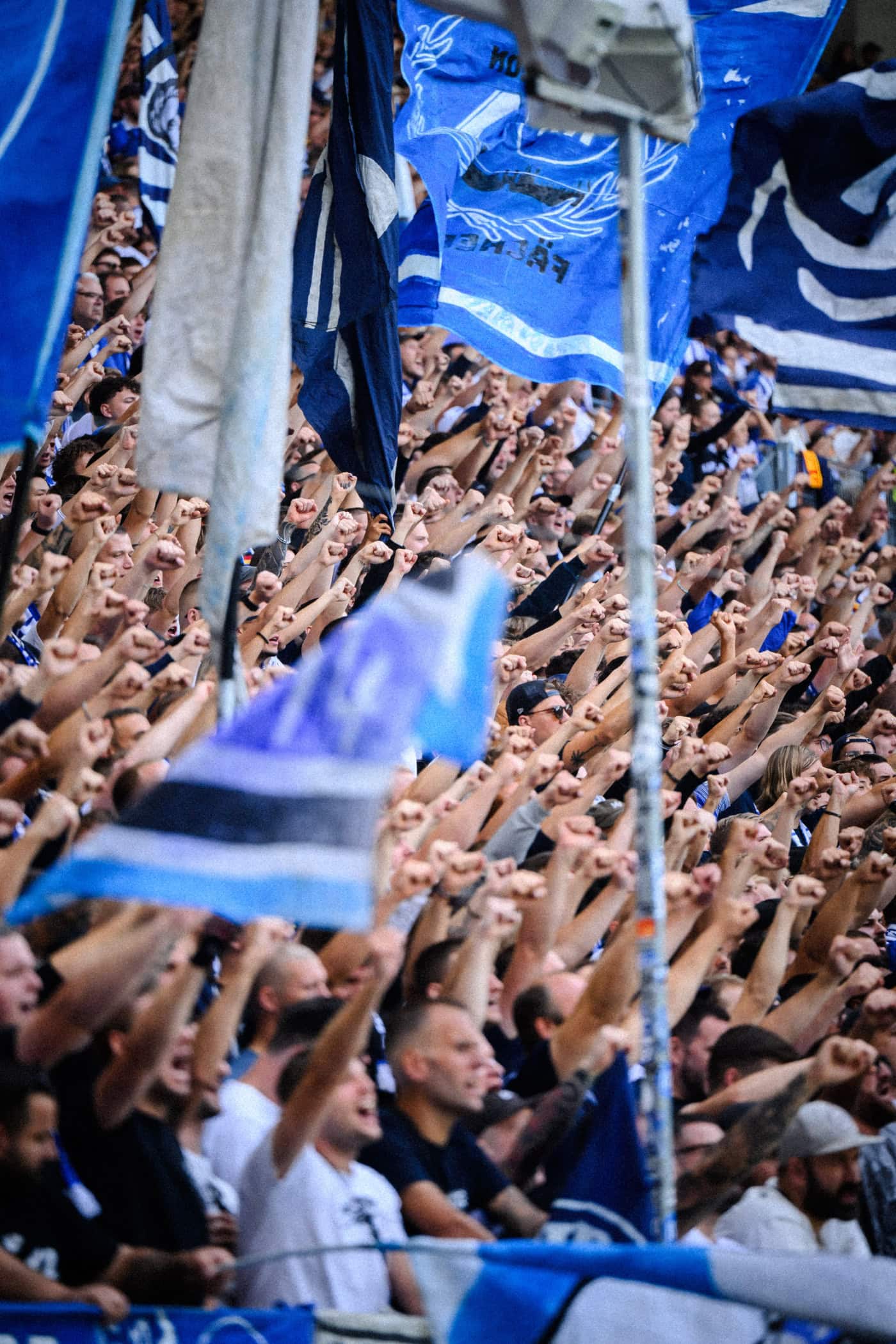 Karlsruher SC vs Eintracht Braunschweig. Photo: Marvin Ibo Güngör
A football crowd is often a good cross-section of society.
 Juri Sladkov
So how can players be given a safe space in which to be open about their sexuality? At second-division Hannover 96, the club is strongly committed to a diverse community. Juri Sladkov explains that the club is aware ‘of the reach that comes with football, and of the responsibility we take on as actors in society’. Hannover 96 also repeatedly takes a public stand against homophobia and for a diverse football culture, for example with statements on its website.
The club is also patron of Christopher Street Day in Hannover, a public statement in itself. Hannover 96 tries to keep the Heinz-von-Heiden-Arena as peaceful as possible. ‘Tens of thousands of people come to our stadium every fortnight, and a football crowd is often a good cross-section of society,’ says Sladkov.
Alongside fan organisations such as ‘AK 96 Fans gegen Rassismus’ (Fans Against Racism), the club has also been working on safety in the stadium since the start of this season. An awareness team is available to all fans. Anyone who experiences hostility, or sees it directed at others, can report it there and get help straight away. One case is already being examined by lawyers, he says.
Uncertain consequences
Sladkov explains the lack of an openly gay active player in Germany’s top divisions as follows: ‘The people concerned simply face a great deal of uncertainty about what the consequences – or the supposed consequences – would be for their career and their life.’ Thorsten Blank also thinks that fear of how sponsors might react can be a major factor.
So a player needs a degree of certainty from his club and those around him about how the issue would be handled. In the case of Hannover 96, Juri Sladkov explains that nothing would change for a player in terms of his contract or standing at the club because of his sexual orientation. A club can create a safe space in this way – but it cannot fully control other unknowns such as fans or sponsors.
 Stickers outside the Heinz-von-Heiden-Arena. Photo: Amelie Arras
The DFB’s contradictions
The German Football Association (DFB) also supports the queer community with public campaigns. At the same time, Thorsten criticises some of the DFB’s decisions: ‘A few years ago we had a World Cup in Qatar, and now the 2034 tournament has been awarded to Saudi Arabia. We all know the human rights situation in these countries, and that they speak out openly against homosexuality. Of course it wasn’t the DFB’s decision alone, but the association still voted in favour,’ says Thorsten Blank.
Homosexuality remains taboo in German professional football – not for lack of players, but because of social expectations, images of masculinity and fear of how fans and the media will react. Clubs such as Hannover 96 show that safe spaces and clear support are possible, but for a player to come out, society as a whole will have to rethink.