New shores: floating islands between art and ecology
Floating platforms like the ‘Zukunst’ in Hannover create green open spaces – a concept that is catching on around the world.
By Carlotta Steinkamp (text), Tim Kirchhof (photos)


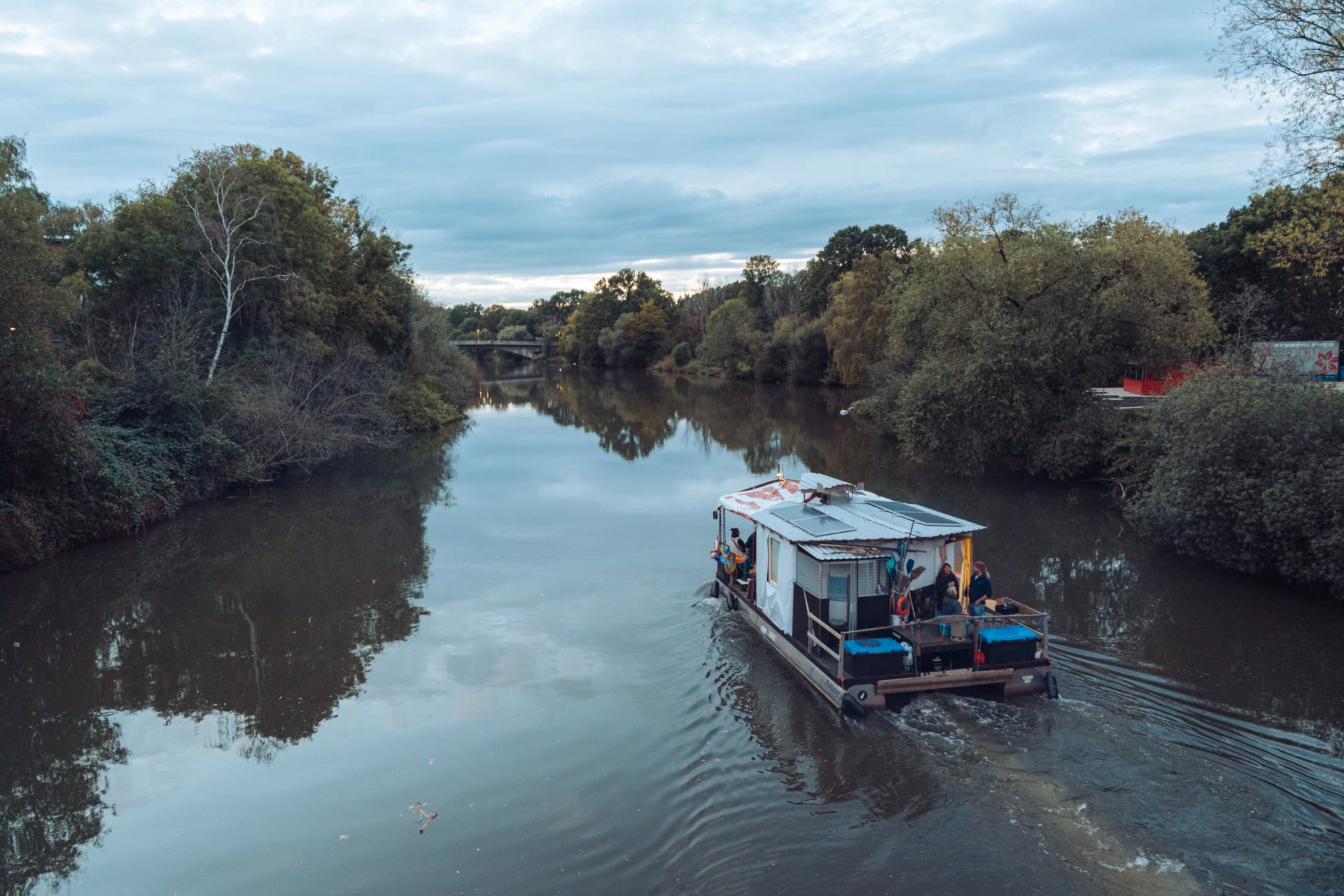
The ice under the keel crackles softly as the ‘Zukunst’ chugs towards the Leine lock in Hannover. The first leg of the journey to her winter harbour will soon be over. It is the last trip of the season before the boat spends the winter in Misburg harbour and the new season begins next spring.
But the Zukunst – a play on the German words for ‘future’ and ‘art’ – is more than just a boat. She is both a floating island and a cultural open space on the river Ihme. Joy Lohmann, the artist behind the project, has been creating islands on the water and experimenting with ways of using them since Expo 2000 in Hannover. Numerous local and international island projects have emerged, for example in Berlin and Ferropolis, but also in Goa in India and in Thailand.
The Zukunst floats on two long metal drums that Joy Lohmann welded together in Berlin in 2022. The first adventure began soon afterwards: with a caravan on the empty raft, he and his colleague Andre Zingler travelled from river to river to Hannover. Once there, they began building on the vessel, supported by a community of scientists, artists, musicians and many other ‘creators’ who shape the floating island together. Since then an open community has formed around the Zukunst; its members spend time on the boat, help design it, build on it, plant it and take it out on trips. Once a week there is an Open Ship Day, when Lohmann and the Zukunst crew invite anyone interested, and passers-by, to come aboard, have a coffee and chat. So the Zukunst is also a place for people to come together.
The project grew out of the initiative ‘Makers for Humanity’, which uses temporary, interdisciplinary teams to build so-called floating islands for culture, education, ecology and social innovation on bodies of water around the world.
Besides the Zukunst, Hannover also has planted floating islands where growing plants is being tested. The environment is always a central concern, and so is the basic idea: those who know and value a body of water are also prepared to protect it. Joy Lohmann’s island projects are always an invitation to experience something beautiful in or by the water.
Beyond the local community, the Zukunst also creates international connections. At a digital island-building conference in November 2023, island builders from Germany, Brazil and Singapore exchanged ideas and discussed solutions to local challenges together.
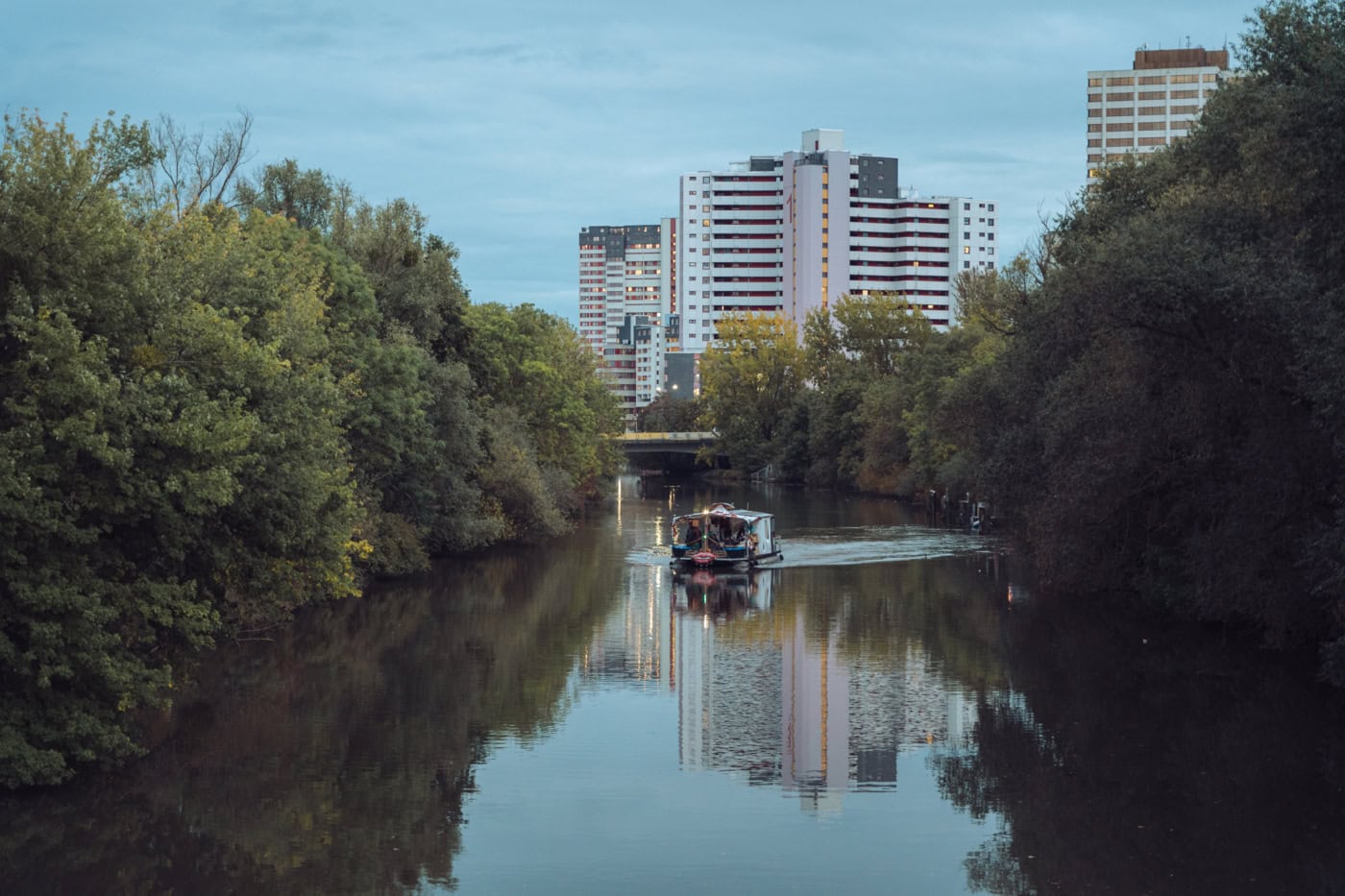
The Zukunst sets off from her mooring in Linden-Nord.
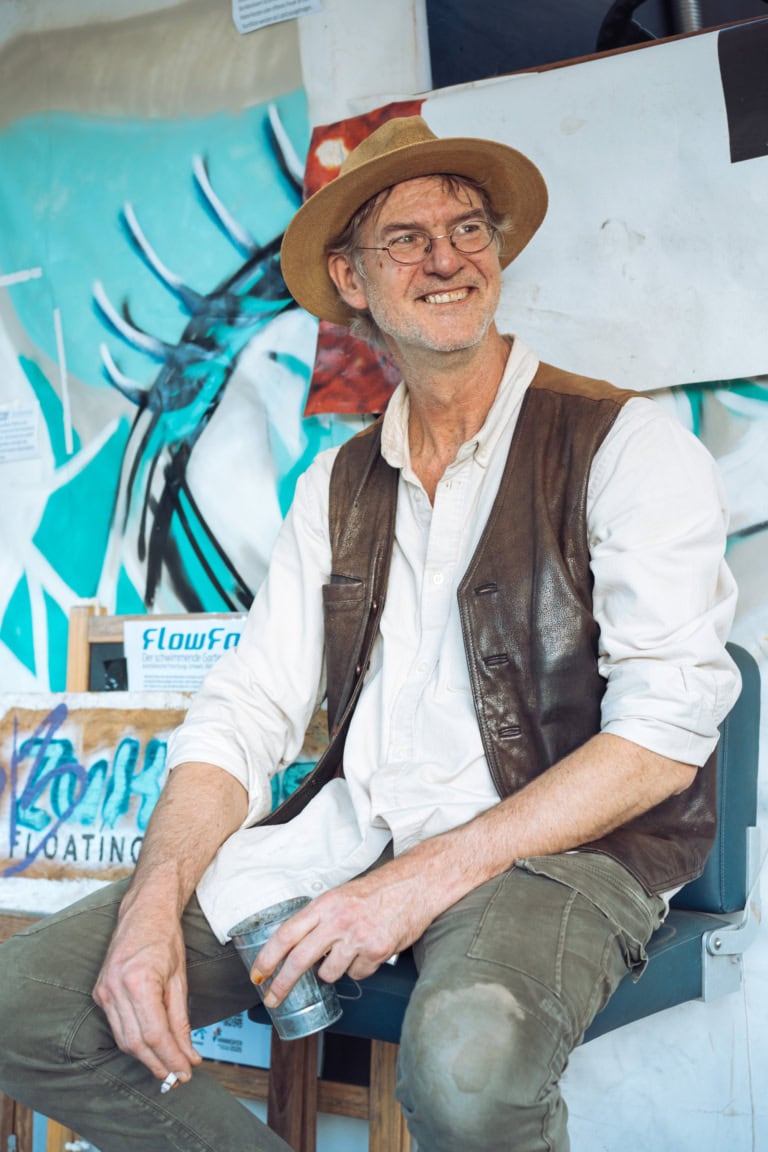
Joy Lohmann, artist and initiator of the project.
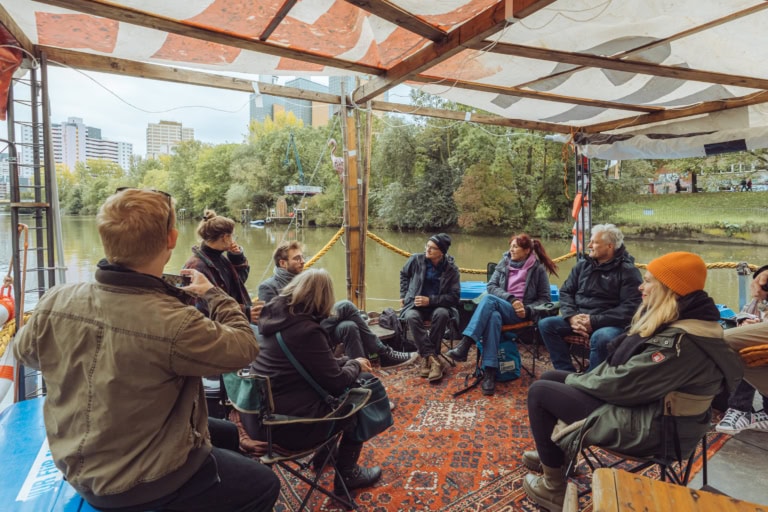
Guests on the VIP trip enjoy the view of the Ihme.
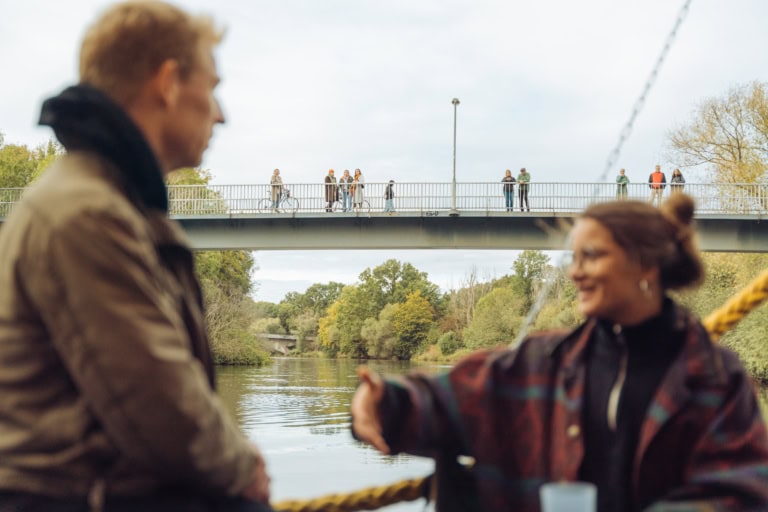
The Zukunst catches the eye of many onlookers.
Floating islands as a response to climate change
‘First there were floating artworks, then a floating garden, and finally the modular system emerged at our association’s maker camps – islands that can potentially be extended,’ explains Joy Lohmann. ‘Some of the islands are still afloat today, others have been dismantled. The ones still afloat are mainly garden islands and islands for cleaning water in Bangalore.’
Bangalore, known as the city of lakes, struggles with heavily polluted waters that are breeding grounds for malaria and other diseases. Lohmann’s approach there had two aims: to clean the lakes organically using plants and algae, and to hold cultural events on the planted islands so that people build a relationship with the local waters. ‘This effect is hard to measure, but it works: people become more mindful, slow down, become more reliable and more sociable too. Through these projects, protecting water becomes an issue that is present in people’s minds, including politically.’
There are countless ways around the world to use the potential of floating islands. One example is the Briton Richart Sowa, who built the internationally known ‘Spiral Island’ on a foundation of plastic bottles off the west coast of Mexico. Storms and floods destroyed the structures several times, but Sowa rebuilt the island every time. Today it is home to a house several storeys high and a mangrove forest. Its creator Sowa is constantly improving and extending his island, with the help of volunteers.
On the other side of the globe, in Bangladesh, former rice farmers have built floating vegetable gardens from bundled water hyacinths, because the traditional paddy fields can no longer be farmed as a result of rising sea levels and salt water intrusion. There, the floating gardens are not only a way of adapting to the consequences of climate change but also an economic opportunity for the population.
Lohmann stresses: ‘Floating islands are both a way of actively doing something about climate change, or at least containing it regionally, and a way of responding to its consequences. Of course the islands alone can’t guarantee to stop climate change, but they could both slow it down and offer strategies for coping with it.’
The Zukunst in Hannover is an example of how local initiatives can take on global significance. It not only offers a place for people to meet and for cultural enrichment, but also raises awareness of the need to protect our waters. The future has to be fun, says Lohmann, because that is the only way to spark enthusiasm and commitment for sustainable projects.
The Zukunst’s floating Christmas party ends with a closing concert in the clubhouse of the motorboat club at Misburg harbour. The crew is welcomed not only by helping hands but also by the smell of mulled wine and bratwurst. The music of Birte Volta, singer with Ton Steine Scherben, brings people together too, and everyone joins in the chorus, ready for the next season.
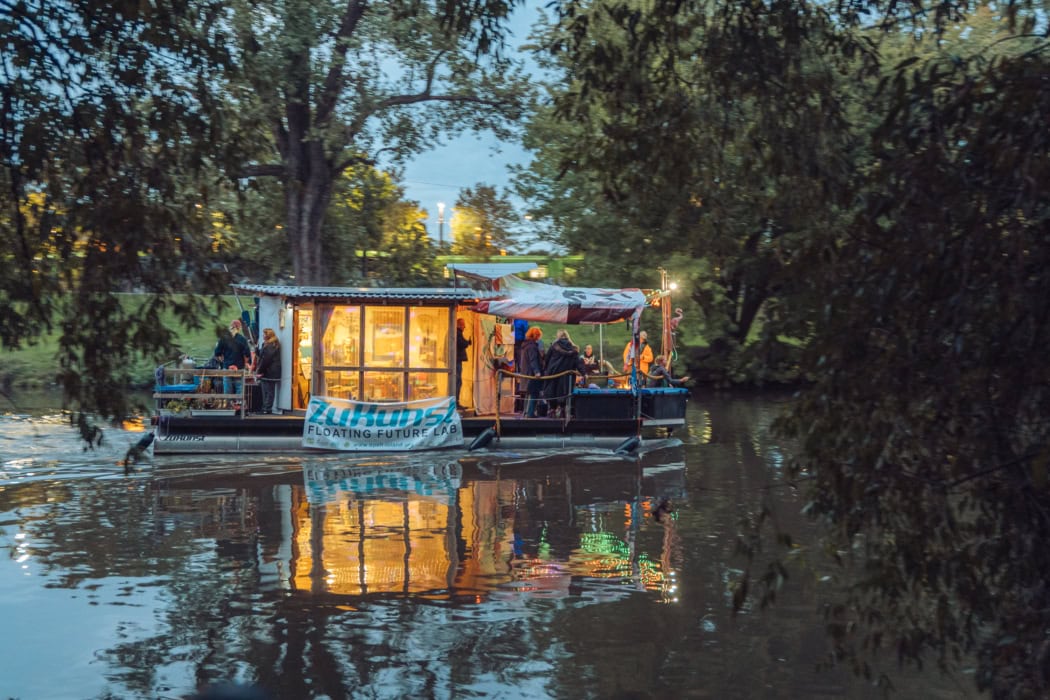
The mood on the Zukunst is good during the evening trip.
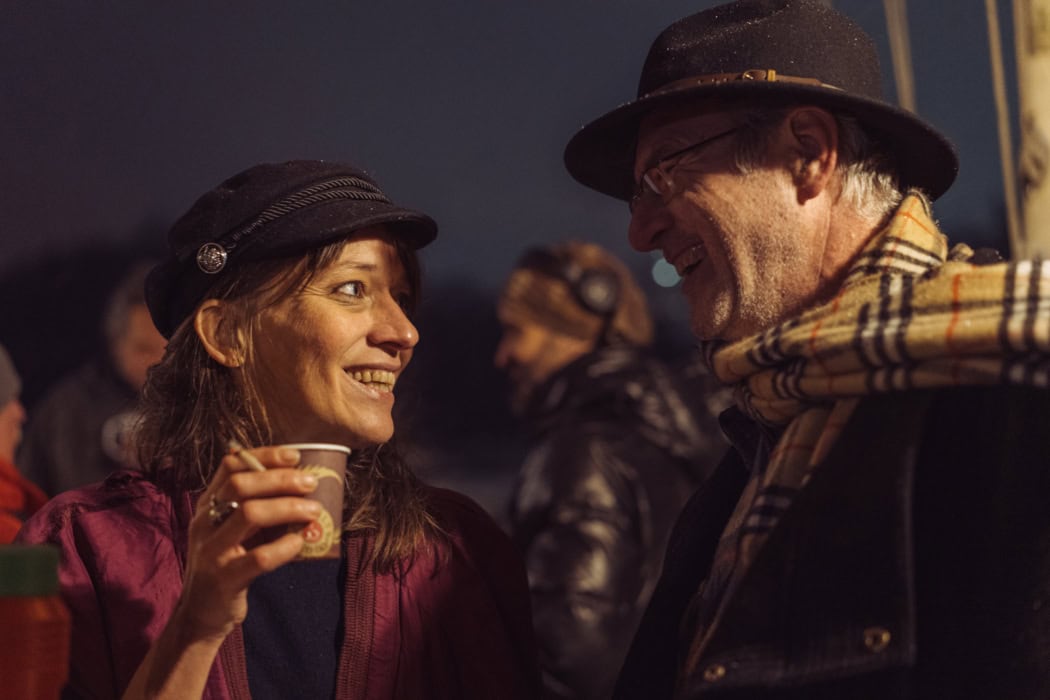
Birte Volta and Joy Lohmann raise a toast to the last trip.
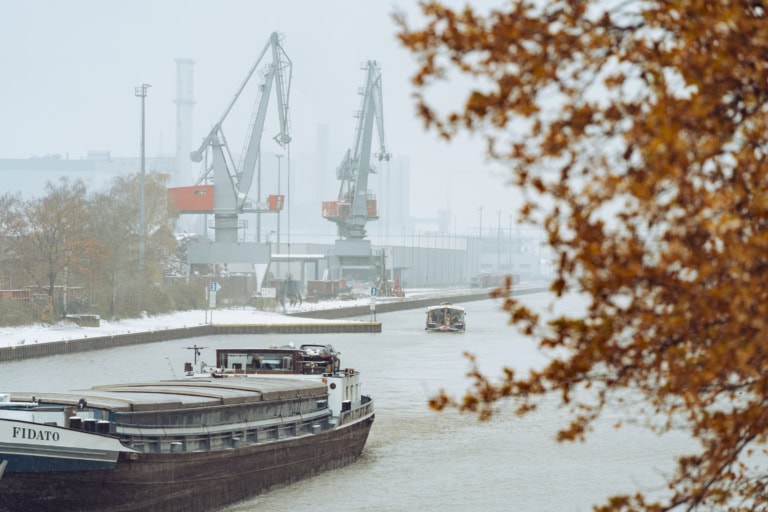
Next to the cranes and cargo ships, the little island looks a little lost.
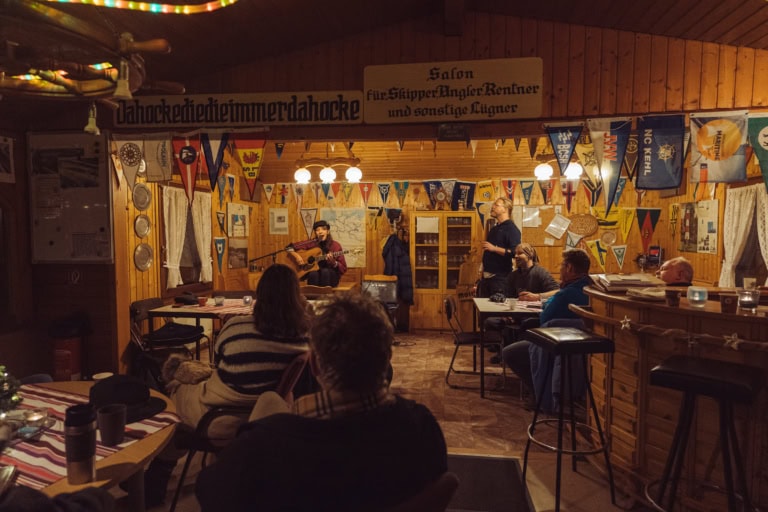
Birte Volta at her concert in the clubhouse of the Hannoverscher Motorbootclub e.V.
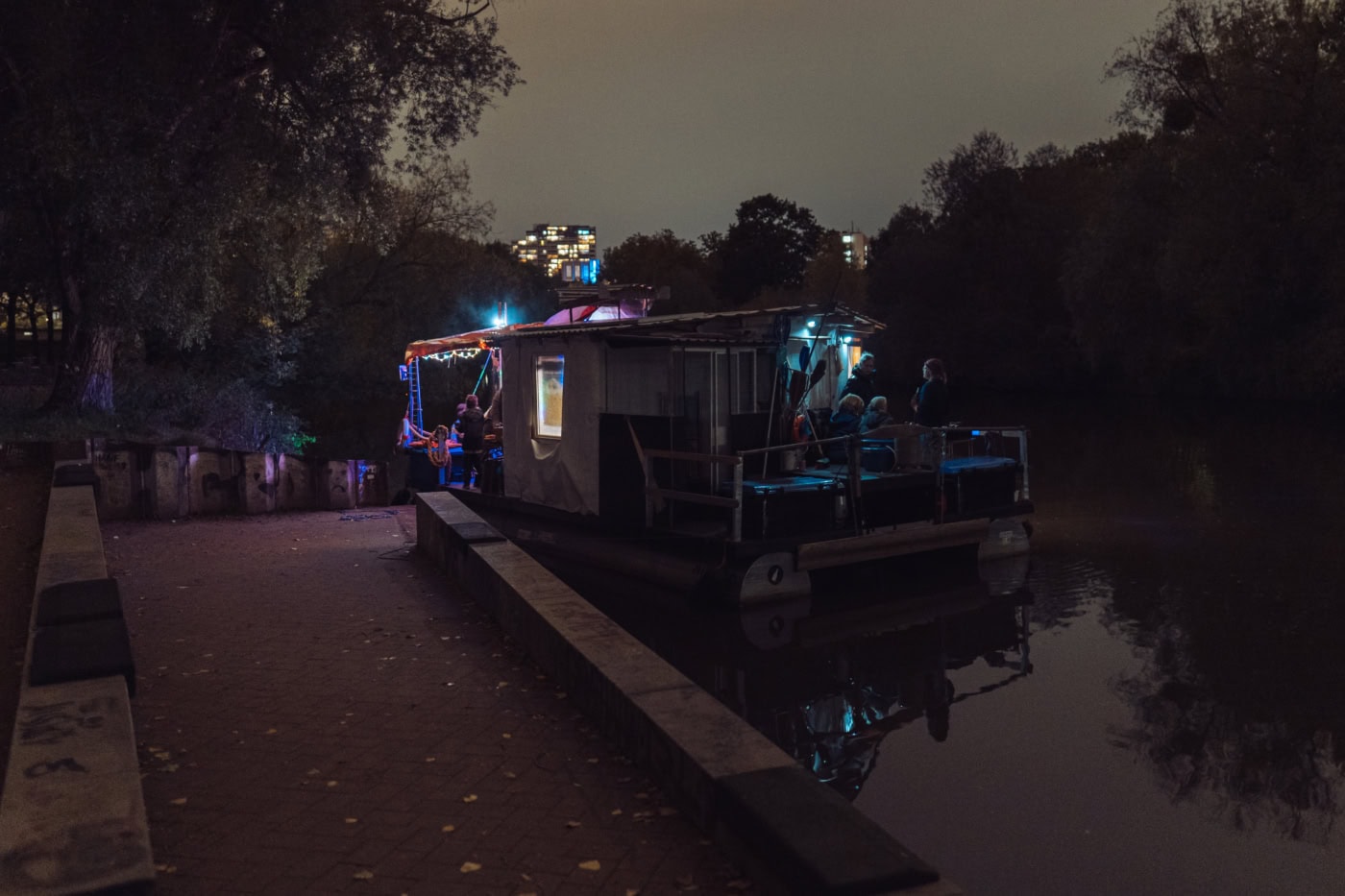
Late in the evening the Zukunst moors for a stop on the Ihme.