Better off unmarried?
Why a break-up is not a failure, and happiness does not depend on the shape of a relationship. Three women talk about marriage. By Lotta von Dewitz


‘Entromantisiert euch! Ein Weckruf’ (roughly: ‘Get over romance! A wake-up call’) is the title of a book by Beatrice Frasl, published in spring 2025. For generations, books, films and songs have presented romantic love as the key to happiness. For women, however, reality often looks different. According to Frasl, romantic love is fed by patriarchal power relations and capitalist interests, and is one of the pillars of patriarchy.
This is especially clear in the traditional division of roles in heteronormative relationships, that is, relationships between a man and a woman. Here, unpaid care work and housework are almost always unevenly shared – to women’s disadvantage. Frasl calls for a radical rethink of romantic love, towards a more critical and more diverse understanding of love, relationships and community. After all, she argues, it is mostly friendships or relationships with siblings that stay with us for life.
In what follows, three women tell their stories. What they share is the experience of living in a heteronormative marriage. Different life circumstances and different decades of birth give them different perspectives on their (past) marriages. Against prevailing social norms, their accounts are meant to normalise the idea that separating has nothing to do with failure, that marriage does not always mean complete fulfilment, and that neither happiness nor loneliness is reserved for any one kind of relationship.
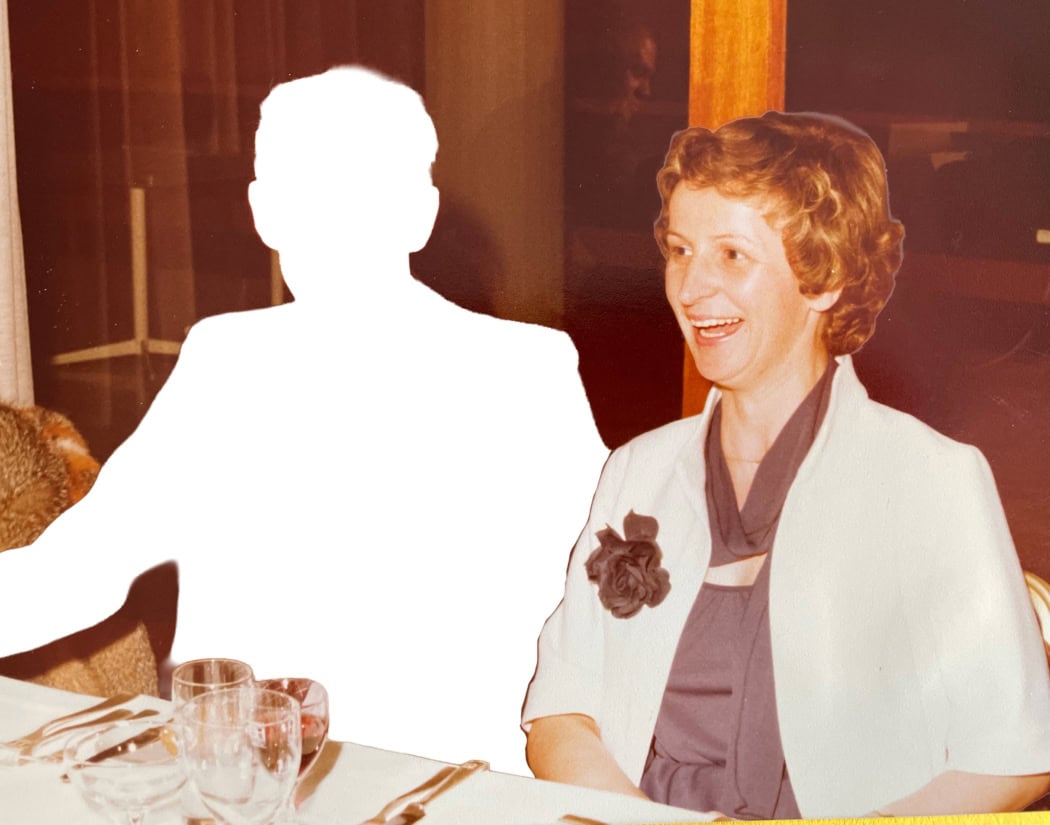 Maria with her husband. Archive photo
A typical Friday morning. Maria mops the floor, hangs out the washing and does the shopping: flowers for her mother-in-law’s grave, meat for lunch, her husband’s favourite bread for supper. At 1 pm she has to pick up her granddaughters from the station. When she gets home, she realises she has forgotten her key. Her husband opens the door and disappears, grumbling, back into his study. She unpacks the shopping, ties on her apron and peels kohlrabi. From the living room, she can now hear the television.
Maria was born in 1946, which makes her a woman of the ‘Silent Generation’. Shaped by the post-war years, this generation is associated with a respect for tradition and with reliability. And so Maria, too, lives the old ‘romantic’ model – marriage for life – with a great deal of care, duty and loyalty.
It really is an art to stay together for a lifetime
 Maria
Maria
Maria met her husband Jürgen when she was 20. Two years later they married. Today they have been together for more than 59 years. For several decades they worked and lived together in his parents’ business, so they were not only husband and wife but also business partners.
Having her in-laws around all the time was not always easy for Maria, as they were very strict and demanding: ‘You always just did what they wanted. He had to fall in line with his parents too, but he found it less of a problem than I did.’ Despite a very difficult relationship with her mother-in-law, Maria looked after her for a long time in her old age and still tends her grave today. Jürgen, on the other hand, never visits it. Nor his father’s. After all, Jürgen says, they were never there for him either.
The roles in Maria and Jürgen’s relationship have always been clearly divided, and retirement hasn’t changed that, Maria says. She looks after the house, he looks after the office. That way each of them has their own domain, and neither interferes in the other’s. Bringing up the children was Maria’s job, because he never looked after their two daughters and son – ‘but that was a mistake, of course’. When their eldest daughter, Karin, was still little, Maria packed her bags once. But in the end she stayed with her husband. It wouldn’t have been that simple after all.
Asked what the advantages of such a long marriage are, Maria hesitates for a long time. Finally she says: ‘Well, what can I say?’ After another pause, she says: ‘Being together.’ She searches for words. It’s nice when someone is there, she says, and it works both ways. ‘You get used to each other, don’t you?’ She doesn’t want to talk about the disadvantages of such a long marriage right now. Instead, she says: ‘It really is an art to stay together for a lifetime.’
She recalls that he used to get angry when she disagreed with him in public. ‘But,’ she adds, ‘I’m my own person, after all.’ She doesn’t want to give the wrong impression of Jürgen: he is a good man, she says, and she has always been able to rely on him. ‘Trust is important for a good marriage.’ Maria and Jürgen trust each other. But when her husband is gone one day, she doesn’t want to look for another. Then she wants to be independent.
The most important people in her life, she says, are her children and grandchildren. ‘Oh, and my husband too, of course.’ But Maria also has two close friends, ‘Paula and Ulla’, who matter to her almost as much as her family. After a short pause, she adds: ‘My sister – actually, my sister first and foremost. She was widowed, and since then we’ve grown closer.’ Maria is content when she gets on well with her husband. But she is truly happy when she has her family all together.
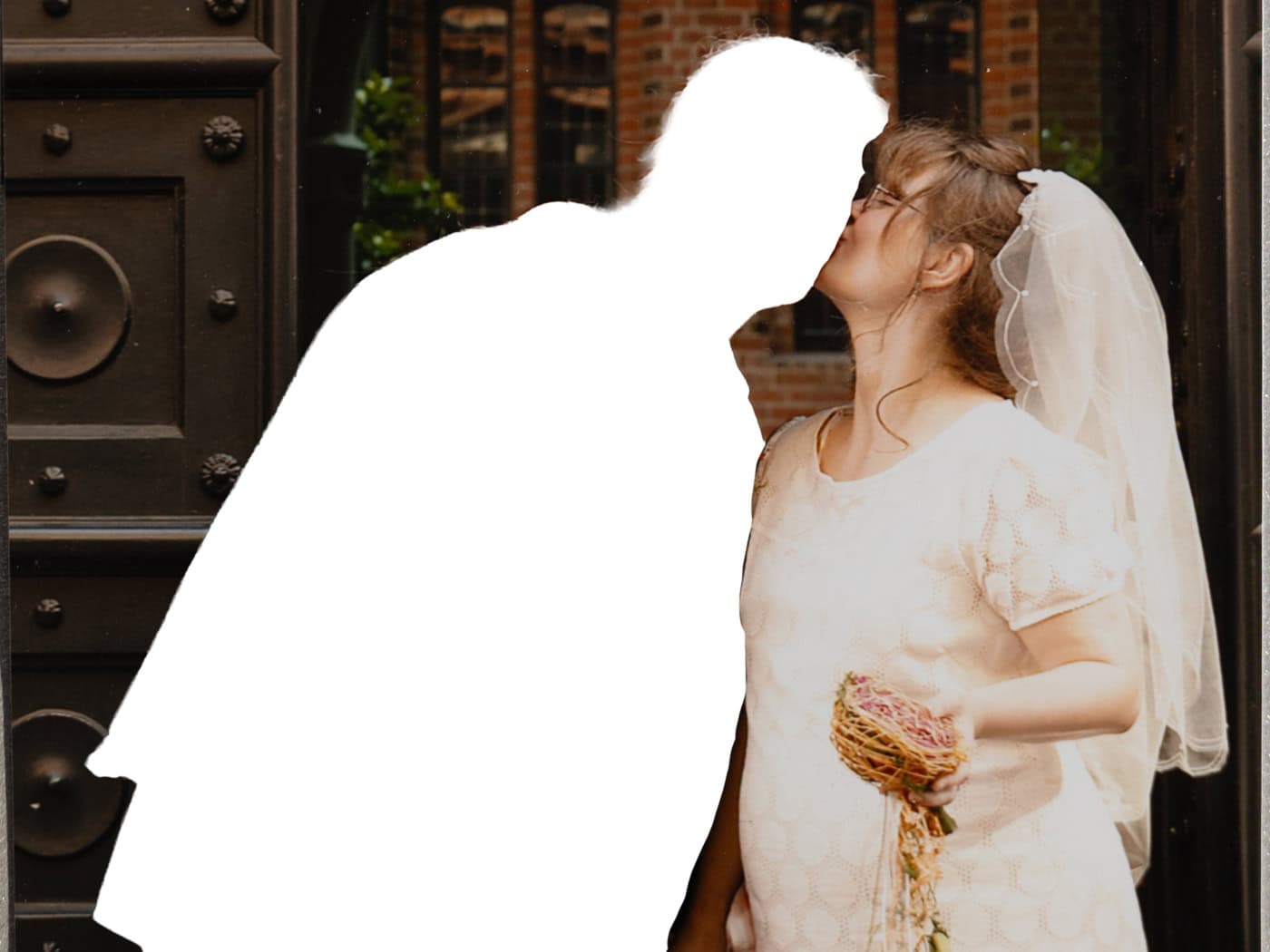 Martina and her husband on their wedding day.
Archive photo
Martina and her husband on their wedding day.
Archive photo

The other two women were also in a relationship with a man for several decades. Esther (born 1958) has been divorced for four years, and Martina (born 1969) is in the middle of a separation. By actively deciding not to make a man the romantic centre of their lives, they shed a different light on the construct of heteronormative marriage. In doing so, both women reflect the thoughts and experiences behind the feminist perspective of the author Beatrice Frasl.
Today, Esther and Martina feel comfortable in their role as single women in society. For Esther, taking that step was at first a source of shame: ‘There are some people – quite a lot, I think – who see you as incomplete,’ she says. Martina knows the feeling. She is often addressed in the plural, for instance, as if it went without saying that she has a man at her side.
Women are often women’s worst enemies
 Martina
This social judgement is linked to a narrow definition of what counts as a relationship: anyone not tied to a romantic partner is considered ‘single’, no matter how dense and close their network of loving relationships may be. A definition that focuses purely on romance ignores the reality of many women, whose lives are rich in close bonds.
Esther says that since the separation her life has been full of love: ‘That’s real love – that’s what I call love.’ By this she means the close bond with her two children and her many friendships. Today, she says, she no longer has to stay in a loveless partnership.
These observations support Beatrice Frasl’s argument that social norms require us to commit to a romantic partner and to make that partner the centre of our lives until death do us part. While single men tend to be seen as independent, the same status quickly takes on negative connotations for women. Martina speaks from experience: ‘Women are often women’s worst enemies.’ They are the ones, she says, who put the most pressure on other women.
Note
The quote ‘Women are women’s worst enemies’ refers to toxic behaviours that women adopt in order to survive under patriarchy. Sophia Fritz, for example, offers a wide-ranging and nuanced look at the subject in her book ‘Toxische Weiblichkeit’ (‘Toxic Femininity’).
In fact, men are women’s worst enemies. The annual report on domestic violence in Germany makes this clear: around 80 per cent of victims are female, while men account for almost 80 per cent of suspects.
One key conflict that often breaks up the idealised nuclear family, Frasl writes, is the unequal distribution of unpaid work. For Martina, conflicts over gender roles contributed to the separation. Although she describes her husband as a very loving and caring father, most of the care work was left to her. In the end, she says, that was the last straw. ‘Money was a constant problem, and I nearly collapsed under the care work,’ says Martina.
On top of her own job, she felt overwhelmed by how little the house was kept clean. So she arranged for a cleaner and paid for her out of her own money. But that regularly led to arguments with her husband: ‘Whenever my husband saw that the cleaner had been again, he’d start a row with me. He wanted me to stop. He said we’d manage on our own. But we had a house with three floors and eight rooms. I couldn’t manage on my own.’
In the relationship between Esther and her ex-husband there was also a clear division of tasks, which developed over the course of the marriage: ‘We just slipped into it – I was responsible for the house, the cooking and the relationship, and he was more for DIY. What else was he actually responsible for? I don’t even know,’ she muses, laughing.
She doesn’t think those were reasons for the divorce, though. The emotional labour – ‘raising things, asking how the other person is, thinking about friends and relatives – that was my job. I made it my job because talking about things mattered to me.’ Esther is convinced that otherwise none of it would ever have been discussed.
You might think the institution of marriage was also designed to multiply happiness. For Martina and Esther, however, it is other things that make them happy. Martina says her work gives her a great sense of fulfilment. But dancing and singing, learning Italian, doing sport and travelling make her happy, too.
Esther says she finds it especially fulfilling to experience intimacy. When she can open up to someone, or the other person opens up to her, without fear of being hurt, she is happy. Being in cheerful company fulfils her just as much. ‘When there’s lots of laughter and I can let go, I’m happy. I think it’s becoming rarer and rarer these days that people just have a good time.’
All three women experience loneliness, whether in a romantic relationship or not. It may take the form of sometimes feeling left alone within the relationship, as Maria does. Or of Martina having to bear the silence of her flat on a Sunday morning after a Saturday evening in good company. Esther feels lonely when she has no one to share intimacy with.
Why is the search for a romantic relationship still the status quo, when friendships and relationships with siblings are often far more lasting, and romantic love does not bring us the greatest happiness in the long run? Probably because it is still the social norm. What we need, Beatrice Frasl writes, is a broader understanding of love – one that decentres marriage and romance and makes room for a variety of bonds and relationships.
All names in this article have been changed.