‘Being gay is not a choice’
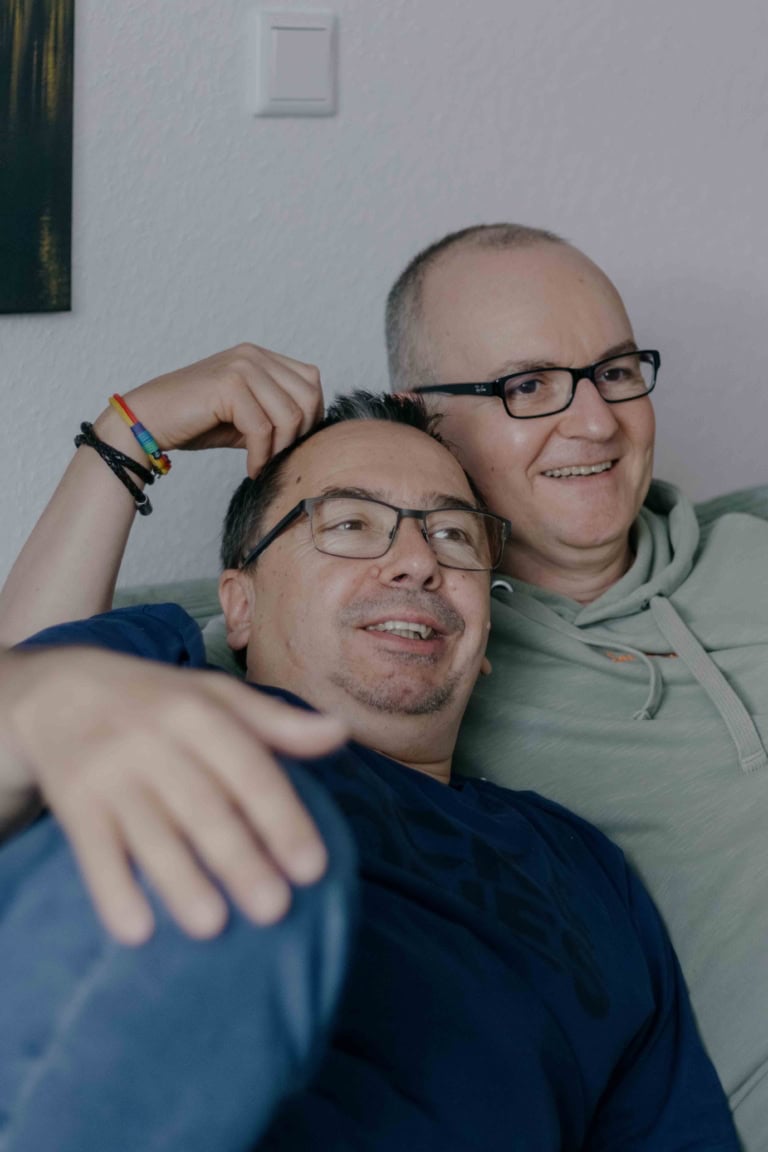
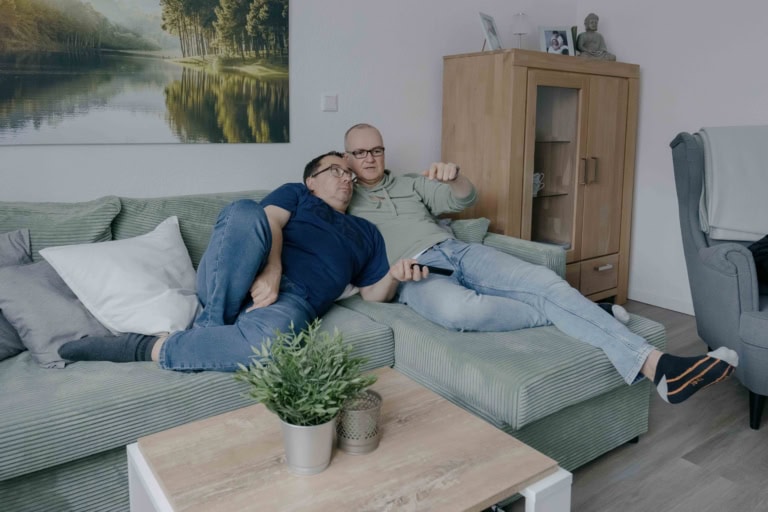
Dirk and Thomas came out to their families only recently. Today they live together as a couple. In an interview with our author, they talk about their path to an open life. By Finja Bosbach

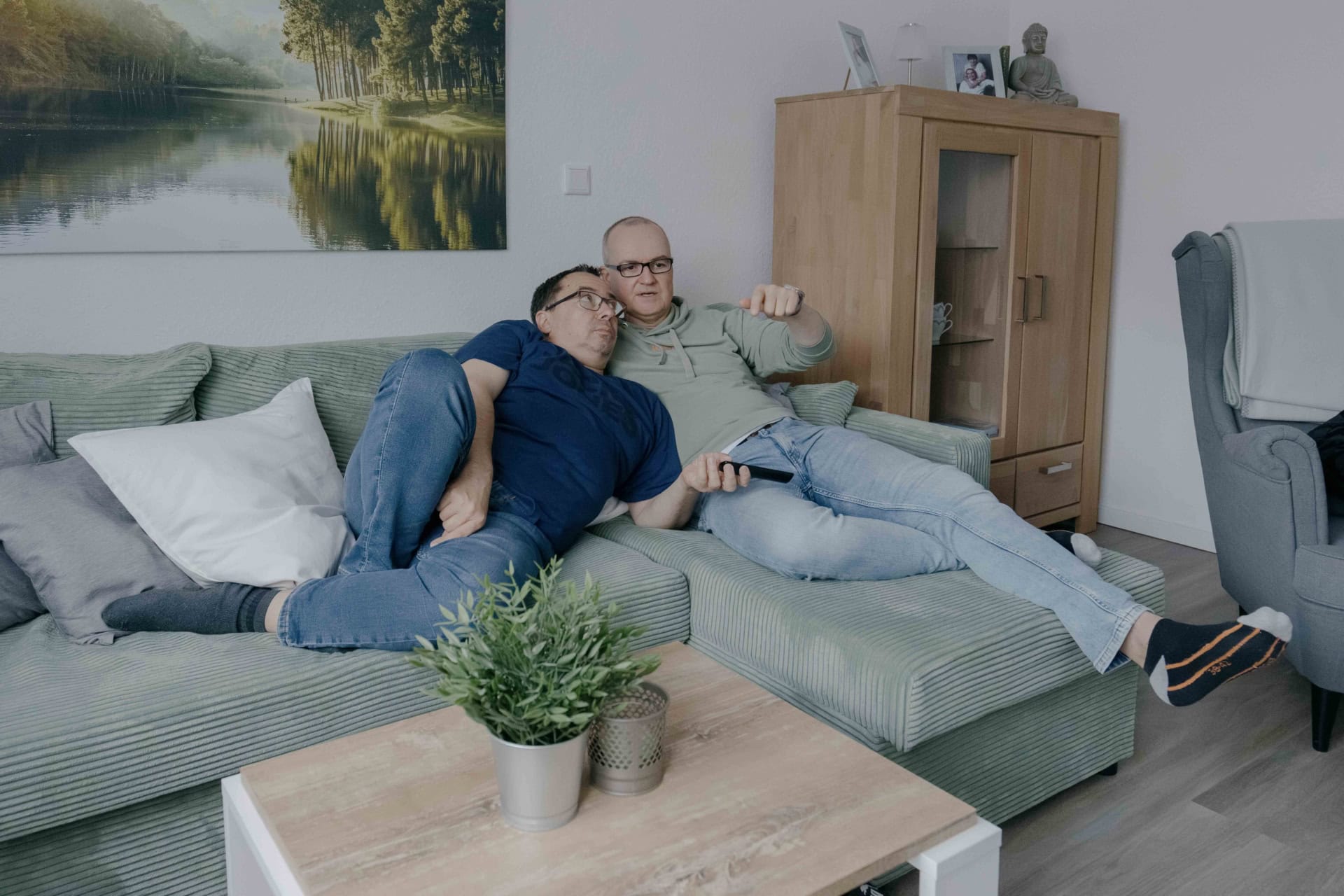
While looking for gay men of different generations, I came across Dirk and Thomas from the Ruhr. Two men who are bound together not only by their love for each other, but also by a very particular life story.
Both are in their fifties, and both came out only recently. At first they led a classic heteronormative life. Both were married, with a wife, children, a house and a settled routine. At the same time, something had been simmering inside them for years. Questions and doubts about their sexuality kept coming up, but they quickly pushed them to the back of their minds again.
One day they plucked up all their courage – it had become impossible to keep suppressing what they had felt for so long. So they talked to their wives and children and chose a life in which they no longer had to hide.
What happened next is the exception rather than the rule: the bond with their families remains strong. The conversations became more honest, the relationships deeper. In the self-help group for gay fathers in Essen, where Dirk and Thomas first met, they soon realised that stories like theirs cannot be taken for granted. They told me how their view of ‘masculinity’ has changed.
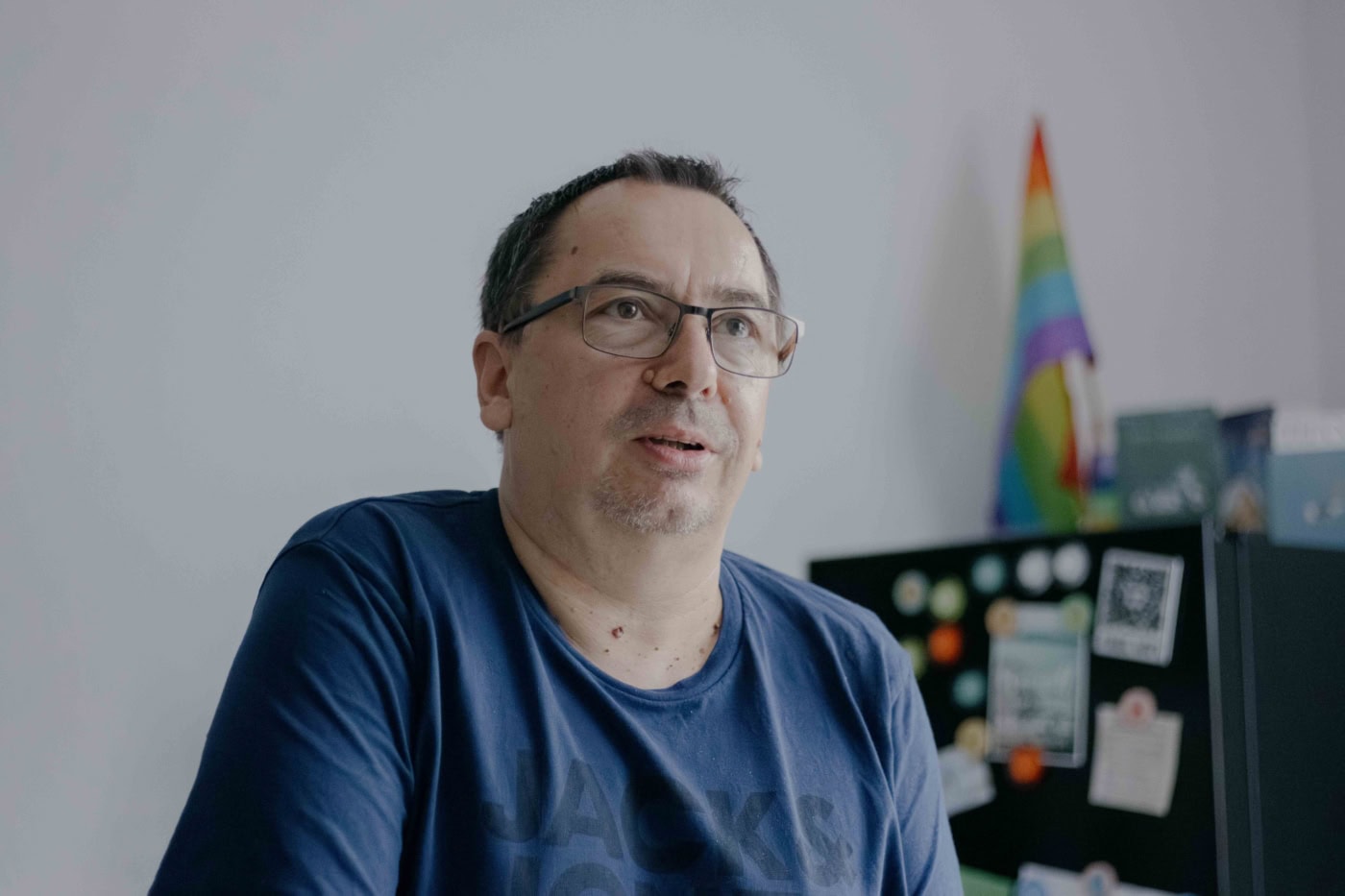 Thomas
What does your everyday life together look like today – and when do you feel most like a family, despite the new set-up and grown-up children?
Dirk and Thomas: Our everyday life isn’t all that different from a classic, heteronormative one. But instead of sharing it with our wives, we now share it with each other, with a man. And that’s exactly where the big difference lies for us, because it feels more authentic, more intense, closer and safer. The mask has come off – at last we can be who we are.
Even if our daily life no longer revolves around our families, they still play a big part in our lives. Tolerance on both sides, and the unquestionable fact that this is how things are, form the basis of our partnership. Our families are part of both of us and always will be.
Because our wives and daughters accept us as we are and respect us as a couple, getting together is completely normal. Our families have grown as a result, and we hope that one day we’ll be able to celebrate occasions such as Easter, Christmas and birthdays together as a patchwork family.
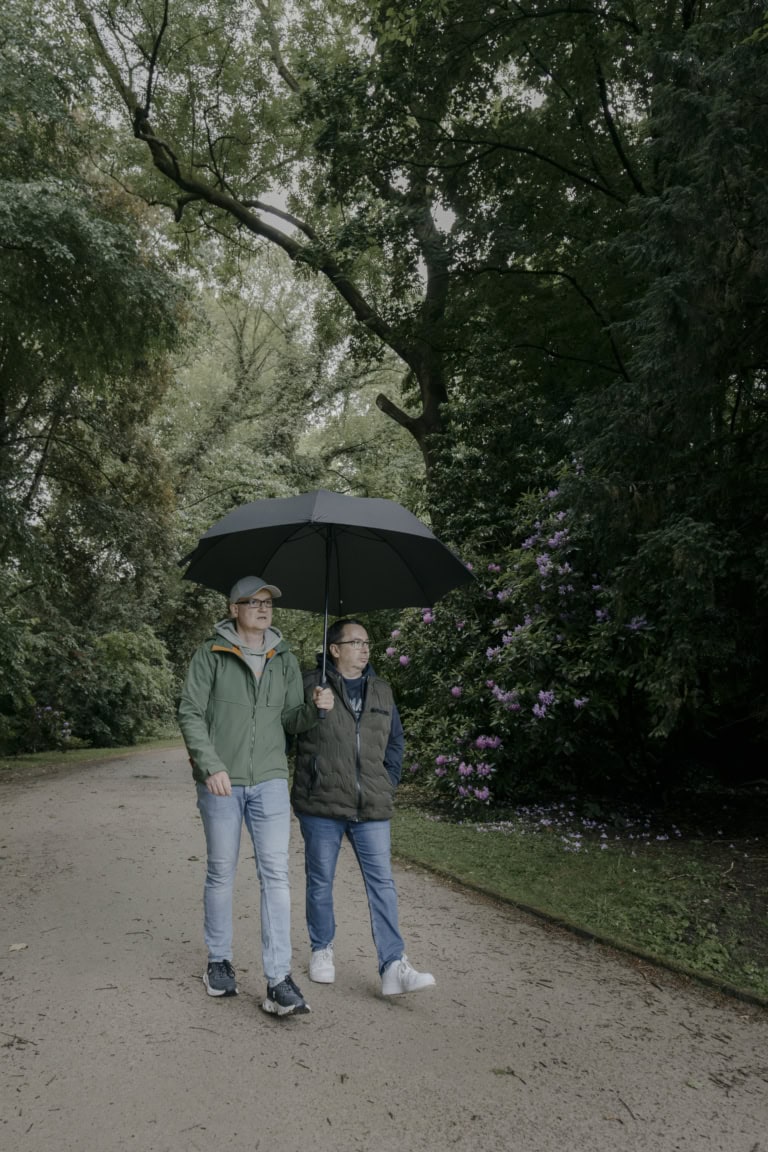

Honestly, I’ve only felt like a real man since I came out
 Thomas
How has your relationship with your children and former partners developed since you came out?
Our relationship with our daughters and wives has become closer since we came out. We may have lost our wives, but we’ve gained very good friends. An important part of it is treating each other with respect and as equals. The fact that we’re gay plays more of a minor role.
Even though our daughters, who are now grown up, are accepting, they were afraid for the family – especially at first. They asked themselves: ‘What’s going to happen to Mum and Dad now? Will they split up? What will happen to us as a family?’ Those were our daughters’ main fears.
But even though we live apart from our wives and have gone our separate ways, our paths still cross now and then – whether at family get-togethers, with friends and acquaintances, or even on short holidays together. What matters to our daughters is that they are part of our new lives and can see that family is still important to us. Regular get-togethers and staying in touch in between confirm that.
How has your understanding of masculinity changed over time – particularly in the interplay between fatherhood, homosexuality and social expectations?
Dirk: I’ve never felt masculine in the classic sense. Typically male behaviour always put me off (and still does). There has always been a slightly feminine streak in me, but it doesn’t show on the outside. For me it’s more of a feeling – a lovely feeling that I can now enjoy without embarrassment.
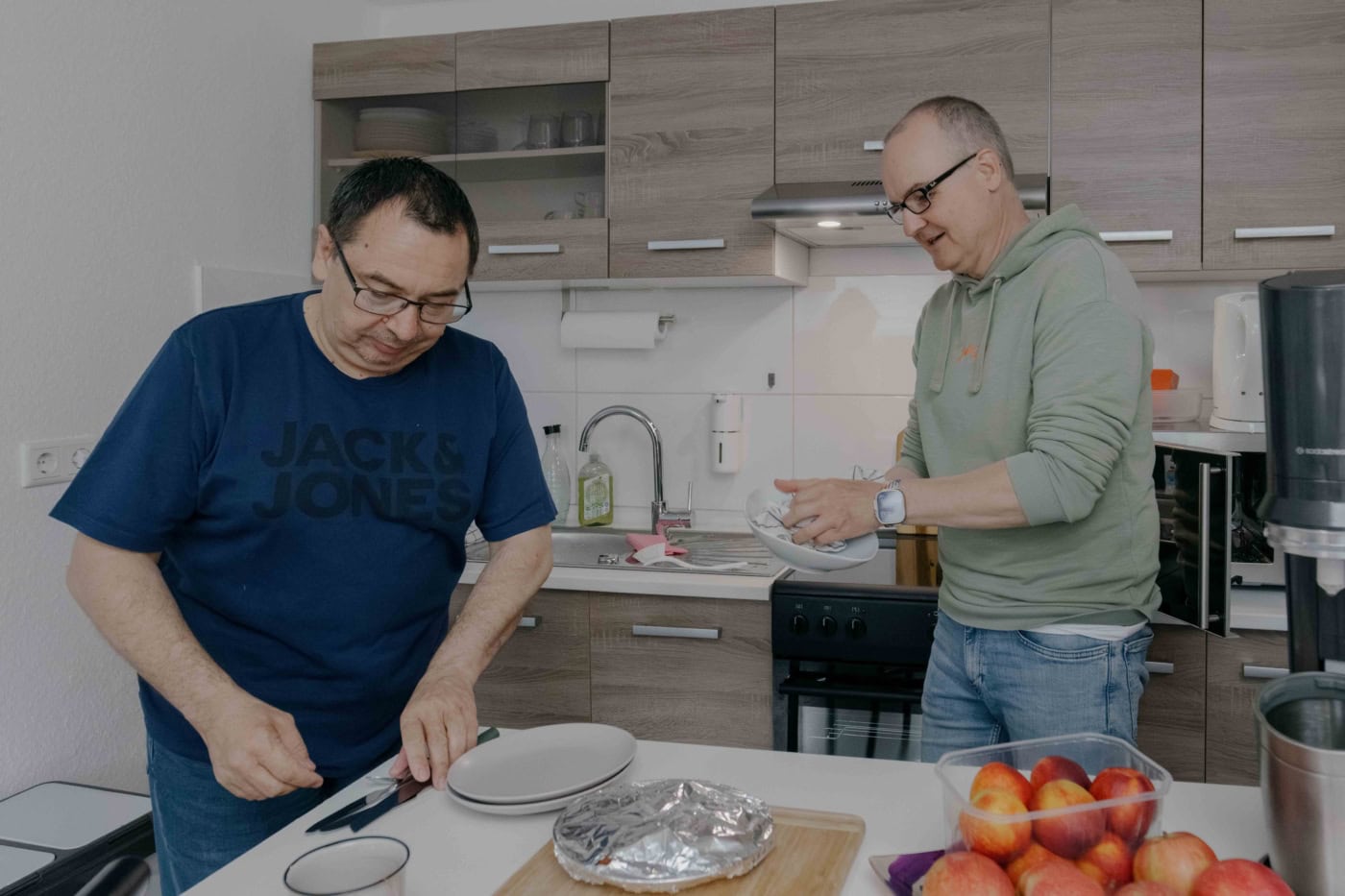
Did you have to leave certain ideas of masculinity behind in order to live the way you do today?
Dirk: At heart I feel like a man, with a bit of a feminine side. Now, at last, I can show and live my homosexual side as a gay man, without having to hide or suppress it. It’s not my understanding of masculinity that has changed – it’s my understanding of my true self. After my (inner) coming out, I accepted it as it is.
Thomas: Honestly, I’ve only felt like a real man since I came out. It was only when I came out that I could really make sense of my feelings. Today I live more as a man than I did before.
What advice would you give other men in similar situations – especially those who are still struggling with themselves or the people around them?
We would advise other men who are still struggling with themselves or those around them to listen deep inside themselves. To ask themselves questions such as: Who am I? What am I? Who do I want to be? These were all questions that preoccupied us intensely while we were finding ourselves, and in a way tormented us, because at first we couldn’t find any answers.
For most men in similar situations, the family is the most precious thing to protect – after all, as fathers and husbands we once took on a responsibility. We don’t want coming out to leave a trail of broken pieces behind. But that is unavoidable, at least at first, once that one sentence – ‘I’m gay’ – has been said.
It’s not my understanding of masculinity that has changed – it’s my understanding of my true self
 Dirk
Dirk
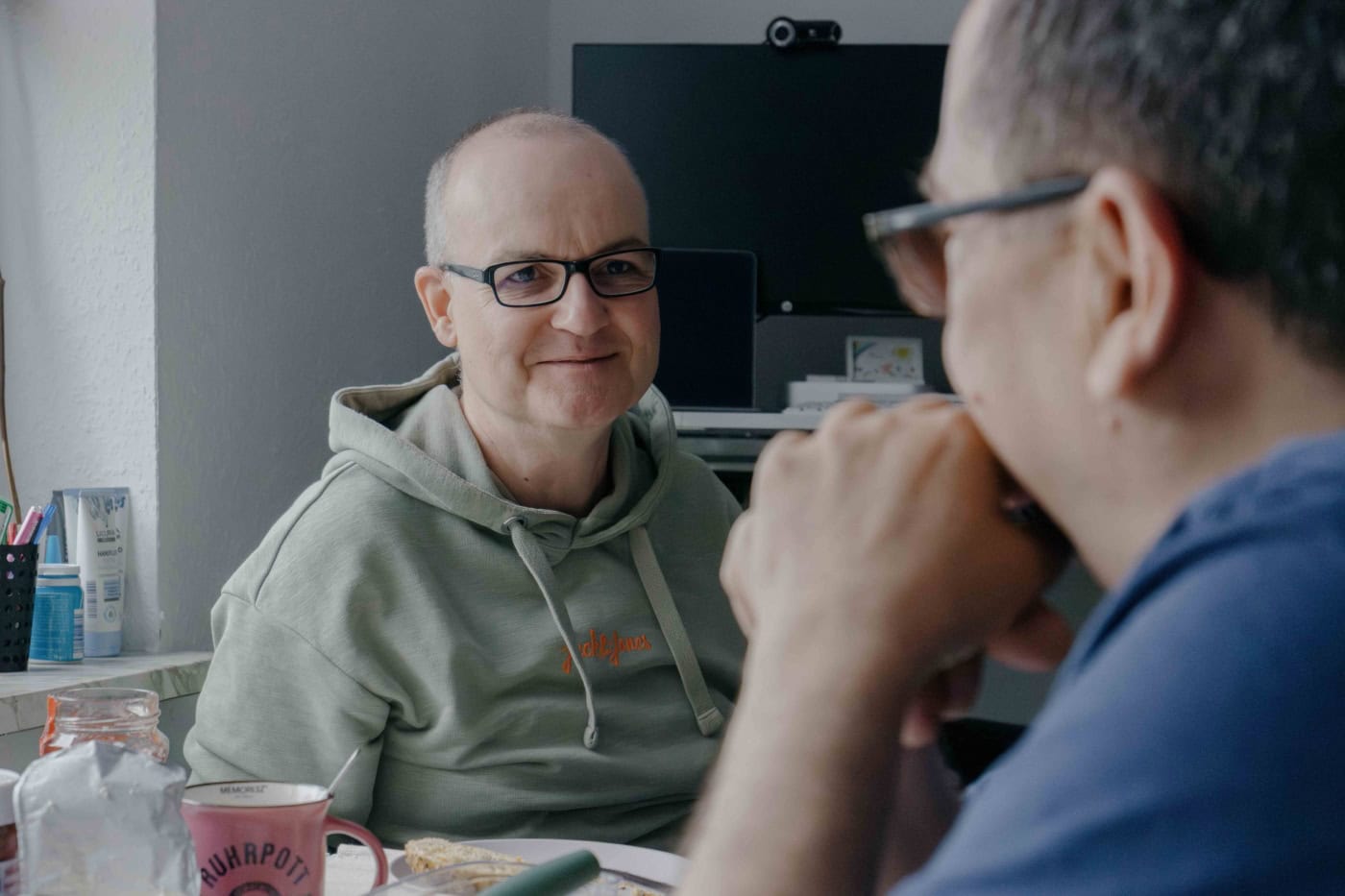 Dirk and Thomas
Dirk and Thomas: But if we want to take responsibility, we have to do so first and foremost for ourselves – we have to be at peace with ourselves. If there’s an imbalance here, it inevitably leads to inner conflict and noticeable dissatisfaction. The people around you can feel that dissatisfaction too, and often see it. Many people confirmed that to us after we came out.
Many of them were glad to finally have an answer. In the end, dissatisfaction and inner conflict lead to escalation, which has to be avoided at all costs. Escalation leads to arguments. Arguments lead to a lack of respect. All of that can only end with the family breaking apart – which nobody wants.
We can tell other men our own personal story with a clear conscience, because thanks to the appreciation shown by our families, our friends and acquaintances, and our colleagues, it has turned out well. Perhaps what follows is just as important as the often life-saving sentence ‘I’m gay’: be true to yourself and live your life! You only get one!