The social pull of masculinity
What does it mean to be a man today? On the pressure to conform, on uncertainty – and why simple answers are so seductive.
By Anton Vester

Our upbringing still often gives us clear ideas of what masculinity means. But many people want to renegotiate that role rather than be squeezed into the ready-made categories society offers.
In Hannover, the week at mannigfaltig e.V. begins at Monday lunchtime with a team meeting. Educators, counsellors and therapists gather round a table with five new project requests on it. Schools and independent organisations have been in touch. They want workshops, counselling and support on the question of masculinity. Demand is high – too high for what the team can realistically deliver. There is a discussion.
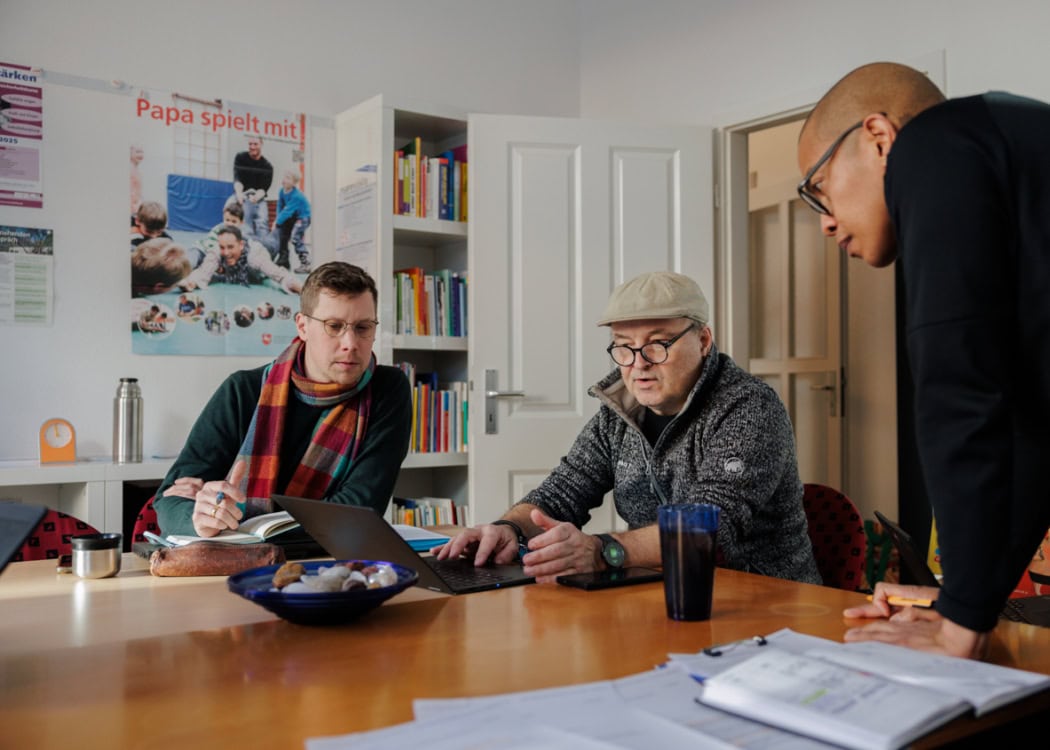 Photo: Anton Vester
Julian Mader-Pathmanathan (left), Olaf Jantz (head) and David Mutinda (right) in discussion at a team meeting. Will they be able to handle all the requests?
Mannigfaltig e.V. is an accredited specialist counselling service for boys and men, and has been supporting them with a wide range of issues in their lives for more than 25 years. The association offers free counselling to young men up to the age of 21. A particular focus is on helping them deal with and work through boundary violations and violence, whether they have experienced it, witnessed it or committed it themselves. As a recognised non-profit youth welfare organisation in Hannover, mannigfaltig works to encourage responsible behaviour and to make gender-sensitive education a firm part of young people’s everyday lives.
A team spanning several generations supports boys and men as they develop into confident, responsible men. From many different projects, they know how complex and many-layered the search for orientation in adolescence can be. Some boys are referred by the courts, others by schools; only a few are sent directly by their parents. At the heart of the work is always a double perspective: on the problems boys are responsible for, and on those they are confronted with. Two of the counsellors give an insight into their work – and talk about orientation, pressure and the diversity of masculinity.
Fred Hahndorf
He has been working at mannigfaltig e.V. as an educator and psychosocial counsellor for four years. With a master’s degree in gender studies, he comes from the theoretical side, but made a conscious decision to move into practical work with boys and men. His perspective adds an analytical view of gender roles and social attributions to the team.
In his work, his aim is to encourage boys and men not to feel they have to conform to stereotyped expectations. For him, strength also means consciously resisting the social pull of masculine norms and going your own way.
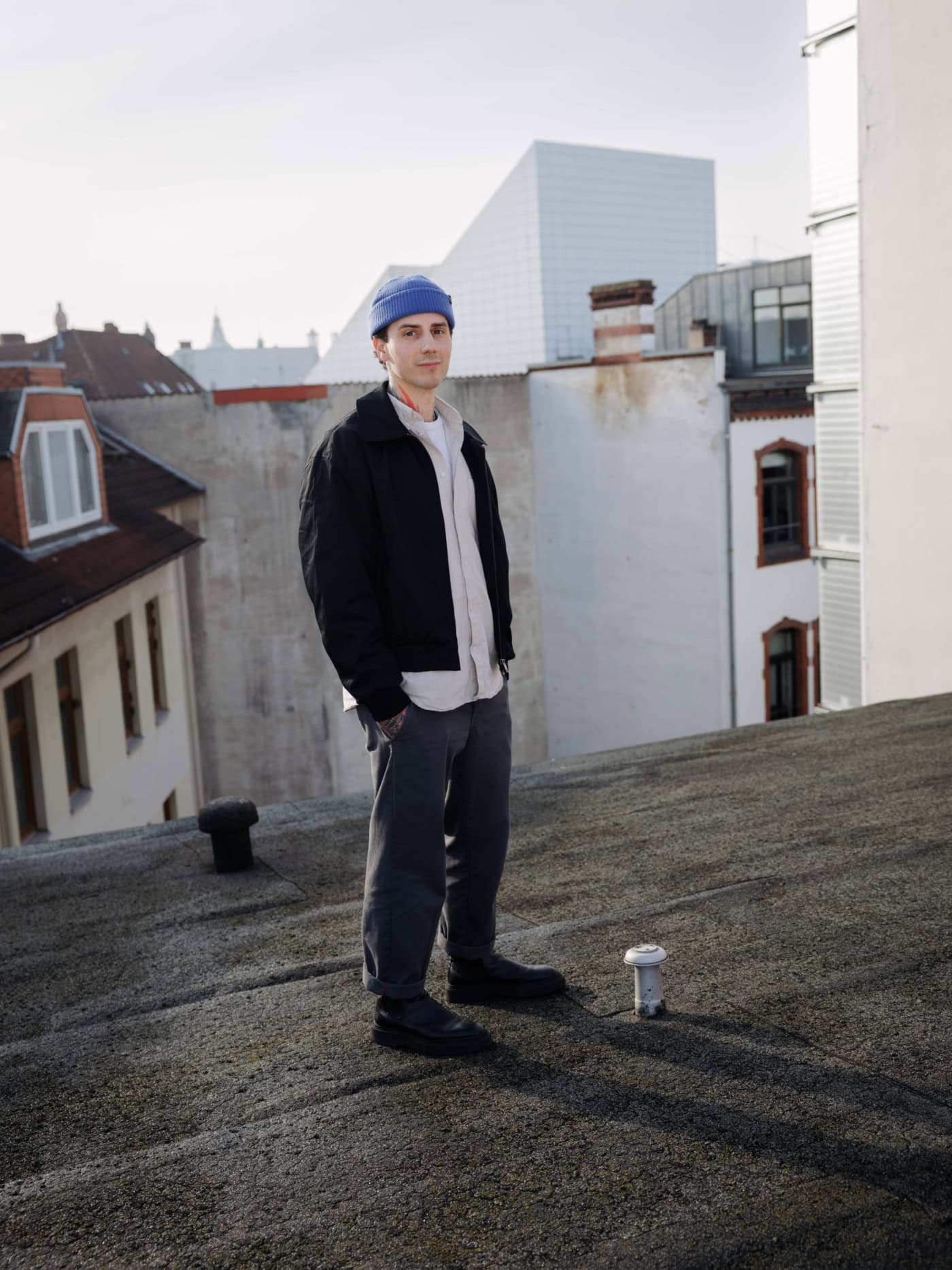 Photo: Anton Vester
Fred Hahndorf deliberately questions the construct of ‘masculinity’ with his clients
Is masculinity a social construct?
In short: yes. From a scientific point of view, masculinity is regarded as something that is produced – not as something natural that is simply there. This view is now widespread outside academia, too. In nurseries, schools and training courses, the statement that gender is socially shaped hardly raises an eyebrow any more.
With masculinity in particular, though, it becomes clear how hard it is to pin down. Ask people what masculinity means beyond the physical, and many of them falter.
Is that because there’s no clear definition of masculinity?
Masculinity is rarely defined on its own terms. Often it only takes shape in contrast to something else, such as femininity. Roles such as fatherhood or family then often serve as a guide, but they are closely tied to physical or biological ideas. That’s exactly why we speak of gender relations. Masculinity and femininity can only be understood in relation to each other.
How much do findings from critical studies of masculinity feed into your work?
To be honest, I find that hard to answer. My impression is that practical work with boys and men and critical masculinity studies often run on two parallel tracks. There are attempts to connect the two more closely, but the research often remains quite far removed from what actually happens in practice. Conversely, many people do very good work with young men without explicitly drawing on critical masculinity studies.
In my day-to-day work, theoretical insights are more of a background, an attitude. Gender does play a role in counselling, but not always at a conceptual level. Telling teenagers about hegemonic masculinity, or that gender is a construct, simply doesn’t work particularly well.
So how do you translate these theoretical approaches for young people in concrete terms?
I try to make the questions behind the theory practical. When a boy says, ‘A boy has to be like this,’ I ask why. Where does this idea lead him? What does it promise him – and what might it also take away from him? That’s the level of action at which critical masculinity becomes tangible for me.
There are controversial surveys, for example by Plan International, suggesting that young people want more traditional gender roles again. Is there scientific evidence for that?
The surveys by Plan International came in for a lot of criticism, partly because of how the research was designed. Different groups were given different questionnaires, and the results were then merged. That’s methodologically problematic. At the same time, I should say that I’m no longer actively involved in research myself. What bothers me about many analyses of the figures is that they are often presented in a one-sided, sensationalised way, even though the data actually point to ambivalence and ambiguity.
Do these studies nevertheless reflect something you come across in your practical work?
When I look at our practical work, I certainly do come across ideas like these. Many young people say clearly that they don’t want sex before marriage, or that their ideal is a classic model of work, family and providing. I read that less as a deliberate return to traditional gender roles than as an attempt to create a sense of security. Often these ideas are not yet fully formed. And the question is whether you can expect a Year 8 pupil to know already what his life should look like in his mid-twenties.
Many young people say clearly that they don’t want sex before marriage. I read that less as a deliberate return to traditional gender roles than as an attempt to create a sense of security.
 Fred Hahndorf
Axel Hengst
For more than two decades, he has shaped mannigfaltig e.V.’s work with boys and fathers. A qualified educator, he is one of the association’s longest-serving voices and has been working intensively on questions of gender and gender roles since the 1990s. Hengst launched his first projects for boys back in the mid-nineties, long before the subject attracted wider public attention.
Since 2015 he has also worked as a psychosocial counsellor. He combines many years of experience as an educator with a sensitive and reflective view of gender-specific socialisation. Besides working with boys, he also supports fathers in one-to-one counselling and runs projects such as training courses in work with fathers.
Many boys are searching themselves and at the same time unsure about their role as men. The key question is how we deal with that.
 Axel Hengst
There seems to be a strong need for simple answers, especially when it comes to images of masculinity. Are teenagers and young men particularly susceptible to such clear-cut labels at this stage?
Basically, I’d say this need affects everyone, not just one particular group. Many people are looking for simple answers, because working through complex questions is exhausting. It becomes particularly clear during puberty. Many grow up with clear, unambiguous images of boys and girls. Then they enter a phase in which a lot is changing, and at the same time they are confronted with issues such as diversity.
Time and again I meet boys who ask me what I think about LGBTQ issues. When people stand up for their rights and are visible with rainbow flags, some of them feel threatened. That sense of threat comes from uncertainty; it isn’t radicalism. It becomes an opportunity to engage with the subject.
Does this feeling inevitably lead to a defensive attitude?
Not necessarily. Many boys are searching themselves and at the same time unsure about their role as men. The key question is how we deal with that. These uncertainties can trigger different reactions. Some fall back on traditional arguments, often because that’s what they hear at home. Others look for discussion or deliberately take a different position.
I remember a boy in Year 8 who said very clearly that he wanted to become a doctor and later have a wife who would look after the house and family. Two of his classmates firmly rejected this idea and argued against it. I found it remarkable how clearly these different views were expressed – and how visible the variety of life plans became in the process.
What does diversity-sensitive work with boys look like, and how can it be shaped?
For me, it means above all keeping the diversity of people in mind and taking it seriously, without pigeonholing young people too quickly. It’s important to me always to bear in mind that we never know how a young person will develop. I might have ten boys in front of me, and nobody can say what their lives will look like in ten or twenty years.
How can such open spaces be created?
What matters to me is creating spaces in which different ways of life are allowed to be visible. Especially for boys who don’t yet have a clear position, or who may not want to come out, it’s crucial to send the signal: you belong here, just as you are.
Another important point is to allow discussion. Schools are increasingly unsure how to deal with gender diversity. Rather than sorting or judging too quickly, I think it’s essential to take a look together: who is actually sitting here in front of us, and what do these young people need right now?
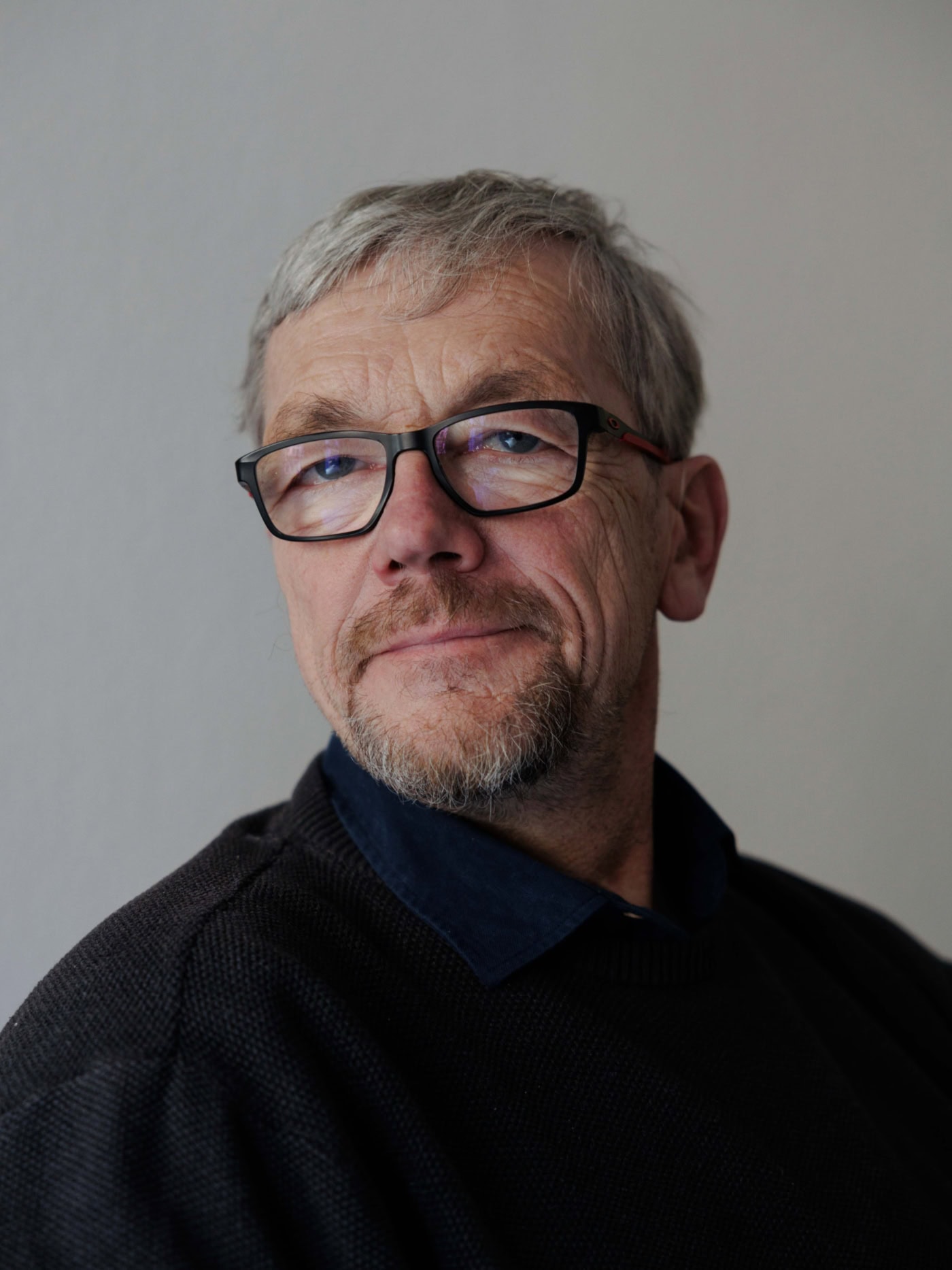 Photo: Anton Vester
Axel Hengst has long shaped the organisation’s work with fathers