Old boys, old conflicts?
Every year, the Coburger Convent draws thousands of fraternity members to Coburg. While some celebrate tradition, others criticise its all-male structures, its torchlight processions and the way it deals with its own history. By Till Franke and Kilian Kämper


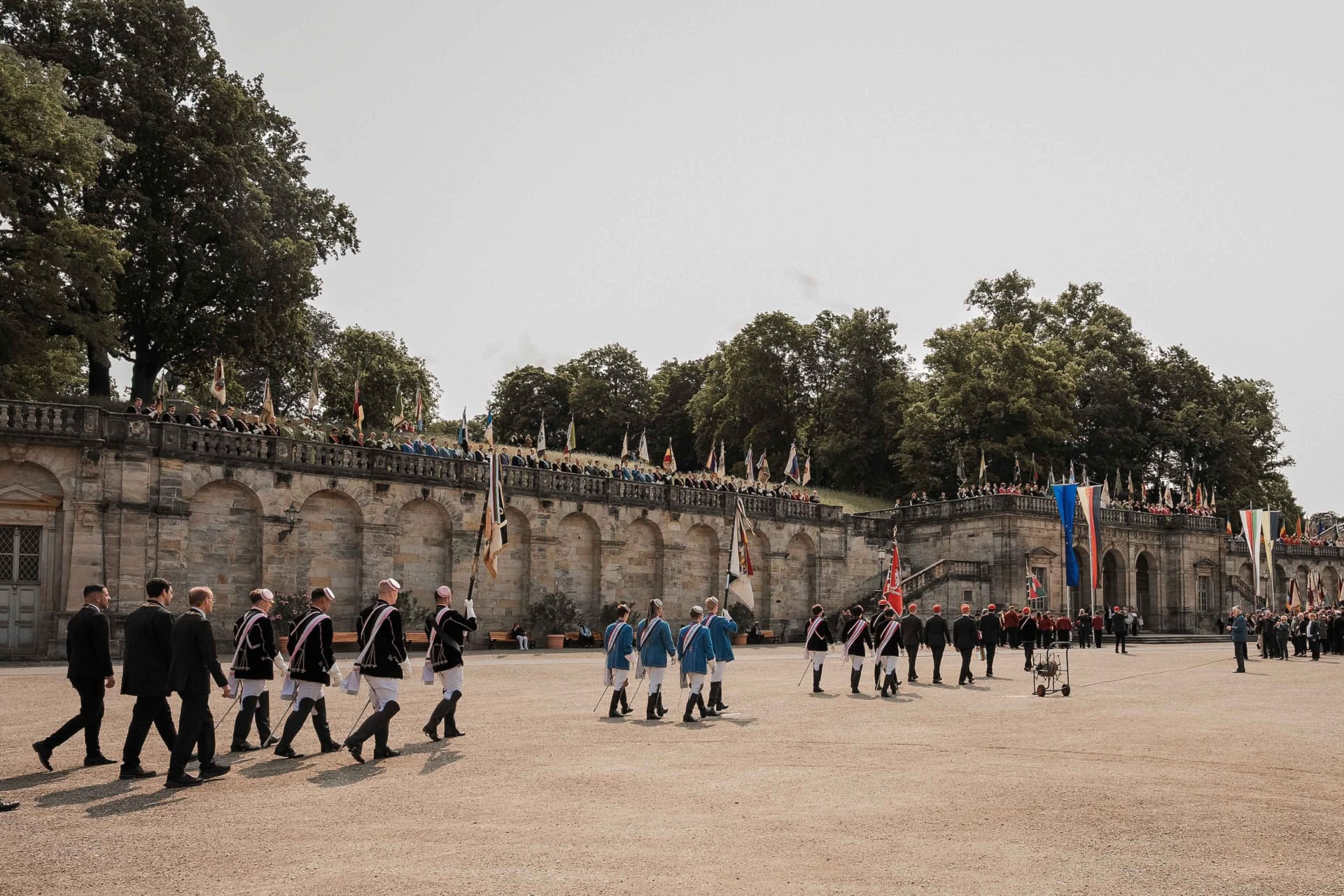
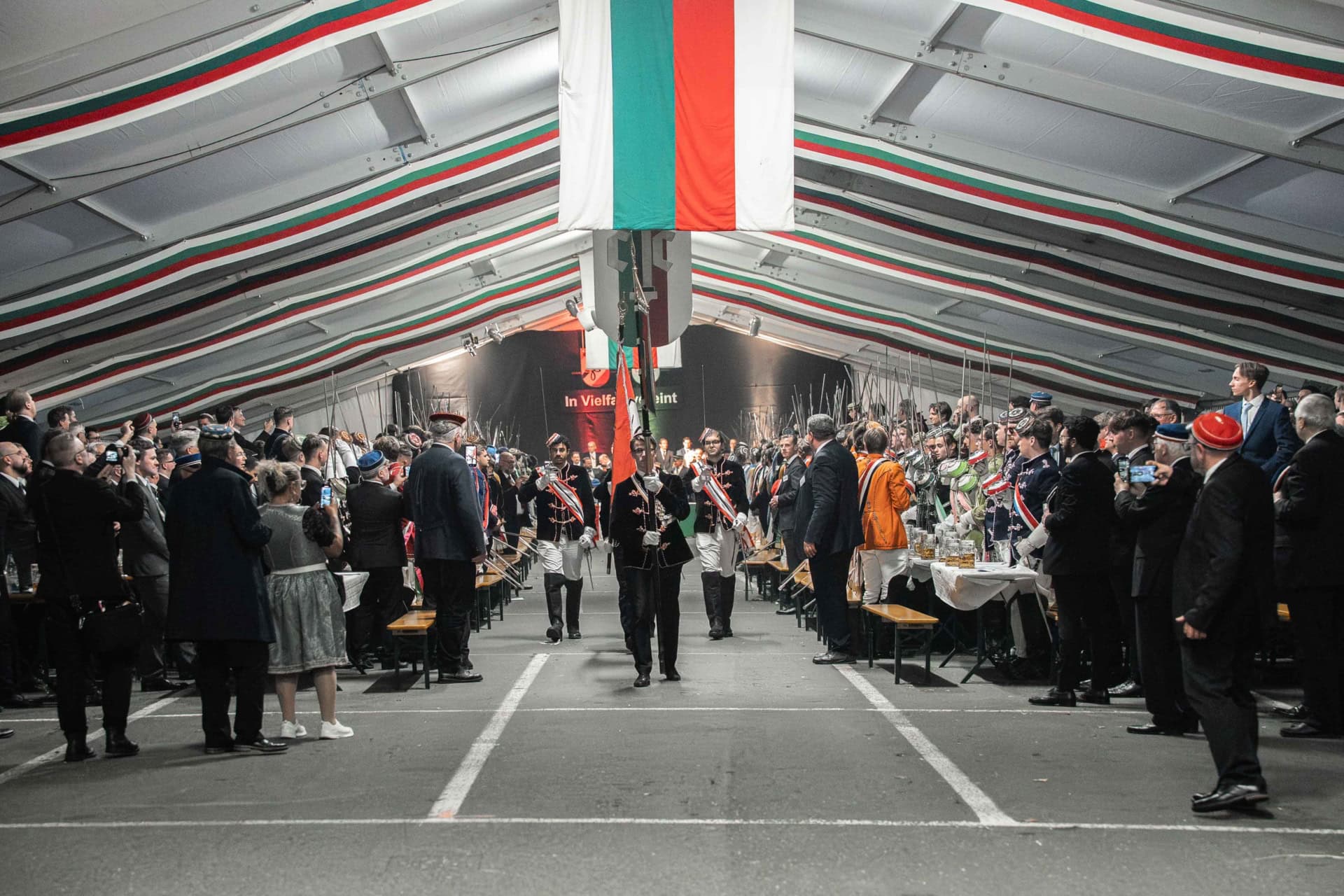
The smell of bratwurst. A thick plume of smoke hangs over Coburg’s market square, rising from a small stand on wheels. Hungry fraternity students queue for sausages, next to the so-called ‘Alte Herren’ – ‘old boys’, the alumni members of the fraternities – all of them wearing coloured caps and sashes that show which fraternity they belong to. Groups in uniform sit at the beer benches all around, clinking glasses, laughing, drinking beer. The Coburger Convent (CC) is back – and with it, the conflict.
Every year at Whitsun, the Convent is held in the Bavarian town of Coburg. It is a tradition more than 150 years old, and it brings not only curious supporters to the town but plenty of critics, too.
The rituals of the Coburger Convent
The Coburger Convent is an umbrella organisation of 100 academic Landsmannschaften and Turnerschaften, two types of German student fraternity. Many of them have Latin-sounding names such as Thuringia, Saxonia or Borussia, which refer to tribes from the Migration Period or the early Middle Ages. In this way, they stage a romanticised – and at times völkisch, ethno-nationalist – link between present-day identity and a supposedly primordial German past, explains the cultural scientist Hubertus Habel in his study of the CC.
All the fraternities in the CC are duelling fraternities, which means that every active member must have fought at least two so-called Mensuren during his time as a student. A Mensur is a ritualised fencing bout in which the opponents face each other with sharp blades and aim deliberately at the largely unprotected head.
The aim is not to win but to endure. If you can’t parry a blow, you have to stand firm. The Mensur is seen as a test of courage and an expression of strength of character, and is meant to show that you will stand your ground as a man when it counts and are ready to sacrifice yourself for the brotherhood, Lucas, 22, tells us. He is taking part in the CC and belongs to a student fraternity in Berlin.
Tensions simmer in Coburg
But behind the Mensur, the smell of bratwurst, the beer benches and the colours lies more than the preservation of tradition. Year after year, the protests grow, too. For many, the Coburger Convent has little to do with folklore – and a lot to do with conservative men’s leagues, elitist structures and a questionable view of history.
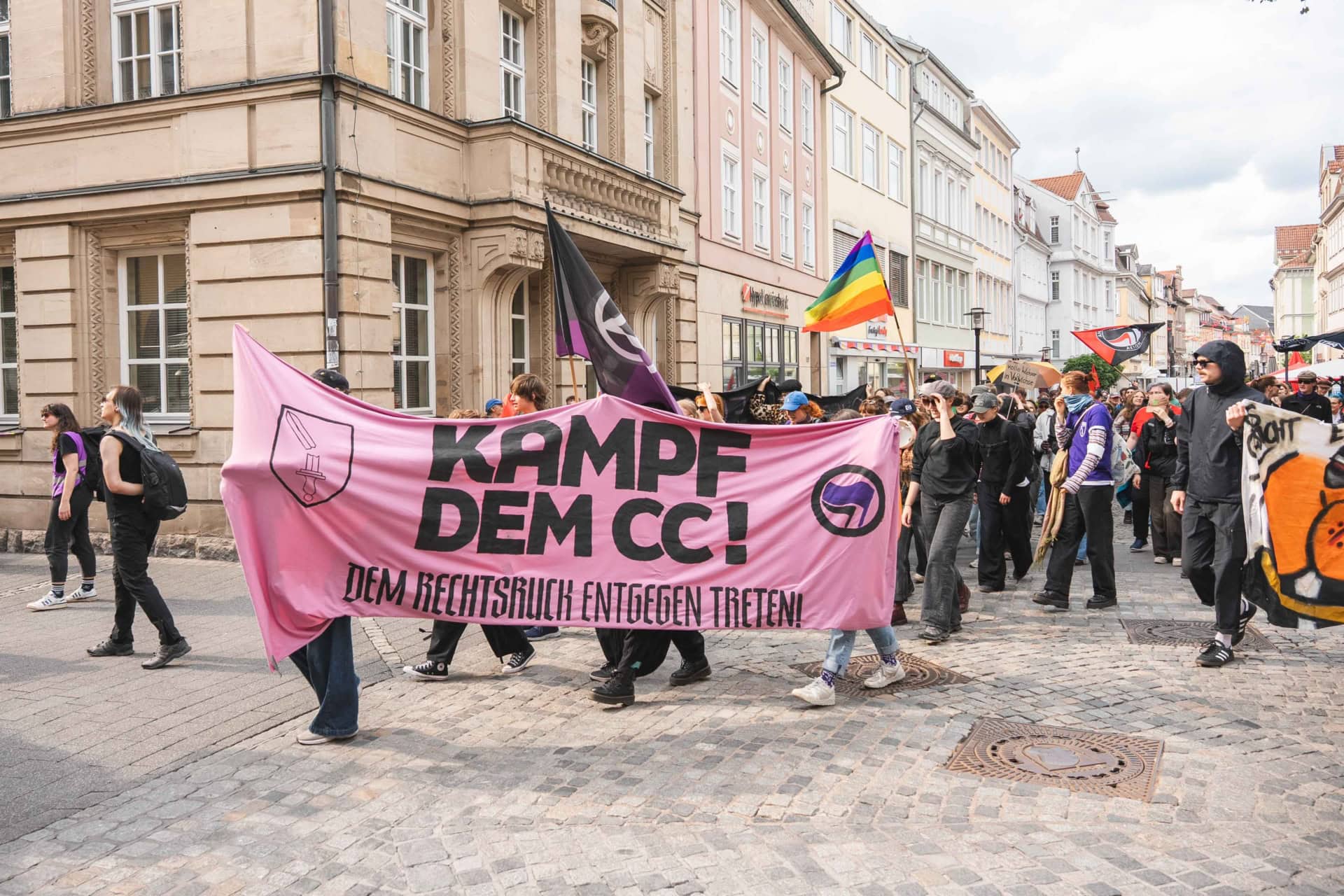
The traditions they bring with them have nothing whatsoever to do with a free, open society, says 27-year-old Sina A., who prefers to remain anonymous. She is a member of the initiative ‘Studentenverbindungen auflösen’ (Dissolve the Student Fraternities).
‘I’m more in favour of us changing as a society.’ The group demonstrates against the Convent every year. Their accusation: the fraternities reproduce a backward-looking image of men, cultivate völkisch narratives and systematically exclude women.
 Sina A. (name changed)
Marching as they did back then
One of the main points of criticism is the history of this Upper Franconian town and its link to the Coburger Convent. On 14 October 1922, Hitler was invited to Coburg as a guest of honour. He later regarded that weekend as an important springboard for his political career, because it was there, in 1922, that he and his SA followers forced through a violent march against left-wing forces – the so-called ‘German Day in Coburg’. The Nazi Party later glorified this event as the movement’s first ‘day of struggle’, and it made Coburg Germany’s first National Socialist town.
As early as 1929, Coburg became the first town in Germany where the Nazi Party won an absolute majority on the town council. Two years later, Franz Schwede was installed there as Germany’s first National Socialist mayor.
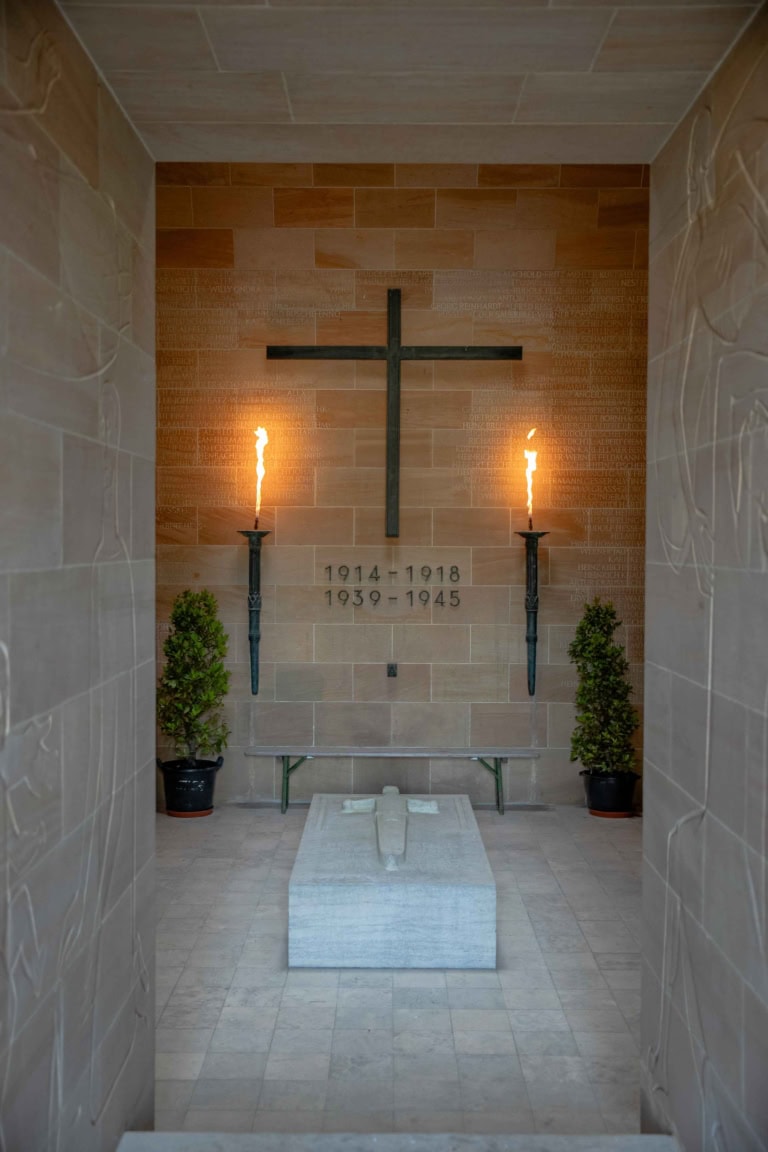
Schwede was also known as a major patron of the Deutsche Landsmannschaft, an important part of the Coburger Convent (CC). These historical ties still reverberate today and regularly spark public debate. Every year on Whit Monday, for example, a memorial ceremony begins at the war memorial on Schlossplatz, which Hitler inaugurated in person. From there, the procession marches through the Hofgarten park to the ‘Memorial of the Deutsche Landsmannschaft’. Among those honoured there are deceased members such as Ferdinand Ernst Nord, a former SA Standartenführer and Luftwaffe officer.
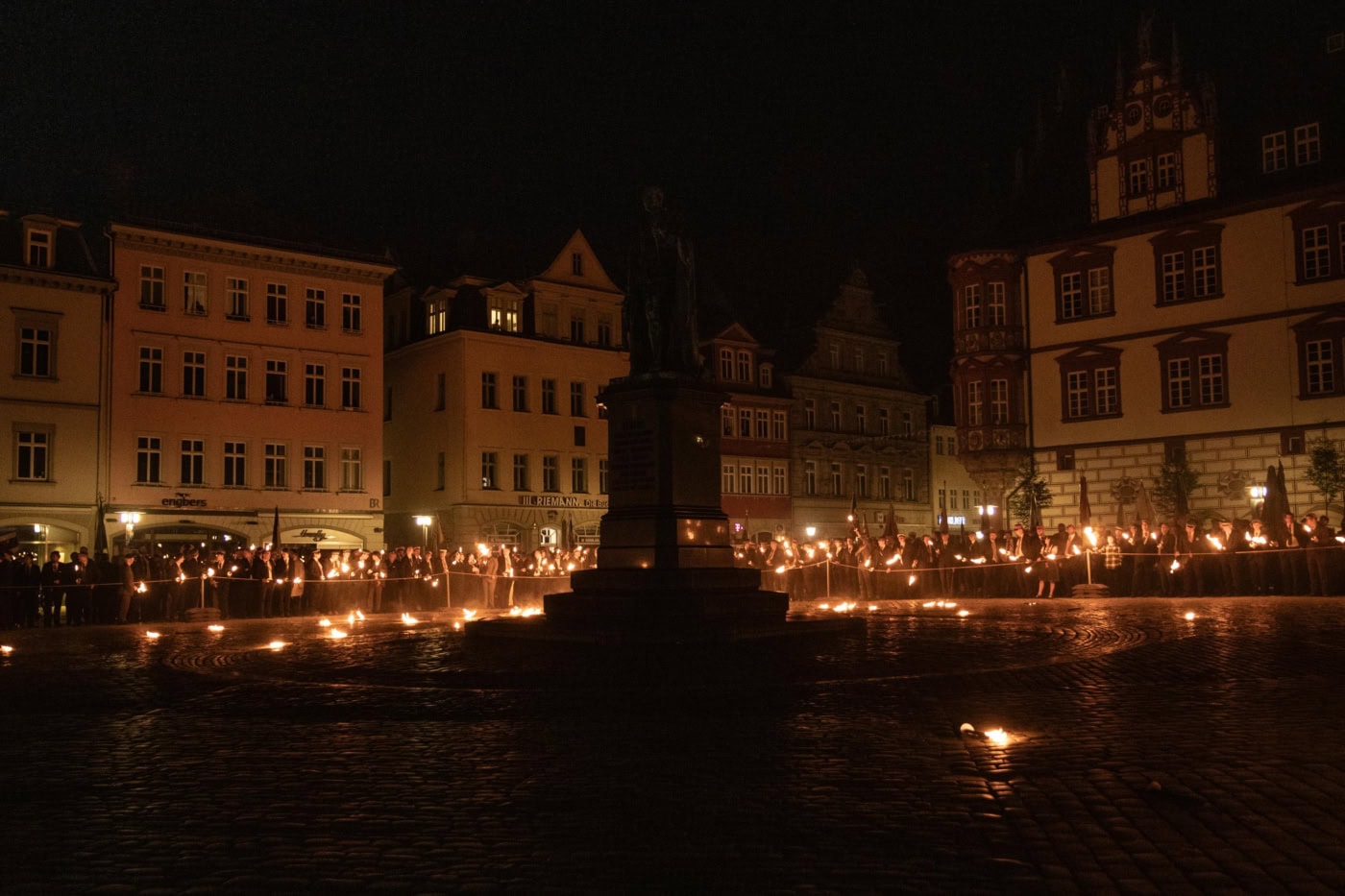
Commemorating former Nazi Party members is not an isolated case. The Coburger Convent’s traditional torchlight procession through the town centre also shows clear parallels in its route and symbolism to historic SA marches.
 Johannes Wagner
‘What bothers me most is really this closeness to images that are also somehow associated with the Nazi era,’ says Johannes Wagner, a Green Party member of the Bundestag and member of its health committee. He criticises the fact that outdated and historically tainted symbolism is still being reproduced at the Coburger Convent without any apparent effort to come to terms with it or put it in critical context. At the same time, Wagner warns against sweeping judgements.
You shouldn’t immediately brand everyone with conservative views a Nazi, he says – that doesn’t do justice to political debate. But what he would like to see is an honest approach to the CC’s own history. ‘I think if you organise a major event like this, you also have a responsibility. And you have to face up to that responsibility.’
When coming to terms with the past becomes an afterthought
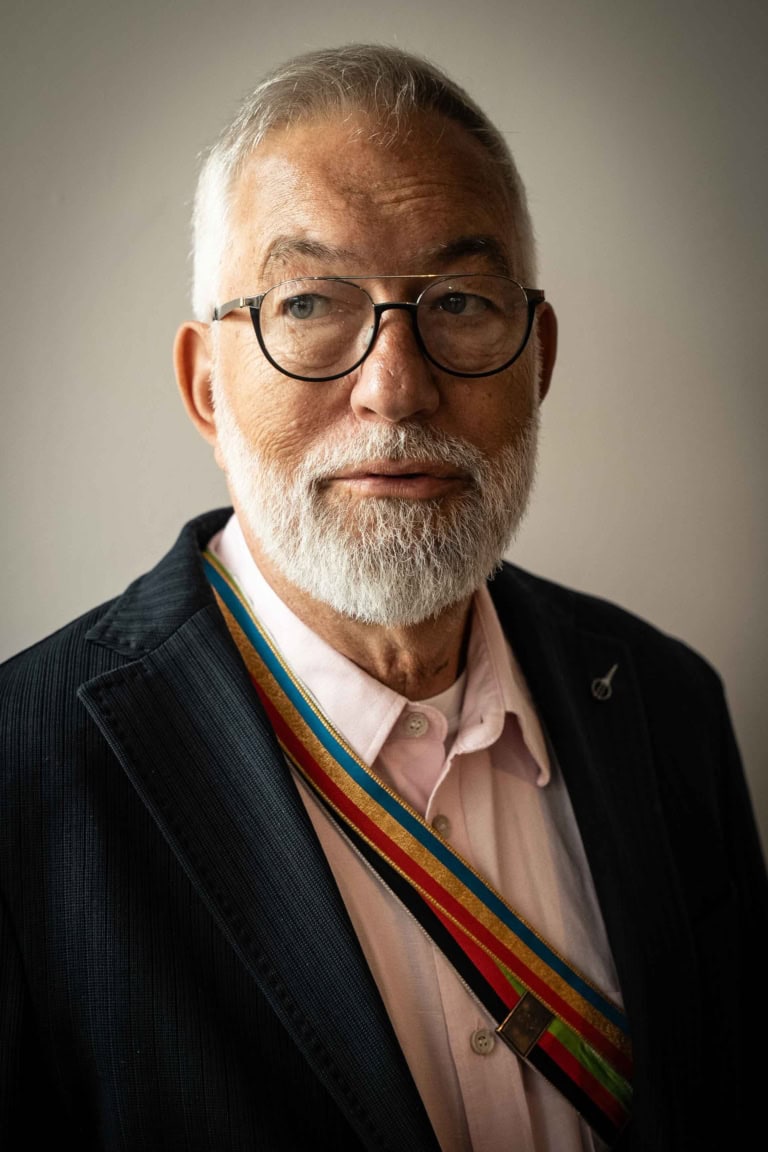
The CC’s press spokesman, Martin Vaupel, sees things very differently: ‘Everyone has to decide that for themselves.’ In saying so, he absolves himself and the CC entirely of responsibility for doing justice to their own history and for educating people about it.
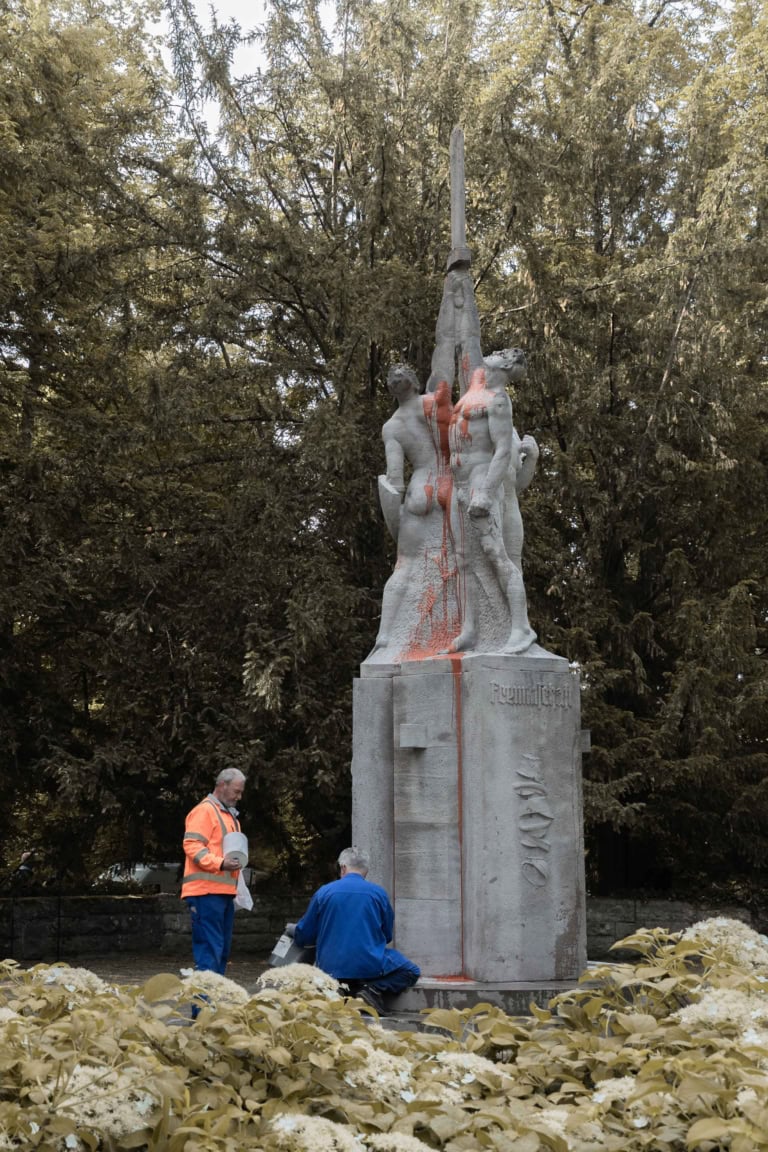
Despite the controversy, there are plenty of onlookers at the foot of the Veste, the fortress where the memorial stands, watching the Landsmannschaften go about their business. Final preparations for the church service and the laying of wreaths at the memorial are in full swing, and people are frantically trying to clean the paint-covered monument.
Activists daubed the memorial with red paint the night before. The protective measures – security staff on site and a wooden screen built specially beforehand – were of no use yet again; by now this has become a kind of ‘tradition’ in itself, as a town employee tells us.
 Martin Vaupel
A colourful spectacle
Some locals enjoy the spectacle, too. One of them is Clemens, 71, who describes himself as a ‘Coburger born and bred’. ‘I don’t see the whole thing from a political point of view – for me it’s a folklore event. What I’ve always enjoyed is simply how colourful the whole thing is.’ Clemens argues for keeping the tradition and leaving the association alone. He thinks it is important not to dwell too much on the mistakes of the past, but to avoid similar mistakes in the future.
After the service and the ritual laying of wreaths in memory of those who died in the two world wars, everyone is busy taking souvenir photos. The individual fraternity houses huddle together and pose in uniform with their swords and flags.
Not far from the bustle of the fraternity students and old boys, a group gathers in the shade of a tree for a picnic. This is no breakfast among friends: it is a counter-event to the Coburger Convent and to the honouring of former Nazi supporters.
Among them is Ellen, a 67-year-old from Coburg who is active in Omas gegen Rechts (Grannies Against the Right). ‘They [the CC participants] are perfectly peaceful. They keep to themselves and it’s all fine. It’s just this march tonight – it’s very reminiscent of the Hitler era. We’d really rather not have them here like this,’ she explains, also criticising the closeness to outdated symbols and images that the event reproduces year after year.
The combative ‘Alte Herren’
We, too, have a number of open and respectful conversations with participants in the Coburger Convent. But not every encounter is constructive and on an equal footing. One person, who has already caused controversy in previous years, stands out in a particularly negative way.
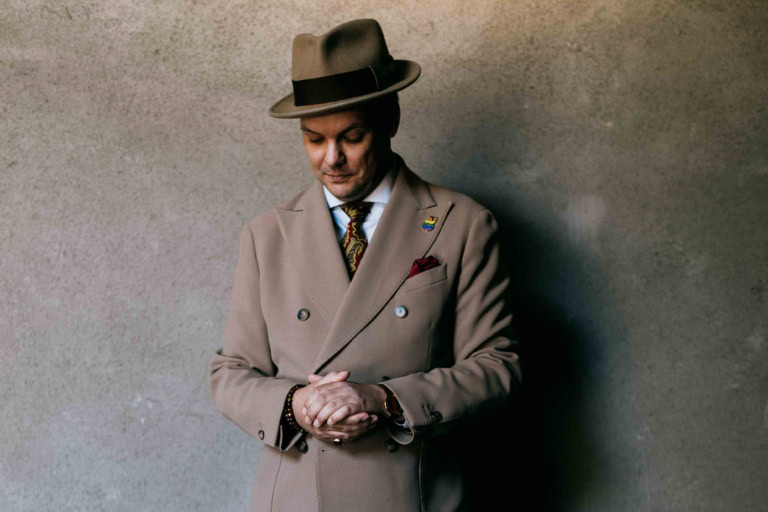
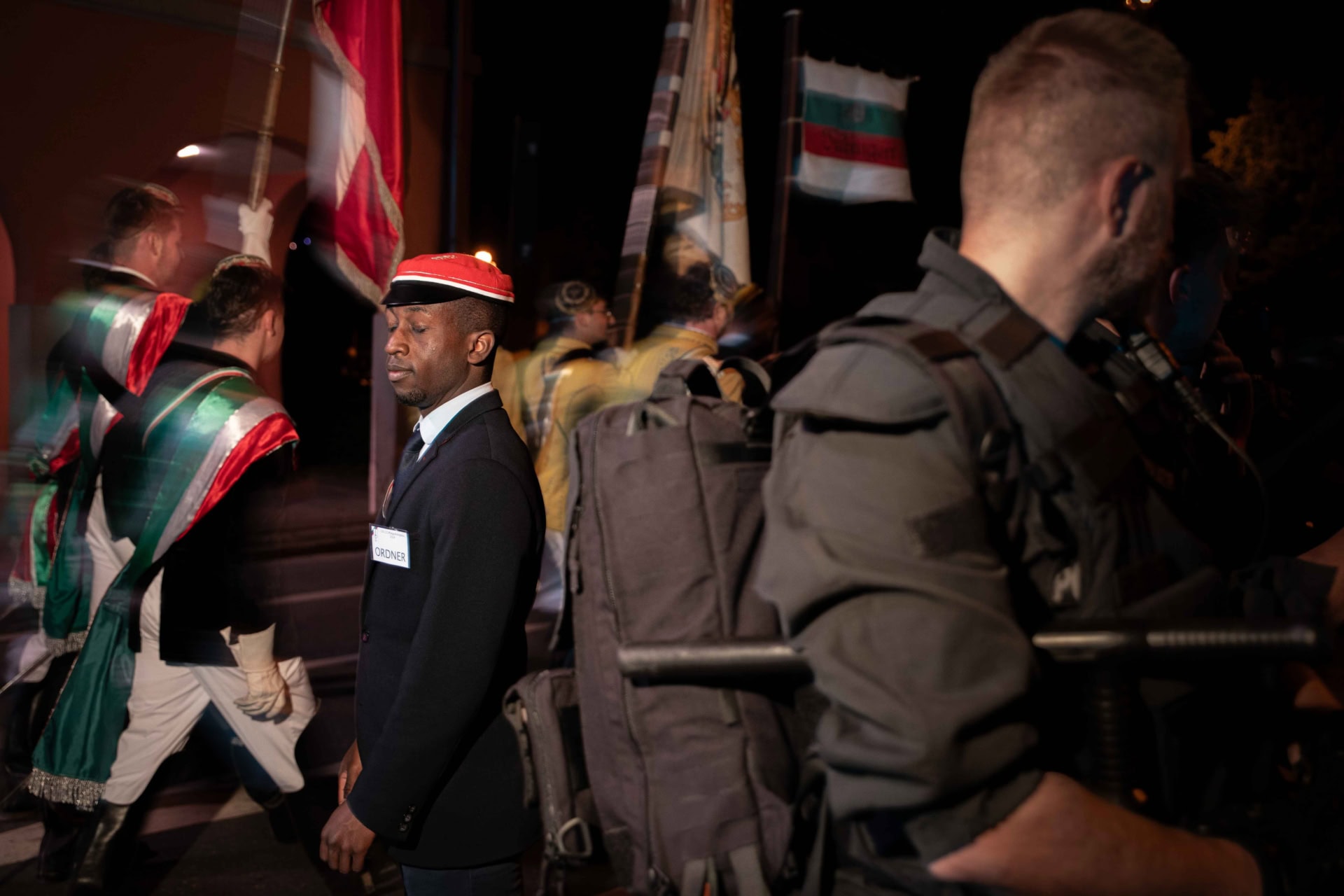
Even before the ceremony on Schlossplatz begins, we are immediately noticed as journalists with camera equipment. A young fraternity member approaches us in a friendly manner, tells us how the event will run and asks whether there is anything else we’d like to know. Shortly afterwards, we are photographed by Hans-Georg Schollmeyer, for many years the CC’s congress officer and treasurer.
He then confronts us. Our presence evidently bothers him. In front of us he makes disparaging remarks and homophobic insinuations. The situation escalates further: when one of us tries to get to the memorial on the square – like the other journalists – Schollmeyer blocks the way with the words: ‘You’ll do what I want – not what you want.’
Tensions between the CC and the media
A few hours later, we run into Schollmeyer again. While I am photographing the torchlight procession, a public event, an older man shoves me into a group of spectators and hits my camera. Schollmeyer tells me I’m not allowed to take photos here and shows us a card that says ‘Versammlungsleiter’ – the official in charge of the assembly.
He doesn’t wear the card, a piece of laminated paper, openly. So there is no way of recognising him as the official in charge. We are surprised that he, of all people, is giving instructions there. After all, he officially stepped down after a public email scandal in 2023. Schollmeyer resigned after internal emails were leaked in which he discussed how to deal with critical journalists.
Among other things, they talked about exposing journalists with a kind of ‘wanted poster campaign’ – a plan that, from the outside, looked like intimidation and targeted denunciation, and that increased the pressure on the CC. Yet he still acts as a leader. In retrospect, his resignation seems more symbolic than real. When we ask the CC’s press spokesman about it, we get only a very vague statement. His comment on the whole affair: ‘Simply embarrassing.’
Coburg’s streets fill up again with CC members, who, after the service and the wreath-laying at the memorial, head for the nearest beer garden. We too make our way back into the town centre and stop at the Münchner Hofbräu – one of the regular haunts of many Convent participants. The landlady, Victoria Klose, 35, gives us a friendly welcome. Every year she hosts fraternity students and old boys in her traditional tavern.
‘They’re really warm, and every year there are hugs when we see each other again. Every year it’s somehow like coming home for them, because they’ve honestly known me for ages,’ says Victoria. Then she adds that it is nice to be asked for once how she personally sees the whole thing. She criticises what she considers one-sided, negative coverage by the established media. She tells us that the Whitsun weekend is one of the busiest of the year and therefore very lucrative for landlords who let CC members in. But she also mentions that she supports the CC as a private individual.
‘My staff and I get more respect from the CC lot than from some other customers. It’s not just that my experiences have been mostly positive – they’ve only been positive. There hasn’t been a single case where I’d really say they were disrespectful.’ Indeed, a waitress from the CC’s marquee also has nothing but good things to say about the participants: ‘The lads are just lovely and nice. They don’t skip out on the bill, and they leave good tips.’
A summer battle over the town
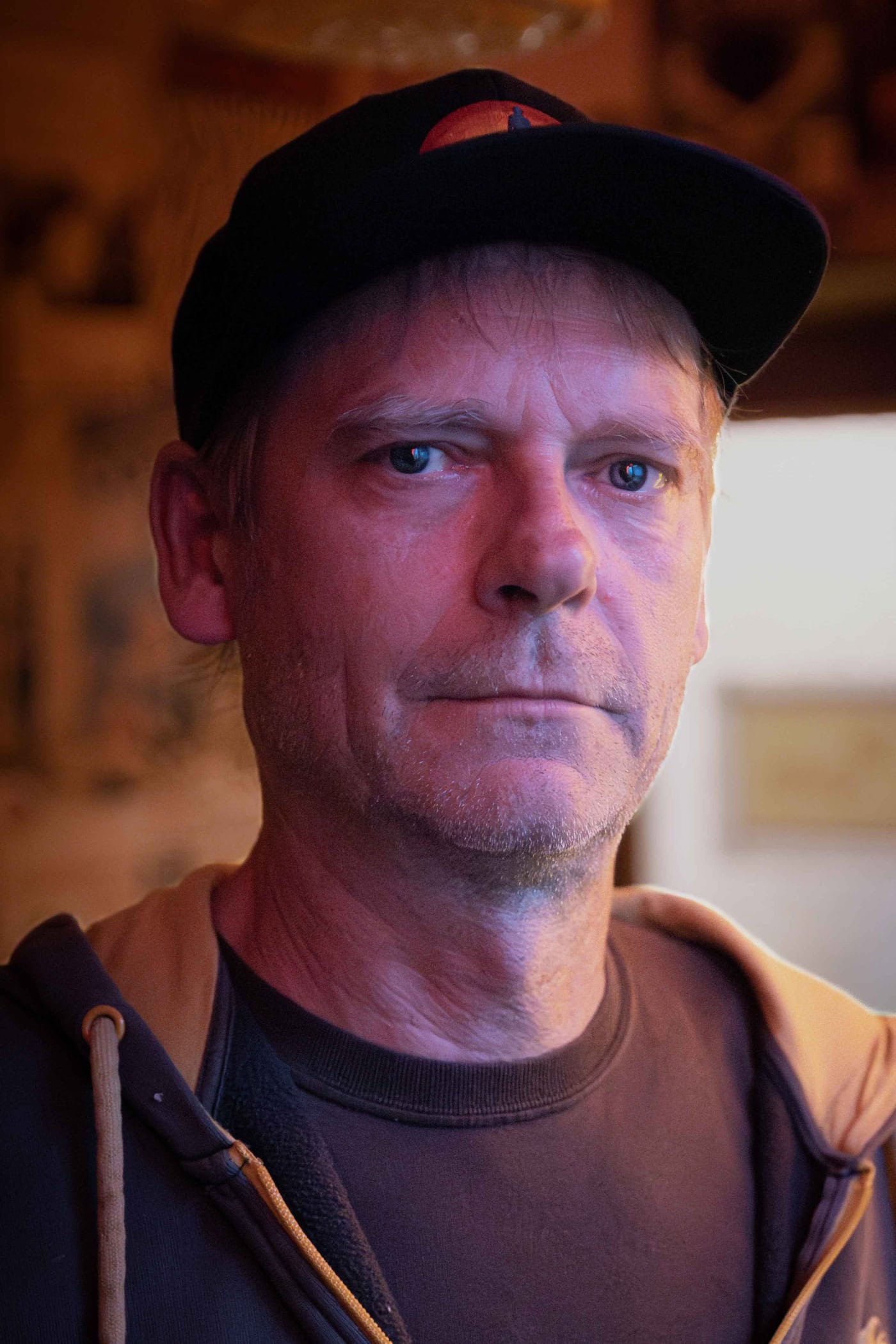
But not everyone in Coburg’s hospitality trade shares this positive view of the Convent. Other landlords experience the days around Whitsun quite differently. One of them is Olli Müller, who runs the Sonderbar. He is critical of the Convent and does not serve participants wearing fraternity colours. ‘I’ve never been able to see anything in it. Every year the same bloody headlines about the torchlight procession, and you feel like you’re back in 1945,’ Olli tells us, also criticising the closeness to images from the Nazi era and the outdated customs of the Coburger Convent.
Instead, he argues for an alternative to the CC: a ‘town festival with creative minds’ is his counter-proposal – an event that makes room for new ideas and at the same time gives the town’s pubs and restaurants reliable planning and takings.
 Olli Müller
Back on the market square, the hustle and bustle continues. The beer benches are full and the taps are flowing. There’s no missing the cloud of bratwurst smoke – nor, of course, the 200 or so participants who like to meet here for a chat and a gossip.
In the Goldener Anker, another of the participants’ regular haunts, Martin Vaupel, press spokesman of the Coburger Convent, tells us about his experiences and how he came to join the CC. He distances himself from the AfD and far-right thinking, but stresses that at this moment he is speaking only for himself, not for the CC.
You can’t systematically exclude a democratically elected party, he says, even if it opposes the basic values of democracy. The same applies to its members who are also part of the Coburger Convent, he explains, adding that if the AfD were officially banned, then something would have to be done and members would have to be made to choose.
Nevertheless, he repeatedly plays down the past with the words ‘children of their time’. ‘These people [Nazis] were used to rebuild the republic. You might find one or two among them who were possibly involved in some way [an allusion to war crimes].’
Asked why the torchlight procession still follows the old SA route, he, too, makes a trivial comparison, explaining that it is the only sensible route to the market square. What he seems to mean is: yes, a lot of fraternity members were heavily involved in the Nazi era, and there may well have been the odd war crime – but didn’t these people go on to build a splendid republic after 1945?
 Jonas Zink
The CC sets its sights high
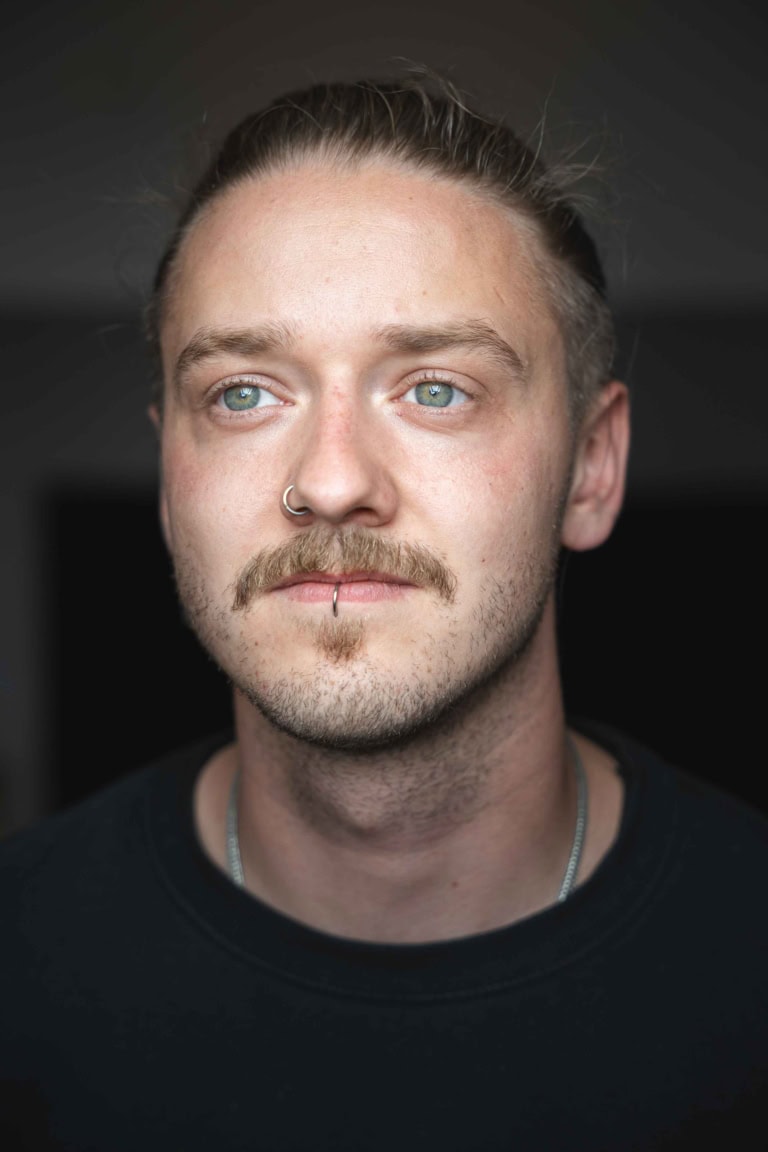
The route is still one of the biggest points of criticism levelled at the CC. Residents such as Jonas Zink, 27, believe it has long been out of step with the times. ‘The way they go – as with the torchlight procession on Whit Monday – is traditionally an old SA route, used here to take over the town, to show that over the Whitsun weekend the town doesn’t belong to the people who live in it.’
At the final speech on the market square, too, the speaker is deliberately raised on a lifting platform above the mayor’s balcony, to make the hierarchy visible. The torchlight procession and the torch-throwing on the market square that follows, combined with the speech from the platform, send a clear signal of provocation to the town of Coburg.
Not all participants in the Coburger Convent are backward-looking – many of the younger members come across as open-minded, have respectful conversations and clearly distance themselves from far-right thinking. The association itself does not see itself as right-wing extremist, and it would be wrong to claim across the board that all its members or fraternity houses hold right-wing views. But that is precisely the problem: openness within is not matched by any critical engagement with the outside world.
A history that won’t go away
Despite the diversity within the Convent’s ranks, the umbrella association has made no visible or structural effort whatsoever to come to terms with its own history. Instead of taking responsibility, it leaves it to individuals – historical connections are played down or brushed aside with platitudes such as ‘children of their time’. The symbolism on display at events such as the torchlight procession or the laying of wreaths is strongly reminiscent of Nazi marches. Images of uniformed groups of men, torches, a martial aesthetic and the honouring of former Nazi Party members show no sign of a critical, enlightened approach to history.
What remains is the impression of an association that hides behind tradition while producing images that, in a democratic, open society, rightly meet with resistance. As long as there is no honest reckoning with the past and no clear break from it, the Coburger Convent will remain, for many, above all one thing: an event that reproduces a view of history that should have been consigned to the past long ago.