All sweetness and light in the Ore Mountains? When staying put becomes resistance
The village of Altenberg in Saxony looks idyllic – until you look more closely. A portrait of a young man standing up to the rise of the far right.
By Jonathan Bar-Am, Paula Baierlein, Kilian Kämper


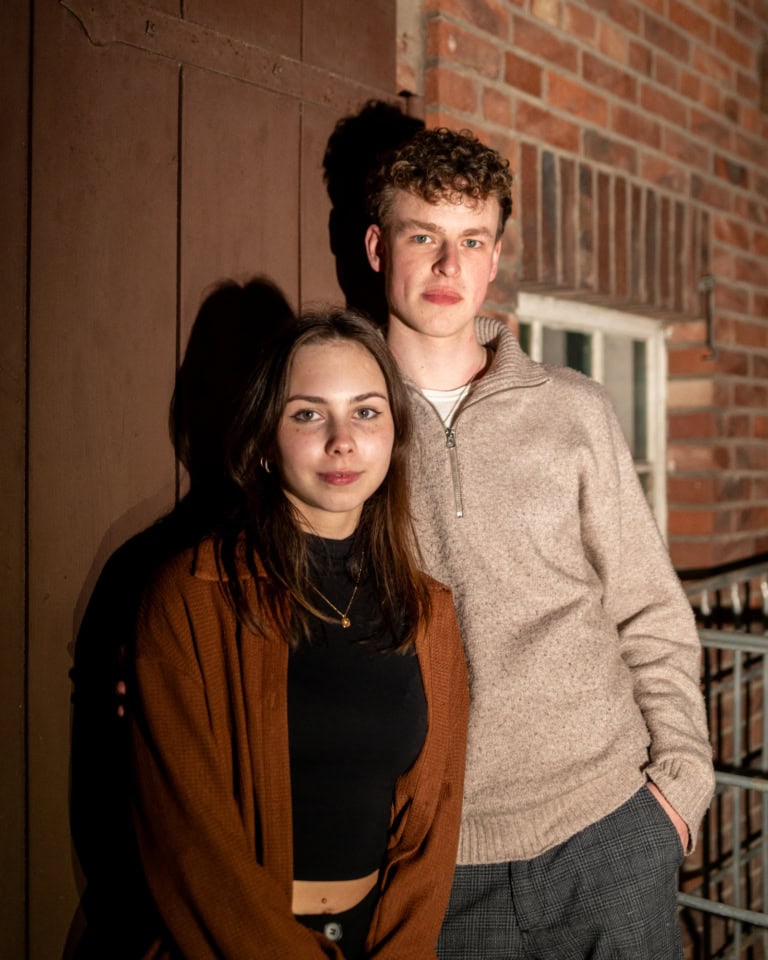
Once, Pit remembers, he was sitting round a fire pit with people from the village when some of them suddenly raised their right arms. Some of them, Pit believes, did it out of conviction. Others probably had no idea of the context and did it ‘just because they thought it was cool’, he says. Hardly anyone here thinks a Hitler salute is a big deal.
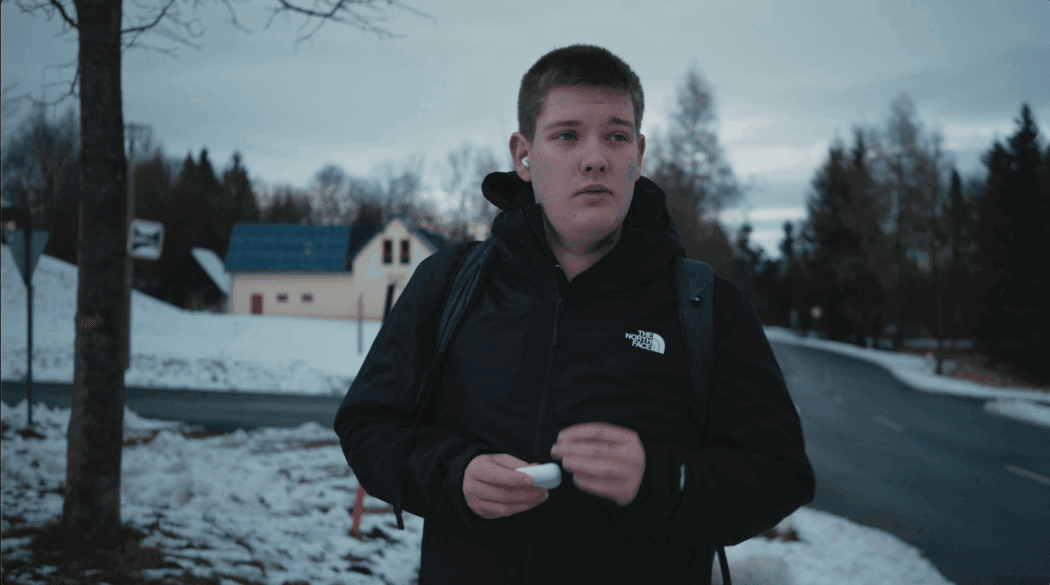
The 17-year-old uses left-wing politics to push back against the growing far-right tendencies in his home town of Altenberg, which sits idyllically among snow-covered mountains, rolling meadows and forests in the district of Saxon Switzerland-Eastern Ore Mountains.
In the 2024 state election, the far-right AfD won 39.2 per cent of the party-list vote in Altenberg – up four percentage points on 2019. The result reflects a wider trend in the Ore Mountains, where right-wing and right-wing populist parties have been gaining ground for years.
English subtitles: switch them on manually with the CC button in the video player.
In the region, the Left Party (Die Linke) meets with a good deal of scepticism. Many associate it with the GDR past and oppose it on principle. Yet the party’s small office in Altenberg has long been more than a local branch. It is a meeting point and a refuge for young people like Pit who feel politically isolated in their surroundings.
After the last election, it was unclear for a while whether the office could stay open at all. One night, persons unknown blew up its letterbox. ‘We haven’t had one since,’ says Pit. To him, it was no coincidence but an attack on everything he stands for politically.
People here are still strongly attached to their home, says one Altenberg resident. ‘Everything here is all sweetness and light,’ says another. ‘The big problems out there feel somehow further away.’ It’s almost as if they lived in a different world. In Altenberg, people know each other, say hello to each other – and know where everyone lives. That’s why Pit steers clear of some political arguments. ‘We have to get along with each other somehow,’ he says.
I ride the bus to Dresden with the same people I’ll be demonstrating against later.
The contact with Pit came about through another photo project in Saxony. The three talked to him beforehand, but the story only really took shape on location, they say. ‘We wanted to let Pit tell it himself: a young voice showing that there are committed, left-wing people in rural Saxony too. That perspective often gets lost in mainstream coverage,’ says Jonathan Bar-Am.
Pit got his left-wing views from his grandfather. ‘At eight o’clock we always watched the 15-minute evening news and talked about it afterwards.’ He remembers how, before the Saxon state election, lots of people were saying ‘Sei schlau, wähl blau’ – ‘Be smart, vote blue’, blue being the AfD’s colour. Because, they felt, politicians ignored them anyway.
Many people here feel economically left behind. Traditional mining is a thing of the past, and there are structural problems, as in many rural regions: crumbling public transport, closed hospitals, roads that are barely cleared in winter. Everyday life in the countryside.


At demonstrations, Pit tries to keep ahead of the neo-Nazis. ‘I ride the bus to Dresden with the same people I’ll be demonstrating against later,’ he says, ‘and then I hope they don’t recognise me.’ When he sees weighted gloves sticking out of their pockets, he gets a queasy feeling. ‘One punch and you’re out cold for a bit.’ Still, Pit carries on. Here of all places, he says, it’s important not to give up and to show that there are other perspectives. Who else is going to stay?
For the film portrait of Pit, Paula Baierlein, Jonathan Bar-Am and Kilian Kämper travelled from Hannover to Altenberg several times. ‘Low budget, with sleeping bags and camping mats. We showered at the swimming pool and filmed with our own gear, plus kit borrowed from the university,’ they say.
The film was screened at the Kurzsüchtig short film festival in Leipzig and has been nominated for up-and-coming’s German Young Talent Film Award and for the European Film Festival Göttingen.