Irmela Mensah-Schramm: fighting Nazi slogans with a scraper and a heart
For decades one woman has been scraping messages of hate out of public spaces – she has removed more than 140,000 of them. The attacks go on.
By Tetyana Chernyavska (text), Jasper Hill (photos)


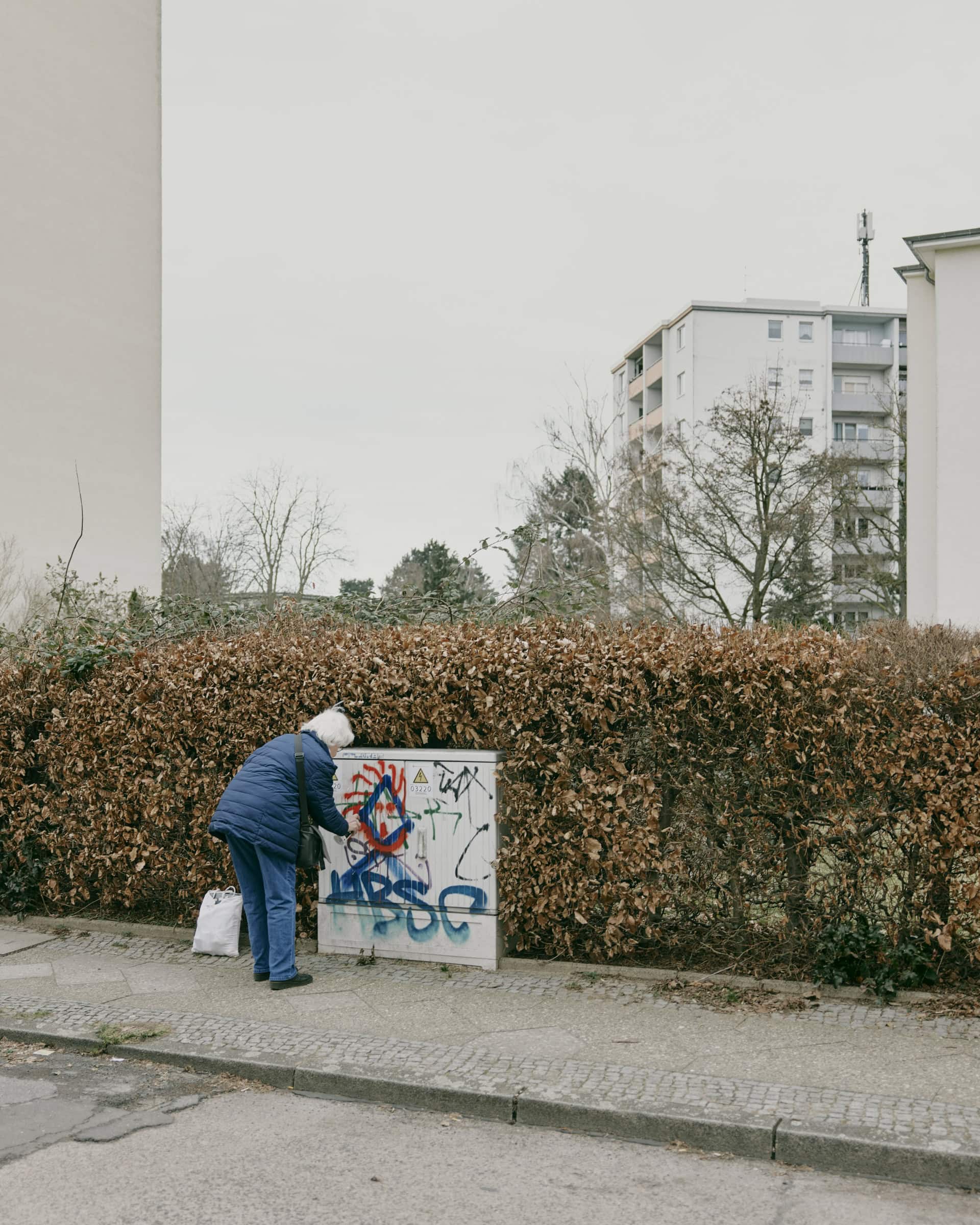
A scraper rasps over stuck-on paper. Scraps and shavings fall to the ground. The sticker with the right-wing hate message is gone. Two days later, somewhere else: the hiss of a spray can. A red heart covers the spot where a swastika used to be. It is painstaking work that Irmela Mensah-Schramm has taken on again and again for decades. She meets with interest, incomprehension and hatred. Hate messages and physical attacks are now part of the activist’s everyday life.
Irmela Mensah-Schramm was born in Stuttgart in December 1945 – shortly after the end of the Second World War. The consequences of the Nazi regime were almost everywhere around her. But it took some 40 years and a move to another city before she took up the fight against right-wing extremism. In 1986, when she was 41, she noticed a sticker at the bus stop right outside her home in the Berlin district of Wannsee bearing the provocative slogan ‘Freedom for Rudolf Hess’. The sticker, named after one of the main defendants at the International Military Tribunal in Nuremberg, went against not only her political convictions but also her family’s stories about the war years and her memories of a visit to Sachsenhausen concentration camp.
She scraped the sticker off with her front-door key – and so began her long-standing mission. For Irmela, removing the sticker was a liberation and a cleansing of the past that fulfilled her and laid the foundation for her activism in the decades that followed. From the start she was clear: words must be followed by deeds. ‘The reason I do this is that I cannot bear the indifference around me. I see fundamental rights and democracy itself in danger.’

Irmela Mensah-Schramm, photographed in her living room
The reason I do this is that I cannot bear the indifference around me. I see fundamental rights and democracy itself in danger.
For almost four decades now, Irmela Mensah-Schramm has been roaming German towns and cities on her mission to remove or spray over neo-Nazi stickers and graffiti. She is equipped with an oven scraper, spray paint and nail-varnish remover, which she always carries in a jute bag. The police have confiscated these tools several times. People see her work in different ways. While some regard her as a heroine and the ‘Queen of Civil Courage’, others meet her with threats and even physical attacks.
In 1996 Irmela Mensah-Schramm was awarded the Federal Cross of Merit medal. But she returned the award in 2000 after learning that the former NPD and later CDU politician Heinz Eckhoff had also been awarded the Federal Cross of Merit – Eckhoff had been a member of the SS during the Third Reich.
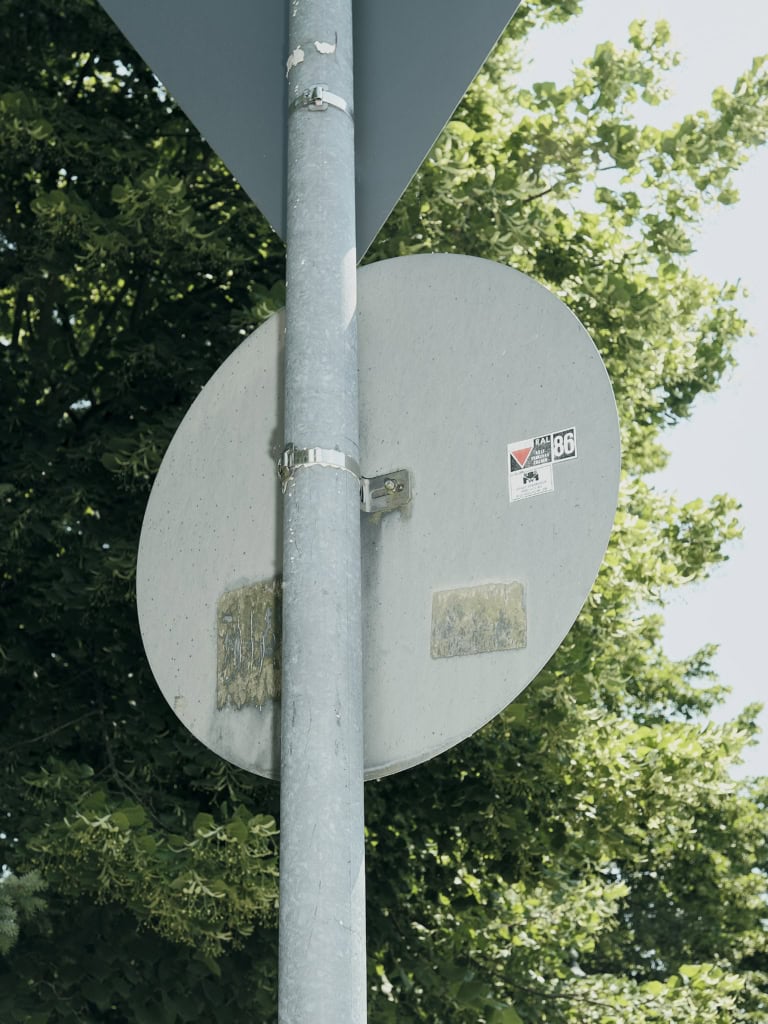 Berlin, 2023
The remains of two of the first stickers she removed can still be seen on a street sign right next to Mensah-Schramm’s flat.
The notion of ‘freedom of expression’ is cleverly sidestepped. Of course topics are picked up and adapted to the situation: wars and conflicts over Russia/Ukraine and Israel/Gaza, government measures on agricultural diesel, energy issues and, again and again, refugee policy.
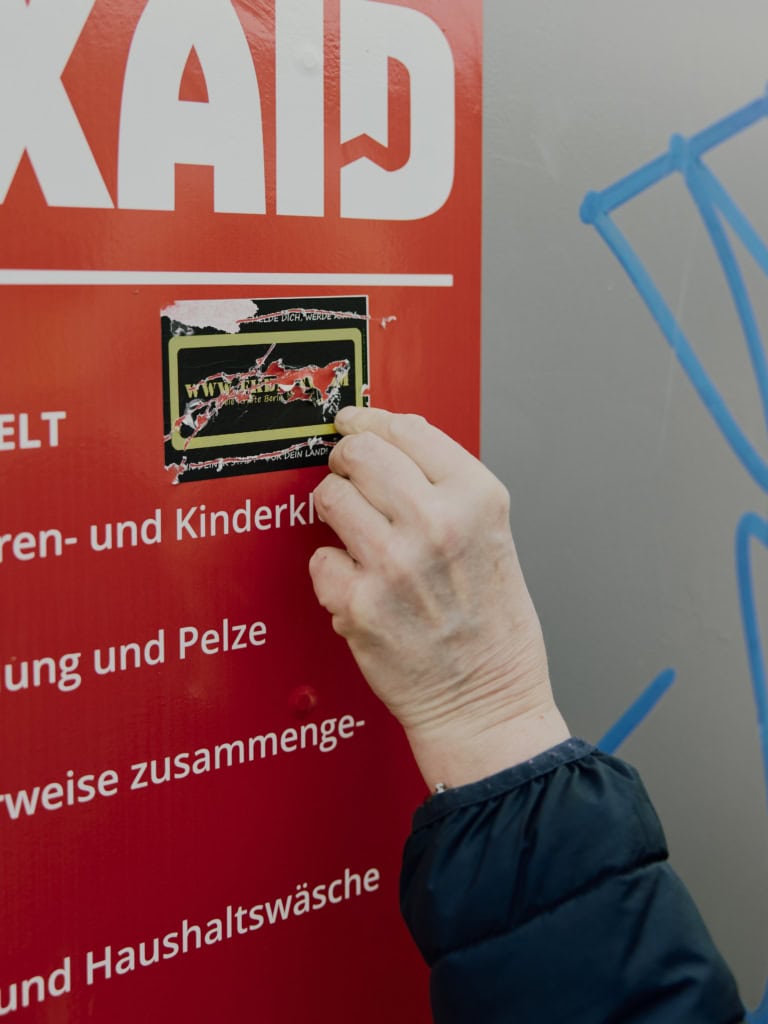
Thanks to decades of experience, the activist recognises different print runs and versions of the stickers.
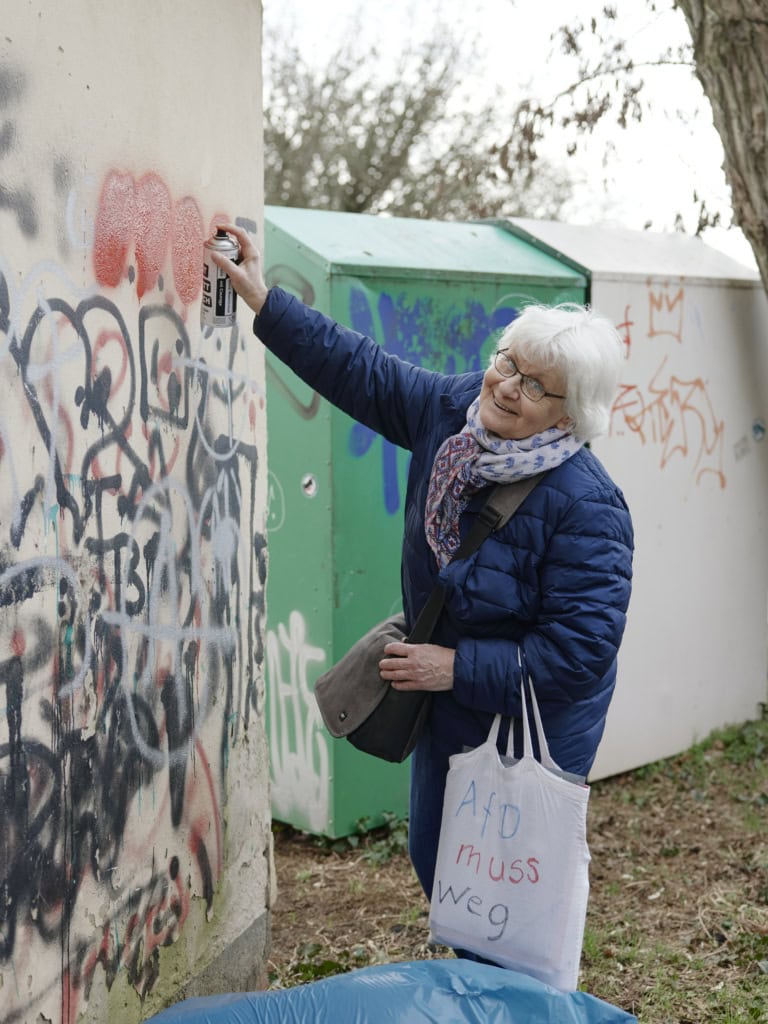
Ms Mensah-Schramm sprays hearts over an NPD slogan.
In her attic flat, 130 files stand side by side, filled with stickers and photos of graffiti. There are also boxes in which she keeps right-wing posters. Irmela Mensah-Schramm stores part of her archive in her bedroom. A map she made herself shows almost every place she has taken action since 1986. On the wall hangs a map of Germany on which she has marked with red dots all the places where she has removed right-wing propaganda. All these documents serve not only as proof of what she has done but also as teaching material for her workshops and talks.
In almost 40 years of activism, Irmela Mensah-Schramm has removed 140,000 Nazi slogans. She sees this, with concern, as an indicator of the growing presence of right-wing propaganda in society. Particular events cause Nazi propaganda to swell, such as the arrival of refugees from Syria in 2015 or the racist attacks in Hanau in 2020. After deadly attacks by Muslims or foreigners, the hatred directed at Irmela Mensah-Schramm grows fiercer too.
‘The inhibition threshold for messages of hate like these has fallen,’ says Mensah-Schramm. ‘The messages are also packaged more subtly – sometimes so cleverly that some people don’t see through them, often not even the authorities.’
Undaunted, Irmela Mensah-Schramm packs her tools for the next outing. Soon a new red heart will cover yet another message of hate.
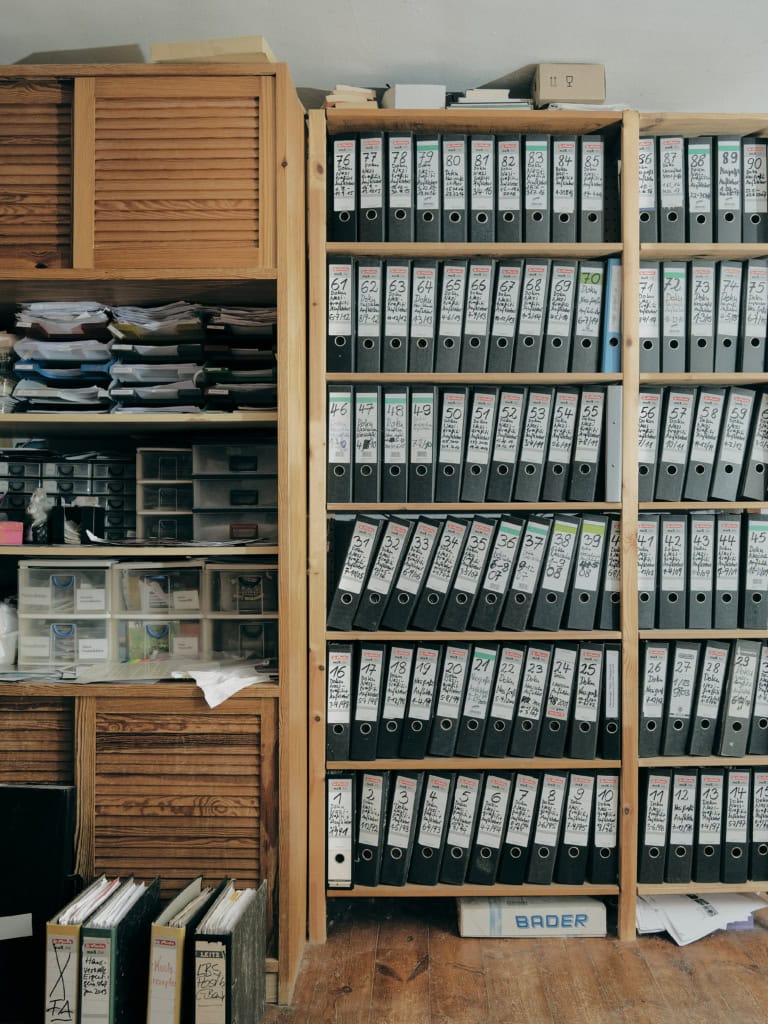
Irmela Mensah-Schramm keeps part of her archive in her bedroom. According to her, the more than 130 files hold around 140,000 stickers and photos of graffiti.
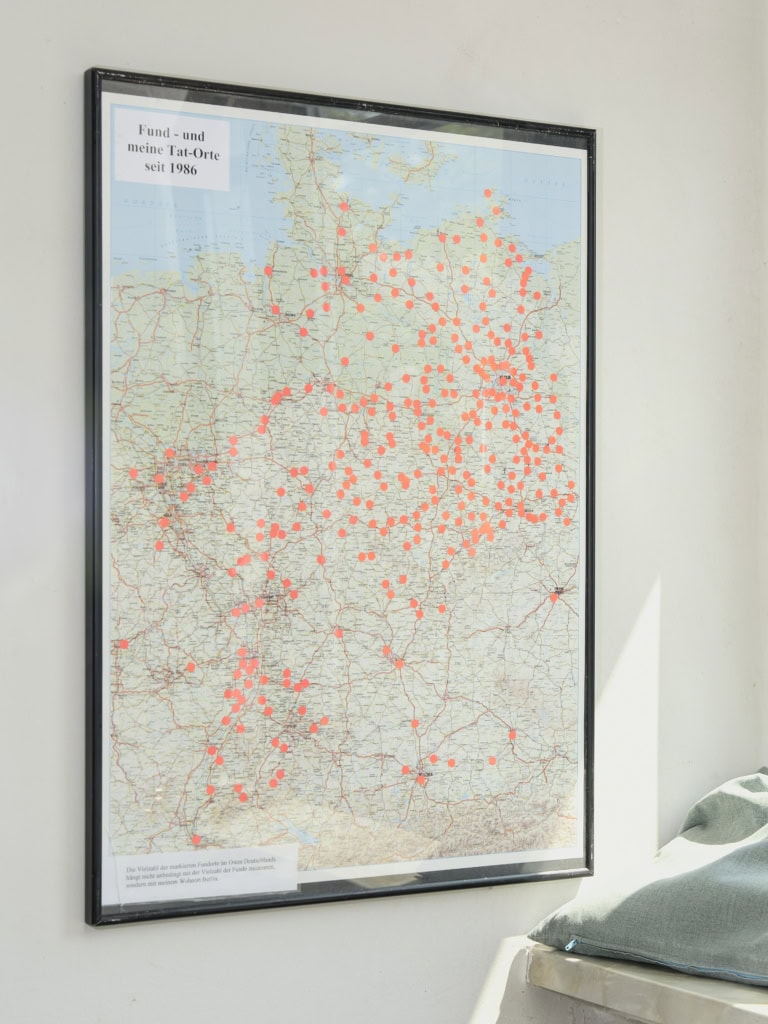
A map she made herself shows almost every place she has taken action since 1986. The choice of places is based on Irmela Mensah-Schramm’s own experiences and tip-offs. She shows the map at her exhibitions; otherwise she keeps it at home.
I laugh when I get a criminal complaint because I’ve ‘damaged’ yet another message of hate, a banned Nazi symbol that has evidently been tolerated in public for ages!
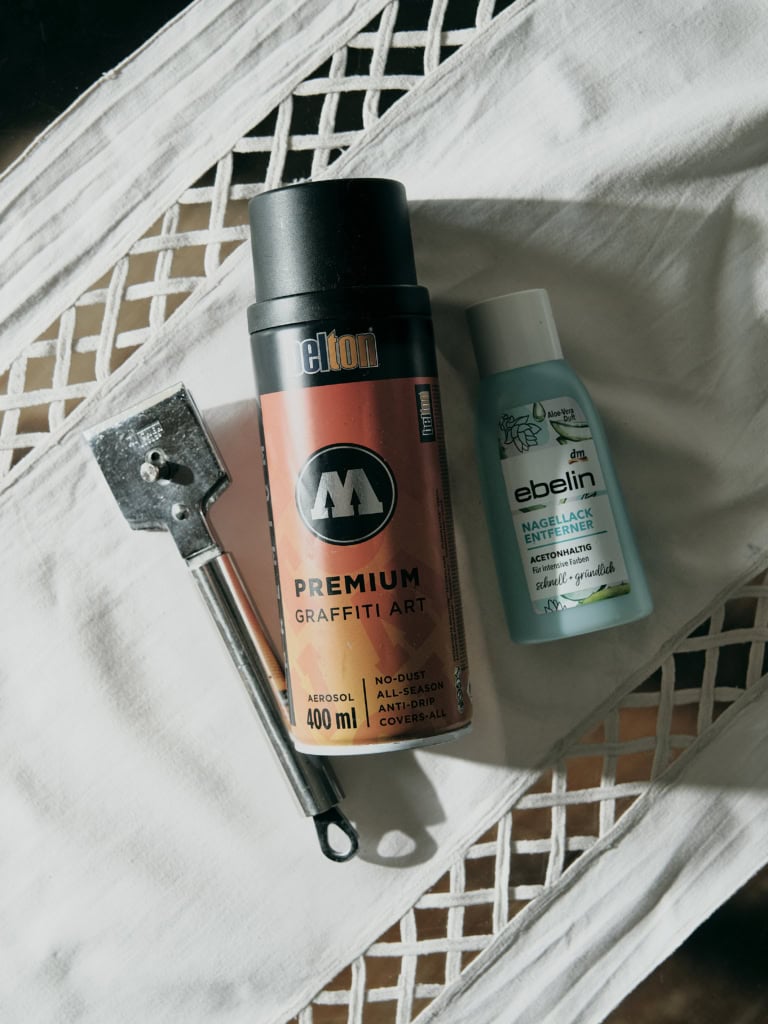
To remove stickers and graffiti
or spray over them, the activist uses an oven scraper, spray paint and nail-varnish remover. The police have confiscated her tools, which she always carries in a jute bag, several times. The tools were photographed on her living-room table.
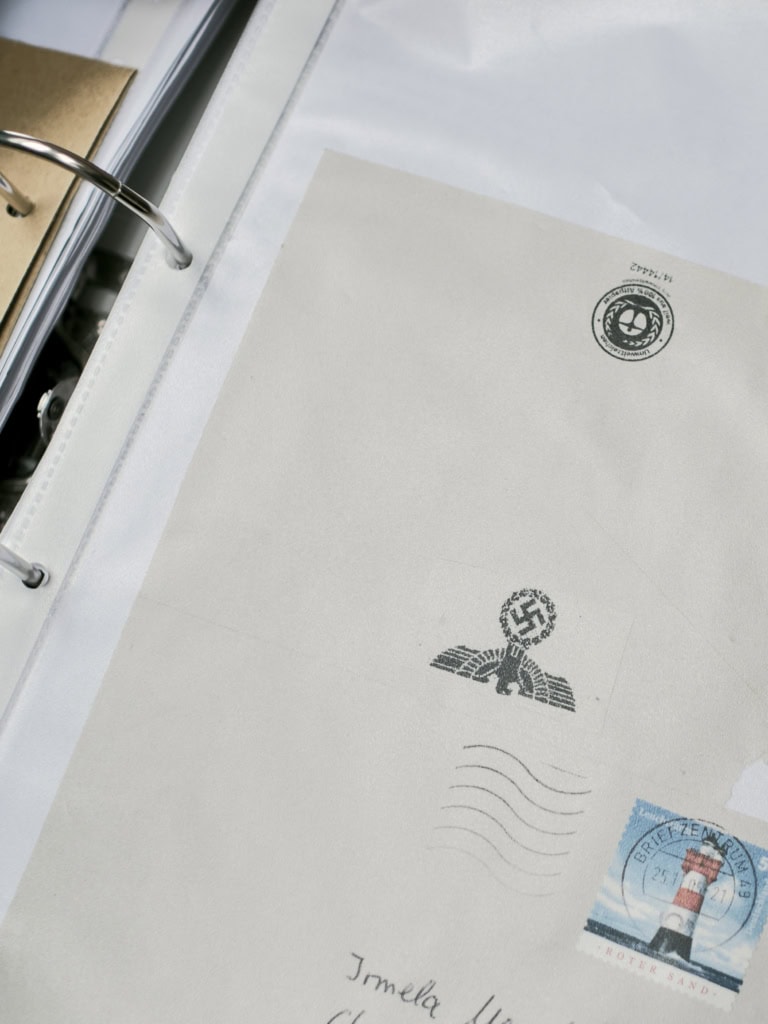
Envelope of a hate letter
sent by post to Irmela Mensah-Schramm’s home address: hate messages and physical attacks are part of the activist’s everyday life.