‘Even citizenship no longer seems like a safeguard’
How people targeted by right-wing hatred see their future in Germany – and whether staying still feels safe.
By Nele Cumart (text), Clara Schöttke (photos)


The AfD’s ‘remigration’ plans. The collapse of the traffic-light coalition. ‘Deportation tickets’ in letterboxes. Debates about the end of the ‘firewall’ against the far right. An early general election. How are the people targeted by right-wing hatred in Germany doing? Can they still imagine a future in Germany at all? During our research, we met, interviewed and photographed 15 Germans with a migration history. The result is a journalistic project: ‘What (still) keeps us in Germany?’ offers a nuanced insight into their lives. What they all have in common is that the shift to the right has a direct impact on their everyday lives and their plans for the future.
Here we introduce three of them.
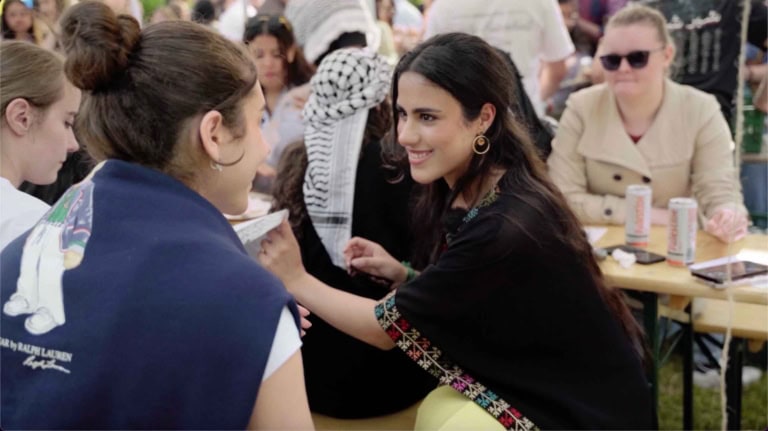
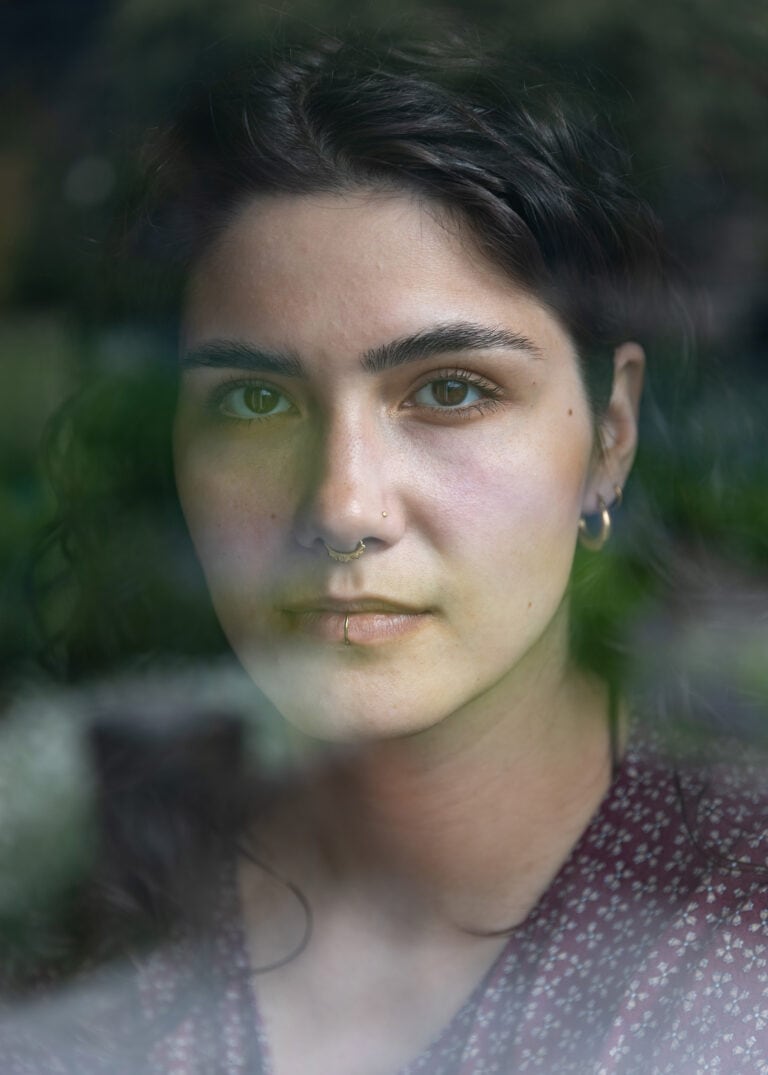
Méï-Lià Sérélé Zoua
‘Even German citizenship no longer seems like a safeguard to me.’
Méï-Lià Sérélé Zoua’s parents decided to emigrate from Germany to Spain after their daughter was born: Zoua grew up in Barcelona. At the age of ten she lived in Saudi Arabia with her family for three years, before moving back to Barcelona. After finishing school at the German School there, she decided to move to Germany to study.
How did you come up with the idea of going to Germany after your Abitur?
I wanted to go to university, and my older siblings had also gone to Germany to study after their Abitur. German is our mother tongue, after all, and studying in Spain costs much more than studying in Germany: there, a degree at a public university easily costs 500 euros a month. So Germany is the better option. I’ve been in Hannover for five years now, and after switching courses I’m studying law.
A German law degree mainly lets you work in Germany. Does that mean you also see your future in Germany?
My plan was actually to finish my law degree here in Germany over the next eight years first. But after the European elections, and when the AfD became the second-strongest party in Thuringia and Saxony shortly afterwards, I thought: ‘I’d better wait for the general election and then see.’ Now that it’s already in February, all my plans for the future are a bit shaky. At least I have the option of going to another country – not everyone has that.
At least I have the option of going to another country
Was there a moment when you felt something was changing in Germany?
When the Black Lives Matter movement grew bigger in Germany again after the death of George Floyd, things felt different here for a short while. But in my opinion, nothing has changed for good in terms of Black people’s actual lives: there was a demo, everyone rushed along, noticed that there are Black people in Germany and that they’re having a hard time, and then everyday life went on as normal. It was a brief flare-up and then it was over. That was really disappointing. A lot has changed in party politics too: I’ve been pretty disappointed lately. The line of German politics used to be at least consistent – or maybe I just accepted a lot of things. But right now it’s a machine-gun barrage of terrible ideas coming out of politics. When did that happen? I find it all very chaotic: Trump president again, the traffic-light coalition collapsing, early elections … I can’t keep up any more.
What (still) keeps you in Germany?
I like the idea of being somewhere where you feel really at home and staying there for a while. I’d never had that before I moved to Hannover. My connection to Germany is first and foremost a connection to Hannover. The things that keep me in Hannover don’t really keep me in Germany, though. I have my partner, my friends and my degree here. It’s mainly my degree that keeps me here. But when I finish my degree here, who knows what will be going on in Germany by then?
It’s mainly my degree that keeps me in Hannover
What are your fears?
This sounds so exaggerated, but who knows whether, when I finish my degree in eight years’ time, I’ll still have the freedom and the right to move around the world as freely as I can now. I’m actively thinking: I’d rather go now, before it’s too late. Everything feels so uncertain to me, as if in limbo. Above all, I don’t want to sit back and watch the situation for too long. Otherwise, in ten years I’ll surely be thinking: ‘If only I’d left in time.’ You can imagine endless things that right-wing parties could ban us from doing. I’m German: I have German citizenship, but even that no longer seems like a safeguard to me. I used to be sure that on paper, as a German citizen, I had these and those rights. But who knows whether the AfD wouldn’t simply change the Basic Law if they got the power to do so – and then my German passport wouldn’t matter either.
What do you hope for the future in Germany?
I’d like to see the AfD banned. It isn’t the solution to everything, but it would bring a bit of calm and the feeling that we’d just about managed to pull back from the brink. I’d like to see denazification – but properly this time, please!
Soukaina El Adak
‘Precisely because I don’t know any other life, it hurts so much to always have to prove I’m “German enough”.’
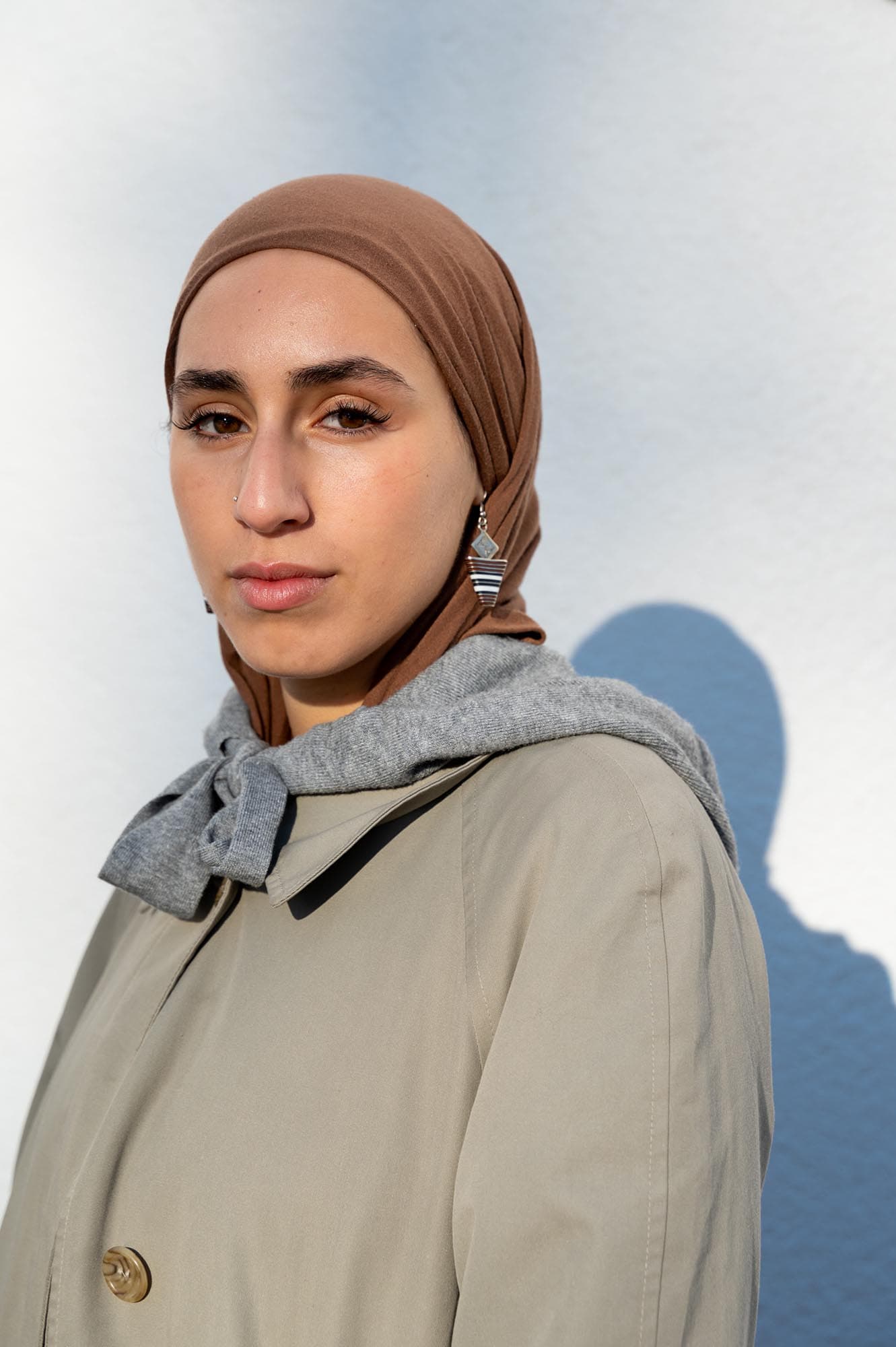
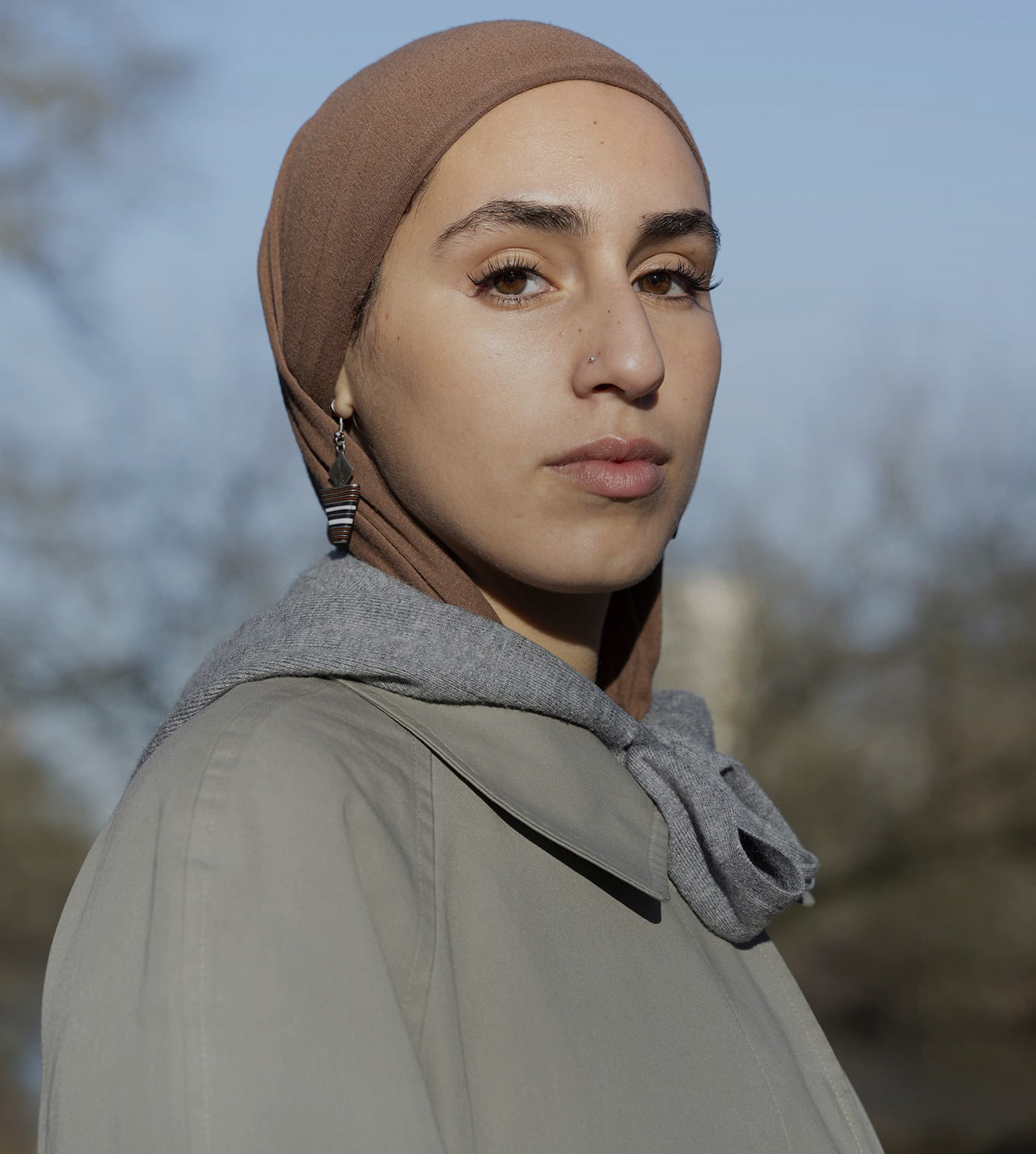
Soukaina El Adak (25) is a multidisciplinary artist from Kassel. She is currently studying fine art and already exhibits her own work regularly alongside her studies. For her, the question ‘What (still) keeps us in Germany?’ is bound up above all with frustration.
Where does your frustration come from?
My frustration comes from always being made to feel that I don’t belong here. The racism starts at nursery and then runs through every other part of my life. The frustration comes from always having to fight your way through: always having to do a bit more than people who aren’t targeted by racism in Germany. I always have to be ready to give the right answers to the wrong questions so that I don’t get pigeonholed by the person in front of me. Often these are remarks people make simply out of ignorance and naivety. Still, these racist microaggressions add up, and they hurt. But these are standard things that everyone in Germany knows who isn’t seen as ‘German’ by others in society. I know this all sounds very negative – but that’s just how it is.
Was there a point when you felt something in Germany was changing?
I don’t think anything has changed drastically, apart from my perspective on Germany and my knowledge of the system. Although: since the pandemic, I’ve had the feeling that racism is being shown more openly. People daring to say in public, ‘I’m right-wing and proud of it’ – I’ve only noticed that in the last three years or so. Of course I believe people like that existed before, but I hadn’t experienced them as blatantly as I do now.
What exactly has changed about your perspective on Germany?
I think for me it started after I left school, when I began questioning more and more the whole system we live in here: how can it be that we live in such a privileged situation, and where do these privileges come from? You quickly come up against the exploitation of other people and postcolonial structures. I’ve lived next to army barracks all my life, and at night I’d always see tanks driving out of them from my bedroom window. At some point I learned that Germany earns a lot of money from arms exports and where all our weapons go. All of that frustrates and disappoints you when you’ve just left school, young and naive. Learning that your own privileges are built on other people’s suffering. That’s when I slowly started asking myself whether I want to live here for ever.
I don’t have the strength to keep fighting any more. The stress of living in Germany as a person who isn’t white is making me ill.
So are you thinking about leaving Germany?
Yes – very often lately, in fact. All this frustration comes out in the thought: ‘I want to get out of here.’ Sometimes I wish I’d realised earlier that leaving was an option. It would have made my school years much more bearable, for example. But the idea of leaving Germany comes precisely from this frustration: it isn’t something I’d do just for fun. If things were different here in Germany, of course I’d stay. But I don’t want to keep fighting. It drains mental energy that I no longer have. This stress makes me ill, it makes me depressed and it’s always there in the background. I have to be prepared for it to stay like this here for my whole life. I’ve done this long enough now, and I’m old enough to make my own decisions. I’m privileged enough to be able to say: I’m just going to go. So why not take that step for the sake of my health?
What (still) keeps you in Germany?
My degree, for one thing, but of course also my family and friends. Actually, I love it here. I don’t know anything other than my street, my hood, my school – I’m simply German. Precisely because I don’t know any other life, it hurts so much to always have to prove I’m ‘German enough’. But I also still lack a bit of courage to really leave: everyone I’ve spent my life with so far is here. The question, of course, is also where I would go. I could go to Morocco – I have family there – but other countries in the world interest me too.
What also keeps me here is resistance to the AfD: the AfD explicitly wants us to leave. They’re even handing out plane tickets to us now. But on principle I think: who are you to tell me where to go?! Everyone around me is talking about it at the moment.
What kind of conversations are they?
I was thinking only recently that we don’t have these conversations completely openly with each other. All we know is that none of us has the energy left even to talk about it. I think it’s OK, and our right, not to talk about it so seriously – but I find it interesting that we all take it a bit sarcastically and with humour. We make memes and funny TikTok videos about it, tell anecdotes and joke that the AfD is paying for our holiday with its ‘one-way tickets’. You just drink a çay to it and life goes on. But deep down we know how much we are all suffering right now.
On the other hand, I don’t want to give in to pressure from the AfD: this is my home – who are they to tell me where to go?
What do you hope for the future in Germany?
I’d like to see a culture of integration. In my opinion, Germany doesn’t currently have a real culture of integration that brings people together. I’d like to see a lot of money pumped into the arts and culture scene so that people come together. So that people go to events together ‘whether they like it or not’, where everyone is treated equally. Like a neighbourhood concert that doesn’t start by shutting out half the people because they can’t pay 30 euros to get in. I’ve learned the most in my life from art and culture: without that access – which I had to fight for myself – I’d be in a completely different place socially. Access to the places where art and culture happen: that’s what I wish for Germany.
Laurentine Edene
‘The AfD itself doesn’t really bother me that much. But the people who vote for the AfD bother me every single day.’
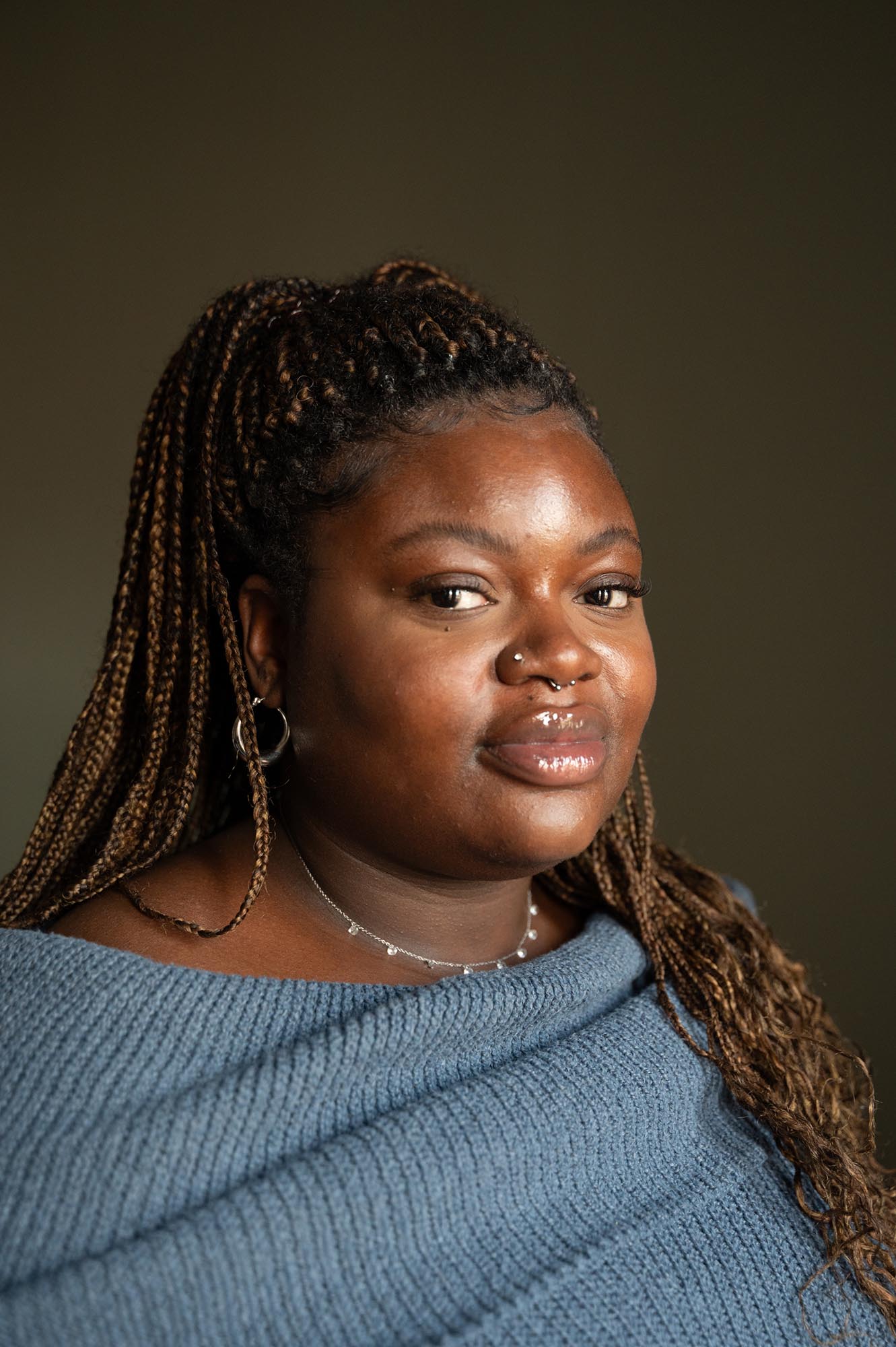
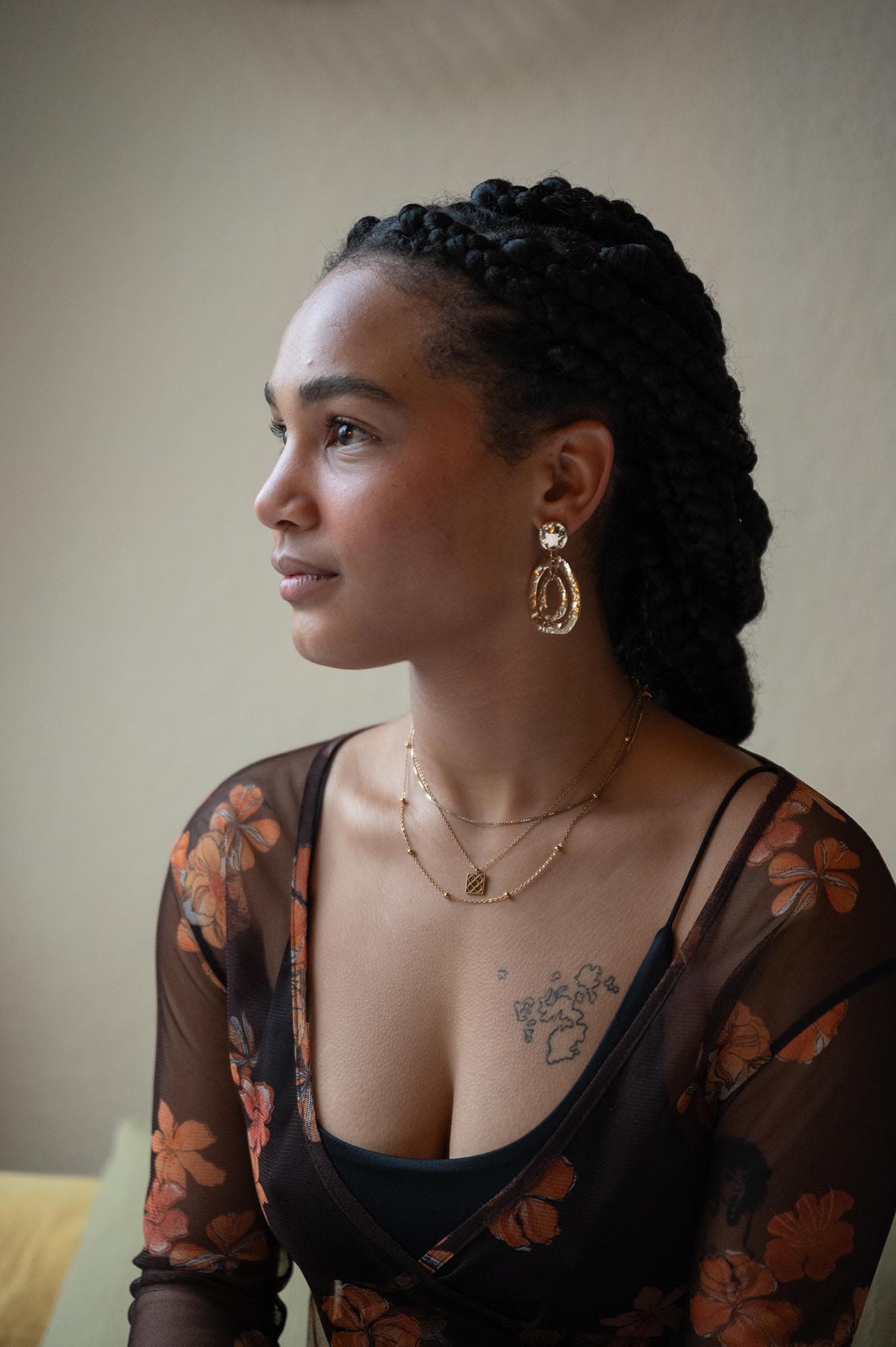
Laurentine Edene (25) grew up in Hannover and is currently doing a master’s in television journalism and documentary film. She also works as a freelance journalist. The question of whether, and how, she wants to spend her future in Germany is one Edene thinks about regularly. She has also talked it over with her family.
Was there a particular reason to talk to your family about it?
As a person with a migrant background, it’s just something you’re forced to deal with. One concrete trigger was definitely the AfD’s secret meeting. When it came out, I was sitting at dinner with my mum and my brother, and we wondered whether we wanted to stay here. Especially when it was reported that they also wanted to deport people who were born here. That hatred of us was so shocking: I mean, we all know what the AfD trumpets so loudly, but at least that’s public and out in the open. When people hate you quietly as well, it feels much more dangerous.
Is the AfD something that affects your everyday life?
The AfD itself doesn’t really bother me that much. But the people who vote for the AfD bother me every single day. Yesterday, for example, I was sitting on the train and an old white man was staring at me the whole time. In a different world, I’d just think: ‘No idea why he’s looking at me like that.’ But in this world, I immediately think he’s looking at me like that because I’m Black, and that he might be an AfD voter. I don’t actually want to think like that. I don’t want to meet people with prejudice. But this fear has taken on such a life of its own that I can’t change it.
Was there a moment when you felt something had changed for you in Germany?
I think it was most likely the point when I became aware that I’m not white. That was at primary school. Since then, I’ve been much more sensitive when it comes to racism. Some people can hide their migrant background. Black people can’t. But the way I deal with racism has changed in recent years. I don’t let myself be intimidated the way I used to.
Some people can hide their migrant background. Black people can’t.
Back to the conversation with your family: what did you decide?
Well, for my mother it’s clear that when she’s older, she’d most like to go back to French Guiana. She’s known that for a while. But she grew up there, after all. It’s her home.
And you?
I tell her jokingly: ‘If everything goes wrong, I’ll see you there.’ After all, French Guiana is part of the EU too, and in theory I could imagine living there. But basically I want to stay here. Germany is my home. I’m also grateful for my life here and the freedoms I have in Germany, especially as a woman. But I don’t want to keep comparing Germany with countries where things are worse than here. Because there are just as many countries where people are even better off than here.
What (still) keeps you in Germany?
I still have hope that everything will get better. Because I think there are still enough people in Germany who don’t hold these right-wing views and who can come together. Besides, people will fall in love with each other anyway, whatever their origins: there will be more and more children with different nationalities. This construct of origin will then become less and less relevant. I may not live to see it myself, but someone in my bloodline certainly will.
There will be more and more children with different nationalities. The construct of origin will become irrelevant.
What do you hope for your future in Germany?
There are so many things – I have to sort them into categories. As a woman, I’d like to feel even safer here. In terms of the danger men still pose to us, but also in terms of being able to do things without being judged for them. As a young Black person, I wish you didn’t always have to prove yourself so often before being taken seriously. I want the same benefit of the doubt and respect that white people with the same CV as mine always get anyway! And as corny as it sounds: I wish we could all come together. Skin colour, nationality and origin are so random. Good for you that you were born a white German who can afford the privilege of being right-wing. But that privilege is such a coincidence. Who knows what kind of person you’ll be in your next life?