Bird warden in the Wadden Sea: seven months alone on an island
What months of isolation do to a person – and why the rising sea level becomes a daily worry.
By Moritz Hartenstein (interview), Etienne Dötsch (photos)


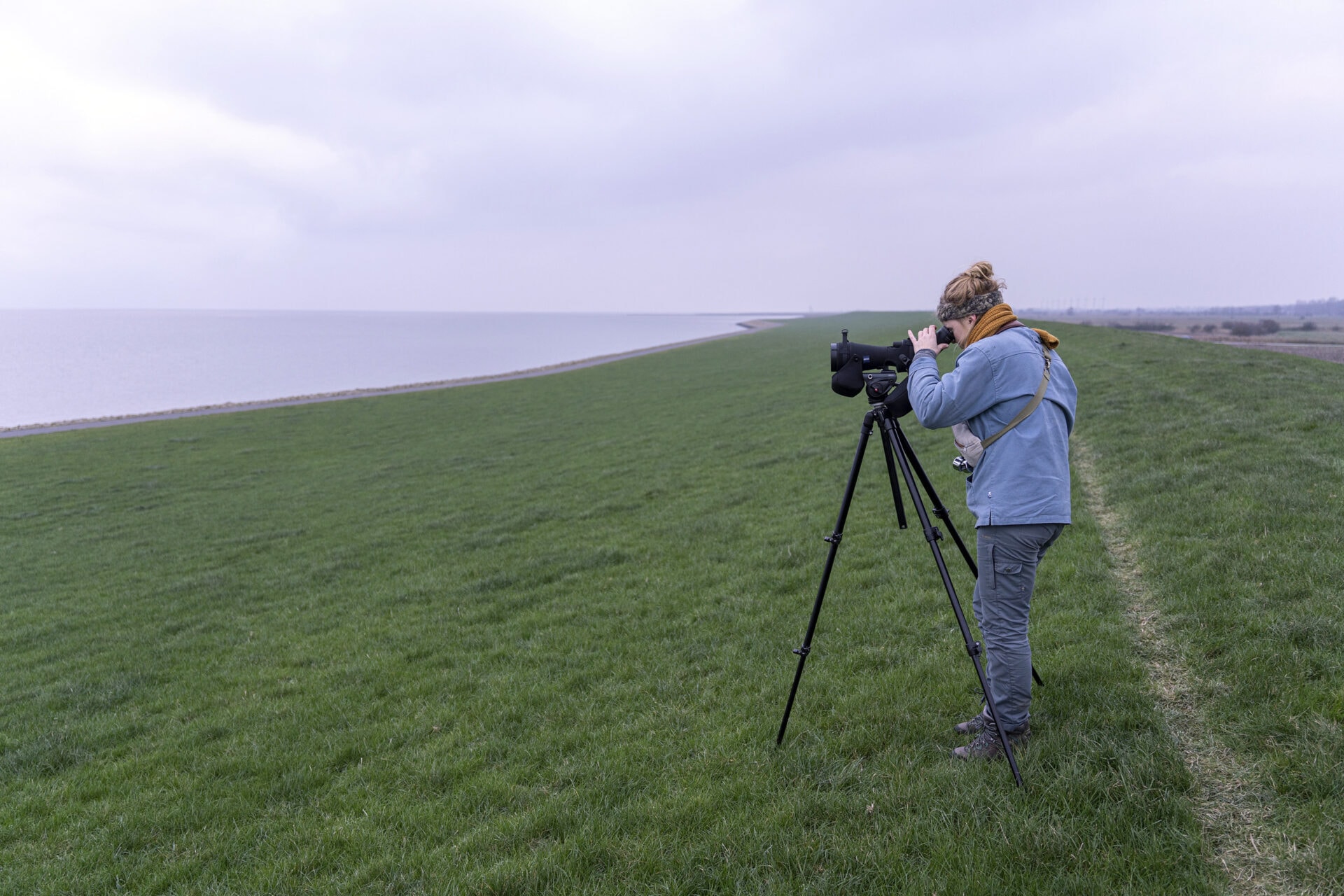
To protect the Wadden Sea, experts such as Anne de Walmont regularly collect data on the effects of climate change. The area, a key point on the East Atlantic Flyway, becomes home to around 12 million birds in autumn and spring and also hosts many resident birds over the winter. This underlines the need for comprehensive monitoring to preserve this important biosphere reserve.
After leaving school, Anne de Walmont did a voluntary ecological year on the island of Pellworm and then initially studied musicology and Scandinavian studies. In 2019 she returned to ornithology and worked as a nature warden on the island of Trischen, where she documented the bird life and recorded her experiences in a book. Today she works as a freelance ornithologist.
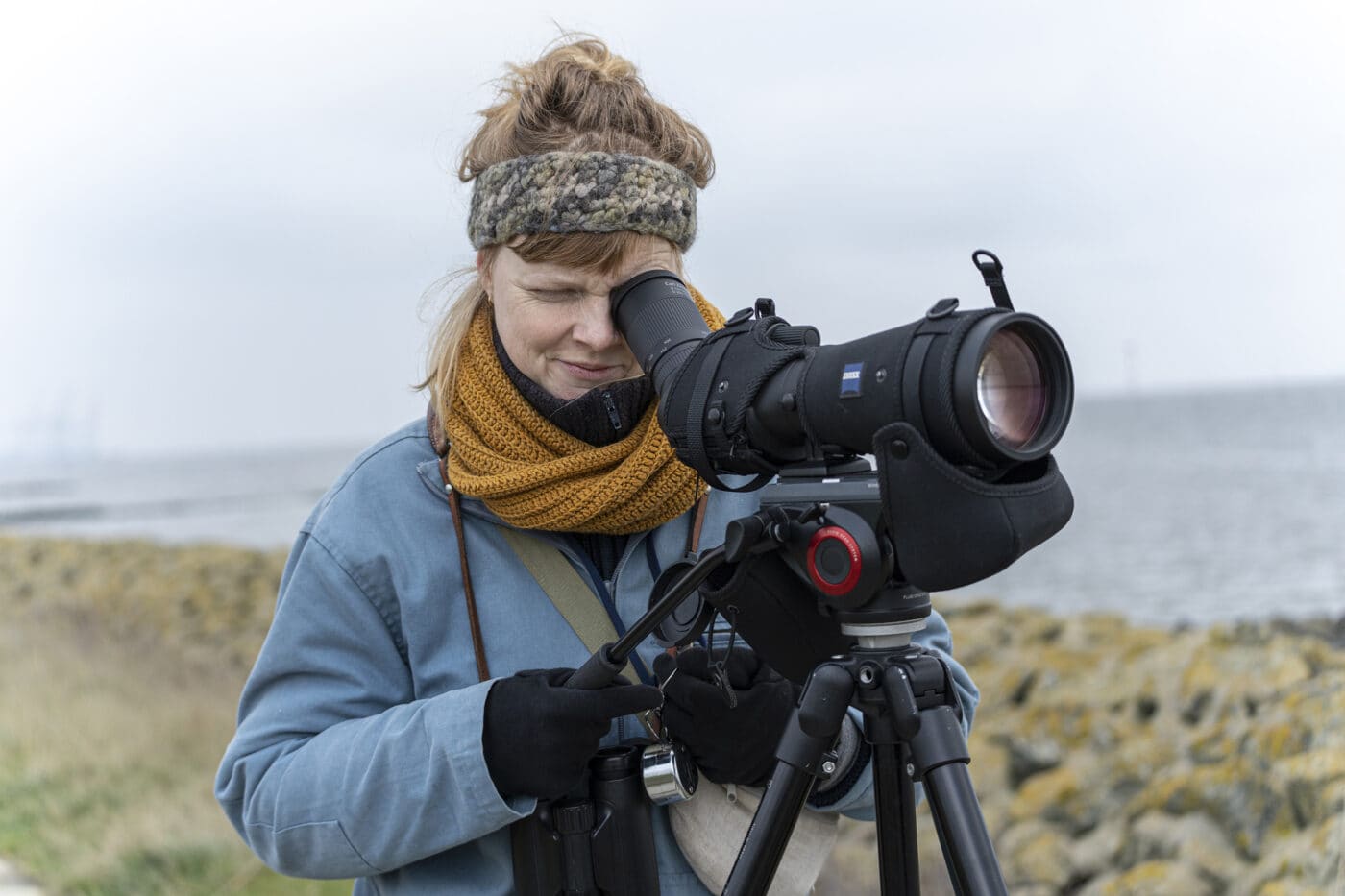
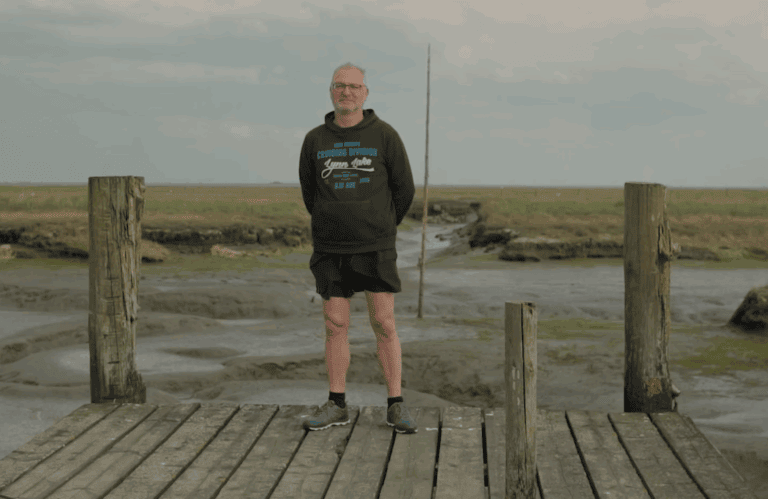
The ornithologist Anne de Walmont on the North Sea coast near Wremen.
Nature does what it wants, and you have to see how you deal with it.
Can you remember a particularly striking situation from your time on Trischen?
Two things come to mind straight away. My loo was a wooden shed, and one stormy day I wanted to go in. The whole island was deserted; all the birds were hiding from the wind. And then I came round the corner and there was a bird of prey – a sparrowhawk – sitting on the toilet lid. It got a terrible fright, and so did I. It almost flew into my face. You have to go to an island like that to get so close to a bird of prey (laughs). Then there was another time when I was out very far in the north of the island. There are no trees on Trischen, and I saw a dark cloud in the sky. According to the forecast, the storm was supposed to go elsewhere, but suddenly it was very close to the island. I had no choice but to crouch behind a dune – and they are not exactly high. I was lucky; it only just passed me by. But that is when I realised how exposed you simply are. Nature does what it wants, and you have to see how you deal with it. Those are moments that have really stayed with me.
What were your tasks?
Documenting the bird life was definitely my main task. There were various survey programmes. In the mornings at sunrise, for example, I often recorded the migrating birds – mainly during the peak migration periods in spring and autumn. Every two weeks there was a spring-tide count, in which all the birds resting on the island at high tide are counted. The breeding birds were mapped in spring. And I constantly noted down chance sightings. Besides all the bird work, I also mapped the mudflats by sampling, for example. I surveyed the island, because it is not fixed and keeps moving towards the mainland. It is losing size and shape. It was also my job to stop other people coming onto the island, because Trischen lies in the national park’s protected zone. I also regularly reported on a blog of the Nature and Biodiversity Conservation Union, NABU, on what was going on on the island.
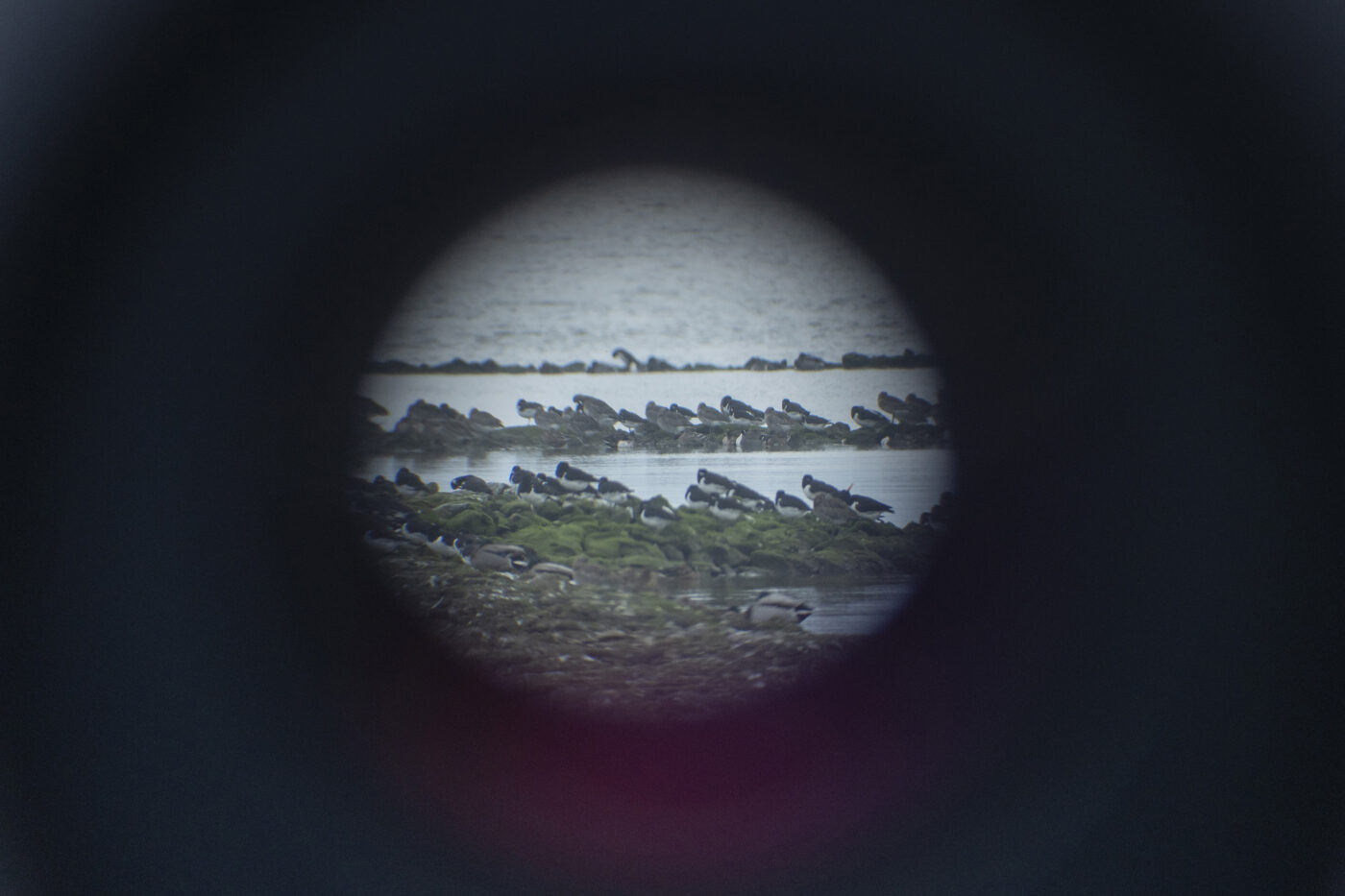
The view through the spotting scope shows some birds sitting by the water.
I always said that what I would miss on the island was an iced coffee.
What was the first thing you did when you were back on the mainland?
I always said that what I would miss on the island was an iced coffee. I love coffee, and in summer iced coffee. Unfortunately I had no way of freezing anything there. But I came back in autumn, so the temptation was not so great any more. I first went to a village on the coast to ease myself back in. Two or three days later, though, I was back in the city at a birthday party with 50 people, and that was no problem. It was a lovely experience to realise that I could go straight back among people and hadn’t become a complete hermit. It was actually as if I had never been away.
Every two weeks you count the birds as a volunteer on the stretch of coast near Wremen, the village you come from. Why is it important to document bird populations?
These counts of waders and waterbirds have been carried out for many years, and because such a long data series exists, you can see clearly how the populations of individual species are developing. That is interesting for research and can also be a basis for discussing how certain species can be protected, or what state the Wadden Sea is in generally.
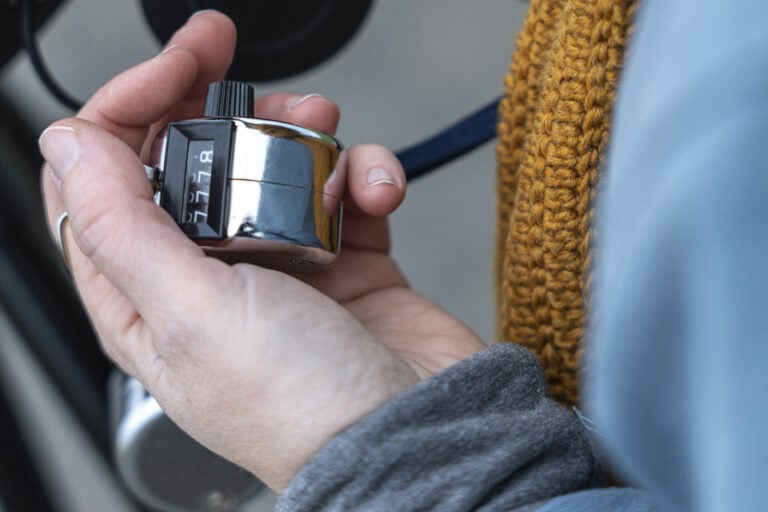
In her hand Anne de Walmont holds a small tally counter for the bird count.
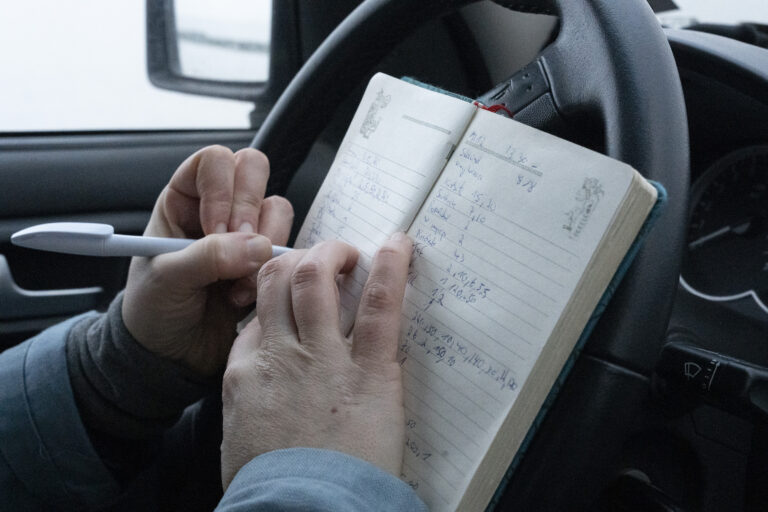
In her car, Anne de Walmont notes down the species and numbers of birds.
The Wadden Sea is defined by the fact that it falls dry twice a day. When water levels rise, fewer areas fall dry – and so there are fewer areas where the birds can look for food.
To what extent is climate change also noticeable in your work?
The consequences of climate change are becoming visible ever more quickly. Sea levels are rising. The Wadden Sea is defined by the fact that it falls dry twice a day. When water levels rise, fewer areas fall dry – and so there are fewer areas where the birds can look for food. That sets off a whole chain reaction. Or the sea gets warmer, so that species that are not really native here feel at home, while other species that used to be native no longer feel comfortable and move elsewhere. This causes a shift that may also throw a balance out of kilter.
Finally: do you actually have a favourite bird?
I get asked that a lot (laughs). I used to always say the eider was my favourite bird. It is a very large, powerful sea duck. I find it so beautiful above all because the males all look different as they moult between breeding and eclipse plumage. I find that special. The females also make great noises. They can ‘chug like a tractor’ – at least that is what it says in the bird guide. But of course all birds are wonderful!
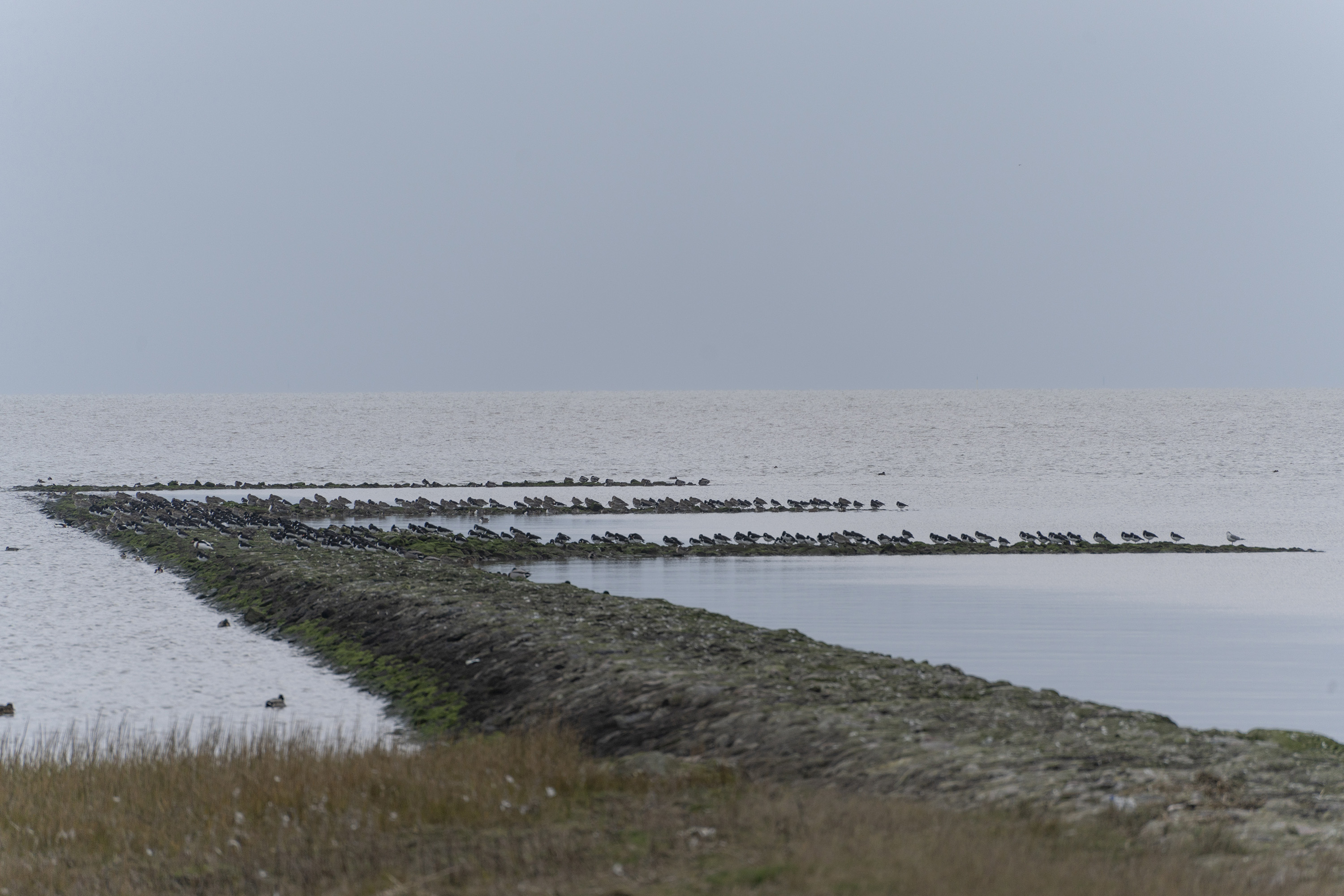
Many birds perch on stones that were artificially laid along the shore.