Camping with a heart: an unusual idea to help Ukraine
One woman, one campsite, a whole village: how spontaneous solidarity turned into lasting support.
By Tim Klein (interview), Simon Belperio (photos)


 Rassa Hoffmann
Last year you became known as the ‘Angel of Hademstorf’ because you took in Ukrainian refugees at your campsite in your village in Lower Saxony. How did that come about?
It sounds hard to believe, but on the day the war in Ukraine began, my TV switched itself on early in the morning. The news was reporting on the invasion, and I knew I had to help. It was like a sign. I thought I’d take in a few families; over the whole year, 250 people from Ukraine ended up living here.
And who helped you?
I did most of it on my own. After the first families from Ukraine arrived, I posted an appeal for help on Facebook in my Lithuanian community. Some people responded and helped me make room here for more people. When I went shopping for the families, people asked why I was buying so much. I explained my situation and got a lot of support. Even the mayor wanted to help. Another woman from Hademstorf sent an appeal for help to the radio station FFN, which a lot of people heard.
What came of that?
It was like a tornado – so many people came and dropped things off. A lot of it was good, but some people also dumped their bulky rubbish and dirty, torn clothes. A women’s group bought two washing machines and brought them round, which helped a lot. Less nice was that one man delivered a tumble dryer as a donation – and later an invoice arrived for it. I still thanked everyone. I can’t see inside people’s heads, and I didn’t want anything negative to come of it.
What was the time with the Ukrainian families on the campsite like?
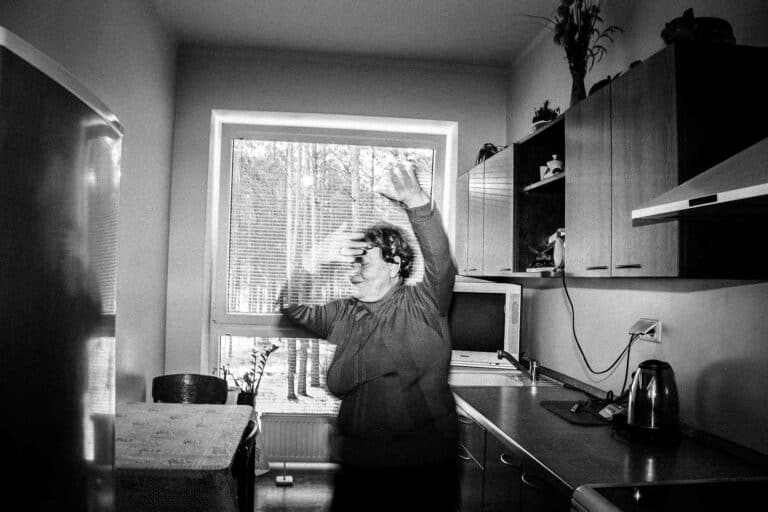
There had to be food in the morning, at midday and in the evening; I slept very little. It looked like a huge flea market here, with lots of stalls where I handed out food and clothes. New people were arriving all the time, day or night. Sometimes I sat here like a zombie. When I put an advert on Facebook saying I was taking in families, my phone never stopped ringing. I felt like Mrs Merkel (laughs).
That must have been exhausting in the long run, surely?
Of course it was exhausting. But I kept going. Not in the mood? Not an option. No time? Not an option. For me there was only ‘I have to’. I had started down this road and had to see it through. I bought the campsite in 2017 and had to fight for a long time for a loan to be able to afford it. Covid made things difficult too. But what the people from Ukraine have to go through is much worse. I simply had to help. I grew very fond of some of them. There are tears when the families arrive, but also when they leave again. That wasn’t easy either. But everyone was grateful. On Mother’s Day I got lots of flowers and presents. They don’t forget their mum (laughs).
I bought the campsite in 2017 and had to fight for a long time for a loan to be able to afford it. Covid made things difficult too. But what the people from Ukraine have to go through is much worse.

At midday, Rassa Hoffman sorts donations in a central building on the campsite. The room used to be a dining hall and kiosk; now it is full of food, medicines and clothes.
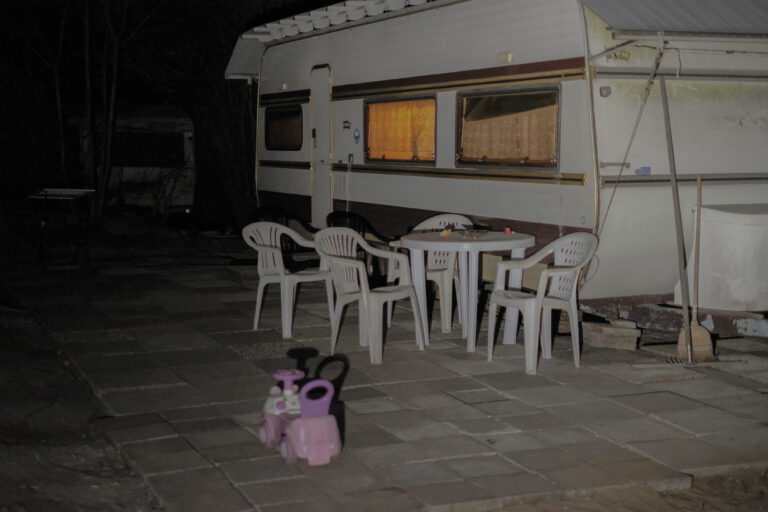
In the evenings it was quiet on the campsite in Hademstorf. The families withdrew to their caravans.
At the authorities, one woman said: ‘That’s enough refugees now.’ I told her she should take that up with Vladimir Putin.
Did you get any official help?
I learnt Russian at school, so I could also help as an interpreter when the refugees had to register with the authorities. Most people there were nice, but one woman also said: ‘That’s enough refugees now.’ I replied that she should take that up with Vladimir Putin. I will not turn away a family looking for help here. Of course they have a lot of paperwork there, but I was working round the clock to look after these people. People often asked me why I was doing it. I told them to put themselves in the refugees’ shoes: coming from a war to a country where you don’t understand the language. That isn’t easy.
How did the families cope on the campsite?
Some families coped better, some worse. When a helicopter flew nearby, many threw themselves flat on the ground. One child started pulling out their hair. And it was still cold in March and April. But better to live in a cold caravan than in a bombed-out house.
Are there still families living on the campsite now, in autumn 2023?
No, the last ones left in the summer. Some families went back to Ukraine. But many have stayed in the region, not too far from their mum (laughs).