No place to retreat: why refugee shelters lack silence
Constant noise, no room of one’s own: how life in collective shelters wears people down – as told by a refugee from Ukraine.
By Antonia Röhrer

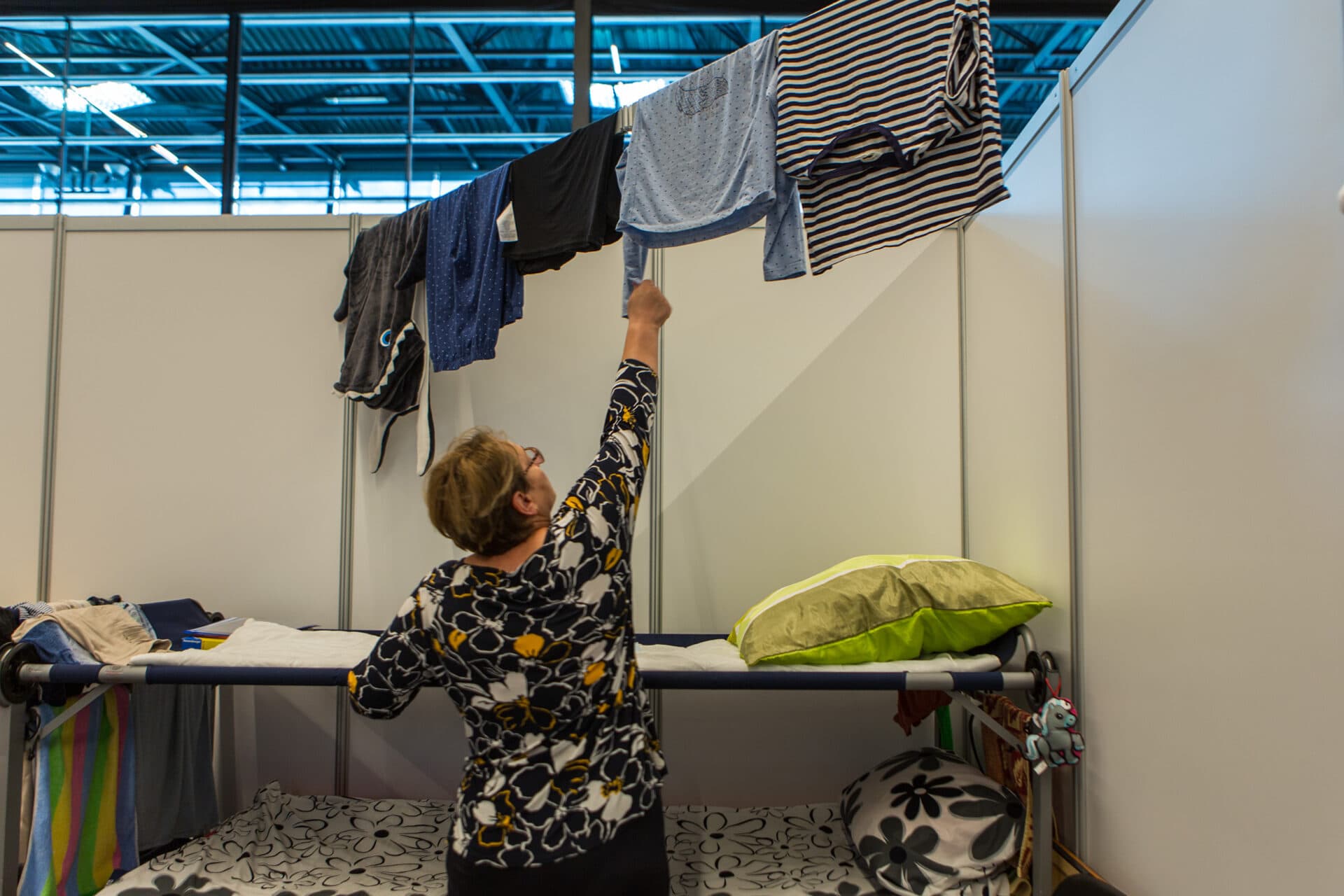
Photo: Tetyana Chernyavska
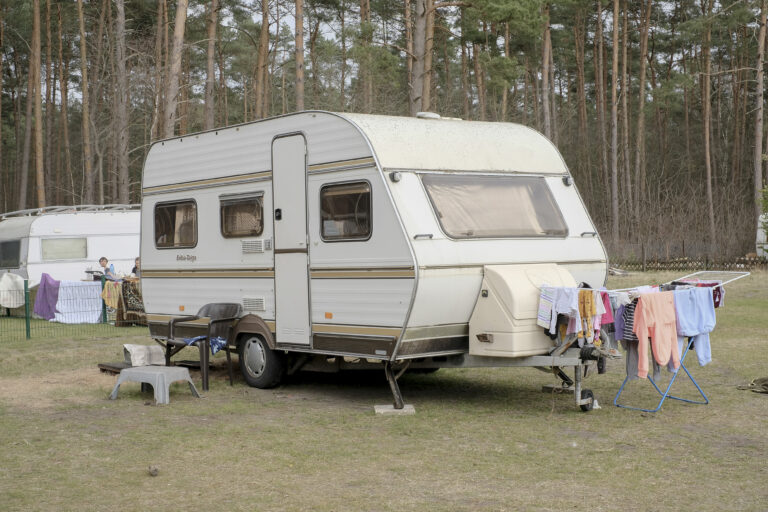
Only a plastic partition separated Maryna Sviderska, 43, her son and the six strangers who shared their cubicle from the hundreds of other refugees. She arrived in Hannover on 9 July 2022 and was housed in a hall on the trade fair grounds with hundreds of other refugees of many different nationalities.
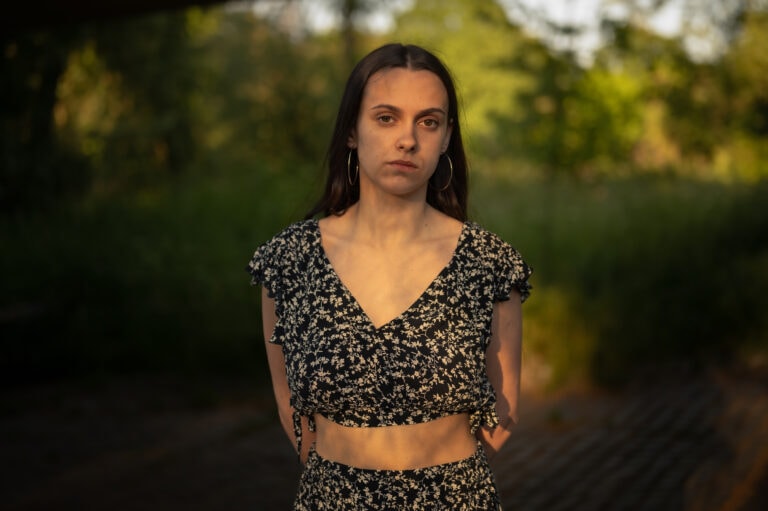
In May last year she fled to Germany from Melitopol, one of the first Ukrainian cities to come under Russian control after the war began. Now we are sitting together on a park bench in Bad Bevensen with Tania, Maryna’s daughter, who arrived in Hannover two months earlier. She helps with the interpreting and can only confirm this: ‘Even on the phone it was hard to understand my mother. Children were screaming and it was incredibly loud, at any time of day.’
During the two days Maryna had to spend in her first emergency shelter, she found no peace; sleep was out of the question: ‘When I wanted some time to myself, I went outside onto the street.’ From Hannover, she and her son were taken to Bad Bevensen, a small town 100 kilometres away. There they lived with twenty other refugees from Ukraine in tents in a school gym. ‘The situation there was better. At least I had already got to know the women I shared the tent with on the bus, so they weren’t complete strangers,’ she says.
You could still hear the people in the other tents, but for the first two weeks it was bearable. Then more refugee women and children arrived, and the situation got worse: ‘From then on it was a disaster. There was no peace, no privacy, no cleanliness; the children relieved themselves between the tents and left the excrement lying there.’ These conditions also led to conflicts among the refugees.
It was incredibly loud, the children were screaming and there was no way to talk at a normal volume or read a book.
Asked whether she could shield her bed from other people’s eyes, Maryna just laughs. There was no privacy for her, for three months. Yet privacy should be a given: in August 2020, the NIFN (Network for Traumatised Refugees in Lower Saxony) presented guidelines for housing refugees. They state, for example, that ‘it (must) be possible to lock the room at all times of the day and night’. If that is not possible, it is important that ‘retreat is nevertheless possible, e.g. through room dividers’. Maryna had none of this; instead, she slept with earplugs every night.
Cramped conditions and a lack of privacy can also worsen the symptoms of trauma-related disorders, according to the NIFN: they limit the sense of safety and of control over one’s own situation. Maryna can only confirm this: ‘If you have no privacy and no place to think, you can’t process what you’ve been through, and that weighs on you even more.’ At first it was good to talk about the war and cry with others in the same situation, she says, but after a certain point she would rather have done that alone, in silence.
Now we laugh about it; back then it was terrible.
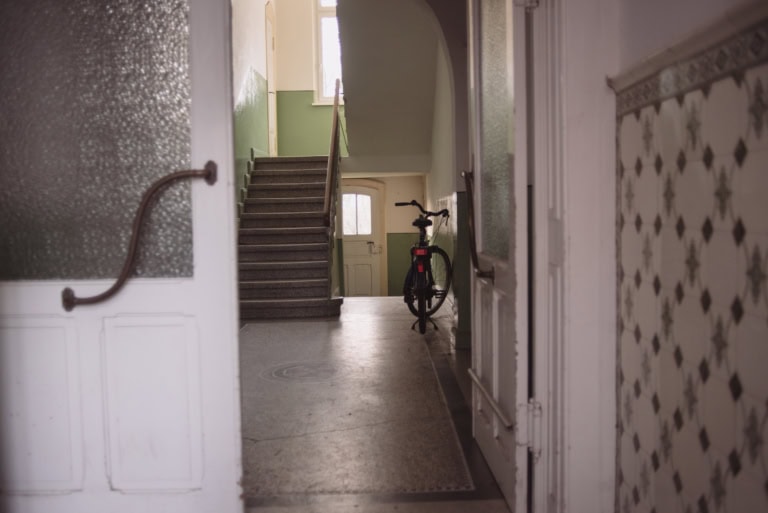
After three months, volunteers found a flat for Maryna, her son and her husband, who came to Germany a month later. ‘What I wanted most for my own flat was silence and my own bathroom,’ says the Ukrainian. She did not care what the flat looked like – as long as it was away from all the noise. ‘It was a release,’ she says. ‘At last I could sleep without earplugs again.’
But for refugees from war zones, silence has another meaning too, she says: ‘When there is silence, no bombs are falling.’ One night in the camp there was a thunderstorm; everyone woke up and was frightened because they thought it was another explosion, she recounts. That was not the only situation that took her back to the war: ‘One day we visited Tania in her former attic flat near the Herrenhausen Gardens. There was a fireworks competition there, and when the bangs started, my son began to cry. It sounded just like the gunfire in Ukraine. Now we laugh about it; back then it was terrible.’