Arolsen Archives: when remembering becomes work
A small town in Hesse looks after one of the largest collections on Nazi persecution. There’s a specific reason why its location isn’t public.
By Lion Knirsch (text), Paul Geiersbach (photos)


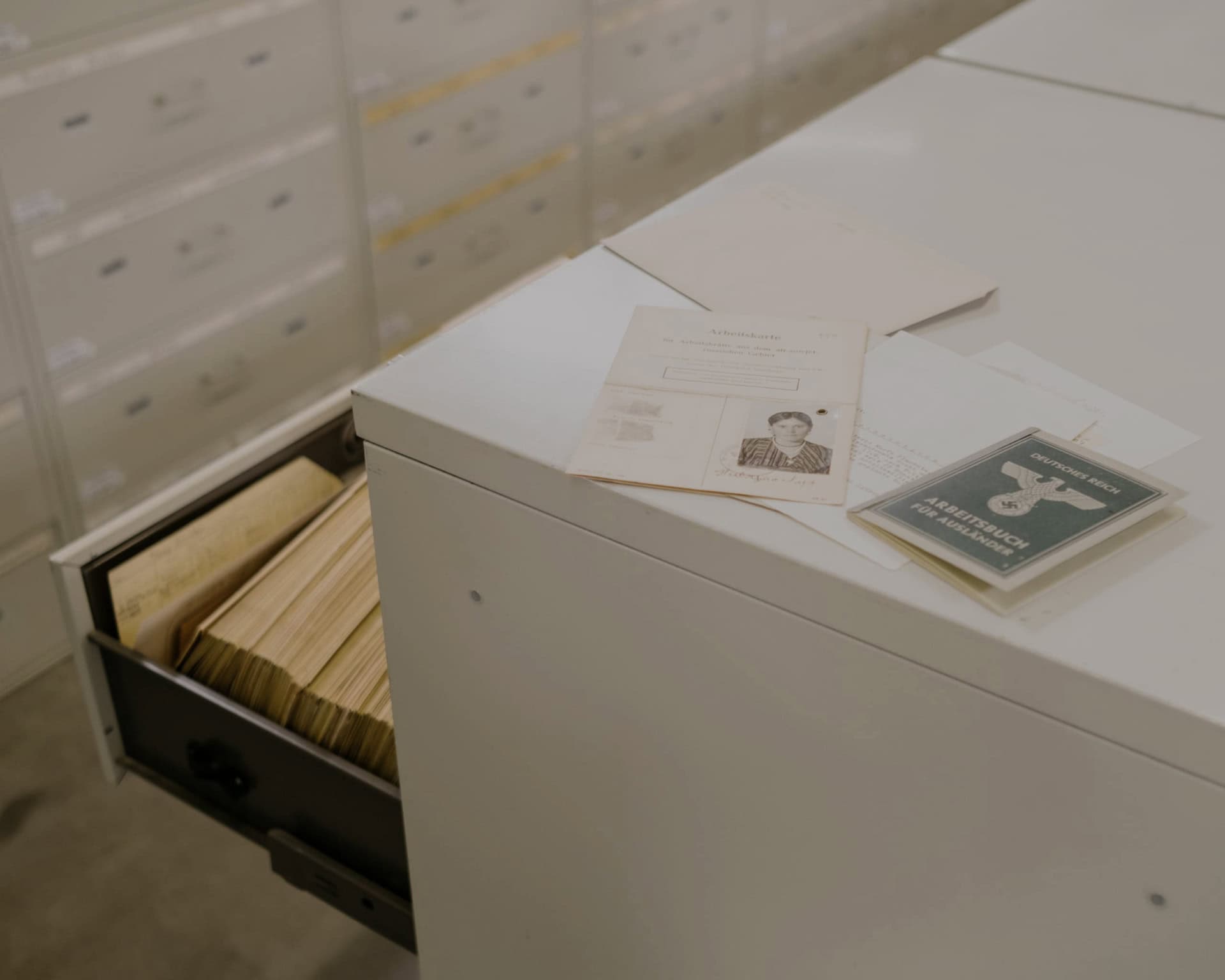
As journalists, we’re used to visiting all kinds of places and talking to all kinds of people – it’s routine. But this time was different. We were only told the exact meeting point a few hours before the visit. The Arolsen Archives’ website only gives the address of the office – not that of the archive. The secrecy is for security reasons. No wonder: the Arolsen Archives are the international centre for records on Nazi persecution – and therefore an attractive target for far-right attacks.
May this archive, which serves to make amends to the victims and their families, be a warning to all future generations never again to let such calamity befall humanity.
So reads the trilingual foundation document that was walled into the main building of the Arolsen Archives at its topping-out ceremony on 20 August 1952. More than 30 million original documents on the fates of around 17.5 million people are archived here. A collection so large that it has become part of UNESCO’s Memory of the World. And work that is becoming ever more important, because ‘especially now, in view of the dramatic rise in antisemitic crimes in Germany since 7 October 2023, it is our responsibility to do everything to protect Jewish people,’ said the then Federal Minister of the Interior, Nancy Faeser.
The Nazi regime robbed, tortured and murdered – and documented its atrocities, sometimes meticulously. That left the Arolsen Archives with an almost endless number of records, including material from concentration and extermination camps, ghettos and Gestapo prisons, as well as documentation on the deportation and exploitation of forced labourers and the fates of displaced persons – among them survivors who wanted to emigrate from war-torn Europe.
The history of the Arolsen Archives began in 1948, when the Allies founded them as the International Tracing Service (ITS). The original aim was to clarify the fates of those persecuted and to find missing persons. In 2007, the international commission responsible for the ITS recognised the need to make these important documents accessible for research as well – and to open the institution to the public, now under the name Arolsen Archives.
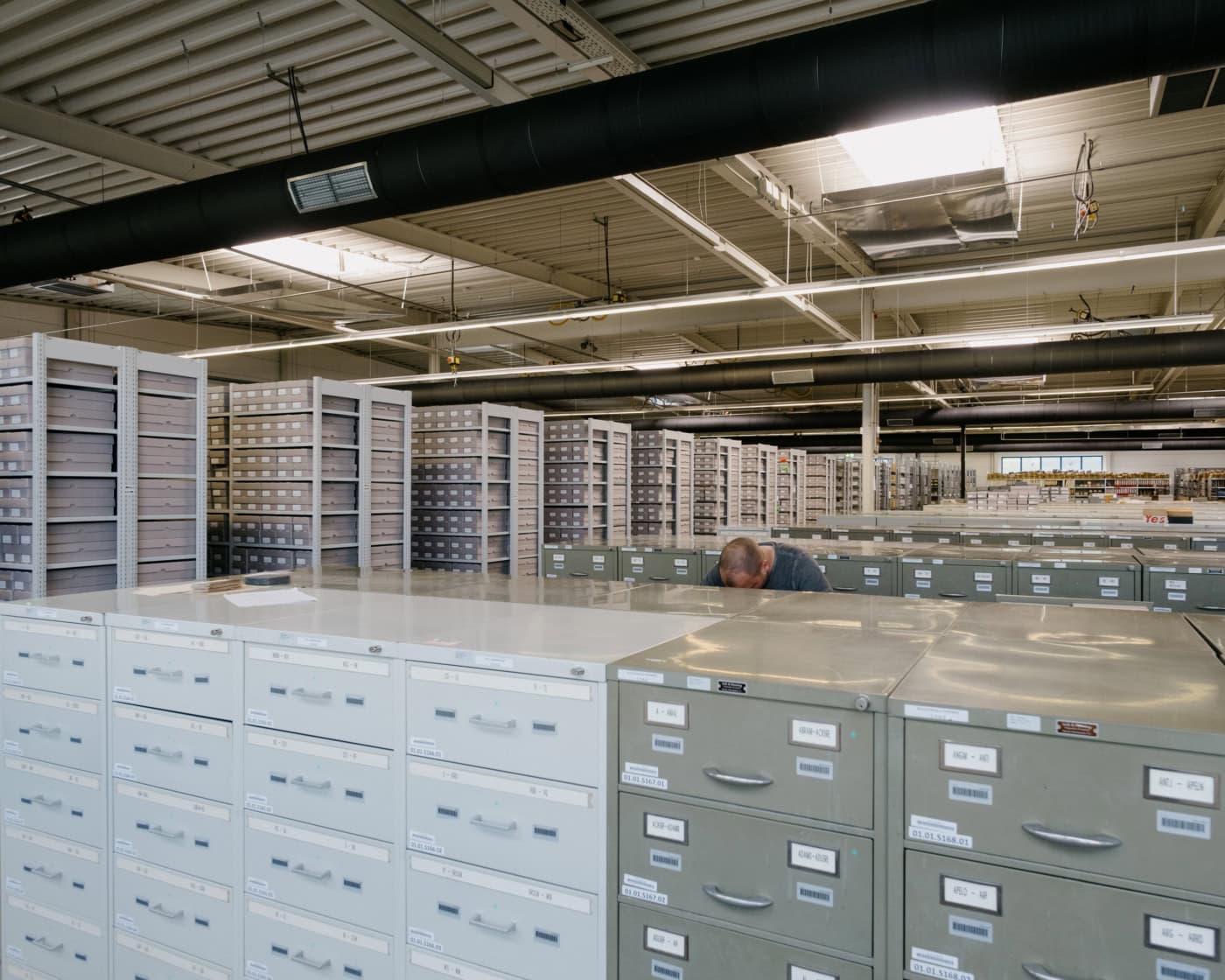
More than 30 million documents and artefacts on 17.5 million victims of the Nazi regime, of forced labour and of so-called displaced persons are kept at the Arolsen Archives.
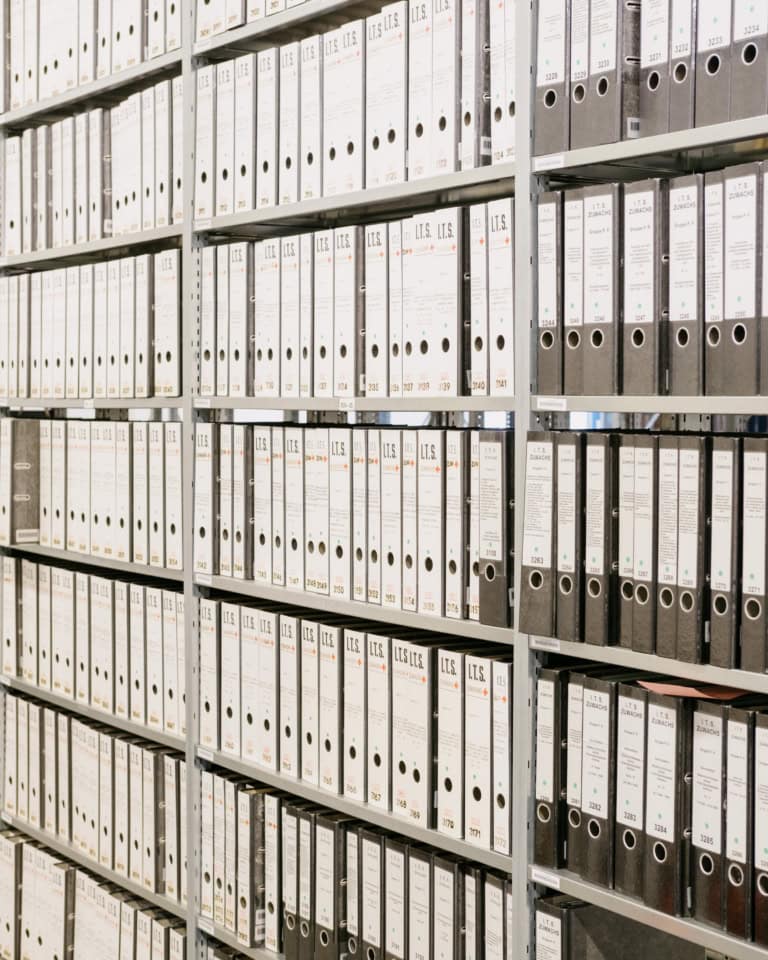
The sheer mass of files reveals the scale of the atrocities. The records are being moved into acid-free cardboard boxes so they can be archived without damage.
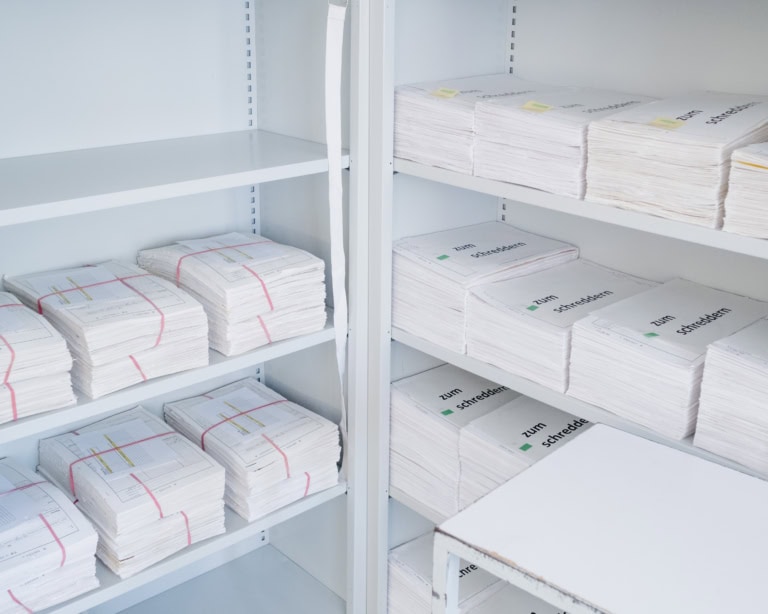
Analogue copies are being destroyed as part of the digitisation process. Before that, every stack is reviewed and the original documents are scanned again.
Drawing on our unique collection on the victims of Nazi persecution, we commemorate the victims and at the same time stand up for historical truth, respect, diversity and democracy in today’s society.
That’s how the Arolsen Archives describe their mission in their own profile. Keeping the historical documents safe is essential to this task. A fire or an attack could destroy irreplaceable evidence. To minimise that risk while promoting research and education worldwide, the archive is working hard to digitise its holdings. A mammoth task that would be impossible without volunteers. In the #everynamecounts project, supporters around the world help to transfer scanned documents into a database that everyone can access. More than 170,000 people have taken part so far, processing more than seven million documents.
But the Arolsen Archives don’t just keep files. Jewellery, keepsake photos, papers – all personal belongings, known as effects, were taken from the victims when they were arrested. To this day, the Arolsen Archives hold around 2,500 effects belonging to former concentration camp prisoners, in the hope of one day returning them to their families. Thanks to the #StolenMemory campaign, launched in 2016, more than 700 families have already been found – often with the help of dedicated volunteers doing research in various countries. Most of the personal belongings come from the Neuengamme concentration camp in Hamburg.
One fate among many
The Neuengamme concentration camp was set up in 1938 as a subcamp of Sachsenhausen and run as an independent camp from 1940. During the war, the Gestapo and the Security Service deported more than 100,000 people from every occupied country in Europe to Neuengamme. On 26 March 1945, the SS began clearing the camp and its subcamps. The more than 50,000 prisoners were taken to other camps such as Wöbbelin or Bergen-Belsen. The main camp was dissolved on 20 April 1945, and many prisoners were executed on site. Among the prisoners at Neuengamme was Leo Tomaszewski, born on 5 April 1921. His belongings are kept at the Arolsen Archives.
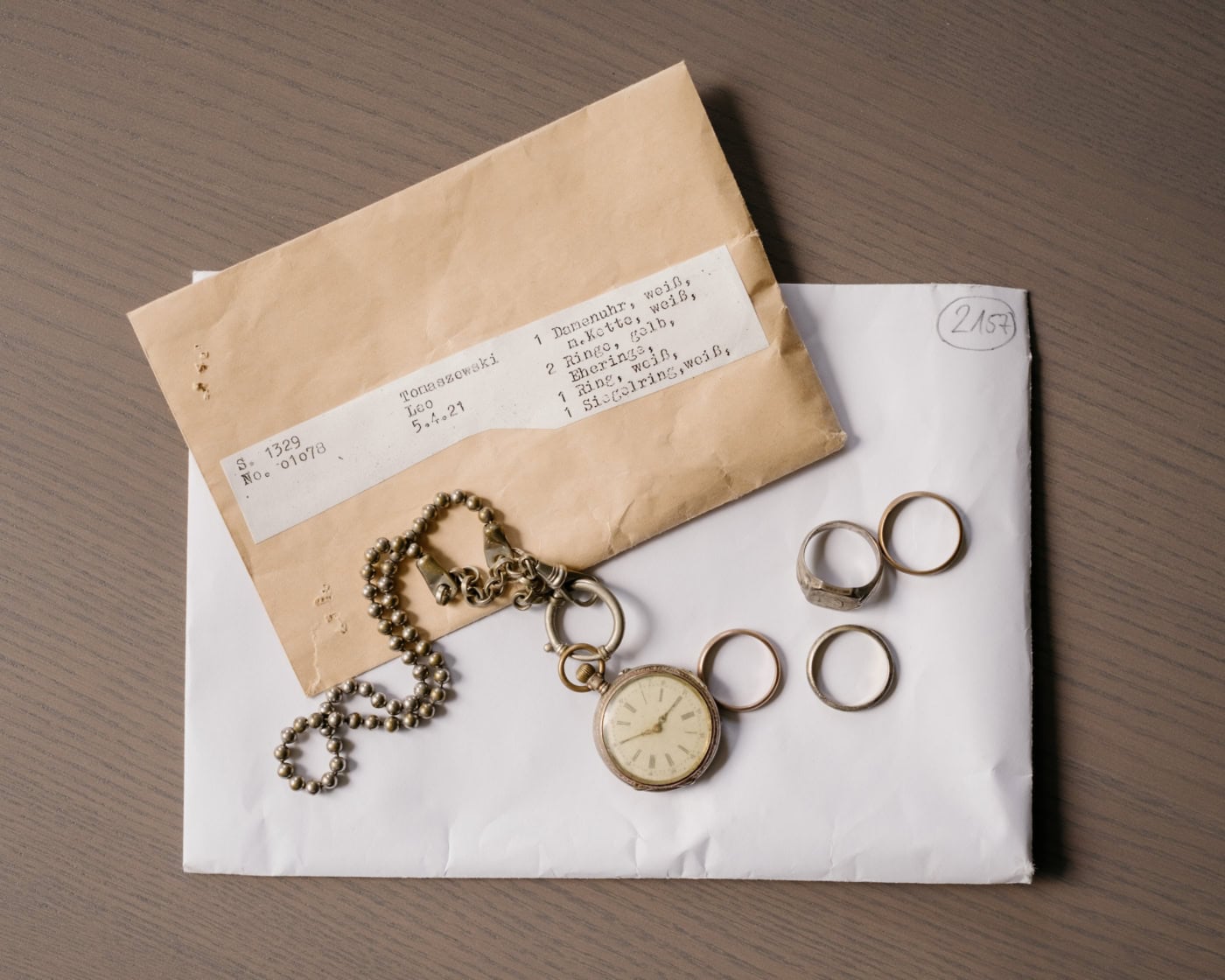
The collection is wide-ranging. From transport lists and photos from concentration camps to records on forced labour and detailed reports on the death marches. Laid end to end, the documents would stretch more than 26 kilometres – the distance as the crow flies between Berlin and Potsdam. These sources are invaluable not only to historians but also to families trying to understand what happened to their relatives. Every year, more than 20,000 enquiries come in from researchers and private individuals looking for answers.
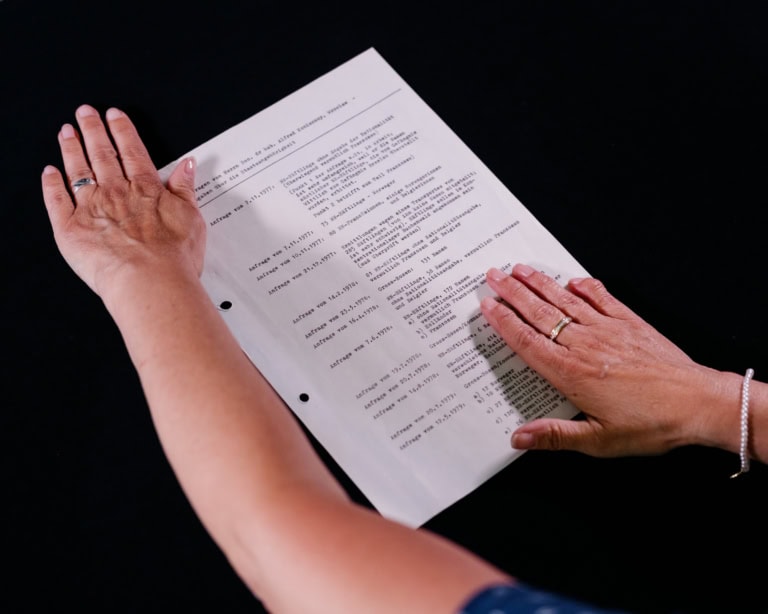
Among the countless documents are enquiries from researchers. These, too, have to be digitised, so that a search for a person shows all the research ever carried out.
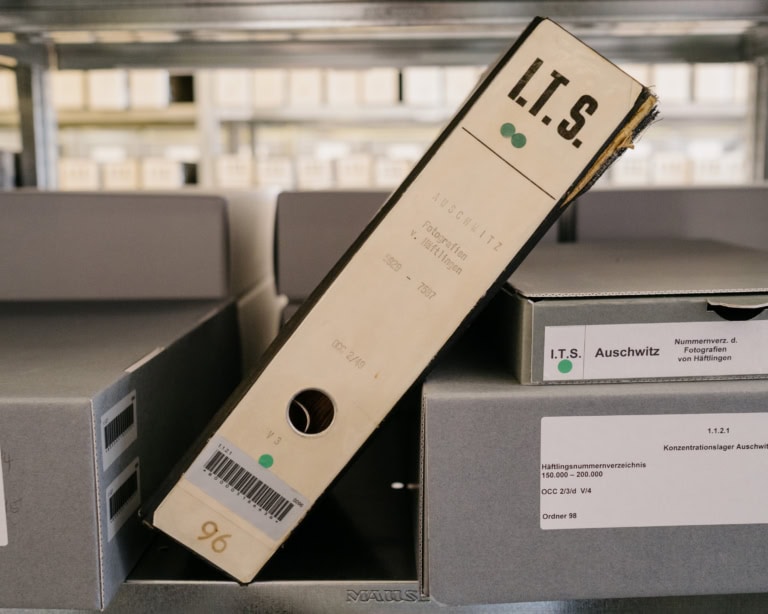
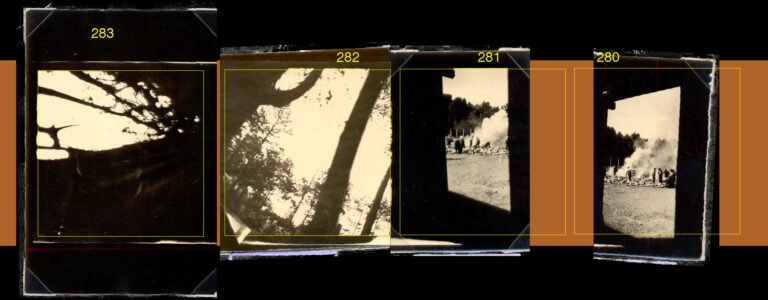
The archive also holds all surviving photographs by the Auschwitz photographer Wilhelm Brasse. As a prisoner, he was forced to photograph other prisoners. His pictures were first used as a prisoner index; later he also had to document the inhuman experiments carried out on prisoners.
Beyond archiving and research, it’s important to make the next generations aware of history too. With educational programmes such as #documentED, the Arolsen Archives prepare school classes for visits to memorial sites: ‘When pupils engage with documents from the Nazi era and the personal fates of concentration camp inmates as part of the documentED project, the horror of the Holocaust becomes more understandable. The project also helps to immunise young people against antisemitism, racism and hatred,’ stresses Dr Josef Schuster, president of the Central Council of Jews in Germany.
In a few years, the last eyewitness will have died. A loss that obliges us to archive their knowledge and memories and pass them on to future generations. Remembering is work. Work that is becoming ever more important in times of rising antisemitism. Work to which everyone – not just the archive itself – has to contribute. Work that, despite all the effort and pain, remains indispensable for our future.