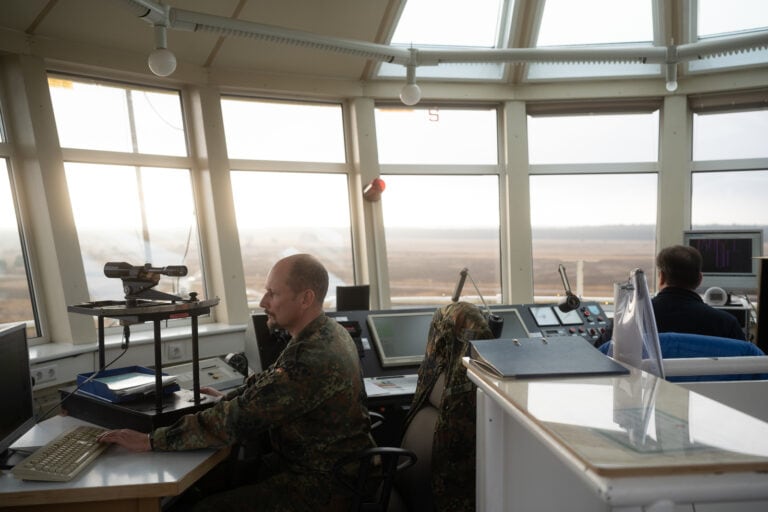
Overcoming creative block: why it happens and how to get back into the flow. Creative block is frustrating – but it doesn’t have to last. Find out why it happens, what it is trying to tell you and how to overcome it step by step and get back into the flow.
 Photo: Max Schlag
Creative block is one of the most painful moments in creative work. The blank page, the camera that stays silent, and the thought: ‘Am I even good enough?’ Standstill. If it’s any comfort: you’re not alone. Even writing this guide took quite some effort. And if I can do it, so can you. So let’s look together at what creative block is and how we can overcome it.
A creative block is more than just a bad day. It is a state in which you feel empty, stuck, without direction. In artistic professions especially, it hits many people again and again – no matter how long they have been in the business. So during the photography festival Rencontres d’Arles, I interviewed several people, some of whom have worked in the industry for a long time and were able to give me some very helpful advice.
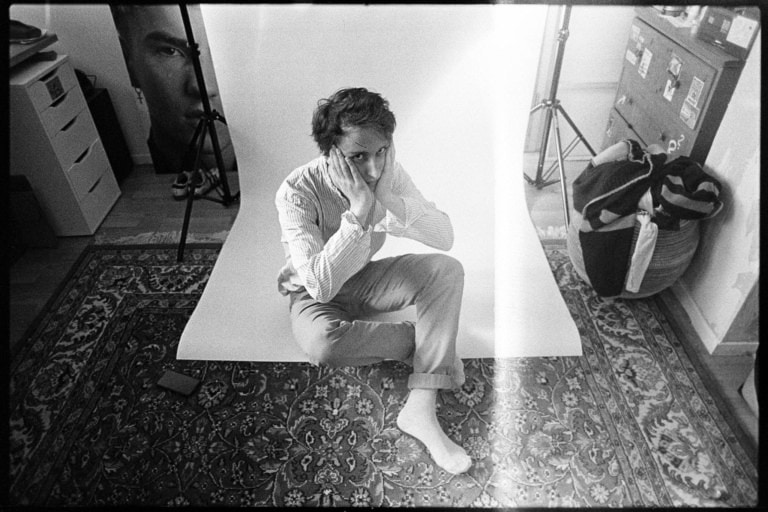
Carlos Rodriguez, for example. The professor from Mexico City knows the feeling all too well. ‘I used to think it would go away at some point – feeling blocked. But even at 50 it still happens.’ He sees it in his students, too. Especially when fears surface, we suddenly change our plans. And that is often exactly where the problem lies.
 Photo: Max Schlag, Carlos Rodriguez, Arles 2025
I used to think it would go away at some point – feeling blocked. But even at 50 it still happens.
 Carlos Rodriguez
A block like this has many ingredients. The urge to make everything perfect can drive the pressure to perform through the roof. And as soon as we try to take on too much at once, we can quickly become overwhelmed.
Comparing ourselves with others doesn’t help either: when we see other people’s finished work, or only a fraction of the effort that actually went into it, we can easily fall into the trap of thinking it came easily to them. Emotional strain also plays a big part – when we feel sad or insecure, it can quickly paralyse us.
Create structure!
In my conversations, though, one possible cause kept cropping up: a lack of structure. The most important thing is to be well prepared before starting a project – to research and get to grips with the subject so thoroughly that you can afford to stumble along the way.
Even if this kind of preparation can feel like a cage, it is much more of a backbone than a cage, Valentina Piccini tells me. She has worked as a duo with Jean-Marc Caimi since 2013. The two documentary photographers have accepted that there will always be phases when creativity deserts them.
Self-doubt is part of every big project!
 Jean-Marc Caimi, Valentina Piccini
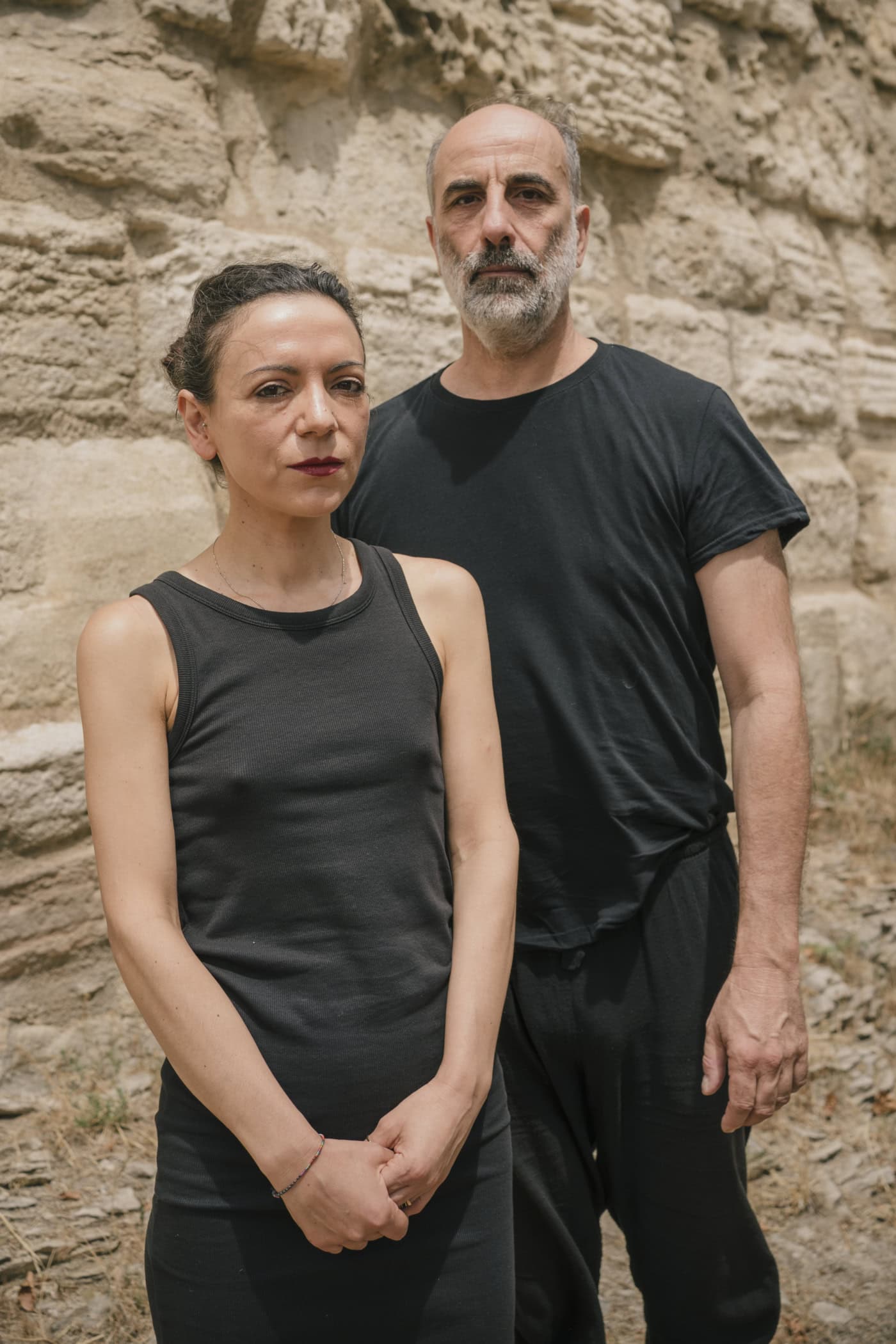 Photo: Max Schlag, Jean-Marc Caimi, Valentina Piccini, Arles 2025
As a duo, they motivate each other – because, fortunately, their moments of block almost never come at the same time. As mentioned, practically everyone I interviewed stressed how important clear structure is, especially when inspiration is lacking.
Sofiya Loriashvili, a 25-year-old photographer from Ukraine, puts it very clearly: ‘Structure is a form of passion.’ She uses to-do lists, discipline and small milestones. Even if you want to be free and chaotic when taking pictures, the framework around it gives you security.
Carlos Rodriguez advises his students to break big projects down into manageable tasks. ‘First just design the cover. Then the typography. Step by step.’ That makes big projects less daunting and gets you moving again.
I also think it’s important not to give all our creative processes a purpose. Just doing something without judging it afterwards. That can be as simple as a walk, or taking photos just for the sake of it rather than to show them later.
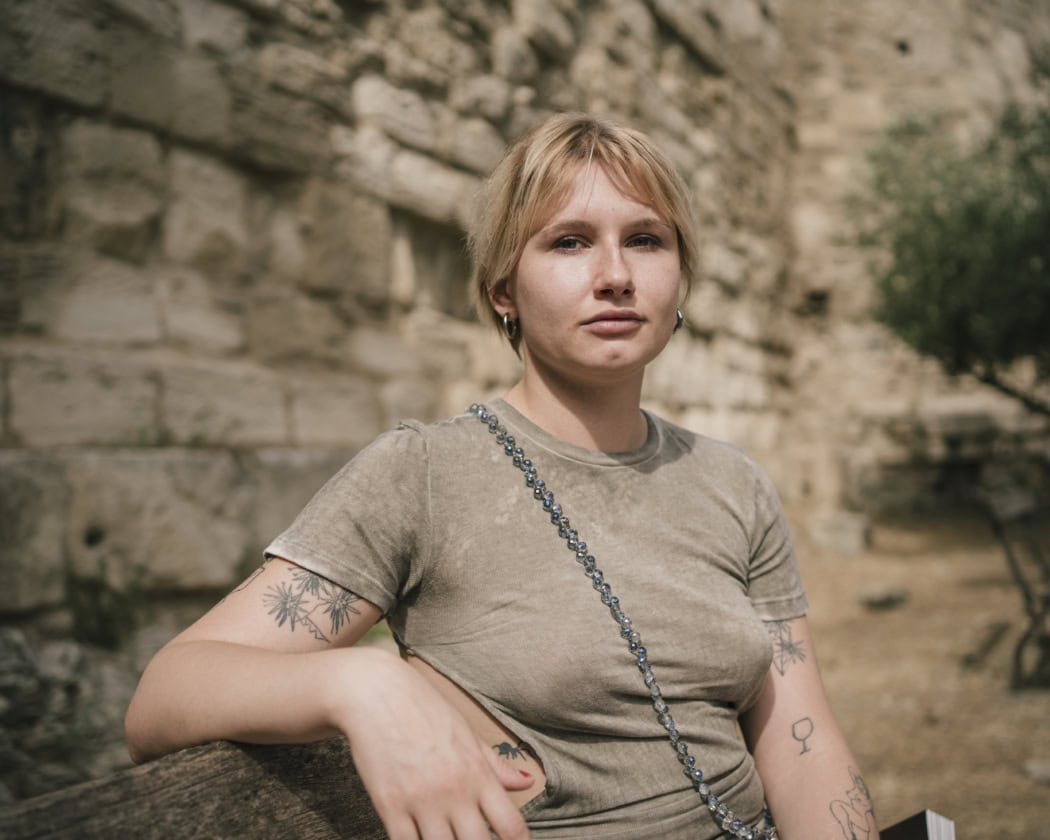 Photo: Max Schlag, Sofiya Loriashvili, Arles 2025
Why force yourself when it just isn’t working?
 Sofiya Loriashvili
Sofiya Loriashvili hasn’t taken any photos for three months. And that’s OK. ‘Why force yourself when it just isn’t working?’ She describes life as an artist like this: ‘Six months of inspiration, six months of depression’ – a phrase she picked up from a friend’s professor. It helps her accept these cycles instead of fighting them.
Jean-Marc and Valentina agree: ‘These moments will keep coming back; it isn’t an illness. You have to understand them and keep going.’
Let’s sum up what we can do when we need our creativity but can’t reach it:
Tips and tricks to beat the block!
1. Write to-do lists, even for creative work!
2. Establish routines and find out what works best for you. When am I most productive, and how can I divide up my time most sensibly?
3. Set time limits, because I often spend a whole day on a small task simply because I haven’t planned my time well. Setting a timer can really help you get into a more productive workflow!
4. Focus on the present! The past is over, and we can’t control the future, Carlos Rodriguez tells me.
5. Keep talking to others, because despairing together is often better than despairing alone.
6. Set yourself realistic goals. If you can’t reach your goal in the end, you’ll only be more frustrated.
The past is over, and we can’t control the future
Carlos Rodriguez
All the artists quoted here – professor, duo or lone fighter – share the same experience: blocks don’t simply stop. But you can learn to live with them, to recognise them and to meet them with structure, compassion and small steps. ‘The future is a compromise,’ says Carlos. And perhaps that is exactly the key: not wanting everything at once, but taking one step at a time.
I wish I had known all this before writing this guide – it would definitely have been easier!