Born to perform?
From engine to muscle, from horsepower to watts: a bike shop reveals how men relate to technology and status today – and whether anything has really changed. By Jan de Vries (text), Isabel Reda (photos)


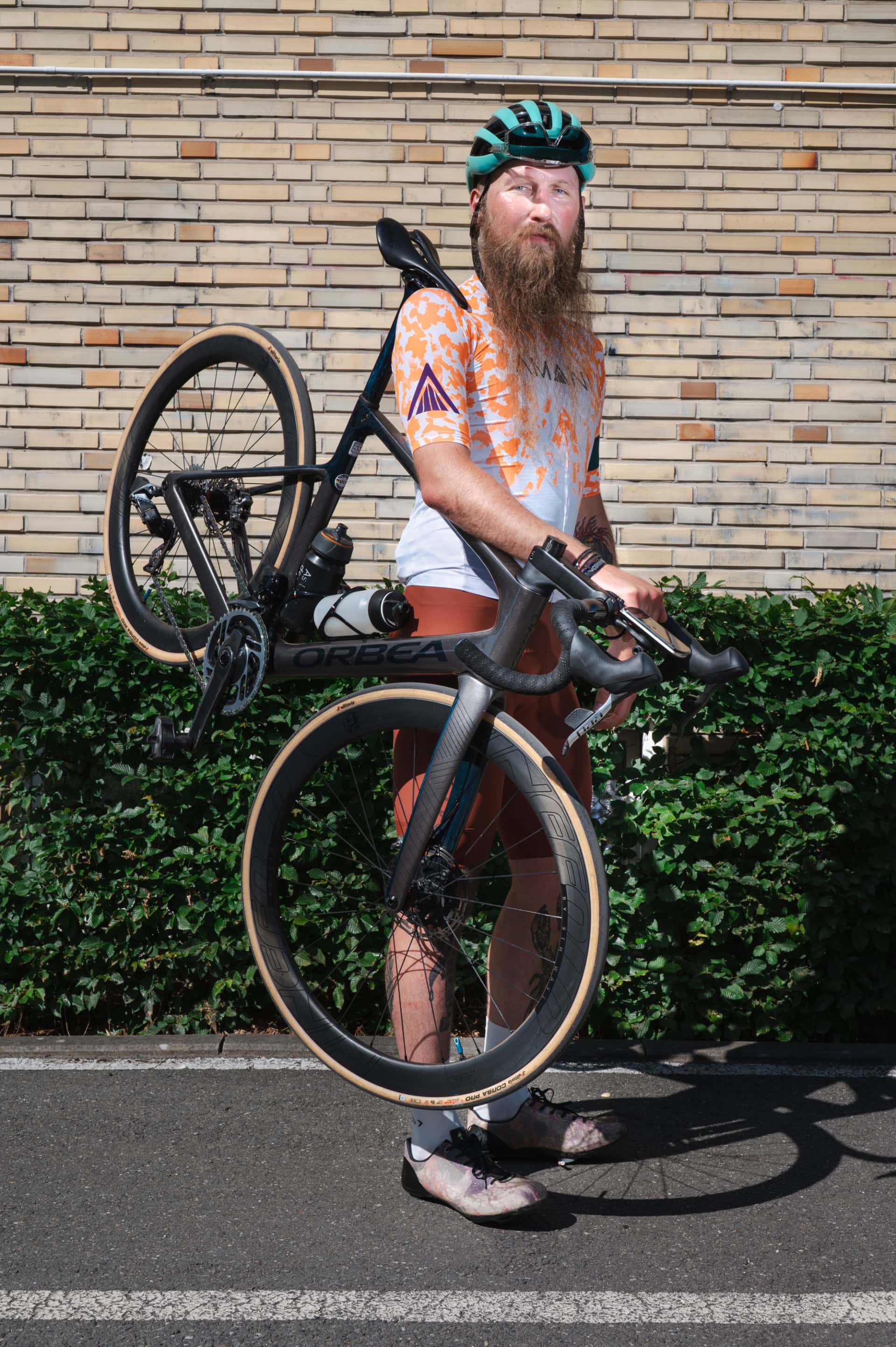
The car park outside the bike shop in Hannover-Wülfel makes no effort to look interesting: tarmac, white lines, parked cars. Still, I stop and stay longer than I need to. A man is lifting a road bike onto the rack of his estate car. He lifts it, puts it down, lines it up again. He pulls the strap tight, loosens it, pulls it tight once more. Then he steps back and looks at the bike as if he needs to check that it’s really secure now.
What grips me is the seriousness of it all. To this man, the bike is more than an object you simply stow away. It demands an answer. And that is exactly what interests me: bikes are treated here the way cars used to be. It’s about more than riding. It’s about who you are when you own a bike like that.
A few metres further on, a cargo bike squeezes between the cars. A child sits in the front, legs dangling. The father in the saddle says something without stopping. He sounds tired but patient. The bike is bulky and needs space, yet it glides effortlessly towards the entrance.
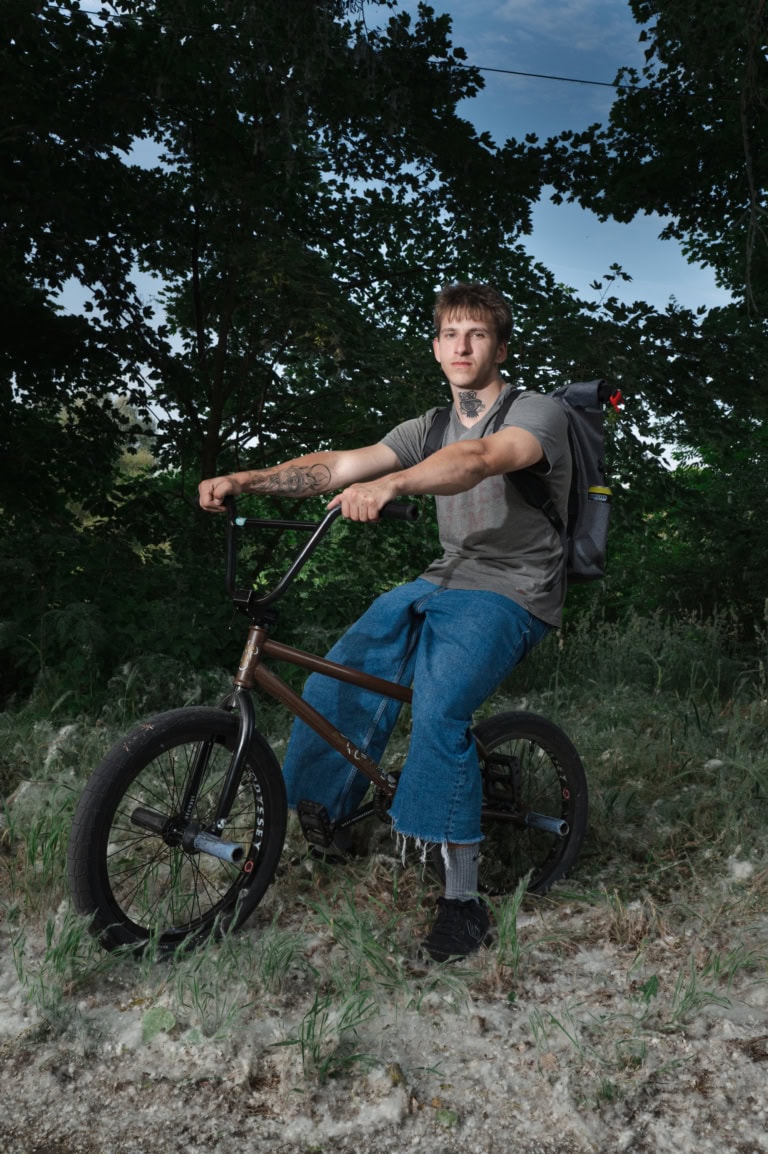
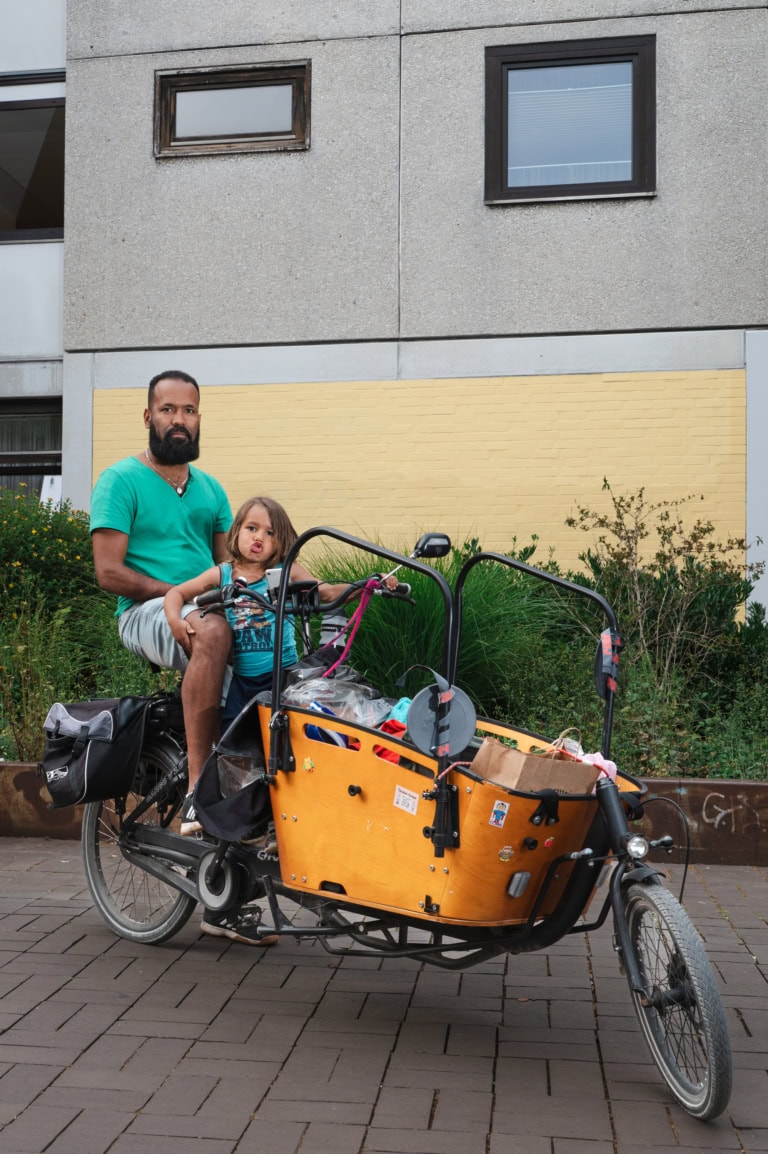
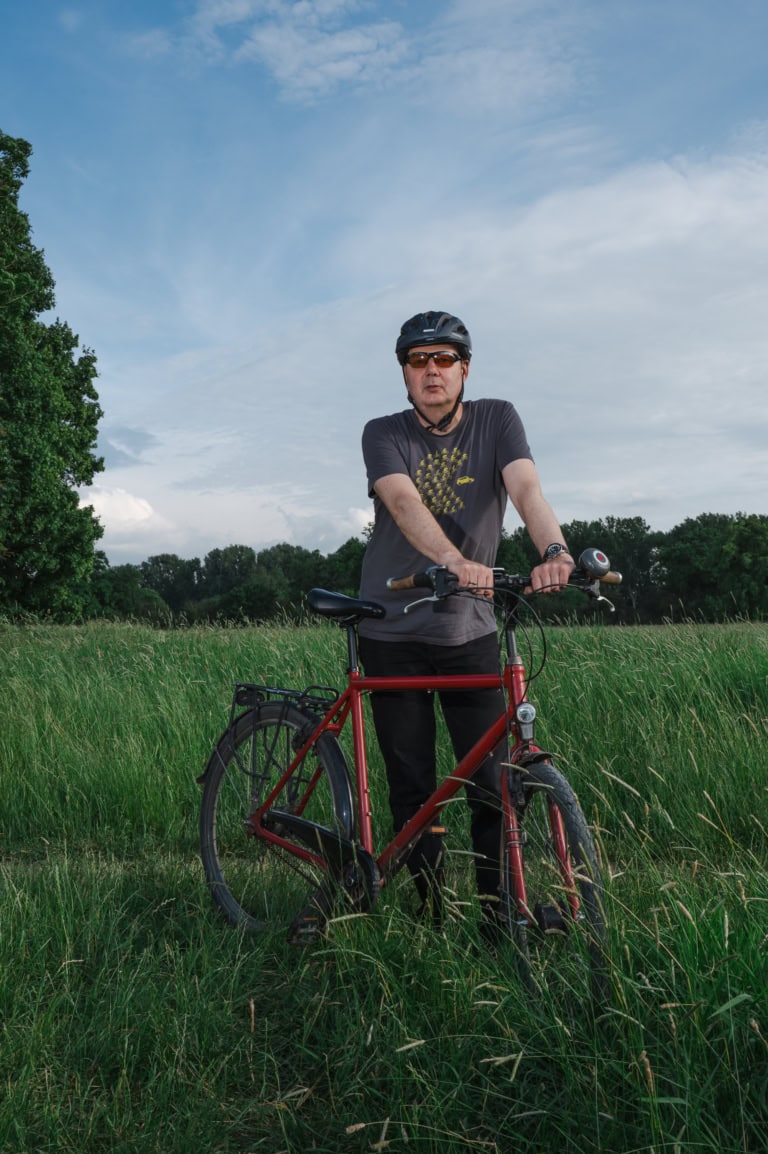
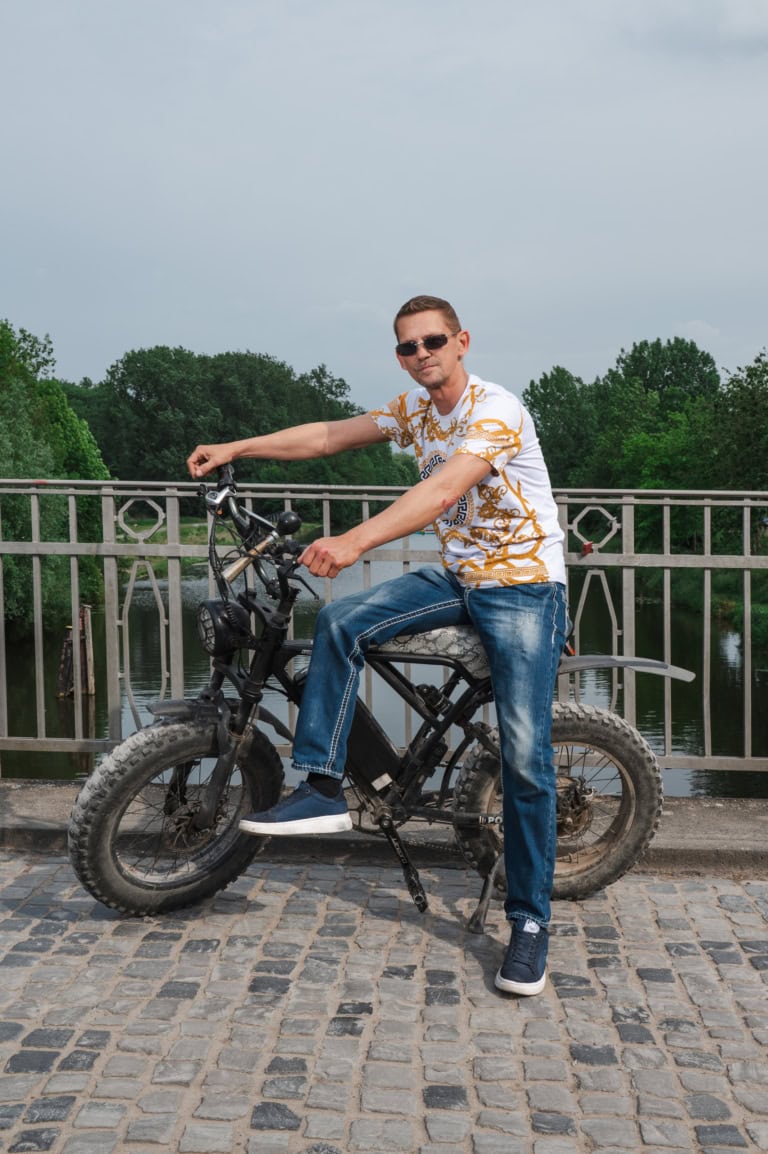
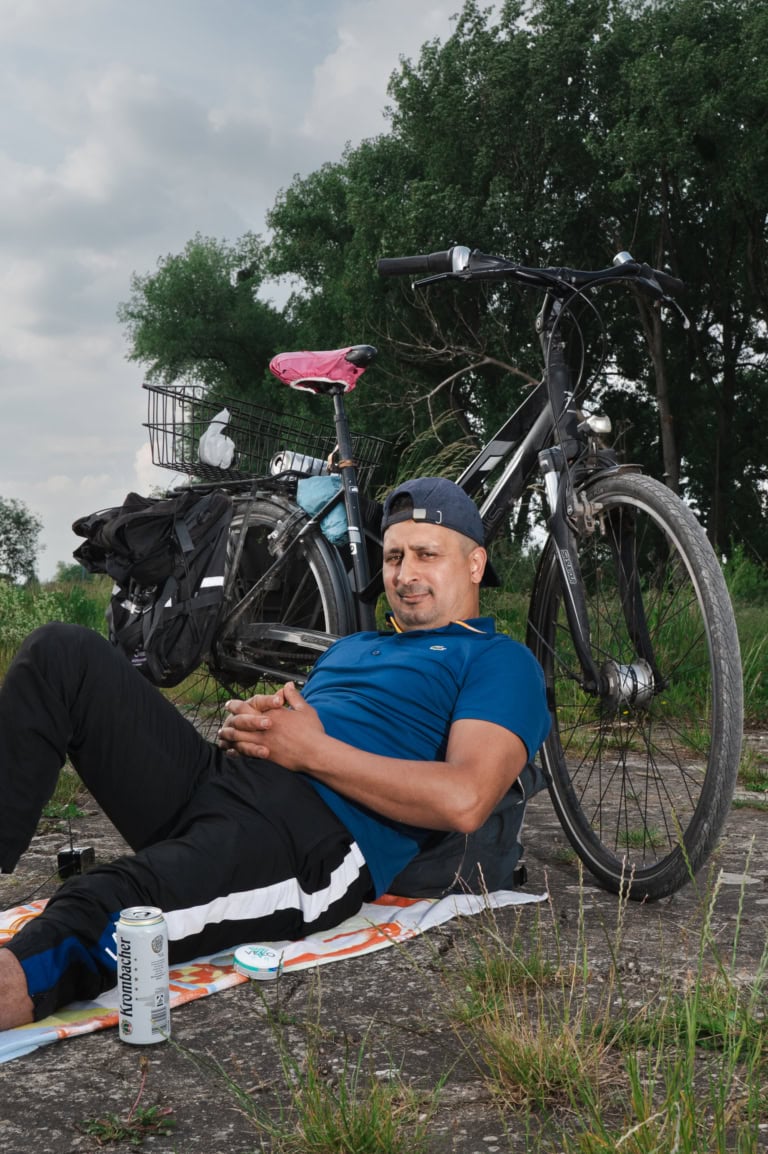
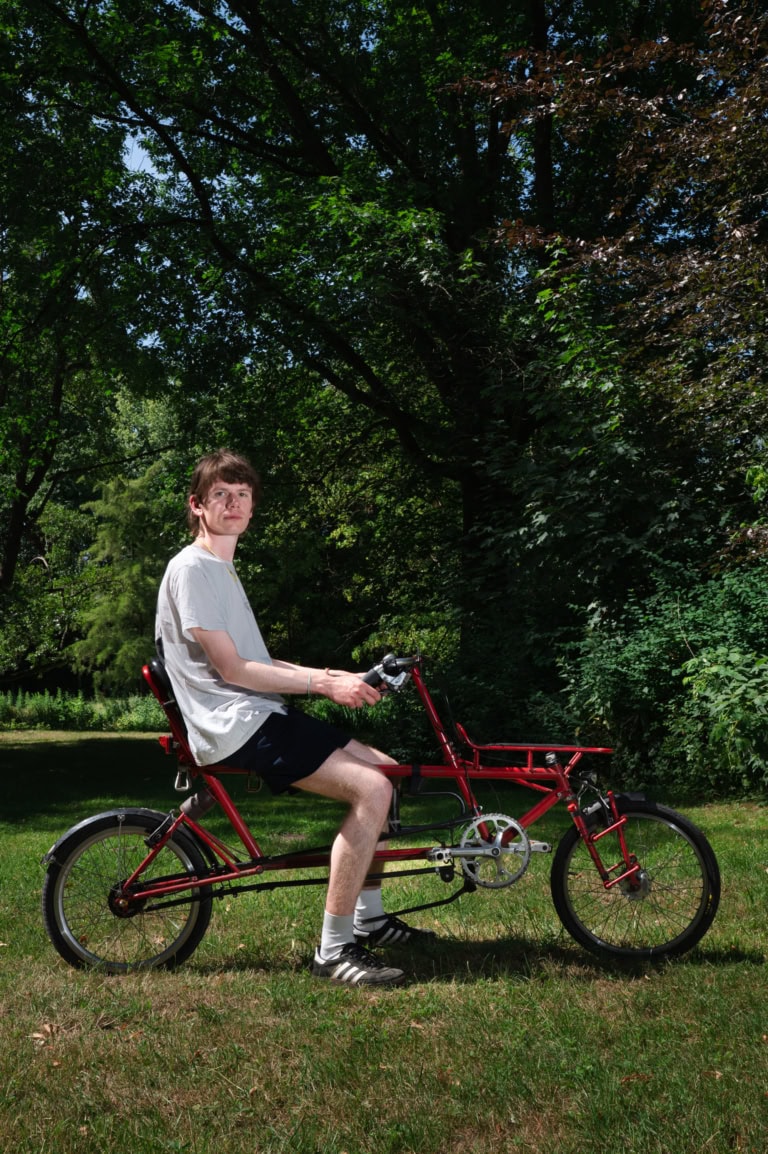
Inside, the shop is bright. High ceilings, wide aisles, bikes lined up in neat rows. Among them, mostly men. They read the little labels, lift bikes slightly, click through the gears. They all seem focused, in their element. It smells of rubber, metal and chain oil – of workshops, of getting your hands dirty – a smell that suits this seriousness. A man in his mid-fifties stands in front of a road bike priced at just under €4,000. His eyes wander over the frame; he checks the gearing and reads the price tag a second time. Beside him, a sales assistant calmly explains the difference between mechanical and electronic shifting. Matter-of-fact, no hard sell.
It reminds me of car showrooms in years gone by. Of men discussing engine options and panel gaps with the same seriousness. Here, too, it’s about technology, about comparison, about a decision you don’t take lightly. Only the object is different: slimmer, quieter, closer to the body.
For a long time, the car was the key marker of male identity. Performance, control and status could all be pinned on it. The car as a status symbol hasn’t disappeared, but it is no longer so clear-cut. In certain circles, the high-end bicycle has taken its place. That’s the question I can’t shake off this morning: why the bike? What can it do that the car can’t?
Part of the answer is that a good bike needs explaining. With a car, you can see the price from the outside; often the brand alone says it all. With a road bike, you have to know what you’re looking at: that electronic shifting costs more than mechanical, that a carbon frame is a different thing from aluminium, that €4,000 is nowhere near the top end here. If you can read the bike, you belong. A road bike or an e-bike is a project, not a casual purchase. You invest not just money but time, knowledge and attention. Because the bike responds quite precisely to what you put into it: strength, patience and maintenance.
You can see this in the open workshop. It sits in the middle of the shop, separated from the sales floor only by a pane of glass and a railing. You can watch the mechanics at work as if on a small stage. A customer leans on the railing and watches someone work on his bike. He asks about the adjustment; he wants to understand why something is the way it is and not otherwise. Of course, men have always tinkered with cars, too: at the weekend in the garage, often with a friend or a neighbour. But that mostly happened in semi-private, on their own driveway. Here in the bike shop, the tinkering is public. Technology isn’t hidden away but shared – almost put on show.
The body plays a different role, too. A road bike demands discipline. You ride against the clock, against the gradient, against your own comfort. The trained body is the product of organisation and perseverance. And the performance rarely stays private. The route ends up on Strava, the average speed on Instagram. You measure yourself against yourself – and share it anyway.
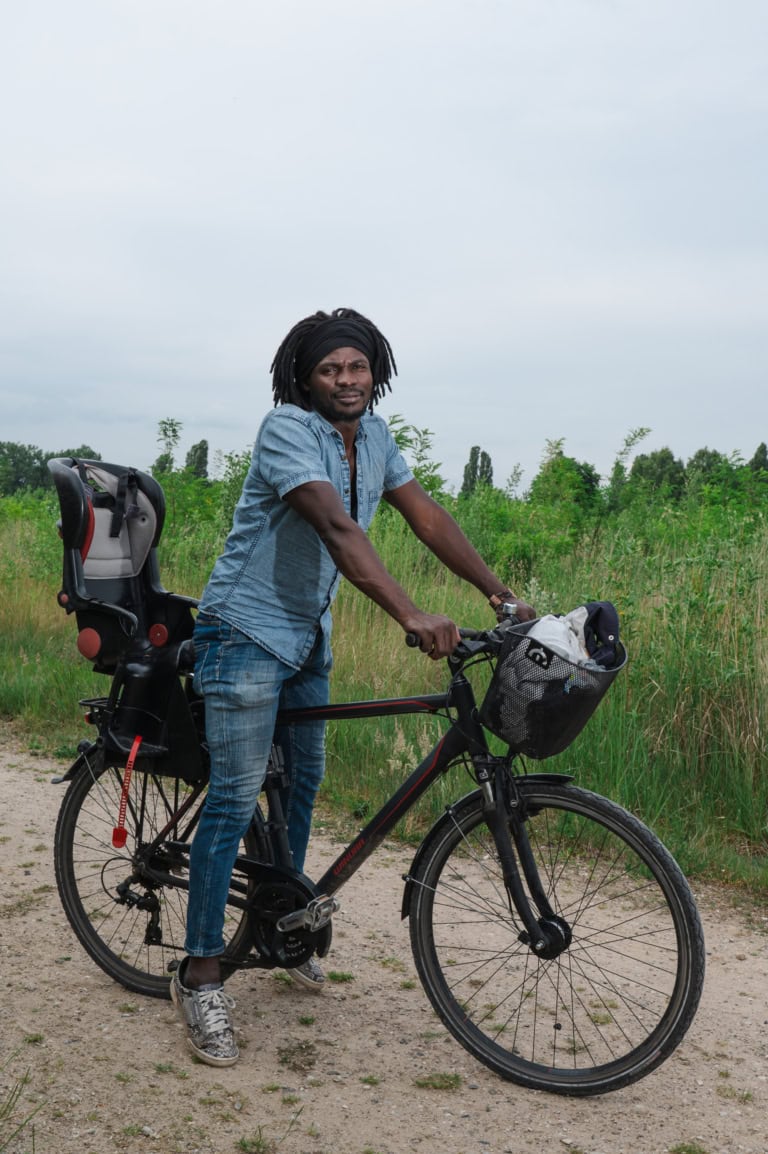
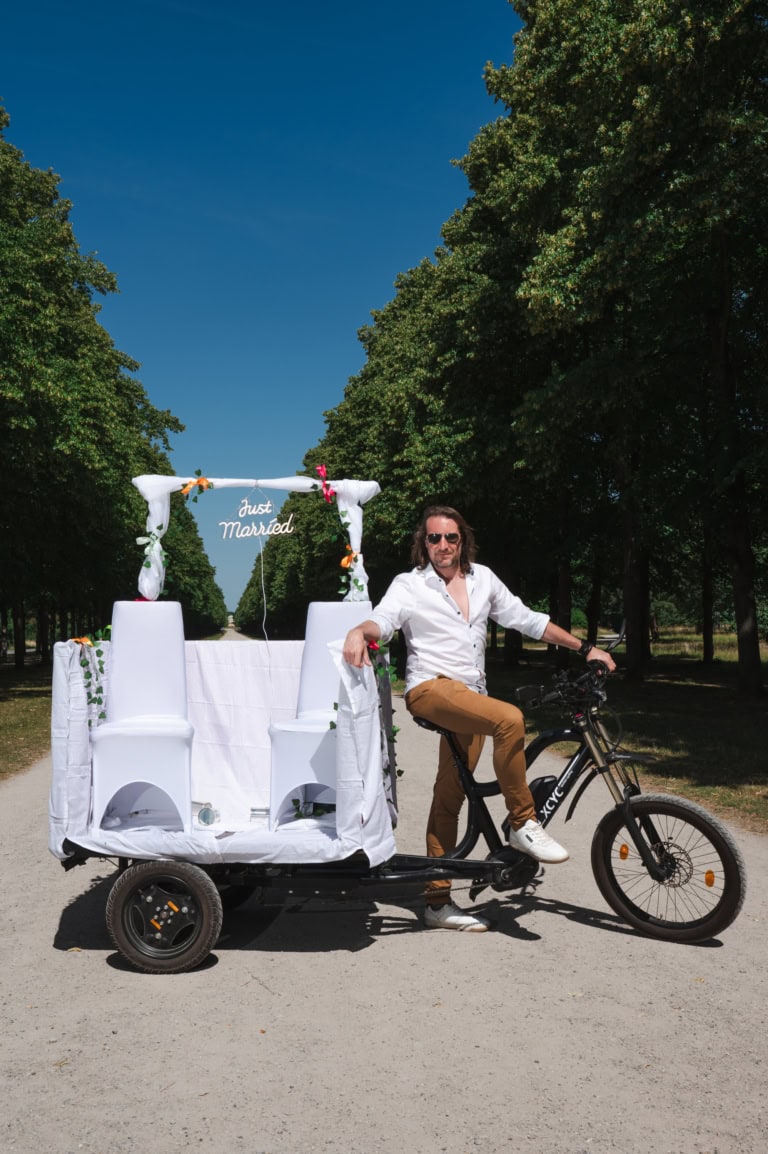
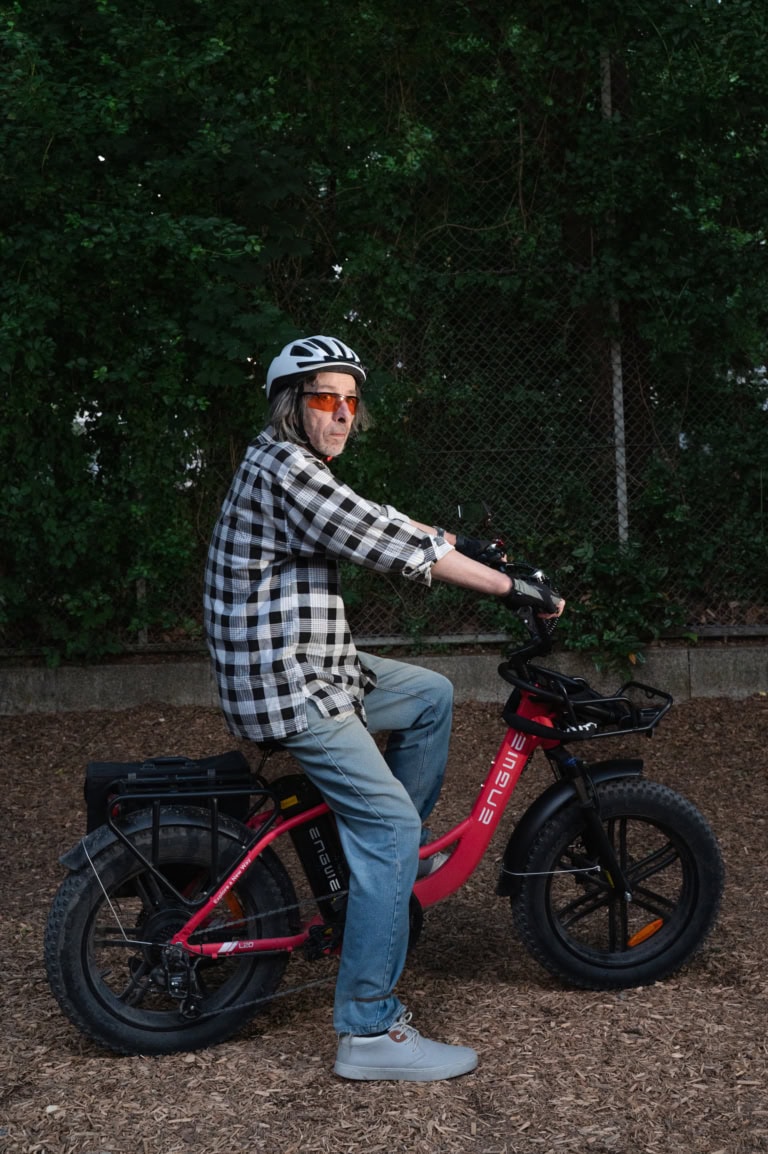
Later I’m sitting on the tram, which is fairly full. At a junction it slows down and stops. I look out of the window and see a road cyclist waiting on the cycle path to the right, one foot on the ground, the other clipped in. When the lights turn green, he sets off, calm and unhurried. While the cars beside us pull away and brake again almost at once, he glides past at a steady pace – first past the tram, then past the queue of waiting cars. And I think about what I’m actually watching. The man isn’t part of the traffic jam; he’s moving past it. That, I think, is precisely the point.
All morning I’ve been seeing two pictures that don’t quite fit together. On the one hand, the bike as something shared: the open workshop, the customer asking questions, the technology people talk through together. That feels like a different, softer kind of masculinity, one built on connection rather than distance. On the other, the road cyclist who overtakes everyone, the discipline, the times, the Strava stats shared online. That’s the old, performance-driven man, proving his strength and progress.
So perhaps the bicycle isn’t the symbol of a new masculinity at all, but a more comfortable vessel for the old one. Status, performance and control haven’t disappeared; they’ve simply changed objects: from engine to muscle, from horsepower to watts. What has changed is the surface: slimmer, quieter, healthier. What lies beneath is more familiar than it seems.