‘It’s like dancing in the water’
Flexibility, timing and blind trust: how a demanding sport shapes young athletes. By Joshua Hummel, Michael Matthey, Carlotta Steinkamp (text, video) and Meline Bühler (photos)
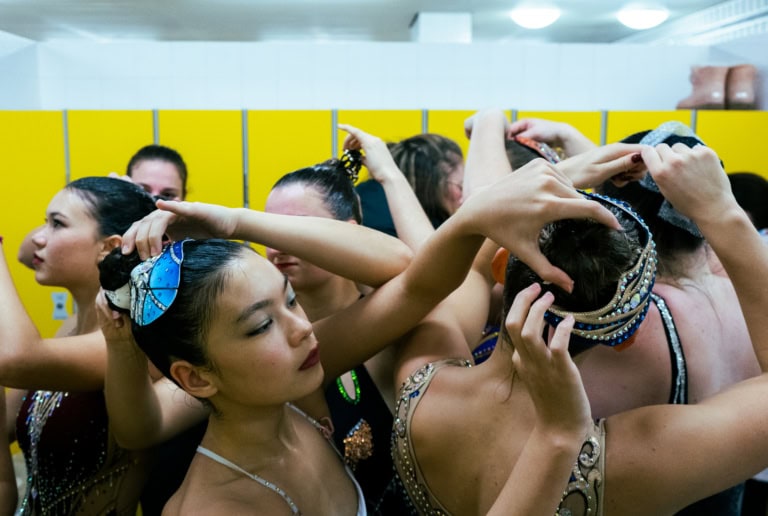
The sun is shining on the water of the learner pool at the newly refurbished outdoor pool in Misburg, where children are splashing, laughing and playing – today the outdoor swimming season begins. In the middle of the fun comes an announcement: ‘The synchronised swimming will start in ten minutes.’ The synchronised swimmers focus; there is little talking. Their costumes fit perfectly and their hair is styled. ‘It’s called “Klitschen”,’ explains Zora, a 15-year-old pupil from Hannover.
Zora and her teammates from SGS Hannover have trained hard for this moment. Synchronised swimming, also known as artistic swimming, demands not only stamina and strength but also perfect coordination with your teammates. ‘It’s like dancing in the water,’ explains coach Anna Kasterina, ‘except that we have no solid ground under our feet.’ Preparations for today’s show began months ago. ‘Every movement has to be spot on, every breath has to be coordinated,’ says Anna, one of the most experienced swimmers in the team. ‘We train up to five times a week, sometimes more when an important competition is coming up.’
English subtitles: switch them on manually with the CC button in the video player.
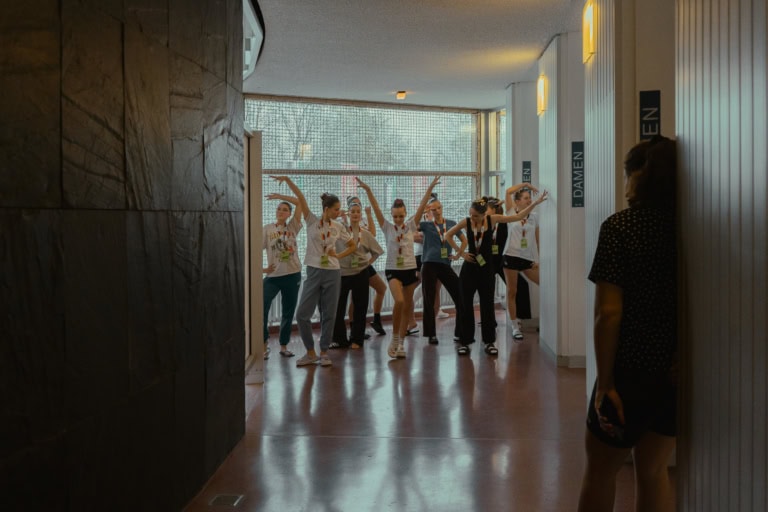 Rehearsing before the performance
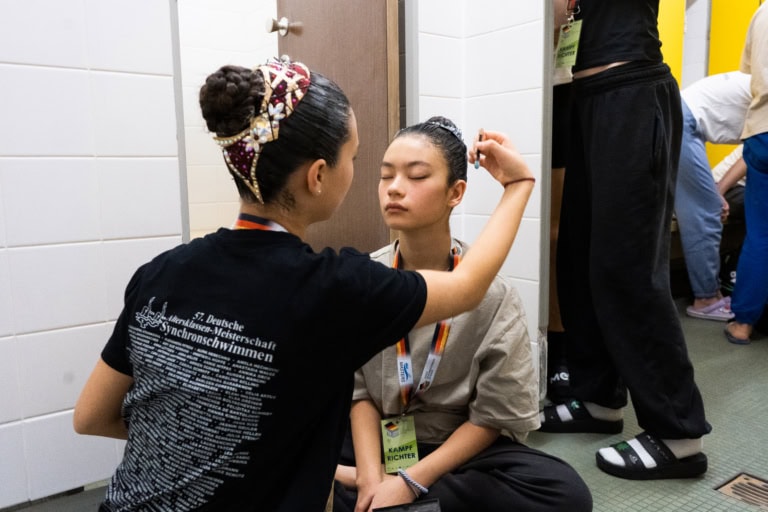 The swimmers do each other’s make-up and hair.
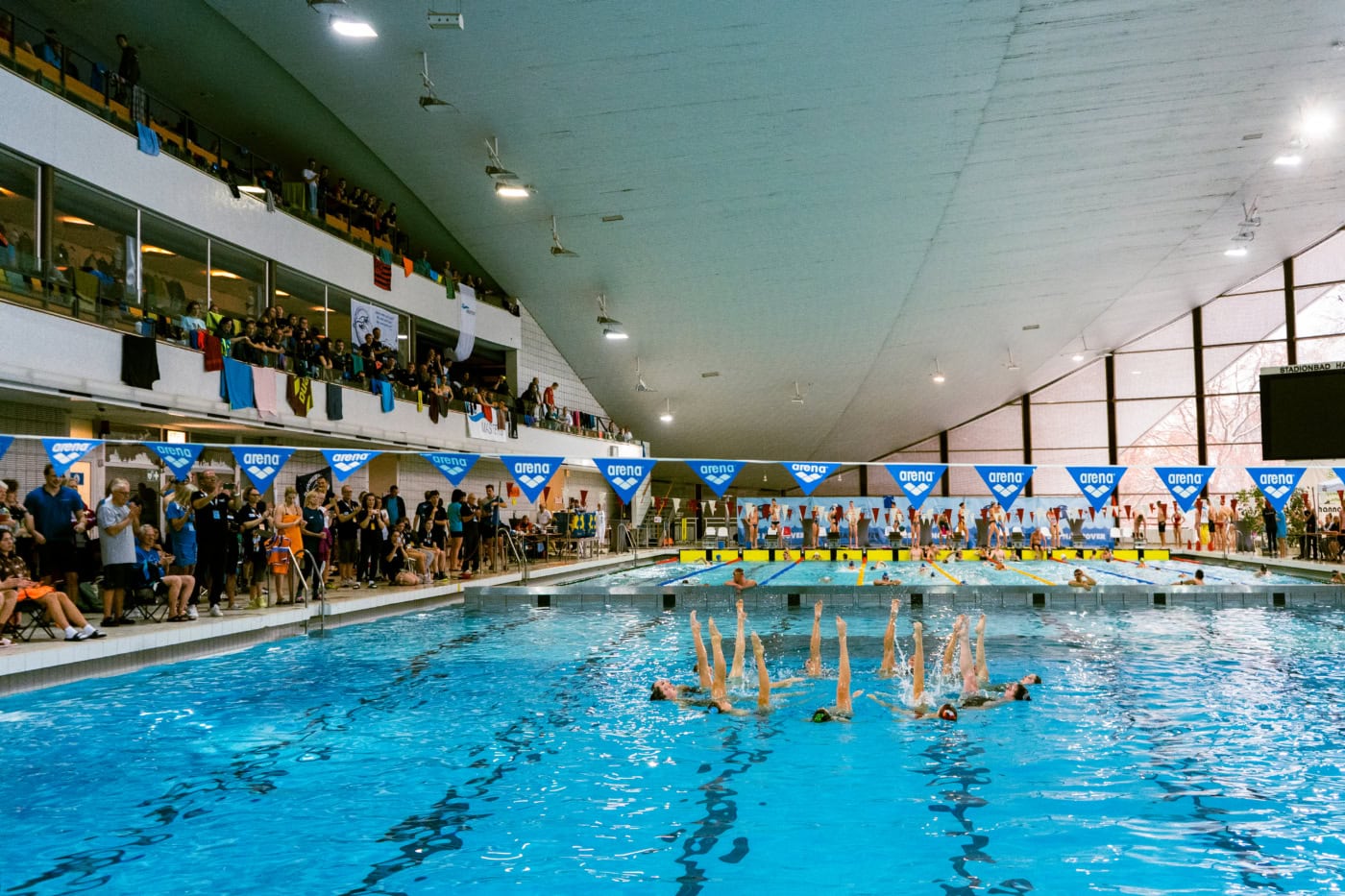 Overall view of the swimming pool
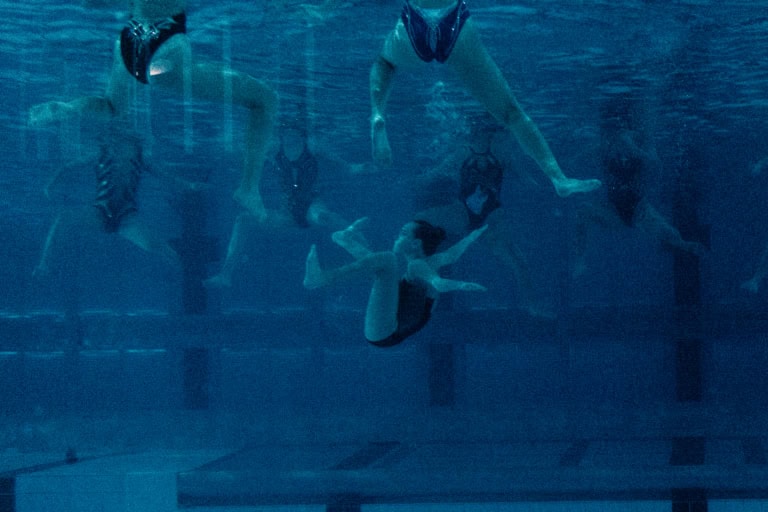 Unterwasserbild, Auftritt
 After the performance the swimmers undo each other’s hair.
It’s not just physically exhausting – it’s mentally challenging too.
 Zora Witkowski
Parents, friends and swimmers gather around the 25-metre pool to watch the performance. The music starts and the swimmers take up their positions. With graceful movements they glide through the water; their synchronicity and elegance captivate the audience.
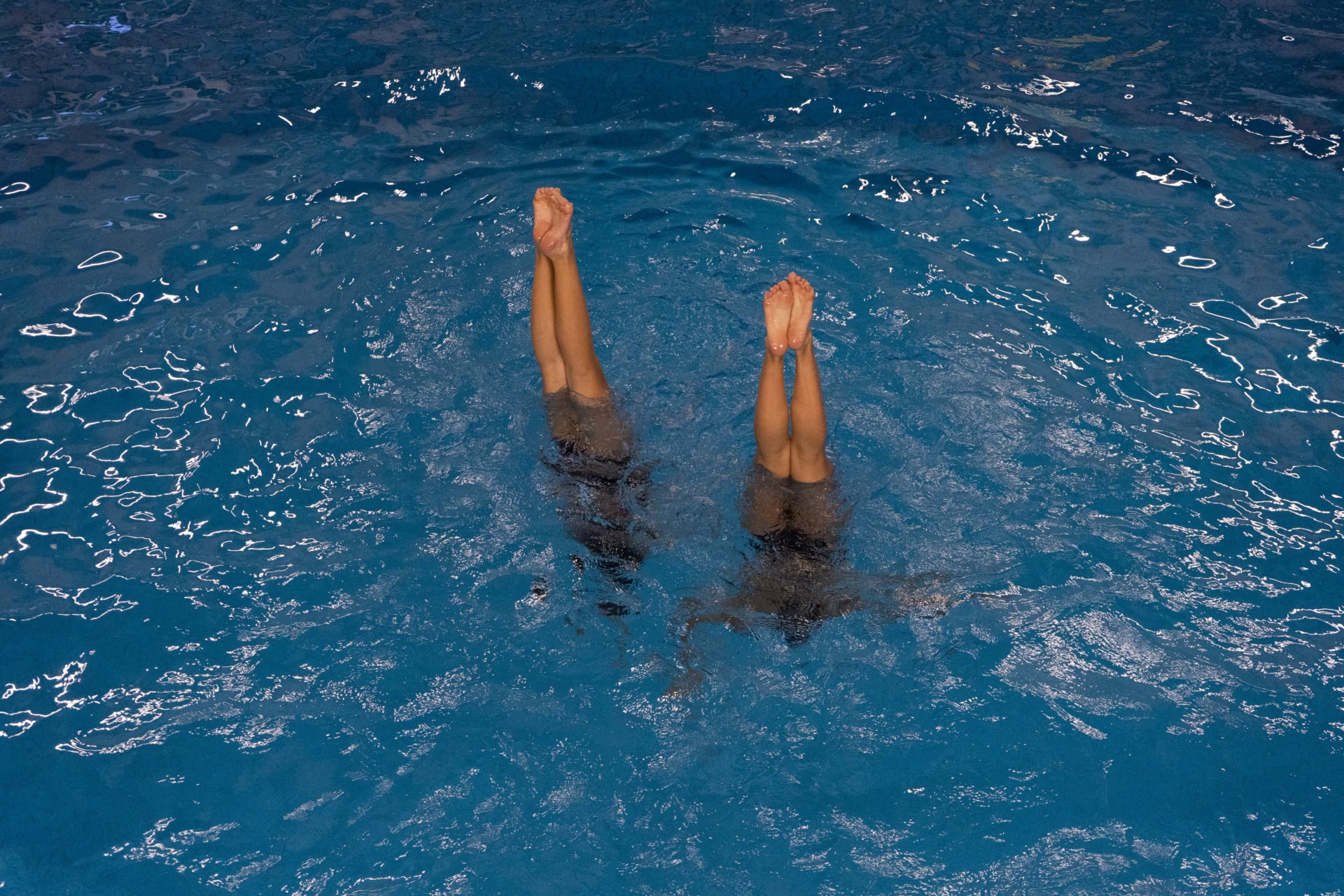
‘A lot of people have no idea how much work goes into it,’ says Zora. ‘It’s not just physically exhausting – it’s mentally challenging too. You constantly have to think about so many things at once: the choreography, the music, the other swimmers.’ Breathing is a particular challenge. The swimmers have to stay underwater for long periods while performing complex movements. They wear nose clips so that no water gets up their noses and affects their performance. Every swimmer has a spare clip attached to her swimsuit.
The SGS Hannover team has had plenty of success in recent years. ‘We’re very proud of what we’ve achieved,’ says the coach. ‘But for us it’s not just about the medals. Synchronised swimming builds team spirit, discipline and stamina. It’s a wonderful way to empower young people and teach them important values.’
Synchronised swimming combines strength and elegance. The swimmers not only need to be in excellent physical condition but must also be able to perform powerful lifts and elegant spins in the water. That requires immense core tension and precise control of every movement. And training, training, training.
The sun keeps shining as the last bars of music fade away and the swimmers climb out of the water. Their performance lasted only a few minutes, but the effort is written all over their faces. The applause is overwhelming.
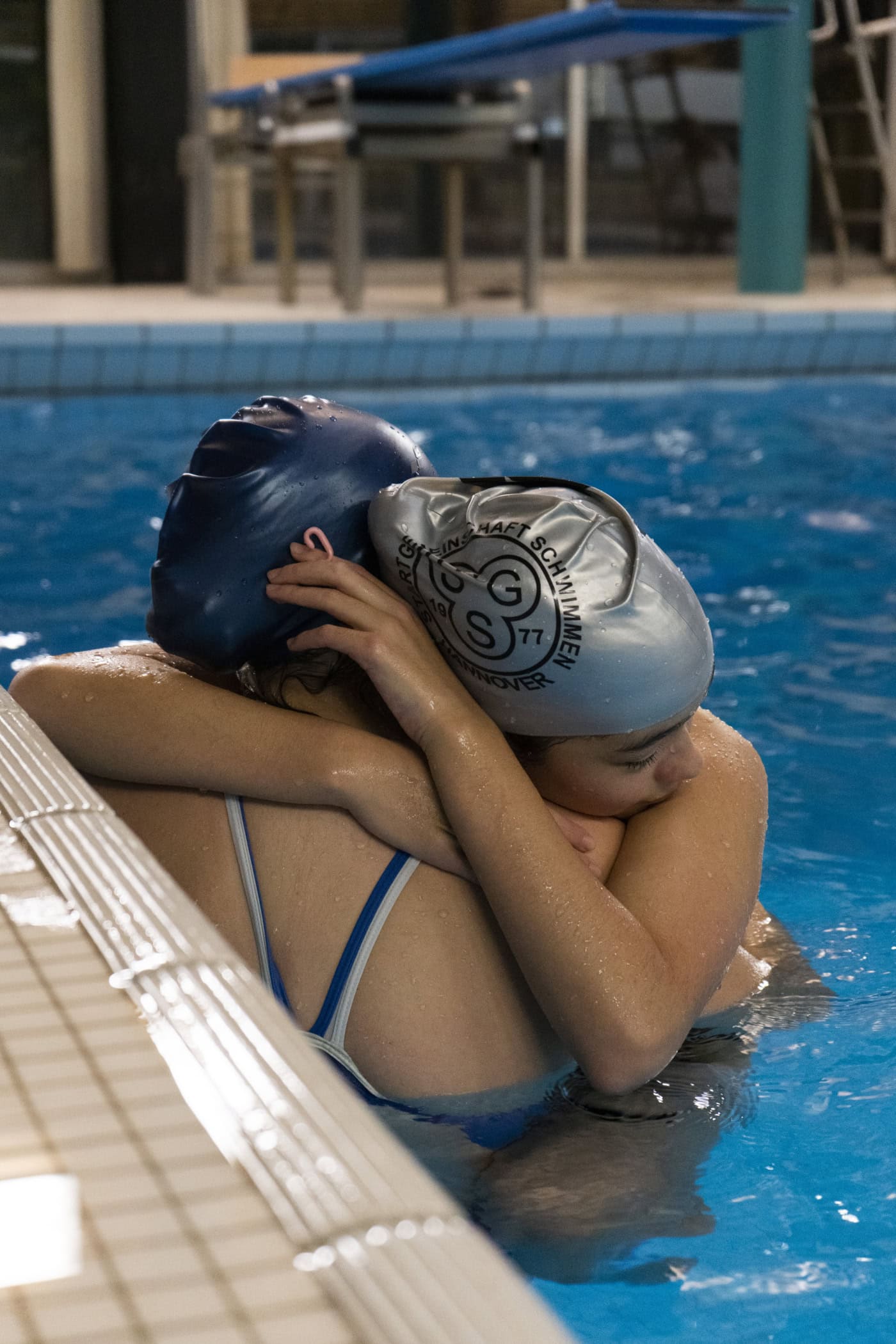
For us it’s not just about the medals. Synchronised swimming builds team spirit, discipline and stamina. It’s a wonderful way to empower young people and teach them important values.
 Anna Kasterina, coach