Portrait of a displacement
Vivid graffiti, buzzing events – the Koch-Areal in Zurich was an alternative place to live. Its eviction sparked a debate about community and gentrification. By Noemi Ehrat (text and photos)

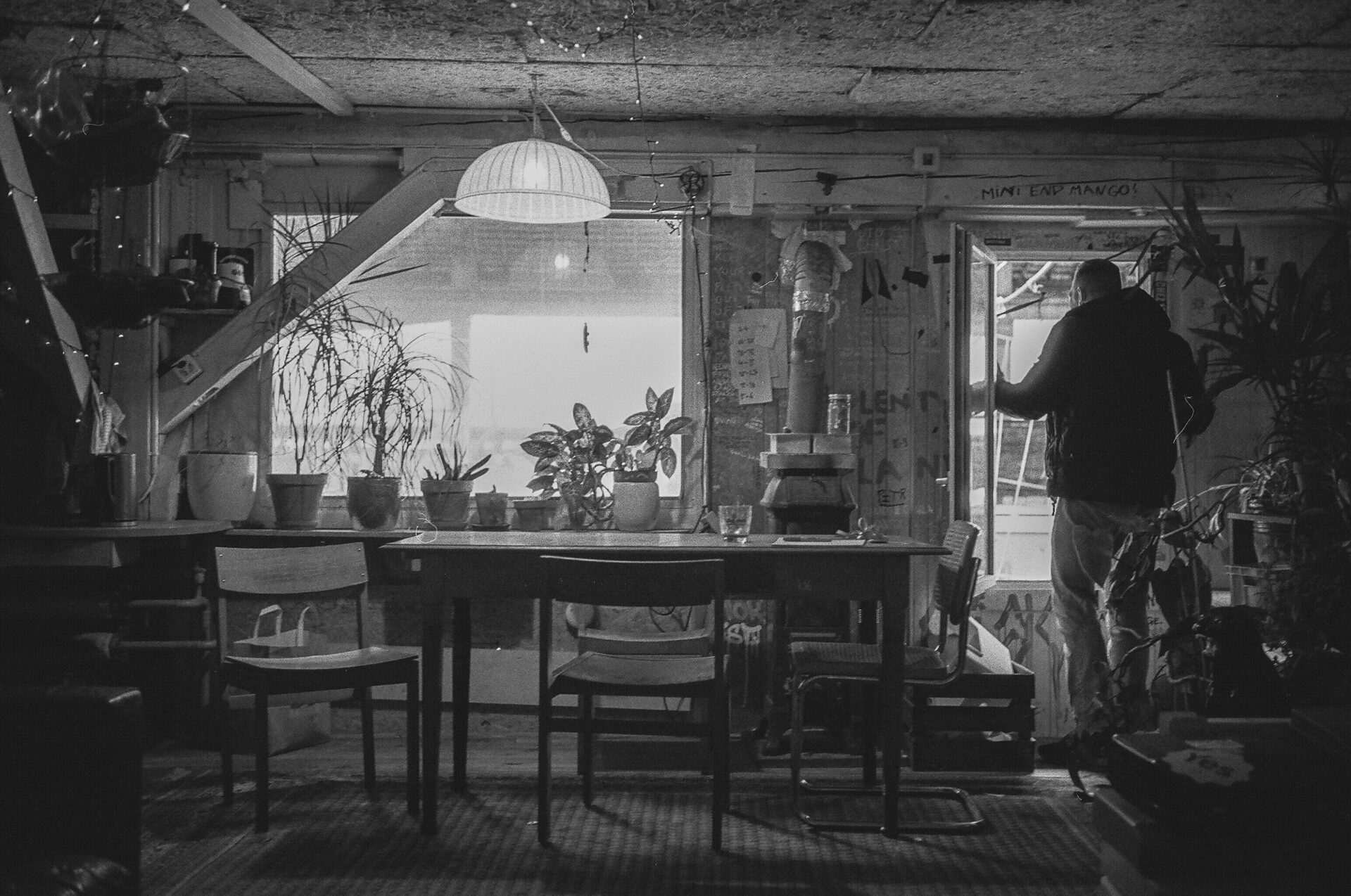
The Koch-Areal covers around 300,000 square metres in the west of Zurich, between the districts of Albisrieden and Altstetten. Colourful graffiti adorns the walls and banners hang from the buildings – the Koch-Areal stands out clearly from its neighbourhood, with its mix of industry, housing and cafés. The name goes back to the original owner, Koch Wärme AG, whose buildings stood empty for a long time. People occupied the site in 2013, and until February 2023 between 100 and 150 people lived there. The occupied buildings quickly became a cultural meeting place in the city – with concerts, a cinema, a bike repair service and a screen-printing workshop.
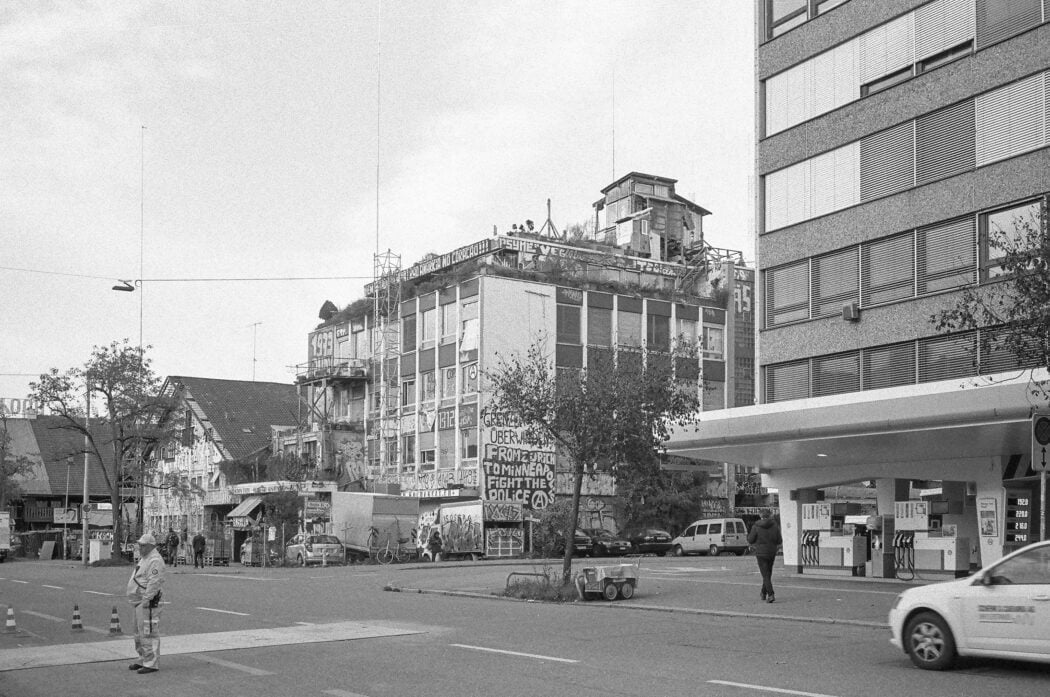 Zurich, November 2022
Approaching the site from Rautistrasse, you might think you were in an industrial estate. The squat is wedged between two petrol stations, directly opposite a car dealership. The first things you notice are the three main buildings: a larger former office block converted into shared flats, and two warehouses containing flats as well as caravans.
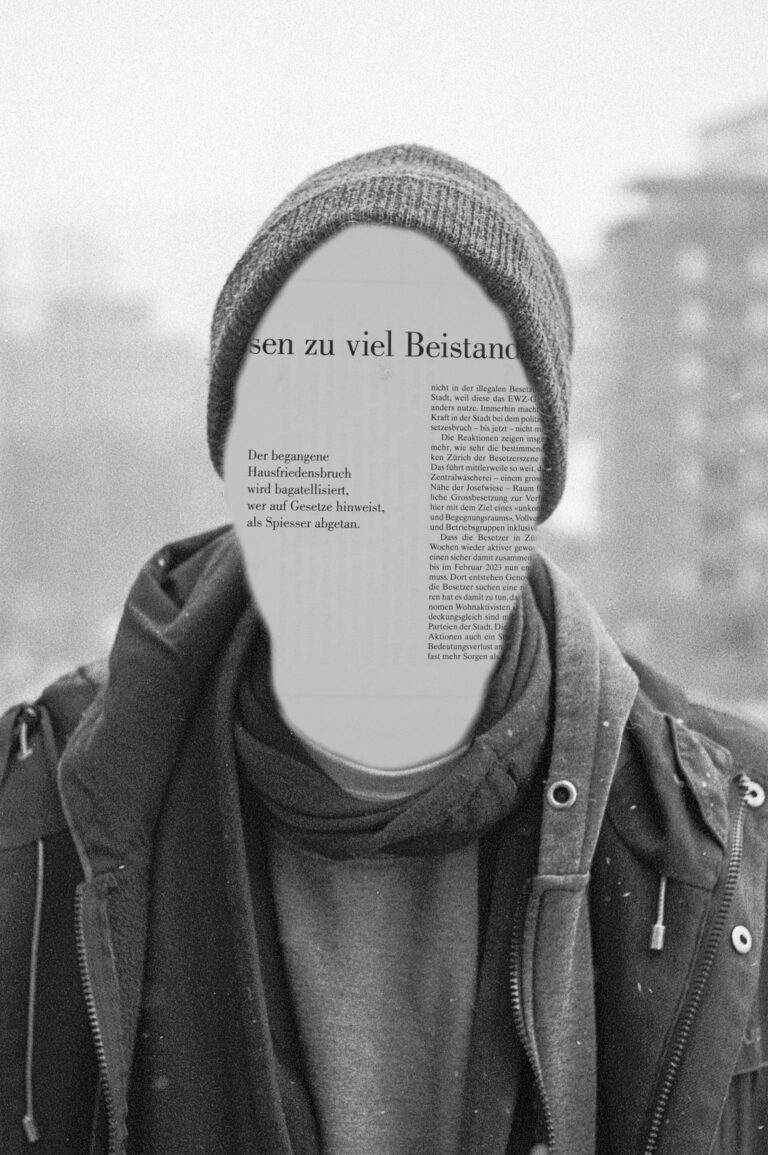 Resident of the Koch-Areal, January 2023.
‘Zurich’s squatters enjoy too much support’, NZZ, 9 November 2022
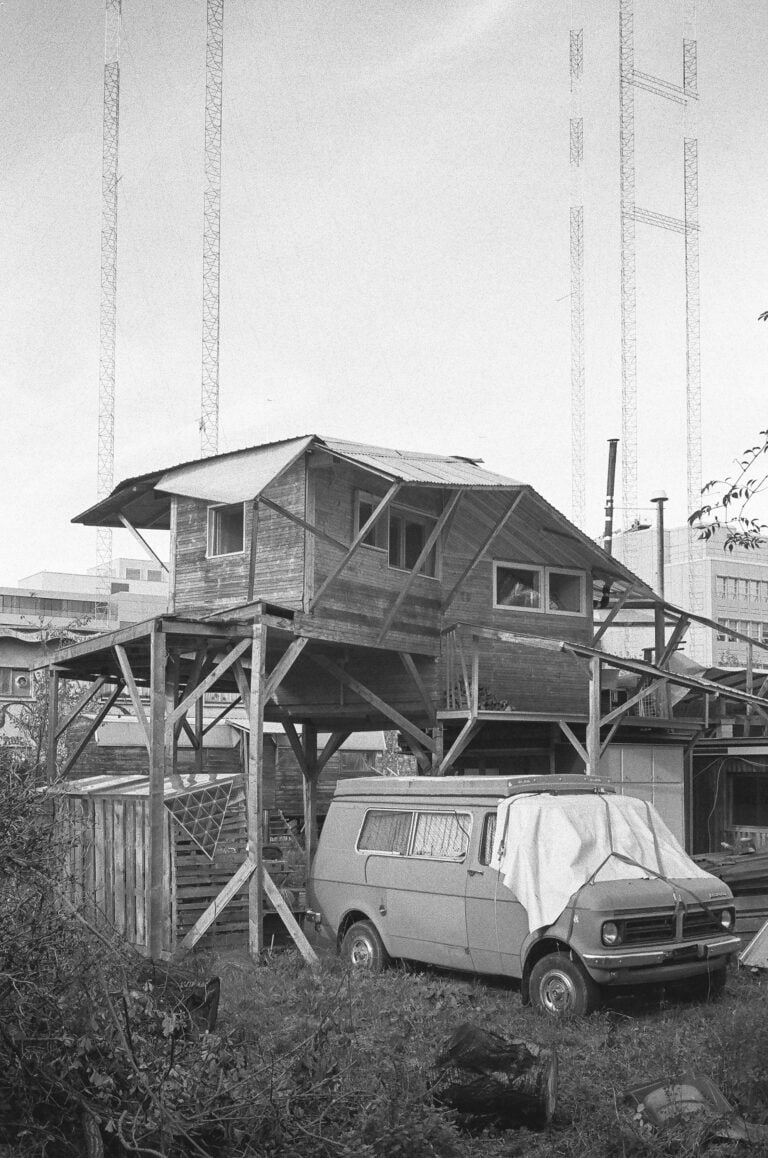 Zurich, November 2022
Some residents have designed and built their own huts and cabins. Others live in caravans.
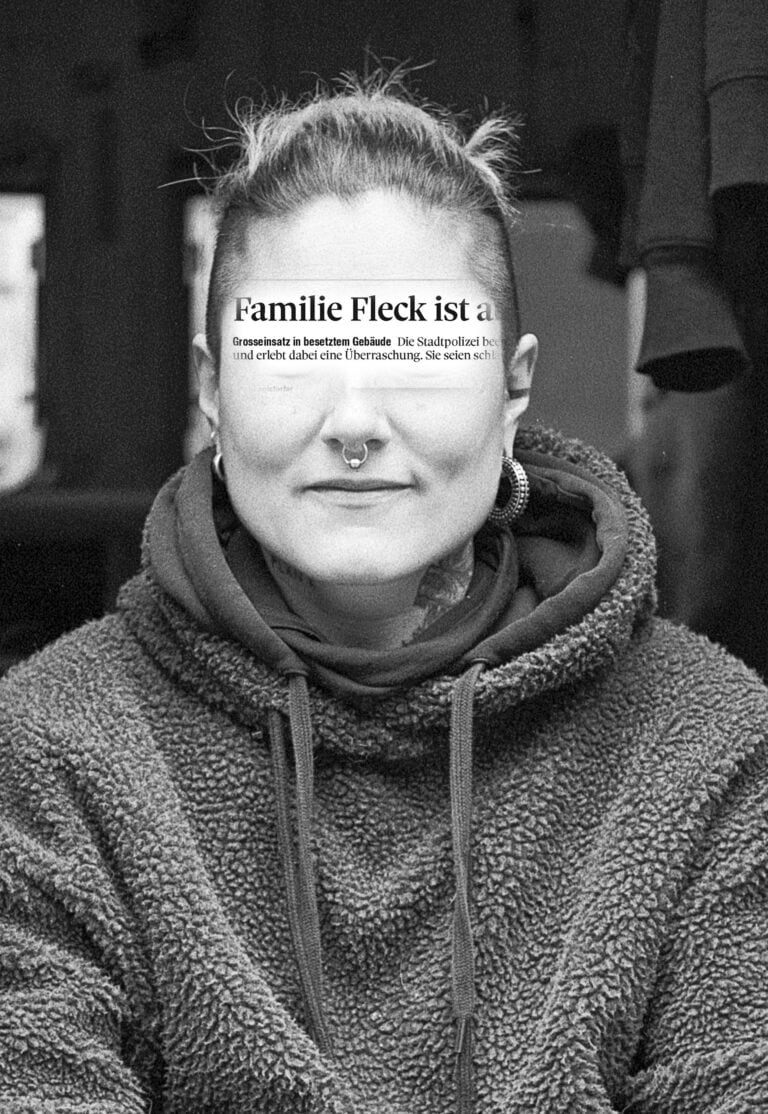 Resident of the Koch-Areal, January 2023.
‘The Fleck family is out’, Tages-Anzeiger, 12 October 2022
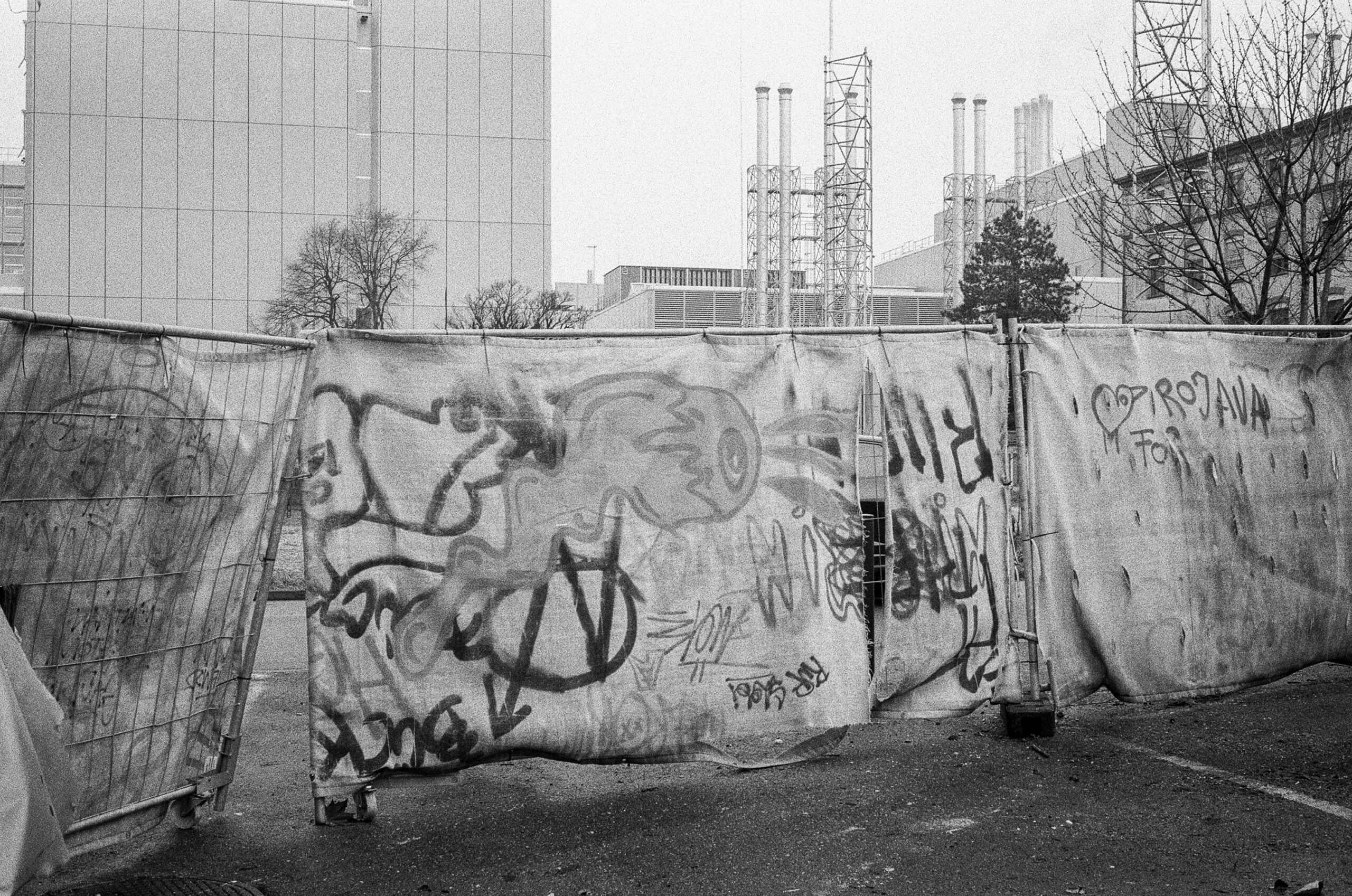 Zurich, November 2022. Construction fences sprayed with graffiti close off the back of the site.
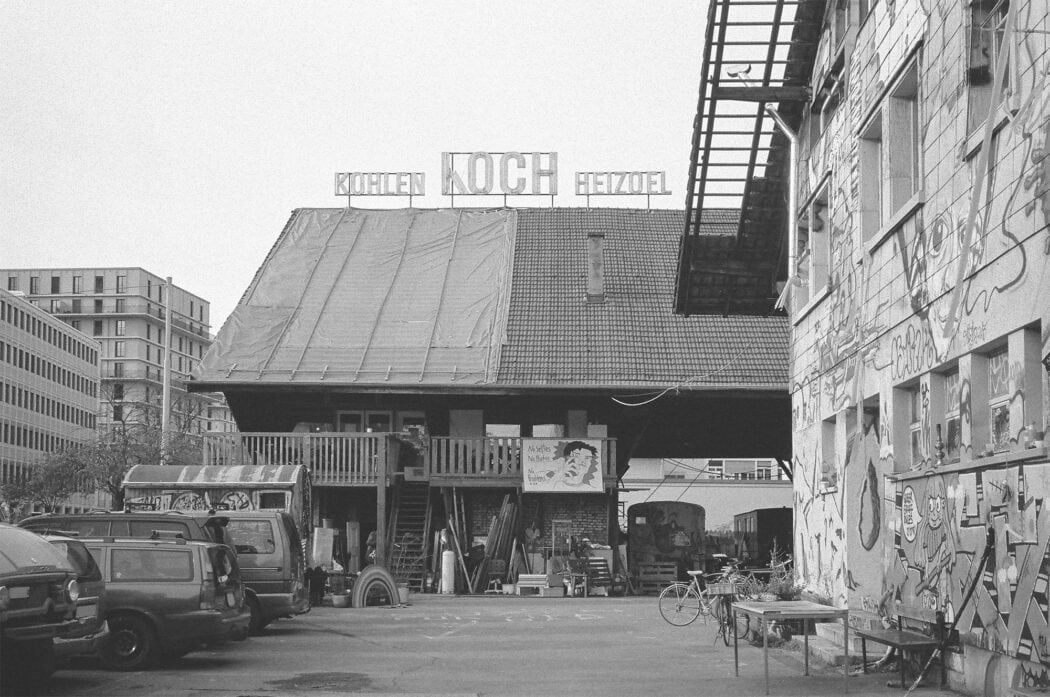 Zurich, November 2022
The surviving hall of ‘Kohlen Koch Heizöl’ AG contains flats and parking spaces for caravans. The converted building opposite houses sanitary facilities and a clothes swap shop.
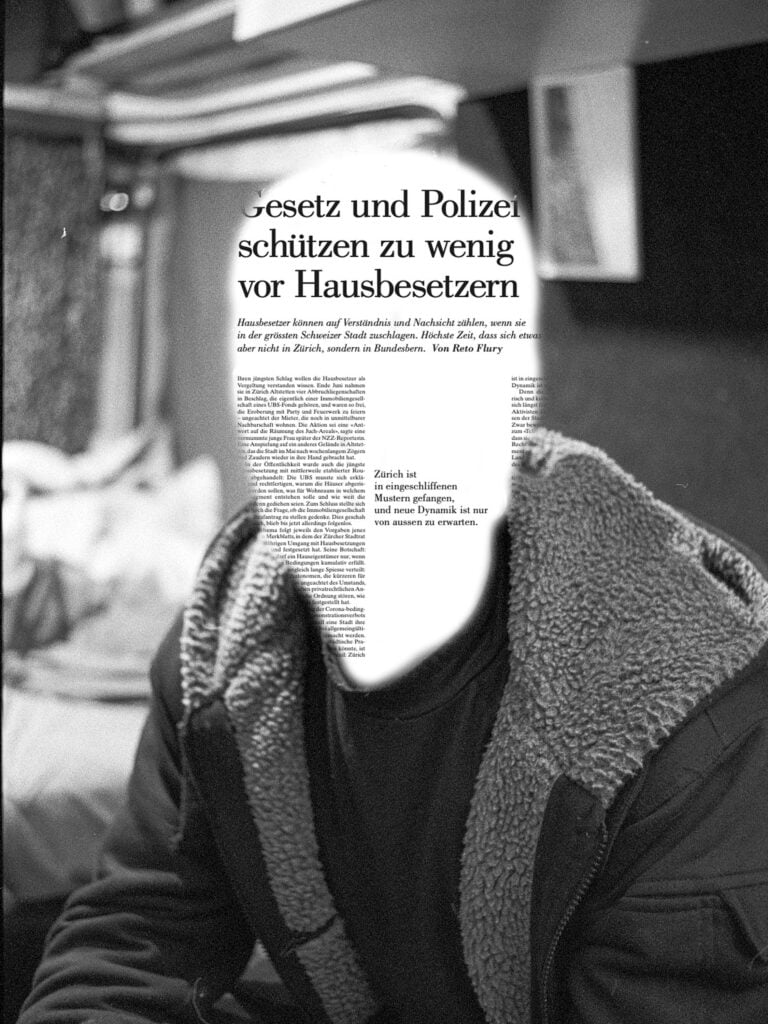 Resident of the Koch-Areal, January 2023
‘Law and police do too little to protect against squatters’, NZZ, 10 July 2020
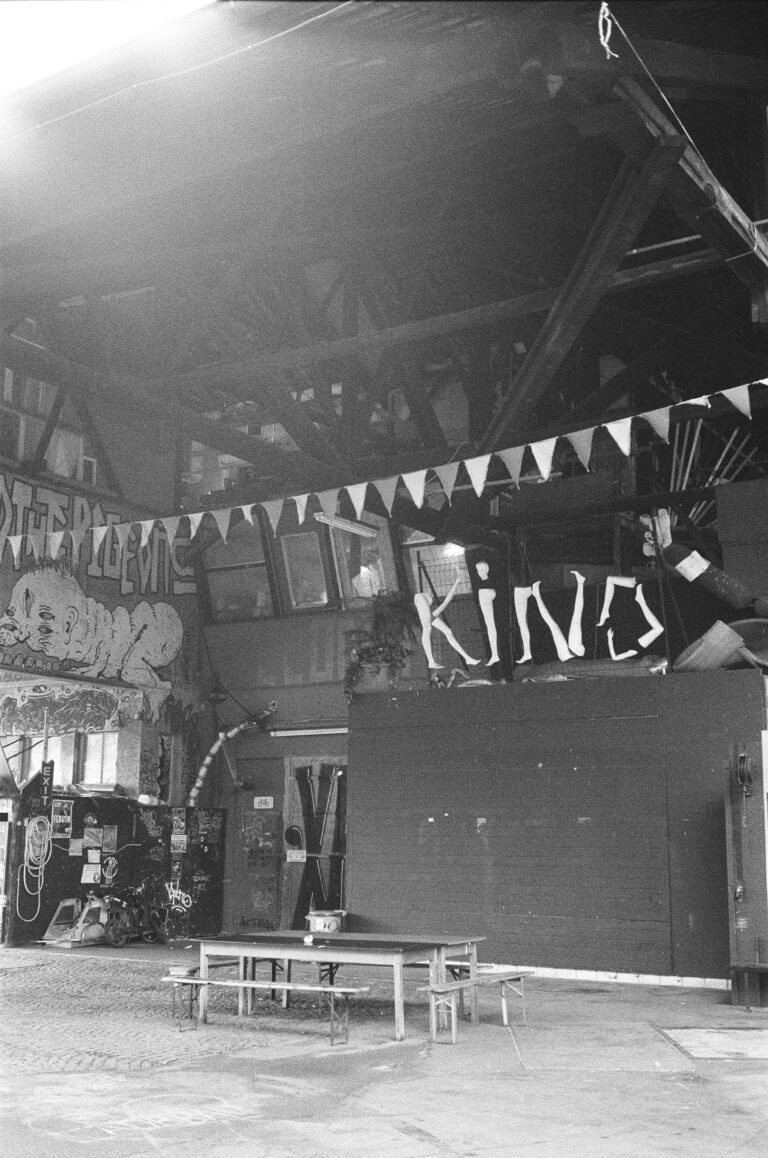 Zurich, January 2023
One of the larger halls houses a cinema. The ‘Kino’ sign is made from the limbs of shop-window mannequins.
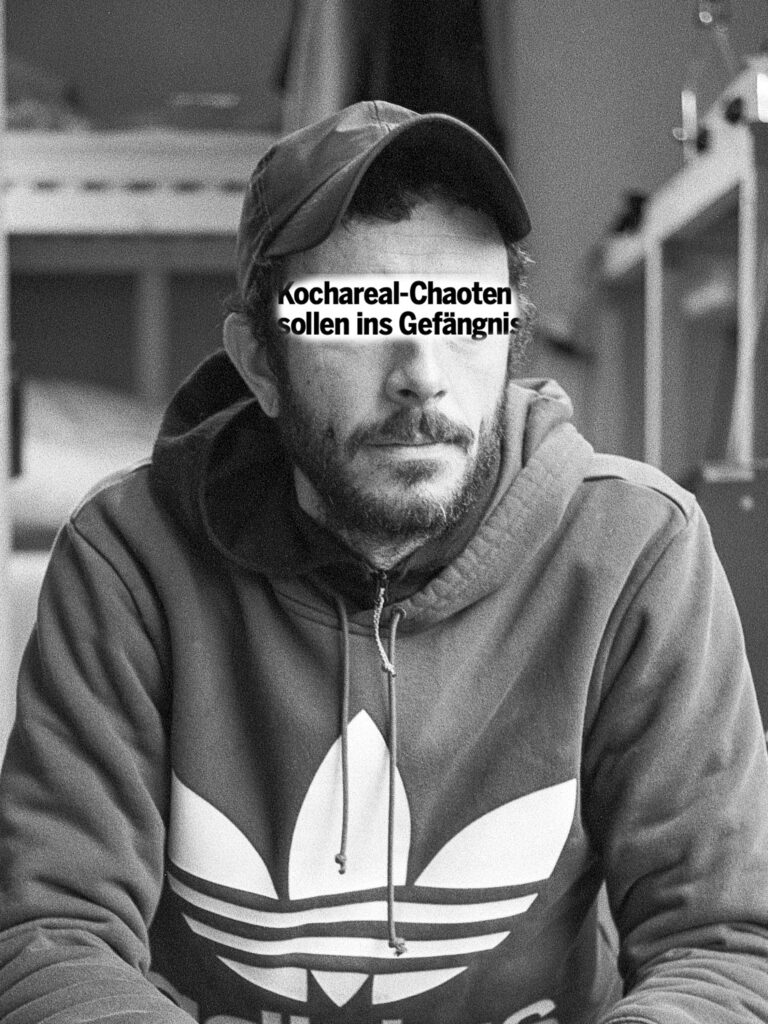 Resident of the Koch-Areal, January 2023
‘Koch-Areal troublemakers should go to prison’, 20 Minuten, 21 April 2016
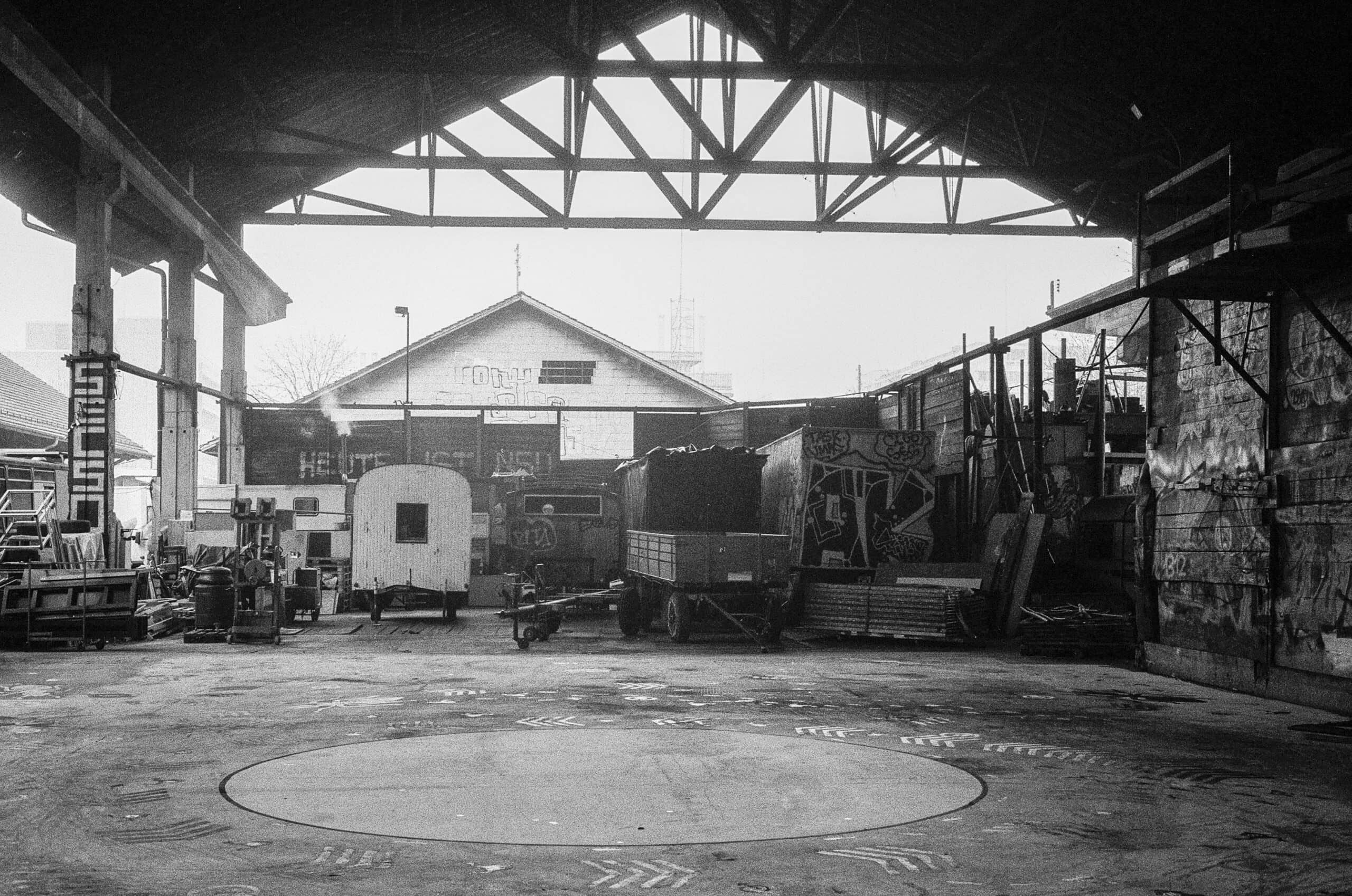 Traces of the last party can still be seen: arrows for a roller disco have been painted on the floor of the hall. It was one of the last big public parties on the site. Zurich, December 2022
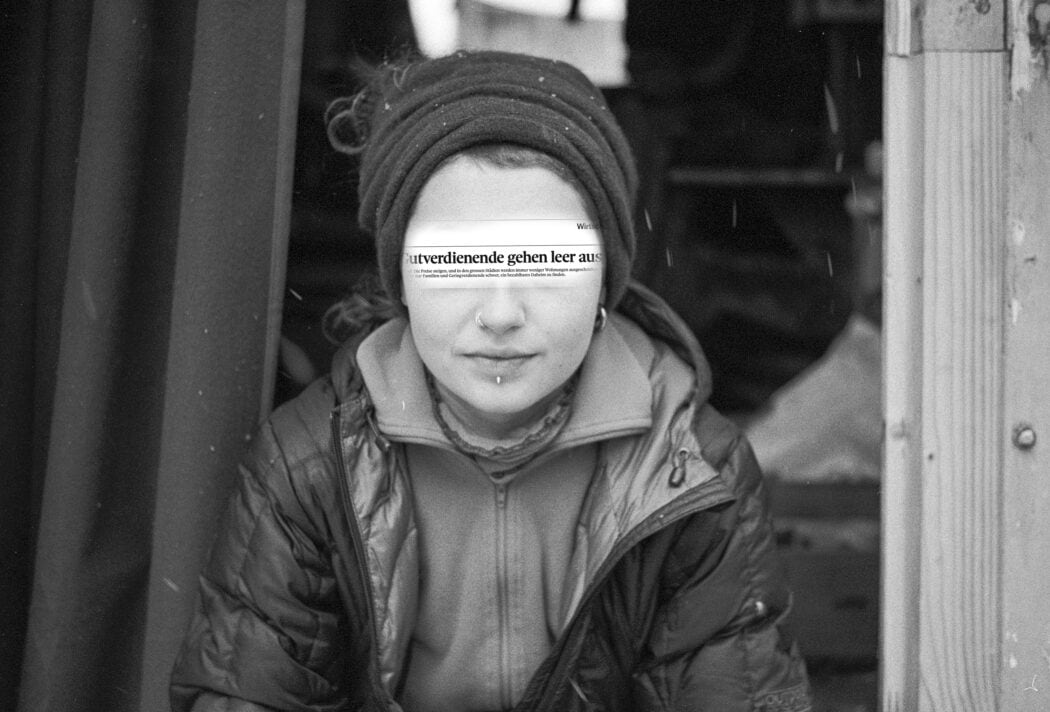 Resident of the Koch-Areal, January 2023.
‘Even high earners miss out’, Tages-Anzeiger, 24 January 2023.
However, the site and its residents were a thorn in the side of the city’s centre-right parties in particular. In 2018 there was a vote on an initiative launched by the Free Democratic Party (FDP), the Swiss People’s Party (SVP) and the Christian Democratic People’s Party (CVP, now ‘Die Mitte’). The demand: the city-owned site should be sold as quickly as possible. For to be able to clear occupied houses or sites, a demolition or building permit is needed, or a contract for some other legal use. The city council also put forward a proposal, but with the aim of building non-profit housing. Zurich voters approved the latter with 72.2 per cent.
In February 2023 the site was finally cleared to make way for cooperative housing. According to the property developer Senn AG, the site is to become ‘a lively place with affordable housing’, ‘with studios for creative work, workshops for manufacturing businesses, shops for everyday needs, refreshing food and drink and colourful culture, plus a wild, restorative green space’. Among other things, a 70-metre tower block is to be built.
The site was cleared in sub-zero temperatures, which made it harder to find new places to live and sites for caravans. Since the eviction was announced, there have been occupations – or at least attempts – in Zurich and elsewhere in Switzerland. Most were cleared immediately. However, two new caravan sites have since sprung up, and negotiations with the city about their future are still pending. On their channels, the occupiers declare: ‘We see red! Who can even afford to live here any more? Enough of this gentrification crap!’
From the City of Zurich’s information sheet on squatting: ‘Occupying a building constitutes the offence under Article 186 of the Swiss Criminal Code (trespass).’ The portraits of the occupiers taken for this series can therefore only be published anonymously, so as not to put them at risk. The resulting collages, which cover eyes and mouths, are meant to show how alternative, autonomous living spaces are systematically pushed out of the city and criminalised. The newspaper articles used reflect the response of the Swiss media.
 Zurich, December 2022
The squatters are in contact with workers in Myanmar. An information board tells visitors to the site about the current political situation in the South-East Asian country.
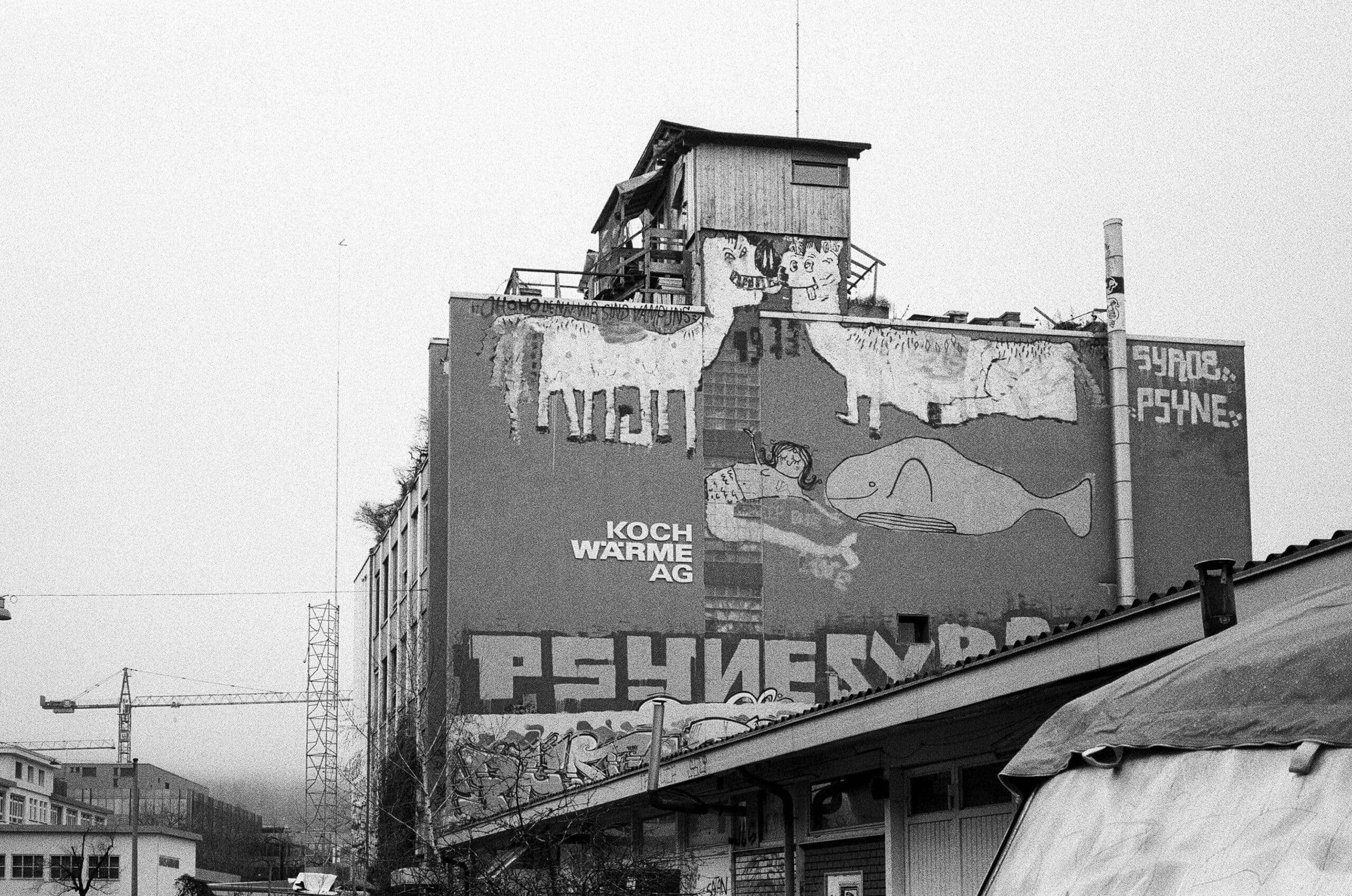 Zurich, December 2022. One resident has built their own wooden hut on top of the shared-flat block. Its position has often led to restless nights, as it is completely exposed to the weather.
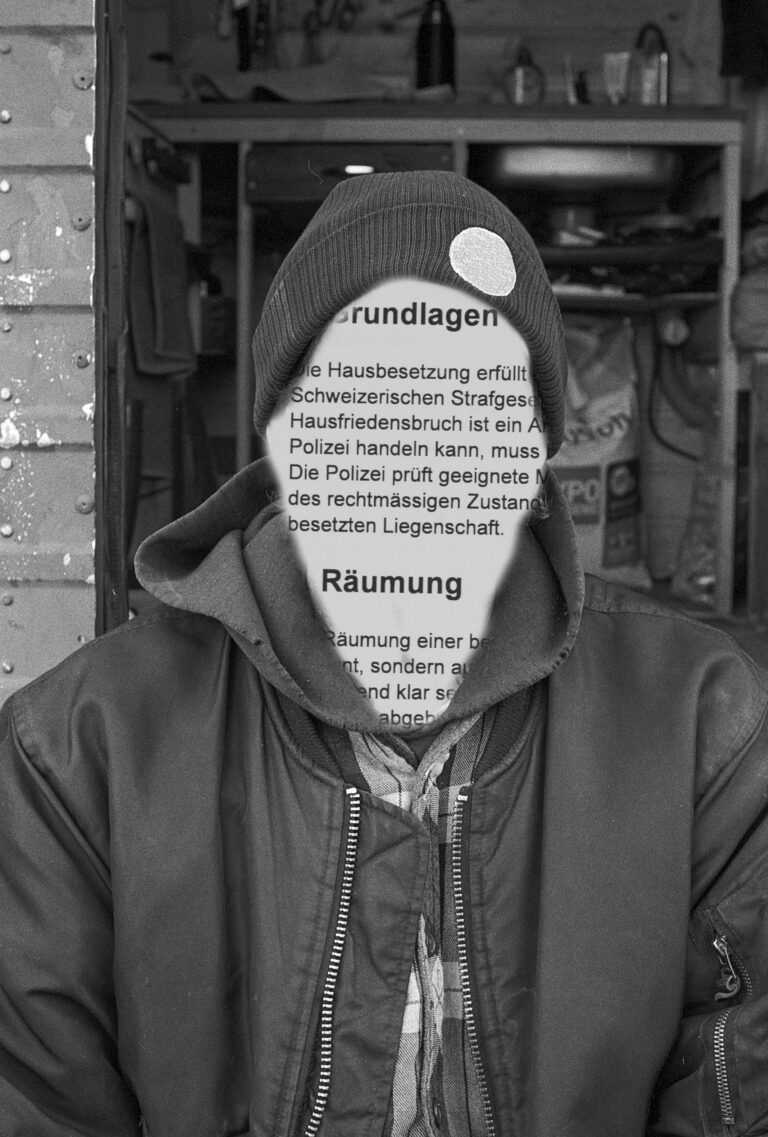 Resident of the Koch-Areal, January 2023.
‘Fact sheet on squats’, Security Department of the City of Zurich
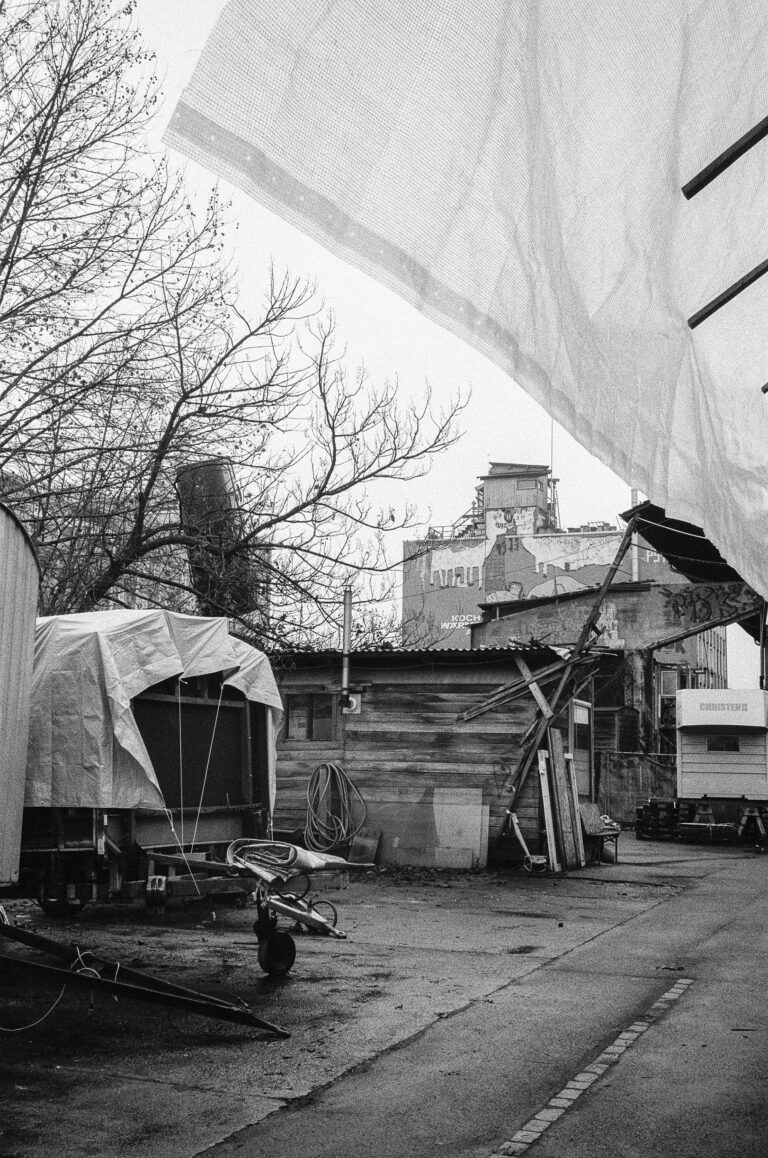 Zurich, December 2022
Over the years a lot of material has accumulated on the site. To cover its disposal in the event of an eviction, the squatters had to lodge a deposit of 25,000 Swiss francs with the City of Zurich.
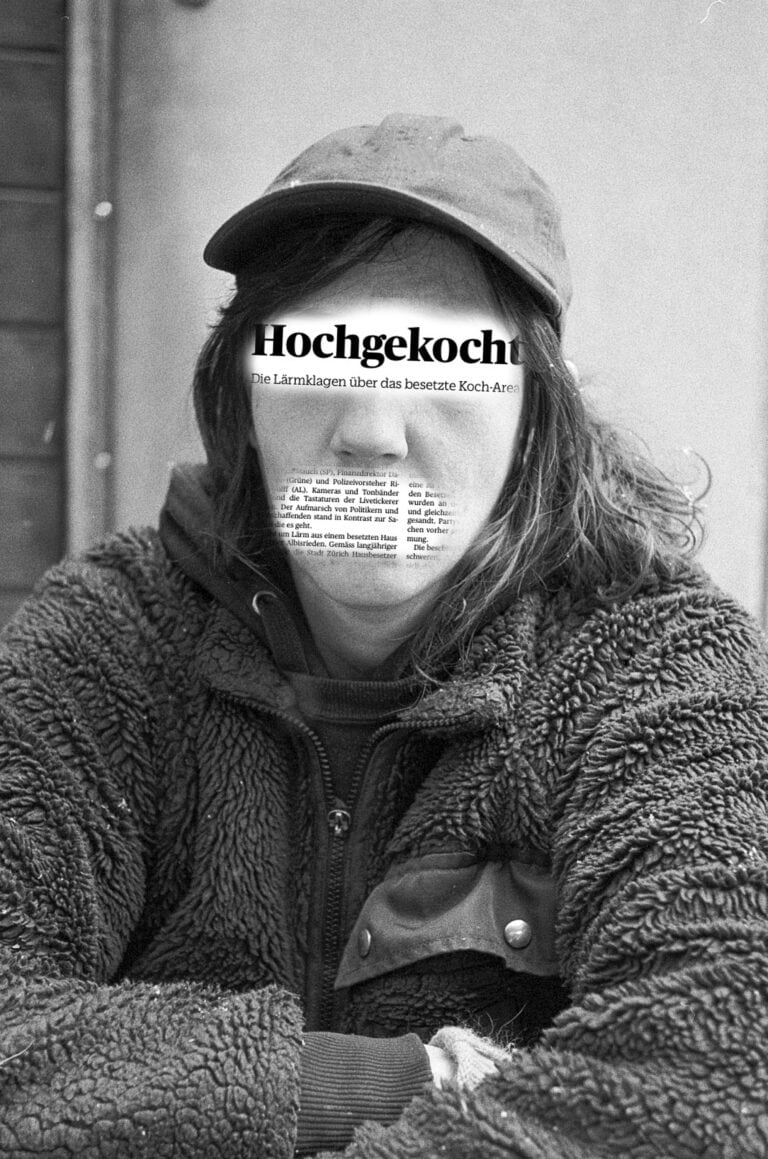 Resident of the Koch-Areal, January 2023
‘Hochgekocht’ (‘Boiling over’), Schweiz am Sonntag, 9 October 2016
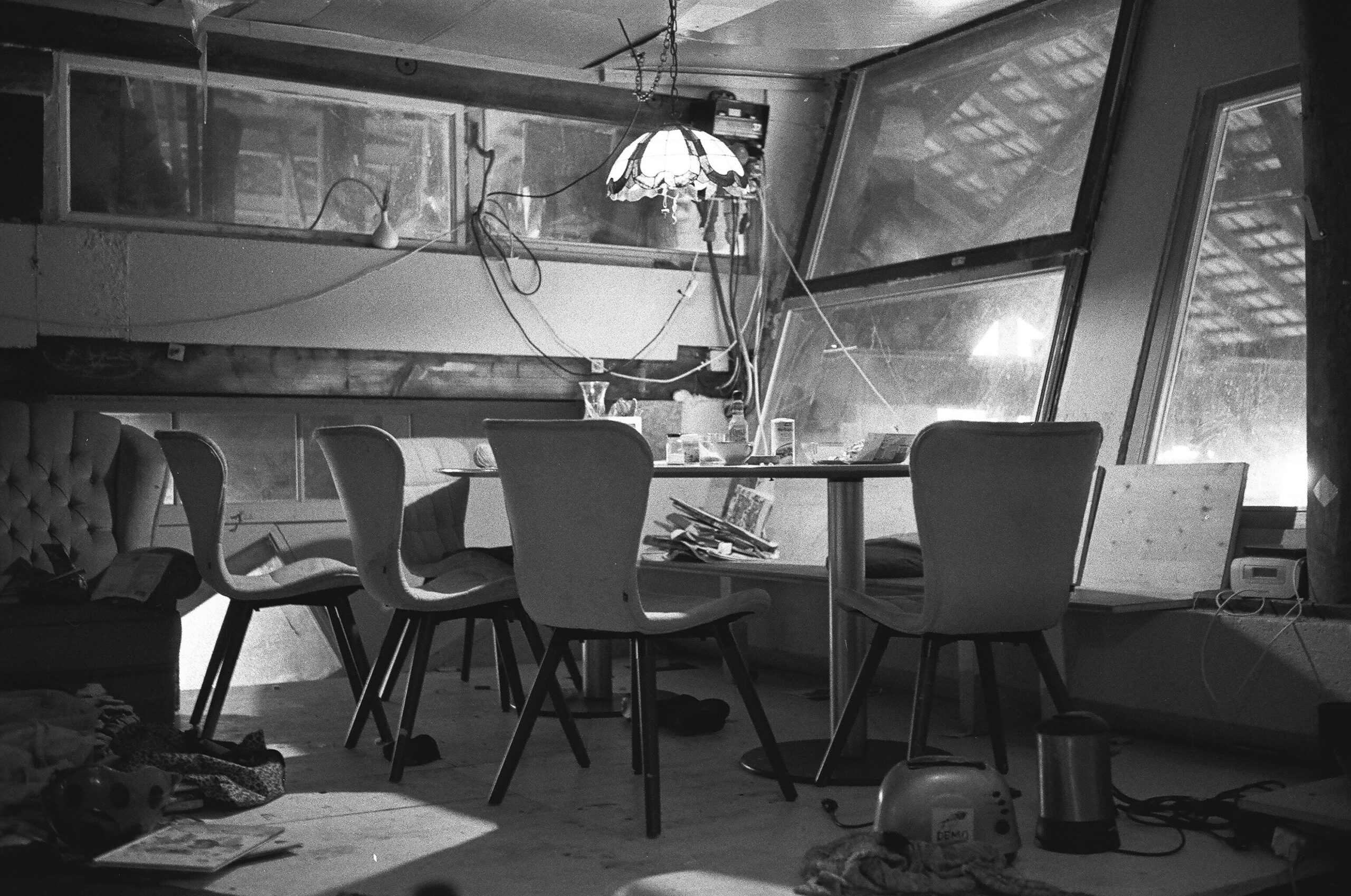 Zurich, November 2022. Children live in the squat too. They like skating around the site or playing hide-and-seek.