Life off the grid: a visit to a commune
Breakfast by the wood stove, water from a reed-bed treatment system: how practical is a life that does without comforts?
By Jux (Jule) Schlutter (photos), Calvin Thomas (text)


In the morning the stove crackles and outside the hens are clucking. On 18 hectares of land stand an old farmhouse, a barn, traditional orchards, greenhouses, ponds and a vegetable garden. For more than 30 years, people in Zarnekla, part of Düvier near Loitz in Mecklenburg-Western Pomerania, have been trying to live together, sustainably and freely.
The I.G.E.L. commune was founded at its current site, a former manor farm, in 1991. Back then it consisted of eleven adults and seven children. Only Roland, a co-founder from day one, is still there. The other members gradually moved away. When they bought the property, Roland remembers, ‘the first thing we did was rip out the flush toilets’.
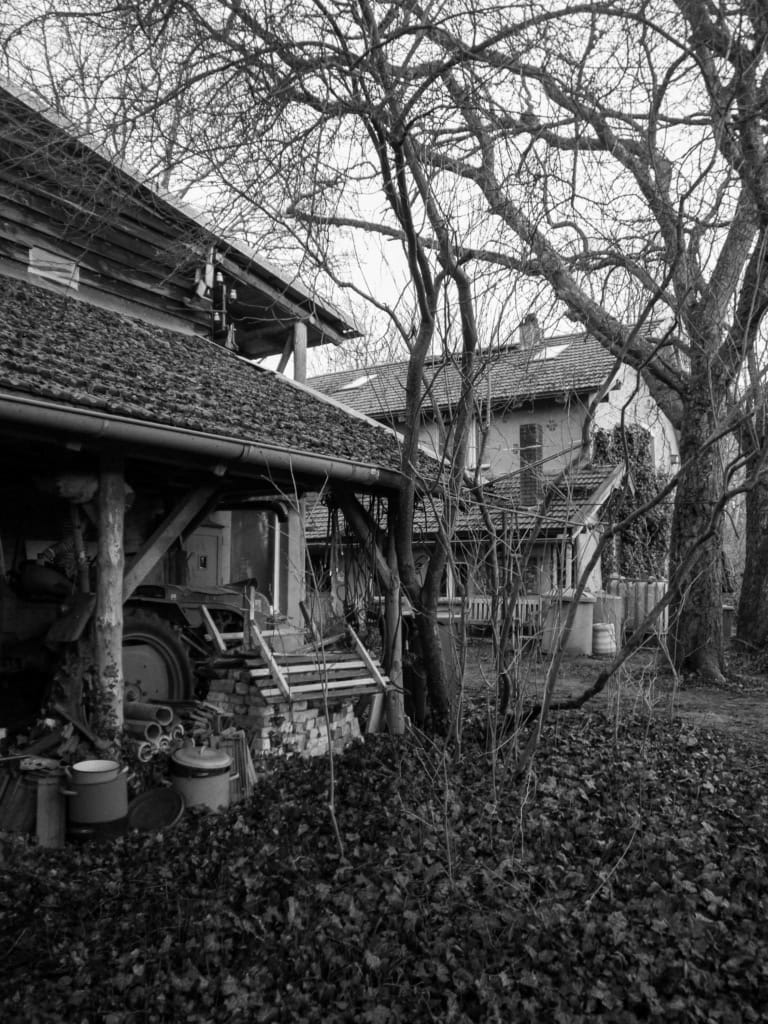
The main house was built around 1900 and renovated by the commune’s residents themselves in the early 1990s.

The greenhouse in winter. In summer, food for the coming year is grown here.
The main house was already standing but was completely renovated. The residents did all the work themselves. They raised the roof structure and plastered the walls with clay. They built a sunroom into the barn, which serves as the meeting room. There is running water, but no drains. A reed-bed system treats the waste water. The dry separating toilets are outside the house. The residents turn the waste into natural fertiliser or collect it for political protests.
All the residents are vegan and live largely on food they grow and make themselves. Every two weeks a lorry delivers organic goods they can’t produce on site. The overall principle is to make as much as possible themselves – with the resources, capacity and energy they have.
What is everyday life like in the commune?

Jonne and his friend Hugo feed the hens in their outdoor run.
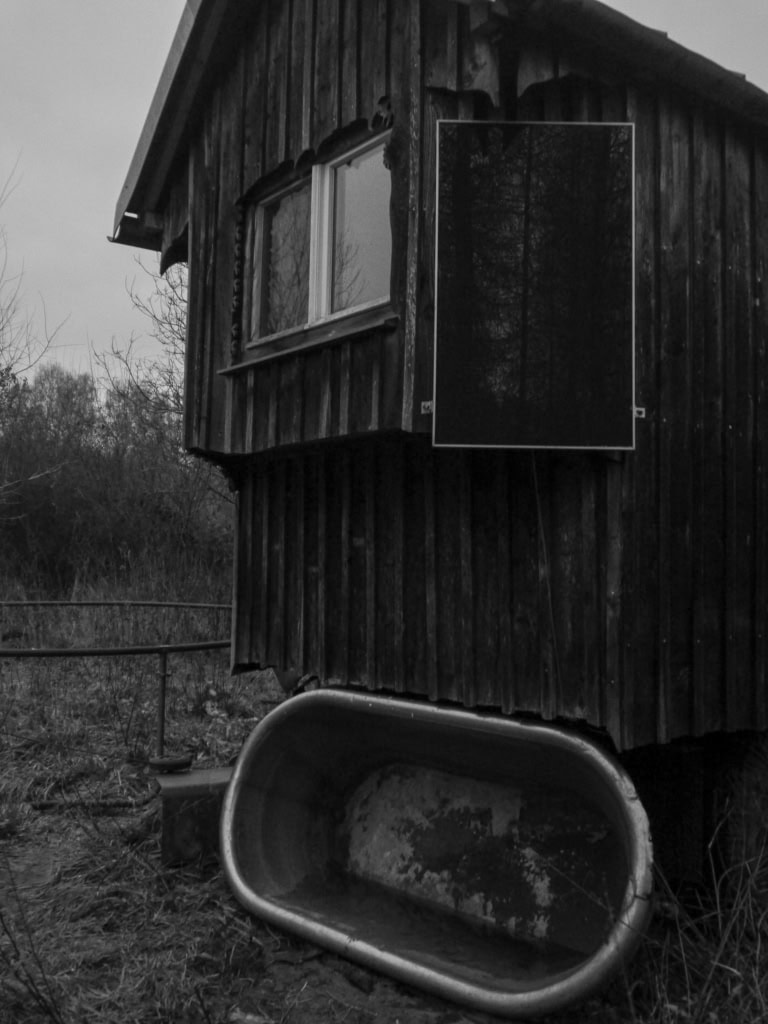
One of the trailers on the commune’s own trailer site – even with solar panels to power it.
The day begins with lighting the stoves. Every room either has its own or is connected to one, so there is warmth everywhere. In the kitchen, the wood-fired range is lit and the first water heated. If not enough wood was chopped the day before, that happens before the fires are lit. Then the residents let the hens out of the coop. After that comes breakfast, usually together in the kitchen of the main house. Then everyone gets on with their own tasks, such as looking after the buildings and grounds or caring for the children.
Lunch is at around 1 p.m. It is often home-baked sourdough bread with various spreads. Then comes a short daily meeting where tasks are shared out. The residents work on them until dinner.
But who actually lives in the sprawling commune today?

Jonne found the hen that had escaped in the woods. The large plot leaves plenty of room to play and experience nature.
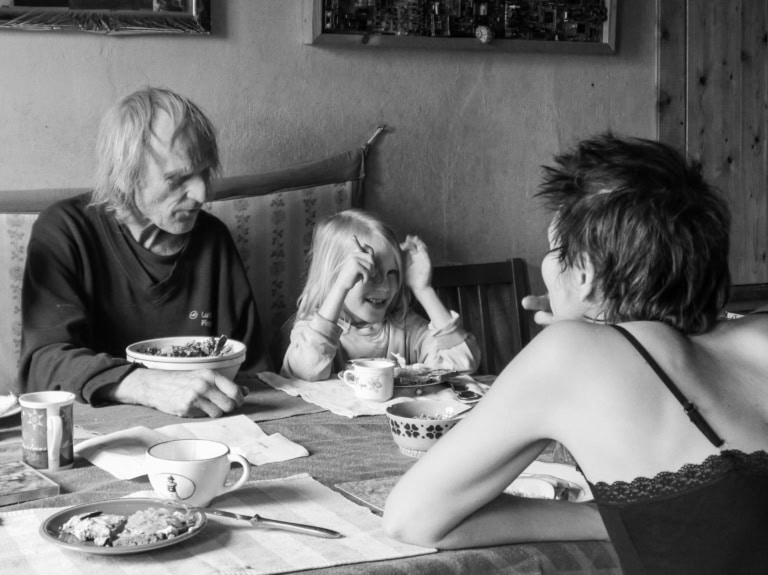
Lunch together in the communal kitchen is part of everyday life in the commune.
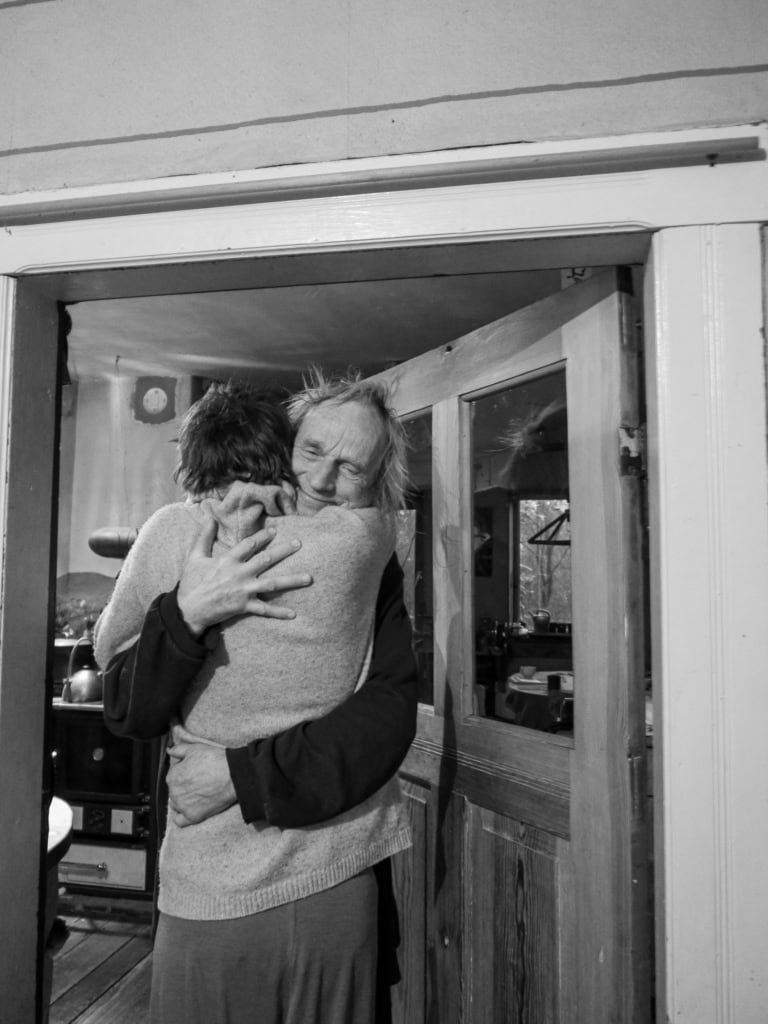
After getting up in the morning, all the commune’s residents give each other a warm hug. Community matters more than anything here.
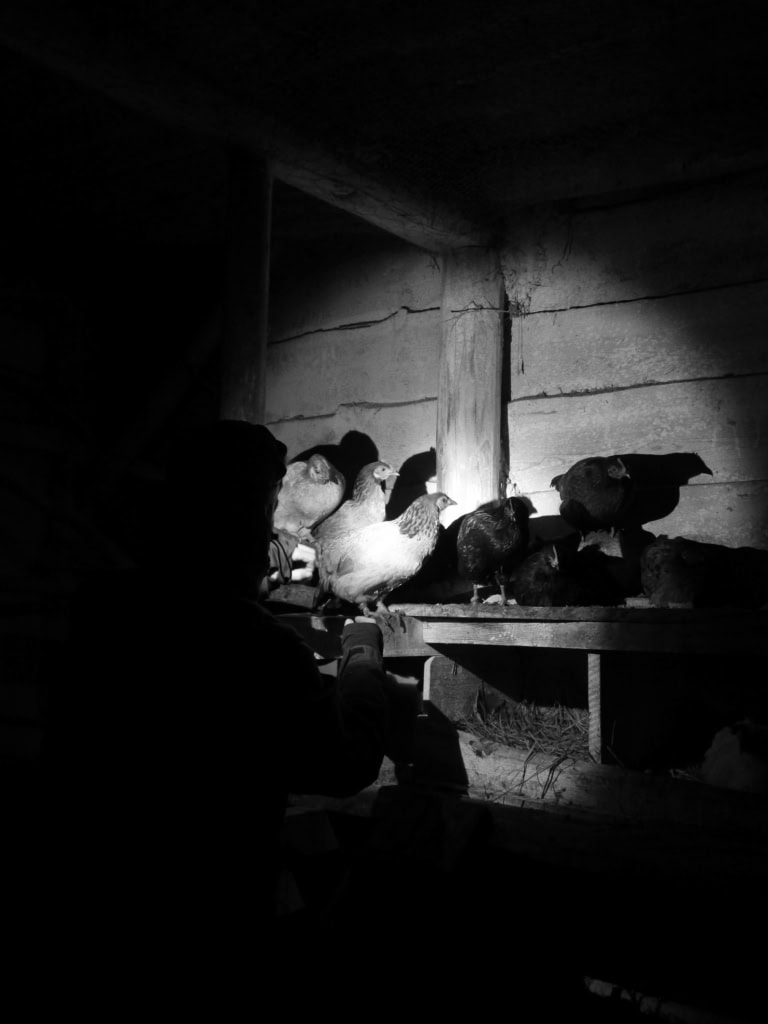
At night, Anne catches the stolen hens to hand them over to a friend from another commune.
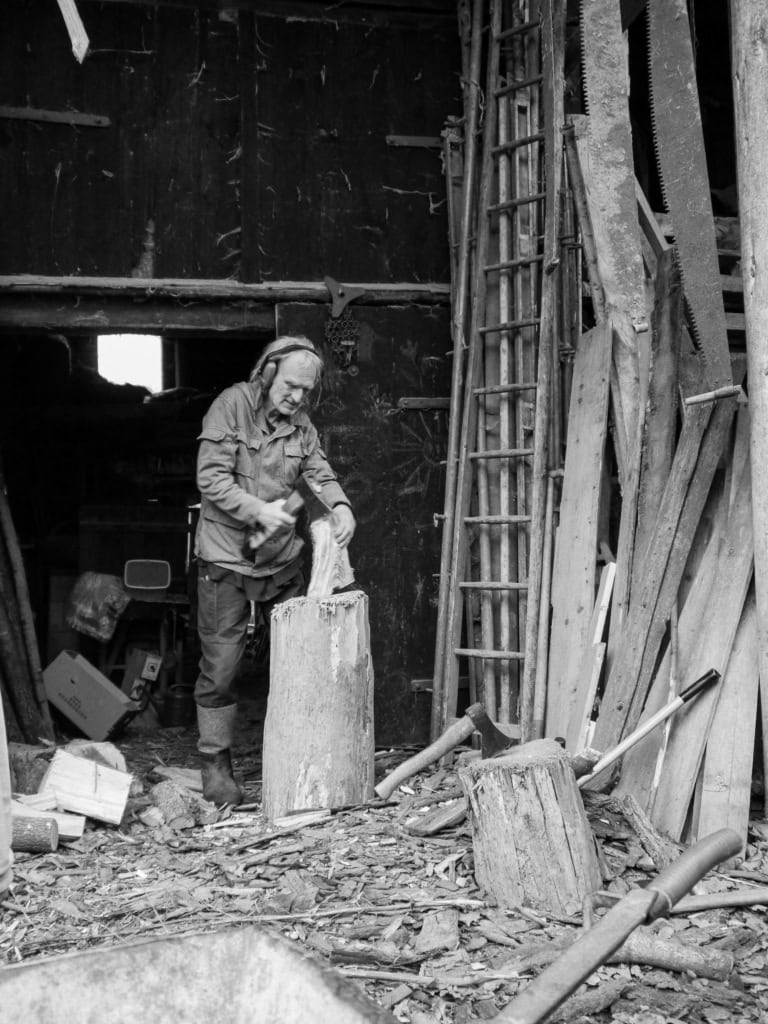
Roland chopping wood in the morning in front of the barn – without it, the house doesn’t get warm, as there is no central heating.

150 litres of home-made apple juice are stored in the bedroom.
Roland (64)
Roland, the commune’s co-founder, has four children aged between six and 38 from two marriages and his current relationship. Born in the GDR, he still holds on to the political views of that era. He studied building engineering in Berlin and lived with his family in Pankow. There he met some of the people with whom he later founded the commune. His personal motivation: to live and love more freely, to let children grow up away from the big city and to put the ideas of self-sufficiency and sustainability into practice. Roland receives housing benefit to cover his living costs. When the money doesn’t stretch far enough, he works now and then as a clay builder.
Anne (early 50s)
Anne, a trained pharmacist, has lived in the commune for nine years. She has three children aged between six and 21. The two older ones are from her marriage to a soldier in the Bundeswehr, from whom she is separated. Anne moved to the commune because she is critical of the school system. She didn’t want to send her children into ‘such a narrow school system’.
Flora (35)
Flora first studied linguistics, then media studies. After that she worked for the Greens (Bündnis 90/Die Grünen). Six years ago she decided to stop working in a permanent job. Since then she has lived on various farm projects and in communes. To cover her living costs, she receives Bürgergeld, Germany’s basic income support.
Ben (16)
Ben is also an unschooler. During the week he mostly stays with friends in Greifswald.
Jonne (6)
Jonne was born in the commune’s house. He is an unschooler and doesn’t currently go to school. As he isn’t enrolled, he misses contact with children his own age.
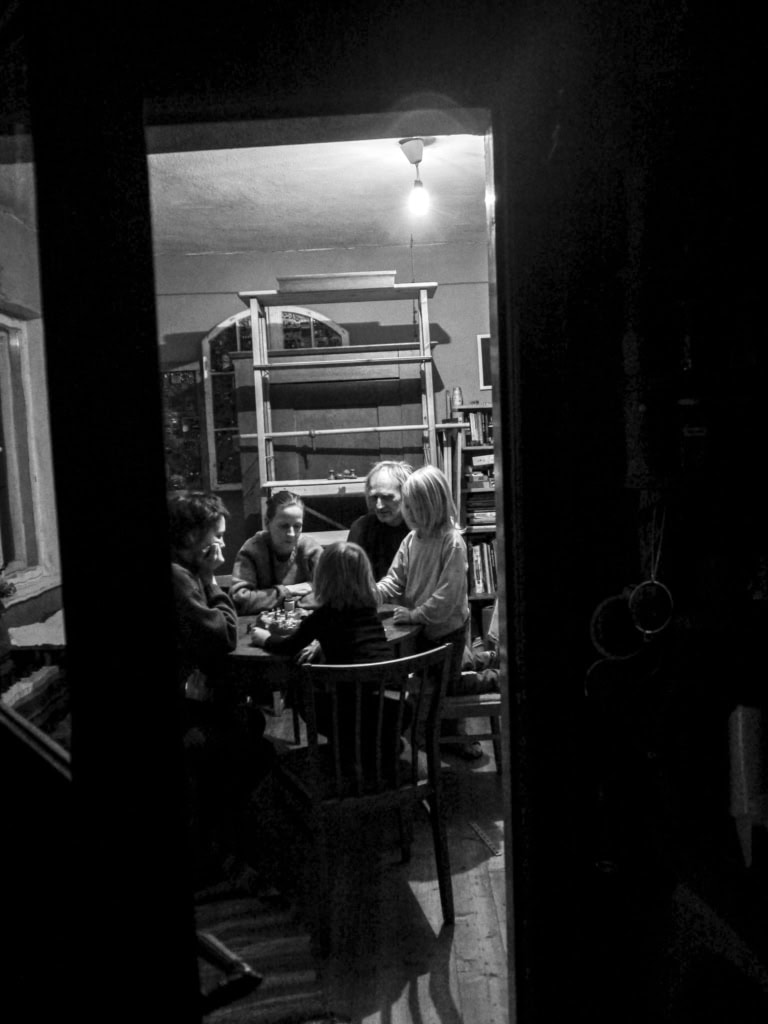
Playing games together is part of everyday life in the commune.
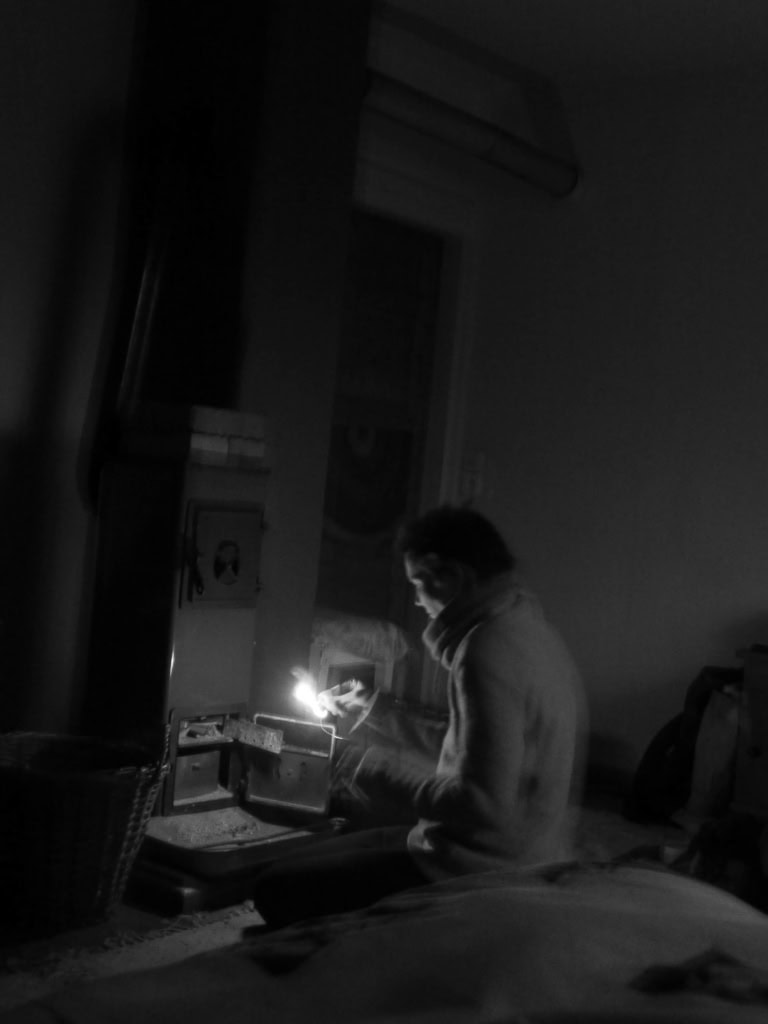
Unless the stove is lit regularly, the room doesn’t get warm.

Flora’s balaclava is still lying on the chest of drawers by the door after a protest action a few days earlier.

Flora’s flat. The bedroom is upstairs and the kitchen downstairs; the two rooms are separated by a trapdoor.
The commune funds itself by renting out converted construction trailers and rooms in the main house via Airbnb. It also lets a holiday home outside the grounds. On top of that, the residents receive state benefits.
The non-profit association I.G.E.L. e.V. is dedicated to environmental education, nature conservation and ecological building. It offers volunteer placements, including places on the Voluntary Ecological Year (FÖJ). In return, the volunteers receive board and lodging in the commune. Thanks to support from the state of Mecklenburg-Western Pomerania, the association enjoys financial freedom.
The commune has seen many members come and go. Few have stayed – but the idea of living differently has. Whether that will still be true in another 30 years remains to be seen.