Between reasons of state and journalistic integrity
The German-Palestinian journalist Farid Dabour on media, power and responsibility
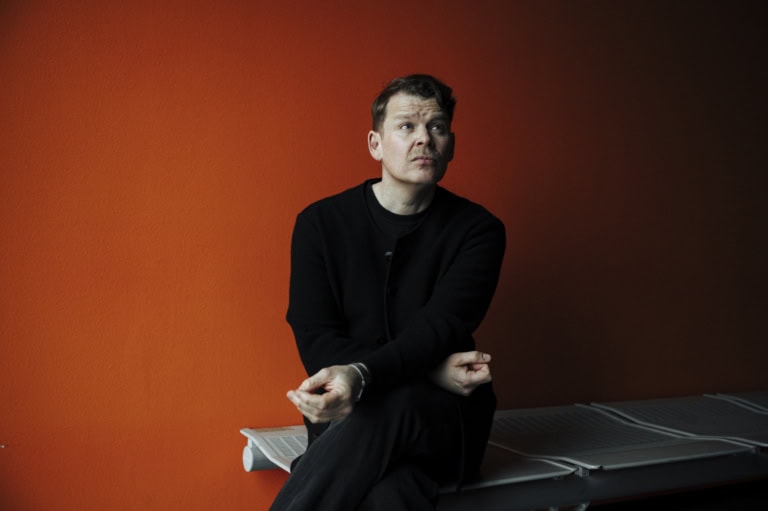
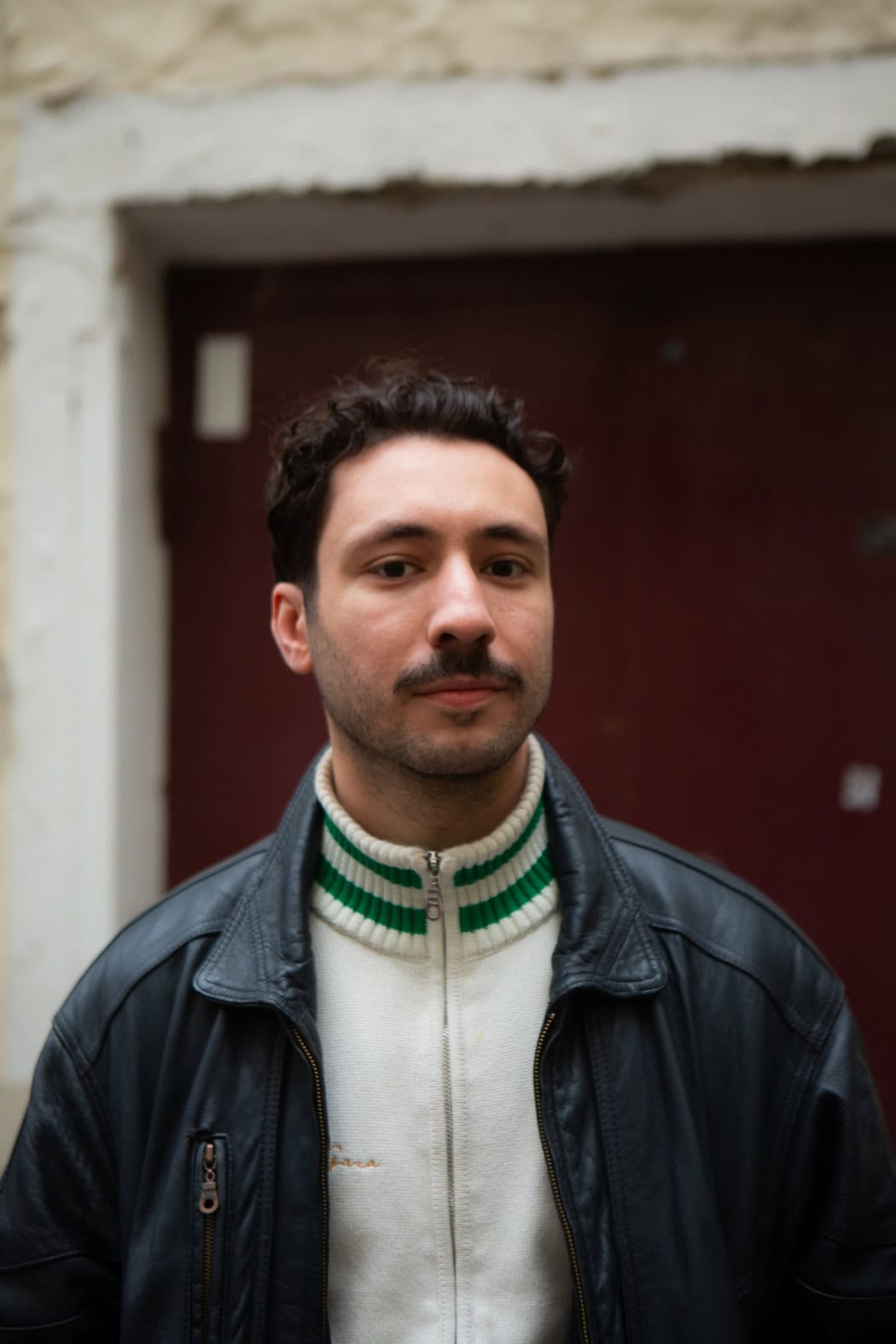 Photo: Keidy Pech
Farid Dabour is a political scientist and worked for several years as a freelance journalist for public broadcasting. Dabour is German-Palestinian; he was born in Germany and grew up on the outskirts of Berlin. His father is Palestinian – his father’s parents were driven out to Jordan in 1948 – and his mother is from eastern Germany. This biographical perspective shapes the way he sees the German media landscape, especially its coverage of Israel and Palestine.
In this interview he talks about narratives, imagery, Orientalist patterns, the role of Germany’s ‘Staatsräson’ – its reasons of state – and personal experiences in a newsroom that still preoccupy him today.
Journalism’s job is to hold power to account. When journalism stops questioning the powerful, it abolishes itself.
 Farid Dabour
How do you see the coverage of Israel and Palestine in the German media – also compared with international media?
Almost every day a report on this subject is published that contains double standards. After the Israeli parliament passed, at the end of March, the racist bill that de facto legalises the death penalty exclusively for Palestinians, the Tagesschau news programme ran the headline ‘Israel billigt Todesstrafe für Terrorist:innen’ (Israel approves death penalty for terrorists) – adopting the Israeli government’s wording word for word. At first the term ‘terrorists’ was still in quotation marks, but these were later simply removed. This puts Palestinians under general suspicion once again and dehumanises them. What was the purpose of this change? Did it improve the quality of the report?
Another example is the coverage of the Berlinale. There, the Syrian-Palestinian director Abdallah Alkhatib, who won the award for best first feature, described the German government in his acceptance speech as a ‘partner in the genocide in Gaza’. The Tagesschau called Alkhatib’s speech ‘hate speech’. Later it changed the wording and spoke of a ‘scandal’ instead. Alexander Hoffmann, head of the CSU group in the Bundestag, spoke of ‘repulsive scenes’ and ‘antisemitic outbursts’. Israel’s ambassador in Berlin, Ron Prosor, also joined the debate and praised the environment minister Carsten Schneider (SPD) in the tabloid ‘Bild’ for leaving the award ceremony after Alkhatib’s speech. Numerous public-service news programmes picked up and reproduced these accusations without context. That alone is problematic, because the incomplete, one-sided choice of interviewees completely distorts the report. Why was no additional voice included that defended the director’s position?
The example shows how the public sphere works in Germany when it comes to Palestine and Israel: almost reflexively, people throw around stigmatising buzzwords such as ‘hate speech’ and accusations of antisemitism, usually without giving any reasons or context. The effect is always that nobody even talks about the genocide allegation on the table or about Germany’s role as Israel’s second-largest arms supplier – even though the allegation is, after all, being examined by the International Court of Justice. And of course it also deters people from taking part in the debate publicly. Amnesty International has officially spoken of genocide since 2024 – as have many of the most renowned genocide scholars, including Israeli and Jewish ones.
Do you see 7 October as a turning point for the media landscape, or rather as confirmation of a dynamic you had seen emerging for some time?
Coverage of Palestine and Israel has been flawed for a long time. After 7 October it became more extreme, but the patterns were there before. Palestinian victims ‘die’; Israeli victims ‘are killed’. With Palestinian victims the perpetrators are often not named; with Israeli victims they are. Context is also often missing – for example when East Jerusalem or the Golan Heights are reported on without clearly stating their status under international law.
Do German media favour certain narratives?
Yes, clearly. Immediately after 7 October, the narrative of the Israeli government and army was adopted word for word. Statements by Israeli government officials were often reproduced unquestioned, while Palestinian figures – on casualties, for example – were questioned as a matter of principle, even though they later turned out to be correct. There is definitely a very clear bias; this has been shown scientifically several times. Meanwhile, many statements by Israeli authorities later turned out to be false – which should come as no surprise, since they are, after all, statements by a party to the war. This asymmetry in fact-checking is unacceptable.
What role do images and framing play?
When we talk about how Palestinians are portrayed, we also have to talk about anti-Muslim racism. Palestinians are portrayed visually in a very one-sided way: either as suffering, grieving victims – often women – or as aggressive, violent men. You get either suffering and powerlessness, or aggression and violence. These are classic racist patterns. A group is marked as other and assigned certain characteristics. That, too, is a form of dehumanisation.
Are there topics or phrases for which you expect a backlash, as a journalist or as a private individual?
As a journalist, I am always careful and deliberate with my language. As a German-Palestinian, I am of course aware of how sensitive the subject of Israel and Palestine is. That makes journalistic standards all the more important. If journalists don’t mention that East Jerusalem or the Golan Heights were annexed in violation of international law because they fear a backlash, that contradicts every journalistic duty of care.
What is it like for you as a German-Palestinian journalist to talk about a subject that concerns your identity?
Ambivalent. Who could speak about Palestine better than Palestinians? At the same time, I don’t want to be reduced to this subject. But of course, as a Palestinian in Germany, I bear a responsibility for making sure that our realities and our repeated experiences of displacement reach the public. Germany is home to the largest Palestinian community in Europe, and yet Palestinian perspectives are almost absent from public debate.
Are there moments when you feel caught between objectivity and belonging?
The question is misleading. What is objectivity anyway? Are Germans objective when it comes to Palestine and Israel? Do people also distrust Israeli experts, interviewees and journalists because they are too involved, too personally affected, too activist? Or do they get particular reach in the German media? Everyone has a perspective. As someone who is personally involved, you can work to proper journalistic standards – or not.
Were there any formative experiences in your work?
Yes, definitely – several things. After 7 October I was sitting in the newsroom of a public broadcaster and heard the duty editor (the person editorially responsible for the programme that day) getting worked up because Deutschlandfunk had quoted figures from the health authority in Gaza on the number of Palestinians killed. The colleague said, more or less: how could Deutschlandfunk quote figures from Hamas? That was like Heinrich Himmler declaring that the six million Jews were doing fine. At first I just sat there, stunned – above all by this relativisation of the Holocaust and the equation it implied. On my last day at work, after I had told him that I am Palestinian, another colleague told me he approved of what Israel was doing in Gaza, ‘so that the Palestinians finally learn’. As a farewell he said: ‘Farid, you’re a good guy – don’t lose your humanity.’
How strongly does Germany’s ‘Staatsräson’ influence journalistic work?
Very strongly. Because of the Staatsräson, one basic assumption seems to apply in Germany: unconditional solidarity with the State of Israel. The problem for journalism begins where this Staatsräson shapes not only government policy but also public discourse. In public debate, criticism of Israeli government policy quickly comes under suspicion of antisemitism – even when it concerns questions of international law or human rights. This creates barriers to discourse in Germany that should not exist in a democratic public sphere. Journalism thrives on questioning power, and there are standards in journalism for that. If we don’t keep to them, we endanger journalistic integrity and trust in a free, independent press. Several representative surveys and academic analyses show that trust in German coverage of Palestine and Israel has been shaken, with massive losses of trust even compared with coverage of Ukraine (Mainz long-term study on trust in the media).
What should solidarity and responsibility look like instead?
The question is: do we really want to show solidarity with a nation state that has a far-right government and whose head of government, Benjamin Netanyahu, is the subject of an arrest warrant from the International Criminal Court? Perhaps we should think much more fundamentally about what solidarity means in this context at all, and to whom it should apply. To nation states and their governments? Or to people – to Jewish life around the world, for example? And shouldn’t Germany’s Staatsräson, especially in the light of German history, mean above all standing up consistently for international law and universal human rights, without any exception?
And despite everything – do you see change?
In society, yes; in the media, less so. Internationally, coverage has changed significantly. Many people now get their information from a wider range of sources. The change is taking place in society rather than in the media. A gap has opened up between what the public sees and what it is shown in many media outlets. In recent years this has led many people to lose a great deal of trust in Germany’s established leading media. As long as the big leading media in particular don’t face this criticism openly, I fear the divides will grow even deeper.
What do you want from journalists?
The same integrity as on other subjects. Journalism’s job is to hold power to account. When journalism stops questioning the powerful, it abolishes itself. If the state you live in, as the second-largest arms supplier, is helping to support what the International Court of Justice has classified as a plausible genocide, then it is the duty of journalists to look with the utmost care and precision and to inform the public about it. Anyone who fails to meet this responsibility shares the blame.