Water privatisation in Chile: a village fights for its water
In hardly any other country is this resource so completely in private hands. In Patagonia, one community is fighting back against the consequences.
By Elena Jaekel, Raphael Knipping (text), Stella Meyer, Sarah Schneider (photos)


‘The man from Edelaysén was sweating heavily,’ Frannie Parkinson recalls. When she and her partner Cristóbal Weber McKay attended an information event about the construction of a new hydroelectric plant in Puerto Guadal in the spring of 2019, they immediately became sceptical. ‘There were lots of questions about the construction plans, and it was clear that what the company was presenting would not match the reality of the project.’ At the time they had no idea that the scheme could split their village.
Frannie, a 35-year-old American from Virginia, and Cristóbal, a 33-year-old Chilean, have lived for five years in Puerto Guadal, a community of 500 people almost 2,000 kilometres south of Santiago de Chile. The rural village with its colourful huts is wedged between treeless hills and Lago General Carrera, a lake about three and a half times the size of Lake Constance. The glaciers on the horizon beyond the turquoise lake give little hint that this region could see conflicts over water.
The glaciers on the horizon beyond the turquoise lake give little hint that this region could see conflicts over water.
Near Frannie and Cristóbal’s house a small river, the Los Maquis, winds its way down the slope. Shortly before it flows into Lago General Carrera, the water rushes over several natural terraces that form waterfalls and pools. For the people of Puerto Guadal the Los Maquis was always a popular spot for relaxation – until the construction machinery rolled in in December 2019.
The energy supplier Edelaysén began building the hydroelectric plant and brought in the diggers. One arm of the river was dammed and diverted. Where trees once lined the hillside, a green pipe and an access road now cut through the landscape. A new, strikingly green powerhouse was also built at the foot of the hill.
Frannie and Cristóbal were not prepared to stand by and watch the idyll being destroyed. As soon as the first trees were felled, they and other villagers founded the citizens’ initiative ‘Los Maquis Libres’. In their view the construction was illegal, because the plant is in a nature reserve and was built without an environmental impact assessment. Los Maquis Libres is ‘not against sustainable energy or the project itself, but against Edelaysén believing it is above Chile’s environmental laws in order to make money’, says Cristóbal.
Alongside various forms of protest, the group also took legal action. The lawsuits brought by the residents of Guadal have halted the plant’s operation for now. Edelaysén must submit the project to the environmental authority so it can check whether it meets the requirements for operation. ‘We filed the lawsuit as the Los Maquis Libres collective because Edelaysén is not complying with the environmental laws in force,’ explains Cristóbal. ‘So far we have won both cases.’
 Los Ñadis, Chile, 8 January 2024.
The Código de Aguas (water code) was drawn up in 1981 during Augusto Pinochet’s military dictatorship. It defines water as a ‘national asset for public use’, yet it can be freely traded and bought like a commodity, including by private individuals and companies. Chile’s water supply is almost entirely privatised.
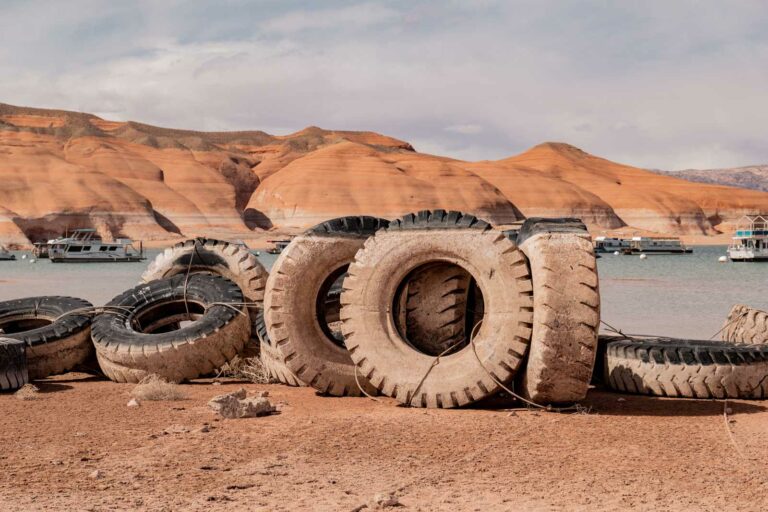
 Río Pascua, Chile, 11 January 2024.
With its water holdings on the Río Pascua, the investment firm Asesorías e Inversiones Diez y Berliner Limitada could supply the entire world population with the minimum amount of water for 469 years – and do so again every single year.
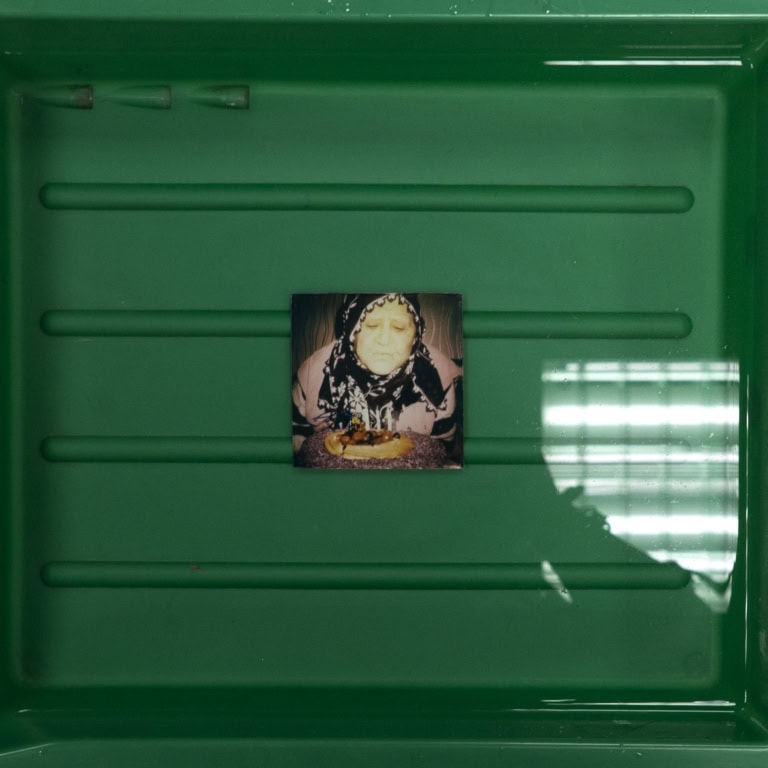
 Puerto Guadal, Chile, 4 February 2023.
The Guadalinos get their drinking water from Lago General Carrera. They own no water rights of their own but obtain it through the local drinking water committee, which holds water rights at one point in the lake and manages and distributes the water in the village.
 Puerto Guadal, Chile, 6 February 2023
Guadalinos who live outside the village centre have to organise their own water supply. That means not only buying their own water rights from the state but also laying their own water pipes. The process can take years and is expensive.
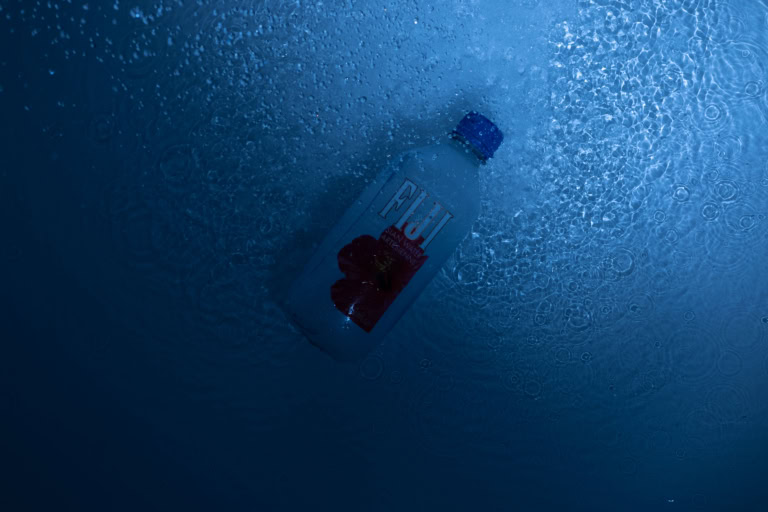
 Jorge Montt Glacier, 9 January 2024
Enough 0.5-litre water bottles to circle the Earth three thousand times – that is how much water Waters of Patagonia has available each year for its bottling business. The company owns water rights to Lago Jorge Montt, a lake formed by the melting glacier. It also holds a patent for determining the age of water, so that alongside ‘Da Vinci’ water, customers can also enjoy ‘Stardust’ water.
 Puerto Guadal, Chile, 5 February 2024
The Los Maquis river with picturesque waterfalls and a green pipe installed for a newly built hydroelectric plant.
 Villa Cerro Castillo, 14 March 2022
At first, many people joined the Los Maquis Libres movement. But the municipal authorities of Chile Chico soon began to put pressure on them, and the mayor banned them from speaking on the radio. As a result, many people who held public office left the movement, fearing for their jobs.
The struggle of Los Maquis Libres stands for many conflicts over water in Chile. With Augusto Pinochet’s military coup in 1973, the South American country became a testing ground for neoliberal ideas. Above all the ‘Chicago Boys’, a group of Chilean economists trained at the University of Chicago and inspired by neoliberal thinking, drove an unprecedented policy of privatisation, deregulation and liberalisation of the Chilean market.
The consequences of this agenda can still be felt in Chile more than 30 years after the end of Pinochet’s dictatorship. It is one of the few countries in the world where water is fully privatised. In other words, large parts of the water resources are controlled by a few players. The effects of this policy are felt most in rural and remote regions such as Aysén, where local communities often have to fight powerful companies to protect their water rights and the environment. Private owners can claim all the water in a river, denying others the use of it. In the case of the Maquis, the owners of the land on which the plant stands hold all the water rights to the Maquis river. The owner, Edelaysén, is in turn owned by a Canadian teachers’ pension fund and a Canadian investment company.
With 1,251 rivers, 12,784 lakes and 24,114 glaciers, Chile is hardly short of water. It is simply unevenly distributed. According to the World Resources Institute’s Aqueduct Water Risk Atlas, Chile is one of the eighteen countries with the highest water stress in the world. This means more water is used than can be naturally replenished by rain. For the population, it means having neither a secure supply of drinking water nor enough water for sanitation. According to figures from the Universidad de Chile, 47.2 per cent of the population do not have regular access to an adequate water supply.
Climate change will pose even greater problems for the country in future, but it is not the only reason for the water shortage. In 2017 Chile’s agriculture used 73 per cent of the available water. By comparison, in Germany the figure is just two per cent. Chile’s avocados, apples and grapes are then mostly exported and end up in supermarkets all over the world.
Water privatisation has another side effect: a speculative market in water rights is flourishing. Wealthy people buy water rights without using them and later sell them on at a higher price. According to a study by the Universidad de las Américas, one per cent of water rights holders use 70 per cent of the available volume of water.
Código de Aguas
Chile’s water law and the struggle for a fair distribution of resources
1. What is the background to the Código de Aguas?
The Código de Aguas of 1981 is a key Chilean law passed during the military dictatorship of Augusto Pinochet. It governs the use and management of the country’s water resources and remains the basis of Chilean water management to this day. The law has far-reaching economic, social and ecological effects and has attracted both praise and criticism.
Source: Ingo Gentes, Zur Rechtsgeschichte der Wasserverwaltung in Iberoamerika – Das Beispiel Chile, in forum historiae iuris (last accessed 17 August 2024)
2. What are the law’s main provisions?
Article 5 of the Código de Aguas declares water a national asset for public use (bien nacional de uso público). Although this recognises water as the property of the nation, the same article allows water use rights to be granted to private individuals and organisations. These rights are permanent and tradable, which has created a market in water rights. Holders may take and use water from natural sources but must comply with the conditions laid down by law.
The Dirección General de Aguas (DGA), as set out in Article 2 of the law, is the state authority responsible for implementing and enforcing the water code. The DGA oversees the allocation of water rights, ensures that the conditions of use are met and is responsible for managing water resources at national level.
For breaches of the water code, in particular taking water without the corresponding right of use, Article 173 of the Código de Aguas provides for sanctions. These consist of fines imposed by the DGA. Their size depends on several factors:
• the amount and duration of the unauthorised abstraction;
• the environmental impact and possible damage to ecosystems;
• repeat offences, which can lead to higher penalties.
The sanctions serve both to punish and to deter, in order to encourage the sustainable use of water resources.
Source: Biblioteca del Congreso Nacional de Chile, Ley Chile
3. What effects and debates surround the Código de Aguas?
Over the years the Código de Aguas has sparked intense debate. Critics complain that privatisation and the trade in water rights create social inequality. They argue that it makes access to water harder for poorer sections of the population and that environmental impacts are not sufficiently taken into account, which encourages the overuse of water resources.
Supporters, on the other hand, stress that the law promotes economic efficiency. By using market mechanisms, water is directed to where it is most urgently needed. The tradability of water rights creates incentives to invest in infrastructure and encourages efficient water use.
Sources: Deutsche Welle, Universidad de Chile
4. What reforms have there been?
On 6 April 2022 Law No. 21.435, which amends the Código de Aguas, was published. The reform recognises access to water and sanitation as an inalienable human right and emphasises the public nature of water. It also introduced new rules on the granting, exercise and withdrawal of water rights in order to protect and strengthen the role of fresh water in terrestrial ecosystems.
Source: Universidad de Chile
 Santiago de Chile, Chile, 9 July 1990, © 1990 Juan Carlos Cáceres
President Patricio Aylwin and former dictator Augusto Pinochet take the oath to the flag in Santiago de Chile.
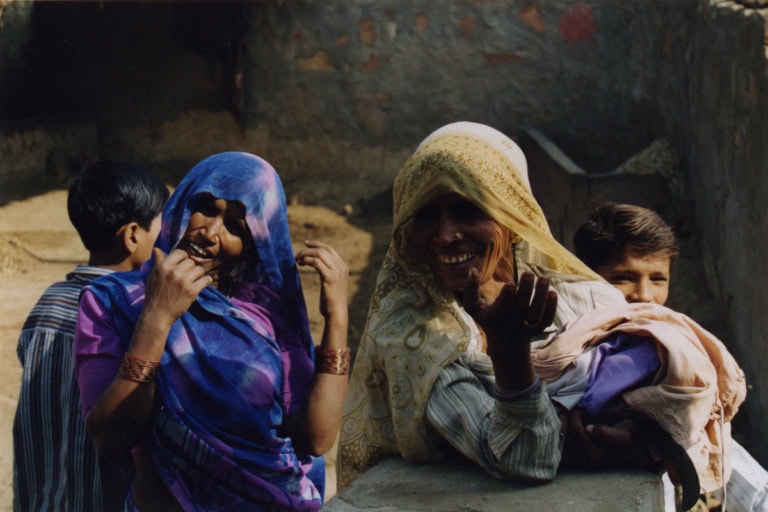
 Puerto Guadal, Chile, 1 March 2023.
‘I’m disappointed in the people of Chile. Even more than in the politicians who privatised the water. Because in the end it’s us who give the politicians the chance to carry on. In Chile money is worth more than water; everything revolves around money. I’ve never seen a government here that wasn’t corrupt.’
Camilo Acuña (33).
 Santiago de Chile, 4 September 2022
On 4 September 2022, 62 per cent of Chileans voted against a new constitution that would have provided both for a revision of the water law and for changes to environmental protection.
 Puerto Guadal, Chile, 17 January 2024.
‘It was a miracle. The military coup changed Chile’s life. Without that coup, which was intelligent enough to put the economy in the hands of economists and give power to the military, we would still be the last country in the Americas, as we were before under Salvador Allende’s government. We had no bread, no sugar, no flour, nothing.’
Quemel Arturo Sade Barría (71)
 Puerto Guadal, Chile, 31 January 2023.
‘I’m afraid of the future. Knowing that at some point there won’t be enough water for us. I wish we were more aware of the nature around us. But people aren’t well enough informed. And the schools aren’t doing anything to change that either.’
Diego Martin (21)
It cannot be right for a person or a company to own the water. How can it be that you have the water right under your nose but aren’t allowed to use it?
 Cristóbal Weber McKay
The struggle of Los Maquis Libres is therefore not only directed against the destruction of nature in Puerto Guadal. It is directed against water privatisation as a whole. And the group is not alone in its protests. In October 2019 an unprecedented wave of protest swept across Chile. Triggered by a rise in metro fares in Santiago, millions of Chileans took to the streets against social injustice and soon made more far-reaching demands: the state should change the constitution and enshrine greater environmental protection and more rights for Indigenous peoples. In September 2022, 62 per cent of Chileans voted against a new constitution that would also have provided for a revision of the water law.
At first many residents of Puerto Guadal joined the ‘Los Maquis Libres’ movement. But the municipal authorities soon began to put pressure on the group. The mayor banned them from speaking on the radio. Activists who held public office feared for their jobs. And the authorities succeeded: the small village has split into supporters and opponents of the hydroelectric plant.
As long as the court cases are ongoing, the plant in Puerto Guadal will not produce any electricity. For Frannie and Cristóbal that is not enough: ‘I want the government, its politicians and its institutions to comply with and respect environmental laws,’ says Frannie. ‘I want water in Chile to no longer be privatised, and I want more people to realise that their actions can make a difference when it comes to environmental injustice in their communities.’
‘What is going on here?’
The photographers Stella Meyer and Sarah Schneider on their research in Chile (video in English).