Lost place in the Harz: the abandoned Harzgerode sanatorium
Where children were once treated for tuberculosis, silence now reigns – a walk through crumbling walls.
By Rebecca Jäger (text and photos)

Grass grows on the outside steps of the former Harzgerode children’s sanatorium, and there is even a small deciduous tree on the terrace. Many windowpanes are shattered or missing altogether from empty frames, and some of the sandstone blocks in the base of the building have cracked. Medical work here stopped long ago, almost 30 years ago. Today the empty complex is a listed monument – and a reminder of the fight that children and young people, nurses and doctors waged against tuberculosis here for decades.
The complex of the former Harzgerode children’s sanatorium doesn’t really fit into the wooded hills of the eastern Harz: too big, perhaps too different too. The Harz is characterised by low buildings, often half-timbered. The sanatorium, however, rises three storeys into the sky, and the architecture of the main building is clear and straight-lined. Concrete and glass dominate the façade. Yet the main wing is gently curved, the centre recedes slightly and the corners of the building are rounded, almost like oriels – a slight break with the rather functionalist, almost Bauhaus-like style.
The forest around the complex is silent. It is winter, and the sun shines only weakly. The cold and snow make the former children’s sanatorium look like the set of a horror film. Somehow this atmosphere fits the history of the place. At the end of the 19th century, around one in seven people in Europe died of tuberculosis, a lung disease. Fresh mountain air and sunlight were considered effective remedies – and that is exactly what the area around the small town of Harzgerode still offers today. So in the 1920s the Saxony-Anhalt state insurance institution decided to build a sanatorium for children with tuberculosis. Scenic beauty, a pleasant climate and tranquillity were meant to promote healing and recovery. Children and young people were treated with walks or rest cures on the balconies.
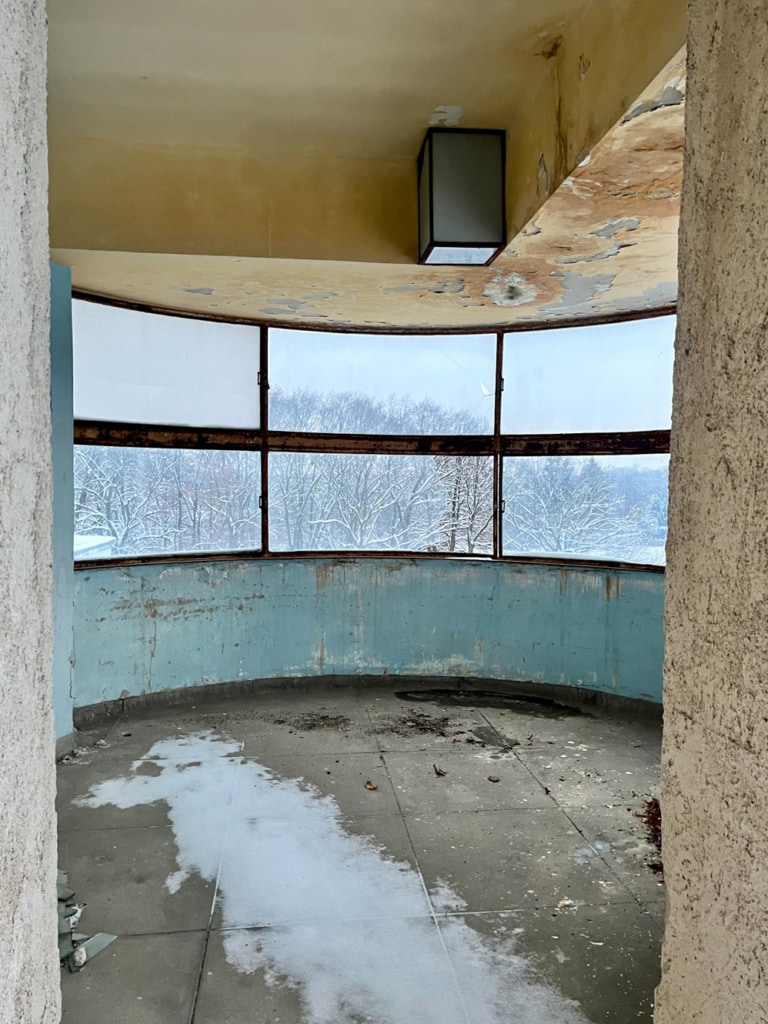
The lookout tower rises above the east wing and offers a view of the surrounding grounds.
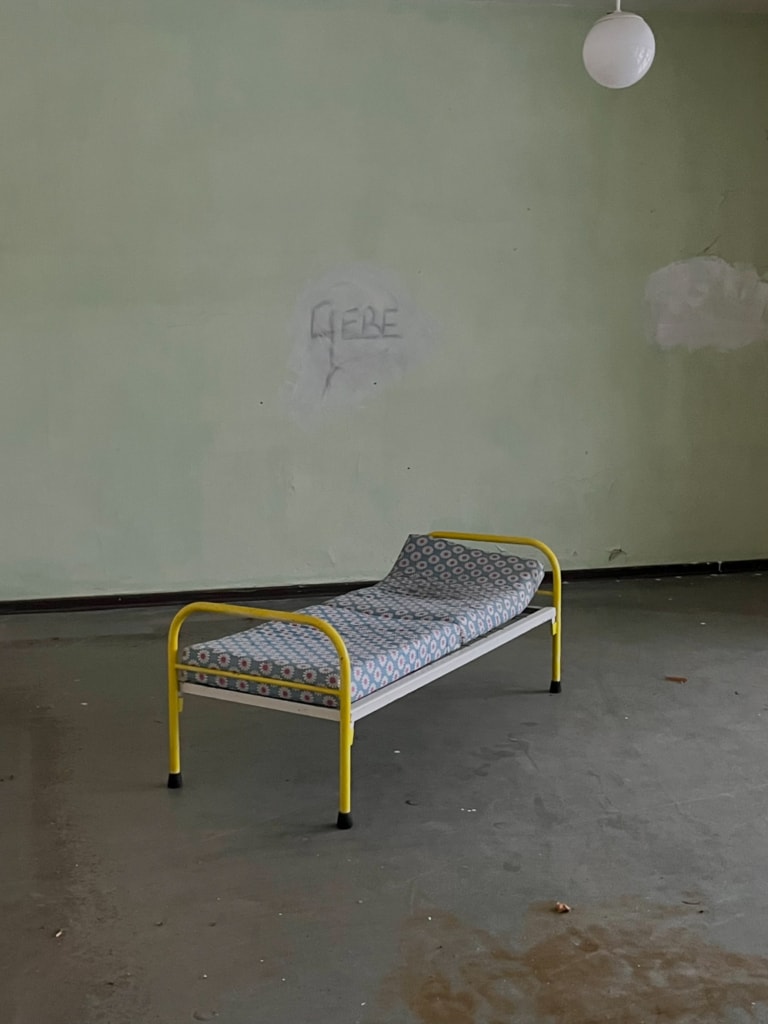
Patients’ room with a draped bed.
G
The entrance steps to the east wing look unstable, and a grille blocks access. Today a small side door to the left of the steps leads into the building. Inside, long, dark corridors stretch out. Every few metres, open white-painted panelled doors on the left and right. Behind them, patients’ rooms and common rooms. The walls are painted in light colours – yellow, lime green. Stickers with all kinds of animal motifs. Here and there old photos are stuck to the door frames: pictures of the rooms as they used to look. Nurses in starched caps bathing their patients. And children lying bundled up in blankets in a long row of beds on the balconies. The yellowed photos tell of the fight against tuberculosis that was once waged here.
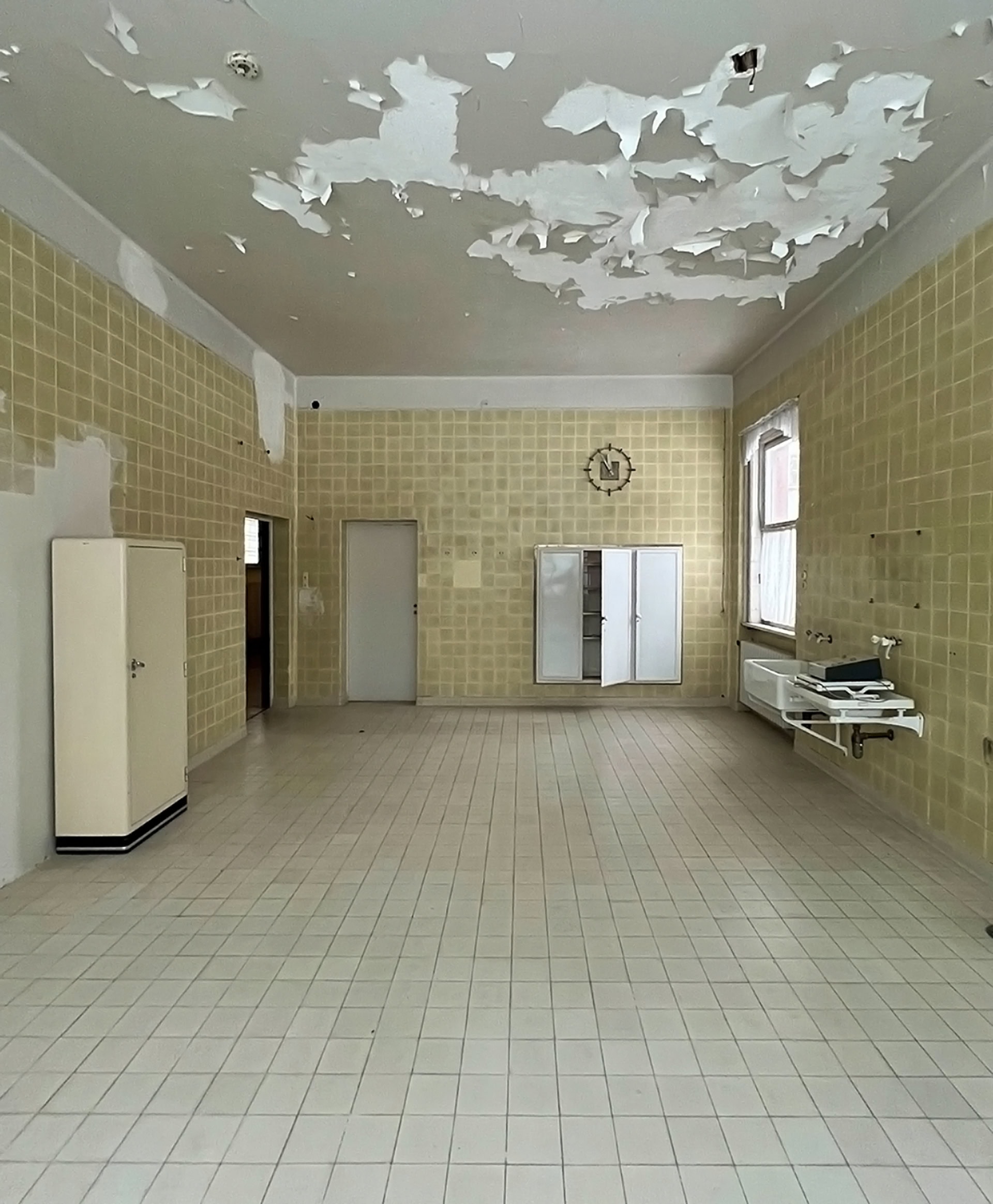
At the beginning of the 20th century, fresh-air therapy and sunbathing were considered innovative and were meant to improve the chances of recovery. So in 1924 the architect Godehard Schwethelm, in consultation with the sanatorium’s first chief physician, Hans Heinrich Knüsli, planned covered balconies for rest cures in the east and south wings – for direct contact with nature. In general, the hospital building was designed to the latest technical standards of the day. The architecture was meant to be not only aesthetically pleasing and playfully light but also medically sound. The treatment rooms are tiled – white, yellow, green – so they were easy to keep hygienically clean. The bathtubs were fitted with modern mixer taps so a comfortable water temperature could be set. Large windows let in plenty of daylight.
Background: fighting tuberculosis with walks and rest cures
At the end of the 19th century, around one in seven people in Europe died of tuberculosis, a bacterial infectious disease that mainly affects the lungs.
The area around the small town of Harzgerode was chosen as the perfect place for healing and recovery because of its scenic beauty, pleasant climate and tranquillity. Fresh mountain air and sunlight were considered effective remedies for tuberculosis. In the 1920s the Saxony-Anhalt state insurance institution recognised the healing effect of the place and decided to build a sanatorium for children with tuberculosis. They were treated with walks or rest cures on the balconies of the sanatorium. The children’s sanatorium was a pioneer in the treatment of tuberculosis. The surrounding nature and the architecture worked together to promote the health of the young patients.
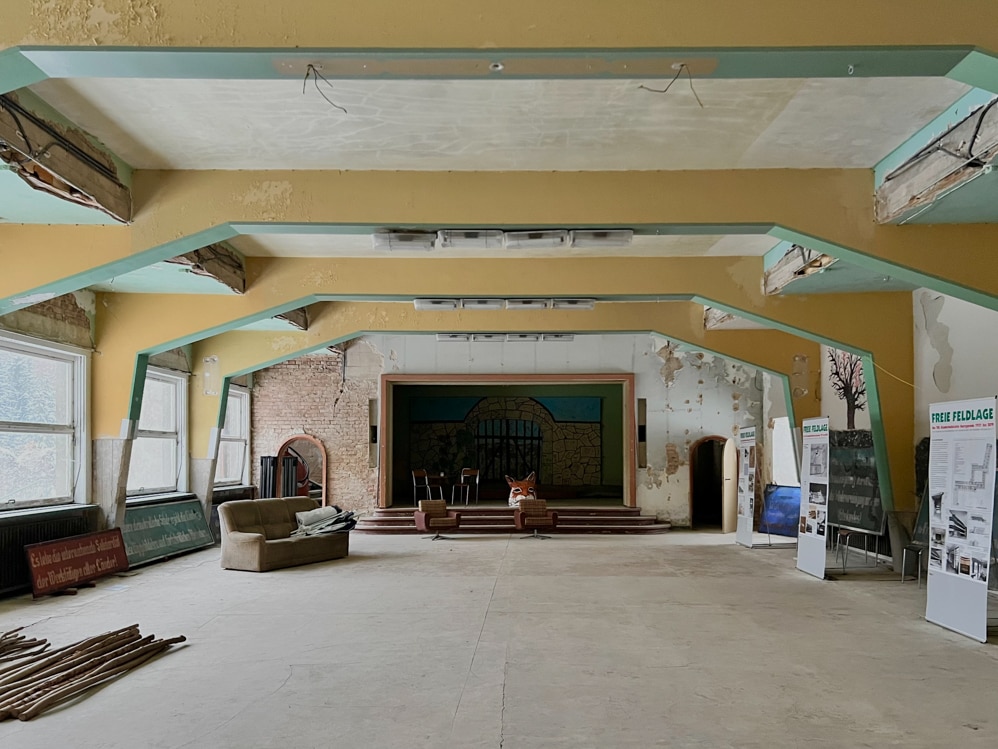
The children’s sanatorium was not only a medical but also an educational institution. Performances took place in a former theatre hall, contributing not only to entertainment but also to emotional healing. Short plays by and with the patients were meant to entertain and inspire them.
Information from the Robert Koch Institute

V

Sanitary facilities with colourful stickers.
B
Today the rooms are damp – plaster and paint are peeling off and hanging from the ceiling in strips. A few beds stand abandoned in dormitories. And yet in one staff room, tables and chairs stand as if doctors and nurses were about to sit down for a meeting.
Up to 150 children and 150 staff lived together in the park-like grounds of the sanatorium – in the main building, in doctors’ houses and in the chief physician’s villa. There were two isolation wards and two operating theatres for surgery. There was also a market garden – and a school building. After all, the young patients were not supposed to fall behind with their lessons during their stay. In a hall, performances and plays were meant to entertain the residents – and support their emotional recovery.
A painted stage backdrop still hangs behind the stage. Construction struts are rusting on the floor of the hall. Banners with GDR slogans lean against the walls: ‘Long live the solidarity of the working people of all countries!’ From 1991 the number of patients with respiratory diseases fell, and the hospital closed seven years later. Today it is a listed building.
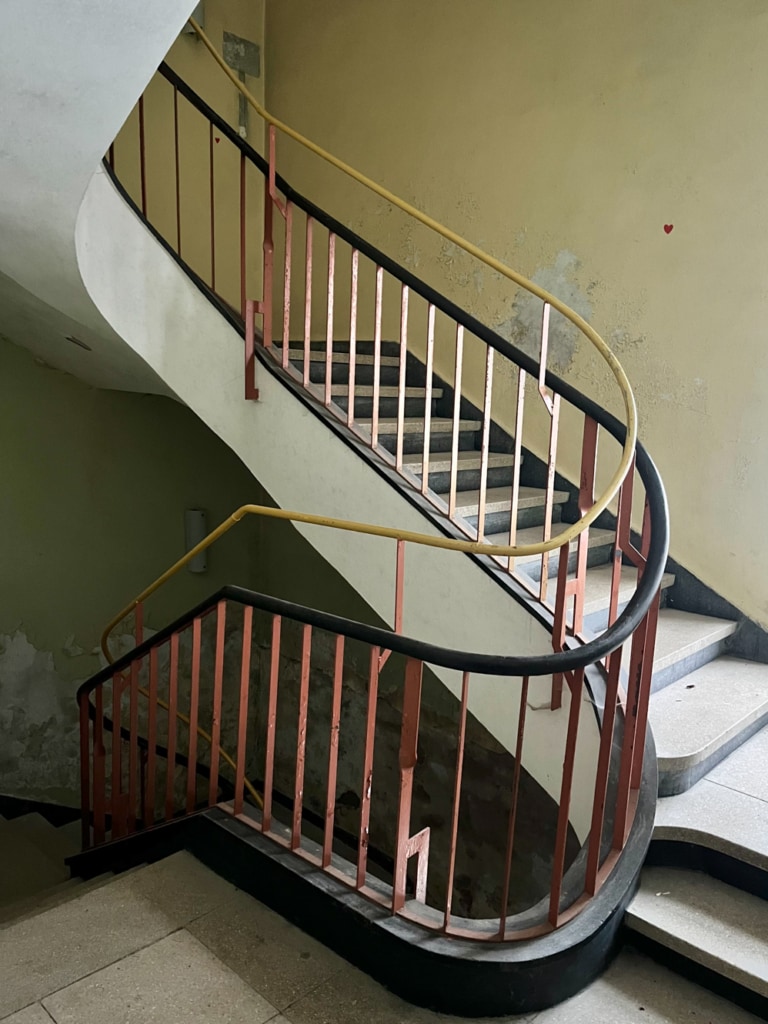
The sun is slowly sinking towards the horizon, bathing the abandoned sanatorium in warm evening light. A curved staircase leads up to a lookout tower. From the top there is a view over the Harz landscape. Snow covers the trees, hills and valleys, transforming the area around the former sanatorium into a glittering winter world. The wind rustles softly. As if it wanted to tell the story of the sanatorium.