‘We want to give dying a place of the greatest possible security’
At Hospiz Luise in Hannover, carers accompany people on their final journey – and turn fear into a sense of safety.
By Tim Kirchhof


The patient was only 28 when she came here to die. ‘She wore a white dress, had black hair and beautiful skin,’ her carer remembers. ‘She wanted to get married next year.’ Her fiancé slept at her side. She died on New Year’s Eve. The carer still remembers the young woman years later. At Hospiz Luise in Hannover-Kirchrode, dying itself is part of everyday life. The prospect of one’s own death, or that of a loved one, often triggers feelings of powerlessness and loss of control. In hospices such as Luise, people who are seriously ill and dying find a place to spend their last days in dignity.
The hospice movement in Germany emerged in the early 1980s as part of a citizens’ movement in which volunteers played an essential role from the outset. The Catholic-run Hospiz Luise opened in 1994. A team of nurses, doctors, volunteers and a chaplain helps patients and the people close to them to ease suffering and provide a sense of security. Despite strict admission criteria, there are far more applicants than places.
In atmosphere, hospices usually differ greatly from hospitals or care homes. ‘We want to meet the uncertainty of dying and create a place of the greatest possible security,’ says Haus Luise’s mission statement. A volunteer also emphasises the calm and the feeling of safety: ‘When people die the next day and the evening before they still eat fried potatoes with a fried egg, with a real appetite… I find that beautiful.’
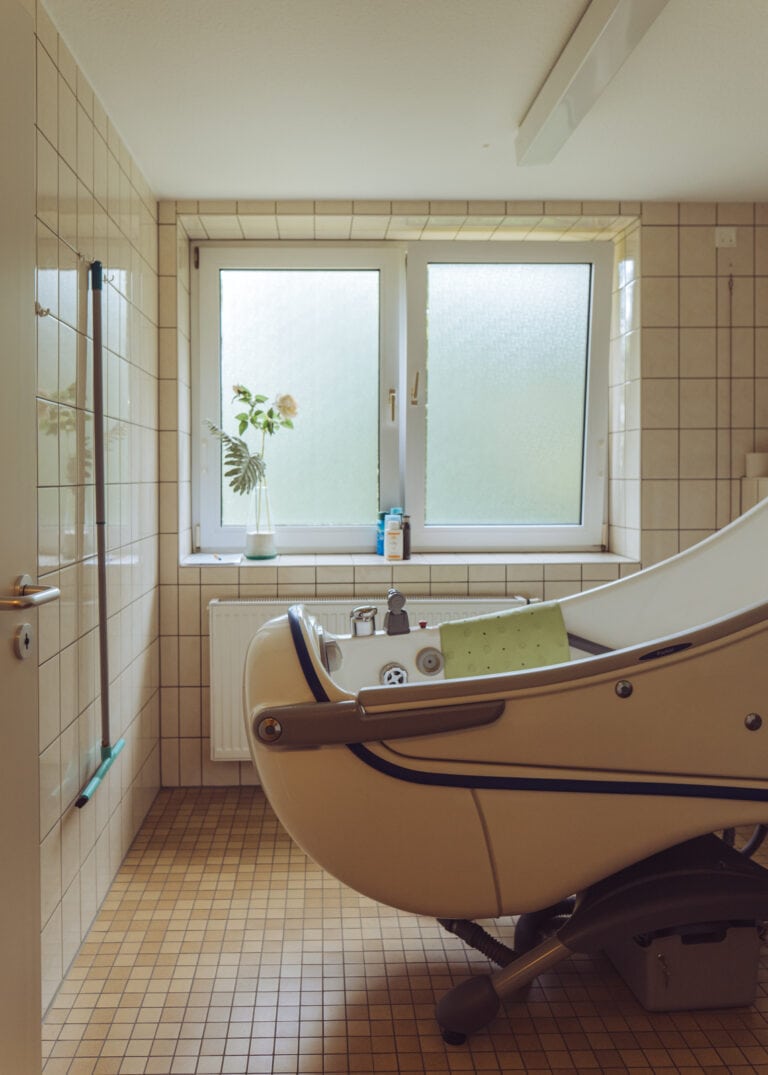
The bath with whirlpool function is very popular with patients.

In the chapel: each candle stands for someone who has recently died.

Eating together and sharing memories: the table laid in the common room

The staff do not only accompany patients in their final hours. They also try to create a pleasant atmosphere for those close to them – relatives, friends and the patients’ wider social circle.
When people die the next day and the evening before they still eat fried potatoes with a fried egg, with a real appetite… I find that beautiful.
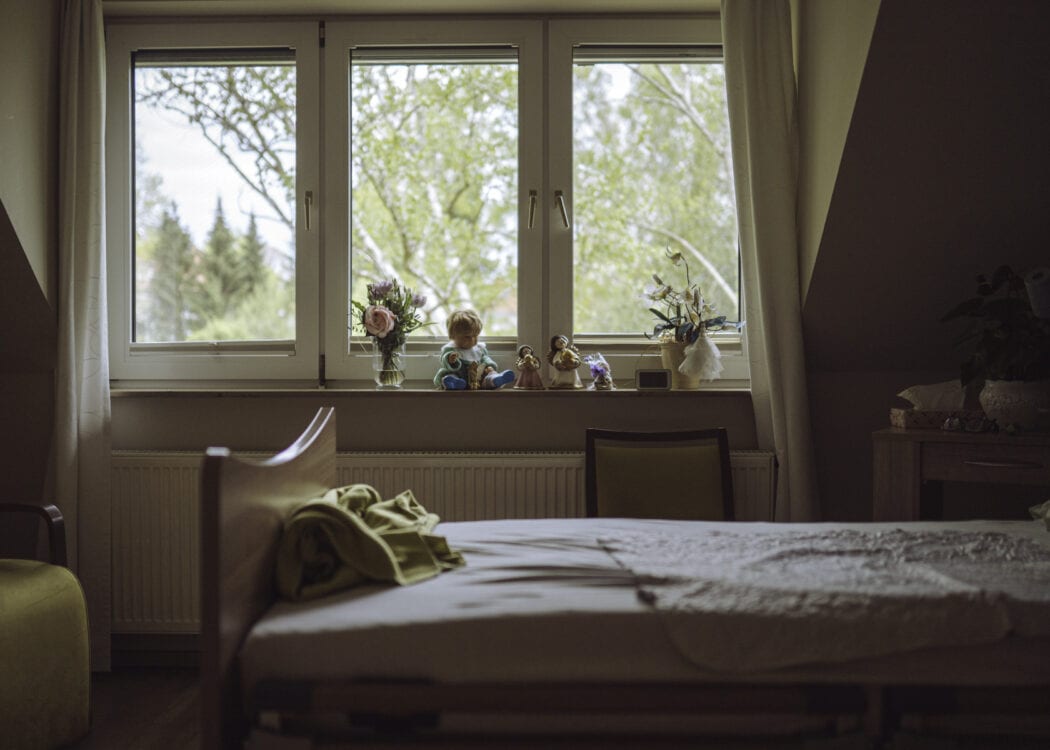
An empty bed after a woman who has died has been collected. Following Christian tradition, the window was closed after the body had been carried out.
D
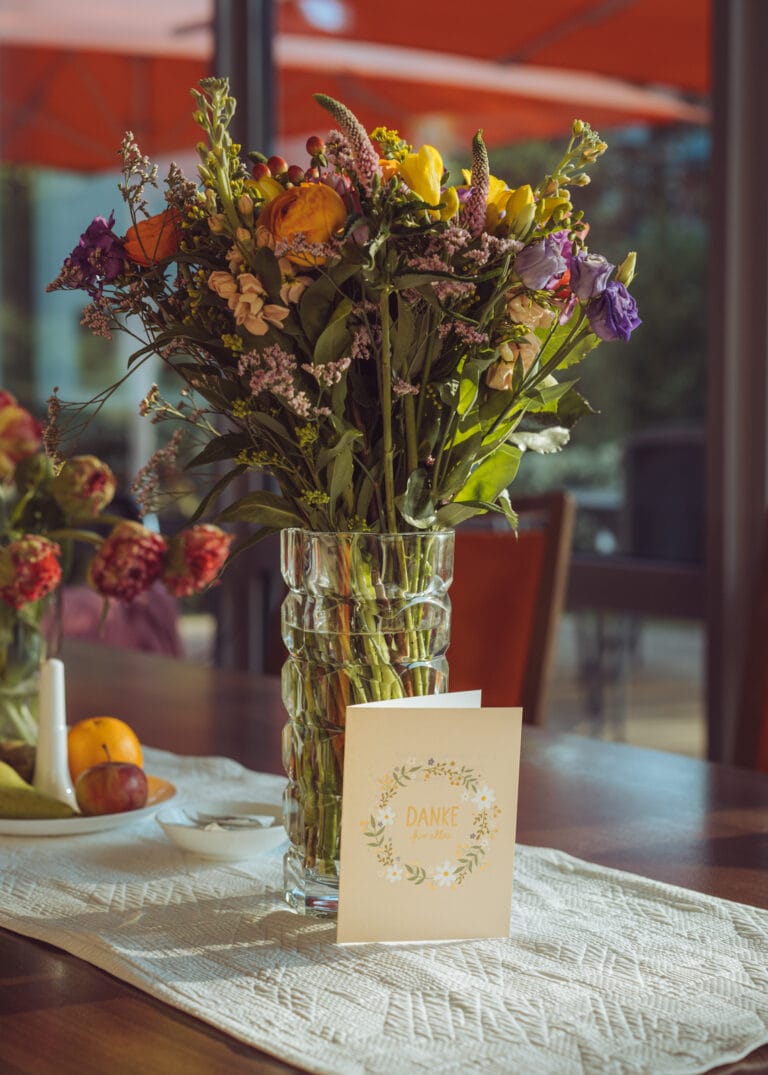
What remains: memories and gratitude from those left behind