The neighbour nobody knew
A stranger’s bicycle in the cellar, a faded letterbox – and between them the life of a man who is suddenly gone. Who was he?
By Jana Junker

Hans sometimes walked past our window – always in a green parka, always with a plastic bag in his hand. If I said hello to him in the street, I got a grunt in return. A friendly grunt.
Hans lived alone and quite withdrawn, in the unconverted attic of a block of flats. He died there in July 2023 – the exact date cannot be established; a resident found Hans several days after his death. Hans was buried anonymously in a village cemetery.
Two months after Hans died, I moved into the building where he had lived.
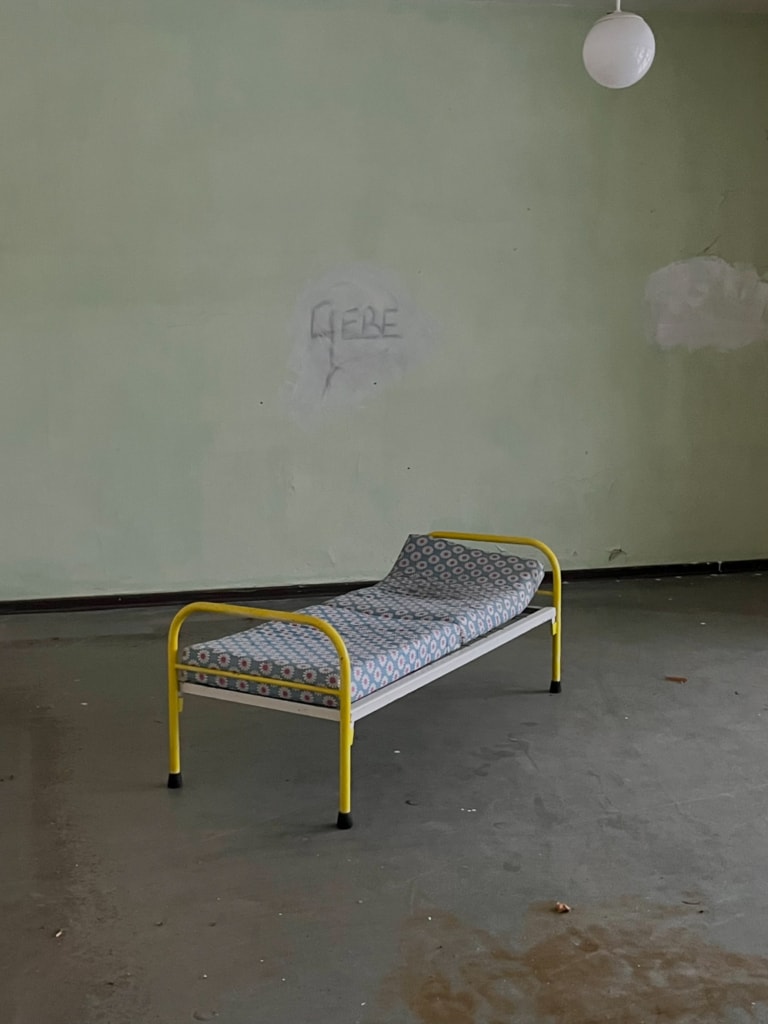
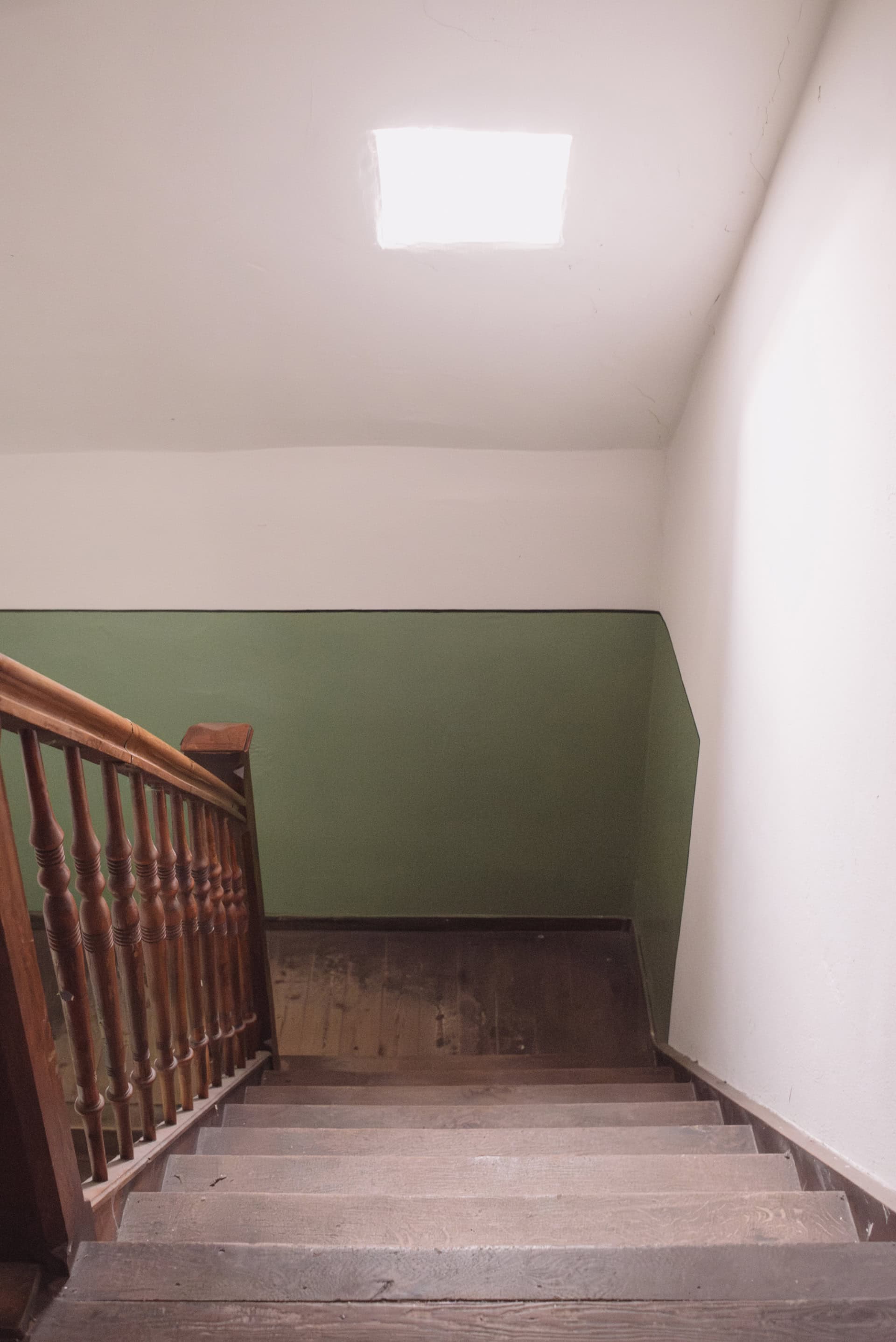
Hans’s death stirred up a lot in me. Traces of his life can still be found all over the building: the tiny bathroom in the stairwell, his bicycle in the cellar, an ancient postcard sent to him from Italy more than 30 years ago, little things in many corners. His old home is untouched.
Who was Hans? How long had he lived in the attic? Who knew Hans beyond saying hello? Where did he go with his plastic bag? How can someone live in such a colourful, lively neighbourhood and apparently be lonely? And what does that mean for those of us still living?
The landlord once tried to take him to court to evict him – by his own account more to protect Hans than to change anything. Hans’s home in the attic was not legal.
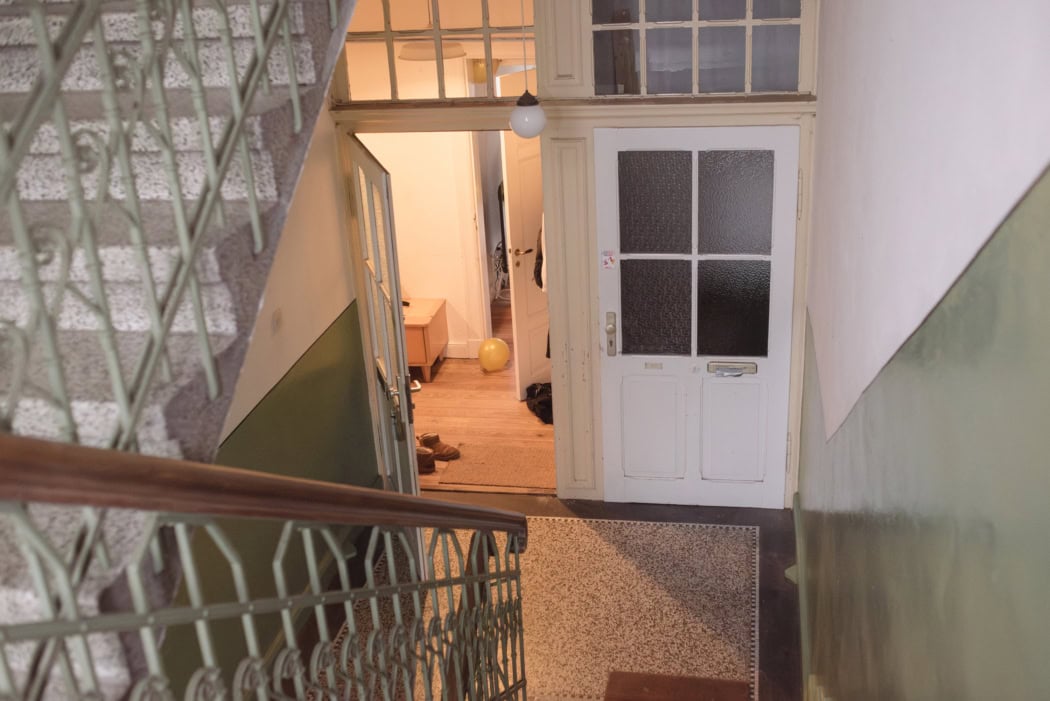 Lüneburg, December 2023
View from the bathroom door down into the stairwell
So began my search for answers to all these questions. I talked to many residents, neighbours and his landlord too. Hans had lived in the building for 40 years. Back then, migrant workers lived up in the attic every summer. At some point they stopped coming, but Hans stayed. The landlord once tried to take him to court to evict him – by his own account more to protect Hans than to change anything. Hans’s home in the attic was not legal.
My project met with varying degrees of interest in the neighbourhood. And yes, some people living close by didn’t even know who I was talking about, although some of them had lived in the street longer than Hans. That gave me a lot to think about and at the same time raised the question of how well I actually know my own neighbours.
Admittedly, I don’t know nearly all of them. In the house next door, for example, right behind my bedroom wall, lives someone who seems to have exactly the same taste in music as me. Only a wall separates us, but I don’t even know this person by sight, although our balconies are not far apart.
I realised fairly quickly that I had to be careful not to read false assumptions into Hans’s past life.
 Lüneburg, December 2023
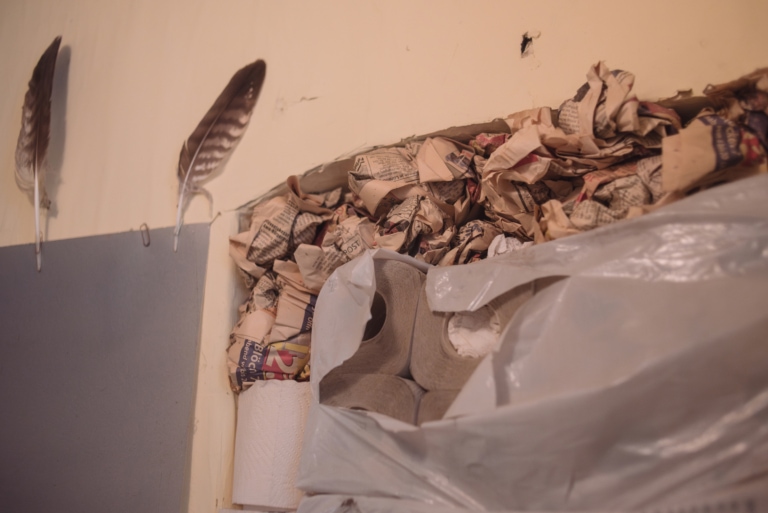
Hans insulated the window of his bathroom with newspaper and toilet paper.
 Lüneburg, December 2023
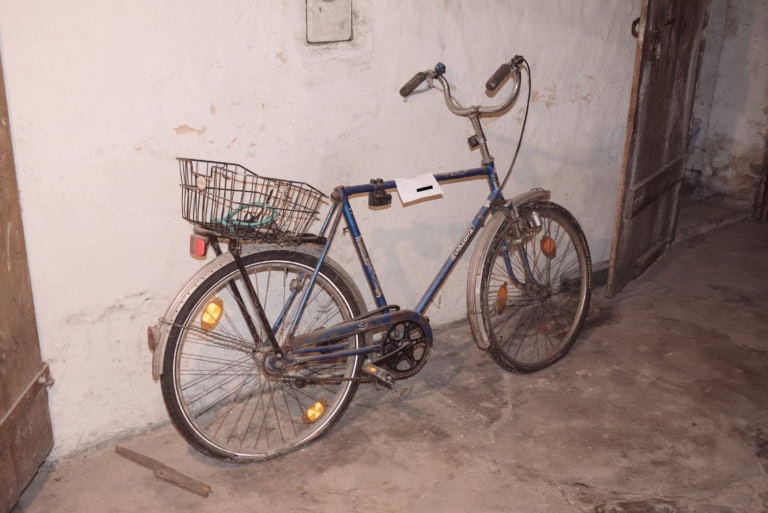
His broken bicycle is still in the cellar.
 Lüneburg, December 2023
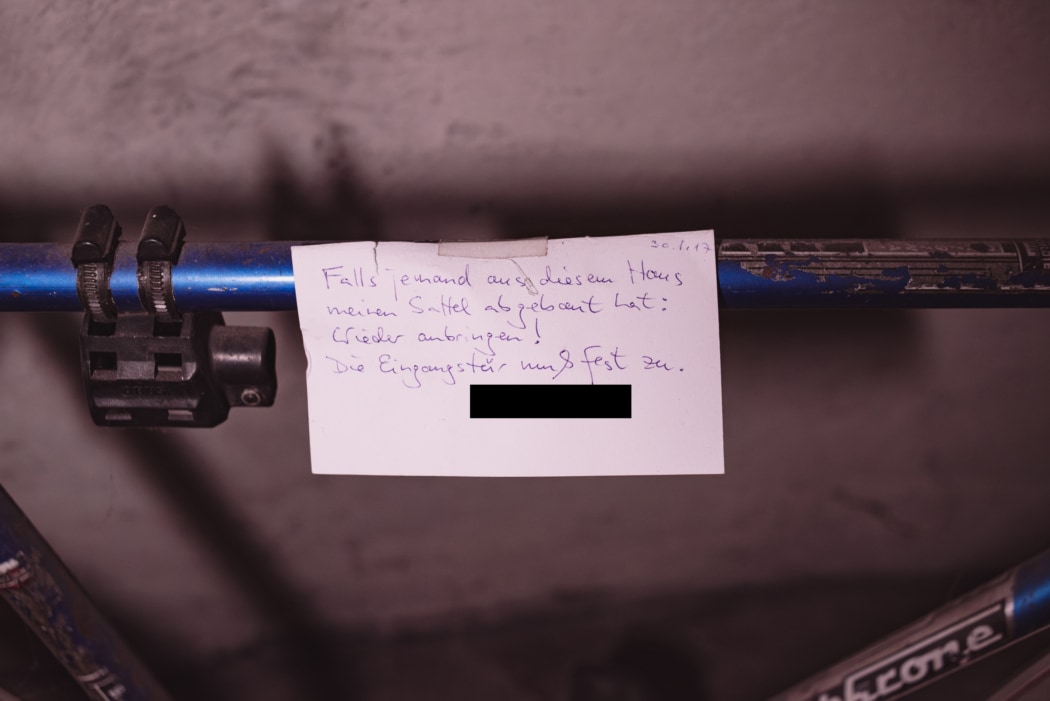
In 2017 Hans wrote this message to the residents of the building and hung it on his bicycle.
I realised fairly quickly that I had to be careful not to read false assumptions into Hans’s past life. Did he feel lonely? Or was he perhaps perfectly content with his life?
In front of the building there is a conspicuous white bank of letterboxes. Only Hans’s small, battered brown letterbox isn’t there; it hangs, easy to miss, on the back of the fence. His name is still there, faded, behind a yellowed plastic window. There is chewing gum stuck to the side and an old advertising leaflet sticks out of the letter slot.
The fact is that Hans may not have lived a lonely life, but in our estate he lived quite anonymously and in social isolation. Nobody, either in the building or in the surrounding flats, seems to have had closer or regular contact with him. Rarely, a brief chat about the weather here or there, and now and then Hans put up notes in the building with messages for the other residents – mostly a complaint or a question. Nothing more. No one could tell me where Hans went with his plastic bag. The residents invited him to evenings around the campfire and celebrations in the garden, but he never turned up.
There are also burials where relatives are present but the grave is still anonymous.
 Torsten Lips, undertaker from Lüneburg
 Lüneburg, December 2023
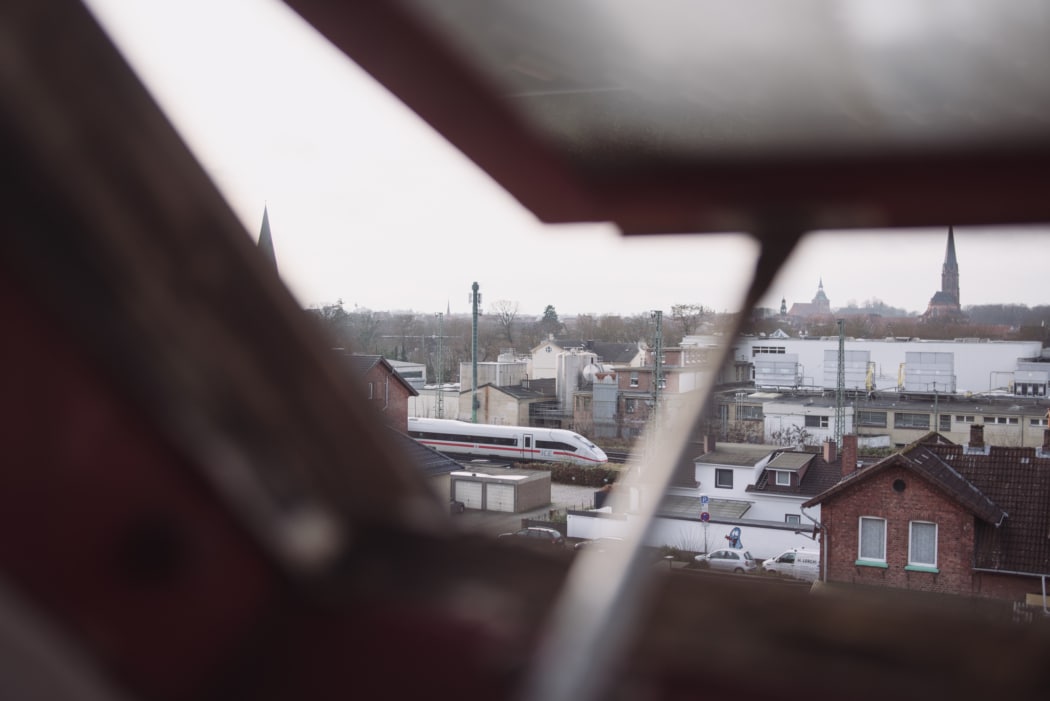
Hans’s view towards the centre of Lüneburg from the only window in his former living area.
And yet there must have been people in Hans’s life, because there is an obituary notice for him online with a few names in it. There is also an email address, but I get no reply to my emails. From the notice I learned that Hans was buried anonymously. What does that actually mean? And what happens when someone dies and has no relatives?
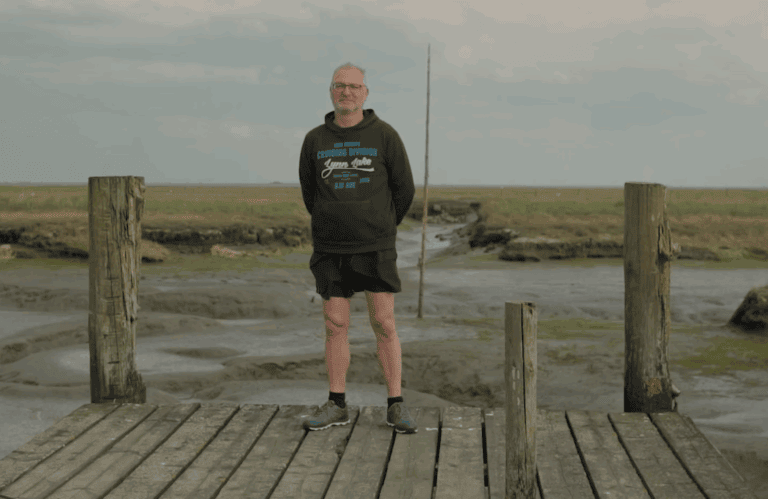
I speak to Torsten Lips, owner of the funeral home ‘Ahorn Trauerhilfe Lips’. If a deceased person really has no relatives, the local public order office is responsible for the burial. If there are no financial reserves, the costs are normally covered by the municipality or city. In that case there is only the burial of the urn – without a ceremony or service. In Lüneburg, however, there is the Tobias-Gemeinschaft, which is committed to dignified burials for people without relatives. To this end it organises memorial services at Lüneburg’s Waldfriedhof cemetery four times a year.
The funding comes from donations. During the services the names of the dead are read out and prayers are said for them. This is followed by the burial, at which members of the Tobias-Gemeinschaft accompany the deceased on their final journey. The denomination or church membership of the deceased is irrelevant. The Tobias-Gemeinschaft sees itself as a charitable church organisation and is open to all.
Lips raises a question: ‘Where do anonymous burials begin?’ It is not an anonymous burial if only the interment is anonymous or there is simply no gravestone, but there was a funeral service beforehand. There are also burials where relatives are present but the grave is still anonymous. Can that even be called an anonymous burial?
Hans was not buried through the Tobias-Gemeinschaft in Lüneburg. So I assume that somebody took care of his funeral – either a relative or people who were connected to Hans in some way. Of course, Hans himself may also have wished for an anonymous burial. Here, too, I could find no answer.
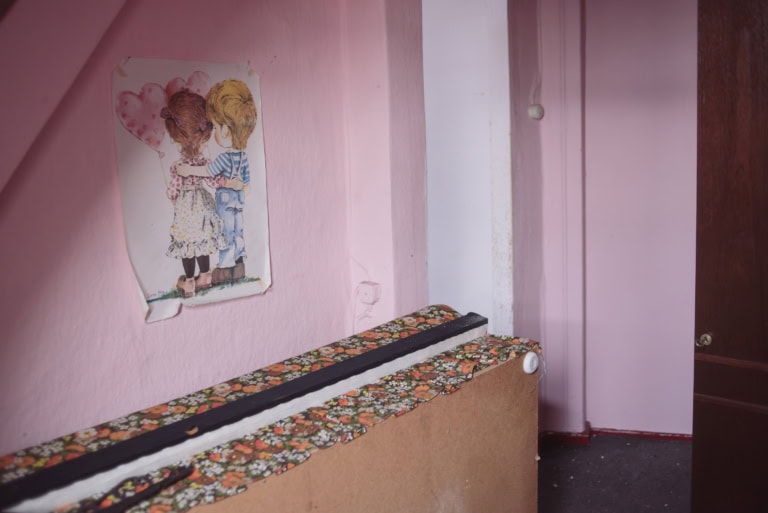 Lüneburg, December 2023
In Hans’s former living area hang several posters by the Australian children’s book and greetings card illustrator Vivien Kubbos.
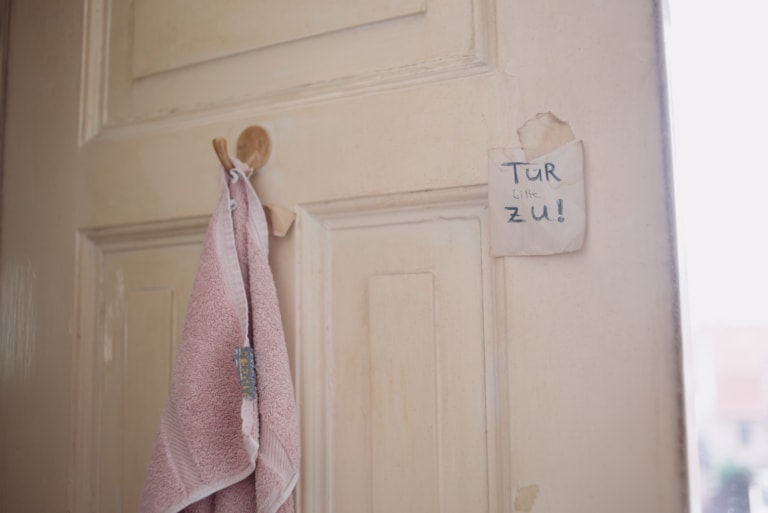 Lüneburg, December 2023
Who was the note on his bathroom door meant for?
According to a Forsa survey from 2019, 24 per cent of respondents do not care at all whether their grave bears their name. For 27 per cent it is not very important, for 31 per cent it is important and for only 16 per cent is it very important. To be honest, I hadn’t expected that. I had assumed that more people would care about having their name on their grave.
Hans’s story, which leaves so many questions unanswered, prompted me to find out more about social isolation. What does it mean for a person’s mental and physical health?
Maximilian Schiff, a practising psychotherapist in Winsen (Luhe), says of the psychological effects: ‘Social isolation is closely linked to depression, for example. It can also intensify anxiety or lead to anxiety disorders. Persistent loneliness can severely damage a person’s self-esteem. The risk of dementia and cognitive impairment is also higher.’
Dr Heiko Schmidt, a GP in Dannenberg, stresses the physical consequences: ‘Social isolation is a risk factor for cardiovascular disease, as more stress hormones such as cortisol are released, which has a negative effect on blood pressure and heart rate. Chronic loneliness can weaken the immune system, increasing susceptibility to infections and illness. Sleep disorders can develop, and studies have shown that lonely people are at greater risk of premature death. Socially isolated people tend to develop less healthy behaviours, such as less physical activity, an unhealthy diet or substance abuse. The lack of social support makes it even harder to cope with stress and other health challenges. Overall, research shows that social isolation is a significant health problem.’
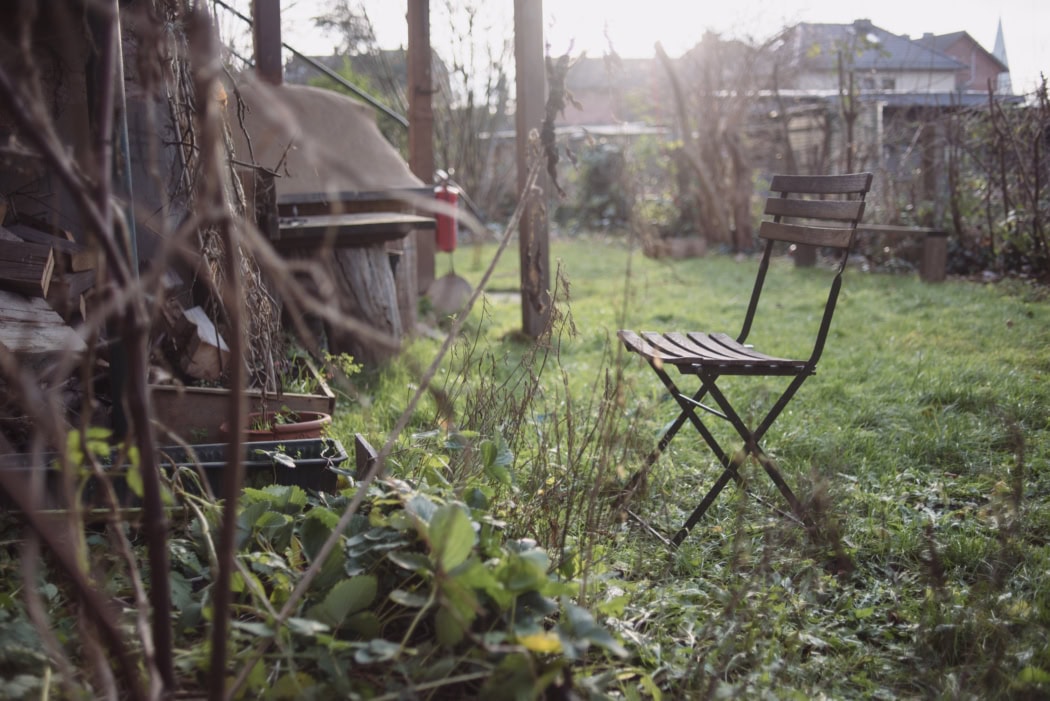 Lüneburg, December 2023
Hans sometimes sat in the building’s shared garden, but mostly only when nobody else was there.
That really is a lot of risk factors, and I can’t help thinking of Hans’s age when he died. Seventy is not exactly old. And one really important question remains: what help is available for socially isolated people?
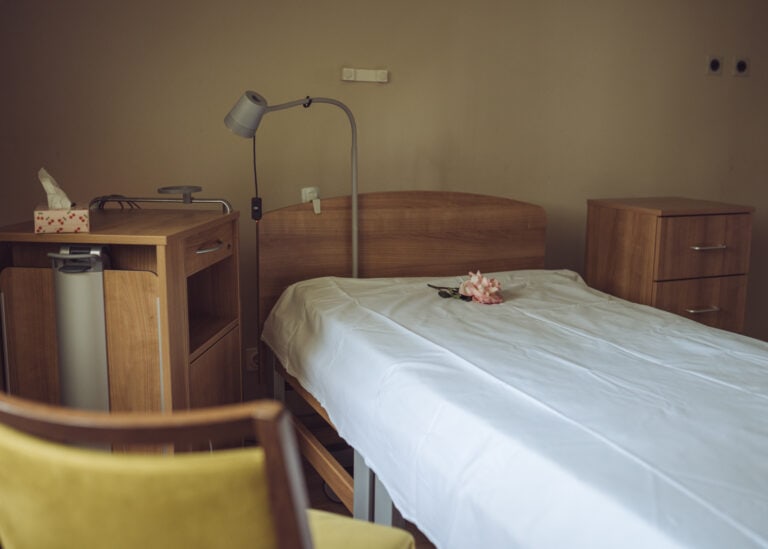
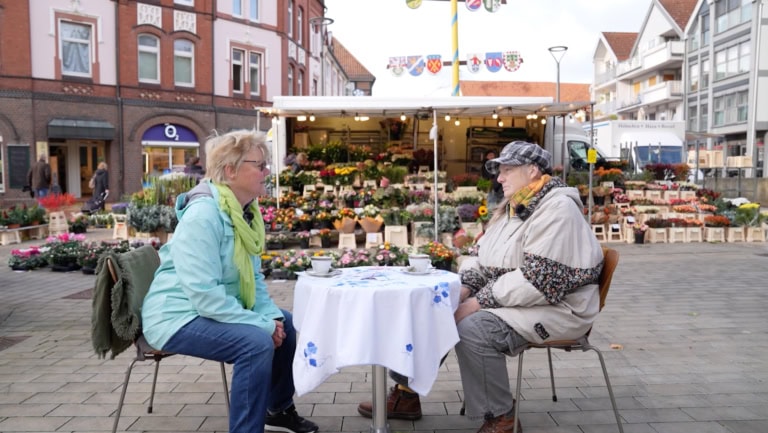
I spoke to Sandra Mendel, who leads and coordinates the volunteer work of the German Red Cross’s ‘Rote Engel’ (Red Angels) in Lüneburg. The Red Angels are a volunteer visiting service that has been active at the German Red Cross care home in Adendorf since 2012. Six Red Angels are currently involved, bringing their personal interests and skills to offer residents enjoyment and variety. Their activities include musical accompaniment, phone and tablet help sessions, support at events, planning and running outings, and individual visits.
The Red Angels were set up to give structure to the volunteering already taking place at the care home. Another aim was to counter the loneliness of older people and give them more social contact through regular visits. About 100 people live in the care home. The volunteers usually visit residents once a week; some take part only in events or outings. The Red Angels’ visits help lift residents’ spirits, encourage them to take part in life and get them to open up more.
In the care home, social isolation particularly affects residents whose families live far away or who no longer have any relatives. Besides the Red Angels, there is other support for socially isolated people in Lüneburg. The senior citizens’ service office arranges everyday companions, and the local Red Cross branches offer regular activities such as coffee afternoons and games afternoons. Some parishes also run visiting services.
For me, though, the question remains of where people can turn who don’t live in a care home or who need help with everyday life in their own four walls. Social isolation, anonymity and loneliness can affect people of any age.
I’m sitting on our balcony in the evening sun when one of my favourite songs drifts out of the open window of the house next door. I have to smile, and my heart beats a little faster as the balcony door next door opens. ‘Great song, I love it!’ I call over. ‘Fancy a glass of wine?’ comes the reply.