A cup of closeness
A table, two chairs and an attempt to start talking to each other again. Five encounters between strangers explore the art of talking – and listening.
What happens when two strangers sit down at a table together?
Nobody listens any more anyway. How could they, with everyone wearing noise-cancelling headphones? We take in more information every day than ever before – scrolling, posting, sharing. But real conversations are becoming rarer. Often there is no one opposite us who really listens. Instead of engaging with each other, we judge – opinions, people, groups. Perhaps because drawing boundaries gives us orientation in an ever more complex world. Perhaps because so much communication now happens online. How do real encounters succeed, and what happens when we sit face to face again?
We tried it out. With a table, two chairs and two cups of tea, we – the editorial team – set up on the market square in Wunstorf and outside the Lutherkirche in Hannover. There we invited people to talk to each other without having met before. Question cards on various topics were meant to help them get closer. The conversations in the videos are in German.
English subtitles: switch them on manually with the CC button in the video player.
When do you feel that your voice counts?
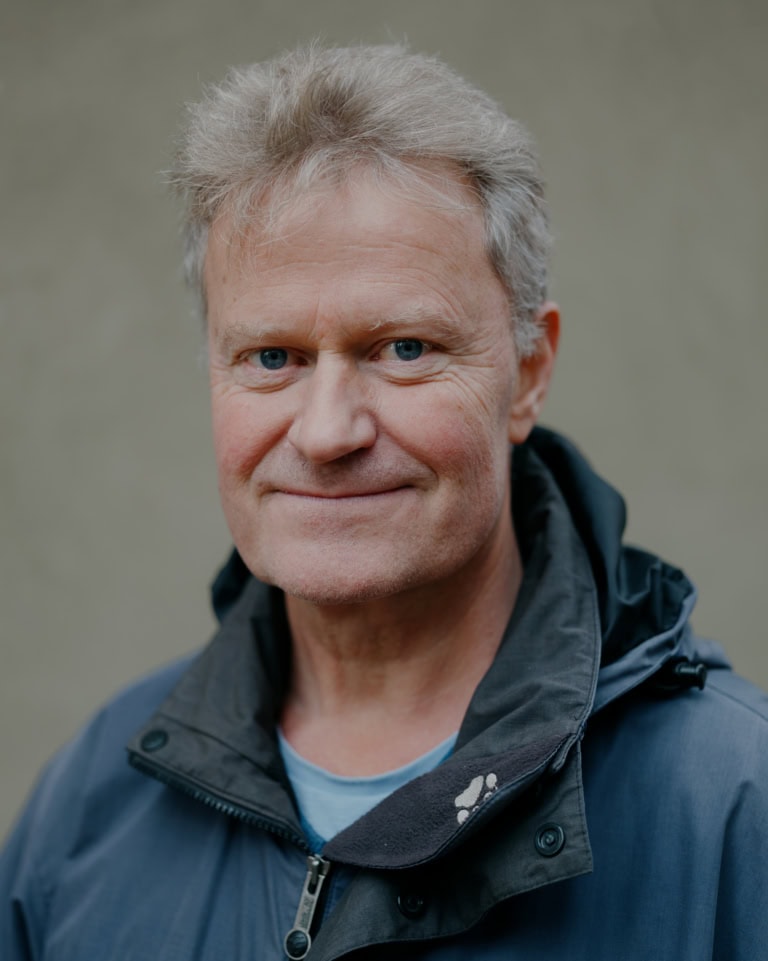 Gunter Siegel
 Kristine von der Haar

‘I think a lot of people no longer even realise how lonely they are’, says Gunter Siegel in conversation with Kristine von der Haar. A few minutes ago they were strangers. Now they are sitting at a table amid the bustle of Wunstorf’s market square. ‘I like being among people best, which doesn’t mean it’s always great. It’s tiring, too,’ Siegel adds. After all, getting along well takes quite a lot – including active listening. That takes patience and energy, as you will probably notice if you try to listen properly yourself and watch the video above to the end.
For Gunter Siegel, the rule seems to be: better in contact than lonely. After all, loneliness also takes its toll and is bad for your health. People who constantly feel isolated face, for example, a higher risk of cardiovascular disease, dementia and depression. Around 60 per cent of Germans know this feeling, according to the loneliness report by the health insurer Techniker Krankenkasse from 2024. Young women, people affected by poverty and people who are racialised as migrants are particularly affected.
Loneliness is not only an individual and social problem but also a danger to democracy. That is the assessment of the Bertelsmann Stiftung following a survey of young people aged 16 to 30. According to the foundation, trust in democratic structures is markedly weaker among those who are lonely. Most of them do not believe they can bring about political or social change, whether globally or locally. People who feel excluded over the long term are also more receptive to populist positions.
Things seem different for Kristine von der Haar. She feels heard, especially by the people around her, and she also sees many opportunities to take part at the wider political level. Still, if she could change something in her community right away, she would encourage dialogue: ‘You don’t have to agree on everything, but you can still talk to each other.’ Does German society need to learn to engage with each other again? To build bridges instead of walls? Should people look beyond their own horizons more often and leave their bubble? There is no shortage of stock phrases to describe the problems of a polarised society. But how do you get back in touch? And who is still willing to?
 Ursula Jungbluth
 Jakob Schröder
When were you ever really brave?
English subtitles: switch them on manually with the CC button in the video player.
On the Große Zinne in the Dolomites he was caught in a dangerous thunderstorm, Jakob Schröder recounts over his cup of tea: ‘That took a bit of courage.’ Not only mountaineering but also open communication takes courage. Anyone who really says what they think, instead of going along with the majority, has to expect resistance. That isn’t always pleasant. Especially in the digital sphere, antagonism is hardly tolerated any more, says the philosopher Svenja Flasspöhler. There, a trifle quickly becomes a political issue: ‘Half a sentence uttered on a talk show does the rounds on social media and is taken as proof of the whole person.’ Nevertheless, in her book ‘Streiten’ (Arguing) she makes the case – surprise – for arguing with each other more again. ‘Only if we open up channels in which groups whose views do not meet in a consensus can argue as opponents are we able to prevent enmity.’ Dissonance, she says, is part of a dynamic life together and, ultimately, of a functioning democracy. Only through struggle can closeness and distance be balanced and members of a society find the right relationship to one another.
To illustrate this, she uses the image of the oak, which stands firm even in the strongest storm, while the reed prefers to adapt and bend with the wind. ‘Anyone who absolutely does not want to become the victim of a shitstorm cannot stand firm against the wind but instead feels obliged to absorb certain currents so as not to stand out.’ Much about such an attitude is healthy, she says; after all, you also have to keep in mind protecting your own voice. But Flasspöhler also detects a ‘subtle opportunism’ here. At certain moments, she argues, you simply need the thick bark and deep roots of an oak.
That leaves the question of who is actually worth arguing with. Talk to Nazis, or punch Nazis? Opinions on this are divided in left-wing circles – much as in politics and the media: whom do you invite onto a talk show, and whom do you leave out? Which party do you form alliances with, and which had better be avoided? Svenja Flasspöhler distinguishes between competing as opponents and killing as enemies. Opposition aims at competing for votes, victory and recognition, whereas enmity is about sheer annihilation. Every dispute, Flasspöhler says, contains the potential for annihilation. ‘Trump shows in extreme form that competing can turn into killing. (…) Opposition only works as long as both parties keep to the rules that make non-violent competition possible and are prepared to admit defeat when they lose.’ The precondition for an argument, she says, is that both sides are prepared to accept defeat within a legitimate contest. Otherwise it can become dangerous.
The exchange between Jakob Schröder and Ursula Jungbluth seems anything but dangerous. They leave the room for argument unused – perhaps because the questions give them no reason to argue, perhaps because they are only just getting to know each other. In any case, Flasspöhler sees a ‘specific potential for escalation’ above all in intimate relationships. There, a small thing much more quickly becomes ‘the hallmark of the whole person’, and people throw around words like ‘typical’, ‘always’ or ‘again’. A completely different dynamic from that between strangers. Jungbluth, at any rate, says: ‘I’m glad we’re sitting at a table together.’
English subtitles: switch them on manually with the CC button in the video player.
For Anette Wöltje, love and friendship have a lot to do with trust. But: ‘My trust was broken a long time ago in a marriage, and with it I also lost love.’ Anette Wöltje is not alone in this experience.
 Anette Wöltje
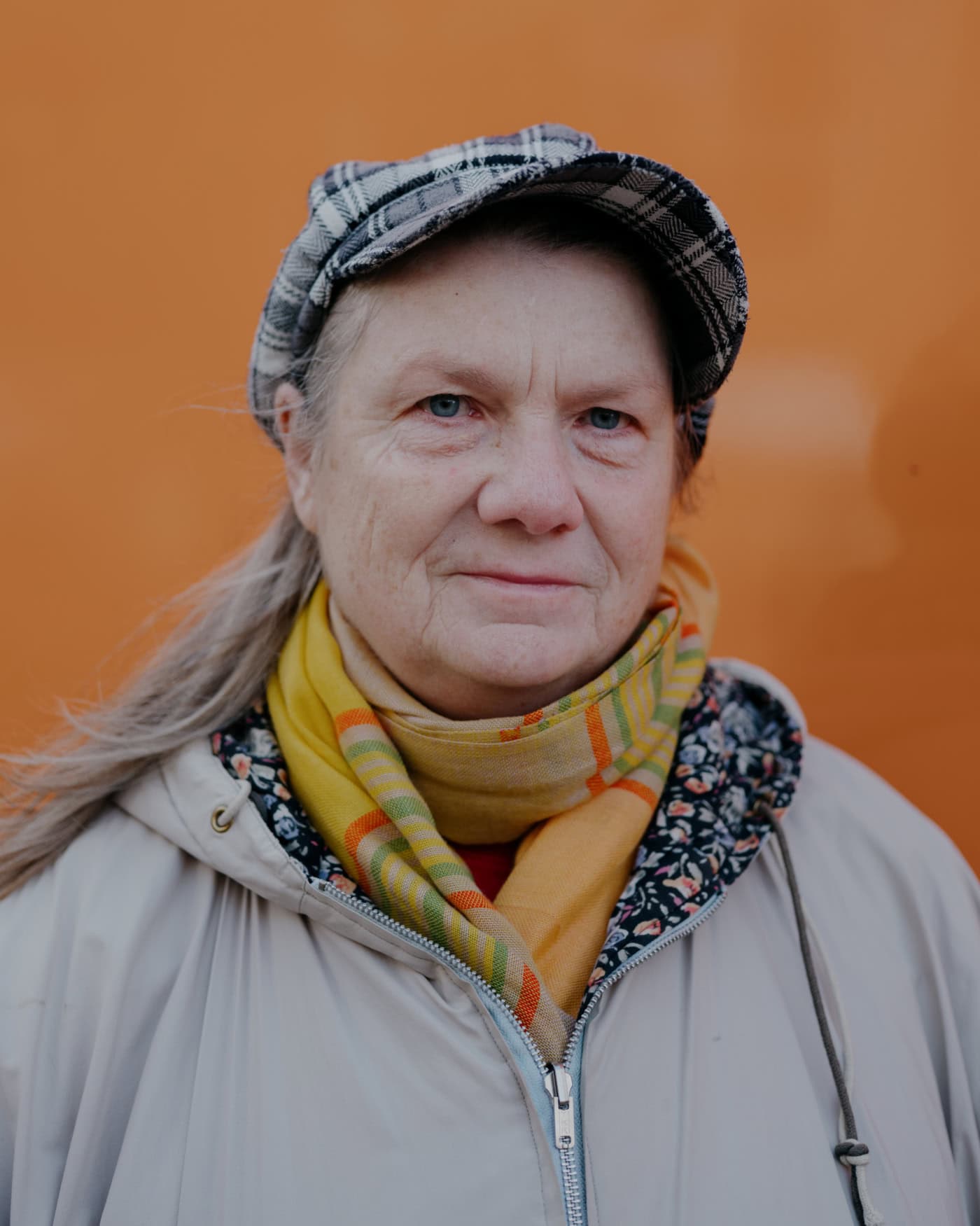 Erika Müller
Social mistrust has increased markedly, the sociologist Aladin El-Mafaalani states in his book ‘Misstrauensgemeinschaften’ (Communities of mistrust). He is referring above all to mistrust of entire fields such as science or the media. But he also concludes that, in the end, communication – including communication between individuals – is what matters for restoring trust. ‘Mistrust grows especially where exchange does not take place, where publics run in parallel, where communication is organised very asymmetrically, or where conflicts are suppressed,’ El-Mafaalani writes. People who mistrust others doubt their integrity and can therefore no longer meet them with an open mind. This ultimately leads to populism, extreme libertarian movements and conspiracy narratives – three consequences with one thing in common: they fundamentally call the existing order into question.
Even so, after just two minutes of conversation, Erika Müller trusts her conversation partner enough to tell her about her severely depressed husband. Anette Wöltje responds – with empathy.
Start a conversation yourself:
10 questions from our editorial team
What are you proud of?
If you could change something about your life, what would it be?
When do you feel alive?
When were you ever really brave?
What did you misunderstand about yourself for a long time?
What is a happy childhood memory of yours?
What has shaped you without you wanting it to?
What do you do differently from your parents?
What does home mean to you?
When did you last cry?
English subtitles: switch them on manually with the CC button in the video player.
Do you prefer talking or listening?
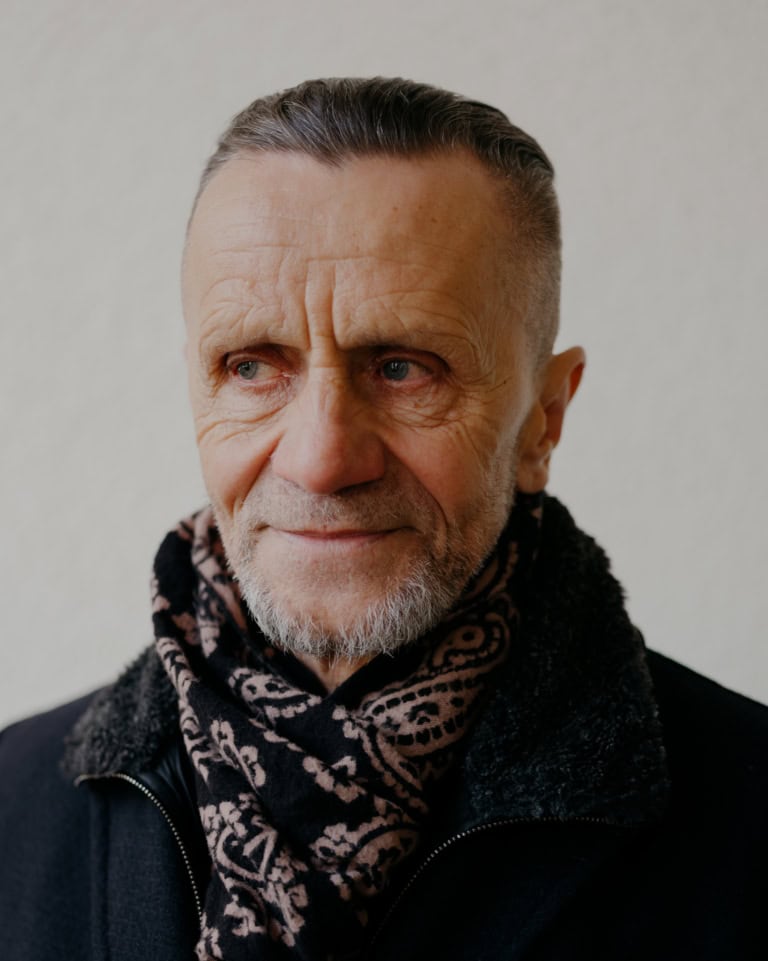 Irfan
Irfan
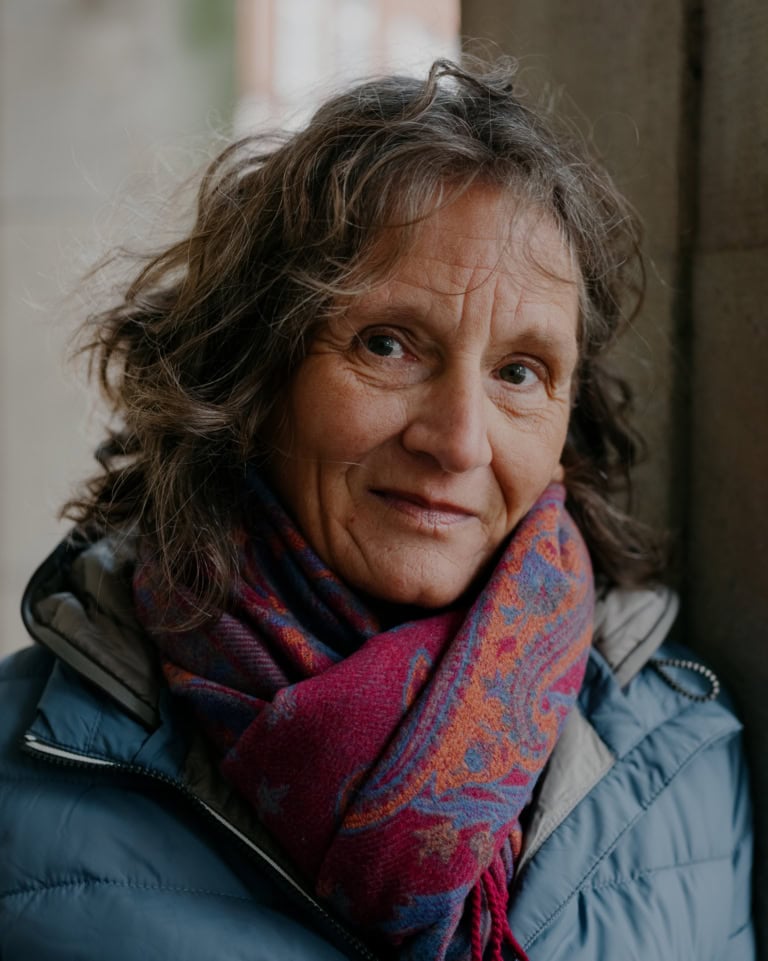 Anja Nübel
You’re so easy to talk to! Anyone who receives this compliment is probably a good listener. Deep conversations need not only good talkers but, above all, open ears. And these are not so easy to find. The fact that people trust less and less is also linked to the fact that they rarely feel heard any more – by politicians, friends or partners. Although most people consider themselves good listeners, very few actually are.
It has been scientifically shown that the brain rewards us when we talk about ourselves. And since digitalisation, we have been exposed to more input than ever before. What’s missing is output. That is one reason why everyone’s need to share is so great. But if you don’t listen, you can’t understand the person opposite you either. People talk at each other or past each other. They interrupt each other, or pull out their phones in the middle of a conversation to quickly type a message. The result: relationships stay superficial, and people feel alone and misunderstood. In the end, everyone sits in some therapist’s room – or in front of ChatGPT. At least nobody interrupts you there.
How to listen better is explained by two experts in an interview with the Süddeutsche Zeitung. They recommend letting each other finish, asking questions with genuine interest and sitting facing each other. You should avoid judging too quickly, giving unsolicited tips and advice, and immediately adding your own stories to what you have heard. An interested follow-up question helps far more than sharing your own thoughts. Although the conversation between Irfan and Anja Nübel offers one or two examples of listening that could be improved, together they mastered one of the biggest challenges: tolerating pauses. When the Wunstorf carillon interrupts Anja Nübel mid-sentence, they both just laugh – and wait.
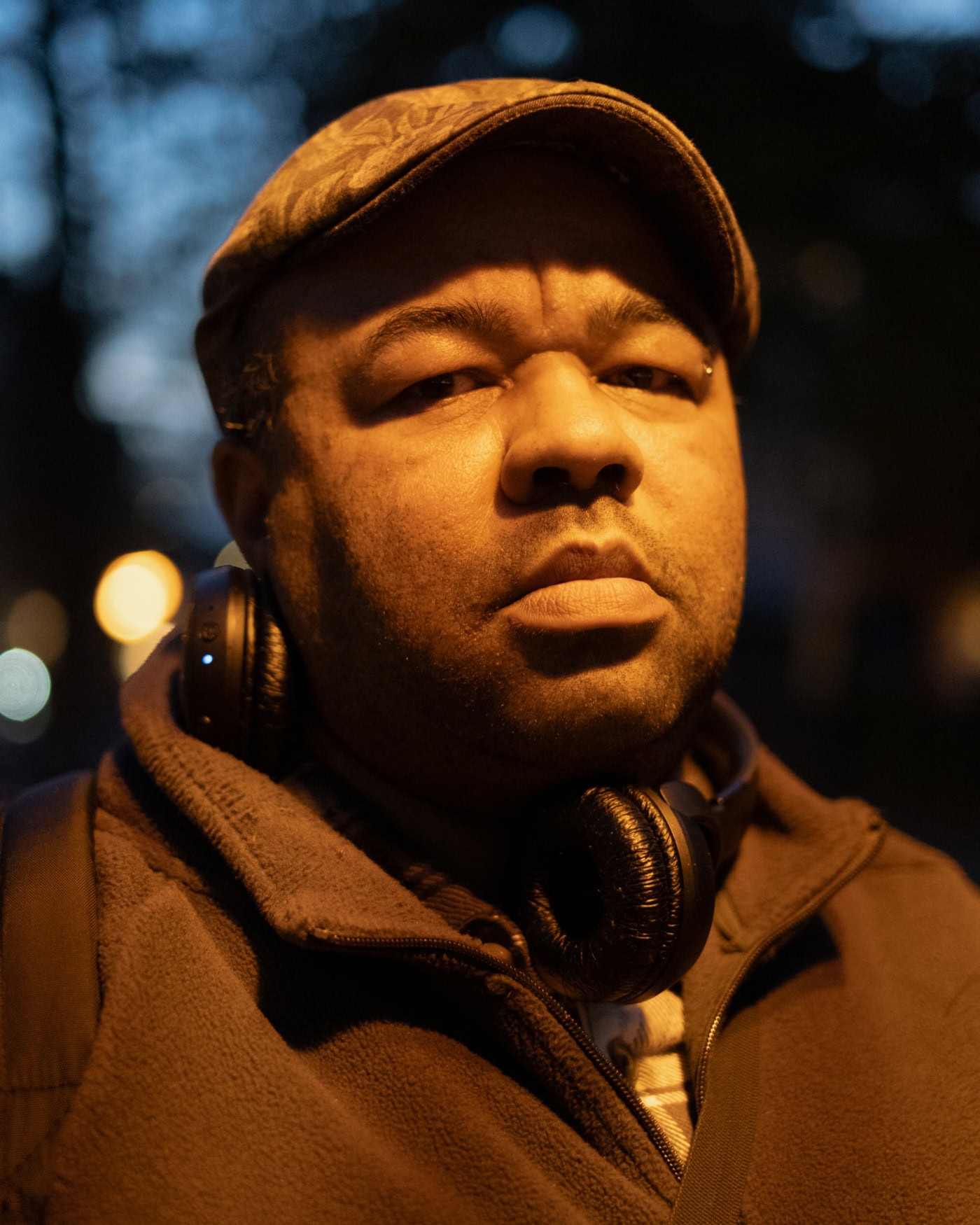 Name, Alter, Ort
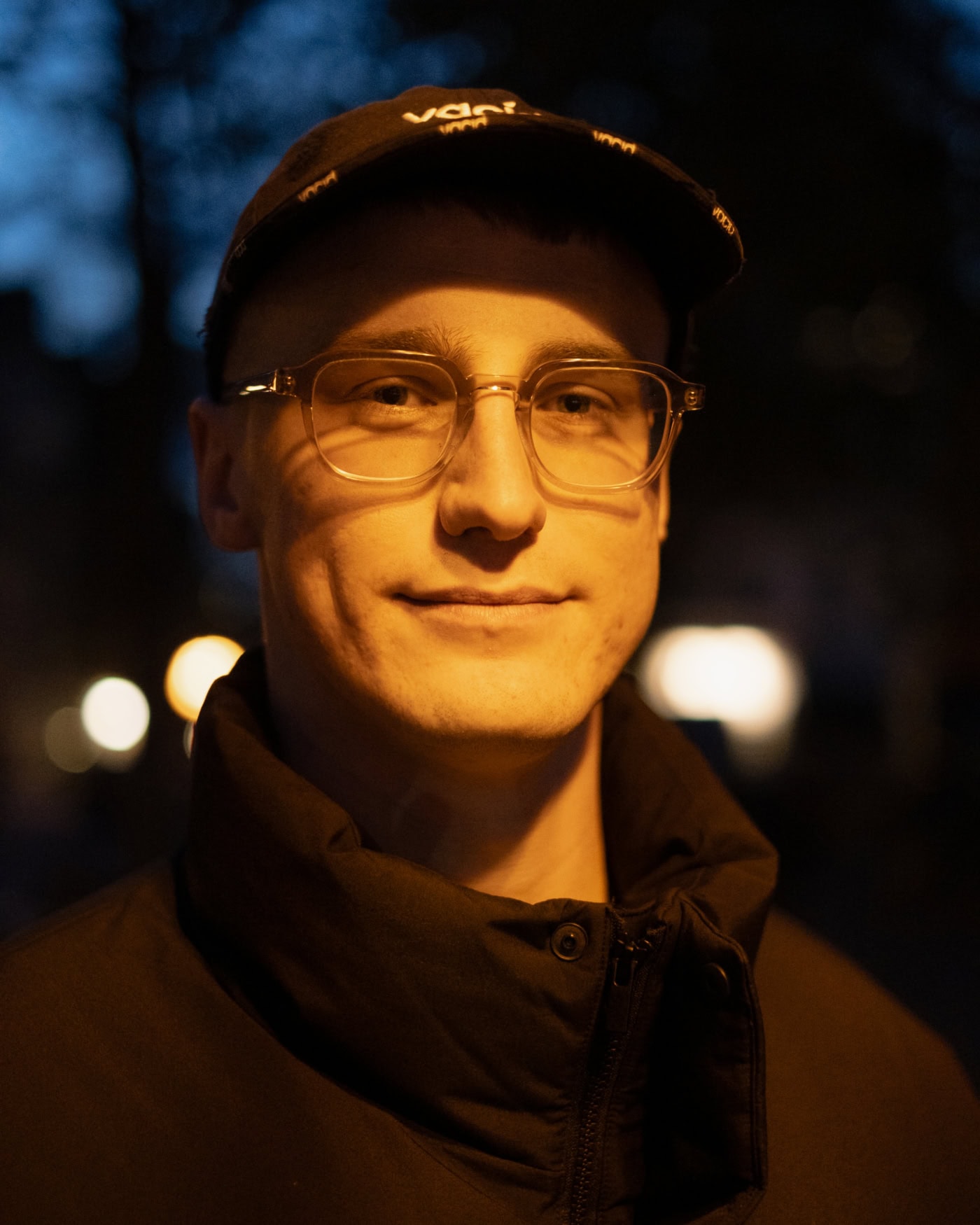 Lukas Ting
English subtitles: switch them on manually with the CC button in the video player.
Active listening takes energy. When that energy runs low, people today like to talk about capacity, about their social battery – and how it’s flat again. Then you need space for yourself to recharge. But ending a conversation isn’t that easy. Whether out of politeness or cowardice, we usually keep talking for longer than we actually wanted to. In a Harvard University study, only 1.59 per cent of the roughly 1,000 conversations examined ended at a point both partners wanted. We all know it: you bump into an acquaintance in the street, start some small talk, and although the cringe hangs in the air, nobody knows when the right moment is to move on. A coordination problem, say the researchers: when you try to find a way out of a conversation, it is not only your own needs that matter but also those of the other person. You try to anticipate them but may fail, because you lack the information you need. So you often stay in the conversation longer than necessary, smiling and nodding until you find an excuse: ‘I’d better go, my train’s coming.’
Did Marvin Jay Bankole and Lukas Ting feel the same? If our microphone’s battery hadn’t given up, the conversation would probably have gone on for a long time. In the end, technology and darkness brought it to a close.
These conversations were recorded in October and November 2025.
The editorial team