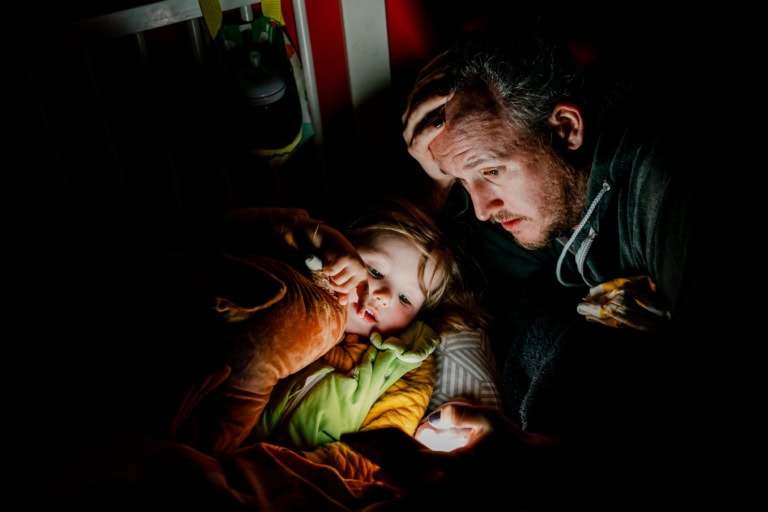
Co-parenting: two friends, one child
She wants to be a parent; her partner doesn’t. How Julia finds an unusual way forward through a friendship.
By Andreas Blauth (text), Jana Margarete Schuler (photos)



When Julia and Ingmar stroll through Leipzig today with their daughter in the pram, at first glance they look like a classic nuclear family. But Julia and Ingmar aren’t a couple. They have never been romantically involved or intimate with each other. And yet they are the biological parents of nine-month-old Verle and share responsibility for her.
Rewind a good year: Julia is in what is essentially a happy relationship with her long-term partner, Patrick. There is just one sensitive point: for Patrick, having children and being responsible for them is a task he doesn’t feel he can live up to. He is ‘fundamentally pessimistic’, as he puts it: he can’t justify bringing a child of his own into this society. For that reason, he has already had a vasectomy. So from the very start of the relationship, having a child together was biologically ruled out. Over time, however, Julia’s wish for a child grows stronger. If she is going to have a child – she has promised herself – then before she turns 38. Because the question keeps nagging at her, she spends a long time reading up on alternative ways of getting pregnant.
 Leipzig, summer 2024
Ingmar and Julia used to be party friends. Today they are held together by shared parenthood, without ever having been romantically involved. Their model is a form of ‘co-parenting’ that is becoming increasingly popular.
She talks about it again and again with her long-time party friend Ingmar, who is gay and, like Julia, lives in Berlin. At one party or another, the two joke that Ingmar could be the father of her child himself. ‘In the gay community it’s quite common for men to offer female friends their help with having a baby, half jokingly, half seriously – along the lines of: if the clock starts ticking, let’s talk again…’ At that point, though, neither of them has given it serious thought. Only when Julia looks into it further, and such conversations happen more often outside parties too, does the idea become more and more serious. For both of them, however, being intimate with each other is out of the question. ‘Sure, functionally it would work, and if it were a woman I didn’t know, I might just about be able to imagine it. But sex with my best friend – that was out of the question for me,’ says Ingmar.
The two decide on another route: on a summer’s day, during her fertile window, Julia inserts Ingmar’s semen with a syringe. This method is called home insemination, often known colloquially as the ‘turkey baster method’. They had tried it several times – once in Berlin and once when he visited Julia in Leipzig. Julia hadn’t expected it to work as early as the second cycle. She becomes pregnant – and in July 2024, Julia and Ingmar’s daughter Verle is born.

For the insemination, Ingmar filled a urine cup with his sperm in the bathroom, drew it up into a syringe and handed it to Julia.

Verle is born in July 2024. ‘BORN’, Julia writes on the new family calendar, which also holds the appointments of Julia, Ingmar, Ingmar’s husband Marcelo and Julia’s boyfriend Patrick.
The concept is new for all of us – and there’s little collective experience from others to draw on.
 Julia
Julia
Who takes on which responsibilities in this form of co-parenting had to be clearly communicated and agreed before the birth. Because in the meantime, Julia had moved with Verle to join her partner Patrick in Leipzig, while Ingmar stayed in Berlin. That’s why, for now, Julia makes most of the decisions and carries the main responsibility.
Because of these circumstances, Ingmar is currently more of a weekend dad: once a week, he and his partner, Marcelo, travel to Leipzig to see Julia, in whose flat they have a room of their own. Ingmar helps out around the house and spends time with Verle. That gives Julia time with her partner, Patrick, which often gets squeezed during the week. At times it feels like single parenting, says Julia. ‘But that’s completely fine. To some extent, it’s what I chose,’ she says, ready to compromise.
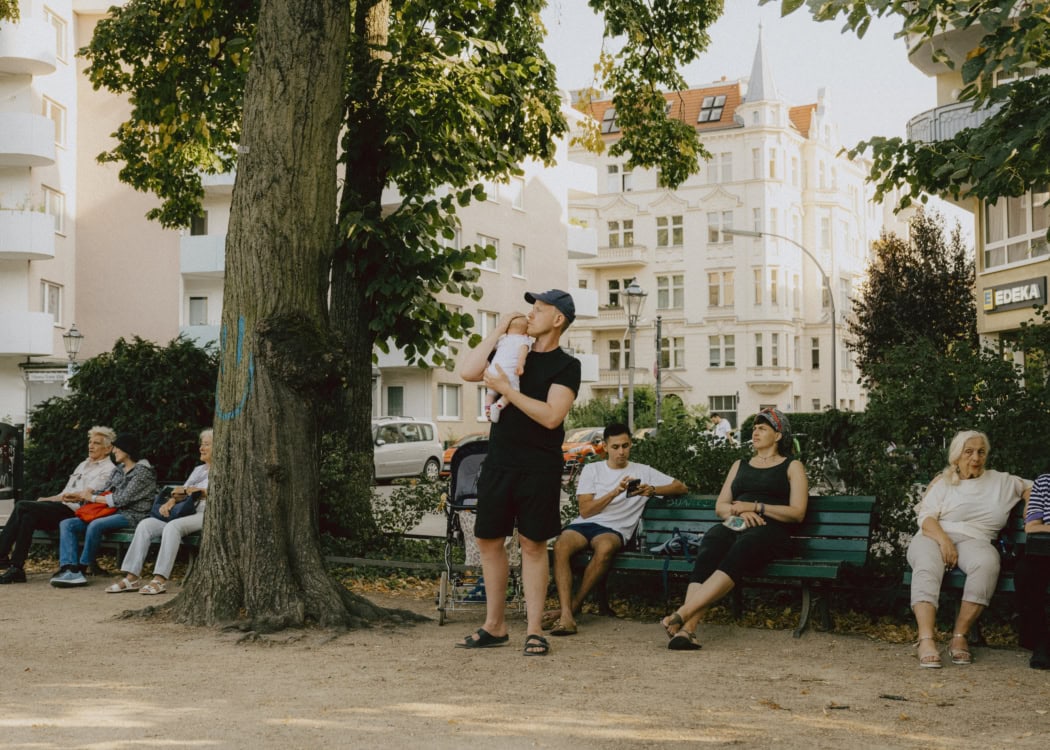
Together, Julia, Ingmar, Marcelo and Verle stroll through the streets and settle on a bench in a park in Berlin-Schöneberg. Some people cast curious glances at the group.
Julia’s partner, Patrick, supports her in her daily life in Leipzig, and Julia occasionally asks for his advice. But he deliberately stays out of it when it comes to the father’s role and parenting: he doesn’t make big decisions with her, such as those about vaccinations, choice of school or other responsibilities. In the end, those are decided with Ingmar alone. Patrick has never felt anything like jealousy towards Ingmar: ‘By now it does me a world of good to know that Verle is in good hands with Ingmar and Marcelo.’
For Patrick, Verle’s birth was somewhat harder to process than for anyone else involved. ‘At that moment I realised that I was more involved in this model than I might have liked, and it dawned on me that I do bear at least part of the responsibility I had always wanted to avoid.’ Over time, though, this unease has faded. ‘When you see how sweet Verle is and how well looked after she is by Julia, Ingmar and his boyfriend, Marcelo, it has actually turned out exactly the way I always imagined.’ Patrick has committed himself to helping Julia and sees it as a gesture of goodwill, part of the compromise the two of them have forged within their relationship: she wants a child, he doesn’t. She finds an alternative route, and he supports her without carrying the main responsibility. That’s the deal.
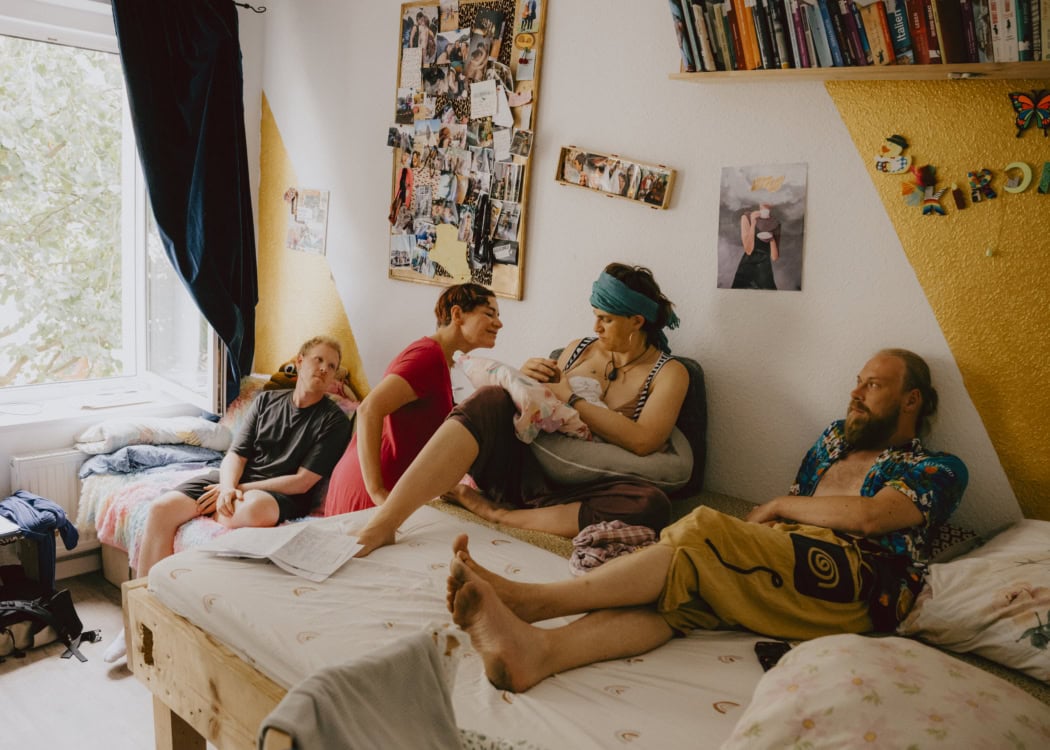
After the birth, the midwife comes regularly for check-ups and explains to the carers what to look out for with the newborn. From left to right: Ingmar, the midwife, Julia holding Verle, and Julia’s boyfriend Patrick.
The co-parenting model has, of course, also changed the relationships between those involved. For Julia, Ingmar has gone from a party friend to a close confidant who shares responsibility for her child. Help also comes from Ingmar’s partner, Marcelo, who has in a way become part of the family too. It isn’t especially common for two people who are friends to co-parent together.
For Ingmar and Julia, the advantages outweigh the drawbacks. ‘In the co-parenting model, I simply don’t have certain conflicts, because my romantic partner isn’t responsible – and I like that. Maybe it’s more relaxed because there’s less potential for arguments with my partner. What I find positive is that I can talk to Ingmar very rationally about things that concern Verle. It isn’t so emotionally charged,’ says Julia.
Ingmar sees it the same way: ‘I can only speak theoretically, but I think a platonic relationship as the basis for raising a child has its advantages. It certainly doesn’t have the closeness, intensity and frequency of shared moments that come from living together. But there’s also less potential for the kind of arguments and resentment that build up in long romantic relationships – and which children often suffer from,’ says Ingmar. ‘Once a relationship stops being so rosy, personal hurt often comes into play. We have the odd conflict too, of course, but no punishments such as withdrawing affection. The co-parenting model has advantages because the child’s well-being comes first – as it ideally should in any relationship.’
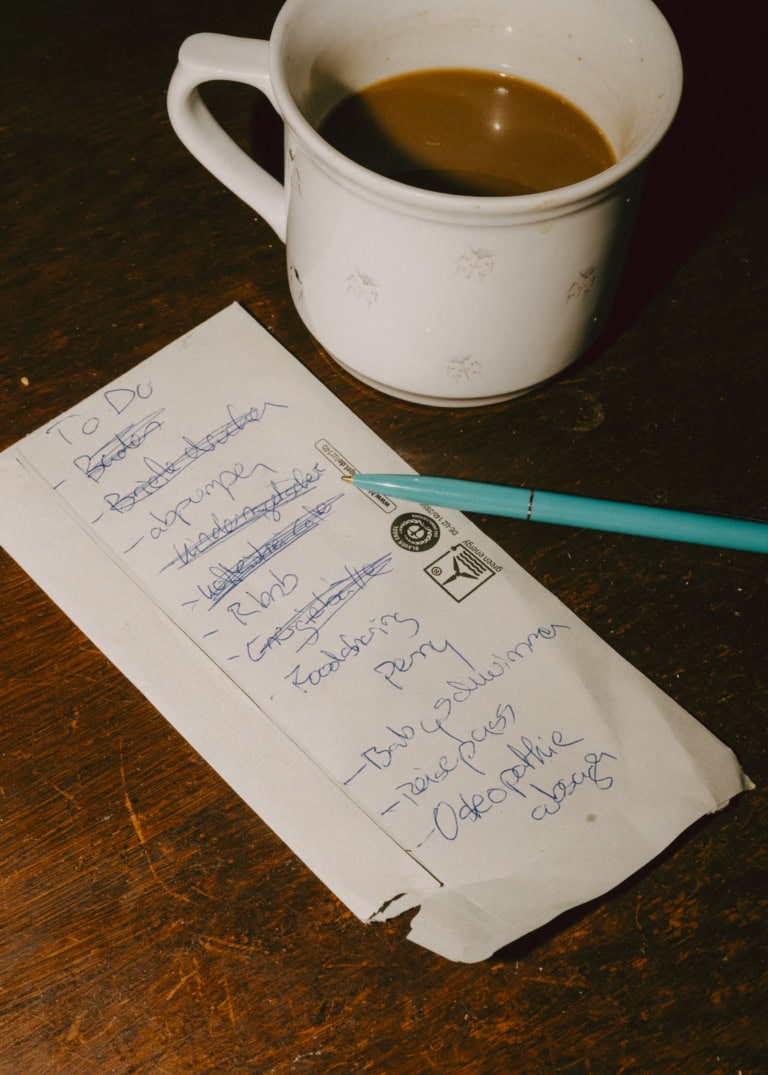
On some days Julia feels like a single mother. From Monday to Thursday she is solely responsible for Verle, and the to-do lists are long. ‘Pump milk’ is at the top of the list, so that she can leave Verle alone with Ingmar for a few hours this weekend.
At the same time, the model demands a high degree of adaptability and spontaneity. They constantly have to find and discuss new solutions: ‘The concept is new for all of us – and there’s little collective experience from others to draw on,’ Julia admits. A book had given Ingmar an overview of the basic legal and practical questions of co-parenting and helped him sort out all the paperwork that comes with it.
But very practical, concrete parenting decisions have to be negotiated and talked through again and again. That’s exhausting; yet Julia approaches these processes with great appreciation. Partly because she feels they are creating something new that hardly exists in this form: ‘In a way, I find the fact that none of the everyday things can be taken for granted reassuring – maybe also more exciting, more colourful. You don’t know what’s coming; the path and the future aren’t mapped out. In other relationships I often feel that the paths are fixed in advance – as if that went without saying.’
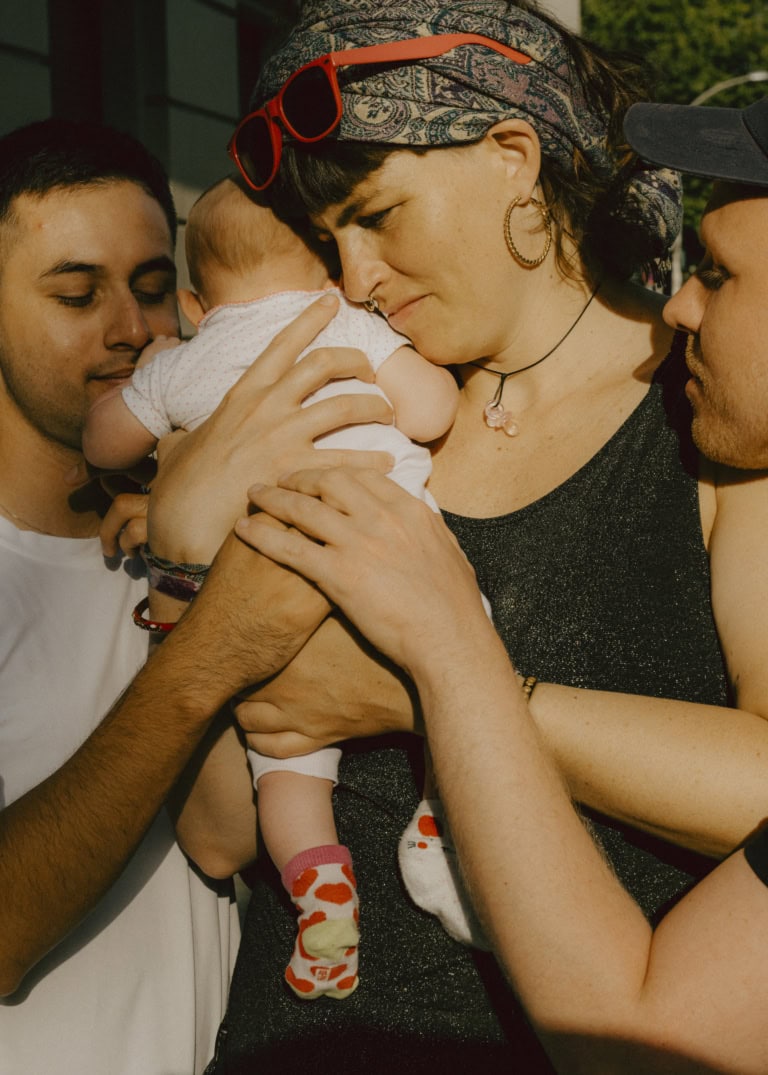
When Julia and Ingmar decided to have a child, Ingmar didn’t have a partner yet. On a trip to Mexico he meets Marcelo and marries him while Julia is still pregnant. While Julia’s boyfriend Patrick largely stays out of family life, Marcelo is involved in everything. ‘He’s part of the family now too,’ says Julia.
So Julia – a spontaneous person at heart – avoids long-term planning when it comes to raising her daughter. What if she later wants to live with Ingmar in Berlin? What if Verle always has to explain herself to other children? Where outsiders might wonder whether it can work, both parents stay relaxed and see communication above all as the key.
It is still unclear how the father’s role will be shared among several people. What will Verle call Patrick, Ingmar and Marcelo? She can’t talk yet; she’s simply happy to see all three of them. ‘Beyond that, I don’t know how she will define us men,’ says Ingmar. It’s possible, he says, that Verle will call all three of them ‘Papa’. He himself doesn’t see the father’s role as shared, though: the responsibility, custody and obligations lie with him. As he sees it, Verle simply has two more male attachment figures who look like fathers to outsiders. Patrick, for his part, could imagine Verle calling all three of them ‘Papa’. It isn’t what he wants, as he doesn’t feel like a father. Even so, he spends a lot of time with her.
The new concept of the ‘community of responsibility’
Ingmar and Julia’s co-parenting story fits a wider social trend: interest in rethinking the concept of family and trying out other ways of living together is growing steadily. Meanwhile, a legal framework that would make it easy for such parents to formalise their parenthood is still a long way off. Under the concept of the ‘community of responsibility’ (Verantwortungsgemeinschaft), people who are not the biological parents but have not adopted in the traditional sense either could be registered as responsible attachment figures and act as such.
A planned law on ‘communities of responsibility’, set out in the 2021 coalition agreement, was meant to respond to this emerging trend and allow up to six people to take legal responsibility for one another – regardless of marriage or kinship. Until then, there had been no legal provisions on matters such as inheritance, tax or custody. Under Justice Minister Marco Buschmann (FDP), a legal basis for this kind of co-parenting was drafted; but it was never passed before the traffic-light coalition collapsed – and the current federal government has no plans to implement the draft.
Verle will grow up in a world where she will have to explain herself.
But even apart from anchoring the model in law, the concept may first have to reach the mainstream. That will probably take time: ‘Verle will grow up in a world where she will have to explain herself; where she notices that she is different and that her circumstances aren’t the norm,’ say Julia and her partner Patrick – who is more worried about this than Verle’s parents, Ingmar and Julia.
For them, such issues are much more a question of communication and of how to explain the situation to people who don’t yet understand the concept. ‘It’s tiring in the sense that you can never explain the co-parenting model in one short sentence. I’ve heard that on their first day at nursery the children are supposed to bring a photo of their family, and of course I’m a bit anxious about that. I try to explain to her that it’s OK and that families can be very different. Of course, all this is tiring at times. But I also want to show society, to some extent, that there’s another way and that women don’t have to wait for ever for “the right one” to fulfil their wish for a child.’