Parental leave for fathers: Dad’s got this
A new study shows that fathers want more flexibility from their employers. Companies that respond will benefit in the long run.
By Lena Bastin (text), Ilkay Karakurt (photos)


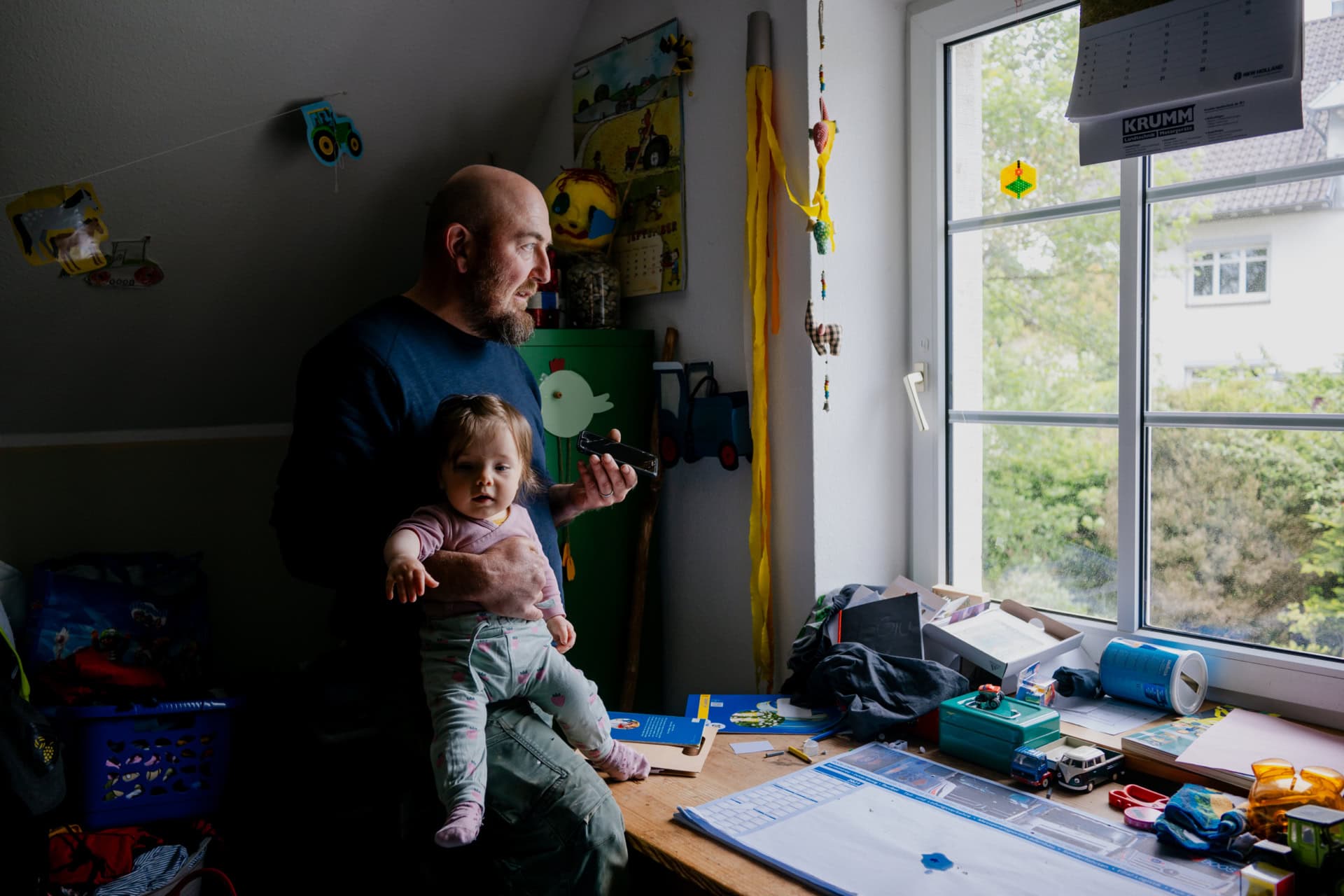
The traditional family model, in which the mother stays at home and looks after the children, is still firmly rooted in many people’s minds. Alongside it stands the image of the man as the main breadwinner – particularly visible in large companies.
Lennart is a father and works at GIS Hannover, a provider of inclusive support services, where he is part of the team that coordinates school support assistants. His wife is a primary school teacher and the main earner. In bringing up their four-year-old daughter, they have opted for a progressive division of roles, with Lennart taking on a large share of the housework and childcare.
‘We work early and late shifts, so I have to agree with my wife which shift I can take,’ says Lennart. ‘I can’t work right through until 4 pm, because that’s when I have to pick my daughter up from nursery.’ Fortunately, he says, his employer is flexible enough for him to combine work and family commitments. But father-friendly working conditions like Lennart’s are still the exception.
About the photographs in this piece
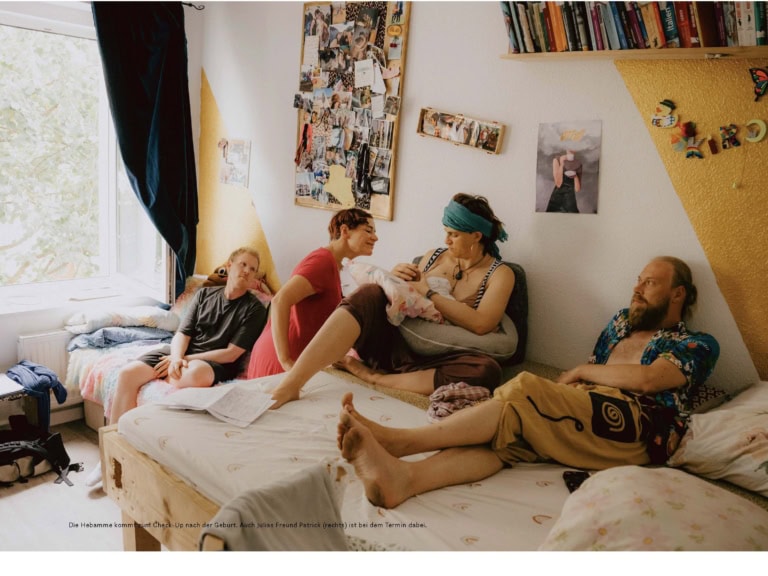
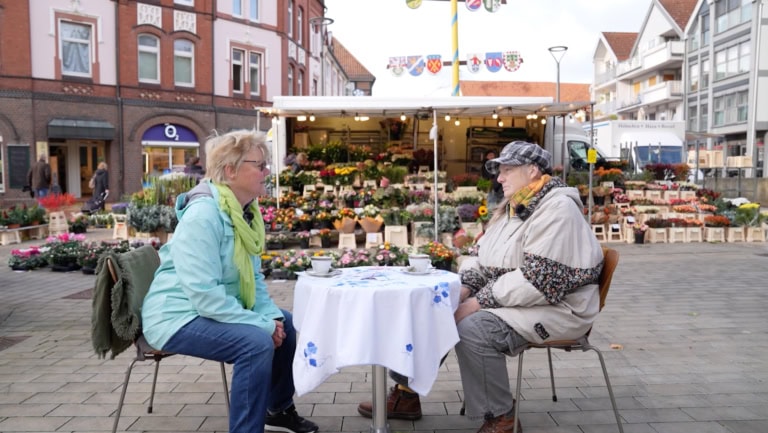
Ilkay Karakurt explores the personal and emotional journey that began with the birth of his daughter. Starting from his own uncertainty and questions about his role as a father, he followed other men through their everyday lives. His pictures capture intimate moments – from the breakfast table to the bedtime story – and take a sensitive look at the many facets of modern fatherhood. He published this work in the photobook ‘Der Vater hüt’ die Schaf’ (‘Father minds the sheep’).
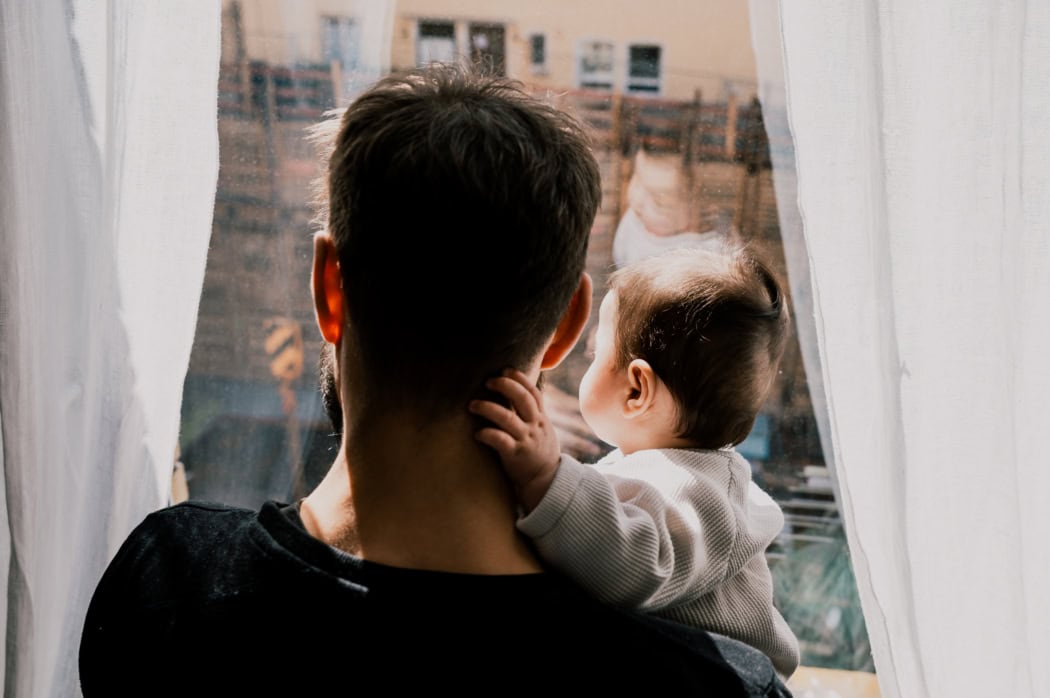
Despite working full-time, Dennis spends every spare minute with his son – a close bond comes first for him.
The 2022 Prognos study found that around 450,000 fathers in Germany have already changed employer because work and family life were not sufficiently compatible. More than 1.7 million more at least occasionally consider taking that step. Parental leave in particular remains a major hurdle: almost a third of the fathers surveyed reported negative or disparaging comments from their managers when they asked for parental leave. As many as 16 per cent said they had been put under pressure to shorten the leave they had planned.
Lennart was spared that experience. He took two months’ parental leave in total – the first month straight after the birth, the second six months later.
‘If we could have afforded it, a longer parental leave wouldn’t have been an issue at all,’ says Lennart. ‘But I’ve heard very different stories from fathers I know. They were told things like: “Why isn’t the mother doing it?” or even: “We’ll have to see whether there’s still a job for you after your leave.”’

Sven (left) and Felix are bringing up their son together with his mother – a family model beyond traditional roles.

Thorben is on six months’ parental leave, looking after his two daughters while his wife works full-time – here he offers comfort after a small mishap.
Parental leave is not the only area where German business could do more for fathers, the Prognos study concluded.
One in two fathers say that balancing family and work is not a regular topic in their annual appraisals – and almost a third of companies admit as much themselves. Managers often find out only in passing whether their male employees are fathers at all; even in staff reviews, fatherhood rarely comes up.
According to the Prognos study, only 27 per cent of companies in Germany can be considered family-friendly. Conversely, 73 per cent of businesses clearly underestimate their shortcomings while overestimating how father-friendly they are.
Asked what fathers expect from companies, Lennart says: ‘More flexibility and understanding. The option to work part-time, and a better division of tasks. After all, two part-timers add up to one full-time post. But the crucial thing is that managers rethink their entrenched ideas about roles – today the father is no longer necessarily the sole provider. That’s a task for society as a whole, though.’
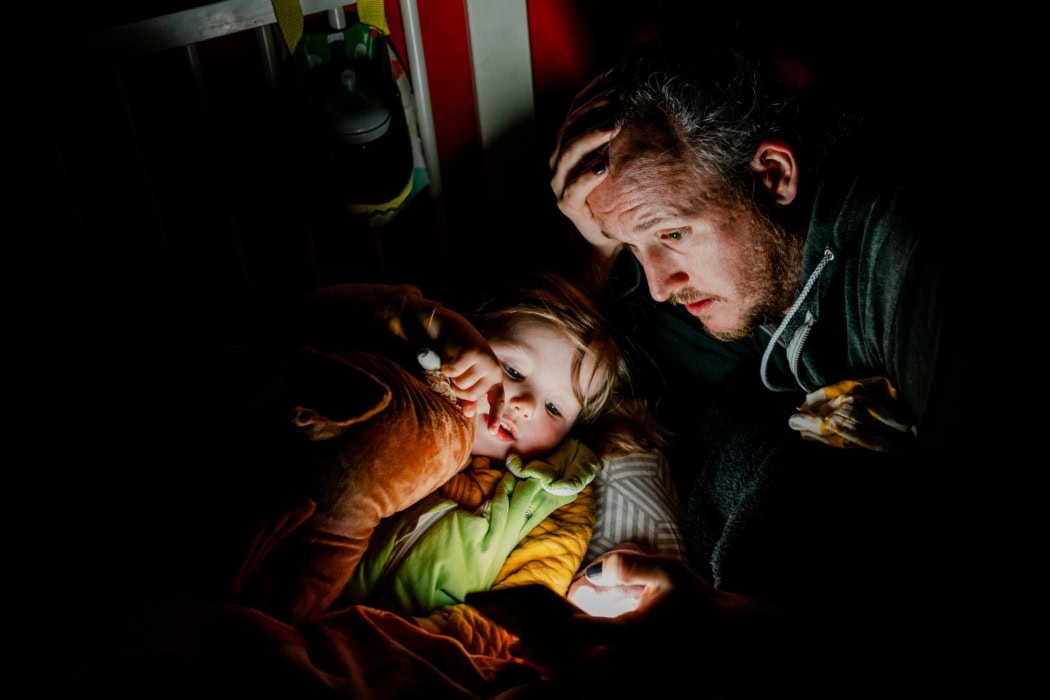
Alex puts his daughter to bed every evening, while his wife settles their son. Part of the bedtime routine is looking together at a photo his daughter has chosen – usually one from the family album.
According to the Prognos study, many companies have now realised that being family-friendly is crucial if they want to remain attractive employers. Given how society is changing, they should actively set about building family-friendly structures – not least to secure their own future.
Lennart is optimistic about a more father-friendly economy: ‘I think we’re basically on the right track. What matters is that future generations of fathers show, too, that things can be done differently. Then perhaps in a few years it will be completely normal for fathers to take parental leave and pick their child up from nursery at 2 pm.’