Misogyny in the feed: when algorithms shape reality
Misogynistic content spreads rapidly on social media. For many young women, it is no longer a digital phenomenon but part of everyday life. An investigation into quiet radicalisation, a lack of prevention and the consequences in real life. By Josefin Pilar Junge and Alina Vogelsang



‘Slut,’ he replied – nobody said anything, nobody laughed. ‘So I kept quiet for the rest of the day,’ Luise remembers.
The 17-year-old school student had come across a follower of the incels in her circle of friends – a subculture with largely misogynistic content that organises and spreads mainly in digital spaces.
Social media platforms such as TikTok, Instagram, YouTube and Reddit are ever-present in the lives of most young people. These digital worlds shape trends and opinions, create a sense of belonging and offer orientation. At the same time, they can also be a breeding ground for polarisation, dangerous ideologies and hostility.
‘I can only remember fragments,’ says Luise. ‘It happened in 2021 – it was the first time we met in real life as friends of the same age.’ The teenagers had got to know each other online during the pandemic. ‘Over the year we’d spent time together almost every day.’ That day, they were thinking about what to do. After they had eaten together, he suggested going to play laser tag. ‘When I said I didn’t feel like laser tag, he called me a slut,’ says Luise.
I was different in his eyes because I’m a woman.
 Luise
Luise
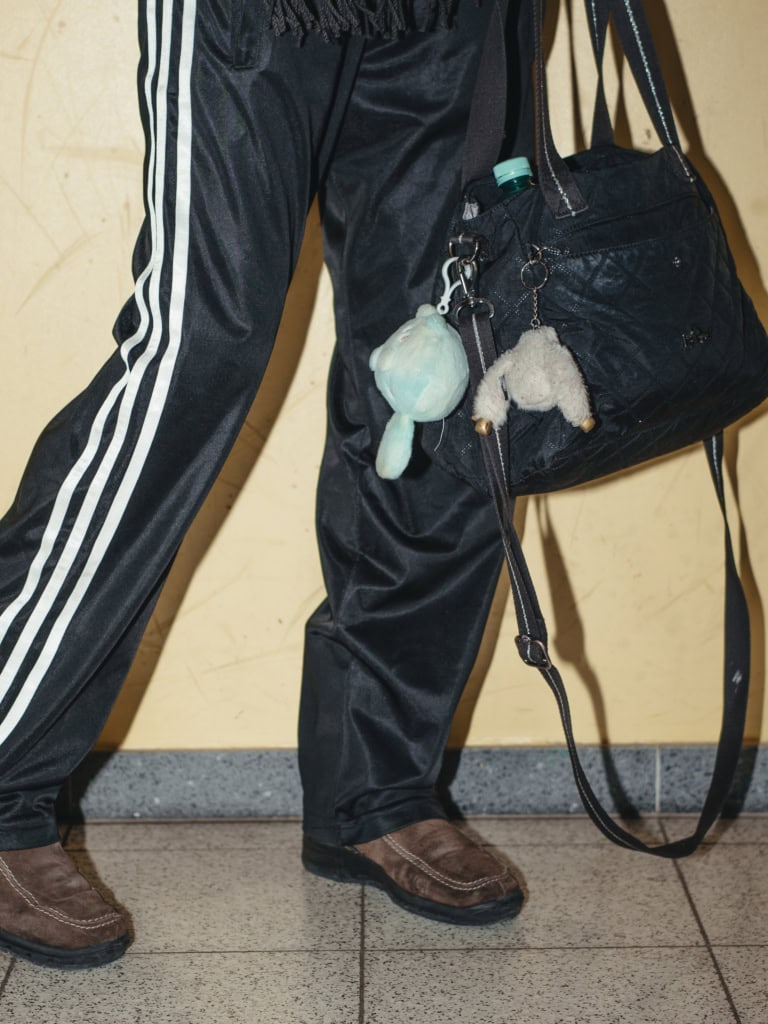

‘That hurt,’ she says. ‘Not just being called that, but because it came from someone who was supposed to be a friend – with such hatred – just because he didn’t like my answer.’ It didn’t stop there. He also started calling Luise a slut behind her back, even when she had had no contact with him for six months.
Looking back, she remembers that he talked down to her the whole time. ‘I was different in his eyes because I was a woman,’ says the 17-year-old. ‘As soon as I let him know that I had a personality and was more than my gender, I was insulted, ignored and put down.’
For some years now, online platforms have seen more and more content that takes up radically conservative images of masculinity and misogynistic (from the Greek mísos, ‘hatred’, and gyné, ‘woman’) beliefs, reaching young men in particular faster and earlier than ever. Such digital spaces, as well as certain narratives and beliefs, are often grouped together under the umbrella term ‘manosphere’.
Manosphere
An umbrella term for a loose network of subcultures, forums and individuals, ranging from seemingly harmless self-improvement content to openly and radically misogynistic material. The manosphere largely rejects feminism.
Incels
The term ‘involuntarily celibate’ (incel for short) describes men who define themselves by their inability to form sexual and romantic relationships with women. The scene is also marked by a strongly misogynistic and anti-feminist ideology. Incels believe they are in possession of the ‘real truth’. Their ideology rests on three main pillars: the assumption of a socio-sexual hierarchy, radical misogyny and the doctrine of the ‘pills’. The incel community overlaps with right-wing extremism in various ways. Incels mostly operate online, in various communities, forums and comment sections. In the past, however, there have also been several acts of violence outside digital spaces with links to the incel scene.
Political failings
At a meeting to analyse the problem, the ‘Youth and Education (RAN Y&E)’ working group of the EU’s Radicalisation Awareness Network (RAN) also made concrete recommendations for dealing with these issues more effectively. They are aimed both at youth workers and at politicians. The recommendations for youth work take up more space and explain in concrete terms how best to respond in particular situations.
Only four recommendations are addressed to policymakers, including enabling further training for people working in social services and youth work, and building digital skills and critical thinking into teacher training at an early stage.
This is where the political dimension comes in: in Germany’s 2025 federal budget, for example, funding for children and youth policy and for voluntary services was cut compared with 2024. The money earmarked for the voluntary social year (FSJ) and the Federal Volunteer Service fell significantly – programmes that often serve as a springboard into careers in social work and education.
For 2026, total spending by the education and family ministry was increased and the Child and Youth Plan was raised slightly, but organisations such as the German Federal Youth Council and the Federal Association for Cultural Youth Education complained that the increases were structurally insufficient to meet the real needs of the youth and social sectors in the long term. This particularly affects services that provide preventive, advisory and psychosocial support.
The pull into misogyny
Why this kind of content resonates so strongly with today’s young generation is a complex question. Misogyny is not a new phenomenon, but social media gives it a reproduction machine that works faster, more intensively and more precisely than ever before.
Especially on platforms such as TikTok, which are dominated by short-form content, algorithms encourage the gradual normalisation of misogynistic narratives, according to a study from the UK. The researchers examined the For You page (the personalised home feed) of newly created accounts and found that the number of recommended videos with misogynistic content quadrupled within five days, without anyone actively searching for such content at the start.
Hatred of women is nothing new
Luise, the 17-year-old school student, knows how pervasive toxic and misogynistic content is. Although her feed is mainly memes and political explainers, she says: ‘Hatred of women isn’t new – there’s just more and more of this content on social media.’
For Luise, coming across videos and comments that spread hatred of women is ‘practically unavoidable’. ‘You just have to be able to understand these videos and put them in context,’ she explains.
Only those with this kind of media literacy can develop a critical attitude, read through the comments and look at the content with some distance. But most very young users, who get sucked quickly and unthinkingly into the For You page vortex, are not taught this skill well enough.
 Luise
Luise
‘You have to be like me!’
Fred Hahndorf, an educator working with boys and men at the association mannigfaltig e.V., also sees social media as a kind of accelerant – even though many young people understand in theory how filter bubbles work. ‘It’s so tempting – you can take it all in quietly on your own and then decide what you share with others, without having to actually talk about things.’
This unchecked, constant consumption, often without any context, gives young people searching for an identity something false but instant to hold on to. It is ‘very stabilising’, he says, when an influencer says: ‘You’re feeling insecure right now, I’ll help you, we’ll find a way out, you have to be like me.’
These false promises are ultimately reinforced by the fact that the videos can be watched over and over again: ‘At some point you start believing things yourself.’ The sheer range of subcultures within the manosphere amplifies this effect even further, because young people can choose from all kinds of offers of orientation for every experience they have.
A look behind the façade
Fred sees a general sense of insecurity as the reason why ever younger men are susceptible to misogynistic ideologies. Although the media now present many alternative images of masculinity and ways of life, the pressure of male competition remains in everyday life: ‘That’s how masculinity works in the traditional sense – it’s always about coming out on top in the competition.
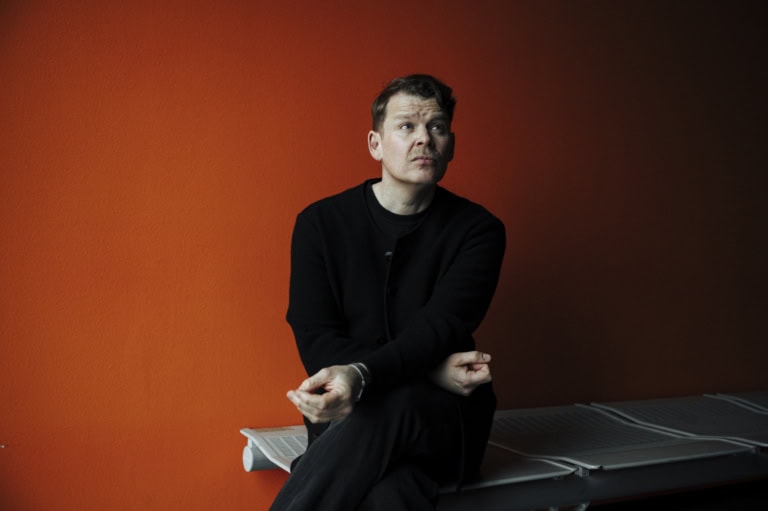
Just being content in yourself comes a long way second,’ says Fred. Many of the young men he talks to are shaped by a façade of masculine ideals, behind which real needs, experiences and insecurities are often hidden. In his work, Fred tries to look behind this façade by building relationships with young people that are based on empathy and understanding rather than authority.
A lot of it is about self-sacrifice – about taking yourself seriously on the one hand, and then completely denying certain parts of yourself: nothing ‘weak’ is allowed to exist.
 Fred Hahndorf
 The counselling service mannigfaltig e.V.
 Fred Hahndorf
In niches such as fitness and self-optimisation culture, and the pick-up artist scene, images of masculinity are often reproduced that centre on toughness, control and an unstoppable success mindset, while insecurity or vulnerability is seen as weakness. Especially at times when young men are searching for their identity, such thinking has a stabilising effect and promises orientation – while at the same time cementing dangerous images of themselves and of women.
Pick-up artists
PUAs give men dating tips, including manipulation techniques. They often use pseudo-scientific and sexist explanations for women’s behaviour.
Pill ideology
The concept of the pills comes from the 1999 science-fiction film ‘The Matrix’ and is widespread in the manosphere.
Red pill: Followers of red-pill ideology see themselves as having recognised the ‘whole truth’, and claim that men are oppressed by women and by the system. They often try to use supposed evolutionary theories and psychological tools to justify male supremacy. Once a man is aware of these red-pill ‘truths’ – once he has, so to speak, swallowed the ‘red pill’ – he can manipulate women to his advantage and so gain access to sex and power. The term ‘red pill’ is used not only in the manosphere but also on the far right, where the overlaps are increasing.
The best-known influencer of the red-pill scene is Andrew Tate, who has been charged in the past with offences including human trafficking and rape.
Black pill: Black-pillers have largely adopted the red-pill view of a society dominated by women, but reject sexual relationships with women altogether. They believe women choose sexual partners solely on the basis of physical features (‘lookism’), so it is decided from the outset whether or not someone will become an incel.
Blue pill: Blue-pillers are the opposite of red-pillers. They are not a self-identified group; the label is applied to them by followers of the pill ideology. According to that ideology, they have swallowed the pill of the ‘ignorant’ and have not yet woken up to the fact that society oppresses men.
Men Going Their Own Way
MGTOW reject relationships with women entirely, believe in the natural superiority of men and hold hierarchical theories of gender relations. Some MGTOW regard women as ‘parasites’, see divorce law and other legal structures as deliberately discriminatory, and believe that feminism has destroyed modern Western society and that men are at high risk of discrimination.
Accounts from users of incel exit forums show how such narratives creep in step by step and have a lasting effect on how social relationships are perceived. One former incel reports: ‘At first we all think these ideas are just some internet nonsense made up by insecure kids. Then there’s the moment your brain starts to rot. You start seeing real interactions through the lens of these communities and start thinking they were right all along.’
Another looks back on how he got into the scene and the long-term consequences: ‘When I was 14, I went online looking for ways to get a girlfriend. I was shy, isolated and had no experience of relationships. In the PUA scene of the time, I came across content that seemed like secret knowledge: apparently scientific guides to how women “think”, how to approach them and what behaviour would bring success.’
He goes on: ‘In my insecurity, I quickly bought into these explanations – they gave me the feeling of gaining control and finally understanding how relationships were supposed to work. […] It was only two years ago that I realised I had never really seen women as people. Not consciously or with bad intent. But that’s how it was. They were targets to be reached and puzzles to be solved. It was all about performance and control, never about real human connection.’
Misogyny in the classroom
The lack of awareness in the offline world feeds fears about the consequences in real life. Luise voices a very real fear shared by many young women: ‘I don’t know where it could end: whether later on they won’t know how to deal with their daughter and will offload responsibility onto their partners – or whether they’ll actively act out a more extreme hatred of women that goes beyond traditional gender roles.’
This fear is well founded. Online statements and ideologies don’t stay in the vacuum of the internet. International reports show that misogynistic narratives from the ‘manosphere’ have real effects and can translate into everyday verbal, psychological and physical violence against women.
They find their way into schools, youth centres and peer groups, as the European Commission report from 2023 mentioned above sums up: ‘In the classroom and in youth organisations, as well as online, debates about masculinity and gender are ubiquitous and often highly polarised, extending to concerns about radicalisation.’
It usually happens in politics lessons, when you’re allowed to give your opinion and discuss things: some lads come out with misogynistic views and nobody stops them.
Luise
In situations where male classmates would usually just get a friendly laugh from their friends, Luise and the other girls in her class get insulted. ‘I’m sitting in history, the topic is Afghanistan and the Cold War. I find it interesting, I often put my hand up and join in the discussion,’ she says.
When she puts her hand up again, she hears a whisper from the row opposite. ‘One of the boys says quietly: “What’s the slut got to say this time?” – and my teacher did nothing the whole time,’ says Luise. ‘It’s always women teachers who step in, never men.’ Whether you feel comfortable in class depends heavily on the teacher, she says.
Another story shows how commonplace sexist comments are at school: ‘During a discussion about grades, the teacher asks one of the girls in my class to step outside,’ Luise says. She is outside for a while, and after a bit the boys in the class start cracking jokes like: ‘Looks like she wants to improve her grade’ and ‘Is she putting out?’*
Some people laugh, including some of her male friends. In moments like these, she says, nobody says anything, so as not to make things even more uncomfortable for the girl concerned.
Luise says there is a clear desire among both students and teachers to address these issues. At the same time, she stresses that schools often fail to tackle the problem head-on. Instead, they point to neutrality and a fixed curriculum. There is a clear lack of education here, the 17-year-old stresses.
*‘Putting out’
The boys used the German expression ‘Loch geben’, a derogatory slang term for sex that comes from online language.
A look at social work
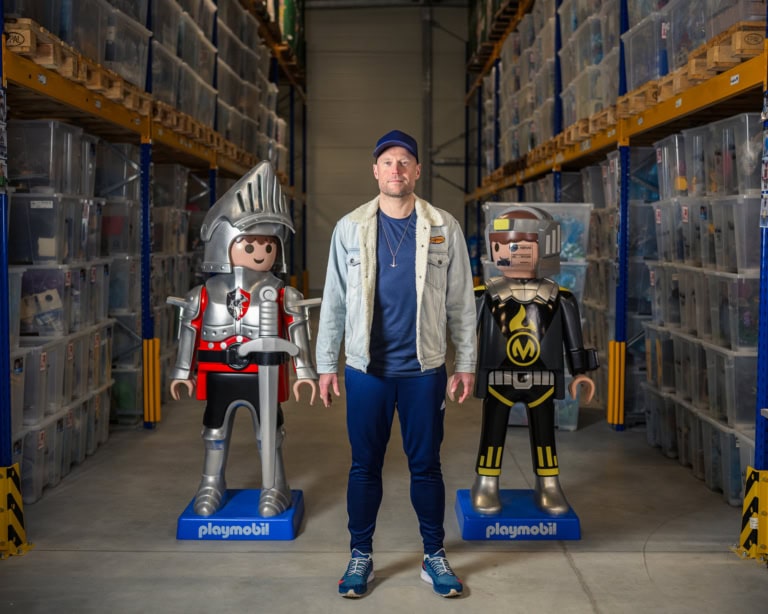
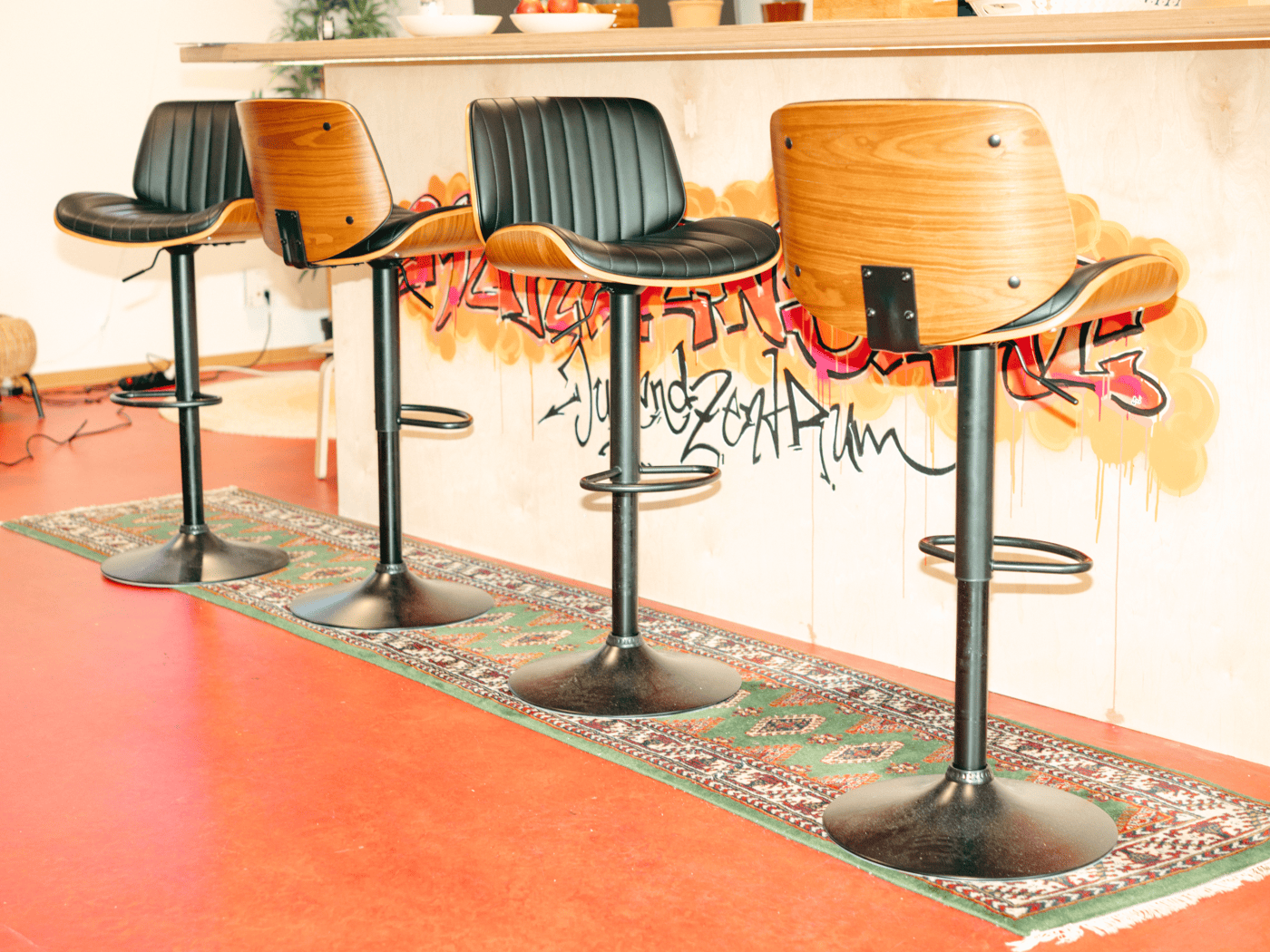
As you walk in the door, the first thing you see is the graffiti-sprayed counter of the youth centre in Mühlenberg, a district of Hannover, which is open every day to young people aged 14 to 27. ‘The counter is meant to make clear that there’s always someone to listen to the young people,’ explains the social worker Hayri Akpolat. The young people make good use of it, talking about whatever is on their minds – and sometimes controversial topics come up.
Through his work at the youth centre, Akpolat often comes into contact with the issues that preoccupy young people. He describes how young men bring conservative images of masculinity with them and reproduce them – for example in statements about how a man should look, that he mustn’t show weakness, emotions or fears, and that he has to earn as much money as possible as quickly as possible.
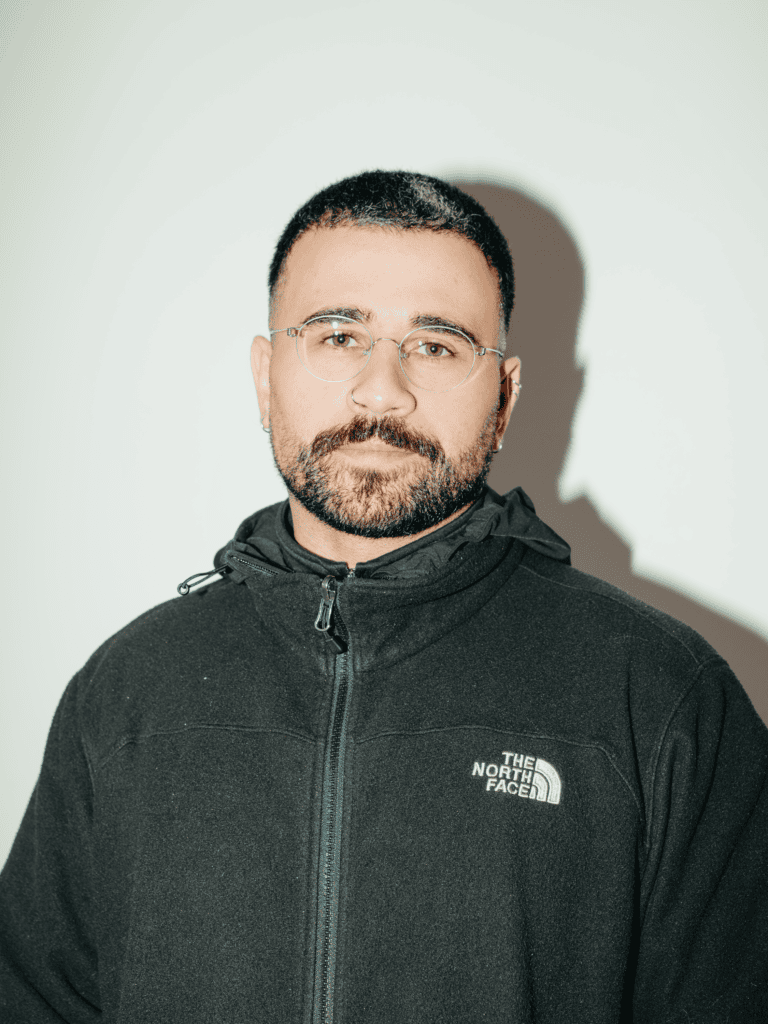 Hayri Akpolat
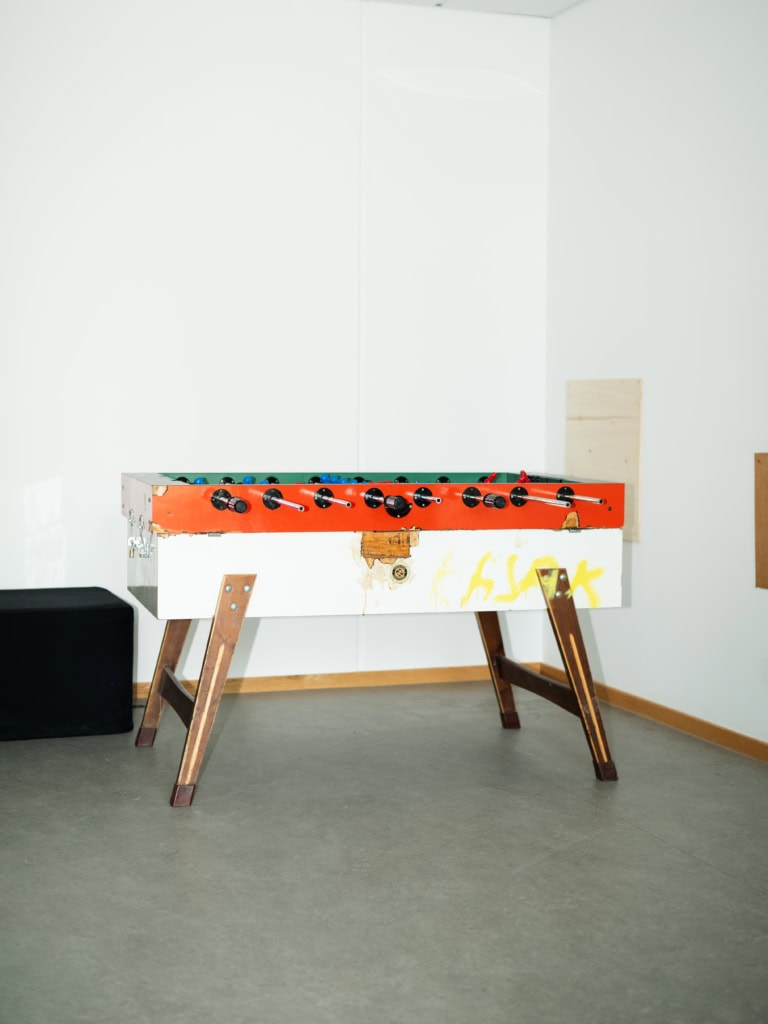
The young people also bring issues such as a lack of prospects, combined with fears, unemployment, the feeling that life owes them something, and the problem of individualism. That’s why it’s important to encourage a sense of community, he stresses.
Young people who are going through puberty and trying to find themselves, and who may have no positive male role models at home, are fed values and narratives on social media that dehumanise women or ‘turn them into status symbols’, says Hayri. ‘Women are instrumentalised, and of course young people act that out, because they’re being given an image of masculinity that doesn’t actually correspond to reality,’ he says.
‘It’s not surprising that things often take a negative turn,’ says the social worker, ‘when the important work needed to address precisely these issues is missing.’ There is often a shortage of staff, he stresses – people with sufficient expertise in online media. Society is often unaware of the problems and dangers associated with this kind of content.
Critical thinking and reflecting on such issues are skills that first have to be learned. ‘But when many young people have role models – influencers, for instance – who reproduce stereotypes and discriminatory ideas, it’s easy to get the impression that such inequalities are normal and justified.’
Asked how the staff at the youth centre respond to misogynistic remarks, Hayri says it is especially important to be patient and respectful, but still to take a clear stance, offer alternatives and ask: ‘Where does that idea of yours come from?’ Shying away from controversial topics doesn’t help, he says. Instead, open spaces need to be created ‘where young people can discuss these things without having to fear negative consequences’.
Prevention instead of escalation
Social media plays a major part in spreading and normalising misogynistic content ever faster, unfiltered and without critical context. Young girls and women in particular feel the effects, both online and in the real world.
Current recommendations call not only for a clear legal framework against digital violence but, above all, for investment in education and prevention, greater awareness of the problem and ongoing monitoring of developments and trends.
A strong social infrastructure is crucial to give young people orientation early on and to prevent insecurities and online narratives from turning into real violence. At the same time, the operators of social media platforms also have a responsibility to regulate misogynistic content more rigorously and to counter escalation at an early stage.
Experience from youth work clearly shows that long-term services, qualified professionals and adequate funding are urgently needed to implement the measures called for. Media literacy, critical thinking and a reflective approach to gender images must be specifically encouraged.
Just as important are places where young people can discuss controversial topics openly without being stigmatised. At the same time, effective protection for those affected is particularly important. At school and beyond, they depend on clear responsibilities, well-informed teachers and reliable places to turn to.