All too human
Hunting divides opinion: some see it as necessary to stabilise damaged ecosystems. For others, hunting is only about trophies – as Felix Kaspar Rosić. also believes.

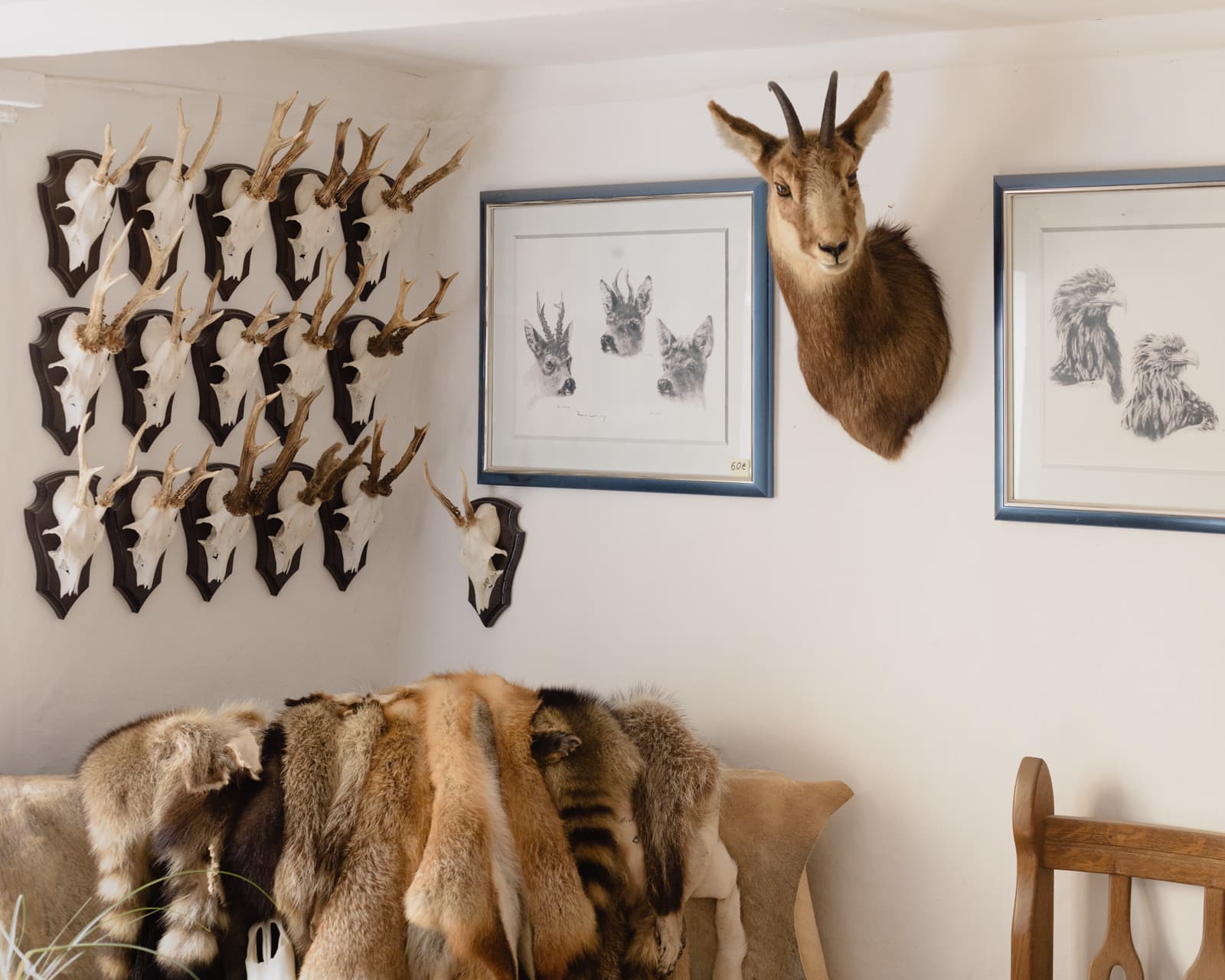
Behind hunting lies a capitalist principle: never being satisfied and always wanting more. Trophy hunting can be seen as an expression of human selfishness, since some hunters practise it as a hobby and the meat is, so to speak, ‘bycatch’. The majority of hunters reject such practices. Most value the peace and the closeness to animals in nature. Sitting in a hide is even said to have an effect similar to forest bathing. Even so, cruel practices such as hunting with hounds cast hunting in a bad light.
Today you can book hunting trips to Africa where you can comfortably shoot animals ordered in advance from a raised hide. Many hunters criticise this commercialised form of hunting and prefer an ethical, fair-chase connection with the animal.
Germany can’t do without hunting.
 Taxidermist Heike Köhler
Most hunters regard hunting as necessary for various reasons – above all to regulate wildlife populations. Regulation without killing is considered impossible: humans now intervene so heavily in animals’ habitats, they argue, that there is ‘no going back’. What’s more, the meat obtained is food of the very highest quality. Ethical principles are also stressed, such as respect for the animal and avoiding suffering.
Animal welfare organisations disagree. ‘Wildlife populations do not grow without hunting’ – the opposite is true, they say: hunting does reduce wildlife numbers, but it also makes the animals breed faster. Wildlife populations naturally keep themselves in balance; it is human influence that throws complex living systems off balance. Animal welfare campaigners also criticise the brutal treatment of animals in hunting and the cult of trophies. They doubt that it is really about remembrance and respect.
 Neusäß, 1 November 2022
The Jägereiverband Augsburg e.V. is one of the older hunting associations in Germany. Its chairman Hans Fürst grew up with hunting and is committed to conserving nature. Besides his involvement with the Bund Naturschutz, he trains hunters. In the theory classes for the hunting licence, his pupils learn the anatomy of native animals from lifelike specimens, lined up in a room specially set up for the purpose in the clubhouse.
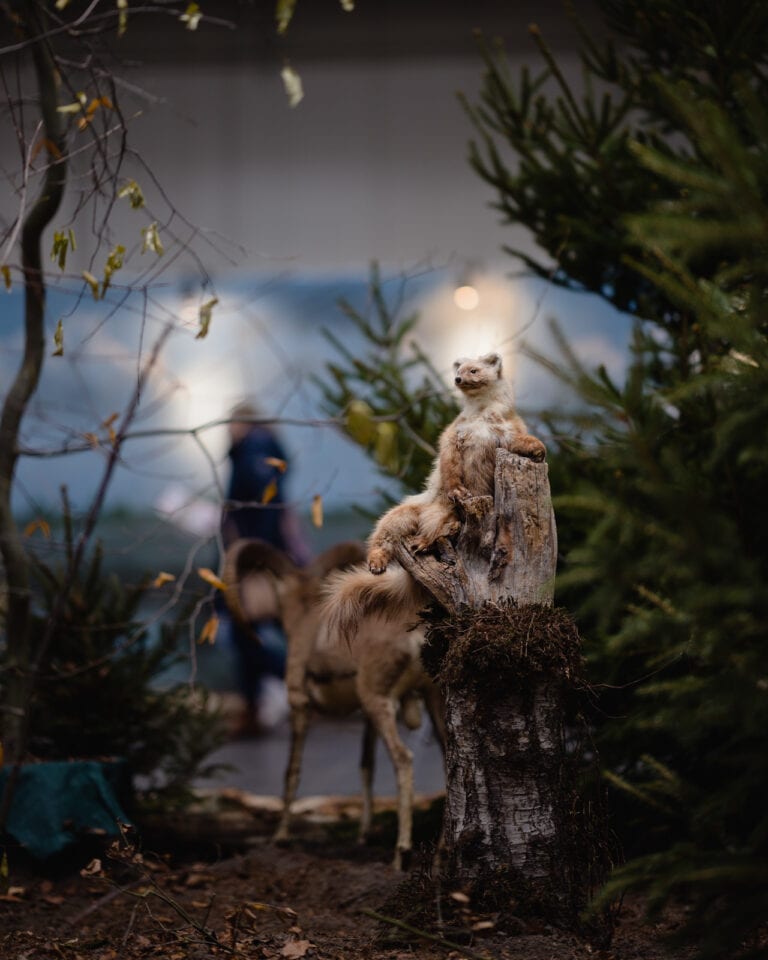 Hannover, 9 December 2022
In the wild, pine martens often prefer forks in branches as resting places. However, it is unlikely that an animal would linger in such a relaxed position. Taxidermy specimens are often made in human-like poses – even though these rarely reflect the animals’ natural behaviour.
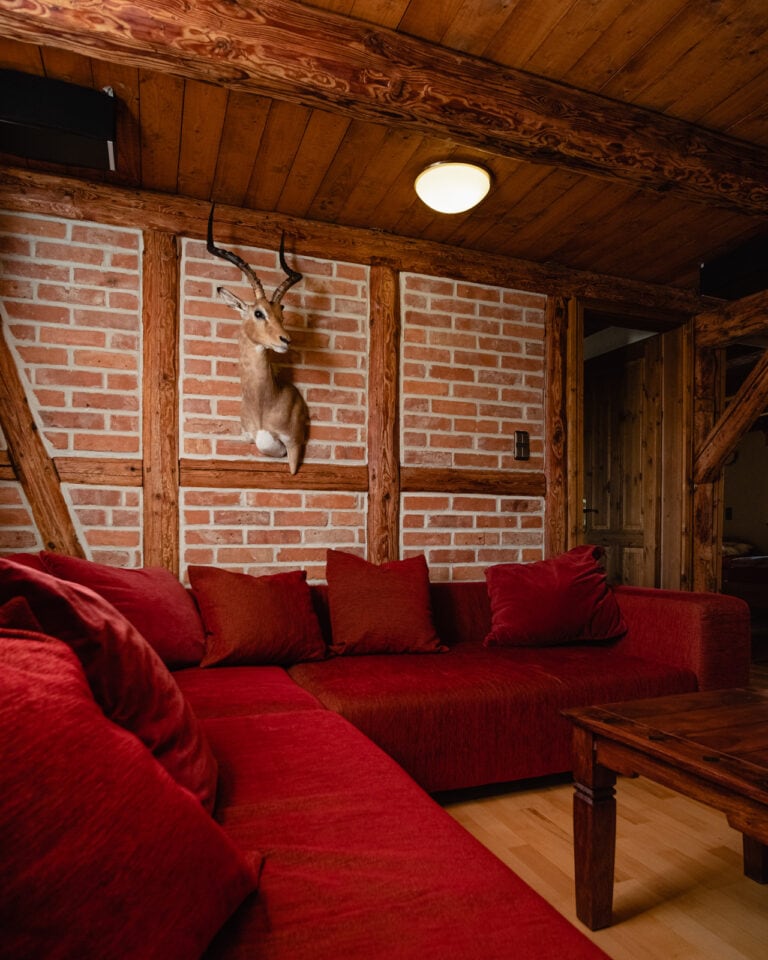 Klein Dahlum, 18 May 2022
B. is a fan of Africa: in his flat, country-house style meets head-and-shoulder mounts of various African animals, like this impala. Many of his trophies were prepared immediately after the kill and sent to Germany whole. But he doesn’t like the way they work in Africa: too flashy, too muscular – unnatural, B. thinks. So he often has preserved skins sent to ‘the taxidermist he trusts’.
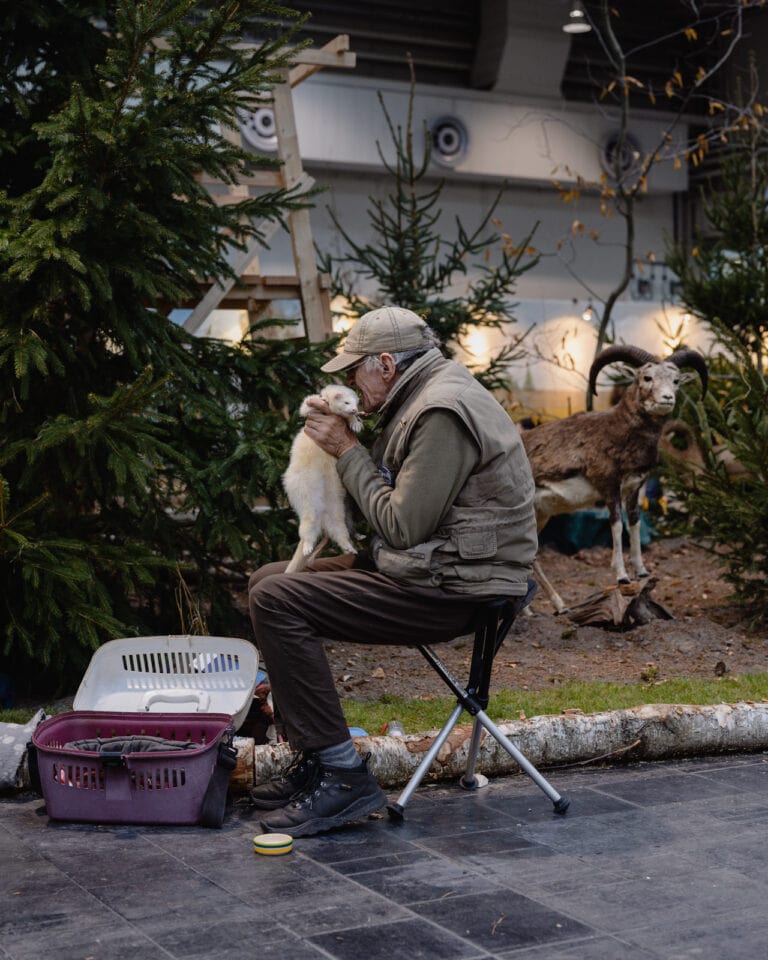 Hannover, 11 December 2022
At a hunting fair, a ferret breeder stood out for the loving way he treated his furry charges. Children in particular were fascinated by the cute animals, which are also used for hunting: the ferrets, descended from the polecat, drive rabbits out of their burrows and into the line of fire.
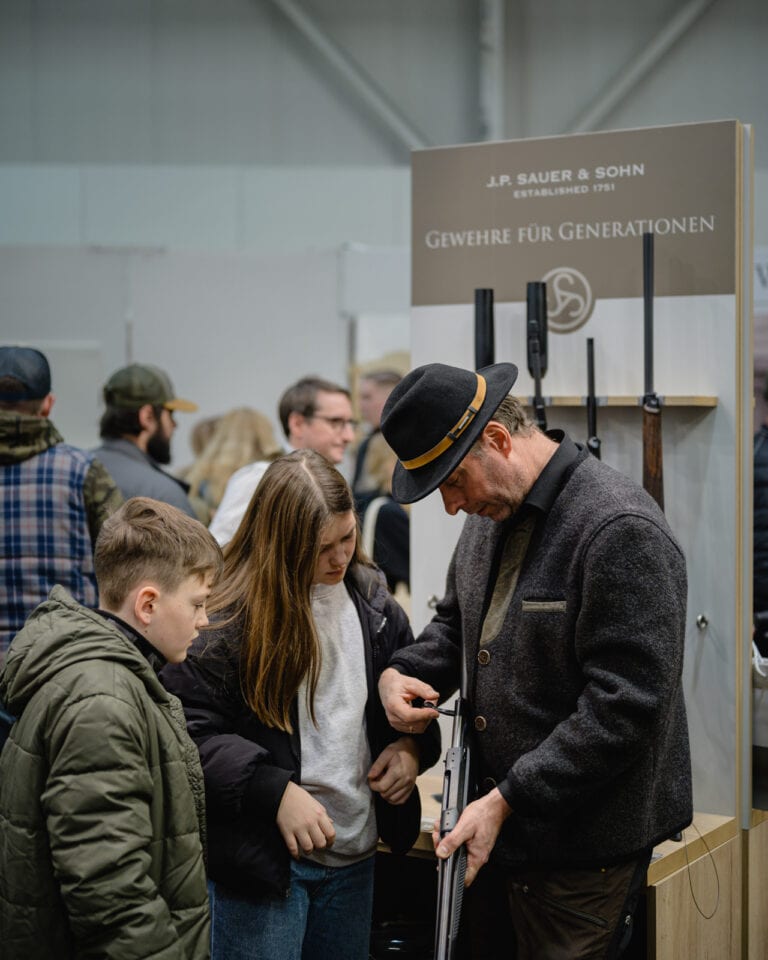 Hannover, 11 December 2022
Some people worry that hunting fairs glorify weapons, especially when children are present and trying out weapons is treated as a kind of leisure activity. Others see it as an opportunity to improve their knowledge and skills in handling weapons and to gain a deeper understanding of hunting and shooting sports.
 Klein Dahlum, 18.05.2022
The ‘storeroom’ of a former big-game hunter. Hunting trips have changed a great deal over the years. Today, many animals are in fact bred only to be shot. This lowers costs for tour operators and brings them higher profits. As a result, many hunting enthusiasts are turning back to hunting at home.
 Lesse, 5 May 2022
A big-game hunter’s living room. Giraffes are listed as a vulnerable species on the Red List of the International Union for Conservation of Nature. Even so, many hunting-trip operators still offer the chance to hunt them. It is an expensive undertaking. Anyone who wants to hang a hunting trophy on the wall also has to fork out for the taxidermy.
 Heere, 21 April 2022
A specimen of a young brown hare: its fur is blow-dried and combed to give it a natural look again. Preparing a small hare costs about 200 euros. Depending on size and effort, however, the price can quickly rise into four figures.
 Heere, 21 April 2022
Taxidermist Heike Köhler modelling a brown hare. She has been doing this job for more than 35 years and cannot imagine doing any other work. She hunts herself. Although it is a lucrative source of income for her, she is not a fan of ‘paid’ hunts. On hunting trips to Africa, she feels there is no connection to the animals.
 Heere, 21 April 2022
A brown hare gets a new face. Taxidermists are often given a photo with the order, and then pay particular attention to certain facial features. ‘Taxidermists have to be able to see with their hands’ is a basic rule of the craft. It means something like: ‘If you can’t see it, you have to feel it.’
 Heere, 1 June 2022
Heike Köhler’s taxidermy workshop is on the ground floor of a 17th-century half-timbered house, with a cosy wood-burning stove and low ceilings. She appreciates the charm of the historic building but finds it too draughty and impractical to want to live there.
 Hannover, 9 December 2022
In the middle of one of the exhibition halls at the ‘Pferd & Jagd’ (Horse & Hunt) fair was an area with various stuffed animals, standing tables and benches – a meeting zone for visitors and exhibitors. An attempt had been made to decorate the area as naturally as possible.
 Swabia, 1 November 2022
Hans has a plot of land near his hunting ground. There is a hunting lodge with a playground for his grandchildren. Years ago he planted fir trees in different spots. While one of his trees has already grown several metres tall, another, in poor soil and shade, is only a few centimetres high. Yet both trees are healthy. He proudly shows his grandchildren how differently trees can grow.