Pankower Tor: the toads missing from the building plan
Berlin wants to build 2,000 homes here – but strictly protected amphibians are holding up the major project. A case study.
By Hagen Plasswich (text), Annabel Karmelk (photos)


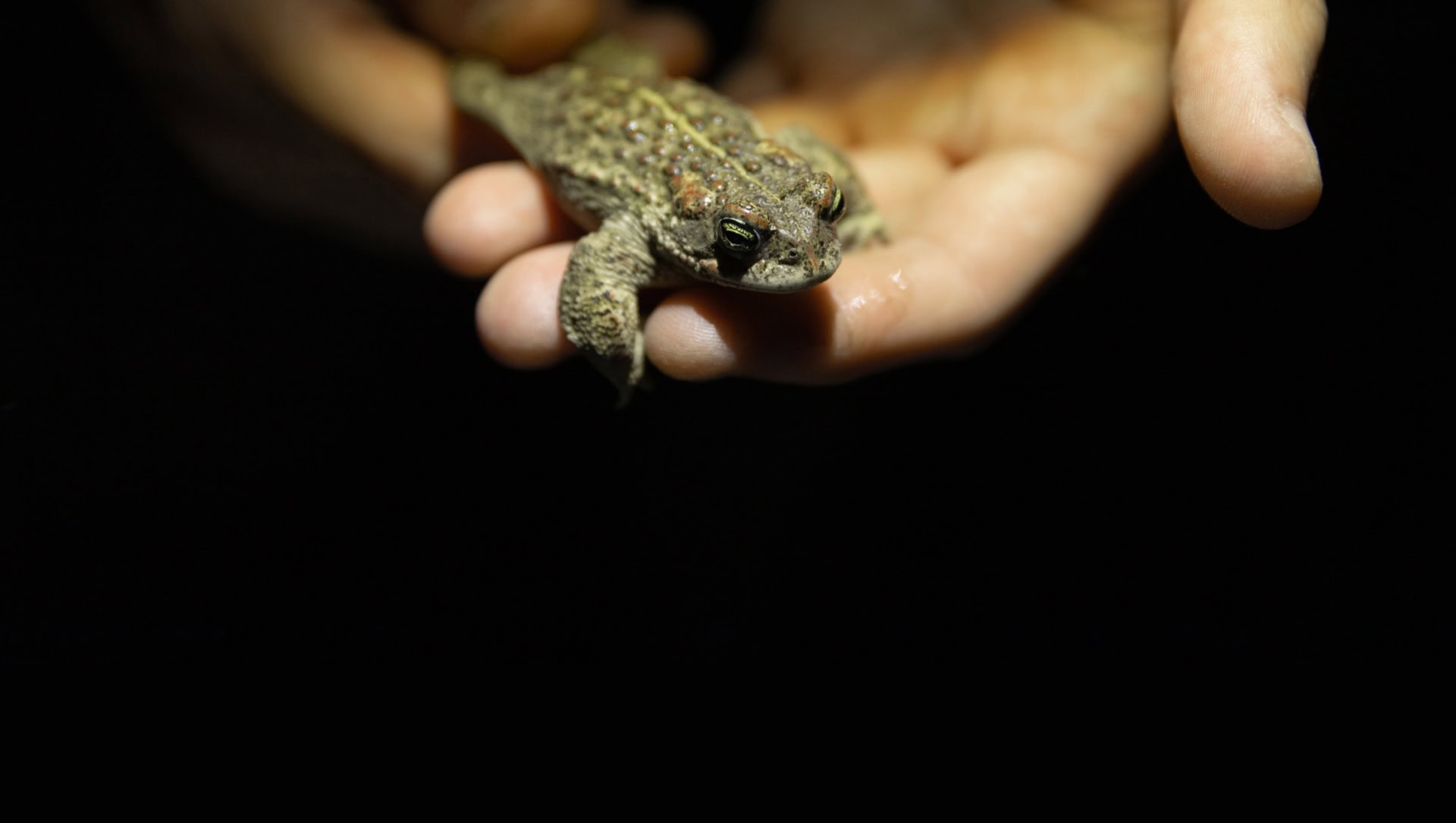
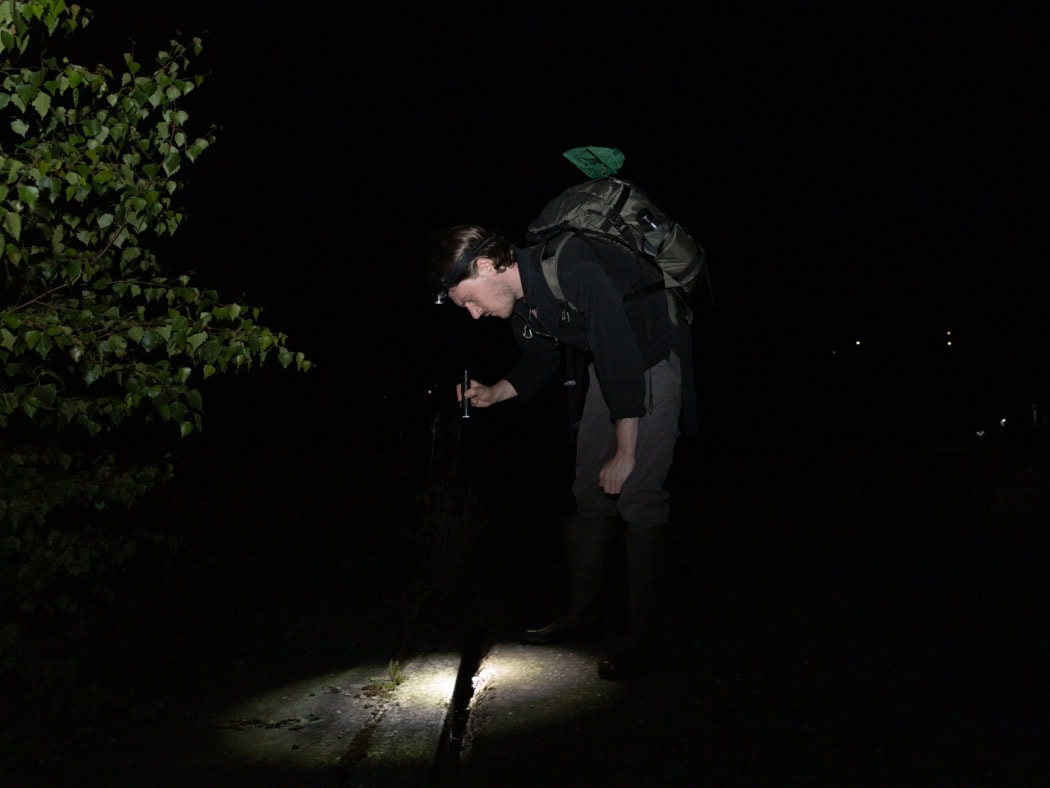
When it gets dark, Frederic Griesbaum sets off. Head torch, net, notebook. The biologist works for the Museum für Naturkunde, Berlin’s natural history museum, and specialises in amphibians. This evening, his route once again takes him to the site of the disused marshalling yard in Pankow. Among ponds, gravel and birch trees, he searches for one of the last populations of the natterjack toad in Berlin – around 800 individuals still live here, according to cautious estimates. A small population, but one with a big impact.
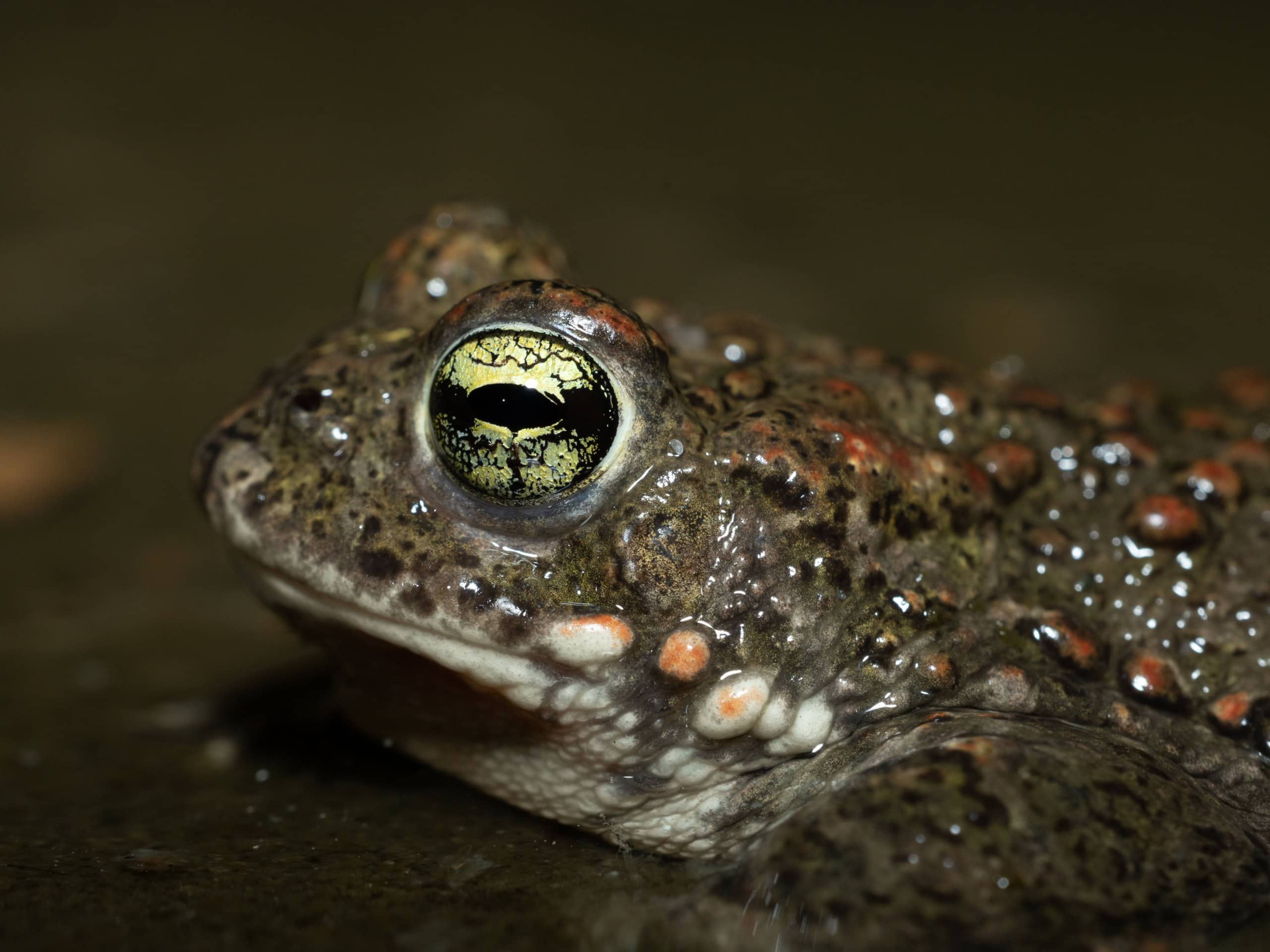
The natterjack toad is strictly protected and threatened with extinction in Berlin. Nationally it is classed as highly endangered. For years, Griesbaum has been documenting its behaviour here, counting animals and analysing the water. Spring is mating season – a sensitive window. The males gather at shallow ponds and call for females with metallic sounds. The calls can be heard kilometres away and give clues to where the species is found.
What looks like wasteland is in fact a network of habitats of particular ecological value: open ground with little vegetation, shallow pools that fill only temporarily, hardly any disturbance. Unremarkable to most people – an ideal habitat for the natterjack. By day, the nocturnal animals hide under stones or in loose gravel, safe from predators. But the site is set to disappear.

At dusk the male natterjacks gather at the shallow ponds on the old marshalling yard in Berlin-Pankow. With metallic calls they try to attract females, hoping to mate. The habitat is temporary but crucial to the species’ survival.
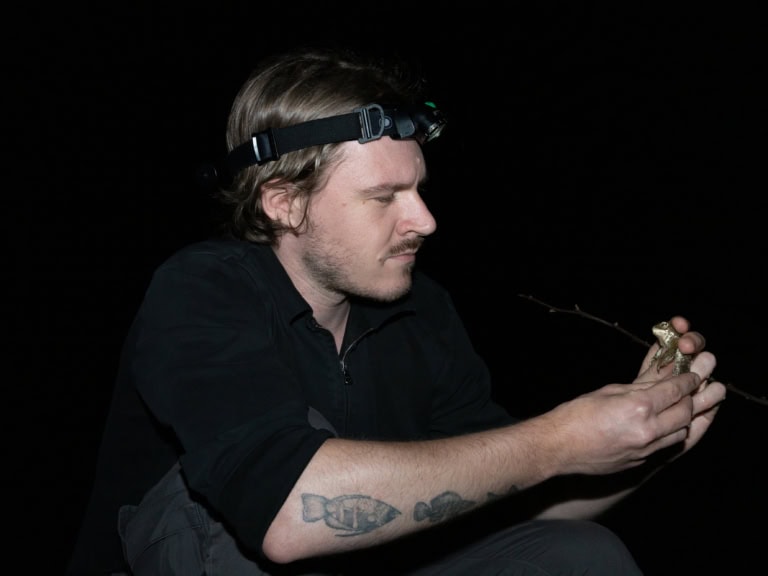
Measuring on site: Frederic Griesbaum records the size, weight and external features of every natterjack toad he finds – important data for species protection.
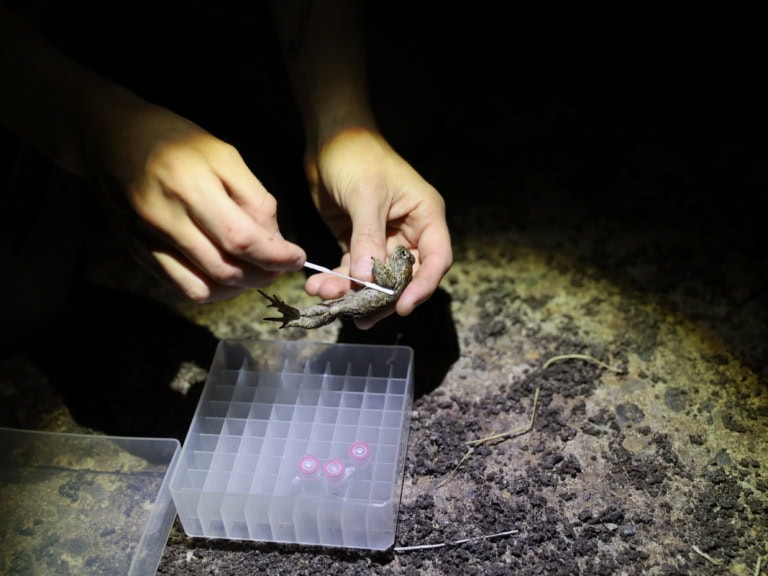
Griesbaum then takes a skin swab. The sample is tested in the lab for pathogens – such as the chytrid fungus, which threatens amphibians worldwide.
As this is a protected species with only one known remaining population, the state of Berlin is legally obliged to take appropriate measures here.
 Frederic Griesbaum
The 27-hectare site has lain derelict since 1997. Now the Krieger Group wants to build on it: the Pankower Tor district, with flats, a nursery, offices, medical facilities and a furniture store. Well connected, energy-efficient, urban. But the price would be high – because the new district would wipe out one of the last refuges for specialised species in the capital.
Around 58 per cent of the planned area is to be sealed. What today absorbs rainwater and slowly releases it would in future be covered with concrete, asphalt and underground car parks. The natural ponds – gone. The natterjacks – driven out.
Conservation groups such as NABU have therefore taken legal action against an exemption that was supposed to allow the development despite the species’ protected status. No official halt to construction was ever imposed, but the conflict over species protection has slowed the project down. A compromise is now being discussed: parts of the site could be kept as habitat while others are built on. Whether that will work is an open question – a new lawsuit is already being prepared.
Griesbaum knows that relocating the toads only works if the new habitat closely matches the old one in structure, soil and microclimate. Simply moving them to a nature reserve isn’t enough. ‘The site is without doubt a political issue,’ he says, ‘and, in my personal view, a prime example of capital interests that, with the help of the state, are destroying nature bit by bit.’
The site is without doubt a political issue and, in my personal view, a prime example of capital interests that, with the help of the state, are destroying nature bit by bit.
Frederic Griesbaum
The natterjack toad is a survivor. It settles on building sites, in gravel pits and on wasteland. What looks to investors like ‘uneconomic land’ is ideal for it. At the same time, it is part of wider ecological systems: it eats insects, is food for birds and mammals and, as a pioneer species, creates living conditions for other species. Its disappearance would have consequences – not only for biodiversity but for the city’s climate as a whole.
Representatives of the property industry accuse conservationists of trying to artificially preserve a species on an inhospitable site – and of blocking housing development in the process. But that falls short. Because this isn’t just about toads. It’s about how a growing city can build without completely destroying its last ecological refuges.
One possible solution would be a combination of rewilding and ecologically compatible development. Griesbaum’s research could help lay the necessary groundwork – scientifically sound, not politically motivated. ‘As this is a protected species with only one known remaining population, the state of Berlin is legally obliged to take appropriate measures here,’ he says.
It is still unclear what will happen next. The only certainty: the fate of the natterjack toads in Pankow is an example of the tensions that arise when cities grow. And of the decisions that have to be made – between density and diversity, returns and refuges.
The natterjack toad spends the day in shady crevices and under stones, protected from the sun and from drying out. Only in the evening does it leave its hiding place and make its way to the nearby water.