Dreamed for us
Markus Heft portrays older queer people in Germany. Since 2022, he has been creating intimate portraits collaboratively, complemented by still lifes and places. The project preserves queer history and makes visible the double marginalisation of old age.


In the long-term documentary project ‘Für uns geträumt’ (Dreamed for us), Markus Heft explores the lives of older queer people in Germany. Since 2022, he has been working collaboratively with the people he photographs on individual portraits, complemented by details and still lifes of important places or objects. Together with interview texts, the pictures are conceived as a photo book, giving a younger LGBTQIA+ generation in particular, but also society at large, an insight into queer life and the double marginalisation that comes with age.
For Heft, it is important to create a document that preserves a small piece of queer history, because this history is barely present in public life and is under-represented in historiography. The experiences of the people he portrays are neither in schoolbooks nor told around the family table, nor are they common knowledge – they have to be actively sought out to be noticed at all. For the photographer, getting to know these lives makes a decisive difference.
The motivation for the work comes from the search for role models. As a young person, Markus knew almost nothing about queer history and had no contact with the older generation until he deliberately sought it out. This results in a double perspective: the inside view through his own queerness, and a young person’s view of the older generation.
Markus Heft
As a queer photographer who grew up in eastern Germany, the 27-year-old mainly explores queerness and identity in his work. Before starting the Visual Journalism and Documentary Photography programme at Hochschule Hannover in 2021, he qualified as a hairdresser. Today he mainly works on long-term documentary projects. His photographic practice is closely linked to his own identity and serves him as a means of self-understanding and self-realisation.
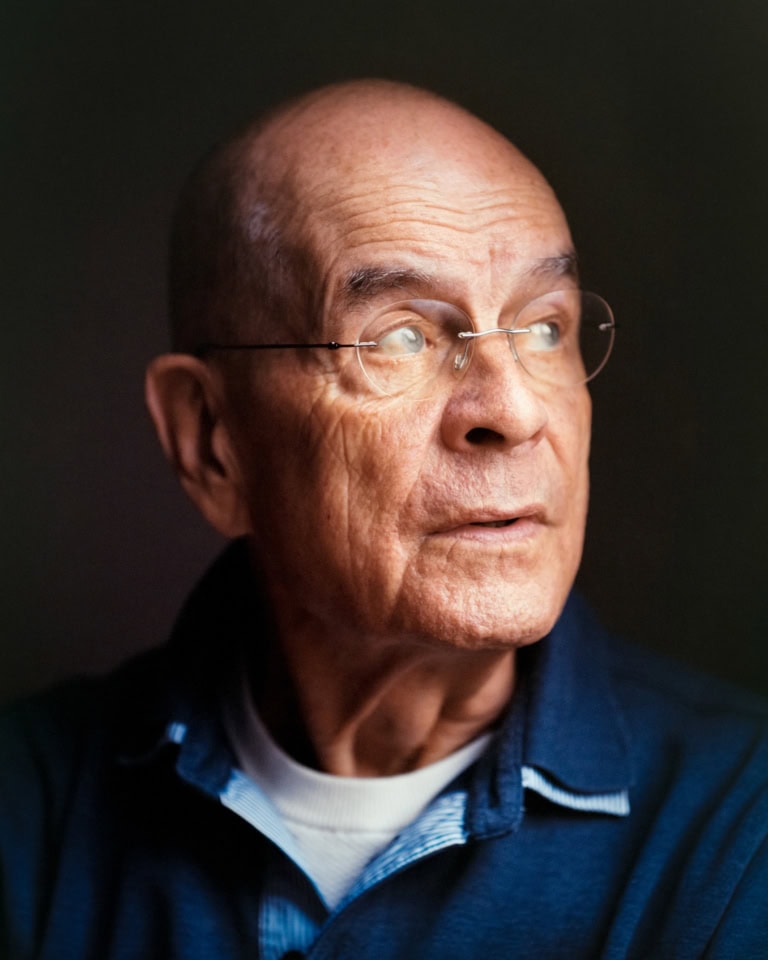 On 25 March 2025 Achim, 79, sits in his flat in Hannover, looking out of the window and reflecting on a turning point in 1990, when at the age of 45 he suddenly realised he was gay. After coming out, he joined a group for gay fathers and found a community that helped him live openly. In the 1990s he moved to Hannover, where he founded ‘Café Konrad’ with his friend Gert and Gert’s partner; it became a central meeting place for the city’s queer community.
On 25 March 2025 Achim, 79, sits in his flat in Hannover, looking out of the window and reflecting on a turning point in 1990, when at the age of 45 he suddenly realised he was gay. After coming out, he joined a group for gay fathers and found a community that helped him live openly. In the 1990s he moved to Hannover, where he founded ‘Café Konrad’ with his friend Gert and Gert’s partner; it became a central meeting place for the city’s queer community.
 Achim’s rainbow flag flies on his terrace in Hannover. At the age of 45 he suddenly realised he was gay. After coming out, he joined a group for gay fathers and found a community that helped him live openly. In the 1990s he moved to Hannover, where he founded ‘Café Konrad’ with his friend Gert and Gert’s partner; it became a central meeting place for the city’s queer community.
Achim’s rainbow flag flies on his terrace in Hannover.
 Udo, 71, and Andreas, 61, in their allotment garden in Hannover on 28 June 2025. They have tended the garden for more than two decades and, as a gay couple, have built a life together in a society shaped by heteronormative expectations. They met by chance in 1995. While Andreas found support early on in a local youth group, Udo grew up in East Germany before moving to the West to live more openly. They entered a registered partnership in 2014 and officially married in 2017.
Udo, 71, and Andreas, 61, have tended their garden for more than two decades and, as a gay couple, have built a life together in a society shaped by heteronormative expectations. They met by chance in 1995. While Andreas found support early on in a local youth group, Udo grew up in East Germany before moving to the West to live more openly. They entered a registered partnership in 2014 and officially married in 2017.
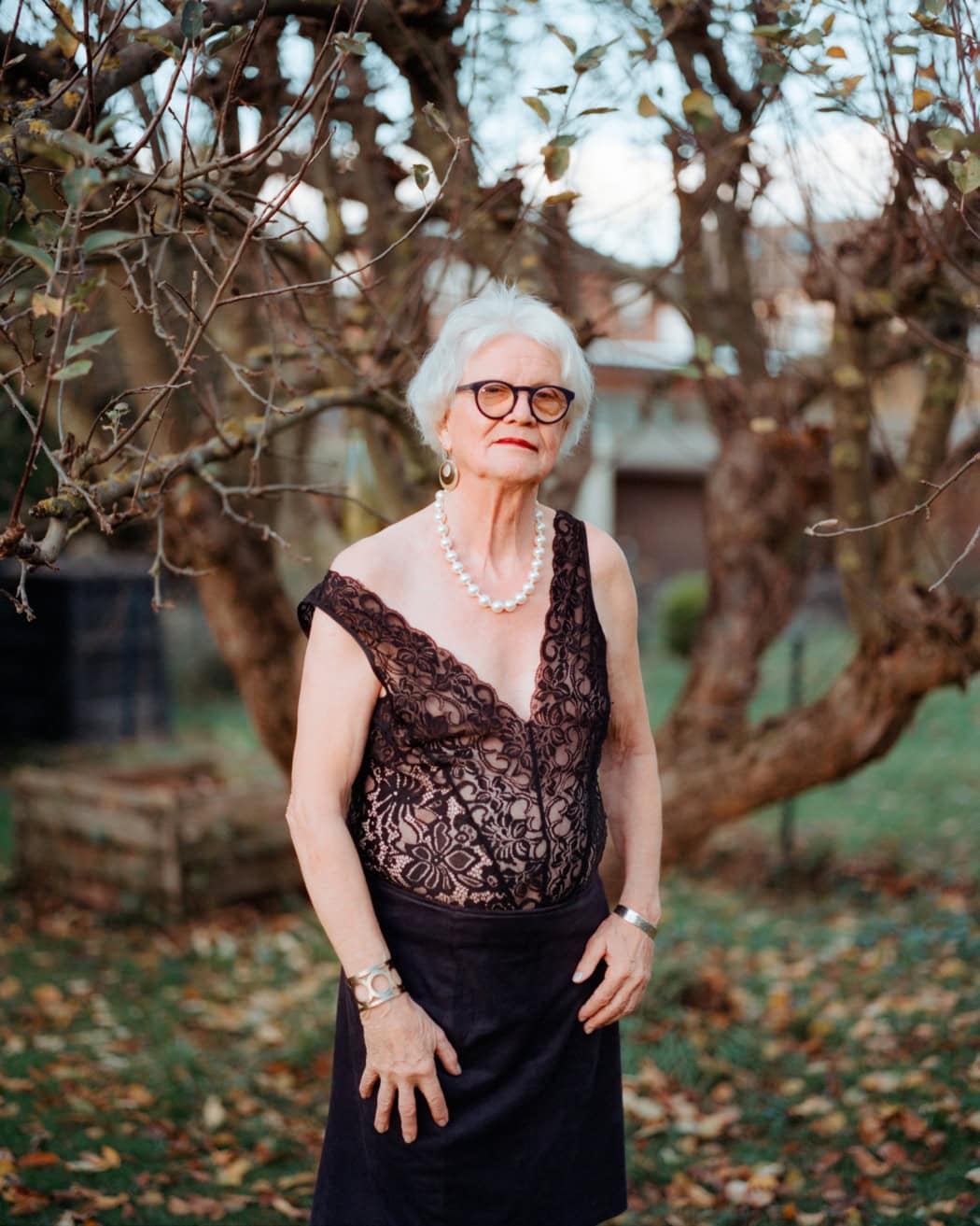 On 20 November 2025 Hannah, 74, who also goes by the name ‘Günter’, poses in her garden near Hannover. She loves presenting herself as either a man or a woman and finds it interesting to see how other people read her gender identity. Having come out late in life, she now lives out her queer identity in a choir, in the theatre and as a model. She also attends a queer seniors’ group in Hannover for people over 60 who support each other and share their experiences.
On 20 November 2025 Hannah, 74, who also goes by the name ‘Günter’, poses in her garden near Hannover. She loves presenting herself as either a man or a woman and finds it interesting to see how other people read her gender identity. Having come out late in life, she now lives out her queer identity in a choir, in the theatre and as a model. She also attends a queer seniors’ group in Hannover for people over 60 who support each other and share their experiences.
 Axel’s flogger (a type of whip used in BDSM) made of leather roses lies on the bed in the BDSM playroom of his flat in Hannover. His partner Christoph used it to propose to him. They have been together for 14 years and met at a BDSM workshop. Axel has long campaigned for the rights of queer people in Germany, first helping to win legal recognition of registered partnerships and later equal marriage. He was awarded the Federal Cross of Merit for his work. Today he works in health counselling.
Axel’s flogger (a type of whip used in BDSM) made of leather roses lies on the bed in the BDSM playroom of his flat in Hannover. His partner Christoph used it to propose to him. They have been together for 14 years and met at a BDSM workshop.
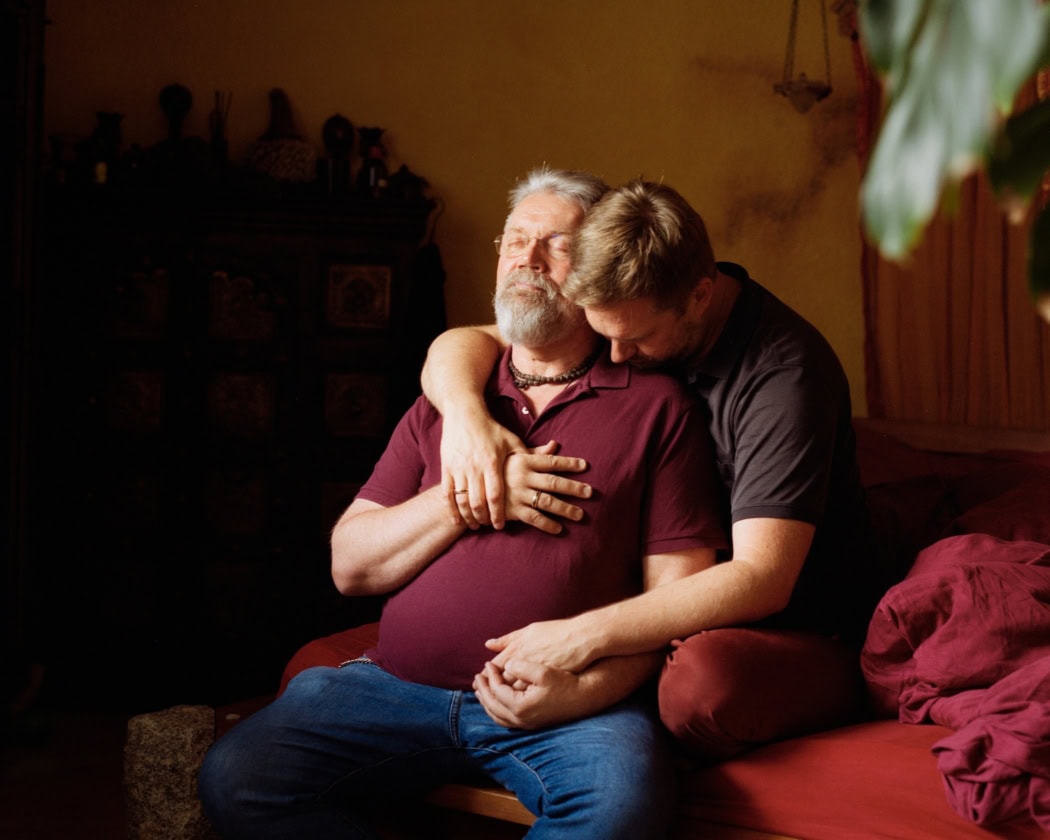 Axel and Christoph embrace in their bedroom in Hannover on 31 August 2025. They have been together for 14 years and met at a BDSM workshop. Axel has long campaigned for the rights of queer people in Germany, first helping to win legal recognition of registered partnerships and later equal marriage. He was awarded the Federal Cross of Merit for his work. Today he works in health counselling.
Axel and Christoph have been together for 14 years and met at a BDSM workshop. Axel has long campaigned for the rights of queer people in Germany, first helping to win legal recognition of registered partnerships and later equal marriage. He was awarded the Federal Cross of Merit for his work. Today he works in health counselling.
 Moritz at his home in Lüneburg on 9 October 2025. Growing up in the 1970s, he knew early on who he was: a boy who is also a girl. As there was no language for being trans at the time, he lived for many years as a lesbian in Berlin and Hamburg – a life shaped by women’s spaces, exclusion, political struggles and alcohol.
Growing up in the 1970s, Moritz knew early on who he was: a boy who is also a girl. As there was no language for being trans at the time, he lived for many years as a lesbian in Berlin and Hamburg – a life shaped by women’s spaces, exclusion, political struggles and alcohol.
 On 20 May 2025 Anjo stands in a rhododendron bush in a park in Hamburg. As an intersex person, Anjo knows the long inner process of searching for one’s own identity – a journey that took almost ten years. Without visible role models, it involved doubts and wrong turns until self-help groups offered recognition and community. Anjo volunteers for Intergeschlechtliche Menschen e.V. (Intersex People), a nationwide organisation that campaigns for the rights and visibility of intersex people. The association has shaped political debates, medical discussions and public awareness, and has made sure that intersex people’s voices are heard.
As an intersex person, Anjo knows the long inner process of searching for one’s own identity – a journey that took almost ten years. Without visible role models, it involved doubts and wrong turns until self-help groups offered recognition and community. Anjo volunteers for Intergeschlechtliche Menschen e.V. (Intersex People), a nationwide organisation that campaigns for the rights and visibility of intersex people. The association has shaped political debates, medical discussions and public awareness, and has made sure that intersex people’s voices are heard.
 Kerstin Juschkat-Schafhaupt, 64, in Witzenhausen, Germany, on 27 September 2025. Since childhood she has questioned the heteronormative world around her. After relationships with women and men, she has been with her partner Antje for more than 21 years. Kerstin describes herself as ‘people-loving’, which also helped her explain to her children what love can mean.
Since childhood, Kerstin, 64, has questioned the heteronormative world around her. After relationships with women and men, she has been with her partner Antje for more than 21 years. Kerstin describes herself as ‘people-loving’, which also helped her explain to her children what love can mean.
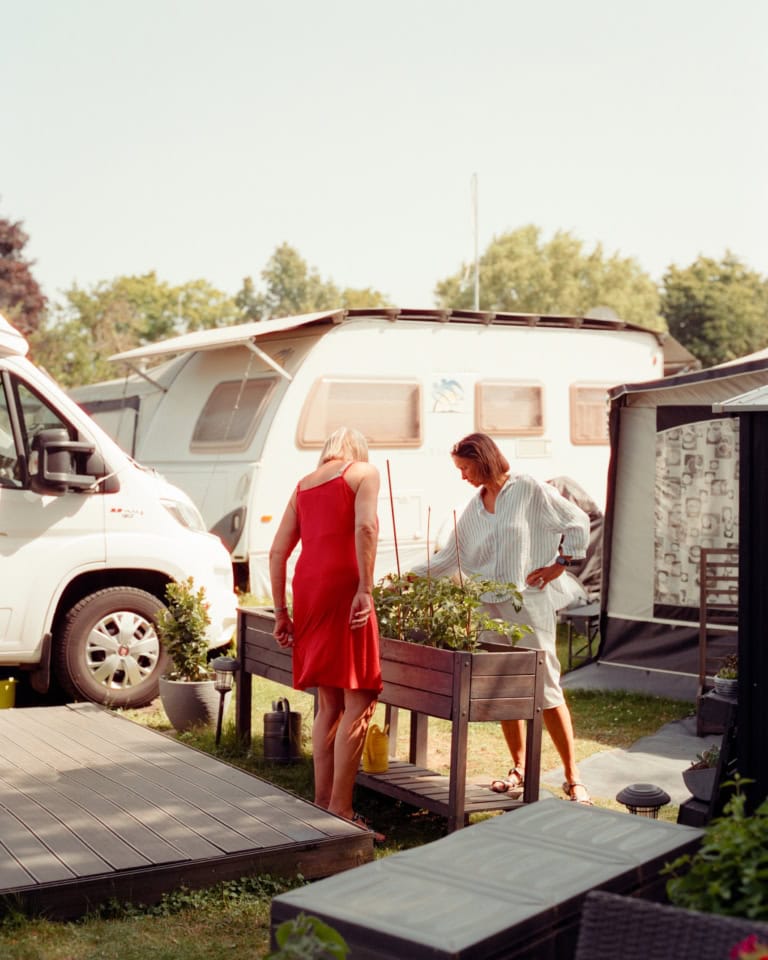 Tina, 67, and Claudia, 64, at their caravan pitch near Gießen on 14 June 2025. They met through their children at a swimming pool in 1992 and became close friends before realising in 1999 that their bond was more than friendship. Despite the difficulties caused by divorce and social pressure, they have built a lasting partnership of more than 26 years. Today they spend every summer in their camper van at a lakeside campsite.
Tina, 67, and Claudia, 64, met through their children at a swimming pool in 1992 and became close friends before realising in 1999 that their bond was more than friendship. Despite the difficulties caused by divorce and social pressure, they have built a lasting partnership of more than 26 years. Today they spend every summer in their camper van at a lakeside campsite.
 Tina and Claudia’s open caravan window. They met through their children at a swimming pool in 1992 and became close friends before realising in 1999 that their bond was more than friendship. Despite the difficulties caused by divorce and social pressure, they have built a lasting partnership of more than 26 years. Today they spend every summer in their camper van at a lakeside campsite.
Tina and Claudia’s open caravan window.
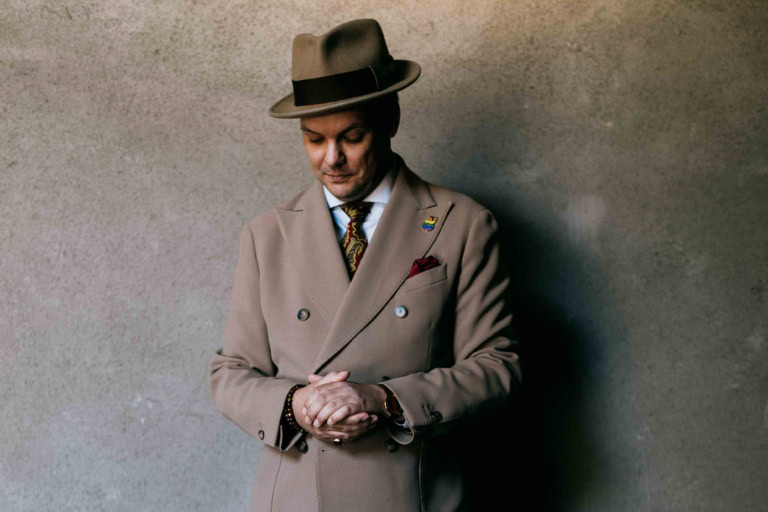
 On 21 November 2022 Bernd, 66, ties his tie in his bedroom in Hannover. After decades of bullying and discrimination, Bernd has regained his self-confidence through his personal style. As a gay man who grew up in rural Germany, he faced isolation and hesitated to come out, which he eventually did gradually as an adult. Despite rejection by parts of his family and the loss of two long-term partners, Bernd has stayed true to himself. In 2006 he met his husband Joachim online, and their relationship lasted until Joachim’s sudden death in 2018. Today Bernd reflects on resilience, loss and the challenges of growing old in a society in which queer older people often face both invisibility and age discrimination.
After decades of bullying and discrimination, Bernd has regained his self-confidence through his personal style. As a gay man who grew up in rural Germany, he faced isolation and hesitated to come out, which he eventually did gradually as an adult. Despite rejection by parts of his family and the loss of two long-term partners, Bernd has stayed true to himself. In 2006 he met his husband Joachim online, and their relationship lasted until Joachim’s sudden death in 2018. Today Bernd reflects on resilience, loss and the challenges of growing old in a society in which queer older people often face both invisibility and age discrimination.
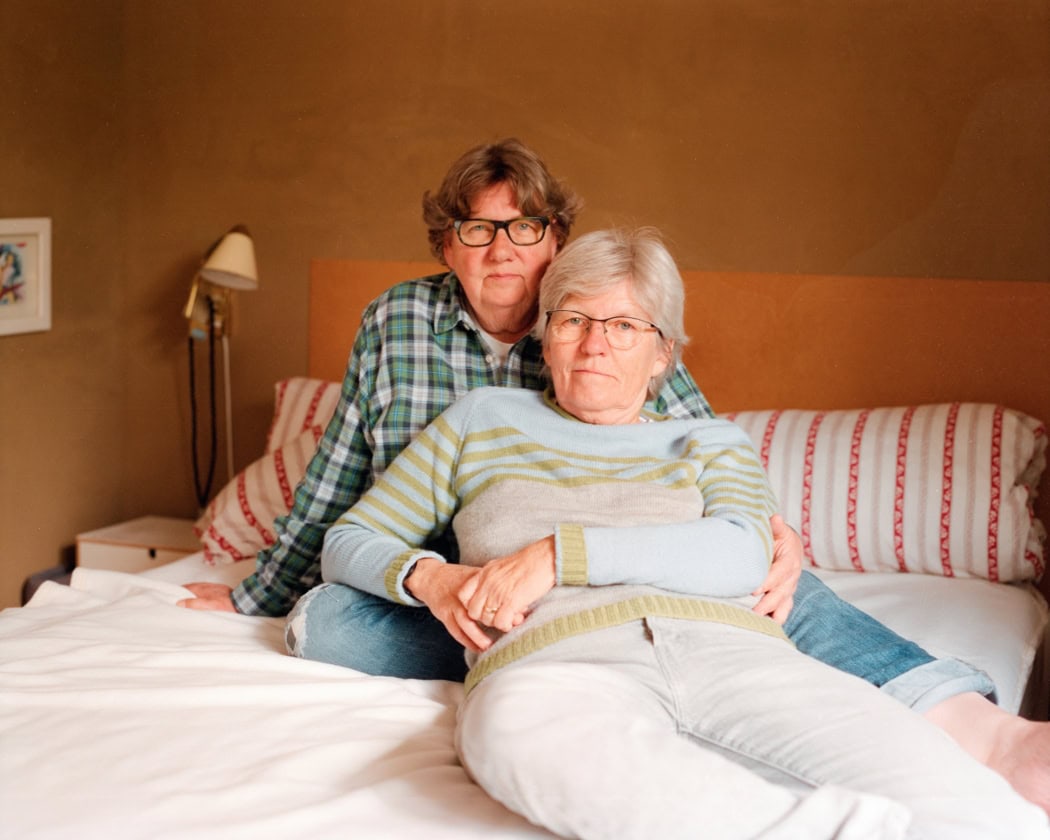 Anjali, 66, and Raddhi, 68, in their bedroom in Witzenhausen on 28 September 2025. They met as Osho sannyasins in Pune, India, in 1988 and fell in love during an eye-gazing meditation. After spending some time between Hamburg and Frankfurt, they moved in together. In Frankfurt they helped shape the scene, among other things with regular lesbian nights at a disco and by hosting the city’s Pride parade (CSD).
Anjali, 66, and Raddhi, 68, met as Osho sannyasins in Pune, India, in 1988 and fell in love during an eye-gazing meditation. After spending some time between Hamburg and Frankfurt, they moved in together. In Frankfurt they helped shape the scene, among other things with regular lesbian nights at a disco and by hosting the city’s Pride parade (CSD).
 On 11 April 2025 Gert, 71, poses with his rainbow fan in his flat in Hannover. At 38 he came out to his wife and three children and first found support in a self-help group for gay fathers at the Waldschlösschen near Göttingen. He later joined a gay choir and a cheerleading troupe and left a lasting mark on Hannover’s scene by founding ‘Café Konrad’ in 1996 with his partner and his friend Achim.
At the age of 38 Gert, 71, came out to his wife and three children and first found support in a self-help group for gay fathers at the Waldschlösschen near Göttingen. He later joined a gay choir and a cheerleading troupe and left a lasting mark on Hannover’s scene by founding ‘Café Konrad’ in 1996 with his partner and his friend Achim.
 On 5 January 2025 Michael, 67, gets ready on the snowy jetty of Hannover’s Maschsee lake to go rowing with his queer rowing club, the ‘Leinebagger’. As director of Hannover’s public library, Michael helps shape access to culture and public life in the city. In 2024 he made the library’s ‘queer living room’ possible, which hosted exhibitions, readings and workshops on queer topics.
On 5 January 2025 Michael, 67, gets ready on the snowy jetty of Hannover’s Maschsee lake to go rowing with his queer rowing club, the ‘Leinebagger’. As director of Hannover’s public library, Michael helps shape access to culture and public life in the city. In 2024 he made the library’s ‘queer living room’ possible, which hosted exhibitions, readings and workshops on queer topics.
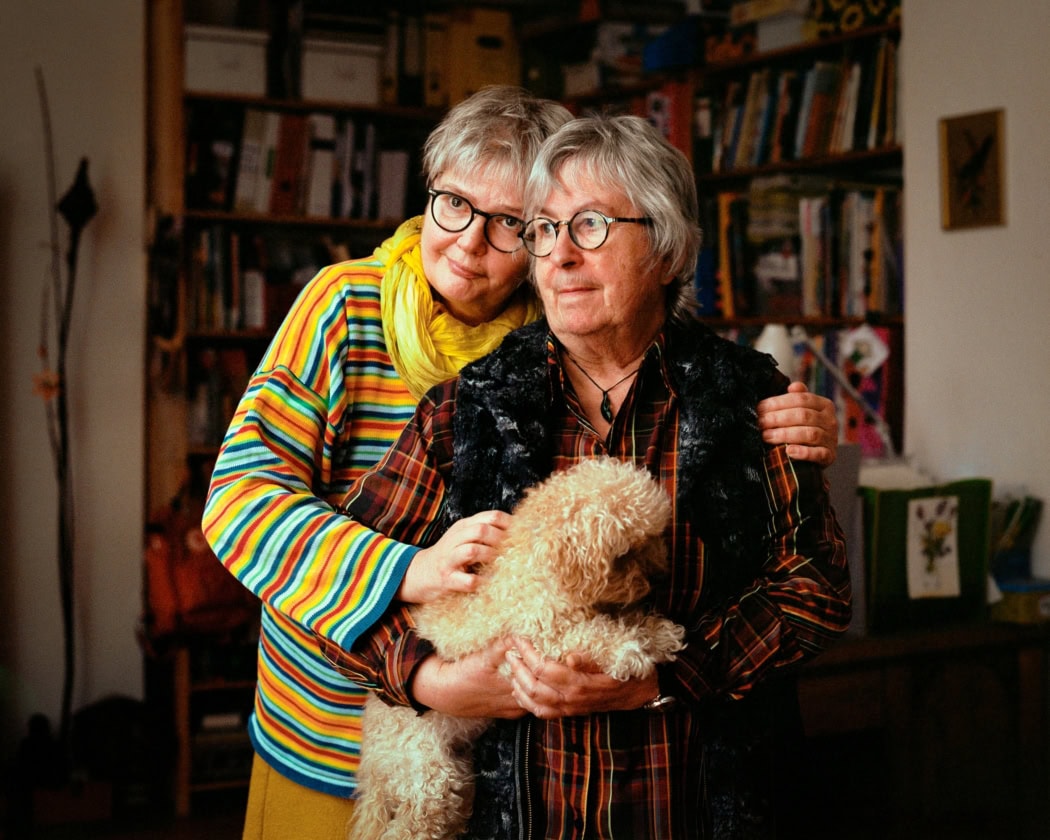 On 3 January 2023 Bettina, 61, and Bettina, 71, stand with their dog in their house in Hannover. They have been a couple since 1981 and have shared their lives for more than four decades. In the early years they found community in lesbian groups and spaces in Hannover, where exchange and visibility slowly became possible. In the 1990s they decided to start a family and raised two children together at a time when the legal framework made this extremely difficult for same-sex couples. In 2005 they were among the first lesbian couples in Germany to win a stepchild adoption in court despite opposition. When marriage for all became reality in 2017, they had their relationship registered at the registry office in Hannover.
Bettina, 61, and Bettina, 71, have been a couple since 1981 and have shared their lives for more than four decades. In the early years they found community in lesbian groups and spaces in Hannover, where exchange and visibility slowly became possible. In the 1990s they decided to start a family and raised two children together at a time when the legal framework made this extremely difficult for same-sex couples. In 2005 they were among the first lesbian couples in Germany to win a stepchild adoption in court despite opposition. When marriage for all became reality in 2017, they had their relationship registered at the registry office in Hannover.