Organ donation –
The invisible people on the waiting list
Germany lags behind the rest of Europe on organ donation – people die every day while politicians and society hesitate. In his photo series, Anton Vester shows those who are running out of time. Text: Finn Winkler


Germany is in the middle of an organ donation crisis: in 2023, there were only eleven deceased organ donors per million inhabitants – people whose organs were removed after brain or cardiac death. That puts Germany near the bottom of the European table. By comparison, front-runner Spain reached more than 46 donors per million inhabitants in the same period – more than four times as many.
The German Transplantation Society points to the stark difference between the two countries: while patients in Spain often only have to wait a few days for life-saving organs, the situation in Germany is far more dramatic. Around 8,500 people are currently on waiting lists for an organ here. According to Deutschlandfunk, two to three people die every day because there aren’t enough donor organs.
It is precisely this waiting that photographer Anton Vester has focused on in his award-winning project ‘Ohnmächtige Stille’ (Powerless silence). Instead of documenting spectacular operations or individual fates, he deliberately puts the oppressive feeling of waiting at the centre of his work. ‘People on the waiting list feel abandoned by politicians, unseen and not taken seriously,’ says Vester, summing up his conversations with those affected. On top of that come catastrophic conditions in German hospitals, which suffer from chronic understaffing. ‘Organ donation also remains a taboo subject in Germany,’ adds the photographer.
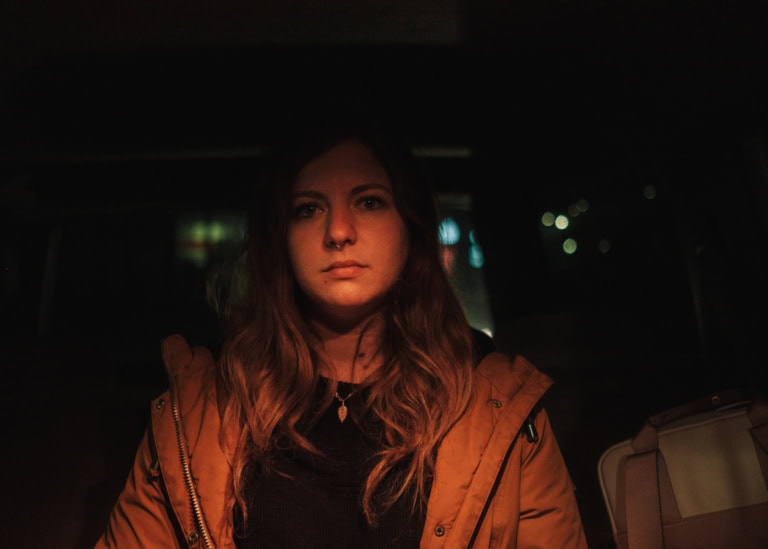 Car park of the dialysis centre in Geislingen, 1 a.m., 26 April 2023. Yvonne Zacher, 27, has an unclassified connective tissue disease (collagenosis), an autoimmune disease that attacks her kidneys. Zacher works as a nurse and has to undergo dialysis three times a week, for more than five hours each time.
Five hours of dialysis, three times a week: Yvonne Zacher, 27, is battling an unclassified connective tissue disease (collagenosis), an autoimmune disease that attacks her kidneys.
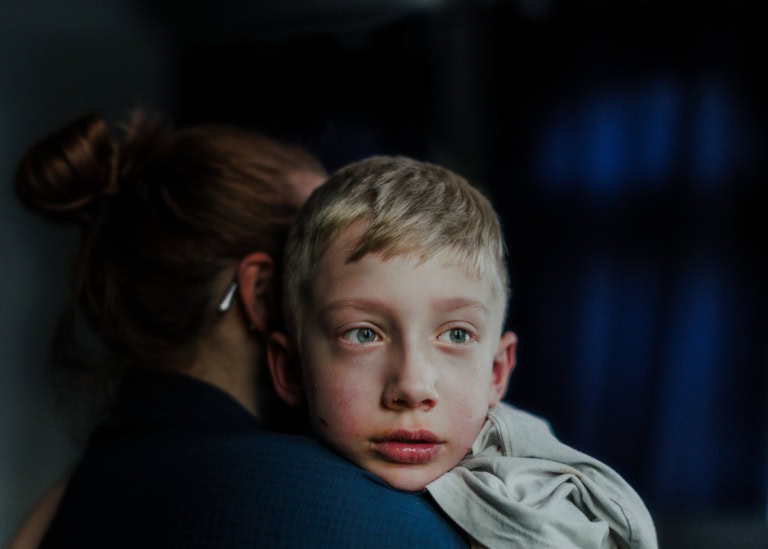 Peine, 13 April 2024. Jakob and his mother Sonja Baumgarte in their flat. Because of pulmonary arterial hypertension, the eight-year-old is about to be put on the waiting list for a new lung. Once a year they go on holiday to a children’s hospice.
Jakob, 8, has pulmonary arterial hypertension and is about to be put on the waiting list for a lung transplant. Once a year his family goes to a children’s hospice to gather strength for the difficult times.
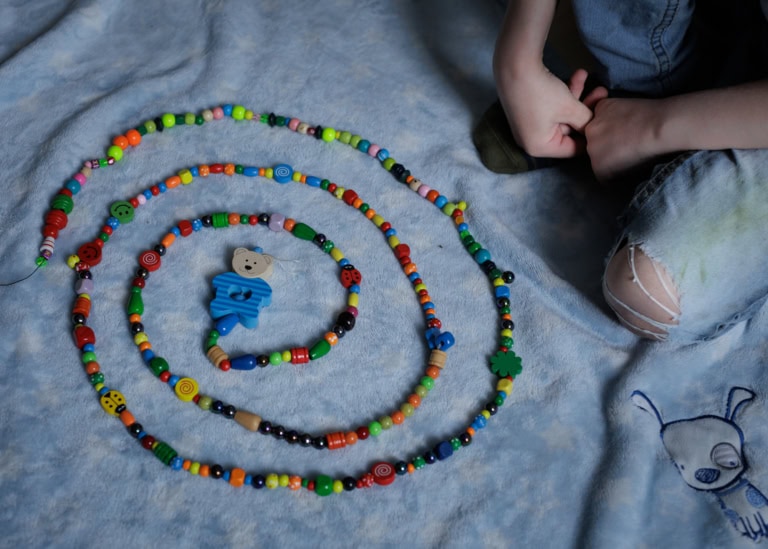 Peine, 13 April 2024. Jakob shows the bead necklace he was given in hospital after he was born. Each bead stands for one day in hospital.
Jakob’s necklace tells his life story: each bead stands for one day he has had to spend in hospital since he was born.
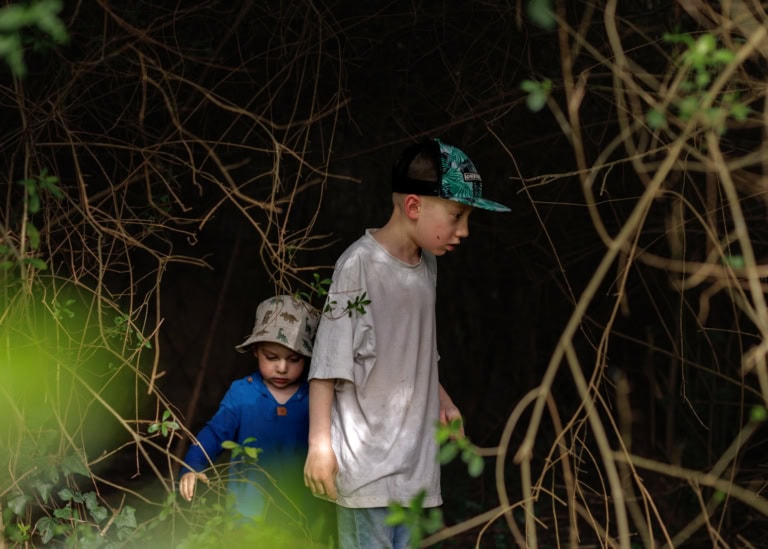 Peine, 13 April 2024. Jakob and his little brother explore the park and lose themselves in play. Jakob leads the way. They are a team in which the big brother sets the direction.
Exploring together: Jakob, 8, playfully leads his little brother through the park – the two are an inseparable team.
This dramatic situation is by no means new. As early as January 2020, science journalist Dr Jakob Simmank asked the crucial question on Zeit Online: ‘If 900 people die every year because they don’t get a donor organ – isn’t that too high a price for the right not to have to decide?’ At the time, a bill to introduce an opt-out system had just failed. Under this rule, everyone would in principle be considered an organ donor after death unless they had expressly objected with a donor card or other declaration. Supporters had hoped this would finally meet the demand for organs. Critics, on the other hand, saw it as an intrusion into people’s right to self-determination.
A few weeks later, the Covid-19 pandemic broke out worldwide. ‘During the pandemic, organ donation fell by the wayside,’ says Anton Vester. Intensive care units were overloaded, and staff of the German Organ Transplantation Foundation (DSO) were often not allowed into hospitals because of strict hygiene measures. The consequences were serious: in the first quarter of 2022, organ donations in Germany fell by around 30 per cent compared with the previous year.
The numbers have since stabilised, but there is no sign of significant improvement. So in summer 2024, a new attempt to introduce the opt-out system was launched in the Bundestag. North Rhine-Westphalia’s health minister, Karl-Josef Laumann (CDU), explained that the measures taken so far had not been enough to increase organ donation numbers sustainably.
Whether the opt-out system alone will be enough to improve the situation decisively remains to be seen. It probably needs a whole package of measures. But perhaps a broad discussion of this rule can help bring organ donation more into public awareness. Anton Vester draws a clear conclusion at the end of his project: ‘Everyone should ask themselves where they stand on organ donation. Doubts and uncertainties are completely understandable, but engaging personally with this subject is essential.’
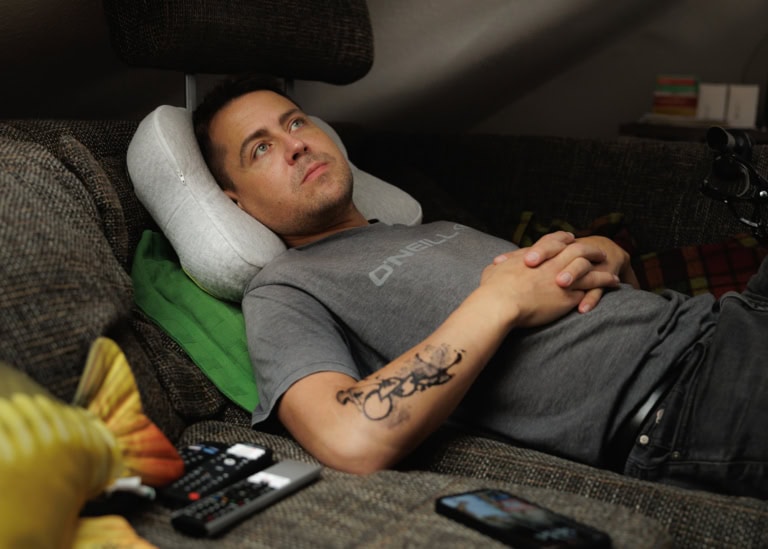 Benningen, 2 April 2024. Alexander Brucker now regularly lies on his sofa and video-calls his two daughters. The freshly inked tattoo on his left arm marks him as an organ donor.
Alexander Brucker video-calls his two daughters from his sofa. A new tattoo on his left arm shows that he is an organ donor.
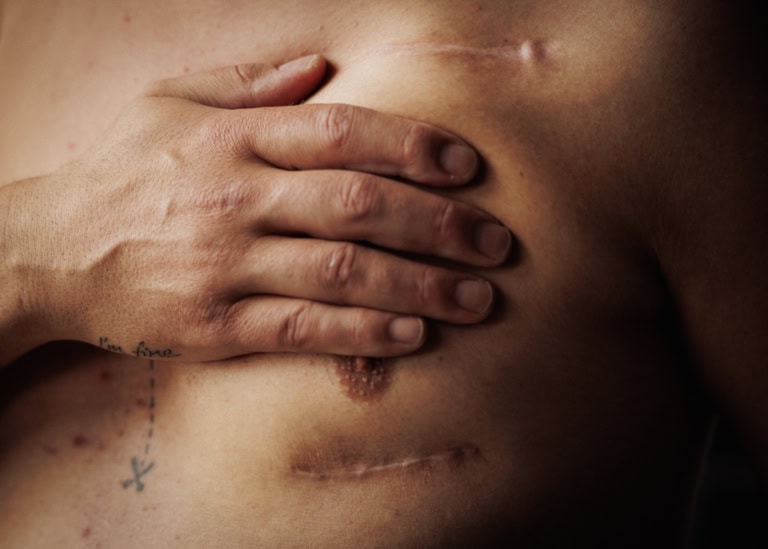 Benningen, 4 June 2024. Alexander Brucker lives on the third floor. His heart, which no longer works properly because of heart failure, regularly reaches its limits. He has collapsed in the stairwell several times. Upper scar: defibrillator surgery; lower scar: lead implantation.
The climb to his third-floor flat regularly pushes Alexander Brucker to his physical limits; he has already collapsed in the stairwell several times. The upper scar is from defibrillator surgery, the lower one from a lead implantation.
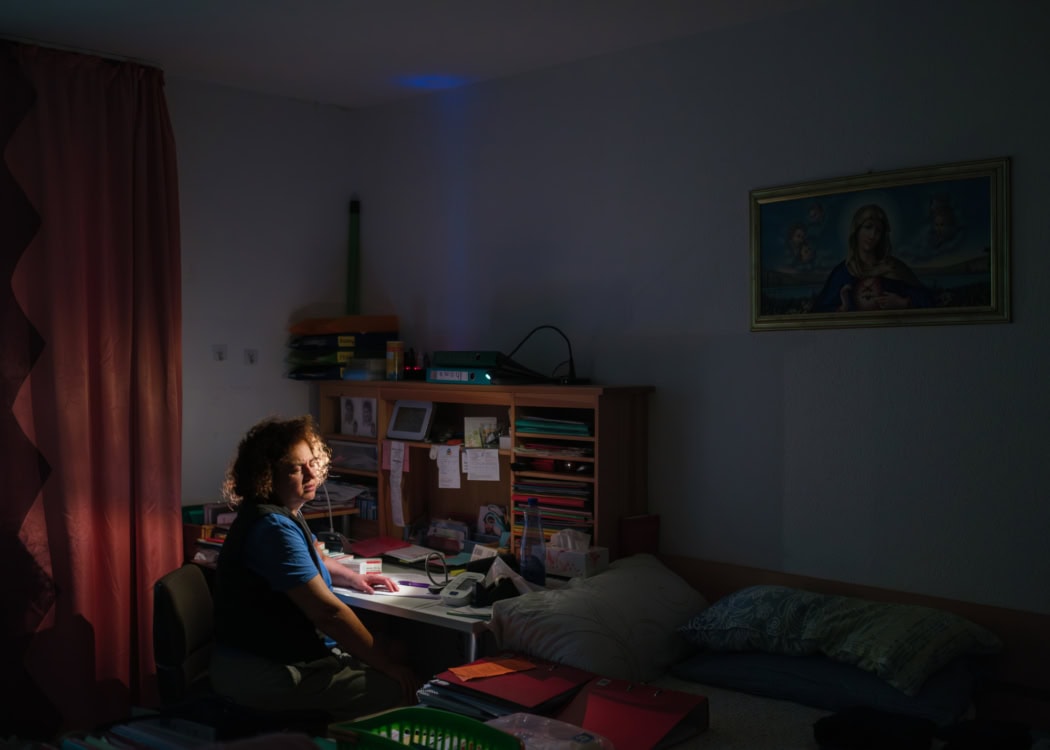 Birkenfeld, Enz district, 20 June 2023. Silvia Acar keeps her evening medication log. She struggles with chronic fatigue and, because of her weak kidneys, is about to be put on the waiting list.
Every evening Silvia Acar meticulously records the medication she takes. Chronic fatigue weighs heavily on her, and because of her damaged kidneys she is about to be put on the transplant waiting list.
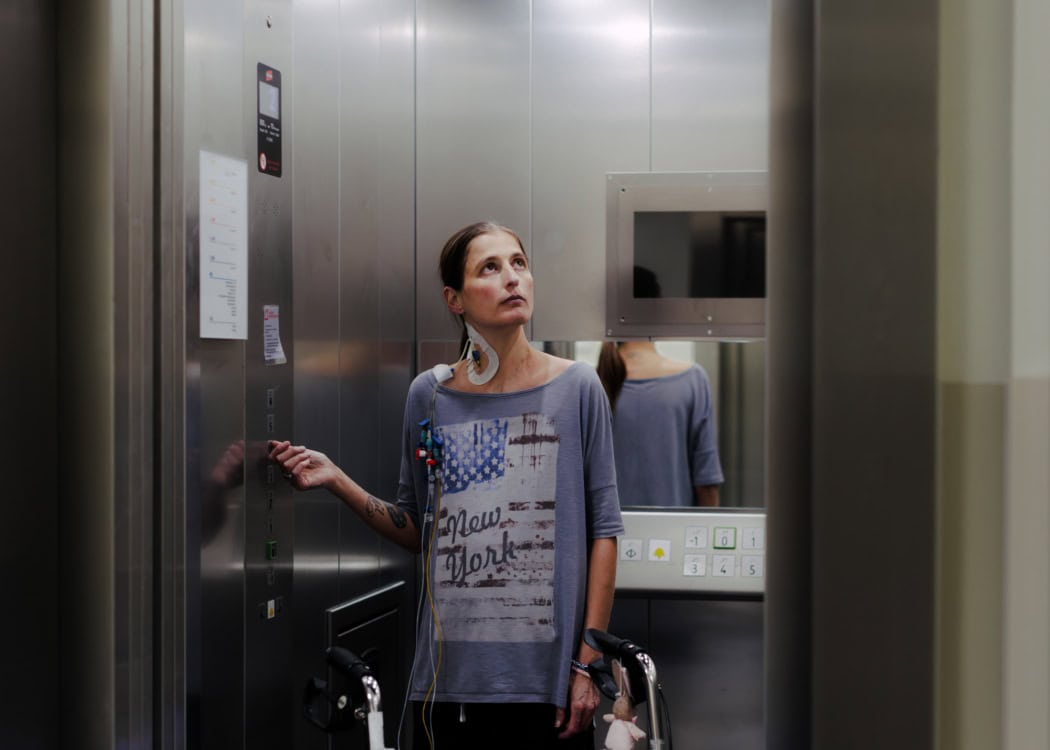 Paulinenkrankenhaus hospital, Berlin, 26 May 2024. Jennifer Krienke has lived with a heart defect since birth. ‘Throughout my life I often went against medical advice by being much more active than doctors recommended. According to many doctors, I have already outlived my life expectancy.’
Jennifer Krienke has lived with a serious heart defect since birth. ‘I deliberately went beyond the limits doctors set for me and was much more active.’ She says she outlived her prognosis long ago.
 Paulinenkrankenhaus hospital, Berlin, 11 May 2024. For more than a year, Alisa Gilmutdinova has looked at the wall of her hospital room every evening, which makes her the longest-waiting patient on Ward 2. The teddy bear was a gift from a friend and former roommate.
For more than a year Alisa Gilmutdinova has looked at the same wall of her hospital room every evening. She is patiently waiting for two organs that could save her life – longer than anyone else on Ward 2. The teddy bear was a gift from a former roommate.
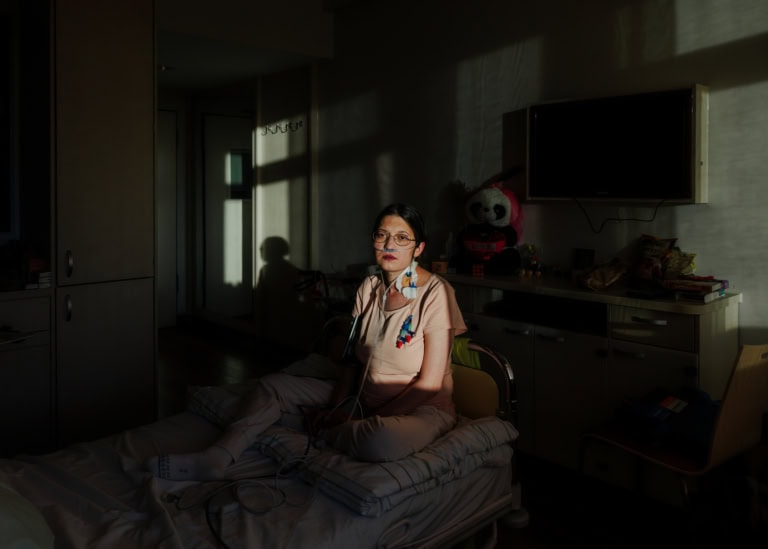 Paulinenkrankenhaus hospital, Berlin, 11 April 2024. Alisa Gilmutdinova is waiting for a new heart and new lungs. Needing two matching organs is a medical challenge – and it means Gilmutdinova has to wait particularly long.
Alisa Gilmutdinova’s wait is particularly long because she needs a new heart and new lungs at the same time. Finding two matching donor organs at once is extremely demanding medically.
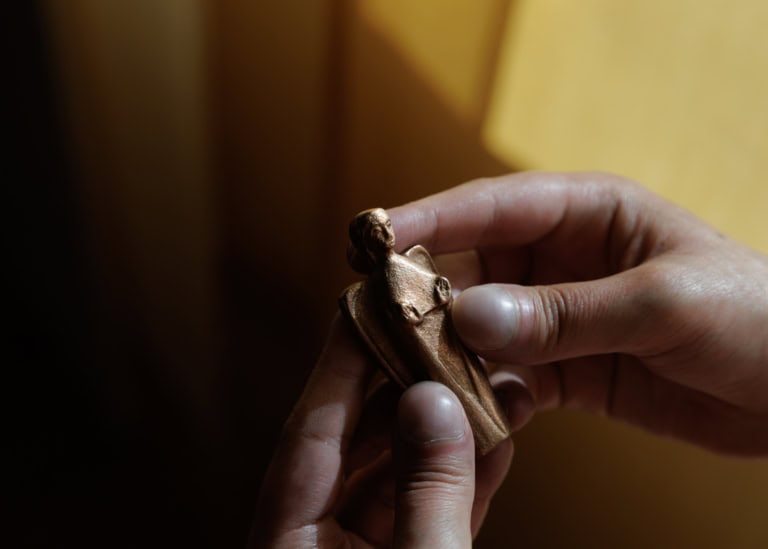 Paulinenkrankenhaus hospital, Berlin, 11 April 2024. Her fingernails already show signs of clubbing, caused by a lack of oxygen due to her lung disease. The angel carries her through this difficult time.
Her fingernails already show signs of clubbing – a clear sign that Alisa Gilmutdinova’s lung and heart function are severely impaired.
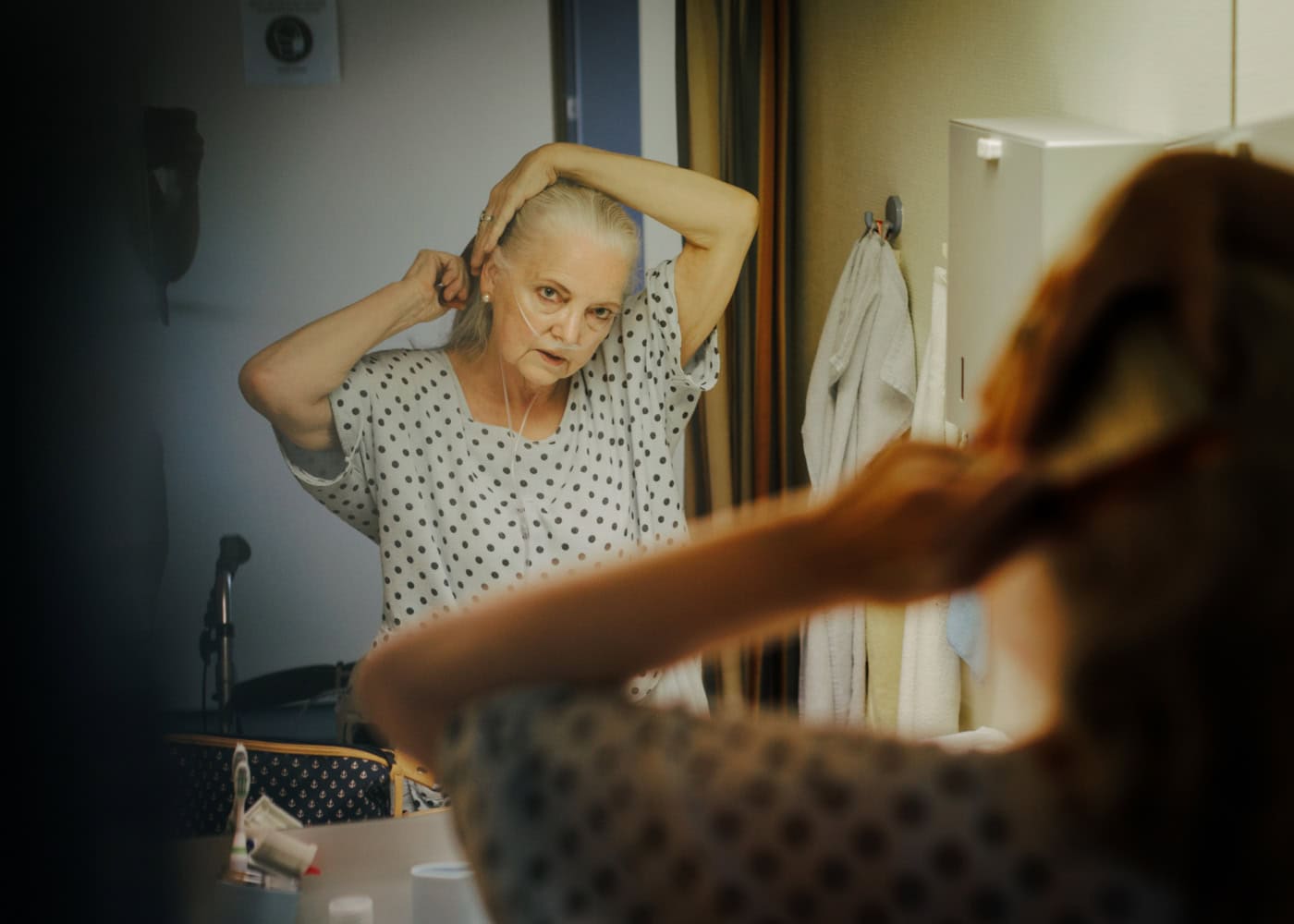 Paulinenkrankenhaus hospital, Berlin, 25 May 2024. Astrid Gruschke depends on supplemental oxygen 24 hours a day – and needs more and more, because her lungs are deteriorating. The interior designer, who has been an inpatient for three months, is no longer allowed to leave the hospital grounds.
In hospital for three months: interior designer Astrid Gruschke is permanently connected to an oxygen machine. Her condition is steadily getting worse; her weakened lungs can no longer supply her with enough oxygen.
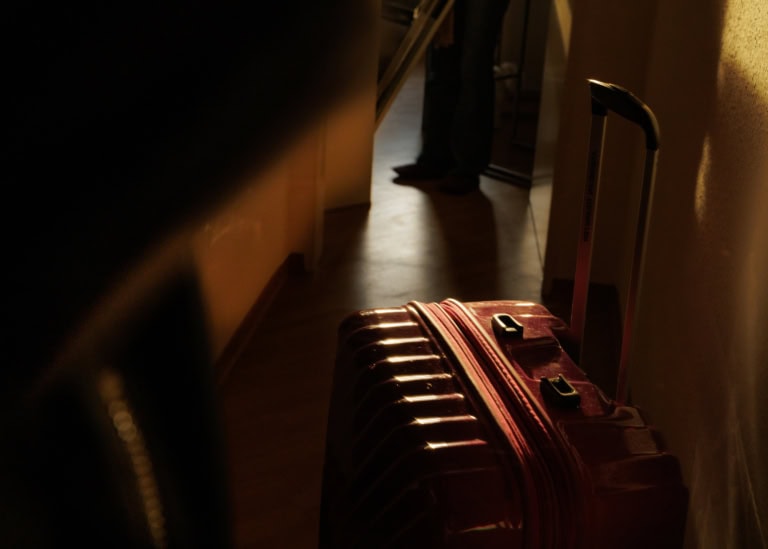 Osnabrück, 26 April 2024. Svenja Wilms’s suitcase stands in the hallway of her flat, packed and ready for the next call – the call with an organ offer.
Svenja Wilms lives on standby: her suitcase is packed, and at any moment the phone could ring with news of an available donor liver.
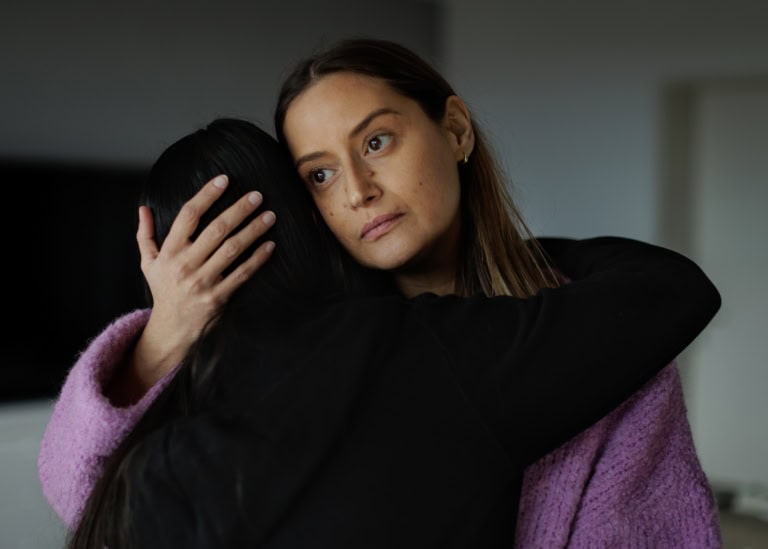 Osnabrück, 26 April 2024. Svenja Wilms’s close relationship with her half-sister Araya is shaped by an awareness that time is finite. Svenja, who was diagnosed with cirrhosis of the liver as a result of an autoimmune disease, needs a new liver. There is no replacement therapy for the liver.
Svenja Wilms and her half-sister Araya live with an awareness that time is finite. Svenja urgently needs a new liver – a reality that gives their relationship a very special intensity.
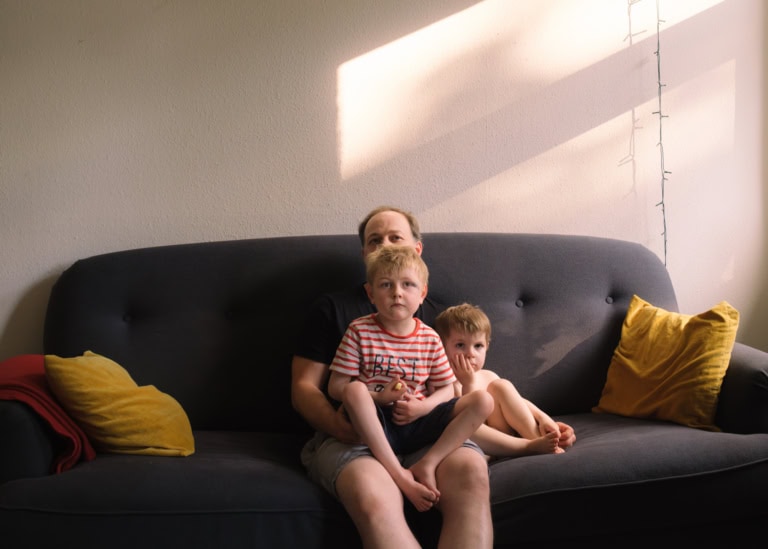 At the Dahlmann family’s home in Berlin, 24 June 2023. After dinner, Levi, 8, and his little brother are allowed to watch the children’s TV programme ‘Sandmännchen’. Levi sits on his father’s lap. He has a bruise at the corner of his right eye from playing; because he takes blood thinners, he bruises particularly easily. A heart defect was diagnosed shortly after he was born.
Evening ritual: Levi, 8, sits on his father’s lap in front of the TV, watching ‘Sandmännchen’ with his little brother. He got the bruise near his eye while playing – because of his blood-thinning medication, such injuries happen particularly quickly. He has lived with a heart defect since birth.
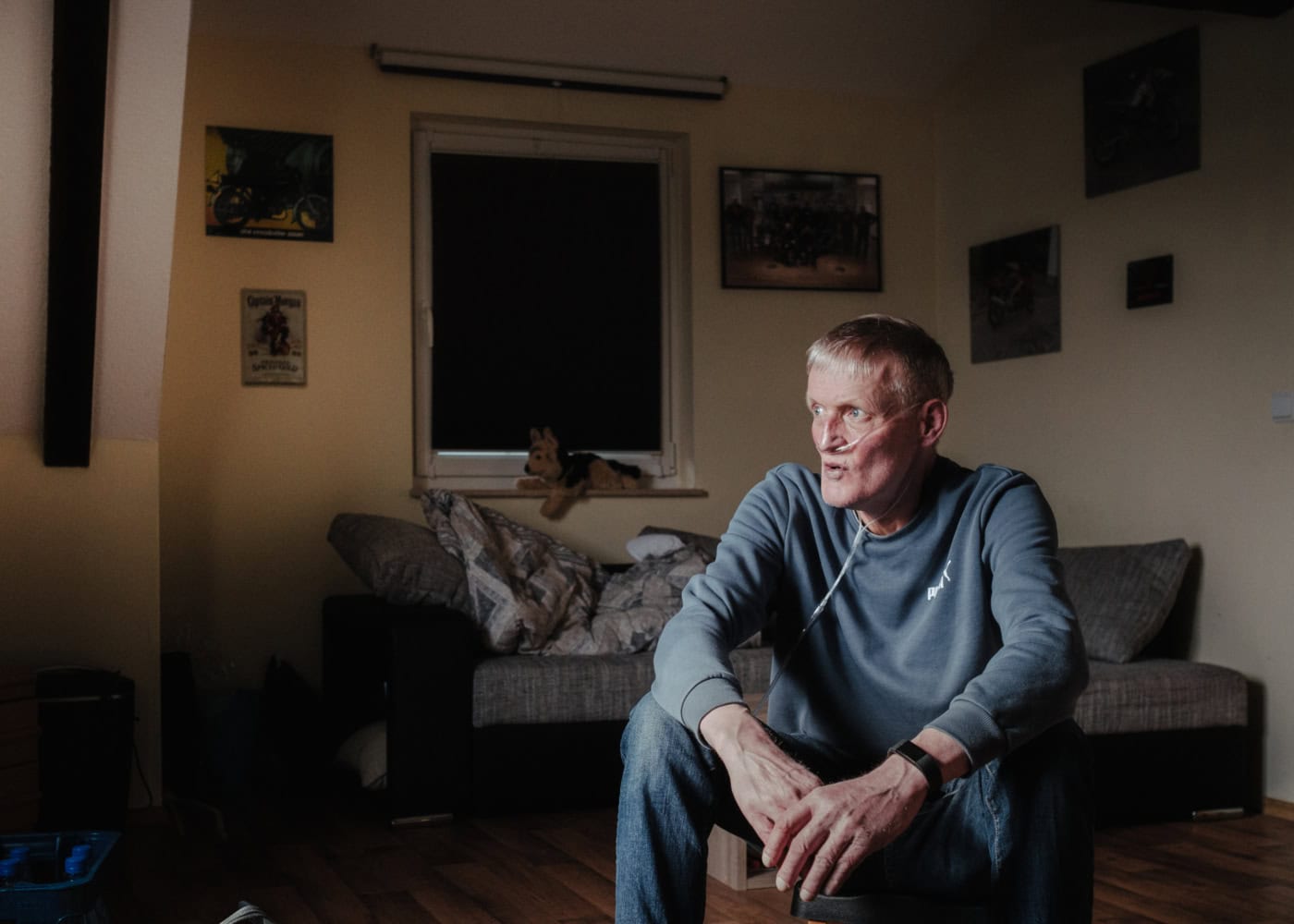 Goddelsheim, 6 April 2023. Norbert Hühner takes a break during an hour-long interval training session for his back. Because he has long suffered from pulmonary fibrosis, he depends on supplemental oxygen.
During a short break in his hour-long interval training for his back, Norbert Hühner uses supplemental oxygen. Because of his long-standing pulmonary fibrosis, he needs it whenever he exerts himself.
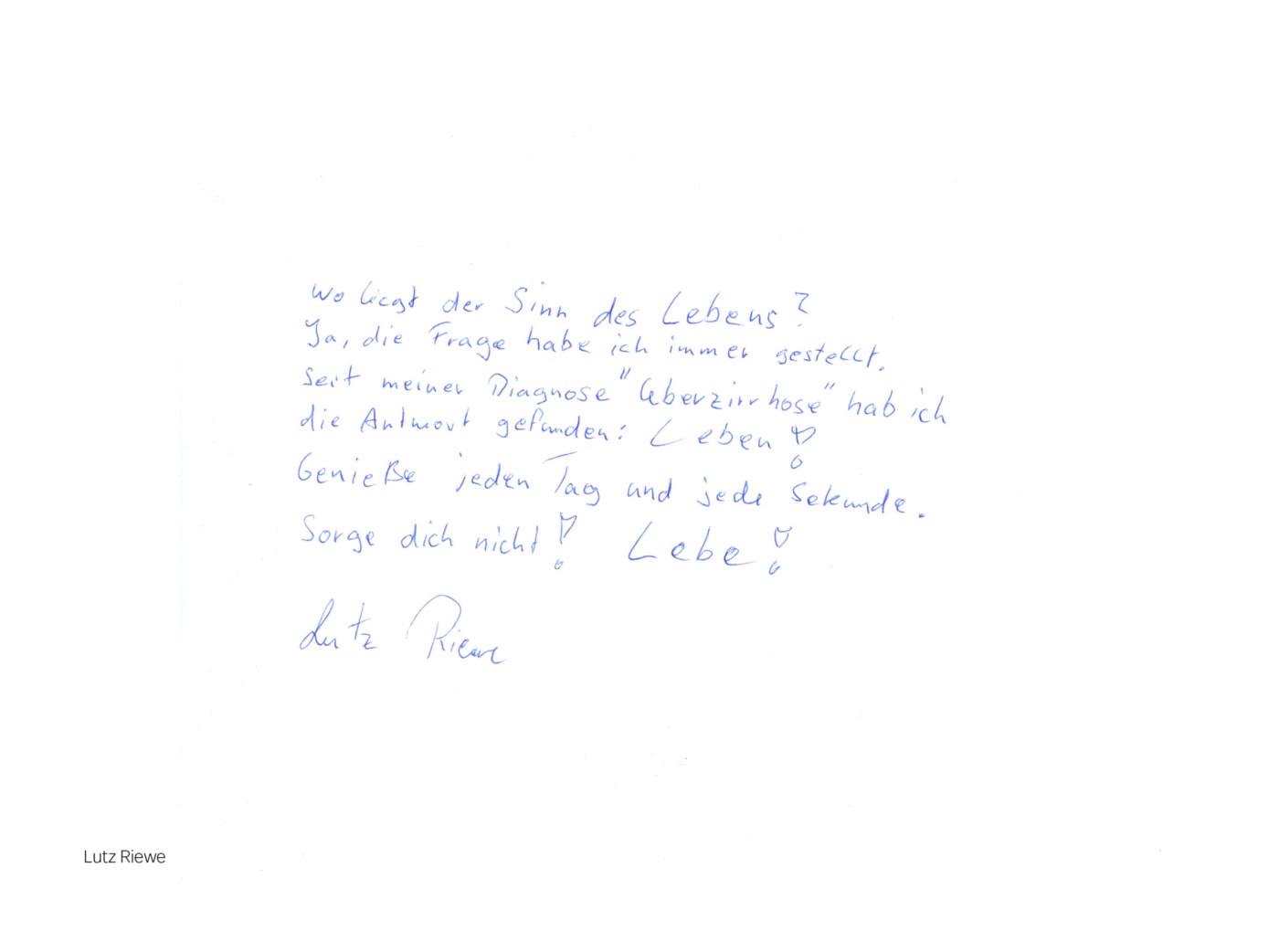 Text von Lutz Riewe
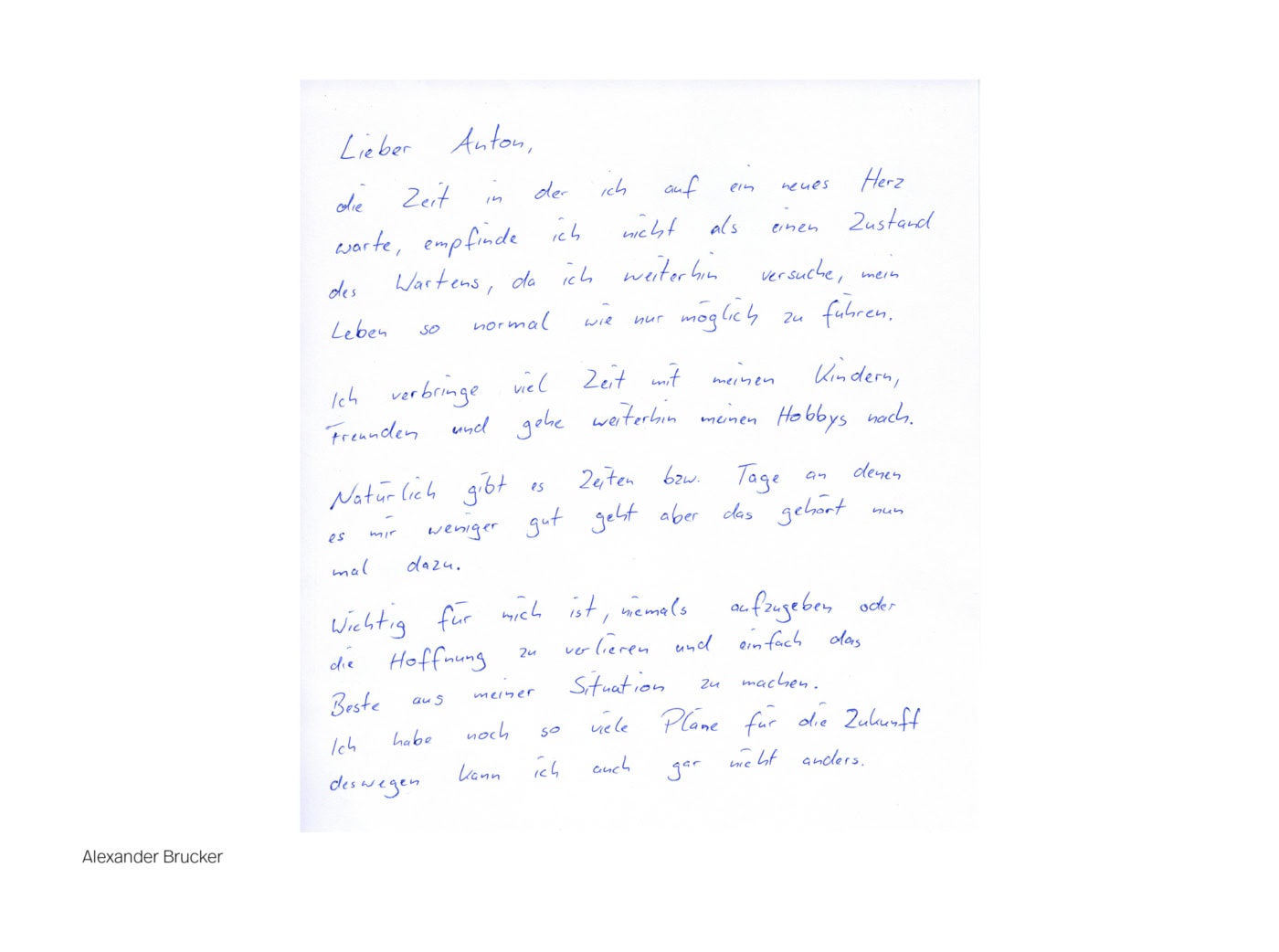 Text Alexander Brucker
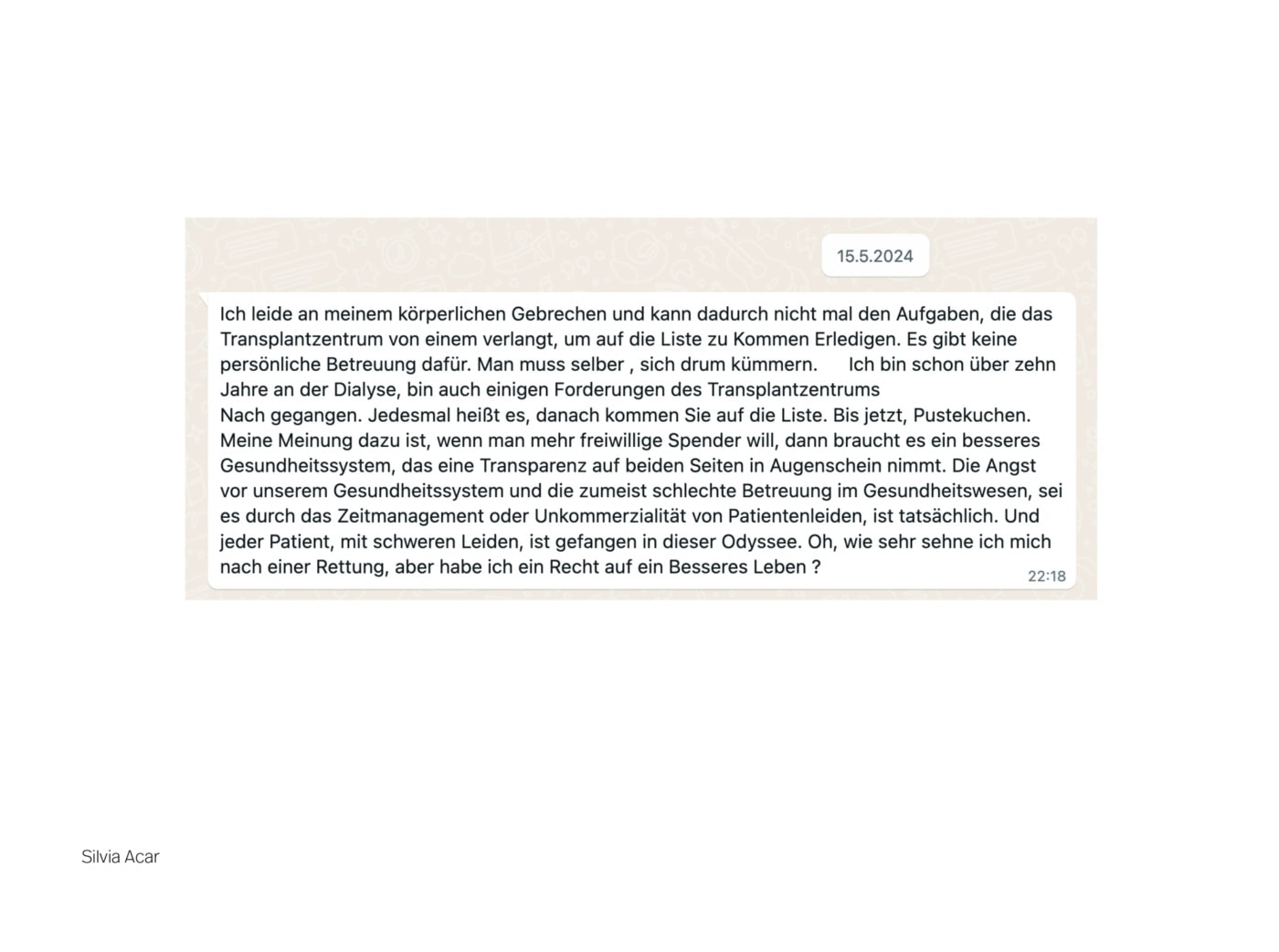 Text Silvia Acar
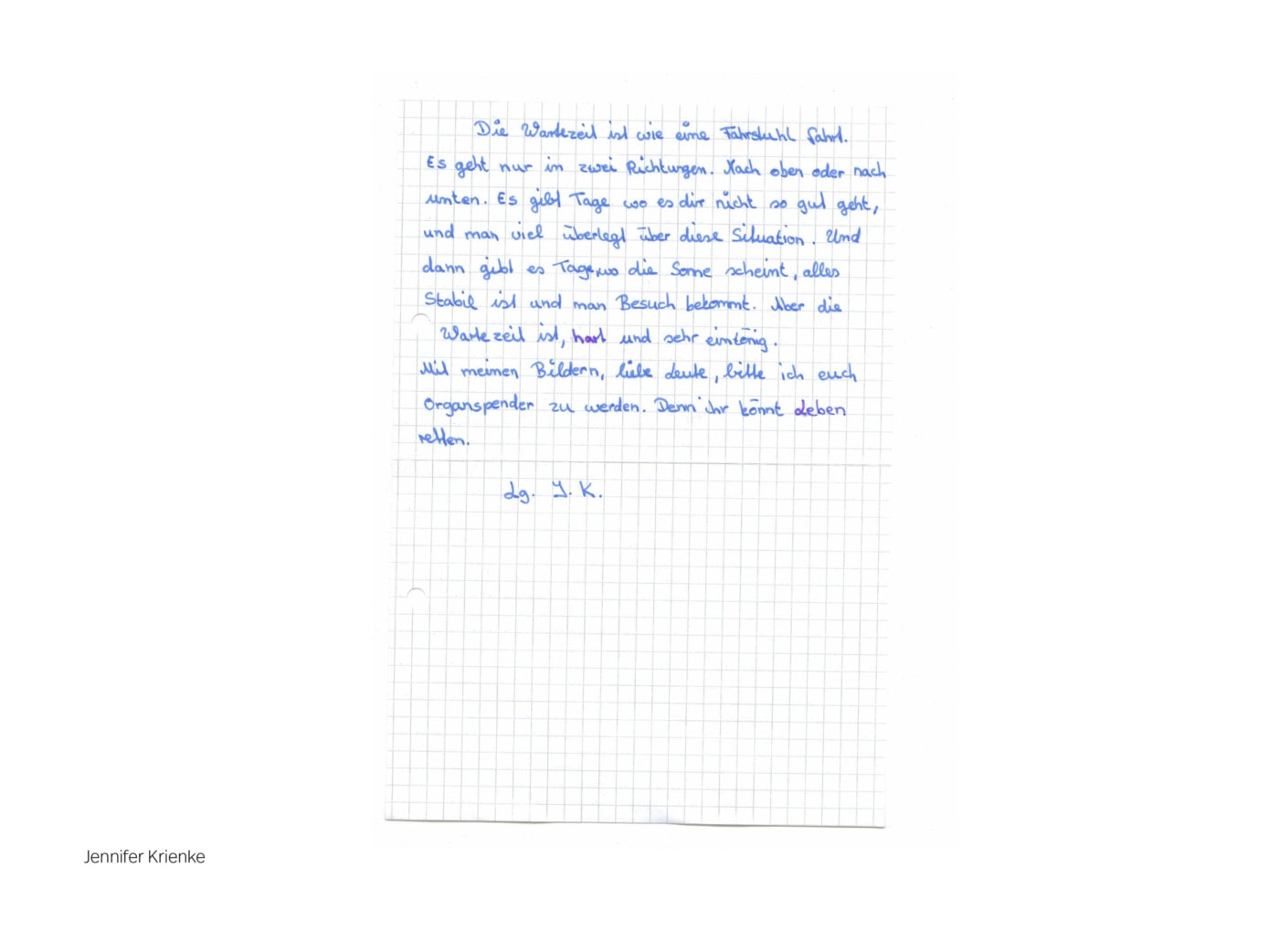 Text Jennifer Krienke
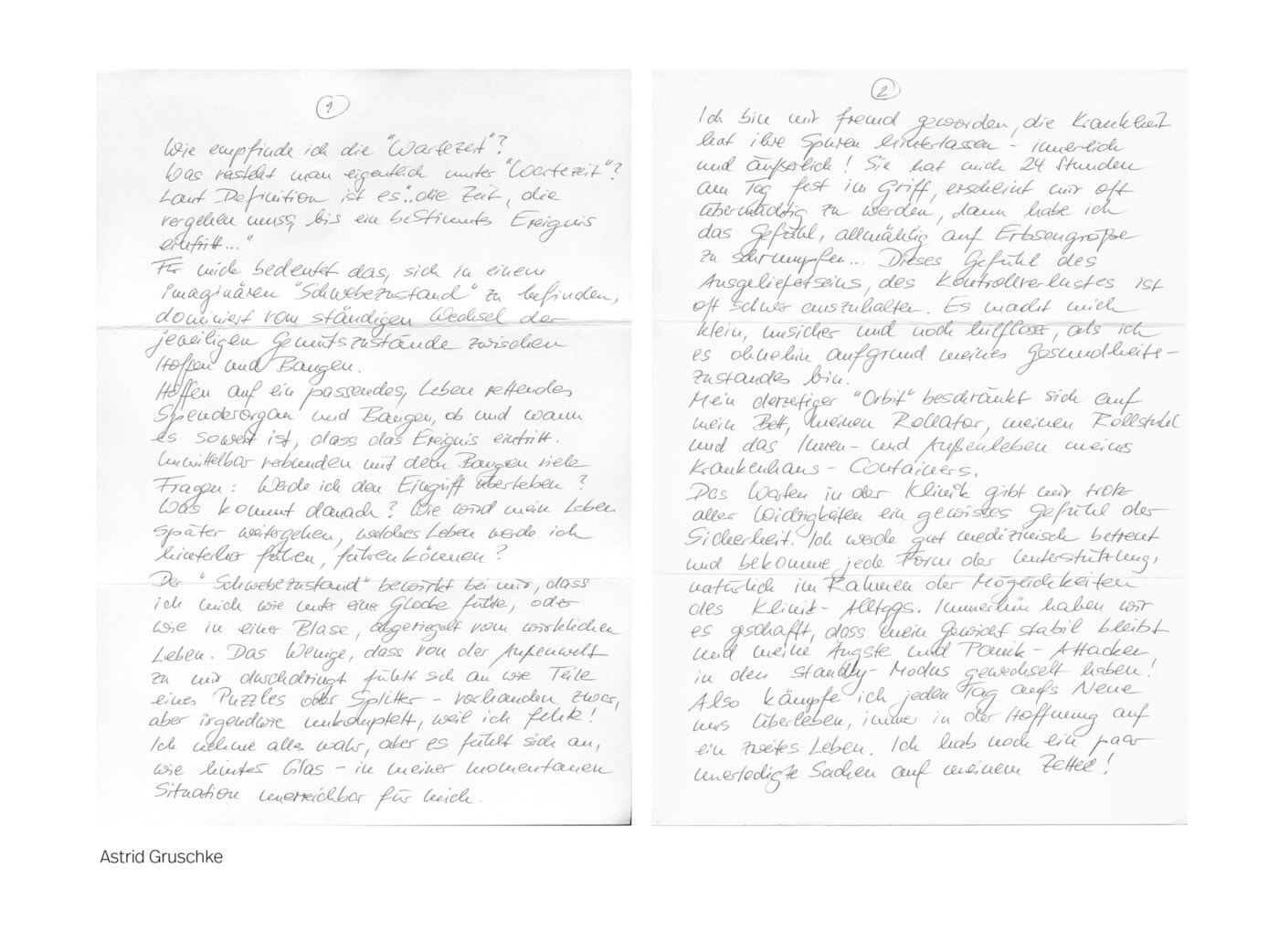 Text Astrid Gruschke
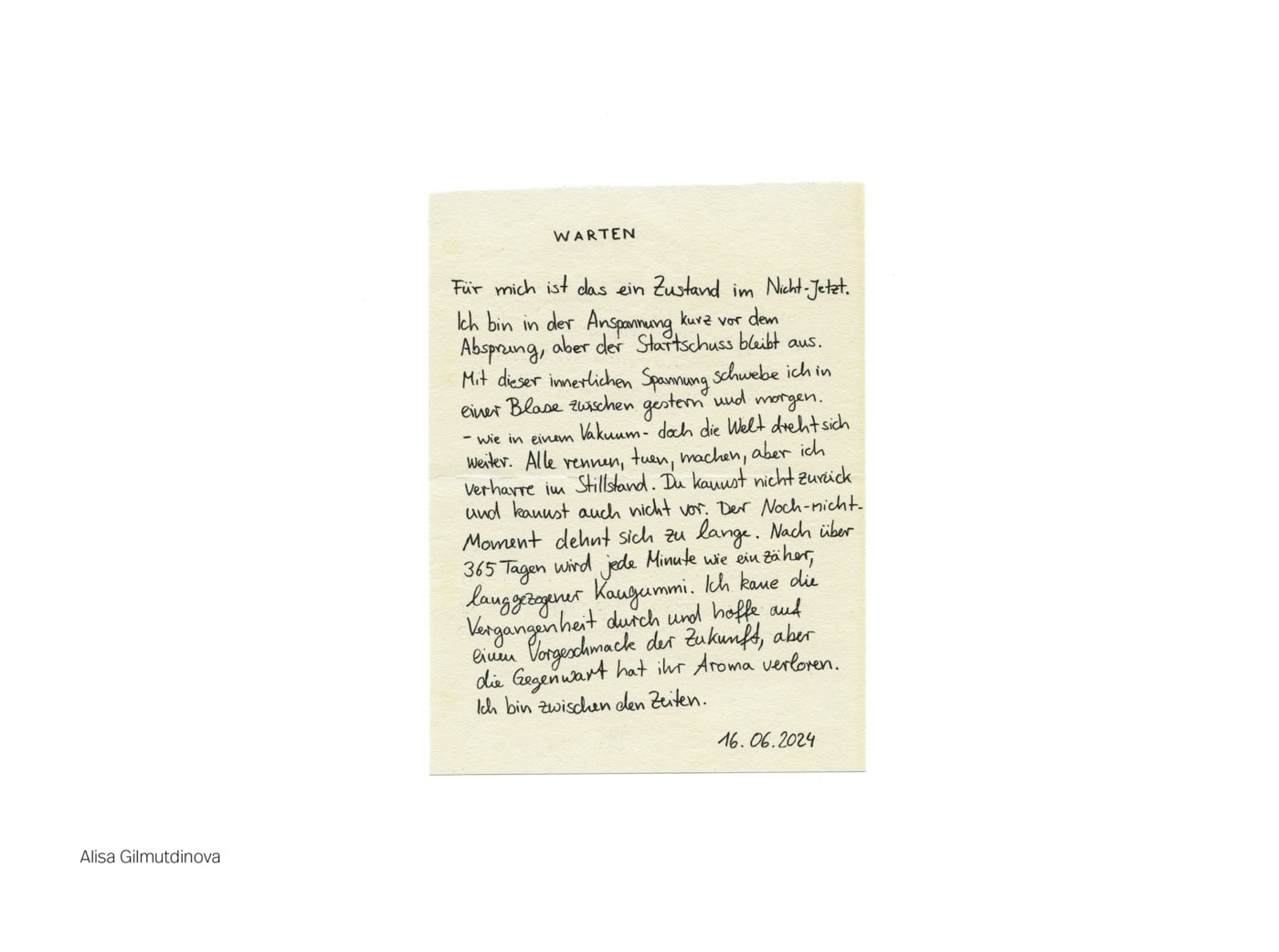 Text Alisa Gilmutdinova
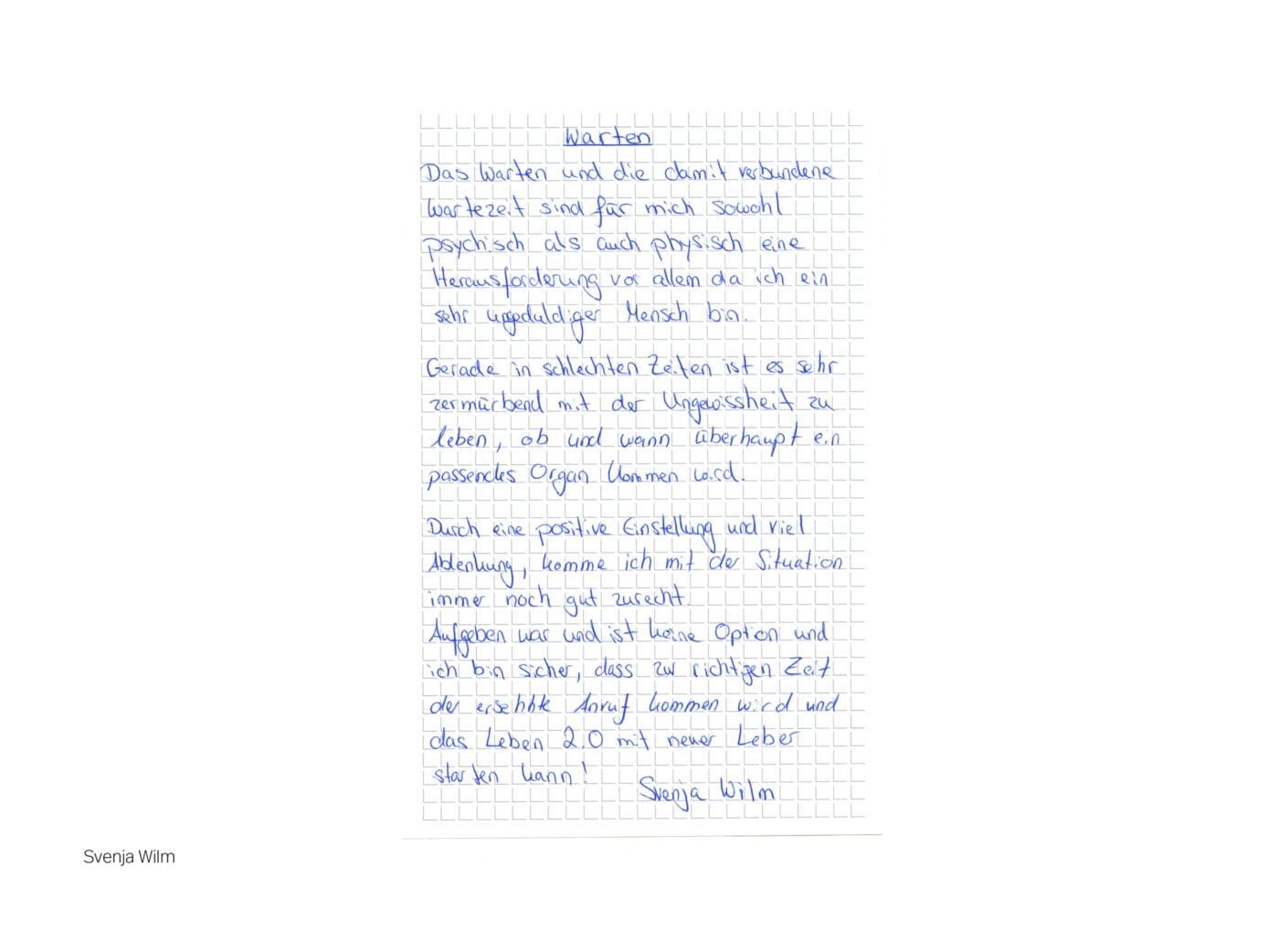 Text Svenja Wilms
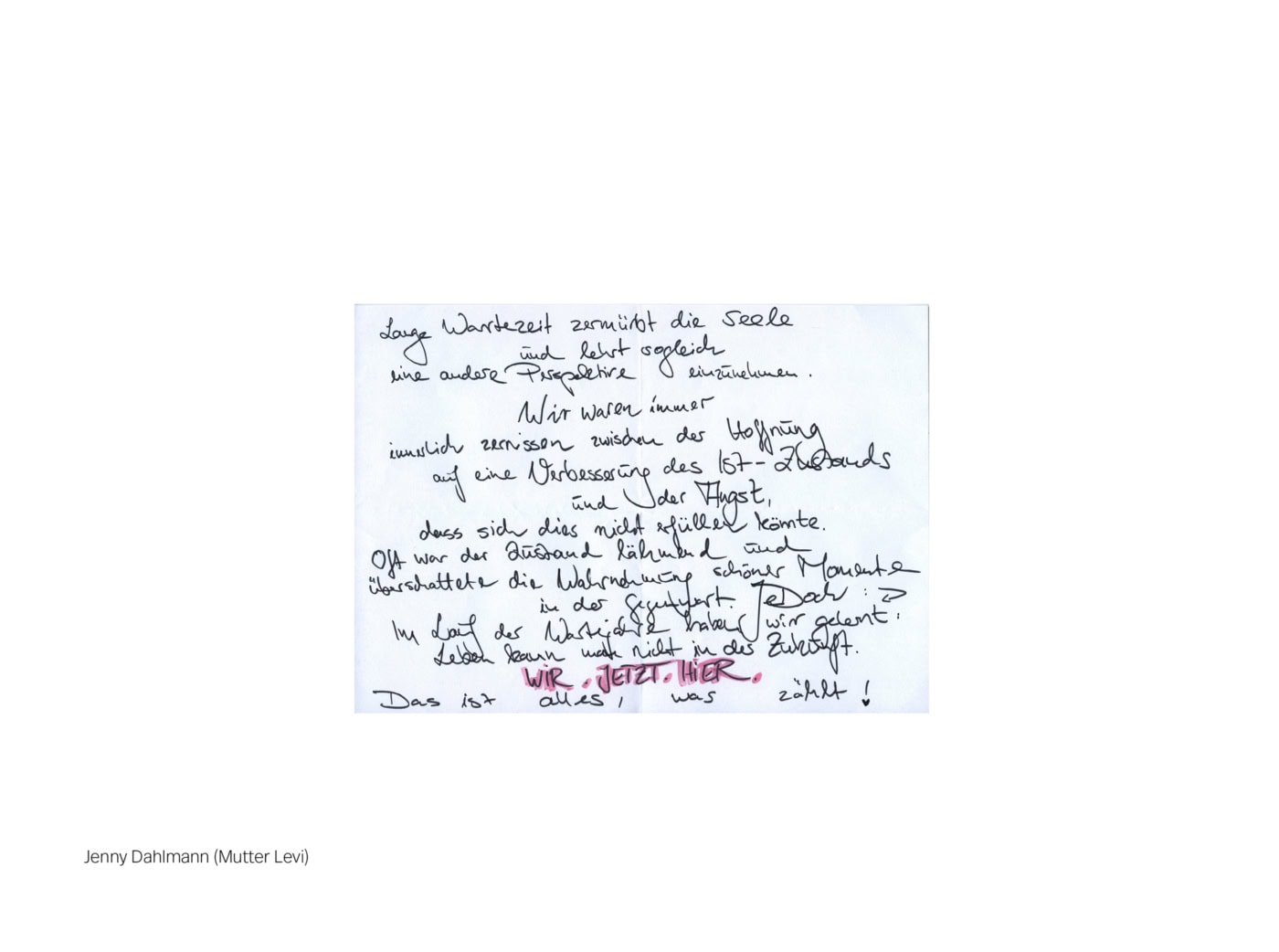 Text Jenny Dahlmann (Mutter Levi)
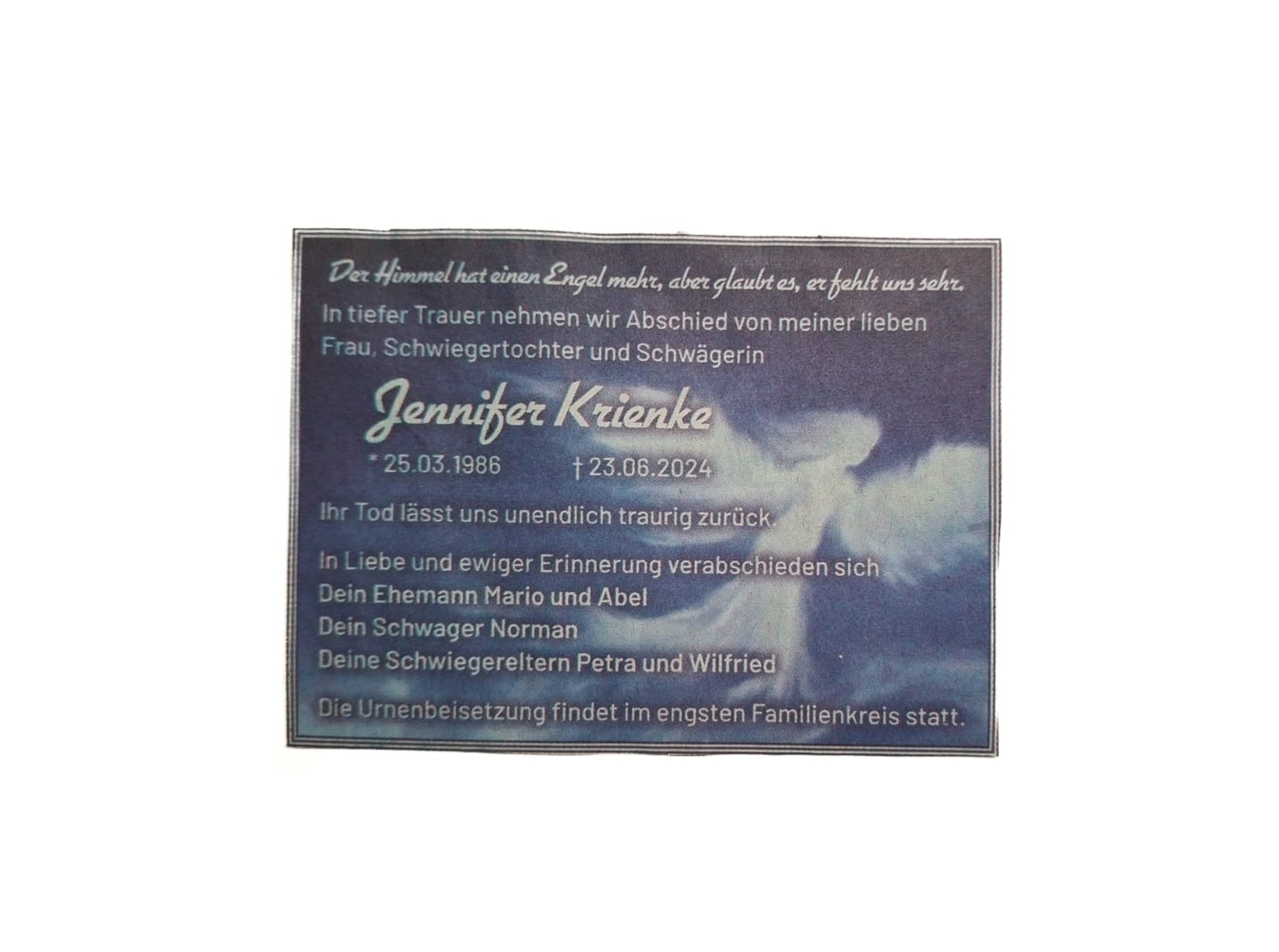 1 July 2024. Jennifer’s husband, Mario Krienke, wrote from his wife’s phone: ‘Sadly, Jenny passed away on 23 June 2024 after suffering brain haemorrhages.’ As it later emerged, she was already undergoing transplant surgery, which probably came too late. Death notice from the Märkische Oderzeitung newspaper.
Jennifer’s husband, Mario Krienke, wrote from his wife’s phone: ‘Sadly, Jenny passed away on 23 June 2024 after suffering brain haemorrhages.’ As it later emerged, she was already undergoing transplant surgery, which probably came too late. Death notice from the Märkische Oderzeitung newspaper.