Night-time in the village: shisha in the barn, joyrides through the middle of nowhere
Where nothing seems to happen in the evening, yet everything does: young people in a village in Lower Saxony after dark.
By Jonathan Bar-Am, Annica-Farina Badowski (text), Lena Kunz (photos)


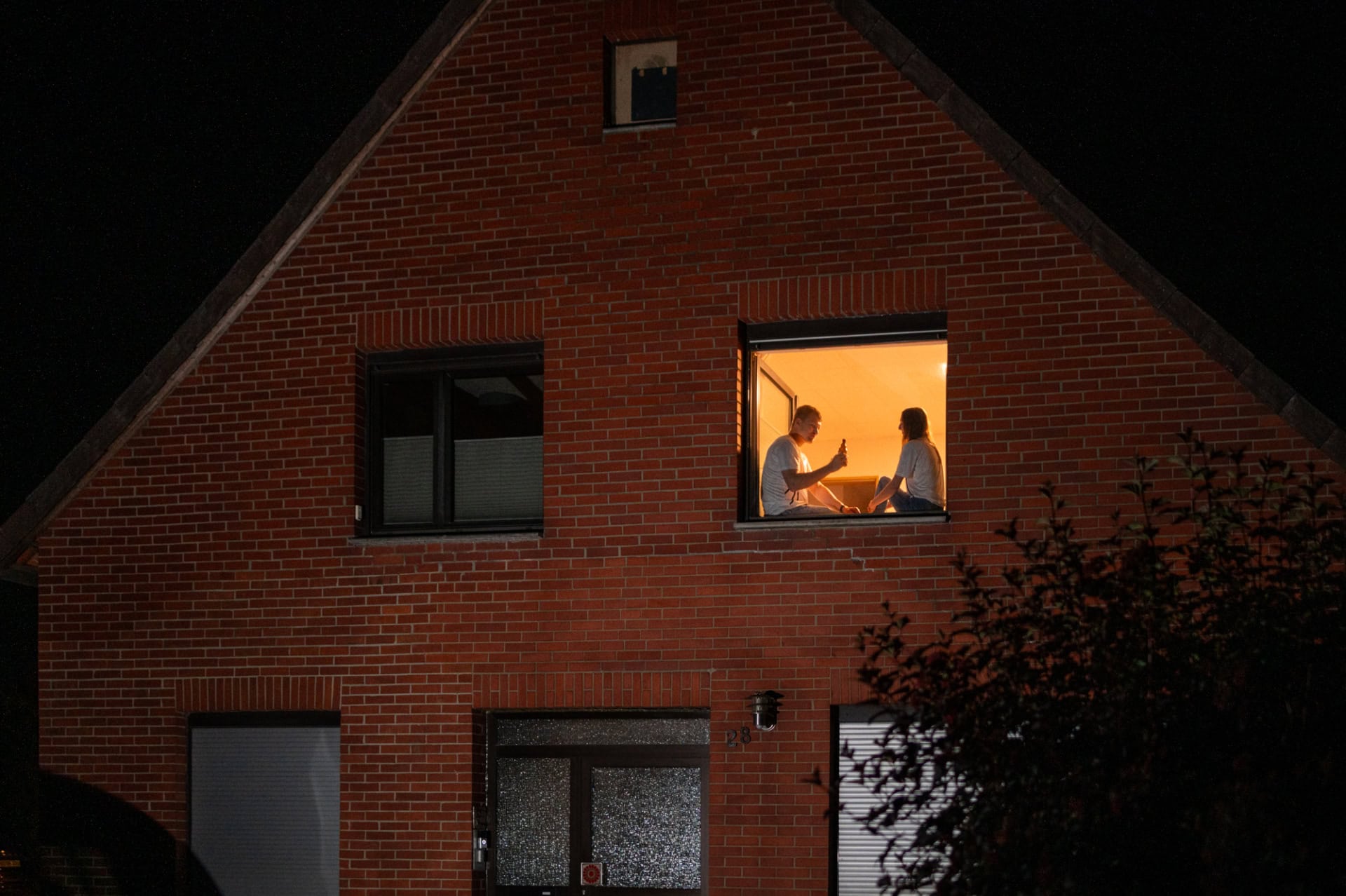
‘Nightlife here is just completely different from the city,’ says Lena. The 24-year-old student grew up in Münchehagen, a small village between Hannover and Osnabrück. ‘There are no clubs or bars. We always met at the edge of the woods, in playgrounds or in someone’s garden.’
Brick houses, paddocks, a McDonald’s and yet more small brick houses. We are on our way to Münchehagen to meet young people growing up in the countryside – just as Lena once did. For three villages and half an hour’s drive we haven’t seen a soul, and this on a Saturday evening. We drive past the ‘Deutsche Eiche’; the inn is dark. A few metres further on, the ‘Deutsches Haus’ – closed too. We park next to a tractor. Two more vintage tractors stand in the garage. The loft above is fitted out with a sofa corner, a minibar and a TV. On YouTube, tractors are pulling each other through a muddy field. ‘That’s just how it is here in the village!’ We’re greeted with laughter and offered a beer.
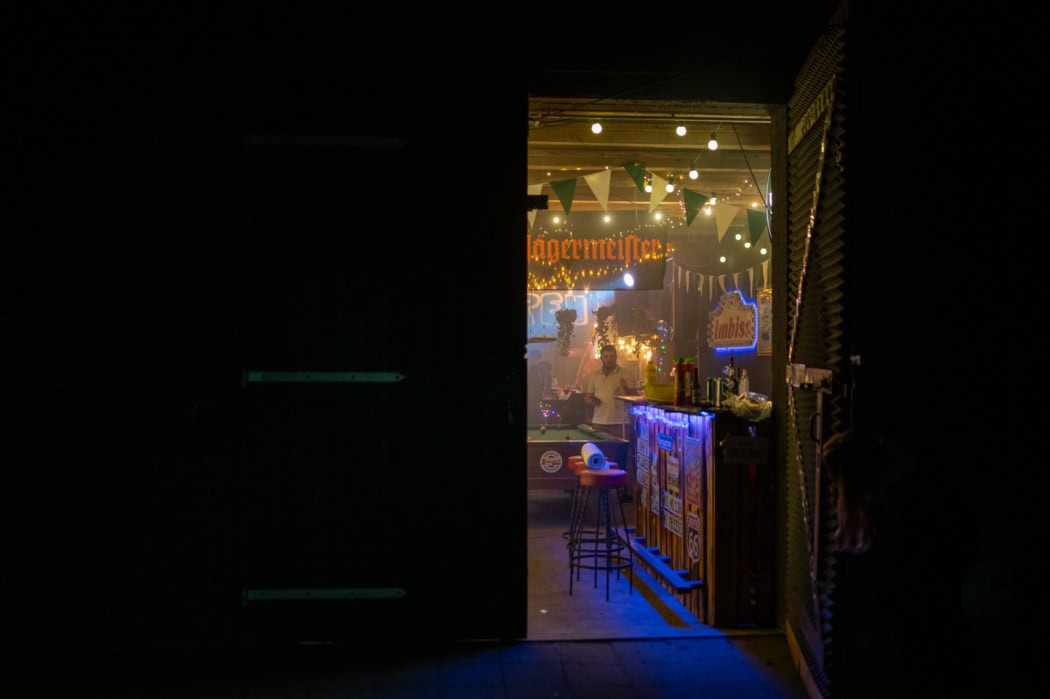
The ‘Schuppen’ is a central meeting place for young adults in the village. Birthday parties and other parties are often held here at weekends.
‘We used to always look for somewhere, anywhere we could hang out – some bench or hut built out in the fields. Maybe you’d have a little party or something, have a drink and a barbecue together. But now there’s the Schuppen,’ Jannik explains. A converted farm barn straight out of a picture book. That ‘we did it all ourselves’ shows – and not only in their proud faces. The table football, pool table and slot machine could indeed hold their own against any student pub in the city.
‘There may be fewer formal, institutional spaces, but there’s a lot of freedom. And most young people live in family homes with big gardens, and they’re allowed to use them,’ says Andrea Moser of the Agrarsoziale Gesellschaft, an association for rural affairs. So it’s not really surprising, she says, that young people in rural areas are mostly very satisfied – contrary to many prejudices. That is confirmed by the results of a nationwide empirical study that Andrea Moser was involved in. Other research shows that the population in rural regions has recently been rising too. It is even increasingly common, she says, for young people to stay in their rural home towns while young families move in from the city. Many people want to live surrounded by greenery. And the village youth, well, they meet at the edge of the woods to play beer pong.
There may be fewer institutional spaces, but there’s a lot of freedom. Most young people live in family homes with big gardens, and they’re allowed to use them. That creates room for them to take the initiative themselves.
 Andrea Moser
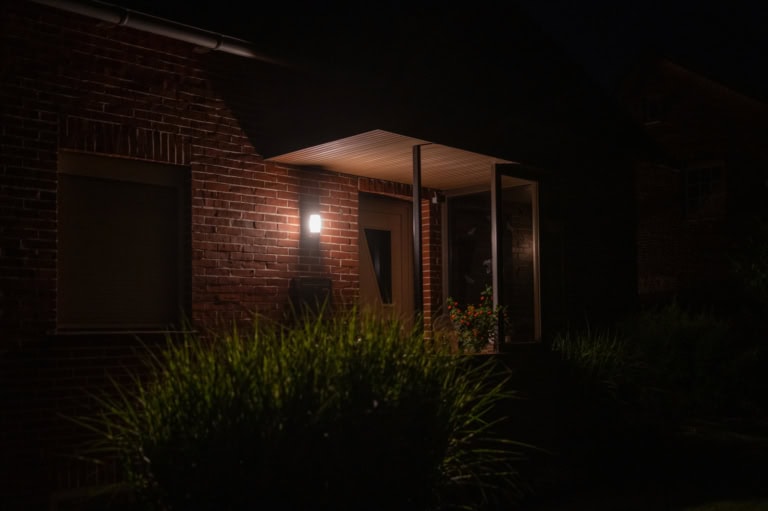
Lena’s parents’ house. Unlike many people her age, she can no longer imagine moving back.

One of the last evenings of the year in the ‘Schuppen’. From November it’s too cold there.
What began as a small DIY lockdown project in the barn has become an established meeting place in Münchehagen. These days, it’s not only the group of friends and the village youth who gather in the ‘Schuppen’ – even the older generation like to keep them company. So nobody has to worry about noise complaints. They’re on good terms with the neighbours, and most of them drop by for a nightcap now and then themselves. Including the police and the pastor – but only in a private capacity. Wink – that’s just how it is here in the village.
Hardly anyone demands that politicians create alternatives. People here prefer to take matters into their own hands – through village clubs, the fire brigade or, as with the ‘Schuppen’, their parents’ barn. There is a lot of commitment, including among young people. Wiebke Osigus (SPD), until recently Lower Saxony’s minister for regional development, says: ‘Politics can’t do everything – and certainly not everywhere in the way we would like. That’s why we depend on everyone getting involved, not least through volunteering.’
Osigus herself comes from the countryside near Hannover. At the time of our conversation she was still a minister; the ministry has since been dissolved. She now sits in the state parliament as an ordinary member, remains active in regional politics – and knows all about oldies parties and the village custom of ‘Eierbacken’.
Politics can’t do everything – and certainly not everywhere in the way we would like. That’s why we depend on everyone getting involved, not least through volunteering.
 Wiebke Osigus

‘In the city everything is so fast and loud, and you meet thousands of people within minutes,’ says Silas.

‘In the evenings you often just drive around. We always call it OKF – Ortskontrollfahrt, a “village patrol drive”,’ says Esther.
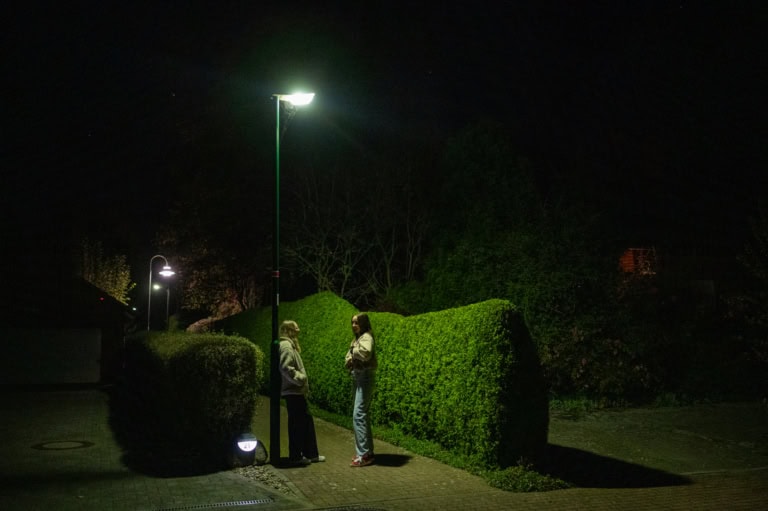
The nearest club is in the next town, the nearest pub in the next village.
In summer we often met at the edge of the woods at night and brought the beer pong table along, or we climbed over the fence of the outdoor pool to go swimming.
 Esther
Alcohol is almost always part of village nights – at barbecues, at parties or simply in the ‘Schuppen’. But how much is still normal? ‘There’s really an alcohol problem in the whole of Germany,’ says Jannik. ‘Everyone here has a beer after work. Sometimes a bit more, sometimes a bit less. It’s a matter of interpretation, I’d say.’ When the Schuppen once nearly caught fire because of a shisha, everyone was at least still able to put the fire out themselves – with apple juice. The drinks for the bar in the ‘Schuppen’ are paid for jointly.
Of course, there are no buses in Münchehagen at night. So the only options are to walk or drive yourself. It is not uncommon – and very dangerous – for young people in rural areas to drive home drunk at night. Sadly, this has happened time and again after an evening at the ‘Schuppen’, they say. So far the only accident has been a minor one involving the cemetery hedge. But everyone agrees that alcohol and a lack of public transport simply don’t mix. So we try to set a good example – it goes without saying that we are perfectly fit to drive when we say goodbye. The street lamps have long since gone out, and without full beam you can hardly see a thing on the village road. Yes – that’s just how it is here in the village.
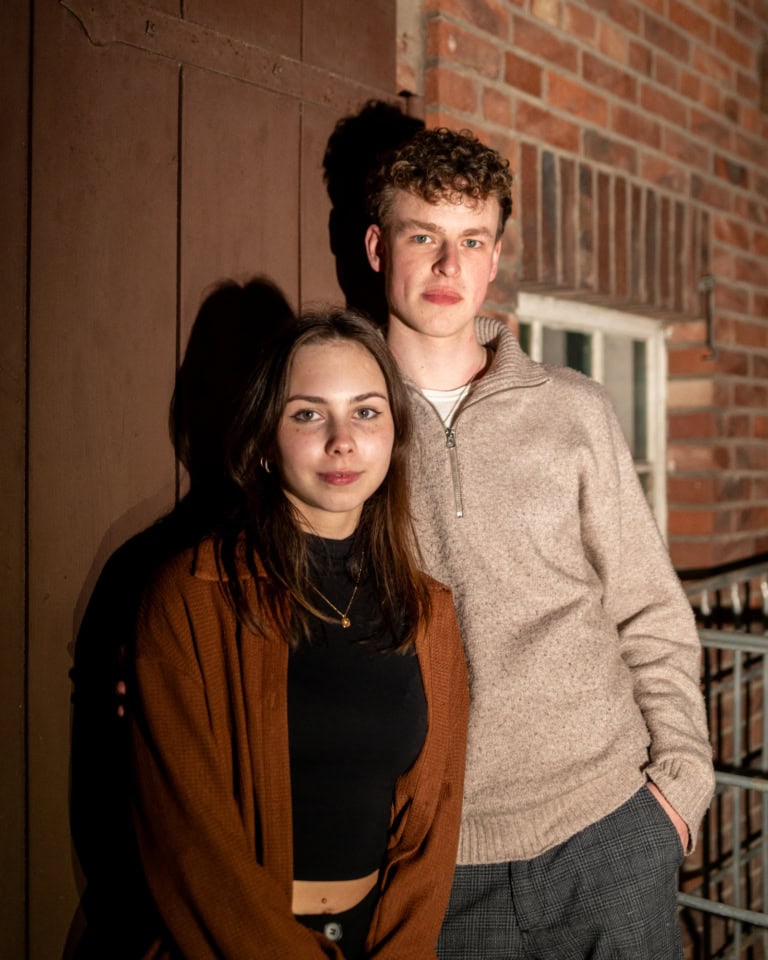
Portrait of Juliane and Jannik in front of the ‘Schuppen’.
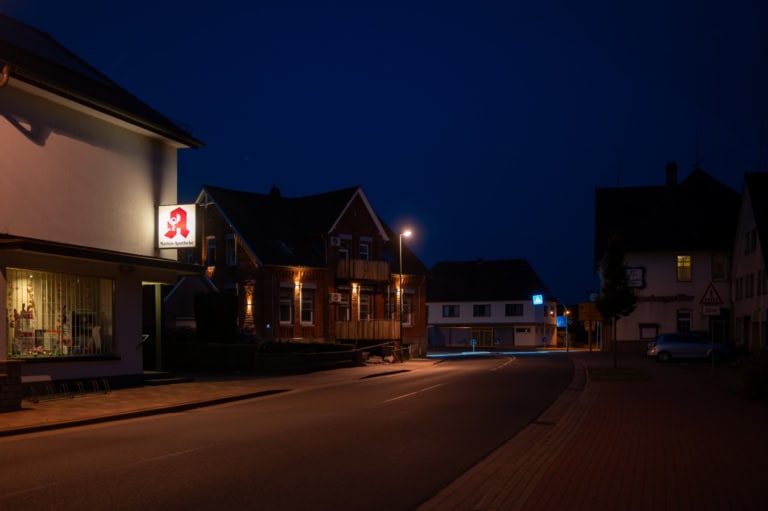
The street lamps in Münchehagen go out at 11 p.m. After that, it’s dark.