Hannover’s night angel: help while the city sleeps
An interview about night-time rounds through the city, encounters on the margins – and help that gets through.
By Henrike Meyer (text), Janek Stempel (photos)


It’s 7 p.m. and the small attic flat is filled with the smell of tomato soup and freshly brewed tea. Martina stands at her two-ring hob, seasoning two big pots of soup with black cumin. ‘Black cumin is anti-inflammatory,’ she explains. ‘That’s why it’s important for my homeless people – almost all of them have some kind of inflammation.’ The tea is already waiting in Thermos flasks. Always two-thirds mint tea and one-third black tea.
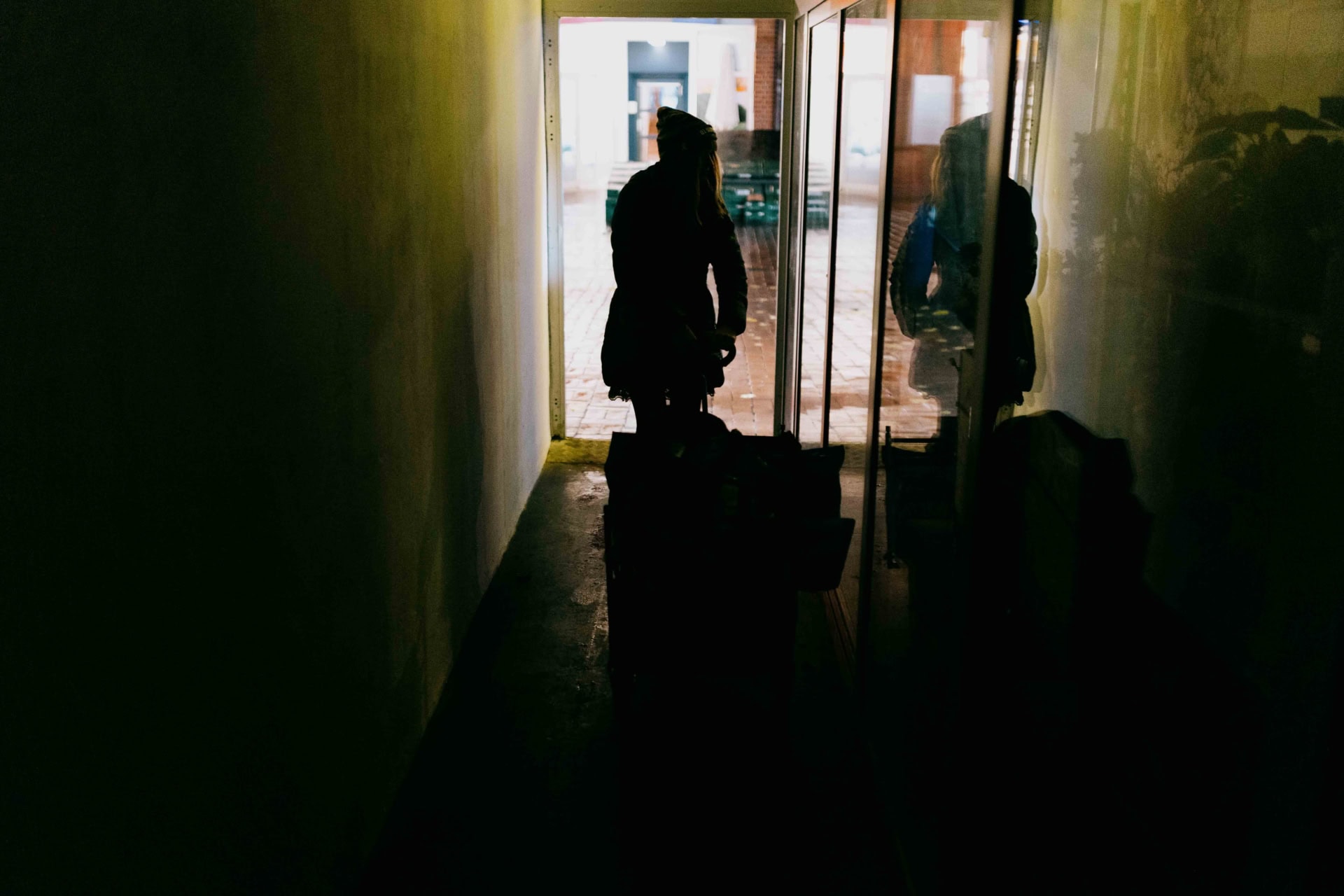
At around 7.30 p.m., Martina gets ready for the night: the soup goes into a huge insulated pot, which is moved out of the way and put outside the front door. So do the tea flasks, disposable crockery and cutlery, a big bag of warm donated clothes and one of pastries. She also packs a first-aid kit, disposable gloves, face masks, small bottles of water and treats for the many dogs belonging to her homeless people. Martina carries the heavy soup pot and everything else down from the attic on her own, bit by bit. Most of the time nobody helps her. Not even when her neighbours notice her.
Once she’s downstairs, the Tetris begins. Everything she needs for the night has to fit into two handcarts and a rucksack. But that’s no problem for Martina. She has her routine, and everything has its place.
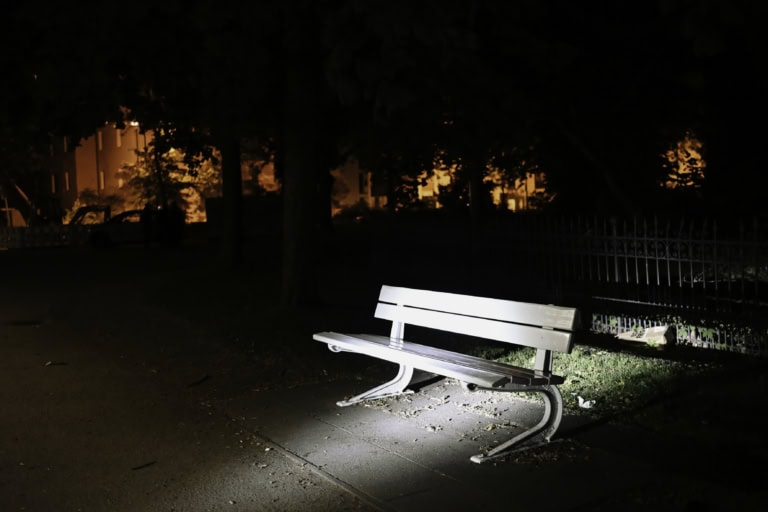
At 8 p.m., fully loaded, she sets off on foot. Her route takes her from the Lister Meile past Weißekreuzplatz and the Pavillon. Her destination: the main station. That’s where she has most to do – and where, as every night, people are already waiting for her.
But what drives her? How does she manage to devote her whole life to helping homeless people? And where does she find the strength to go out every single night and witness so much suffering?
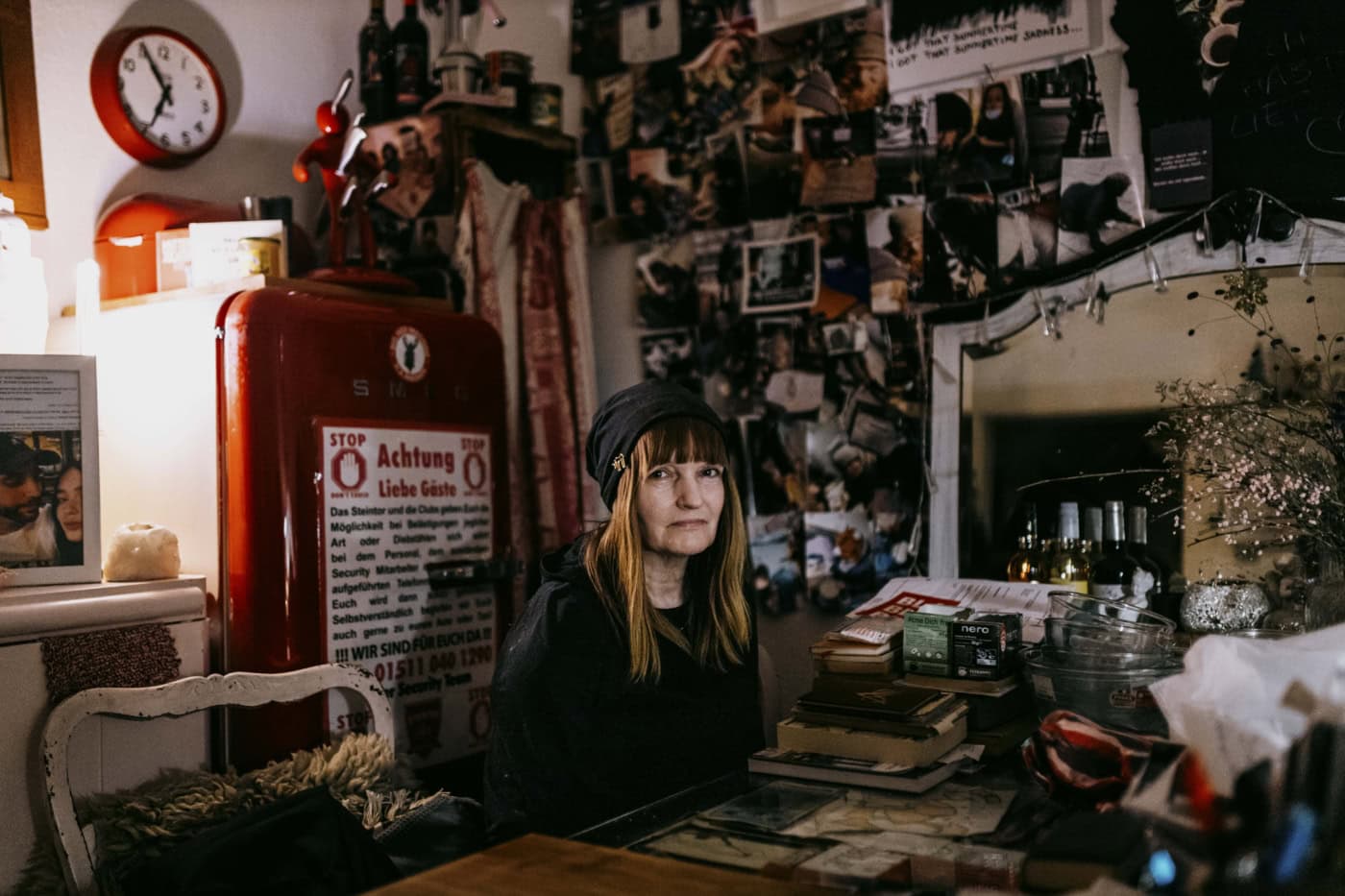 Martina in her small kitchen.
My work as a night angel has now become my full-time job, but I still go out at night. That’s when the need is greatest.
 Martina
How and when did you start as a night angel?
That was quite a long time ago, more than twelve years. I saw a group of homeless people in town, and one woman stood out because she was in a really bad way. I felt so sorry for her, and I thought: you have to go and get something now. I didn’t give her money, because I thought others would steal it from her, but nobody can take away a banana, a tea or a water. Yes, that was the beginning. Suddenly I noticed more and more homeless people. It was like a switch being flipped in my head. Once you look, you can’t close your eyes to it any more. Whenever I was in town, I had a rucksack full of small bottles of water with me and handed them out. At some point they asked me if I could bring something warm too, soup for example. And that’s how I came to go out every night with freshly made soup…
Even though you had a full-time job?
Yes. I worked from 9 a.m. to 6 p.m., then dashed to the supermarket, did the shopping and cooked at home. Then off into the city centre.
So that’s why at night…
My work as a night angel has now become my full-time job, but I still go out at night. That’s when the need is greatest. During the day there are other services, such as the Mecki or the Stellwerk. But at night? Nobody wants to work there then.
And how do you pay for it all? You have to go shopping every day.
At first out of my salary. I also had a mini-job. Some friends supported me with donations in kind, like cups for tea. I also had – and still have – a bag with me that anyone can put empty deposit bottles into. For many people on the street, a bag of deposit bottles is their wallet, and they’re proud when they can support me with it. Fortunately, I now get financial donations and help from the children’s charity ICH e.V. Two special representatives there, Rolf Eisenmenger and Mirela Stanoiu, are very supportive of the ‘Nachtengel’ project.
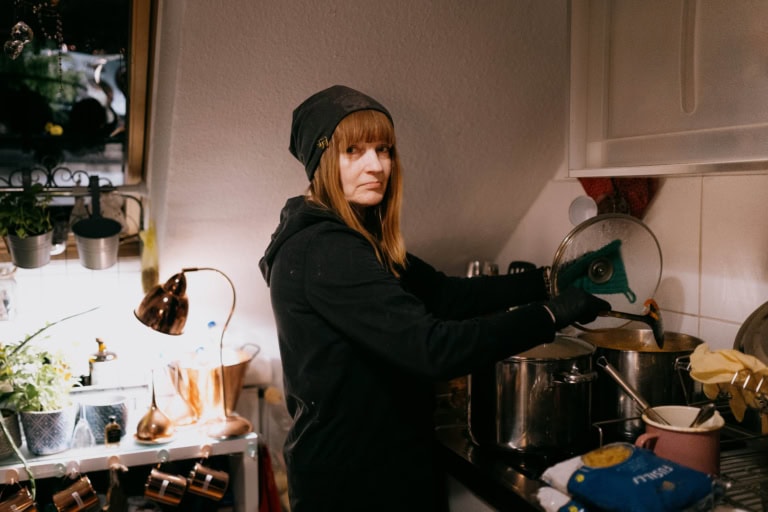 In the kitchen of her small attic flat, Martina cooks for 70 to 100 people in need every evening.
 Martina receives a lot of the food as donations.
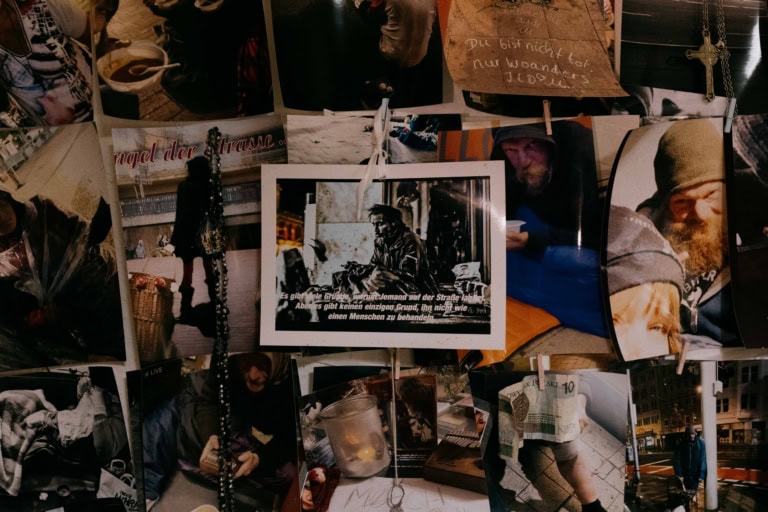 Martina keeps happy memories from her work as photos on a pinboard.
 Martina carries the soup down from the third floor on her own.
We should all have compassion and be grateful for what we have.
Martina
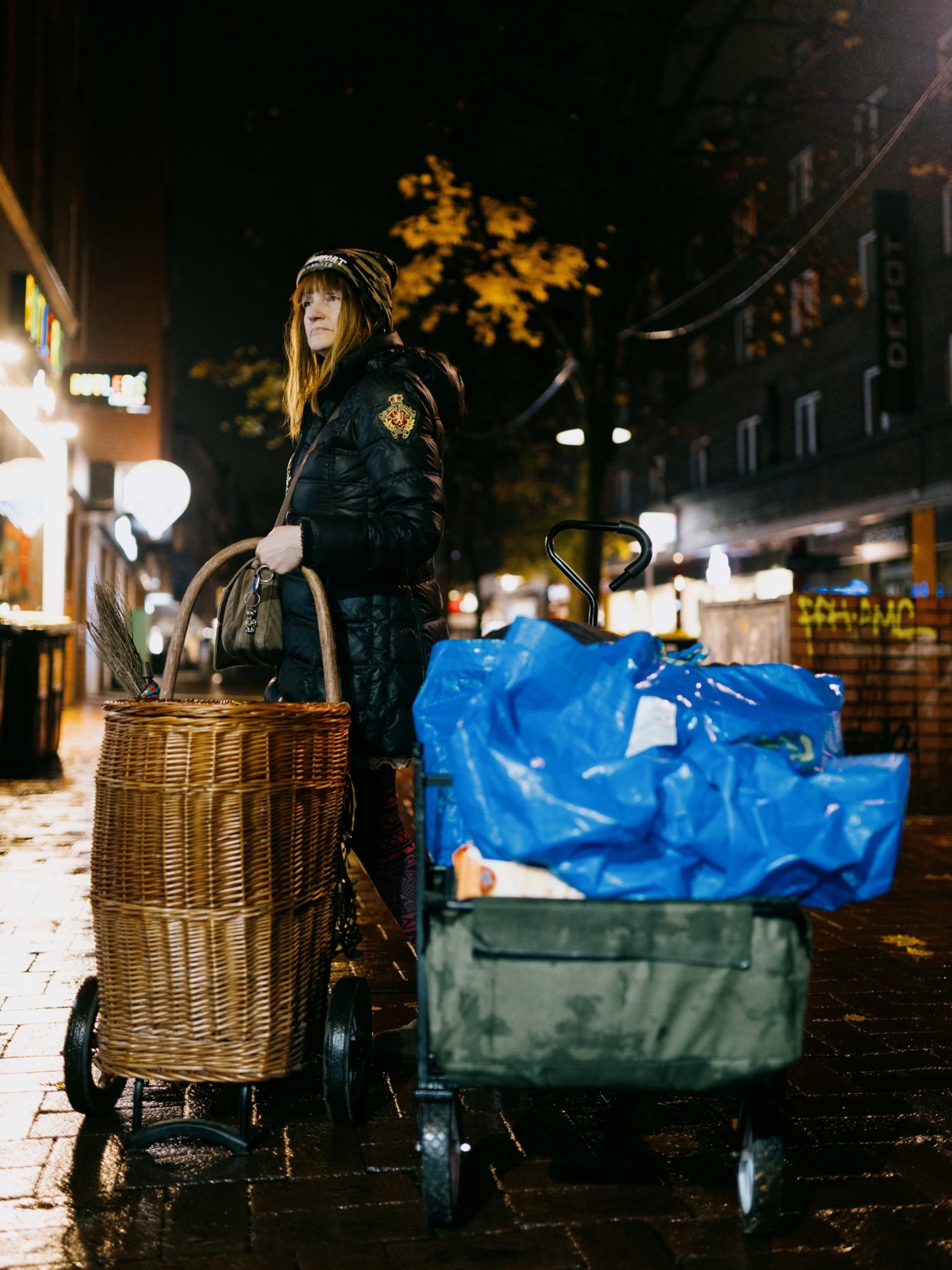 Martina with her kit for the night.
Does it get to you sometimes, seeing so much suffering every night?
Of course it gets to me. But it would get to me more if I did nothing. My homeless people told me I’m their dealer. Their harmony dealer. Sadly, I can’t save everyone, but I can bring them a bit of joy every night. I also dress wounds or help with important paperwork, and I get a lot of gratitude for that, because not many people do it. Homeless people aren’t cute like children or animals. They don’t get much help. Most people think homeless people are to blame for their own situation. But I don’t care about that. I see where help is needed and I offer it. We’re all human, after all, and we all deserve a bit of care.
How could the situation of homeless people be improved, in your opinion?
Oh, I have lots of ideas. For example, I’d like them to be able to use the trams and buses for free. Most of them can’t afford a ticket, of course, yet they’re supposed to go to the night shelter at the old airport. And how are they supposed to get there without fare-dodging? Or something else I could easily imagine: every hotel keeping, say, five rooms free for homeless people. Sadly, the city doesn’t make enough money available for things like that. Instead, a bicycle car park costing several million euros is being built at the main station. Bicycles can’t freeze to death, though…
How do you cope when someone you know dies on the street?
That’s really hard. I write their name on the pavement in chalk and try to find their relatives. Many homeless people here come from Poland, for example, because they wanted to work here and send money home. Unfortunately, it’s not as easy as many people think, and then they often end up on the street and nobody looks after them. Two years ago, something terrible happened to me. Two years ago, Igor died. Igor had pneumonia and was so ill that I called an ambulance. But they didn’t want to take him, supposedly because there was no room in the hospital. They told me to buy him cough sweets. When I went to work the next morning, two others told me that someone had died. It was Igor. I still blame myself for it to this day. I should have screamed like a madwoman until they took him to hospital.
What would you like from each individual? What can we do?
We can all start at home. Help your parents, or if you know that a single woman or a lonely grandad lives in your building, ask whether they need help. Hold the door open for others and look closely to see whether someone needs help. Little things like that can always make the world a tiny bit better. And have compassion. Many people say pity is a bad word, but I don’t think so. We should all have compassion and be grateful for what we have. Because others pray every day for what we have, even if it’s just a small room or a bed.
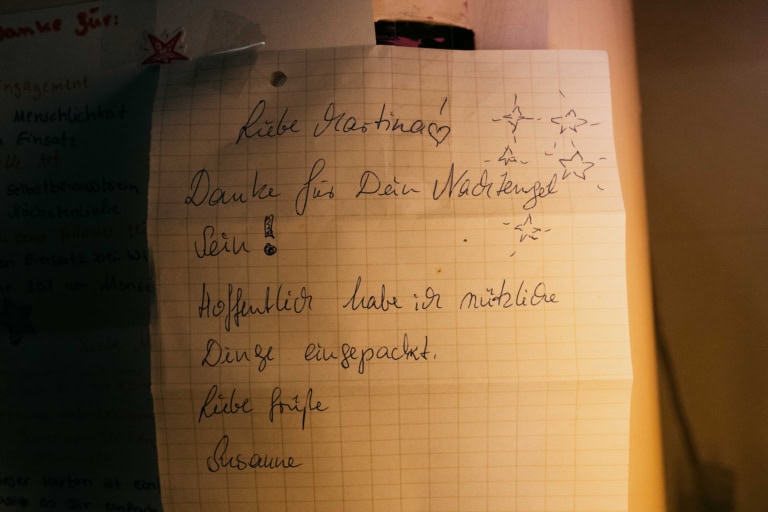 The ‘night angel’ receives lots of donations and kind messages
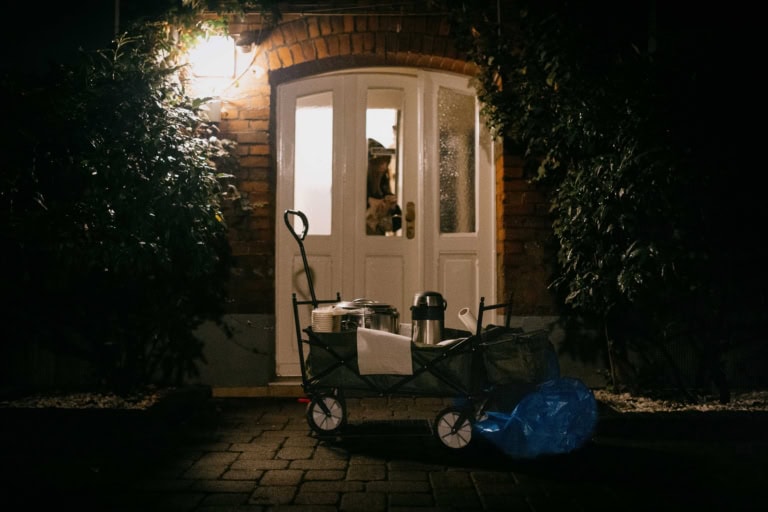 Martina packs soup, tea, medical supplies, spare clothes and more into a handcart.
How can you help homeless people?
Tips for interacting with homeless people
1. Look and help when someone is in need
2. Speak to people directly and listen, always staying polite and respectful
3. Ask what is needed instead of just buying something
4. Support help for homeless people financially
5. Don’t judge drug or alcohol use, and don’t lecture
Donation account Projekt Nachtengel
IBAN: DE70 2555 1480 0313 2797 39
Reference: Nachtengel
For a donation receipt, please include your address in the payment reference. All donations go directly to Martina’s work as a night angel and thus to homeless people in Hannover.