Waiting for war
For his bachelor’s degree, photographer Patrick Slesiona travelled to Armenia. For years the democratic country has had to defend itself against its authoritarian neighbour Azerbaijan.

It is just after midnight when the spectacle begins. On this 13 September 2022 some residents and many tourists probably think at first that it is a firework display – a celebration, perhaps, in honour of the southern Armenian spa town of Jermuk, where after two years of Covid the hotels are finally busy again. Like the Olympia sanatorium, a mouse-grey colossus with 52 rooms. Its owner, Kristina Ivanian, suspects something else, and she will soon be proved right: that night the larger neighbouring country of Azerbaijan is attacking Armenian territory. Besides Jermuk, other regions along the border are also coming under heavy fire.
‘Many guests asked me to evacuate them straight away,’ Ivanian says two months later. But that would have been too dangerous. Staff and guests sat it out in the cellar all night and were only able to leave the town in the morning. After two days of escalation the guns fell silent again. By then around 300 people had died along the border, most of them soldiers.
It was the same period in which Russia’s army suffered its heaviest defeat in eastern Ukraine. And it was not the first armed conflict between Armenia and Azerbaijan, the two countries of the South Caucasus. Back in 2020, as the world headed into its first Covid autumn, war broke out in the contested region of Nagorno-Karabakh. But no one in the southern Armenian spa town of Jermuk or in the town of Goris had expected the conflict to reach Armenian territory – until that night.
Since then Russia, the USA and the European Union have been vying to mediate. But in view of a gas deal, European Commission President Ursula von der Leyen calls Azerbaijan a ‘trustworthy partner’. Many people in Armenia feel abandoned by the international community. Azerbaijani troops are reportedly still patrolling the mountains just five kilometres from the centre of Jermuk.
Life in Jermuk has been different since the attacks in September 2022. Most of the roughly 6,000 residents have returned, the worst damage has been repaired and many wellness temples like the Olympia reopened long ago. But what the town lacks are tourists slipping into towelling slippers while military lorries rattle past their windows. And a basic trust in the mountains, where Azerbaijani troops are said to be still dug in.
Armenia is fighting for survival. Yet very few people want to give up and leave.
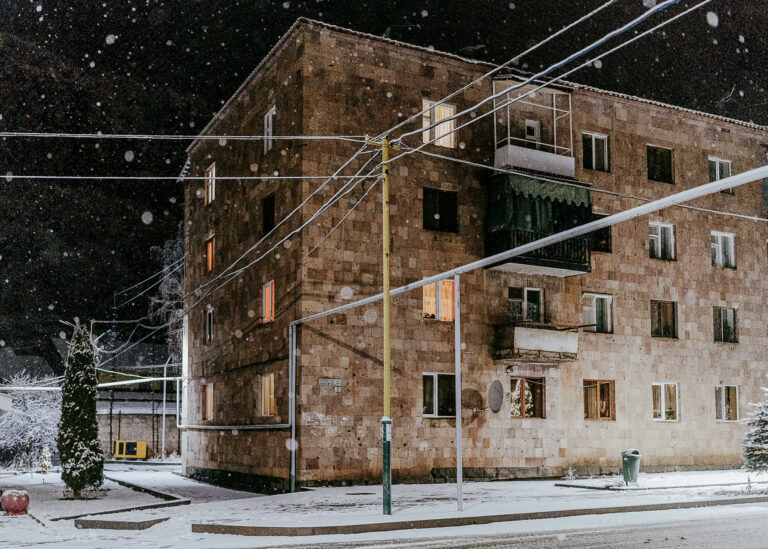 Jermuk, Armenia, 3 December 2022
A residential building in the Armenian spa town of Jermuk.
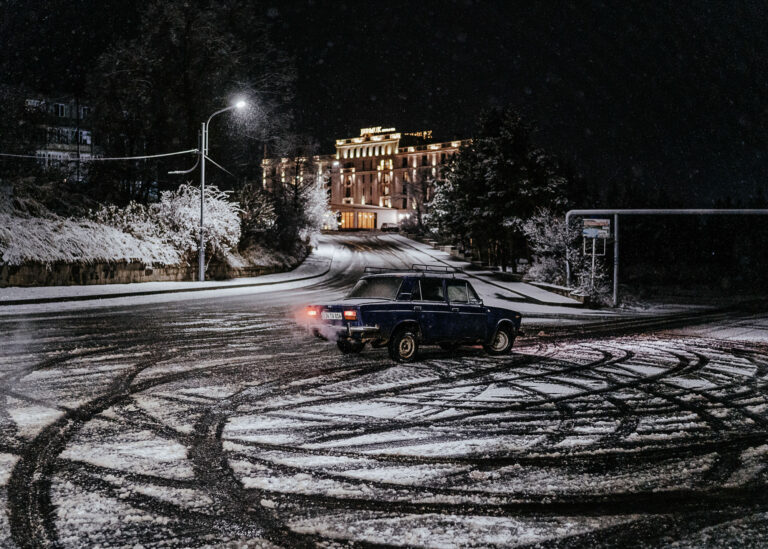 Jermuk, Armenia, 3 December 2022
On 3 December 2022 the snow settles for a while, and young people from the village of Gndevaz pass the time drifting in a rusty Lada not far from the Jermuk Spa Resort.
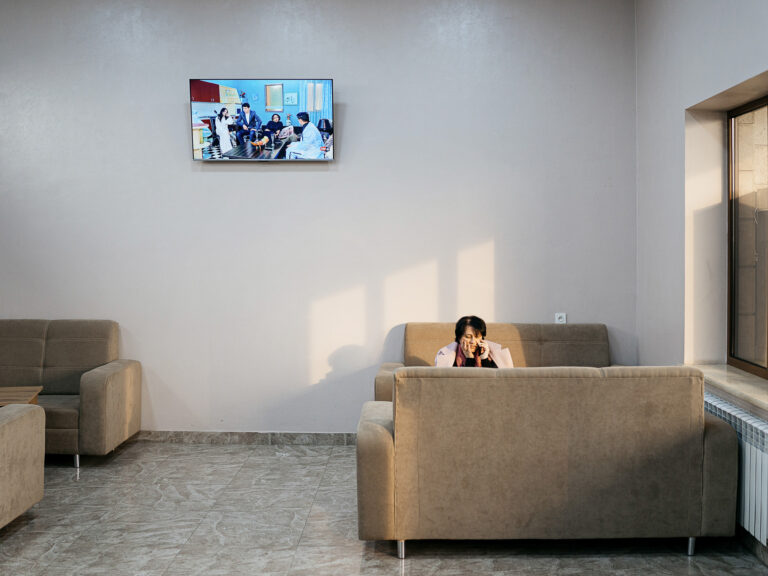 Armenia, 16 December 2022
A woman on the phone in the waiting area of a roadside service station between the capital Yerevan and Jermuk. An Armenian telenovela is on the television.
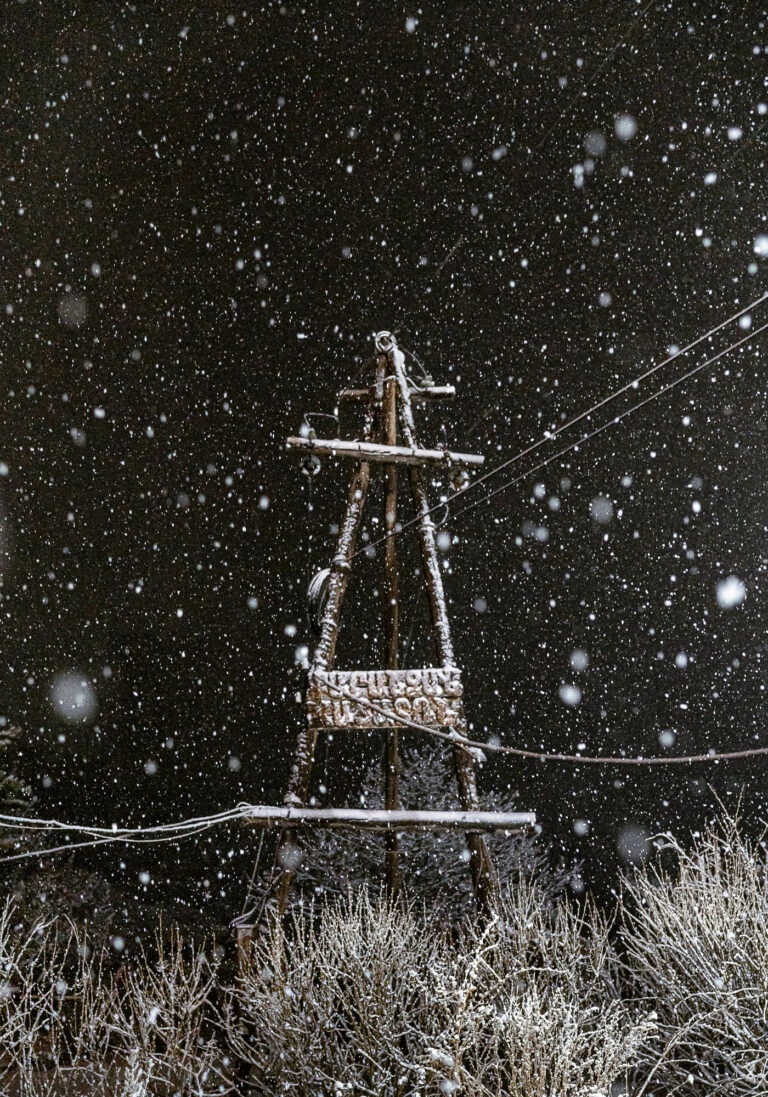 Jermuk, Armenia, 3 December 2022
An electricity pylon and a signpost to a restaurant in Jermuk.
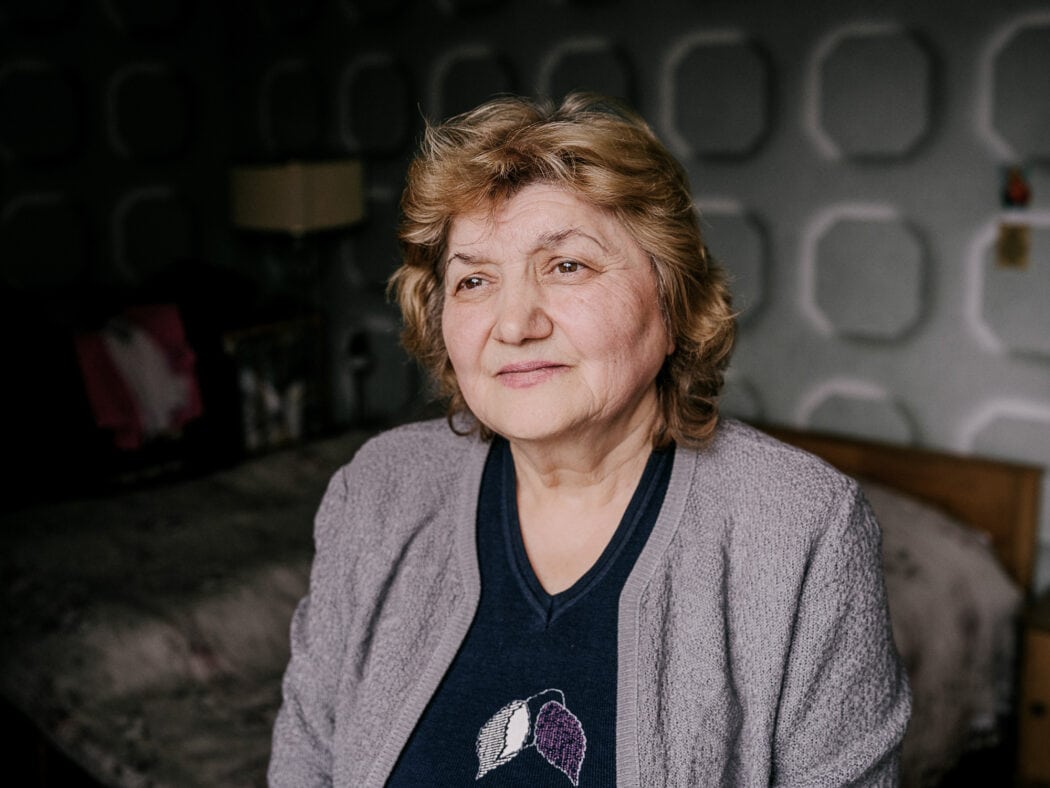 Jermuk, Armenia, 16 December 2022
Viktoria Gregorian works as a teacher in Jermuk, but she was born and grew up in Baku, Azerbaijan. She learned German in the Soviet Union and remembers a time when the two peoples lived peacefully side by side.
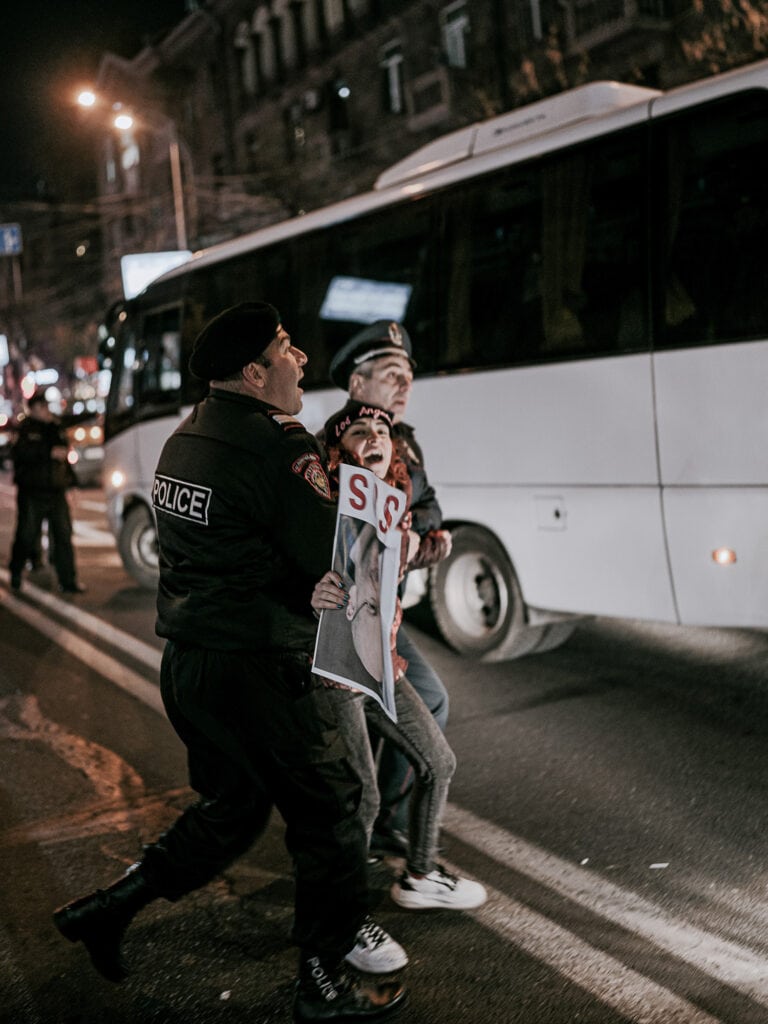 Yerevan, Armenia, 6 December 2022
A protester is led away by police officers and detained for more than three hours. The protest in the capital Yerevan demands that Varuzhan Avetisyan, the imprisoned leader of the pro-Western National Democratic movement, be transferred from prison to a civilian hospital. At this point Varuzhan Avetisyan’s health is critical.
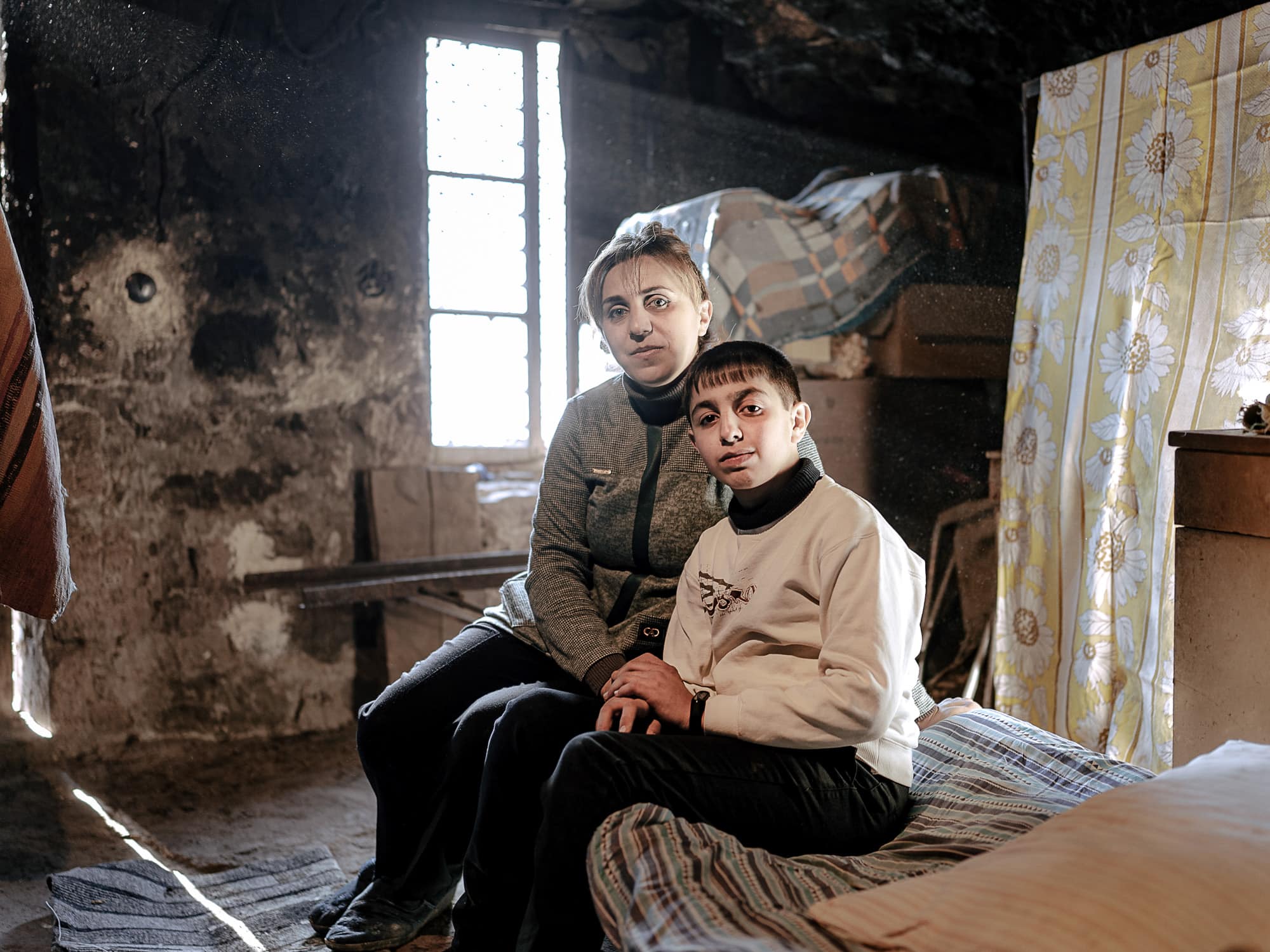 Goris, Armenia, 12 December 2022:
In the town of Goris and the surrounding villages, people lived in natural caves in the mountains until the 1950s. Later they left them to build houses nearby, but continued to use the caves, either for their animals and farm work or to escape the heat in summer. But in September 2022, when Goris, Verishen and many other communities in the Syunik region came under fire from Azerbaijan, the residents fled into the mountains. Now, like the family of Alina Minasyan and her 13-year-old son Hayk, they are turning the caves into air-raid shelters and installing electricity and water so they are prepared in case of another attack.
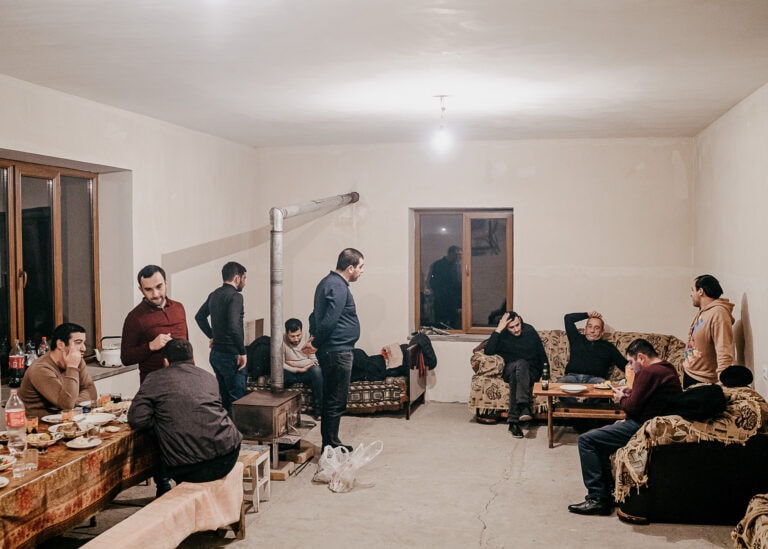 Goris, Armenia, 11 December 2022
Levon Arshakyan (25, centre) and his friends meet once a month in the evening to barbecue together and drink to life with home-distilled mulberry vodka.
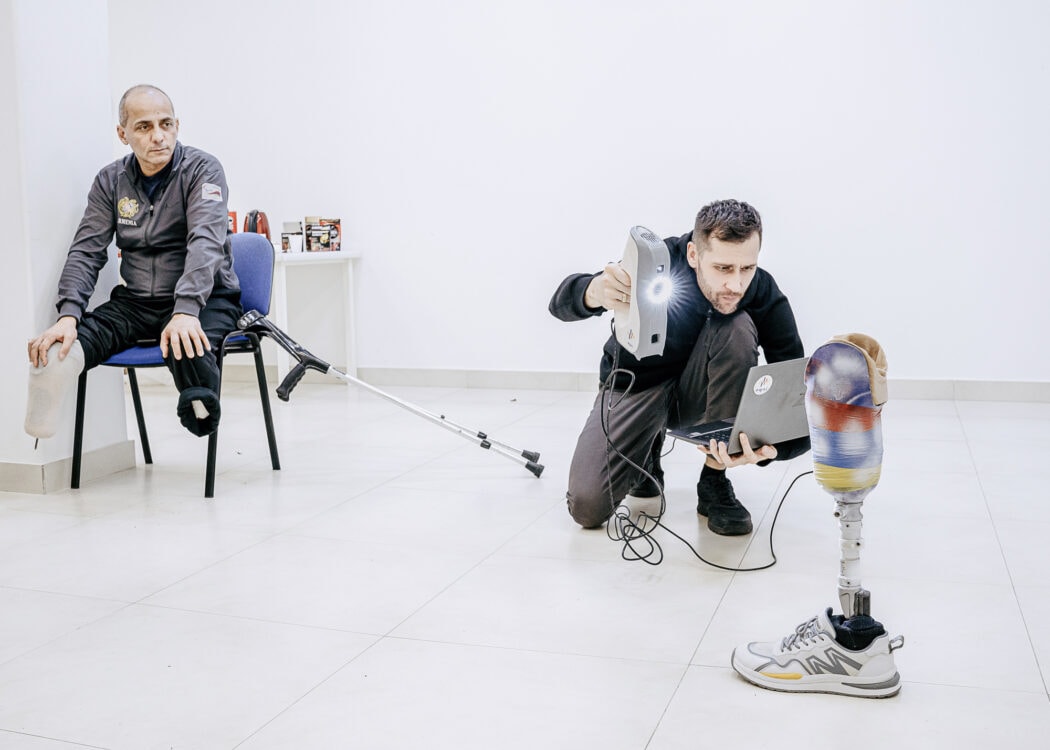 Yerevan, Armenia, 1 December 2022
Helping people with leg amputations to lead fulfilling lives, physically and mentally – that is the aim of the Armenia-based NGO Oqni, Armenian for ‘Help!’.
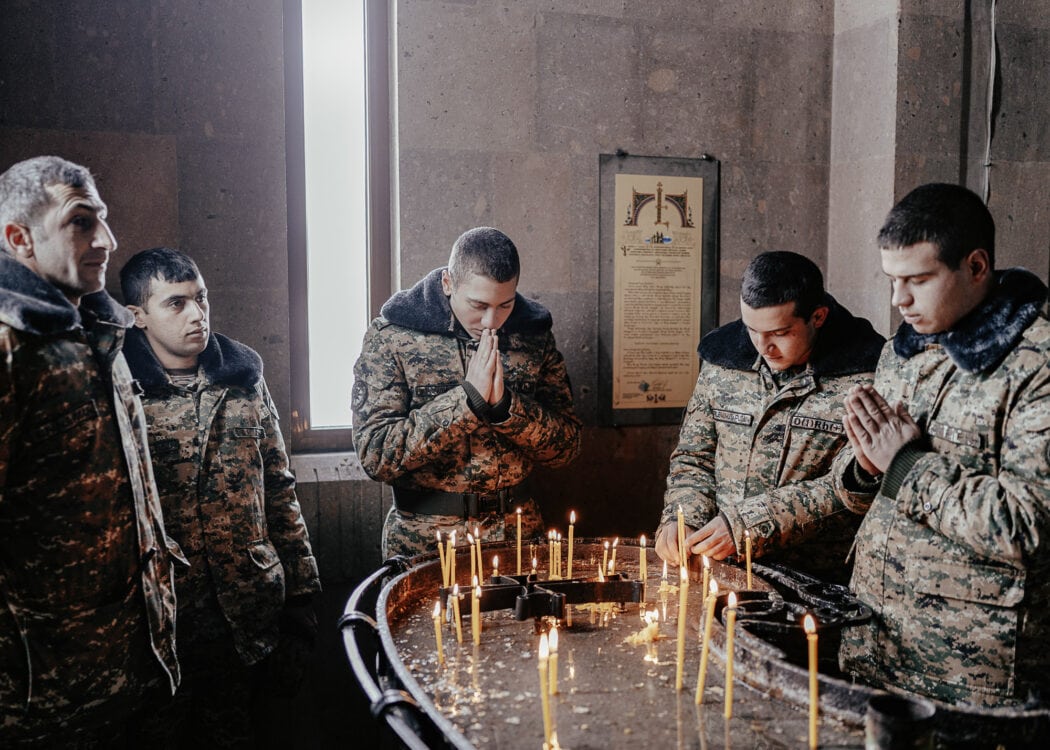 Jermuk, Armenia, 4 December 2022.
Candles and prayer: soldiers during a service in St Gayane’s Church in Jermuk.
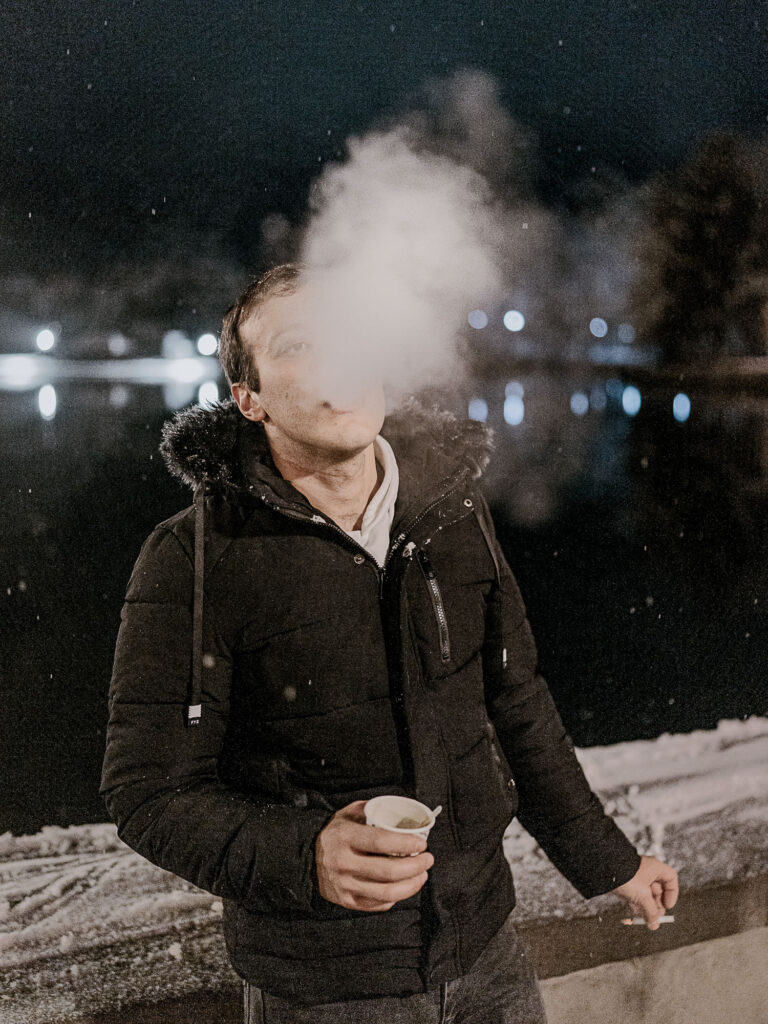 Jermuk, Armenia, 3 December 2022
Maxim (23) works as a cook in Jermuk and, with a group of friends, founded the ‘Dolphins’ youth centre to actively improve educational and cultural life in the small town. Especially since the recent attacks, the centre has become a refuge for many.
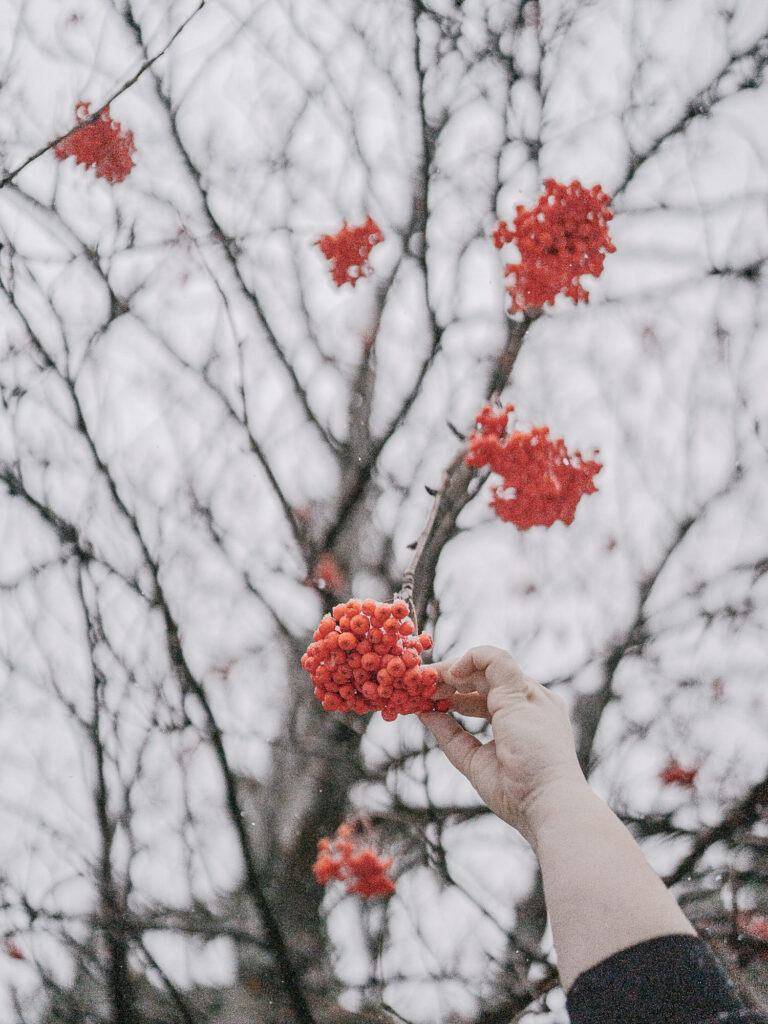 Jermuk, Armenia, 3 December 2022:
Kristina Ivanian (38) is manager of the Olympia sanatorium and Jermuk Spa Resort. She is picking the local hawthorn berries.
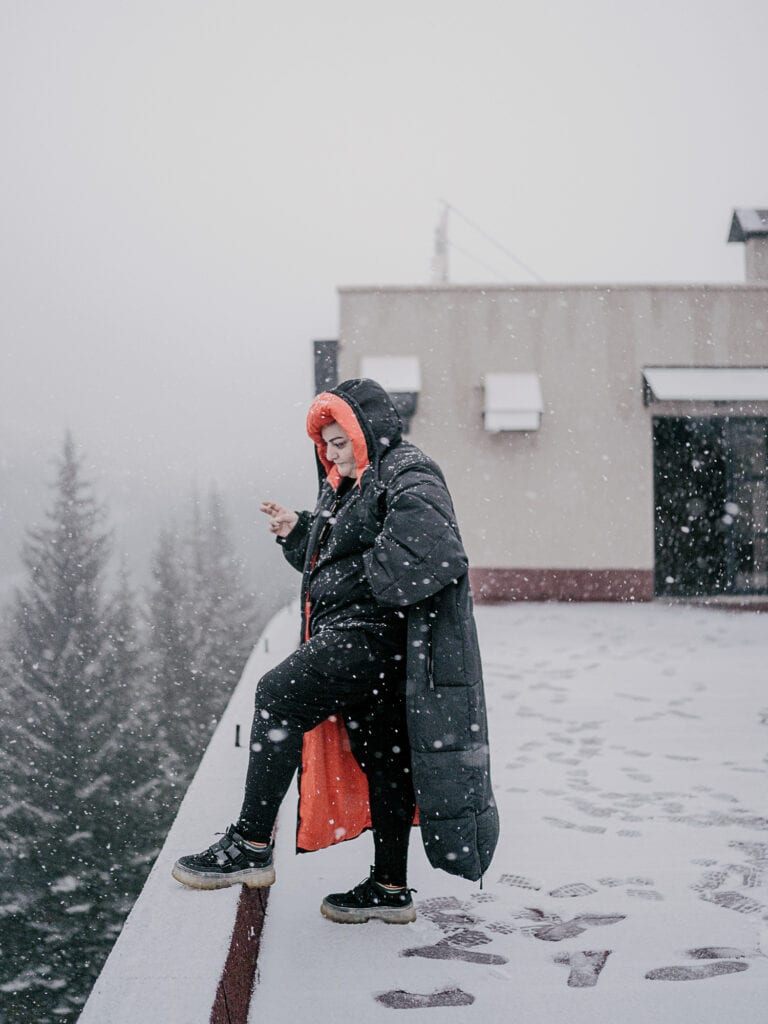 Jermuk, Armenia, 3 December 2022:
On the night of 13 September, Kristina Ivanian looked after her guests in the shelters and organised evacuations out of the town. Two years earlier she had volunteered during the 44-day war in Nagorno-Karabakh.
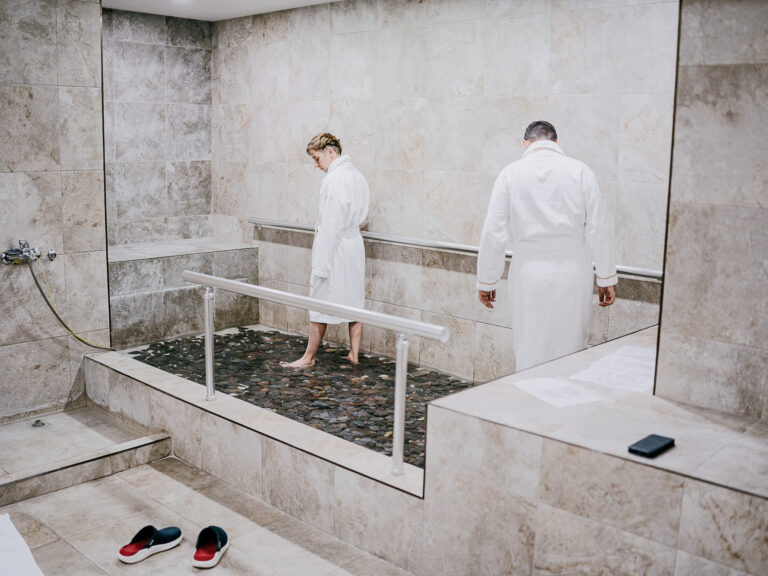 Jermuk, Armenia, 4 December 2022:
Guests at the Jermuk Spa Resort enjoy the calm of Kneipp therapy. On the night of the attack, hotel manager Kristina Ivanian and her staff put up their startled guests in the treatment rooms. Massage chairs and sofas were quickly turned into camp beds, while loud rumbling could be heard from the mountains and bright lights flashed in the forests.
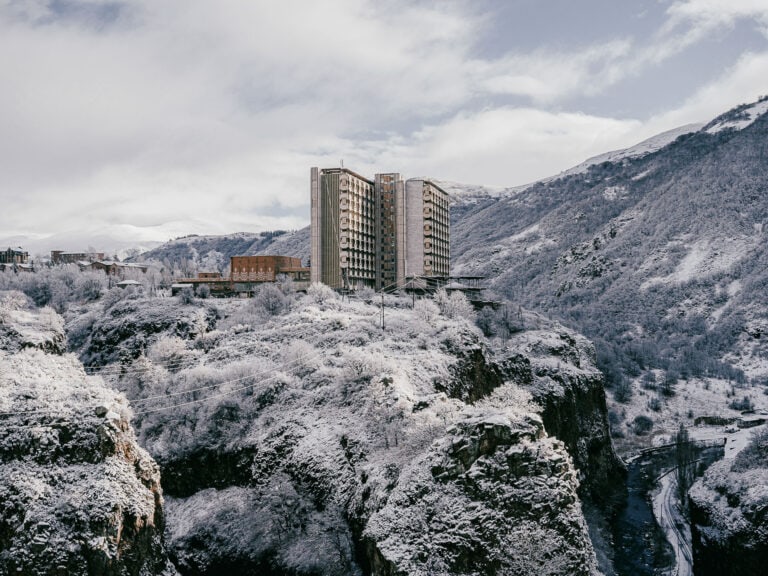 Jermuk, Armenia, 4 December 2022
Nature has made Jermuk famous far beyond Armenia’s borders. Natural mineral springs rise all around the town.
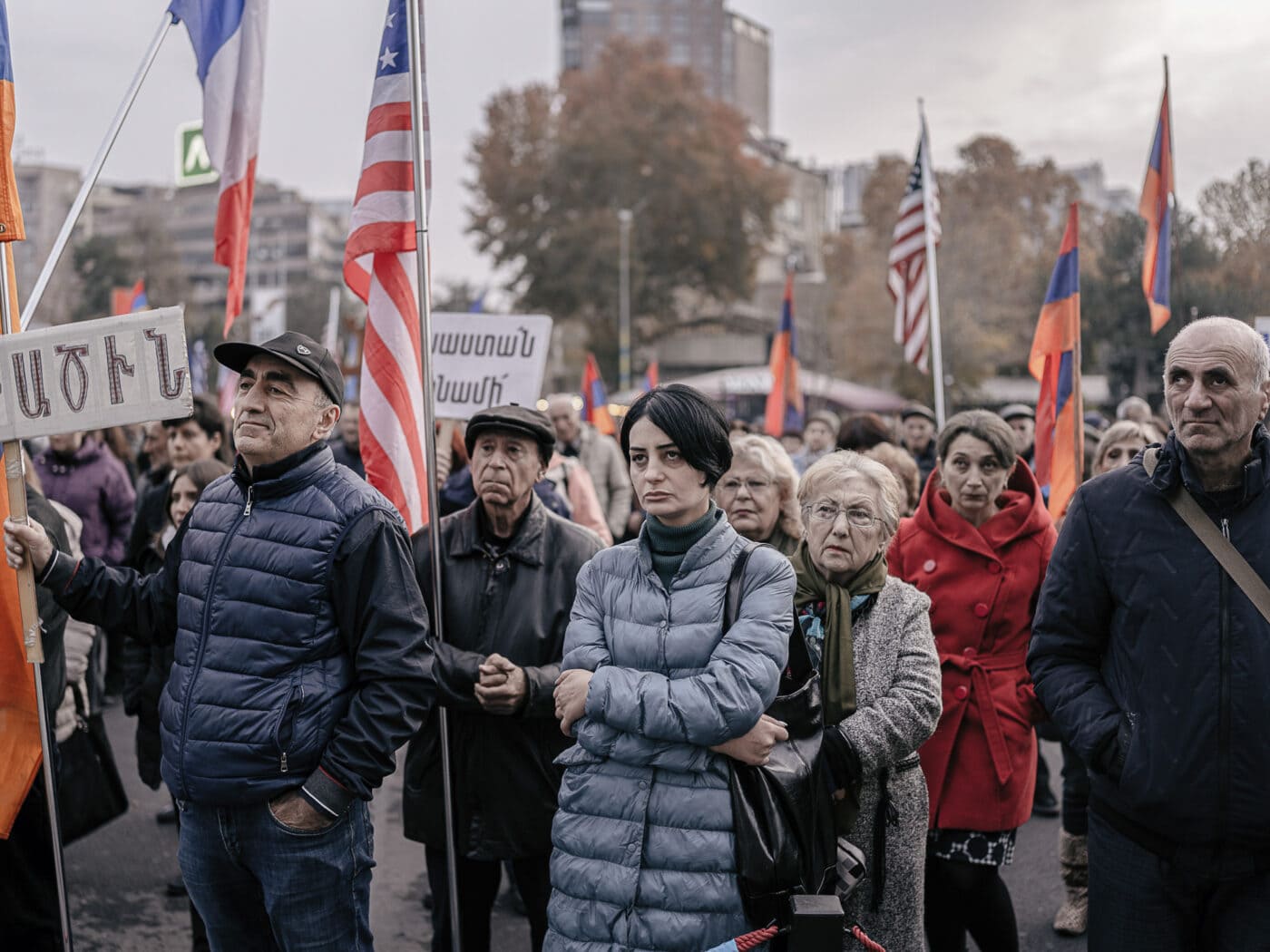 Yerevan, Armenia, 26 November 2022:
Many Armenians are angry with their prime minister, Nikol Pashinyan, who in 2020 agreed to the terms of the Russian-brokered ceasefire – and they still are today.
The conflict
For more than a hundred years, Christian Armenians and Muslim Azerbaijanis have been in dispute over Nagorno-Karabakh, a region mainly populated by ethnic Armenians. After the collapse of the Soviet Union in 1990, many residents of what had been an autonomous part of the Azerbaijani Soviet Republic since 1923 demanded to join Armenia. The following year Nagorno-Karabakh declared itself an independent republic but received almost no international recognition. In 1992 war broke out between Armenia and Azerbaijan, at the end of which large parts of Nagorno-Karabakh came under Armenian control. Hundreds of thousands of people were displaced and tens of thousands killed.
Almost thirty years later, in 2020, fighting broke out again between Armenia and Azerbaijan. This time Azerbaijan had the upper hand: during the six-week war, in which more than 6,500 people died, Azerbaijan recaptured large parts of Nagorno-Karabakh. In a ceasefire brokered by Russia, Azerbaijan was also awarded territory around Karabakh that had until then been under Armenian control. Many Armenians were therefore angry with their prime minister, Nikol Pashinyan, who had agreed to the terms.
When Azerbaijan attacked Armenia’s territory for the first time in September 2022, it marked a turning point in the conflict. Now the conflict threatens to escalate again. This time Armenia’s protecting power, Russia, was too busy with its own war of aggression in Ukraine to intervene.
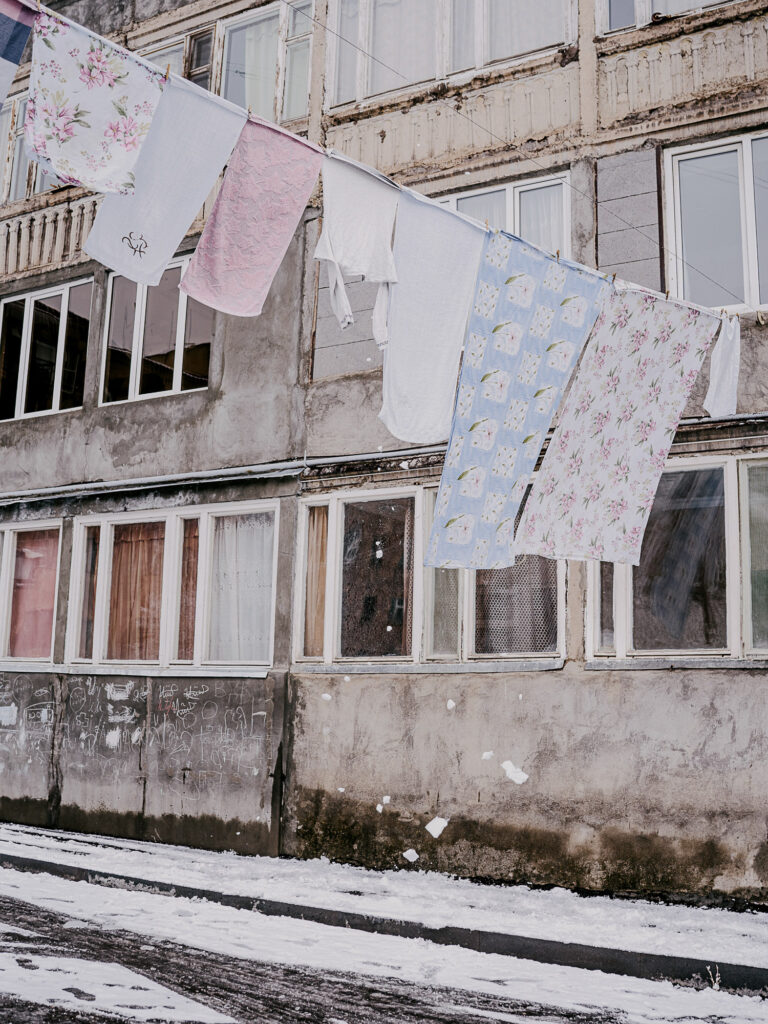 Jermuk, Armenia, 4 December 2022
Far from the wellness temples, washing lines hang full between the apartment blocks. But on this house wall in Jermuk there are also children’s drawings reflecting the sounds of explosions and burning cars.
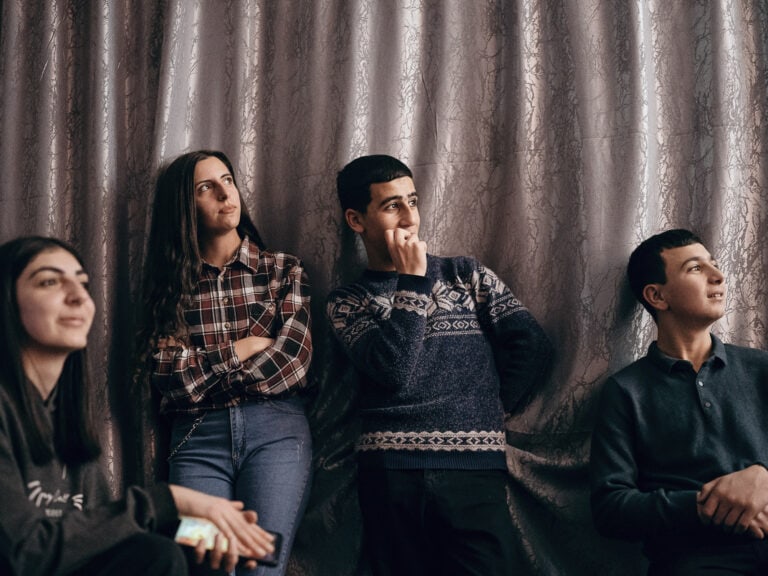 Jermuk, Armenia, 9 December 2022
This afternoon a handful of young people crowd around the computer screens and a projector at the youth centre. English pop tootles from the speakers.
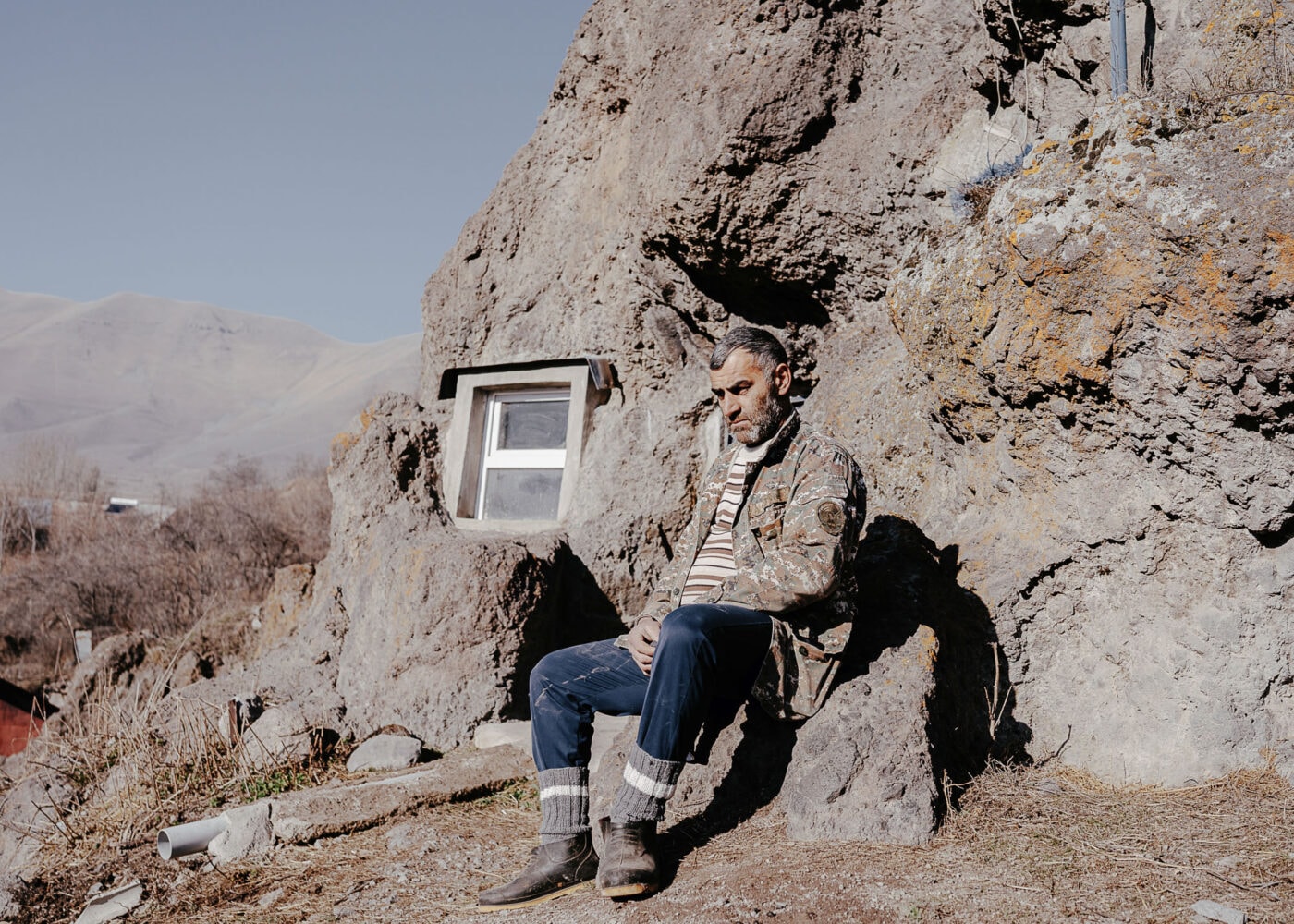 Photo from the work "Armenia" by Patrick Slesiona
Arman Aretunjan (44) comes from the village of Verishen near Goris. He is a farmer and father of three sons. During the attacks in September his family took refuge in one of the mountain caves on the edge of the village.