In the land of the white mountains
Jasper Hill makes visible what a century of potash mining has left behind. Caught between food security and environmental damage, an industry faces a turning point.

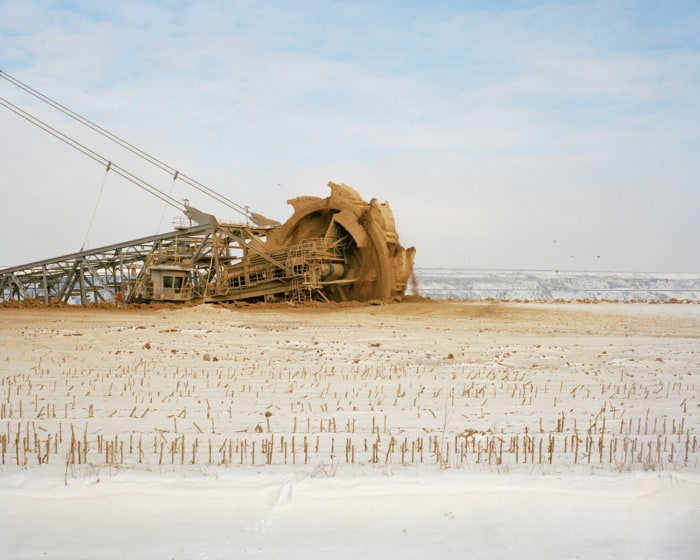
For more than 100 years, Germany’s industrial landscape has been shaped by fertiliser production from potash mining – and the consequences, in the form of spoil heaps several hundred metres high, will remain visible for at least as long.
Potassium, essential for plant growth, is mined in the form of potash salt from depths of up to 1,500 metres. In production, up to 70 per cent of the salt extracted is dumped on heaps as waste, which places a heavy burden on the environment. Yet without the fertiliser produced by potash mining, modern agriculture as we know it would no longer be possible, and feeding the world’s population could not be guaranteed.
With eight former mines, the Hannover region was one of the world’s most important mining areas until a few years ago, and potash mining is still deeply rooted in the region today. Germany’s currently extractable potash deposits will last fifty years at most. The prosperous potash regions must therefore develop new industries while learning to deal with the residues and consequences of mining in the long term.
Jasper Hill
Jasper Hill (born 2003) works as a photographer in southern Germany and Hannover. In his work, he explores socially relevant issues through personal, approachable stories, working both on independent projects and on commissions for various magazines and publications.

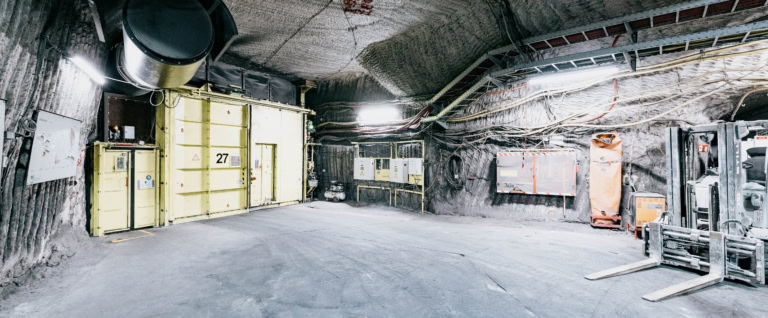
An electric loader tips previously blasted crude salt into the primary crusher 750 metres below sea level – the start of the underground conveyor belt.
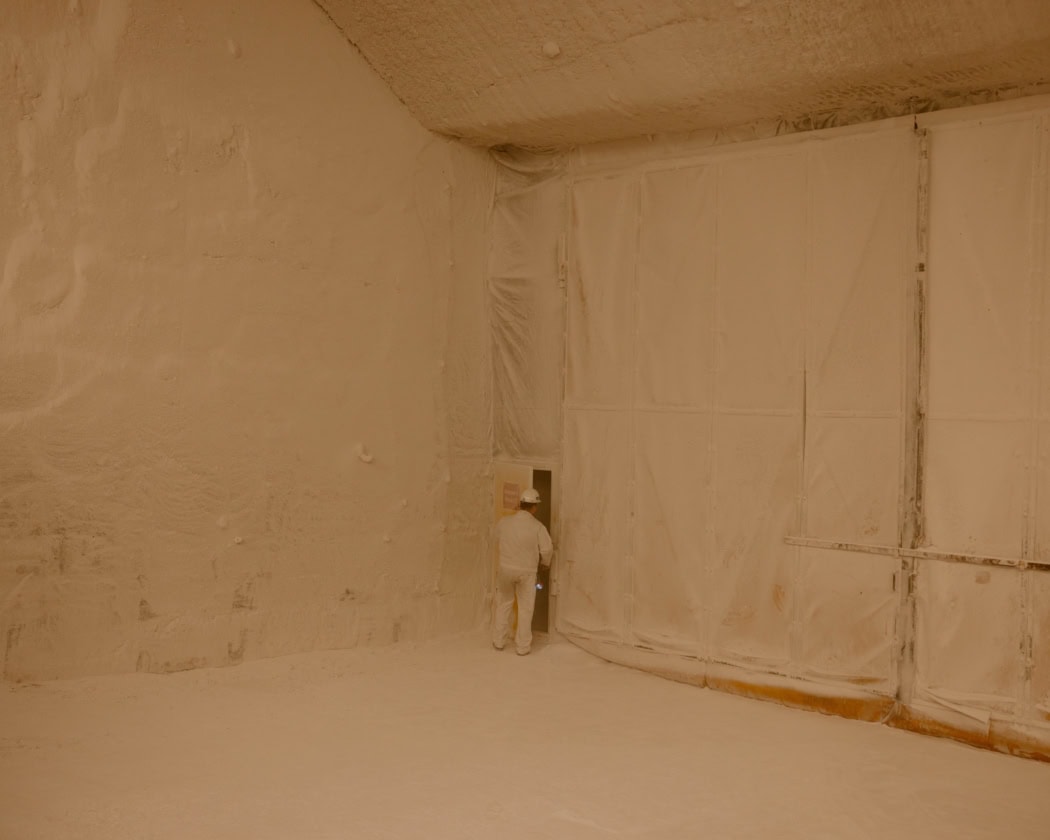
A miner enters the large underground crude-salt bunker. The bunker temporarily stores the crushed crude salt to ensure an even flow of material to the conveyor system and processing plants.
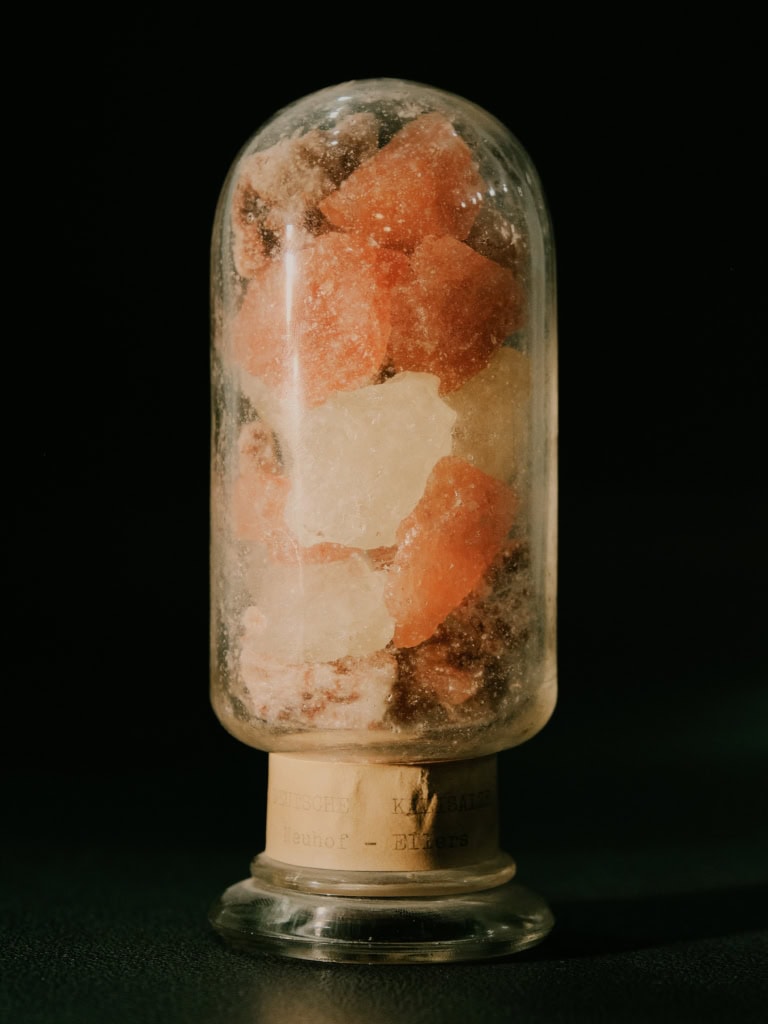
The Potash and Mining Museum in Ronnenberg near Hannover displays potash salts extracted from more than 1,000 metres below sea level.
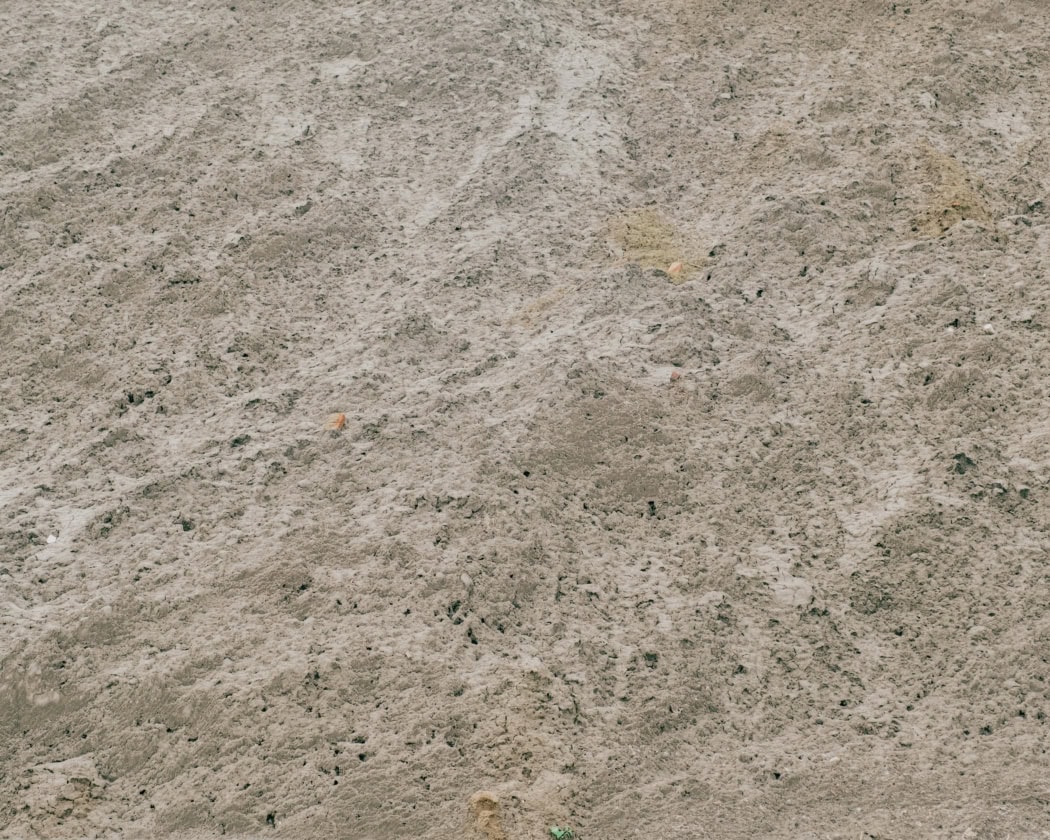
The surface of the Siegfried/Giesen potash tailings pile south of Hannover. A tailings pile usually consists of more than 85 per cent ordinary rock salt (sodium chloride). Processing the rock salt is possible, but not economical because of impurities.
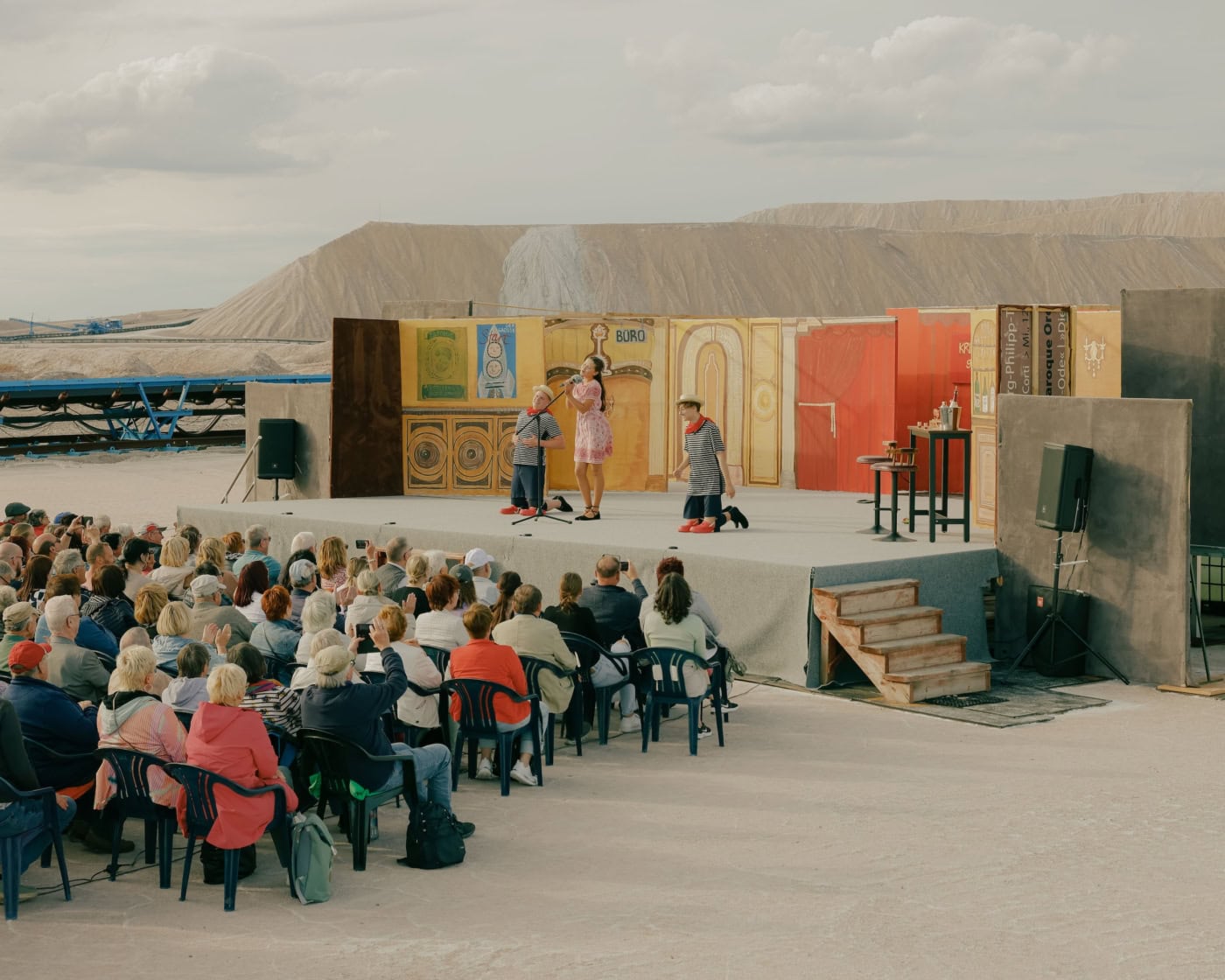
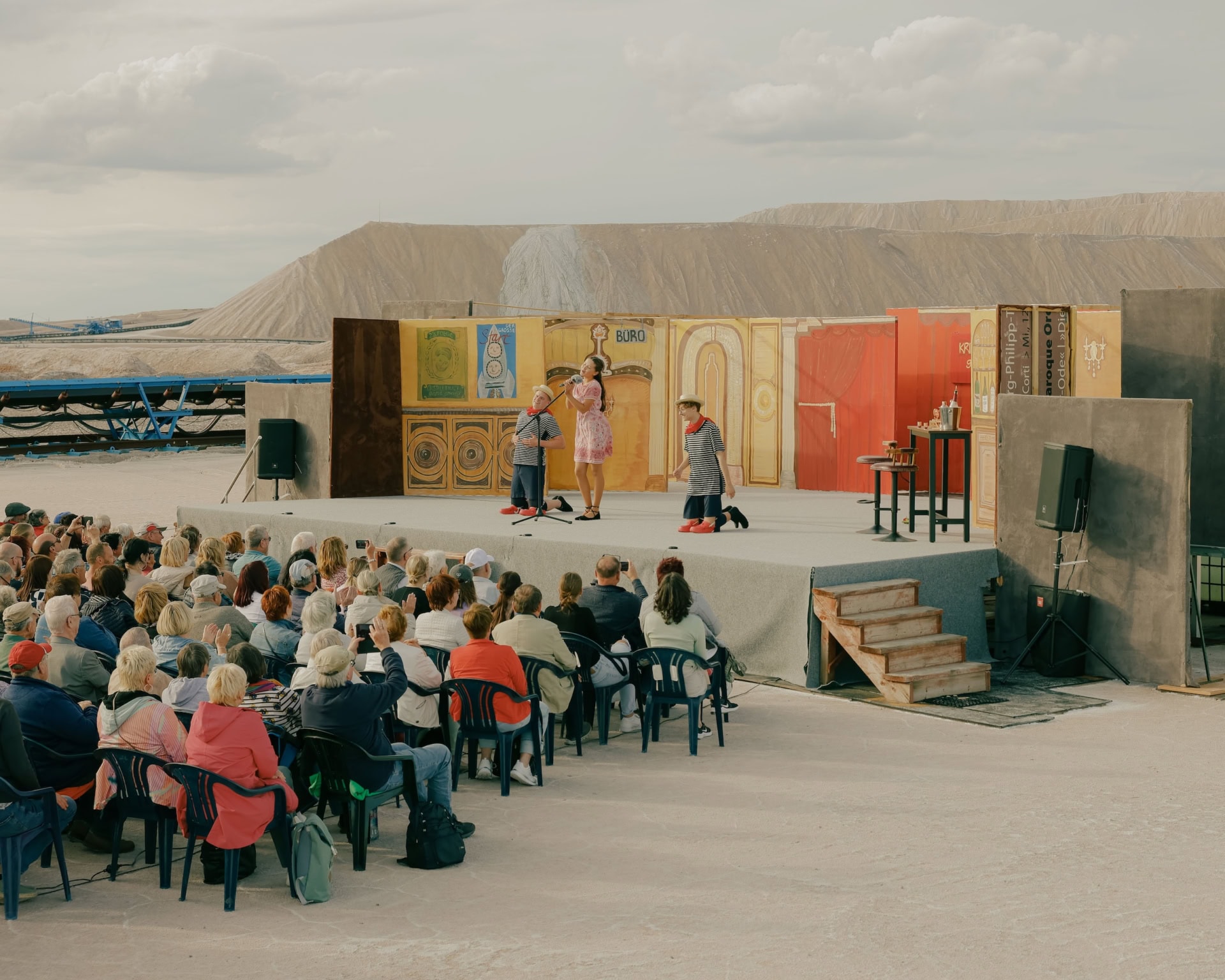
A performance by the Holzhaustheater Zielitz as part of the annual ‘Kalimandscharo’ festival, held on one of the plant’s two tailings piles. Thanks to high business tax revenues, the municipality of Zielitz, with around 2,000 inhabitants, is one of the wealthiest places in Saxony-Anhalt and was able to finance a new theatre building costing about 2.6 million euros in 2015.
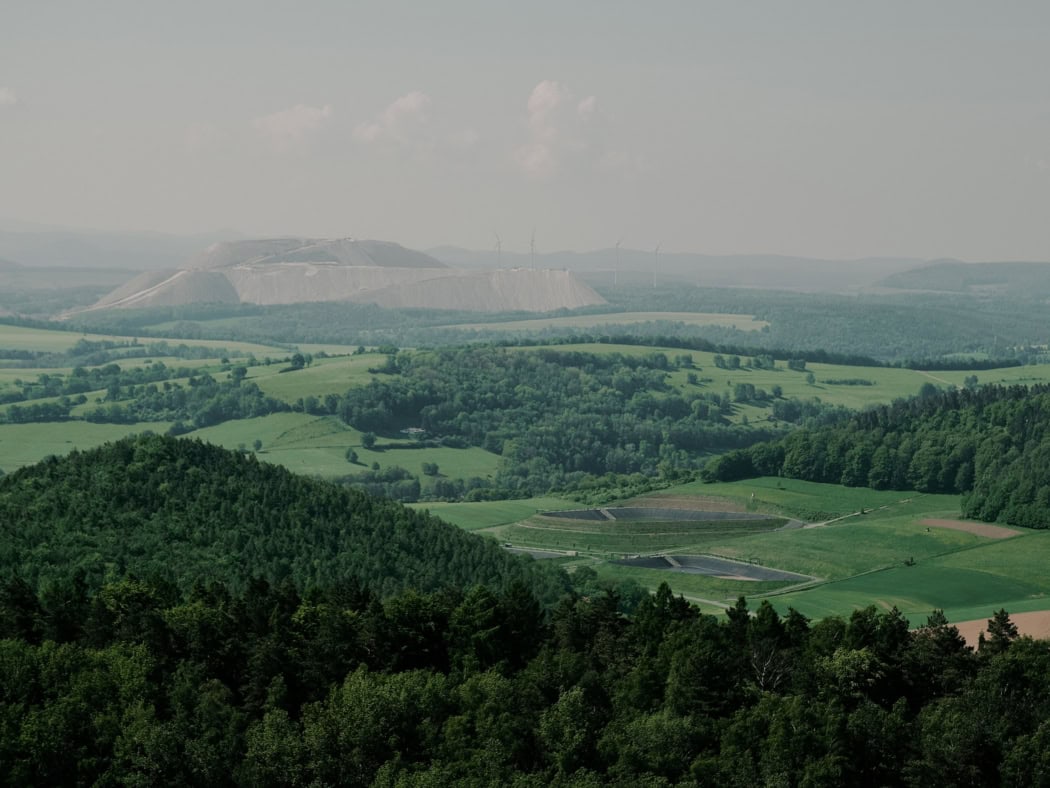
One of the two spoil heaps of the Werra mining complex. As Germany’s largest active potash mine, its underground mining area covers roughly the size of Munich. Around 21 million tonnes of crude salt are extracted every year, yielding about 3.5 million tonnes of end product.
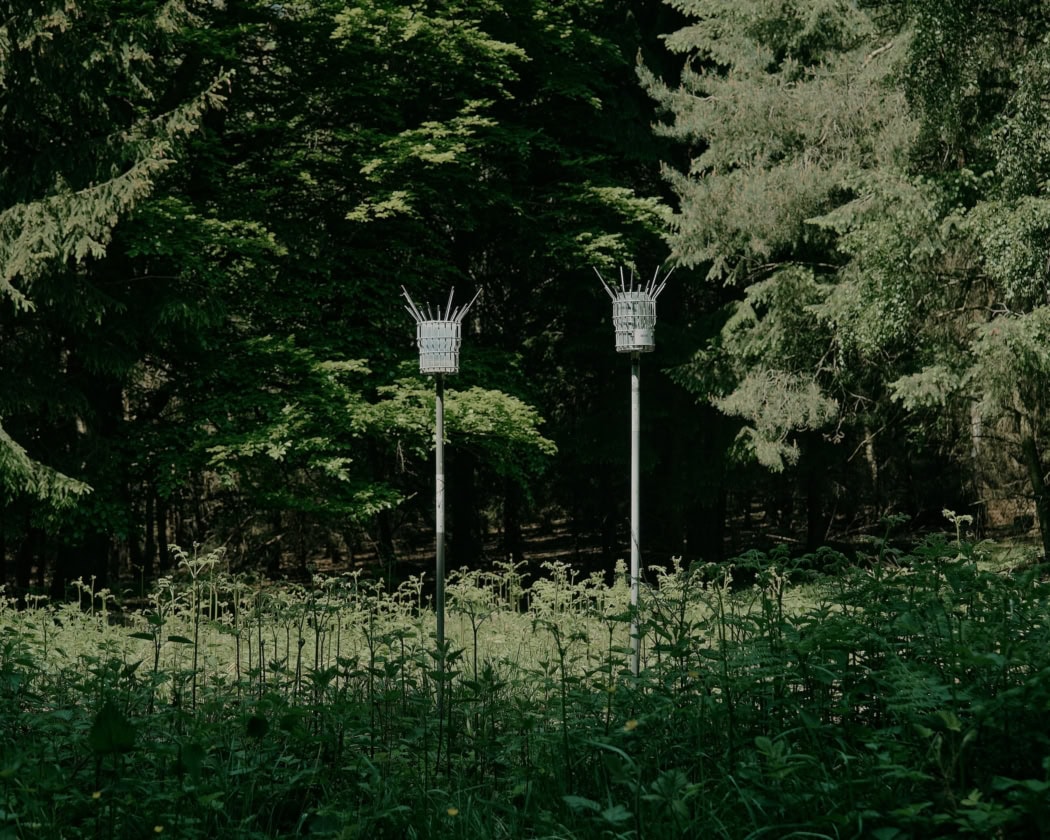
Right next to the tailings piles, sample containers measure the local dust deposition.

A freight train carries brine from the mining areas in Hesse to Hannover, where the former Sigmundshall potash mine is being flooded with the salt water. The flooding creates counter-pressure and stabilises the mine.
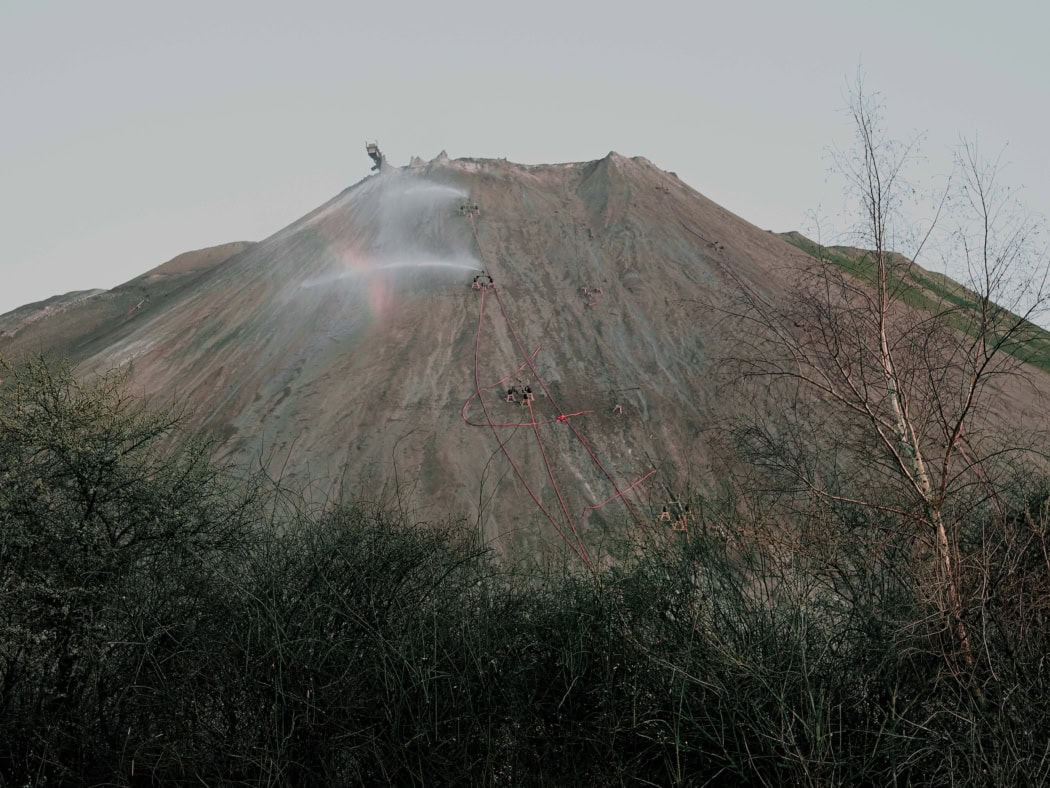
The tailings pile of the disused potash works in Wunstorf near Hannover is artificially irrigated. To reduce the seepage and salinisation of rainwater, more and more tailings piles are being planted with vegetation. Citizens’ groups in the surrounding villages criticise these measures and often demand that the piles be removed completely.

The heavily salinised soil at the foot of the piles offers salt-loving plants (halophytes), which otherwise grow mainly in coastal regions, good growing conditions inland too.
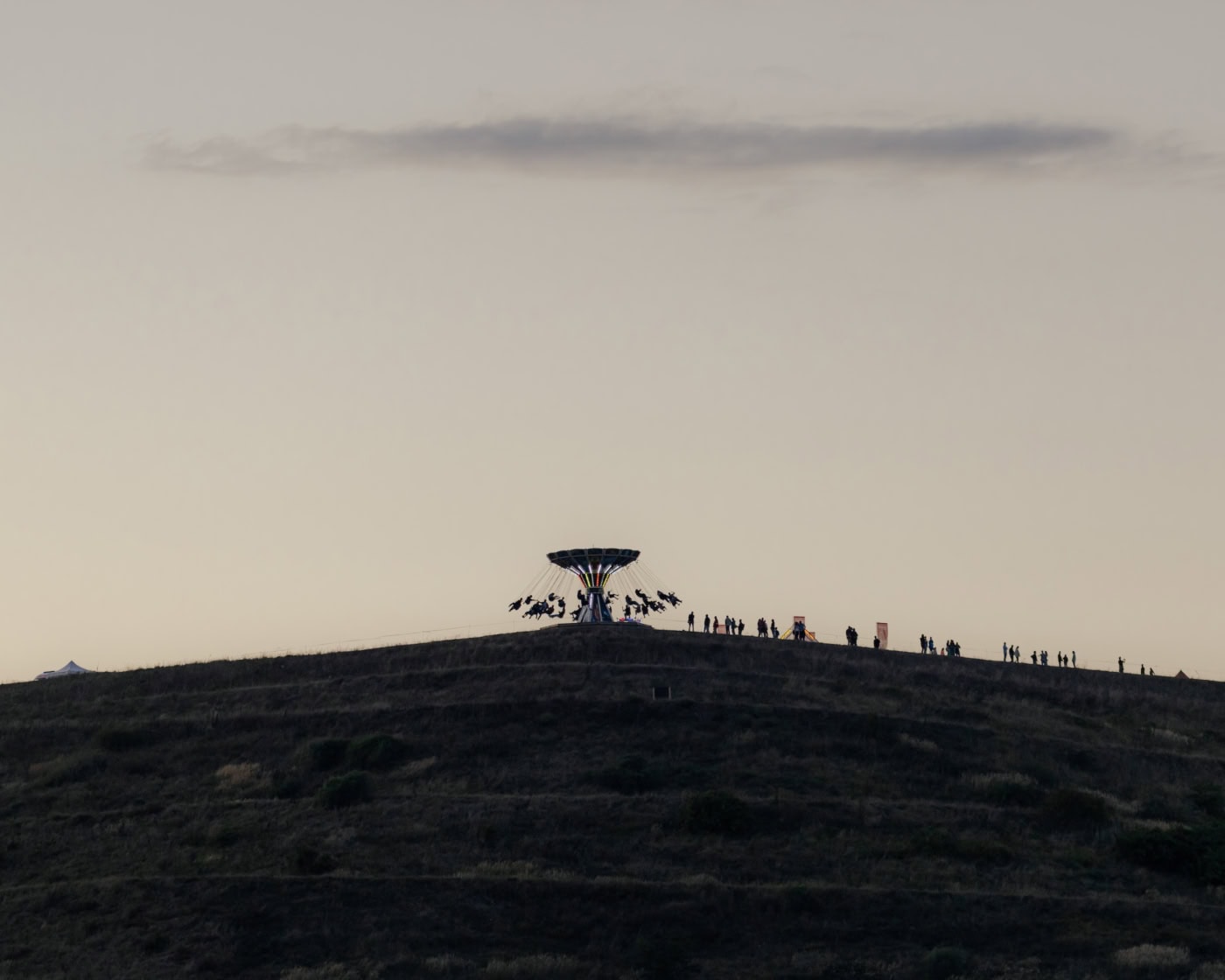
The Sehnde Bergfest 2025. Since 2004 the town of Sehnde has regularly held a village festival on a now-greened potash tailings pile near Hannover; with more than 20,000 visitors, it is known far beyond the region.