Hannover’s hidden source of raw materials: recycling at the Nordhafen
Uncertain trade routes, wars and new regulations are putting the recycling industry to the test. At the TSR site in Hannover’s Nordhafen, a whole sector can be seen changing.
By Moritz Heck (photos), Jannis Johanningmeier (text)


A lorry loaded with scrap metal rattles into the yard of the recycling company TSR in Hannover’s Nordhafen. A member of staff – instantly recognisable in the TSR uniform of hi-vis vest and white hard hat – waves the driver in. An excavator with its grab arm extended, known as a scrap grab, is standing by to unload. Harm Kolberg nods.
From his desk, the manager of TSR’s Hannover branch looks straight out over the company’s scrapyard. Kolberg knows exactly when new deliveries arrive at the metal recycling yard. ‘Wherever there are machines, there’s scrap,’ he says. Every day his staff load around a thousand tonnes of iron and metal scrap. In total, around a hundred and fifty thousand tonnes of scrap metal are stored here at the Nordhafen and at TSR’s branch at the Lindener Hafen. Most of it comes from the car industry, or is simply production waste.
When a lorry arrives at the TSR yard in Hannover’s Nordhafen, the first step is weighing it – and checking for contamination. If there is any radioactivity, the sensors on the huge weighbridge raise the alarm immediately. If the load is safe, it is inspected, sorted and then fed into the scrap shear to be cut up.
Wherever there are machines, there’s scrap
 Harm Kolberg
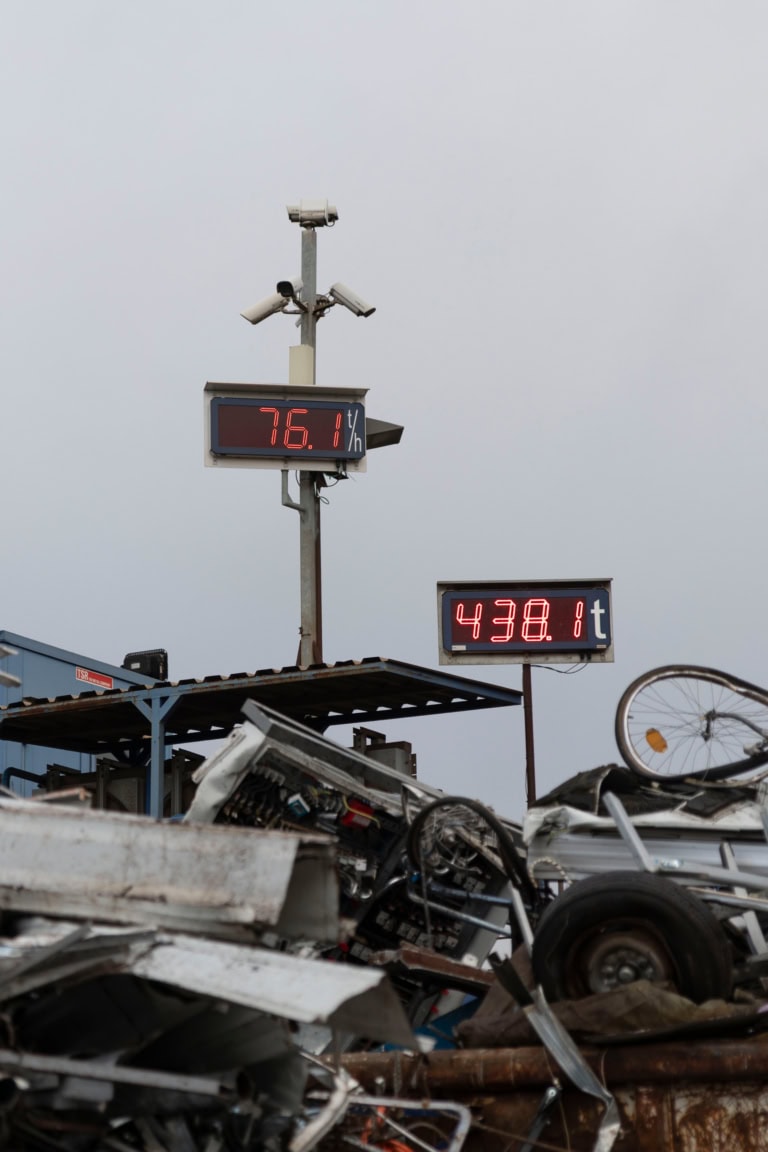
The digital display shows how much metal is currently going through the shear.
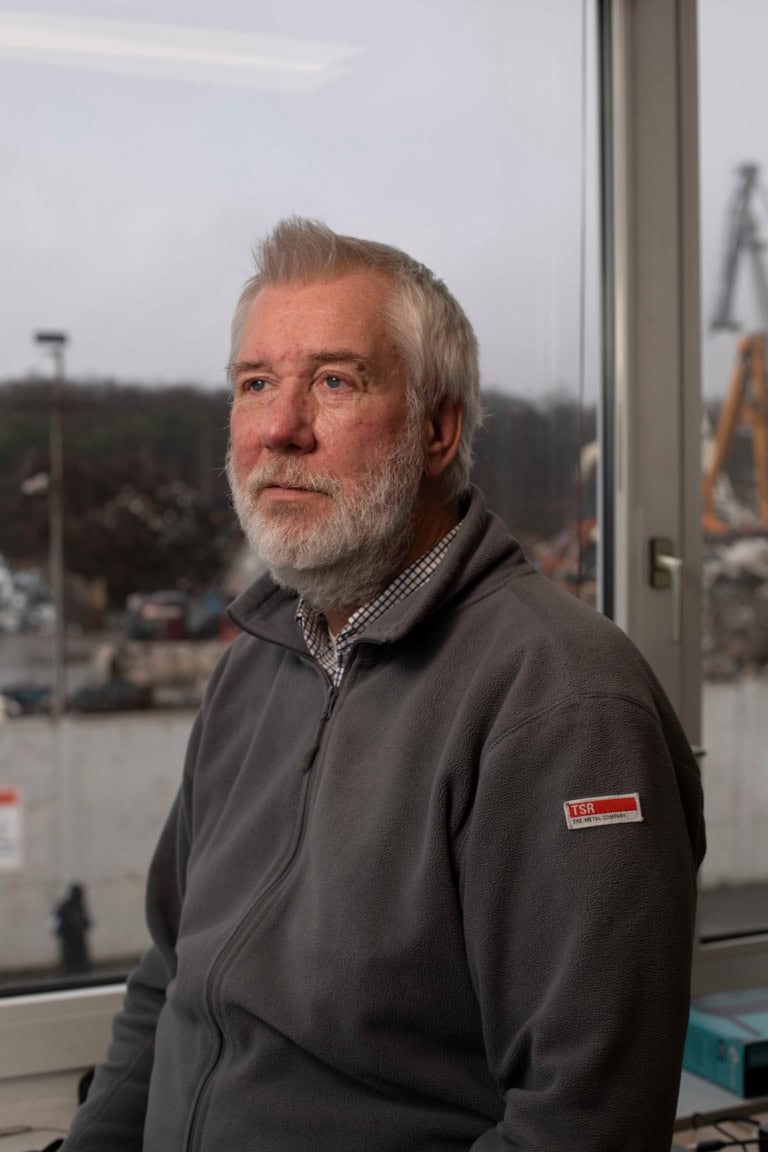
Branch manager Harm Kolberg in his office.
The scrap business is getting more complicated. Political events such as wars and trade disputes drive prices on the market. On the world market, processed scrap metal now competes with primary raw materials fresh from the blast furnace. Scrap dealers and car breakers have turned into traders in recyclables and secondary raw materials. Because metal has one crucial property: it can be used again and again in a closed materials cycle.
Its quality stays the same from one recycling cycle to the next and is no worse than that of newly extracted metal. The German Federal Association for Secondary Raw Materials and Waste Management (bvse) highlights the environmental benefits: lower consumption of primary raw materials, less energy, reduced CO2 emissions and conservation of ore deposits.

In the small cab of TSR’s metal shear, about five metres up, sits Markus, the shear operator. In front of him is a console with buttons and a lever rather like a joystick. The scrap shear stands in the middle of mountains of scrap. Markus extends the scrap grab and lowers the arm into the heap of metal several times. The grab scoops up old iron, lifts it high and drops it with a clatter into the shear’s trough.
The grab swings back and forth again and again, and the trough gradually fills up. The scrap in the trough is to be prepared for onward transport. ‘All right, good to go’ – a colleague’s voice crackles over Markus’s radio, giving him the green light. Markus presses a red button and pushes the lever to the right. With a deafening crash, metal plates slam down like blades into the pile of scrap in the trough. Within seconds the coarse scrap is crushed.
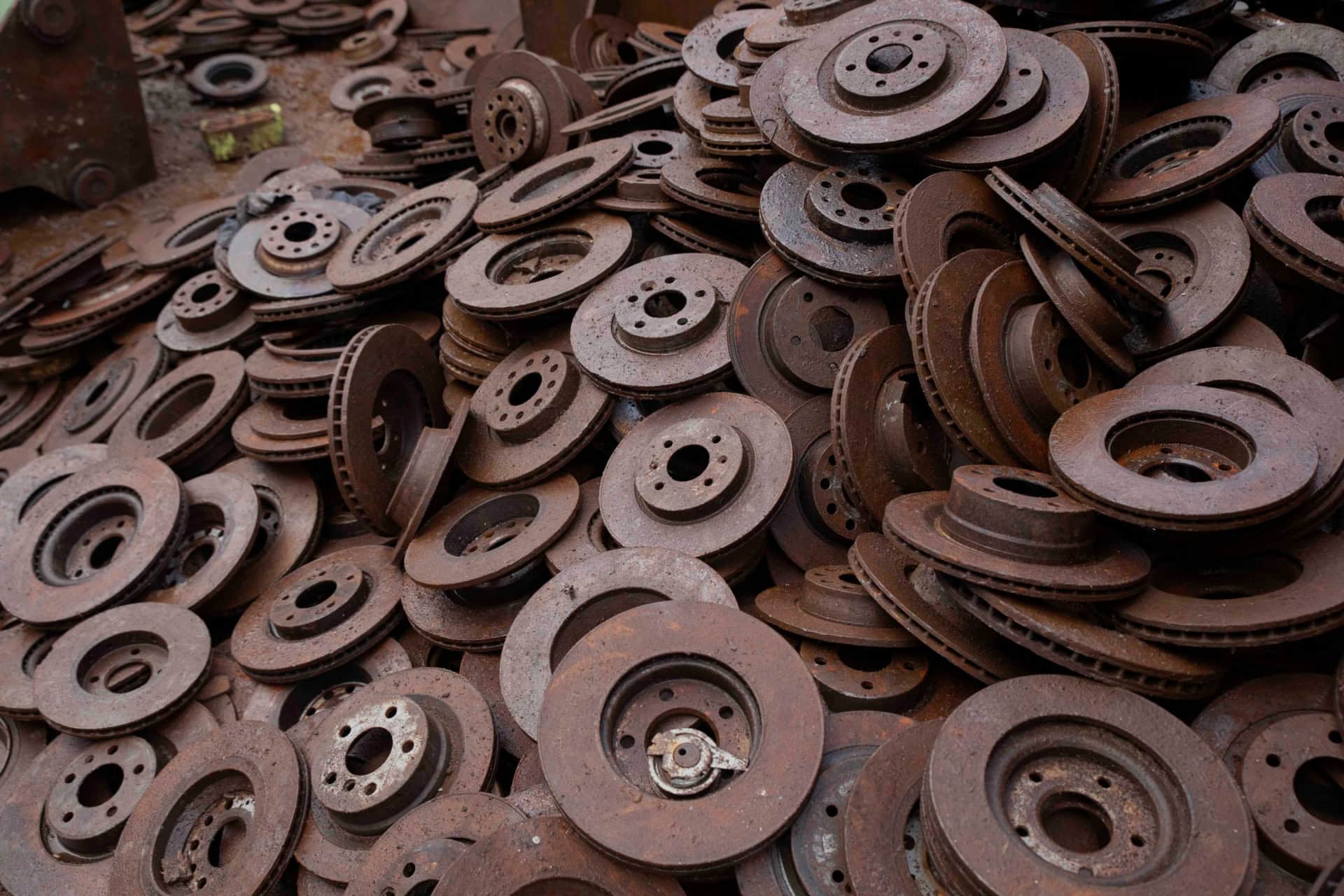
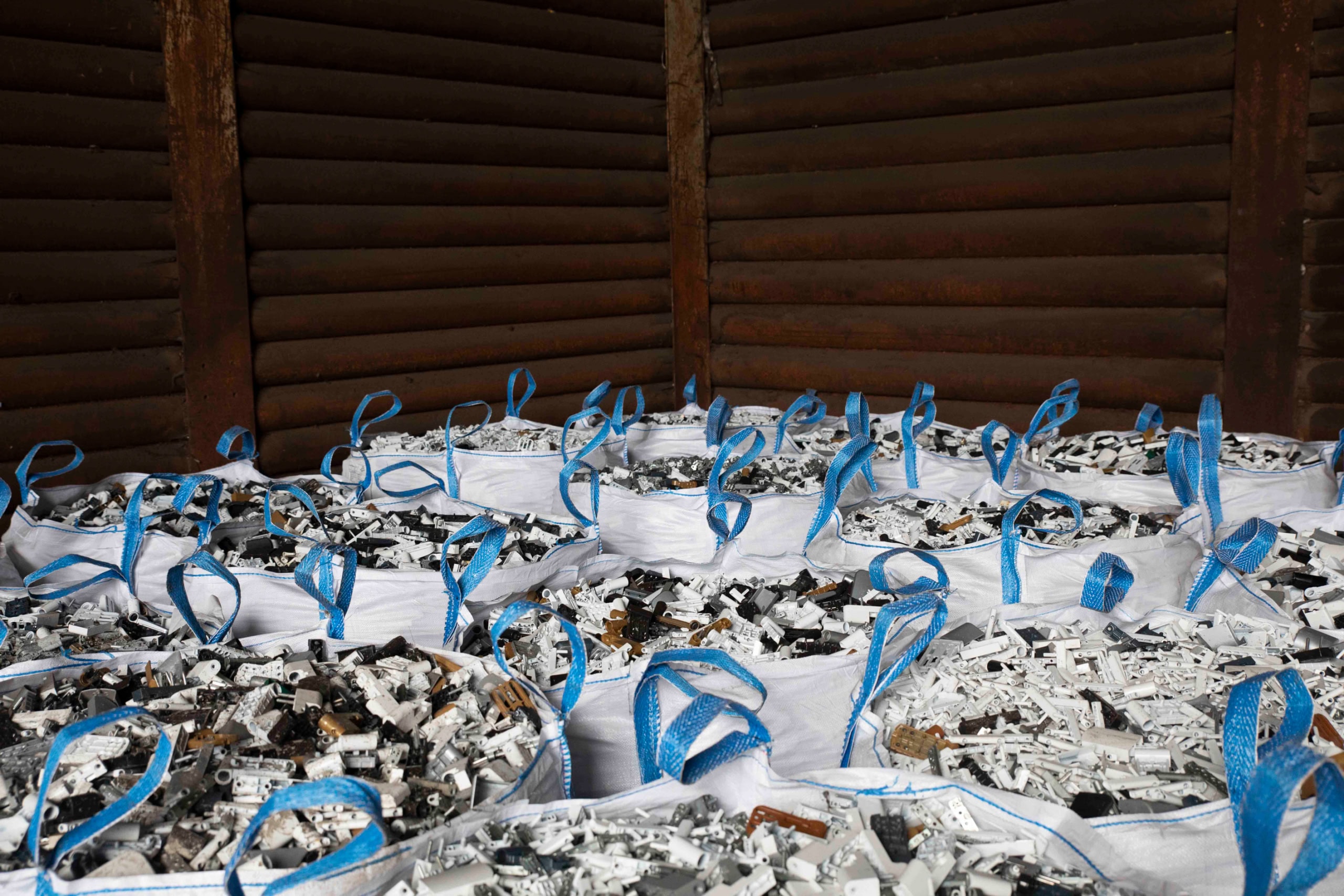
All over the TSR site, mountains of scrap metal stand side by side. Pressed or shredded, copper or iron. Every heap is carefully sorted – by hand if necessary. A decommissioned Volkswagen assembly line has just arrived. Two workers pick brake discs out of the small parts and stack them in a separate container.
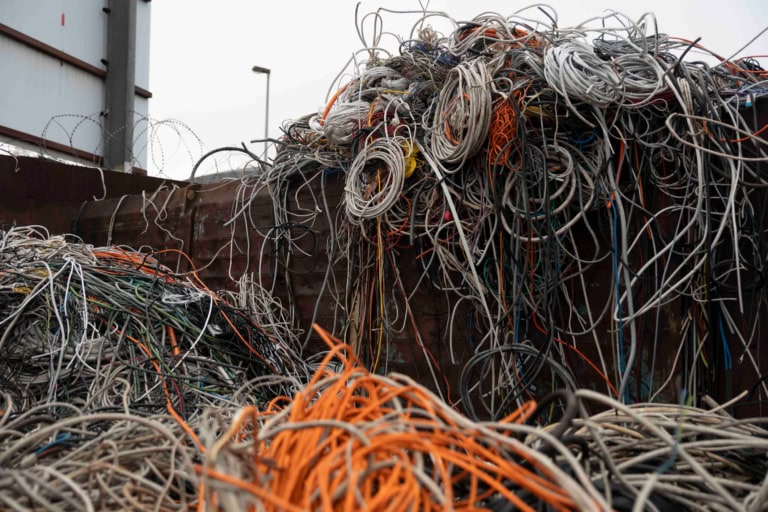
Mountains of cable, from which copper is recovered.

Markus in the control cab of the scrap shear.
Anyone who carelessly throws old electrical appliances or batteries in with their household rubbish isn’t just harming the environment – they’re creating a fire risk, too.
 Harm Kolberg
Harm Kolberg insists on meticulous sorting and proper disposal. There have already been three fires on the TSR site at the Nordhafen. The cause: lithium-ion batteries in the scrap metal. A single knock to one of these batteries can generate enormous heat in no time. Lithium-ion batteries are everywhere today – in every mobile phone and every e-cigarette. And sometimes this electronic waste ends up in the scrap metal.
With consequences: small fires are now part of everyday life at German scrapyards. Hardly any recycling firm can get insurance against them, says Harm Kolberg: ‘It’s a big problem. The costs are so high that I really have to think about whether the damage is in proportion to the cost of the insurance policy.’
Germany exports waste from base metals such as aluminium, iron and steel. According to the Federal Statistical Office, it amounted to 9.1 million tonnes in 2023 – trade worth €6.3 billion to the German economy. Much of that sum is earned on a small scale: it comes from the country’s many scrapyards and their mountains of old metal parts.
Kolberg and other German traders in secondary raw materials keep a constant eye on costs, prices and developments in the markets – and in politics. The German scrap market is part of an international system. At home there is an oversupply of scrap, but abroad the material is still in demand: after the earthquake in Turkey in February 2023, for example, demand for scrap metal at Turkish steelworks rose considerably.
Turkey, the world’s largest importer of scrap, planned to rebuild infrastructure and housing within a year. German companies such as TSR delivered, and steel prices briefly went through the roof. Then it became clear that reconstruction would drag on. Demand for scrap metal fell – and with it the price.
Pricing on the market is complex – and often extremely fast. ‘We’re talking about short-term business, even hour by hour,’ says Kolberg. So at the start of the week, TSR can’t guarantee that prices will hold until the end of it. Kolberg is hoping for more certainty in 2026. That’s when Hannover’s public transport operator ÜSTRA will gradually take the TW 6000 – the city’s green trams – out of service. TSR has already secured 40 old trams: mountains of scrap metal that will keep Markus and his shear busy for months.