‘A coffee, please, sweetie’
On civil courage – and why, in tricky moments, we often look away rather than step in.
By Wiebke Rose

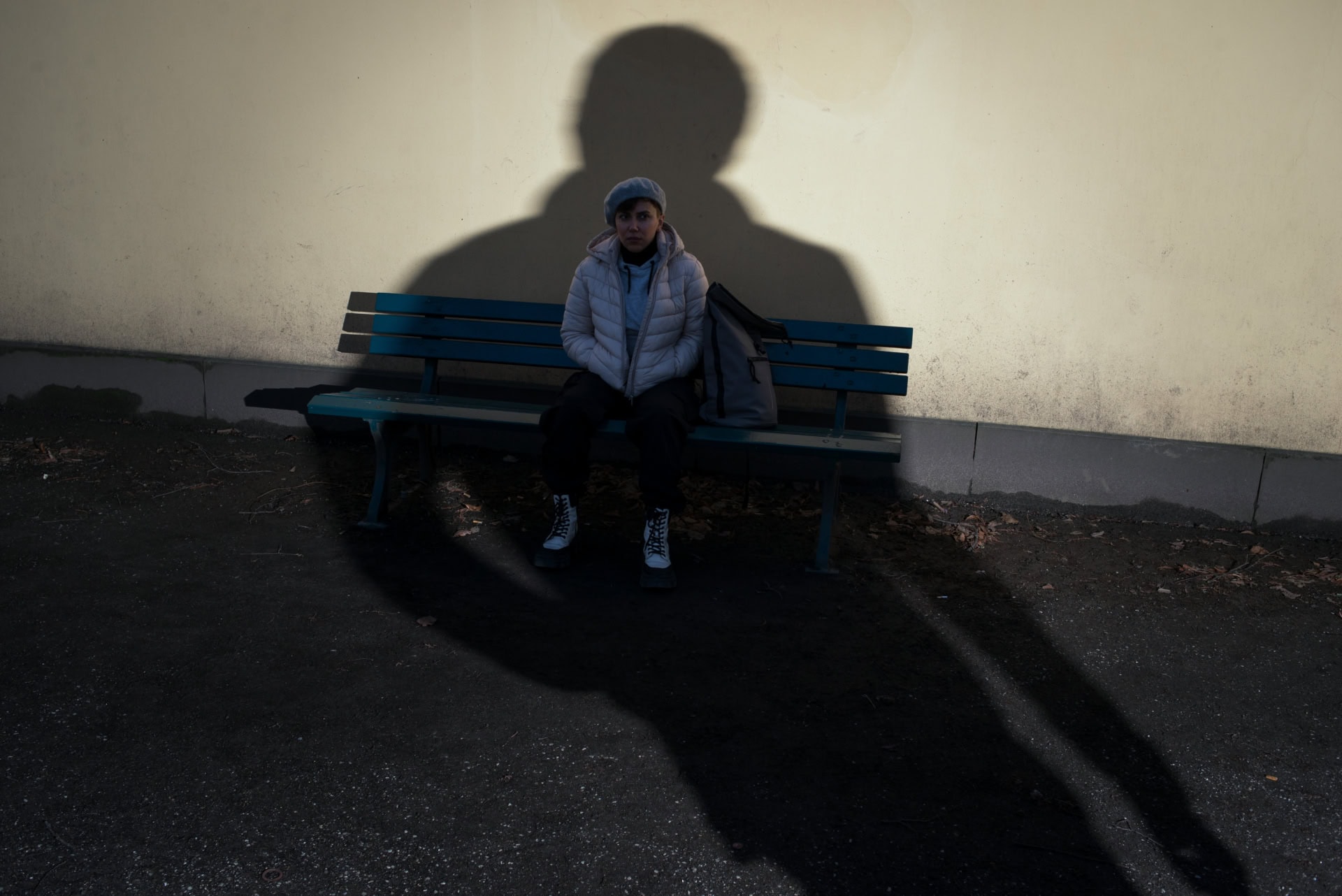
Illustrative photo: Bastian Betz, Armina Ahmadinia, Jannis Schubert, Cora Trinkaus
‘How are you today, darling?’, ‘Everything all right, sweetheart?’ and ‘A coffee, please, sweetie.’ Mirja often hears lines like these at work. She is 20 and works at her local bakery. ‘There’s an older regular,’ she says, ‘who really does come in every day. Sometimes with his wife, sometimes without.’ He calls every member of the bakery’s all-female sales staff by a pet name, without exception. ‘At first I just found it a bit odd, but now it makes me really uncomfortable.’
The long-standing customer also stares down her and her colleagues’ tops or at their bottoms whenever they bend over or sweep something up from the floor. ‘The whole condescending way he treats us. For me, that borders on sexual harassment,’ Mirja admits. Talking to me, she says she wishes someone would say something for once. But she also understands why her colleagues don’t step in. ‘We’re simply afraid of getting into trouble with our boss – it’s really important that we’re polite to our customers.’
The more people witness an emergency, the less likely it is that anyone will intervene.
That is just one of many reasons why people stay silent in similar situations. The political scientist Gerd Meyer wrote about the pros and cons of acting with civil courage back in 2011, in the magazine proJugend. Meyer classifies civil courage as a particular kind of socially responsible action rather than a human trait. Acting out of social courage, however, is not the same as ordinary helping or showing solidarity.
One decisive difference is the setting: where the emergency takes place and prompts at least one other person to intervene. It has to be in public for it to count as civil courage. What’s more, intervening usually comes with consequences that are partly unpredictable. Will stepping in achieve anything at all? Am I putting myself in danger? Must I expect negative consequences for myself – like Mirja, who doesn’t want to annoy her management?
Another feature is the appeal to our own moral compass. If a situation violates our values, we are quicker to step in and, if necessary, help the victim. Gerd Meyer describes civil courage here as a ‘value-based concept’ that is always directed against violence and extremist political aims. That, he says, is why civil courage is also ‘an important, demanding and uncomfortable virtue in a democracy’. But what exactly determines whether we intervene and act with courage? There is more than one answer. For one thing, we always have to assess the situation first. We often only step in once it is clear that our action is needed.
Research has identified the behaviour of the other people present as a second important factor. Whether others stay passive or step in directly strongly affects what we do ourselves. One hypothesis is confirmed again and again in studies: the more people witness an emergency, the less likely it is that anyone will intervene. This phenomenon is known as the bystander effect. Each individual assumes, for example, that someone else is more competent and will step in. Responsibility is spread across more and more people, so that everyone actually feels less responsible and less called upon. There are plenty of everyday examples of the bystander effect.
For about 15 minutes, none of the passers-by helps her, even though the man repeatedly tries to grab her hand.
Another young woman tells me about her experience. She is sitting at the station in her home town, waiting for her bus, when a man starts talking to her. ‘He’s pretty well known there, apparently has a drinking problem and often pesters people,’ she says. First he compliments her on her hair, which she says was still fine. Then he starts flirting with her, invites her back to his place and even grabs her hand. ‘Of course that made me uncomfortable, and I told him so clearly.’ Several people are standing around her, some of whom can see exactly how uncomfortable the situation is for her. For about 15 minutes, none of the passers-by helps her, even though the man repeatedly tries to grab her hand. ‘Until two girls came over – two out of maybe ten people standing right nearby,’ she recalls. She felt pretty much abandoned and helpless, even though she did get help in the end.
To make more people willing to act with courage in future, awareness of the issue has to be raised early, in the family and at school, writes Gerd Meyer. That way, the willingness to show civil courage could grow. But as long as abuse of power remains a problem in society, civil courage is likely to remain an issue too. In Mirja’s case, no one has yet called out the older customer for his suggestive remarks. She has since quit her job at the bakery to focus on her studies – but regulars will always be regulars.