800 euros less: a ZDF journalist on the gender pay gap
Her male colleagues earn considerably more – for the same work. What needs to happen so that equal treatment isn’t just theory?
By Emma Jacob

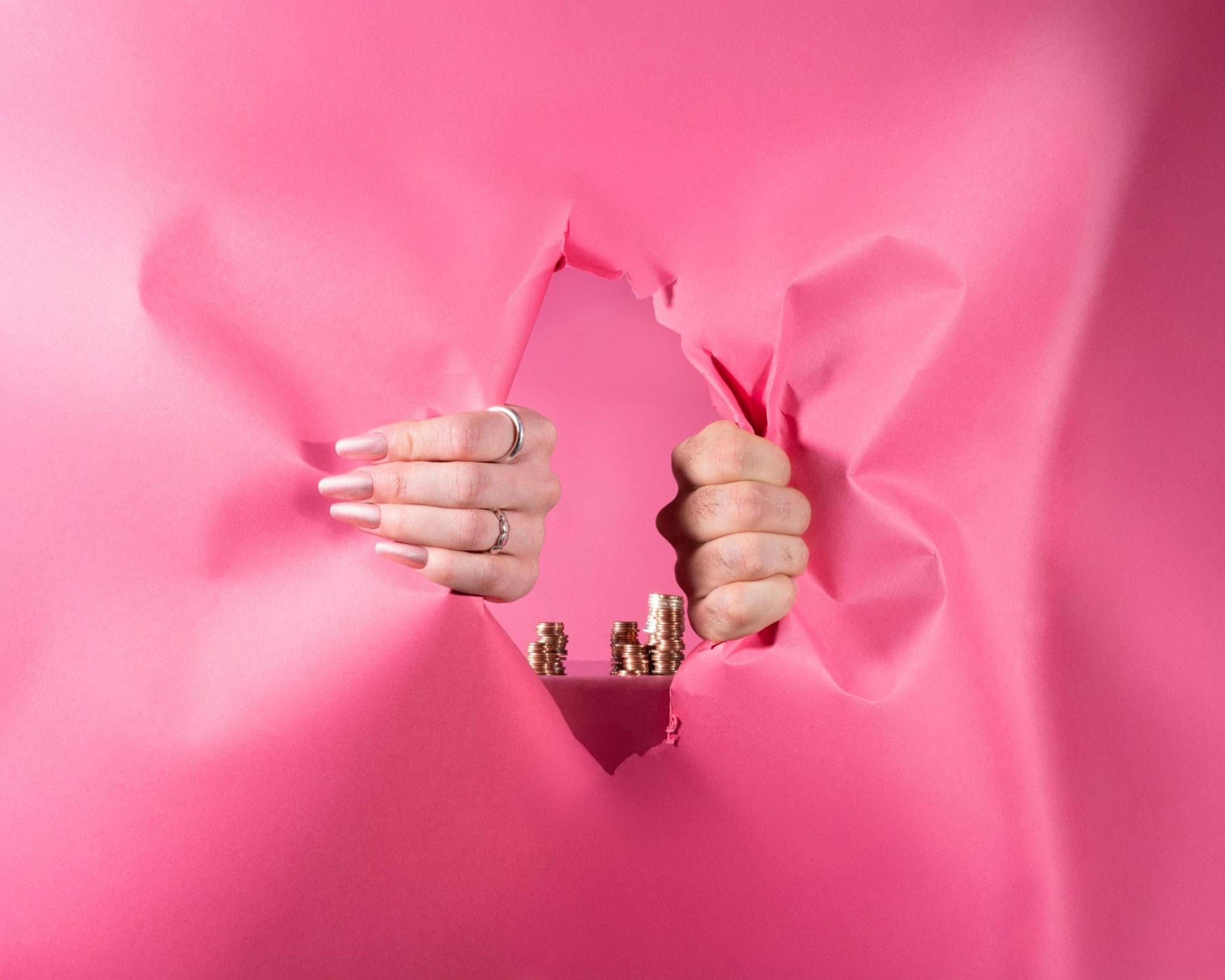
Photo: Salome Ziermann, Jonathan Funk
Imagine going to your company Christmas party without a care in the world and suddenly finding out that your male colleagues in the same position, doing the same job, earn more than you. That’s exactly what happened to Birte Meier, a German investigative journalist.
Meier had worked since 2007 for ‘Frontal 21’, the political magazine programme on the public broadcaster ZDF, where, according to Deutschlandfunk, she was responsible for political background pieces and business reports. In 2015 she discovered the pay gap by chance. Suspecting discrimination on the grounds of her gender, she sued ZDF.
Her claim was initially dismissed in 2017: the regional labour court demanded proof that the pay difference really was linked to her gender. Her employer gave contradictory explanations – sometimes pointing to professional experience, sometimes to a degree in journalism.
In June 2020, the Federal Labour Court finally ruled in favour of Meier’s claim for information. ZDF then admitted that her male colleagues’ comparable salary in 2017 had been around 800 euros higher than hers. Meier eventually received back pay from the broadcaster, even though it had previously offered her 110,000 euros to ‘keep her mouth shut’, as she told Die Zeit. The fact remains: there were clear differences in pay, and in the end it was the male colleagues who went home with a higher salary.
And yet the General Equal Treatment Act is unambiguous: ‘The purpose of this Act is to prevent or eliminate discrimination on the grounds of sex.’ That’s the theory – but reality often looks different.
€4.46 gross less per hour – that’s how much less women earned than men in 2023.
One in three employees has experienced discrimination at work, according to a Europe-wide survey by the auditing and consulting firm Ernst & Young – and gender often plays a decisive role. Of the 1,800 employees surveyed, 36 per cent of women said they had been discriminated against at work, compared with 31 per cent of men. For many women in many countries, equality is still a utopia.
Despite quotas for women and equal treatment legislation, women in Germany often earn less than men in the same job – yet many women aren’t even aware of it.
Unequal pay for women and men is a symptom of patriarchy and an expression of deep-rooted disadvantage. For centuries, women were excluded from positions of power and from education and were therefore seen as less valuable. These values still shape our thinking today and are only slowly changing as old ways of thinking are reassessed and confronted.
That’s why unequal pay between men and women remains an issue. The so-called gender pay gap is visible in almost every country. It compares the average gross earnings of women and men. According to the Federal Statistical Office, Germany had the fourth-largest gender pay gap in the European Union in 2022, at around 18 per cent. So women here earn around a fifth less than men. But why do these gaps still exist in the 21st century?
In Western European countries, it was long the norm for men to be the main earners while women were responsible for the household and family, according to the employer review platform Kununu. Pregnancy and childcare mean that women interrupt their careers more often and for longer, and more often work part-time.
The pension gap between men and women is around 60 per cent.
Another reason is that women mostly take on the care of older family members – around 68 per cent of all carers are women. Women also often hold back in salary negotiations. According to Kununu, the cause of this ‘entitlement gap’ is that leadership positions are often held by men, so women lack role models and support.
The pay index of the Institute of Economic and Social Research (WSI) showed in 2020, for example, that female branch and store managers earn on average 18 per cent less than their male colleagues. With a 38-hour week and ten years’ professional experience, a man earns on average 3,220 euros gross a month, a woman only 2,640 euros.
The Federal Anti-Discrimination Agency points out that these pay gaps have long-term consequences for pensions. The pension gap between men and women is currently around 60 per cent, as many female pensioners earned very little during their working lives.
Women are still disadvantaged in many areas. But time shows that this situation doesn’t have to be permanent. The recruitment company Randstad believes it is necessary for companies to take active steps against unequal pay. They should make it possible for women to take on responsible positions part-time after having a child – with real prospects of promotion.
The German Trade Union Confederation (DGB) is calling for equal pay for work of equal value, an upgrading of female-dominated professions and stronger collective bargaining coverage.
In the 20th century, women fought for fundamental rights – today they can vote and study at university. The historian Kurt Michel describes discrimination against women as a ‘cultural aberration’. But culture can change. What matters is holding on to the basic principle that everyone should be treated equally – regardless of origin, sexuality or gender.
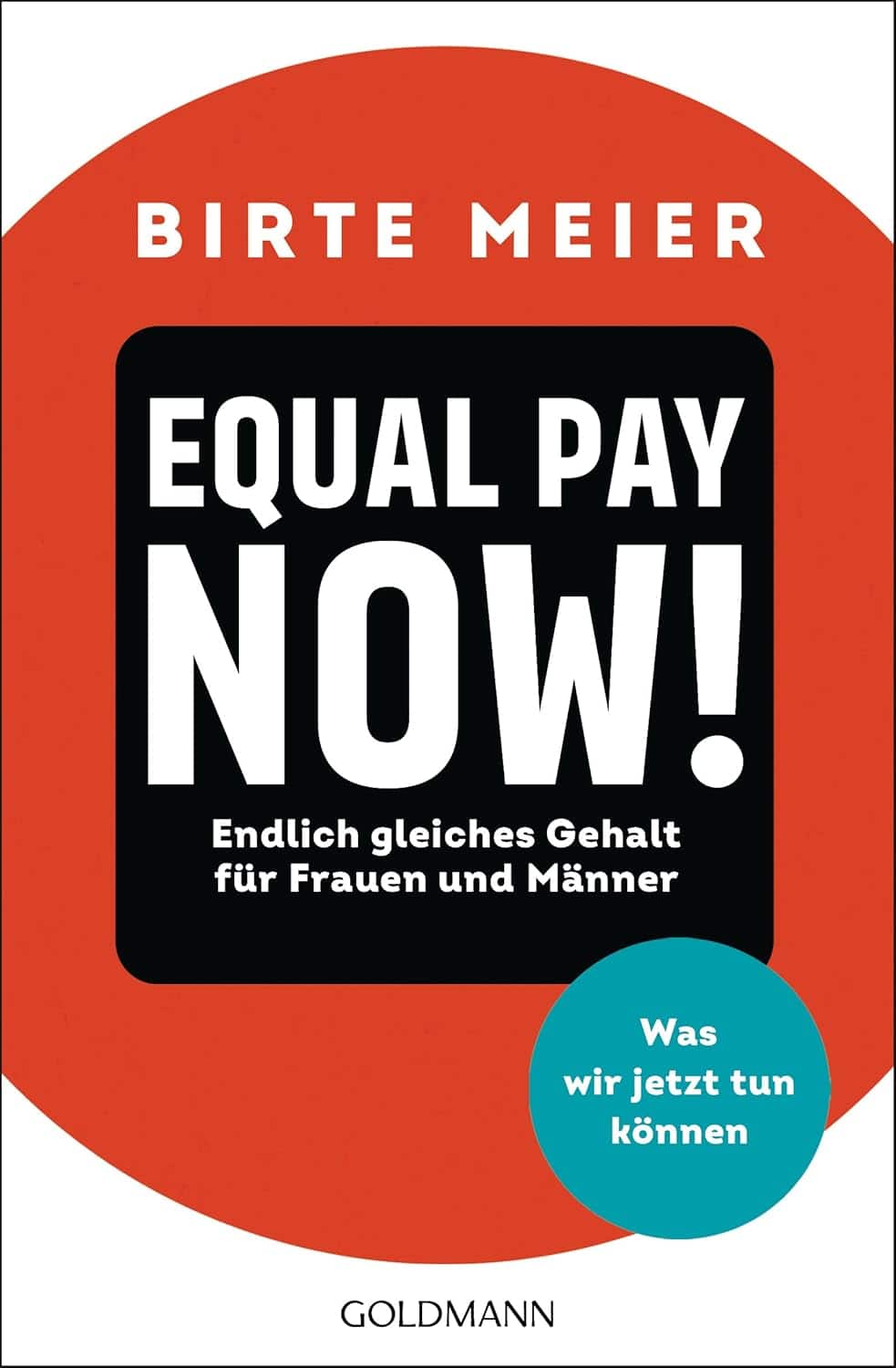
Equal Pay Now! Endlich gleiches Gehalt für Frauen und Männer was published in German by Wilhelm Goldmann Verlag in 2023.
It’s not individuals who need to change, but the system.
The journalist Birte Meier published her book ‘Equal Pay Now!’ in 2023 after discovering that she had been discriminated against because of her gender. For years, with the same qualifications and the same tasks, she had earned considerably less than her male colleagues. In her book, she debunks five myths spread by those who deny the pay gap:
Myth 1: There is no pay discrimination.
Myth 2: Women aren’t good at negotiating.
Myth 3: Women choose the wrong professions.
Myth 4: Collective agreements protect against discrimination.
Myth 5: Women just aren’t up to it.