‘A cultural middle finger to the system’
For some, punk is long dead; for others, it’s more alive than ever: a conversation about attitude, dissent and freedom.
By Pha Croissant (photos and text)
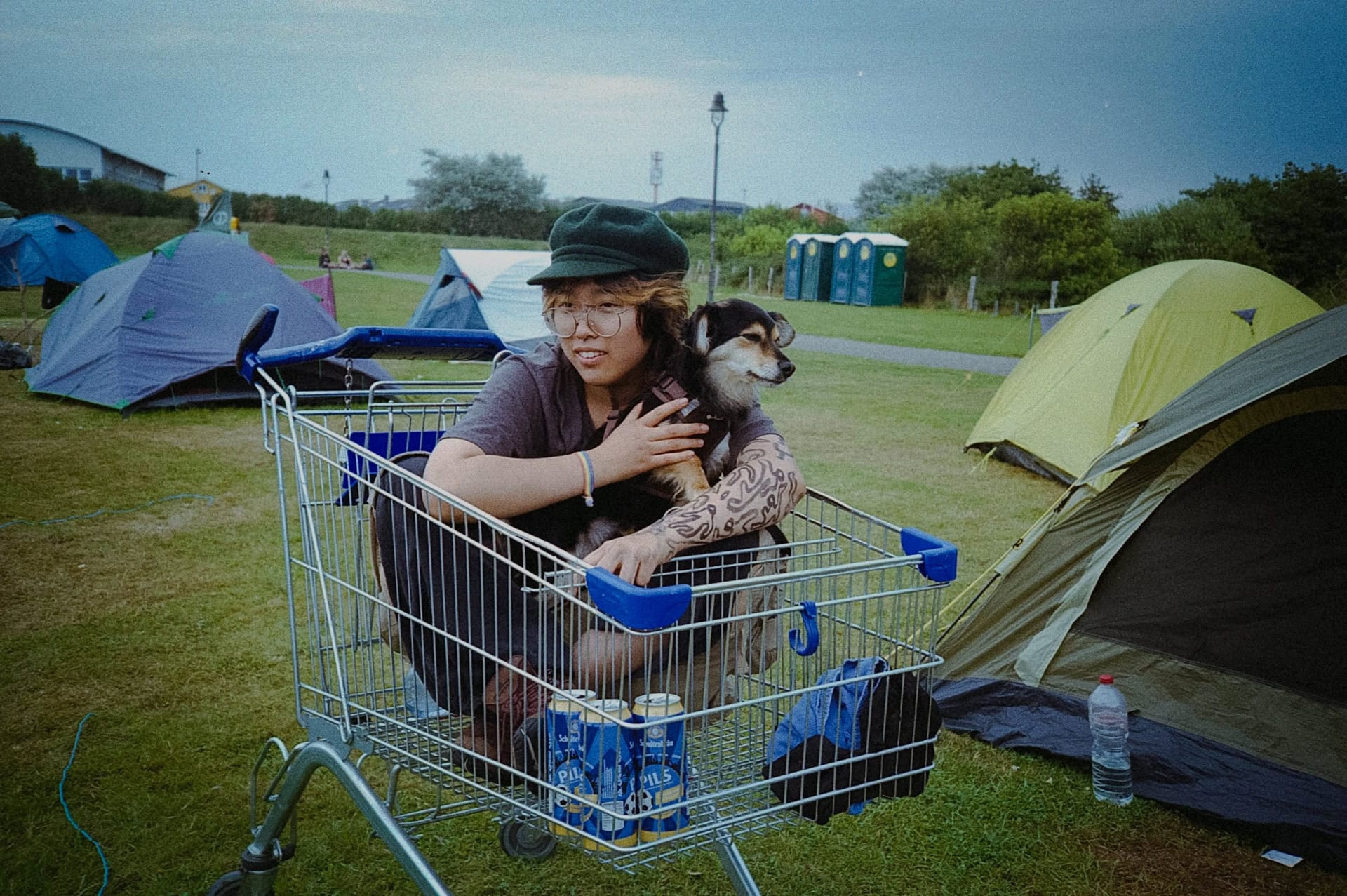
Sarah, DrehNix and A. live punk – each in their own way, but always in the spirit of resistance and rebellion. Why do they feel connected to the scene? What does punk mean to them? And why can’t punk be squeezed into one clear, uniform concept? To find answers, I met young punks. We talked about political resistance, cultural rebellion and rejecting ‘normie society’ – and with it, conformity with the capitalist system, patriarchy and discrimination.
I visited the punks in Hamburg, Berlin and Hannover. Over the decades, these cities have produced places where punk is lived, celebrated and debated. But the scene isn’t only found in big cities. Punk is diverse – it exists in autonomous youth centres, squats, forests and small rehearsal rooms in rural areas. Where life is boring or the infrastructure doesn’t allow for big record labels or music shows, people do it themselves. That’s the DIY mentality at the heart of punk.
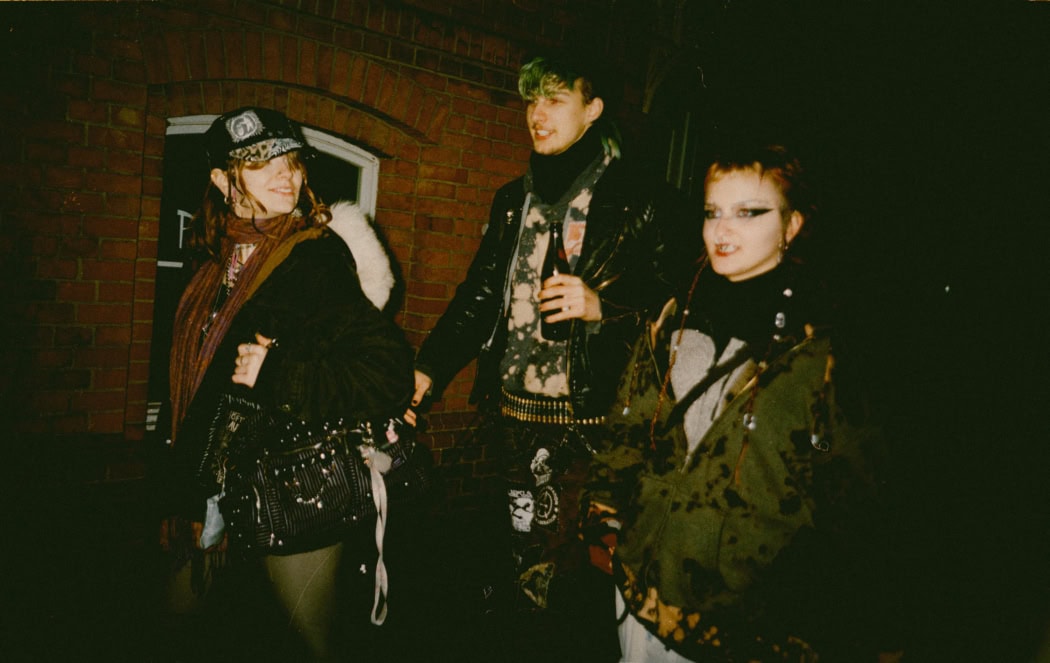
DrehNix and friends Sid and Schimmel in Berlin on their way to a bar, winter 2024
Punk lives, and stays alive, wherever people push back – loudly, awkwardly and colourfully – against conformity, exclusion and indifference. The scene is defined by individuality and by many different ideas of what punk is. Some who feel part of the punk scene are doing an apprenticeship or a degree and fit in more with social norms. Others devote themselves full-time to activism – or to none of the above.
Punk as identity
A. is one of the people I met for this project. We got to know each other a few years ago; I no longer remember the details. In our conversations we often talked about our shared rejection of the power structures that dominate our society. When I asked A. what punk meant to her, she said: ‘For me, punk is the cultural middle finger to the system and the conformity that comes with it. It’s a way of expressing that you don’t accept this absurd “normality” of capitalism, domination, patriarchy, discrimination and all the shit that goes with it, that you don’t want to be part of it – and of showing that openly.’ Last year I asked her whether she’d like to talk about how she feels as a FLINTA* person in the punk scene, because here too, as in mainstream society, FLINTA* perspectives are often overlooked or ignored. And yet punk in particular offers many FLINTA* people a space where they feel accepted and understood through music and self-expression.
The term FLINTA*
The German term FLINTA* (‘women, lesbians, inter*, non-binary, trans* and agender people’) above all makes the social dimension of gender visible. The asterisk (*) is a placeholder for other gender identities and sexual orientations that don’t conform to the patriarchal norm. Because of their gender and/or sexual identity, FLINTA* people face discrimination in a male-dominated society.
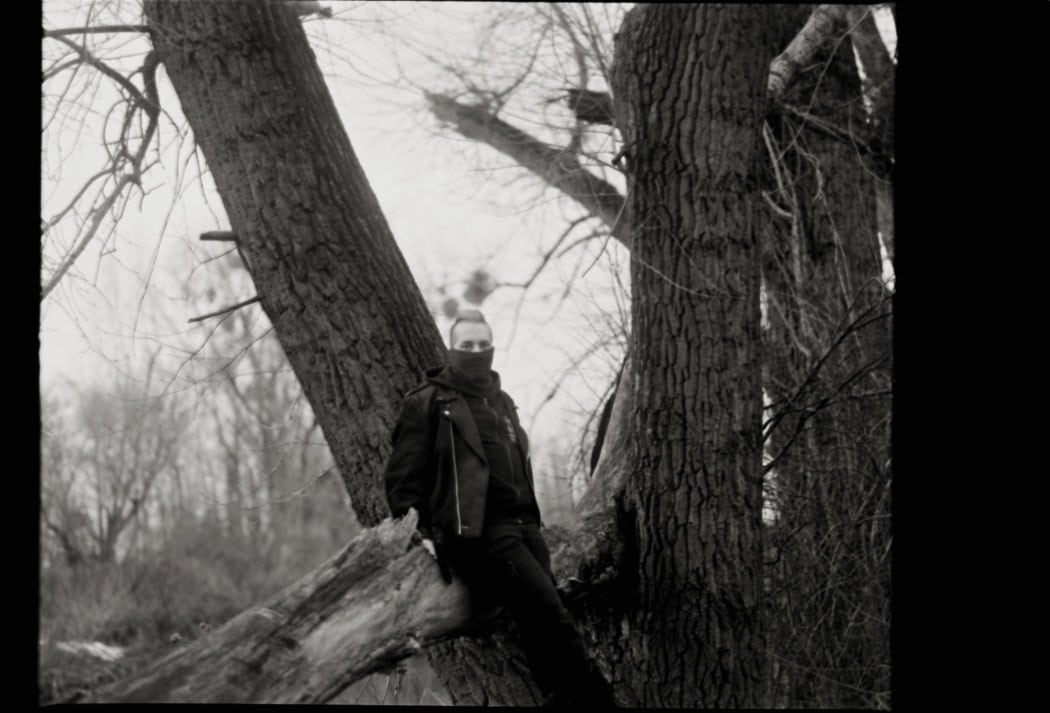
For A., punk is existential: ‘Punk isn’t part of my identity. Punk makes it possible for me to live my own identity – here I can be who I am, connected to my political ideals. I don’t find that in any other subculture or scene.’
‘Alte Männer’ (‘Old Men’)
At first glance, punk seems to be dominated by ‘old white machos’. History shows that this isn’t true. Punk has been shaped by queer-feminist voices, and the scene is diverse, made up of many different lived realities. Queer-feminist struggles and the rejection of the patriarchal system are part of punk.
Punk came to Germany from England in the late 1970s and early 1980s. Around that time, the all-female punk band Östro 430 was formed in Düsseldorf – one of the best-known feminist bands in German punk. They were a counterpoint to the mostly male-dominated bands, and they still make feminist punk today. They take up central feminist themes such as the politicisation of the private and the everyday. On their 2023 album ‘Punkrock nach Hausfrauenart’ (‘Punk rock, housewife-style’), songs such as ‘Alte Männer’ make provocative statements.
‘Old men start wars’ – so begins ‘Alte Männer’ by Östro 430, a song that goes on to name Putin, Trump and Erdoğan.
 Östro 430
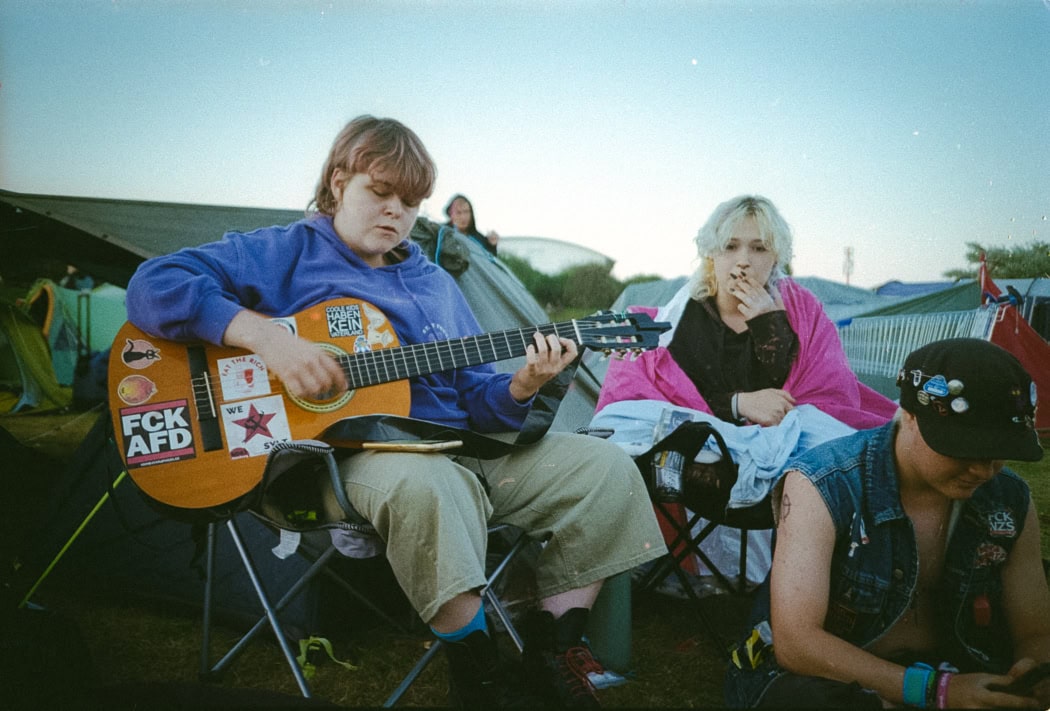
Stummel, Dübeldi, Ameise at the protest camp on Sylt, 2024.
Queer-feminist voices in punk music give a melody to a feminism that fights the oppression of queer lives and pushes back against a heteronormative world and binary systems. They first emerged in the 1980s in ‘queercore’. This strand of punk, which came from the US, addresses the discrimination faced by LGBTQ+ people and people of colour. Queer feminism is a strand of feminism that fights the oppression of women and queer lives. It goes hand in hand with rebelling against a heteronormative world and binary systems. The heteronorm rests on the binary assumption that there are only two fixed sexes and therefore only two gender identities (male and female). It follows that attraction and relationships are only possible between these two genders. In this logic, men and women complement each other in exclusive romantic couples.
In an interview with the punk magazine Underdog (2018), Dr Maria Katharina Wiedlack points to the link between punk’s anti-capitalist stance and queer-feminist approaches. She stresses that capitalism is built on exploiting many marginalised groups for the benefit of a few, mostly white men. This isn’t just a theoretical reading of a many-layered punk scene; it is reflected in the real experiences of people in it.

Neurodivergent, queer, left-wing
Another person I talked to about punk and lived realities is DrehNix. We first met at the ‘action days’ – also known as the ‘Chaostage’, or chaos days – on Sylt in 2024. The self-styled ‘rabble’ had come to the island for the third year running and set up camp on the festival meadow in Tinnum. With it, the ‘Aktion Sylt’ initiative wants to protest against social injustice. DrehNix and I shared a deep irritation at the unpleasantly domineering behaviour of some ‘machos’ in the punk scene.
Asked what originally drew DrehNix to punk, DrehNix said it had been a gradual process. DrehNix describes always having been different: ‘neurodivergent, queer, left-wing, thinking “differently”, looking “different”. Always too loud or too quiet, too much or too little, too colourful or too grey, too creative or too monotonous.’ DrehNix had never fitted in anywhere. ‘Understimulated by all the “normies” and their ideas about life, but at the same time overstimulated by the flood of expectations and the hustle and bustle of the “normal” world.’
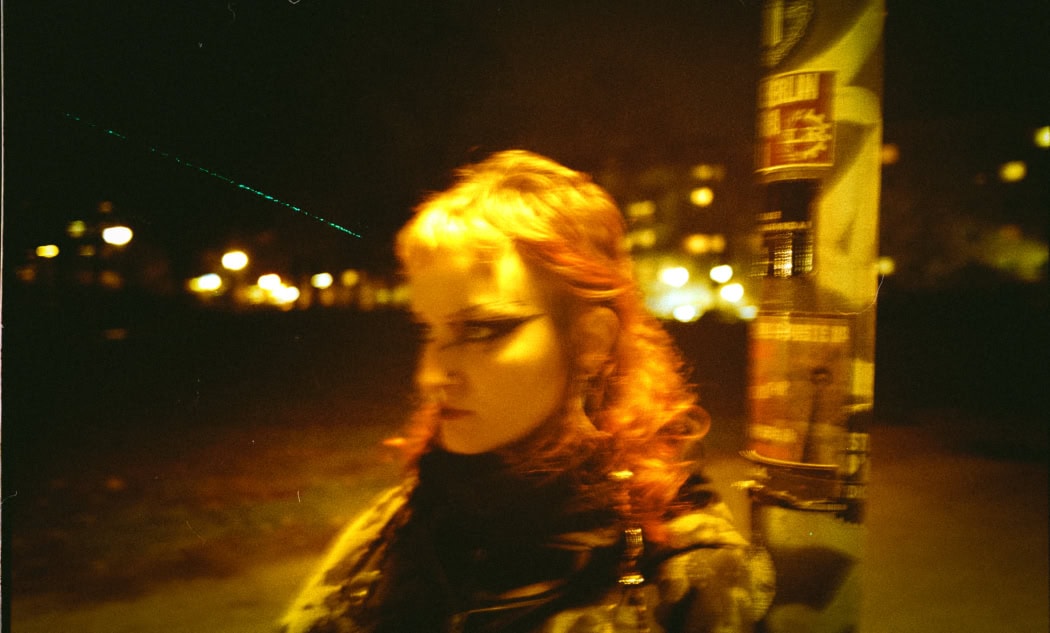
‘At last I felt I had arrived, that I was allowed to be who I am.’
DrehNix describes how school in particular left little room for working out who they were. There was a constant feeling of being trapped in a control-obsessed system, of having to obey orders and ‘keep your gob shut’: ‘Bound by time pressure, unrealistic expectations, grey people with grey lives and identities. Bossed around by unhappy, boring people with no prospects in a room full of unhappy, boring people with no prospects. Anyone who broke out, any individuality or creativity, was nipped in the bud as bad behaviour. I never fitted in.’
A colourful, loud, open group: punks.
But a lot changed once DrehNix had left the ‘shitty institution’ – school. ‘I decided to finally choose my own social circle and to dress, do my make-up and act the way I really am.’ By chance, DrehNix got to know the punk ‘Schimmel’. They met in an antifa group they had both joined and became friends. In 2023 they went to the ‘Chaostage’ on Sylt together. There DrehNix met their current group of friends: ‘a colourful, loud, open group: punks. At last I felt I had arrived, that I was allowed to be who I am. Nobody judged me for what I did, how I looked, how I thought – for being me.’
Punk in the family
Sarah’s first contact with punk was different. She is in her early twenties and training as a hairdresser in Hamburg. We met in 2023 at a small punk rock festival, where she had come with her father and friends. She grew up with the subculture through her father, a punk himself. She told me that he passed on its values to her – tolerance, openness and anti-fascism.
The village where she grew up was intolerant and steeped in right-wing ideas. Back then she couldn’t find her place in society. That changed when she started going to punk festivals and gigs. There she realised: ‘These are my people, who take me as I am – and whom I love. I love the open, tolerant attitude of the people, and definitely the music.’
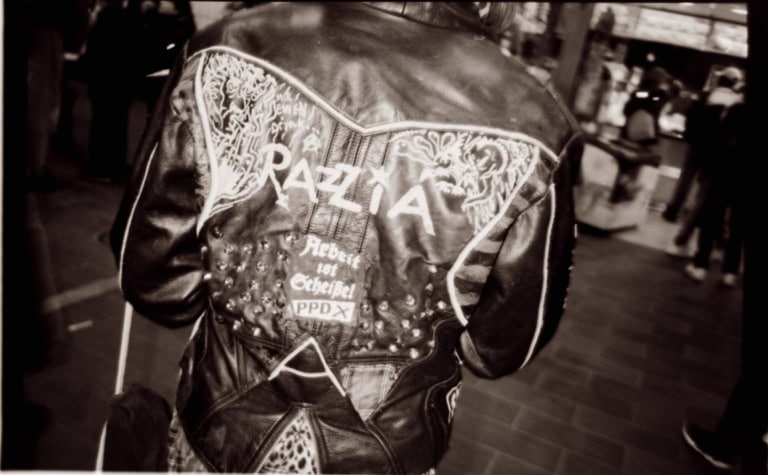
Sarah grew up with the subculture through her father, a punk himself.
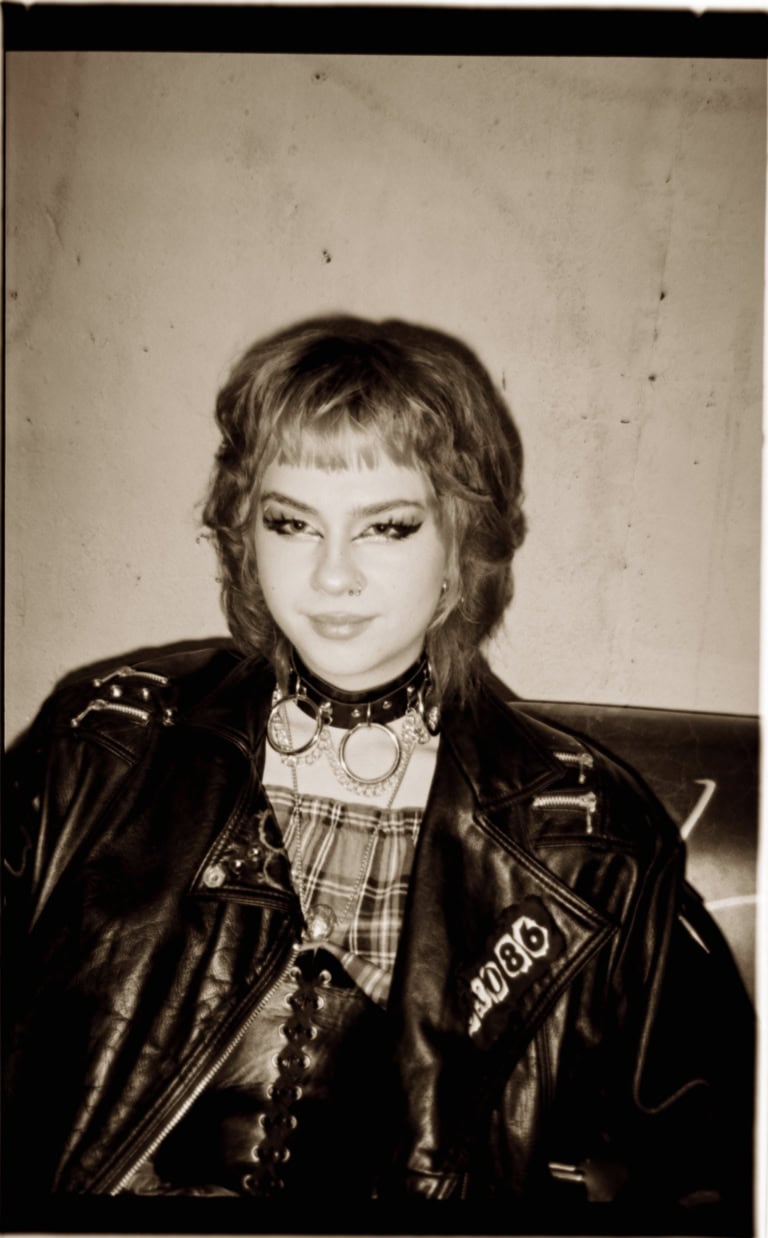
‘These are my people, who take me as I am – and whom I love.’
‘Smack in the gob!’
For many, the punk subculture stands for freedom, self-determination and breaking free of social constraints. But however idealistic this self-image may be, in reality this freedom doesn’t automatically go hand in hand with respect and solidarity for everyone. Within the punk scene too – much as in society as a whole – there are problems such as discrimination and abusive behaviour that contradict the ideals of tolerance and equality.
A. thinks the scene often fails to live up to its own standards. Punk music, she says, often turns middle-class and sells out. Solidarity is often just empty words. ‘“Punk is dead!” – you hear that a lot. The days of the ’80s and ’90s are over, but lots of people are still stuck there in their heads. Sure, the scene has got smaller, but it has also changed – which is completely normal. Many people don’t want to accept that, so they constantly moan and try to deny that punks of the new generation are real punks. Just sad.’
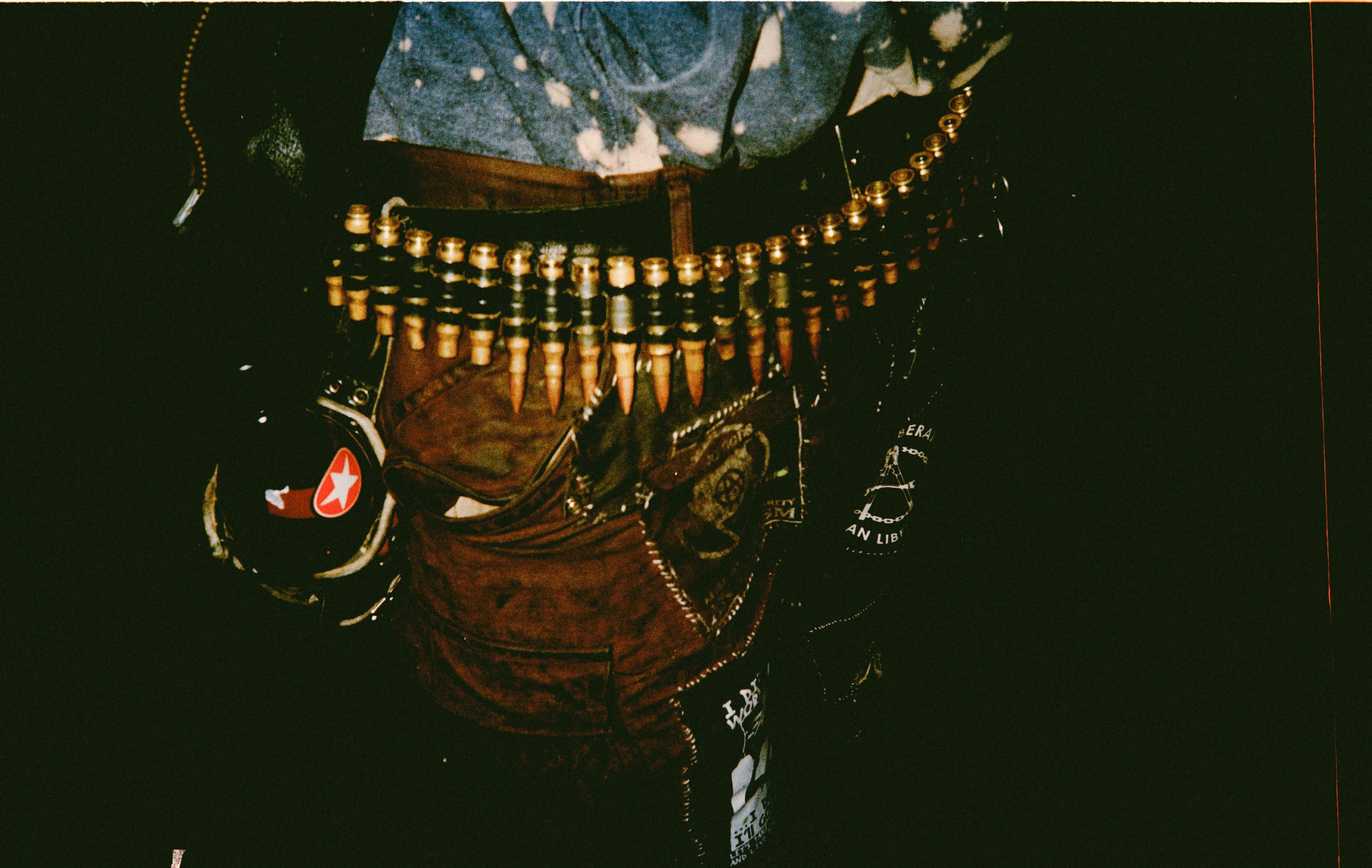
I asked A. how she experiences the scene as a FLINTA* person. She said the attitude ‘I don’t give a shit what your gender or sexuality is!’ is common. At first that sounds ‘pretty great’. A. is agender, and acceptance of that sadly can’t always be taken for granted. The queer punk faction does have this attitude, she says, but unfortunately that’s the exception. ‘Patriarchy and a lack of understanding of trans people’s lived reality are almost as widespread in the punk scene as in mainstream society. It’s getting better, but shirtless machos, misgendering and sexual assaults are sadly not uncommon.’
Sarah, on the other hand, sees the scene as a comparatively safe place. She says she experiences abusive behaviour far more often outside the punk subculture. Within the scene, there are at least serious efforts to stamp it out. However, boundary-crossing behaviour often goes along with the heavier drug use in the scene, and there are often structures in which perpetrators are protected or covered for.
In the end, A. calls for a clear stance: ‘As a scene, we need to recognise the problems I’ve described and face up to them. In my view, that means the scene needs to be re-politicised and, to some extent, reinvented. Old white cis men bawling Toten Hosen songs while pissed – smack in the gob!’