The Blatten landslide: when permafrost makes the Alps unstable
When warming sets the rock sliding: how climate change is putting entire high-mountain communities at risk.
By Emil Eichinger (photos), Hagen Plasswich (text)


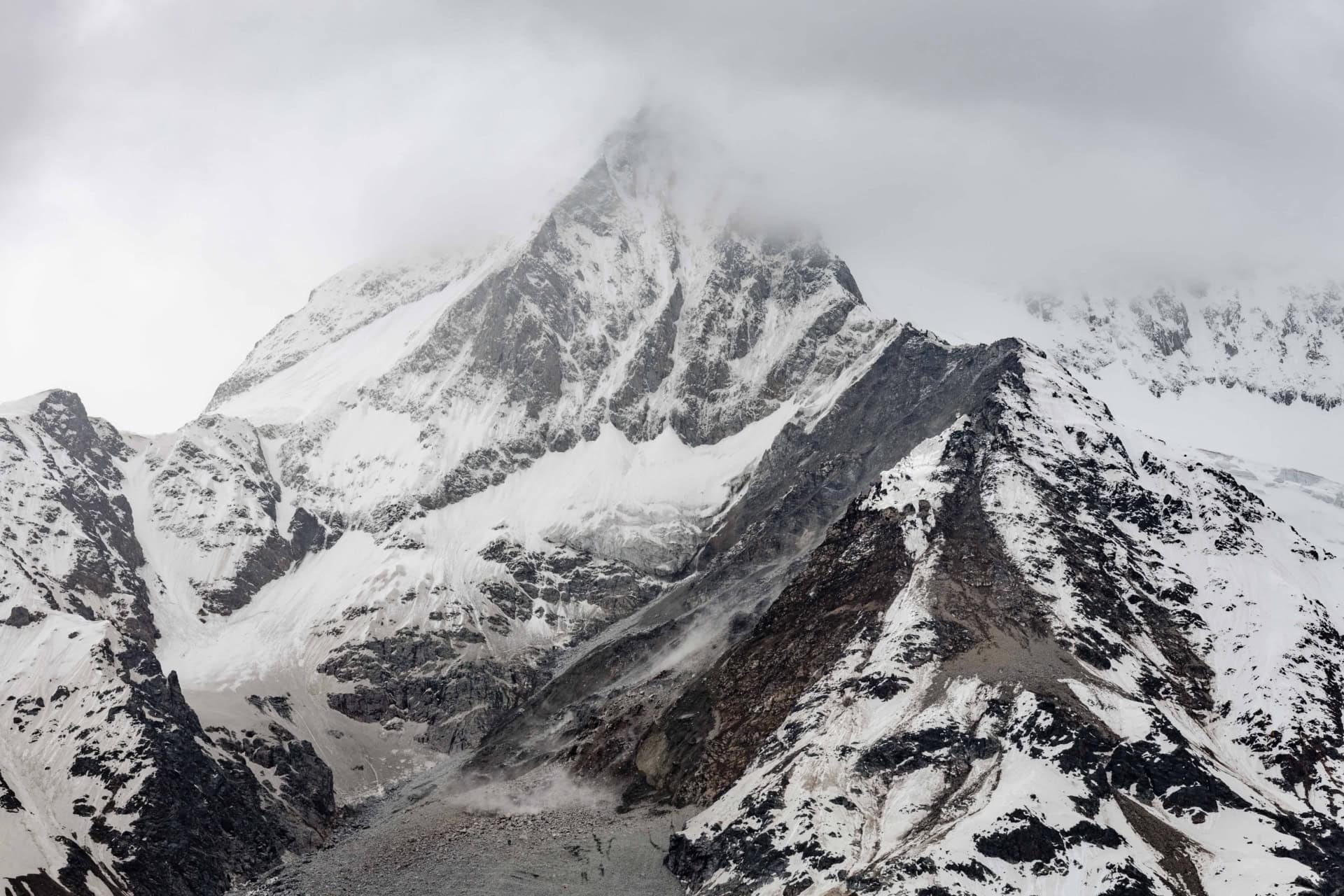
The mountains are starting to crumble. For the people of the Swiss Alps, this is no longer an abstract threat but reality. When a glacier in the canton of Valais collapses on 28 May 2025 and, together with hundreds of thousands of tonnes of rock, buries the village of Blatten, one thing becomes clear: for the Alps, the climate crisis is not the future but the present.
It took only moments for Blatten to disappear almost completely. Days earlier, part of the nearby mountain had begun to crumble. The rock piled up on the glacier below. The pressure grew so great that the glacier broke away from the rock face. A huge mass of debris and ice crashed down into the valley.

The debris and ice cover the floor of the Lötschental valley over a length of around 2.5 kilometres, in places 100 metres deep. Around 90 per cent of Blatten is buried.

Under the pressure of the rock masses, a large part of the Birch Glacier slides away on 28 May, sending around 10 million cubic metres of rock and ice crashing into the valley.
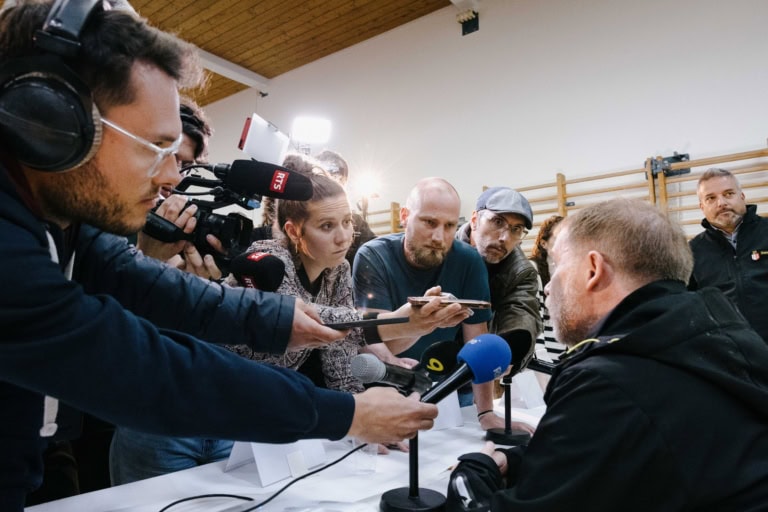
Raphaël Mayoraz, head of the natural hazards service, answers journalists’ questions after the press conference on 28 May 2025.

Immediately after the landslide, a helicopter takes off to assess the situation.
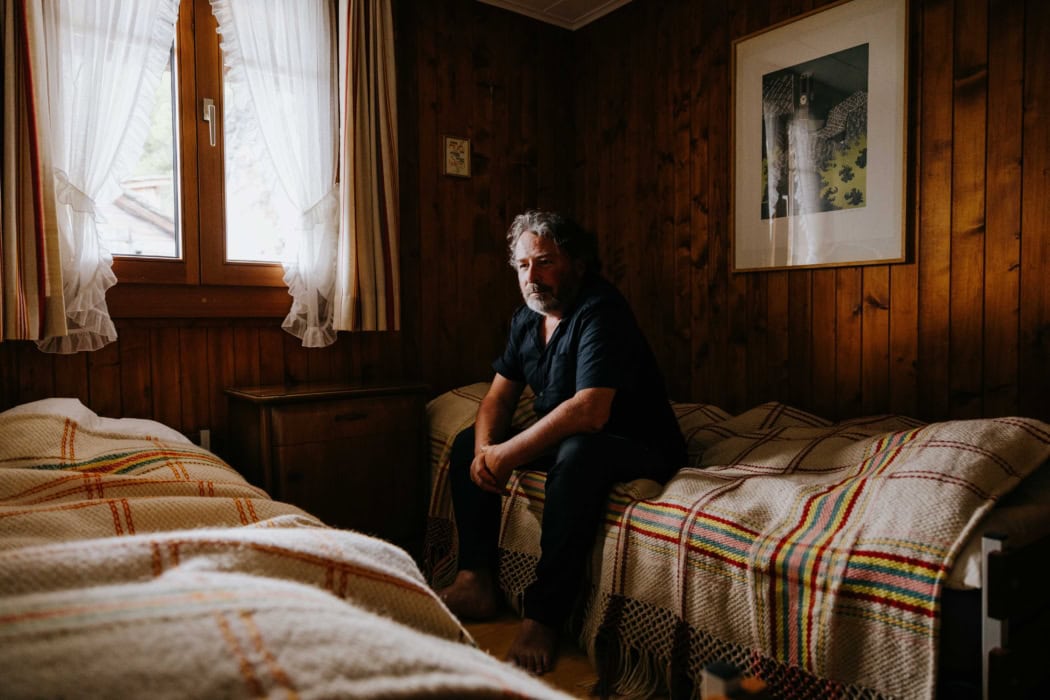
The 300 evacuated residents of the village in Switzerland’s Lötschental valley had to watch as their home vanished in seconds. One of them is Zarick Berger.
‘Nature is much bigger than we are. We have to save ourselves from it,’ Zarick says in his emergency accommodation. He had always been aware that the mountains could be his undoing. A filmmaker and photographer with a deep bond with nature, he has always experienced it as something immense that humans cannot control.
The world that existed there can’t be rebuilt. It’s gone.
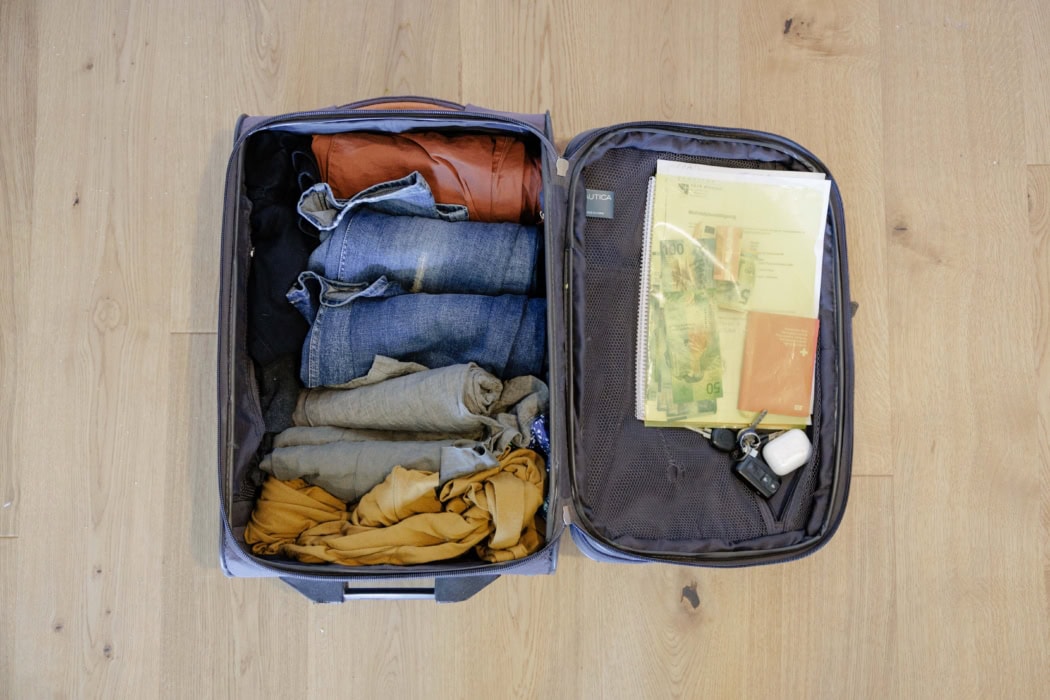
In Blatten, Zarick lost not only his house but most of his belongings. The sight of the destroyed village felt surreal to him, even though such scenarios were not unfamiliar from his work. He doesn’t want to put a figure on the financial damage, but he is sure the insurance won’t pay. Even if it did, the cost of a new house in the region has since multiplied. Far worse, he says, is the irretrievable loss of his film archive, his camera equipment and his collection of musical instruments.
Most of Blatten’s residents have suffered a similar fate. They were evacuated in time, but a 64-year-old shepherd was buried under the rock. That there was only one death is thanks to scientific monitoring: the mountain had been watched for years, so people could be warned early. Even so, the people of Blatten lost almost everything – yet they refuse to give up hope for Blatten’s future.
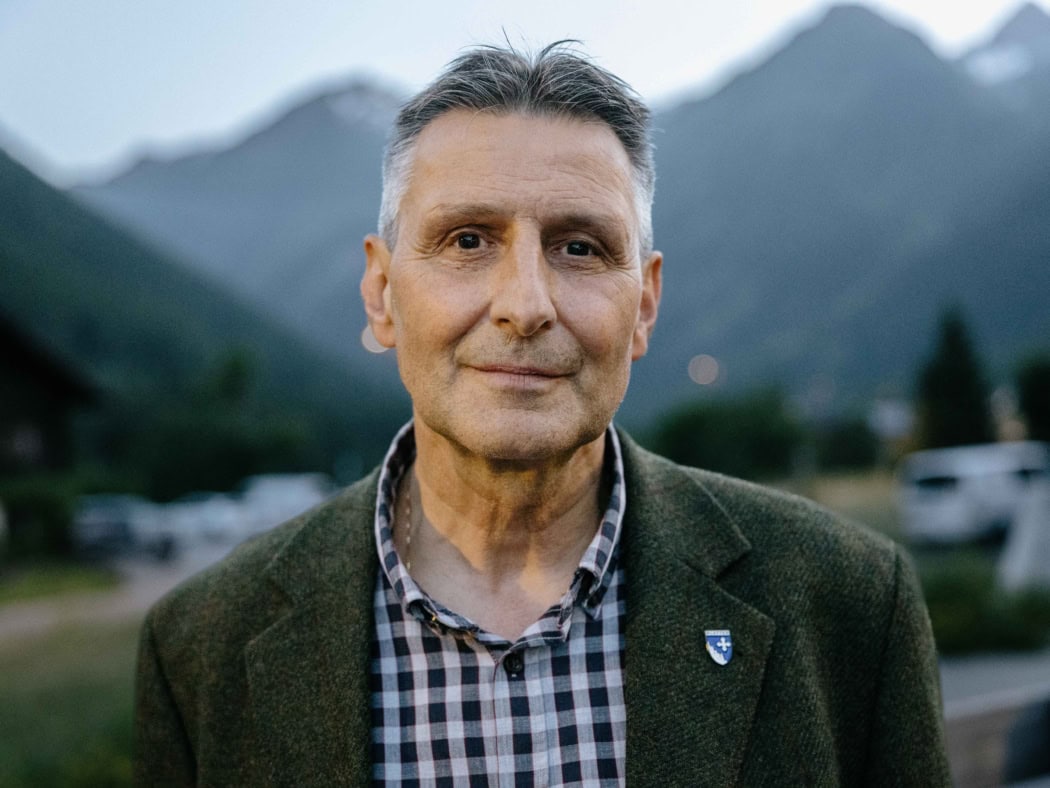
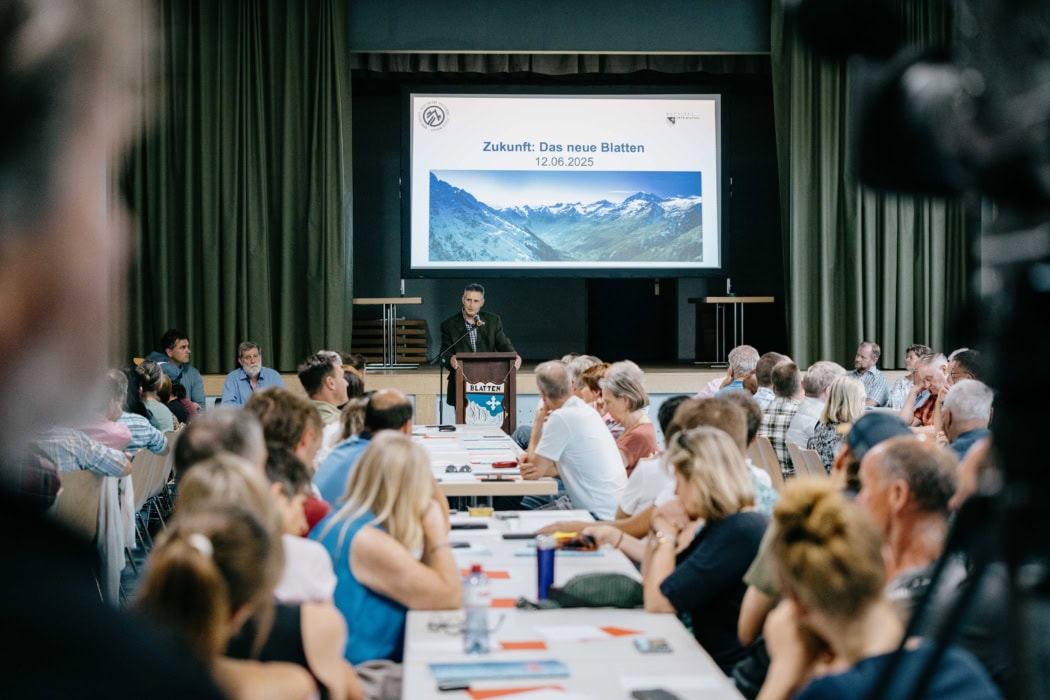
‘We have lost the village, but not our hearts.’ With these words, Blatten’s mayor, Matthias Bellwald, begins his address after the disaster. His voice sounds confident – rolling up his sleeves, looking ahead. Bellwald was born in Blatten. Speaking to the NZZ, he says he owes a great deal to Blatten and the Lötschental. Now he wants to give his home a future again.
He speaks in images. After the disaster, Blatten’s brass band, the Musikgesellschaft Fafleralp, performs in Kippel – a symbol, a sign: ‘We’re still here!’ The first families are due to return to Blatten as early as 2026.
But Bellwald’s plans don’t meet with universal approval. Critics call them unrealistic and too expensive. The tabloid press in particular has been scathing. Blick claims, on the basis of its own survey, that most residents don’t want to return to their buried village. Bellwald remains unfazed. The former career officer calls his vision ‘ambitious, but doable’. He is counting on the people of his home village – and expects to bring most of them back by 2029.
How can a landslide be predicted? Researchers from the Technical University of Munich (TUM) are looking for answers deep inside the Zugspitze, Germany’s highest mountain. Inside the ridge, they are investigating the causes of such landslides and developing ways of detecting them in time.
One of the tools they use is a terrameter, which sends electrical pulses through the rock to measure its conductivity. This shows how warming around the summit is affecting the stability of the rock mass. Mountains are made up of countless pieces of rock that permafrost holds together like glue. When the ice melts, mountains such as the Kleines Nesthorn above Blatten are at the mercy of external forces and lose stability.
What is permafrost?
Permafrost is ground that stays below freezing for at least two consecutive years and is therefore considered ‘permanently frozen’. In the mountains, permafrost occurs above an altitude of about 2,400 metres. It holds rock together; when it thaws, slopes can become unstable, leading to rockfalls and debris flows – a danger that is growing with climate change.
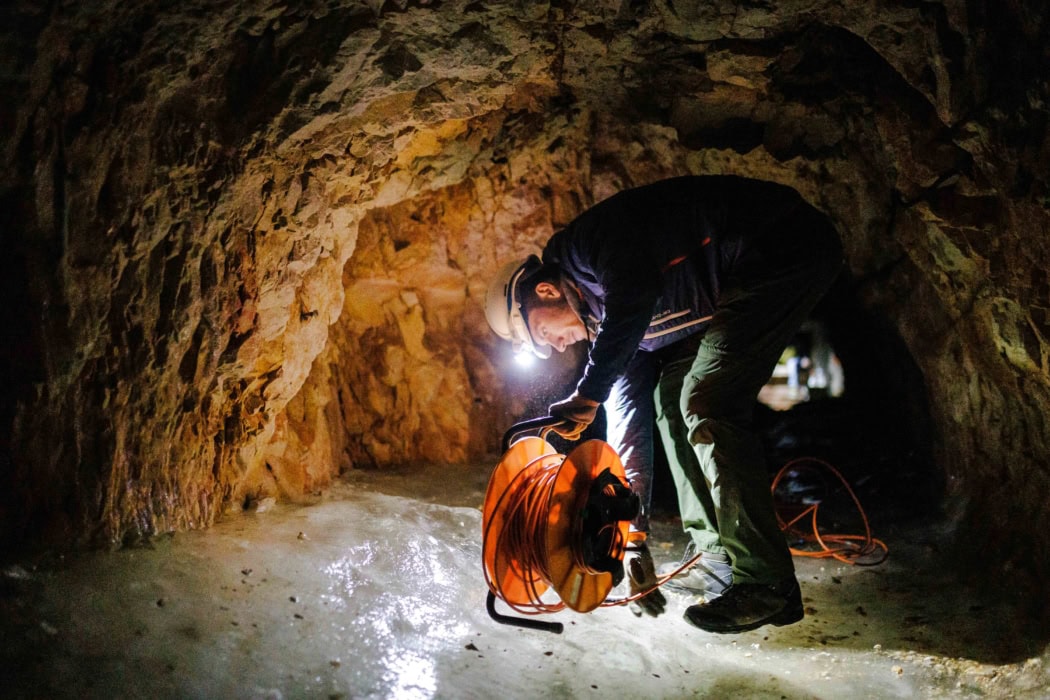
The TUM researchers lay out the terrameter’s electrodes for the monthly measurement in the ridge tunnel on the Zugspitze.

The Schneefernerhaus (2,656 m above sea level) on the Zugspitze is an environmental research station where 11 research institutions carry out long-term studies. The entrance to the ridge tunnel is in this building.

The layer of ice on the walls of the ridge tunnel comes from meltwater. The permafrost has been thawing since the mid-1980s. At the height of the tunnel, it will have melted completely within ten to 15 years.

Measurements with the shear machine at TUM examine the stability of the ice layer between frozen rock samples, determining at what temperature and tensile force the ice breaks.
One thing is certain: the Blatten landslide is directly linked to human-caused climate change. Researchers estimate that the rock mass near Blatten has warmed from minus 2.5 to minus 1 degree Celsius since it was last measured. The Swiss cantons are drawing their conclusions and rolling out monitoring methods like those on the Zugspitze across the board, so that areas at risk can be identified early and people warned in time.
That is exactly what is happening in Kandersteg, a village in the valley next to Blatten. Here, in the shadow of the Spitze Stei, the danger can’t be seen. But anyone who watches the mountain for long enough will notice that the rock mass above Kandersteg is slowly starting to move as well. The human eye can’t detect the movement. That’s why geologists working for the municipality rely on measuring instruments and cameras. On the basis of their measurements, parts of the slope and the valley have already been closed for safety reasons.
The restrictions for residents are minor. According to local resident Peter Eichholzer, they only affect a few hiking trails and a fitness trail. As far as he’s concerned, that’s bearable. ‘It’s only when it rains that you get a bit nervous.’ In severe weather, the risk of a landslide rises sharply. Otherwise, he says, the transparent investigations and clear evacuation plans make him feel well protected.

I’m not afraid, but I have respect for the mountain.
Heinz Stolle sees it the same way. The pensioner lives with his wife, Verena, in the house where he was born in 1942. Moving away is out of the question for him. Still, the events in Blatten have left their mark. But the couple refuse to be defeated. Like most people in Kandersteg, they plan to stay until the very last day. Because one thing is clear: the changes in the climate can no longer be reversed. And so, sooner or later, the crumbling Spitze Stei will come down, with unknown consequences for Kandersteg and its people.
Interview by photographer Emil Eichinger
English subtitles: switch them on manually with the CC button in the video player.