My house wrapped in clouds
Armina Ahmadinia returns to the Caspian Sea. Her photographic work tells of the retreating water, the loss of familiar places and a quiet longing for closeness and home.

Armina Ahmadinia’s project explores the growing distance between the Caspian Sea and the people living in its southern coastal basin in Iran. The Caspian, the world’s largest landlocked body of water, is suffering a marked fall in its water level due to a wide range of human and natural factors. Inadequate management, excessive dam building, illegal fishing, global warming and other factors have lowered the water level and triggered a series of ecological and social crises.
Through the everyday lives of local people, the project examines the social and cultural consequences of this retreat. It shows changes that have led to alienation, lethargy and a loss of joy in life – developments that ultimately lead to a form of collective exhaustion. For the people, many places have lost their original meaning. A deep emotional gulf has opened up between the lake’s past and its present – a void that causes melancholy and inner restlessness.
After years of migration, Armina Ahmadinia returned to her home on the Caspian Sea, because being far from home and separated from her mother had given her a sense of childlike vulnerability. For her, this personal experience is mirrored in the perception of the receding sea – a sea that has always been a symbol of the mother and of generosity for the people of this region.
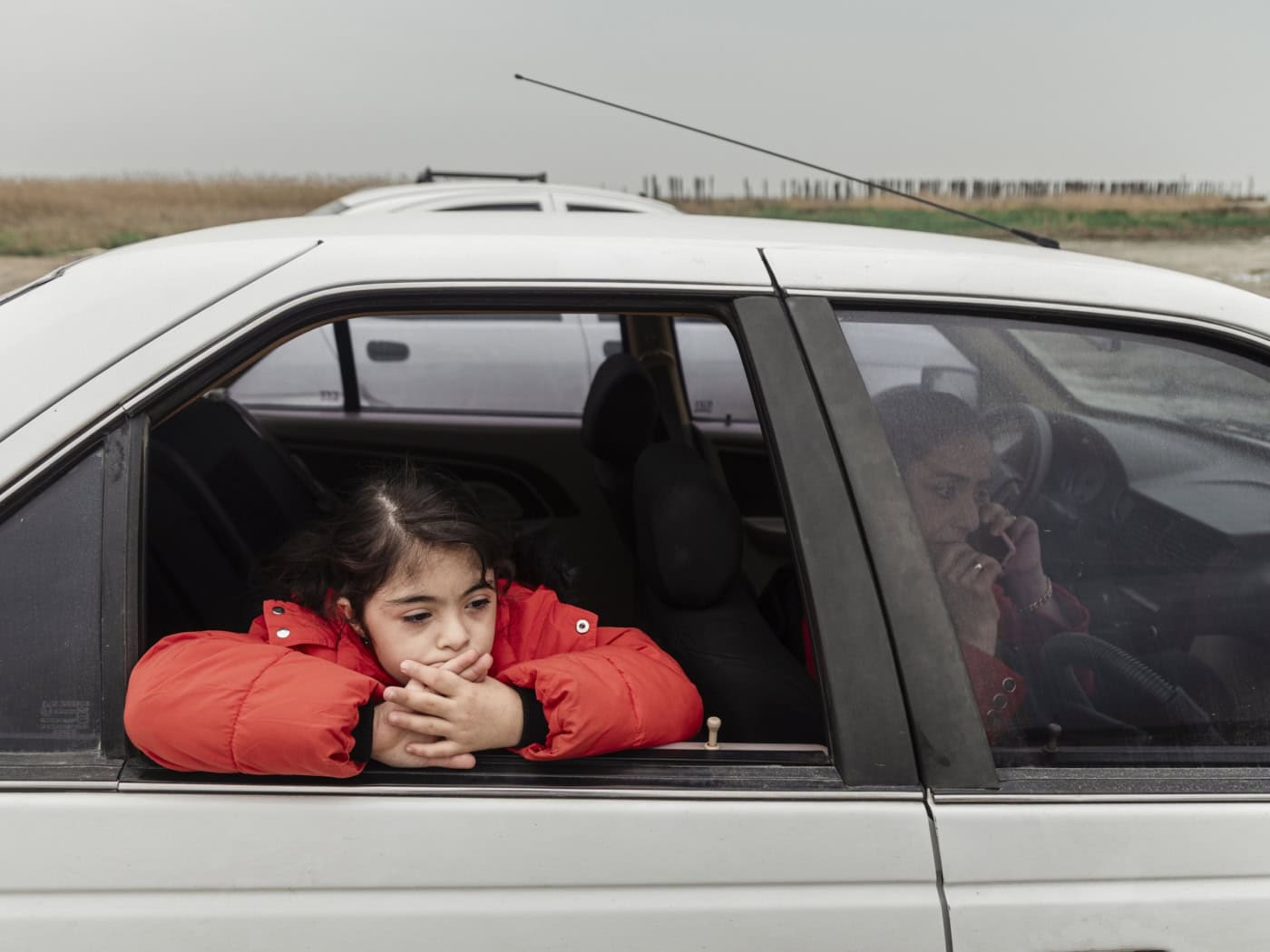 Port of Torkaman (Golestan Province), Iran.
Every evening Mina and her mother visit the pier at the port of Torkaman to look at the sea. The Caspian Sea is a precious source of life for the people who live here. They draw not only their livelihoods from it but also their emotional and mental well-being, and have always associated memories with it. Today, however, the huge influx of tourists to the coast is causing serious environmental damage to the sea, which worries the local people.
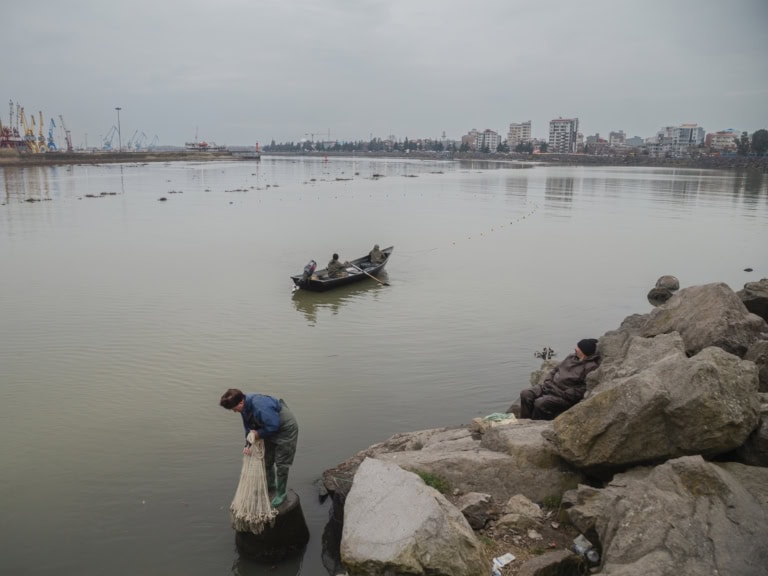 Port of Anzali (Gilan Province), Iran.
Every year, in autumn and winter, local fishermen catch Caspian kutum, carp and flathead grey mullet using different methods – either the ‘salik’ method or by casting and hauling in nets from boats. Illegal fishing has increased sharply in recent years. An estimated 35 per cent of the total catch in the Caspian Sea comes from illegal activities, which not only reduces the economic value of the fish caught but also does irreparable damage to the sea’s ecosystem.
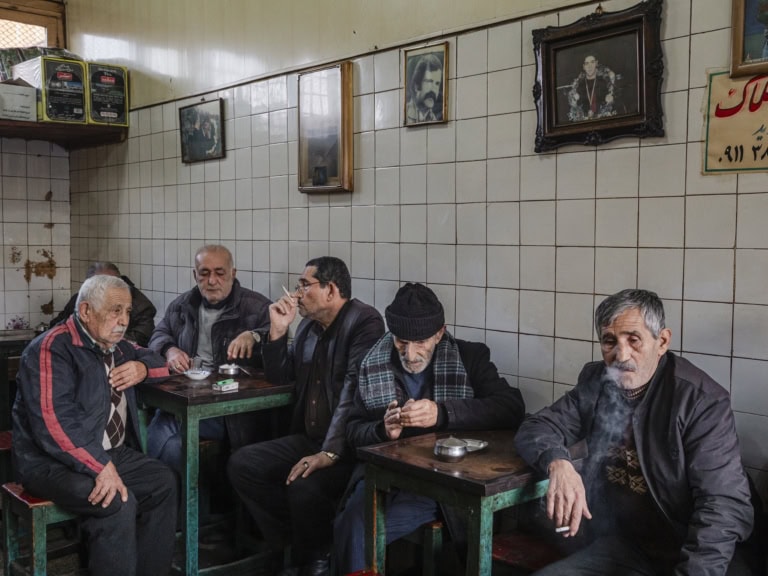 Port of Anzali (Gilan Province), Iran.
The café ‘Asheghan-e-Malavan’ (Malavan lovers) is one of the oldest cafés in the city of Anzali. Its interior has kept the traditional style of old teahouses. For many years it was one of the most popular meeting places for older people and pensioners – especially former employees of the fisheries and customs authorities, coaches and former players of Malavan football club. In recent years the poor economic situation, together with the government’s lack of interest in and support for Bandar Anzali – one of Iran’s largest commercial ports – has severely affected the pensioners’ living conditions and markedly diminished their hope and will to live.
 Miankaleh Peninsula (Mazandaran Province), Iran.
Old car tyres are used as bird baths. Covering more than 68,000 hectares, the Miankaleh Peninsula is the only protected area on the southern coast of the Caspian Sea that serves as a habitat for fish and migratory birds. In recent years, however, there has been a dramatic decline in birds and fish, as well as a loss of vegetation in the area. About 30 per cent of the international Miankaleh wetland has dried up.
 Khaled Nabi (Golestan Province), Iran.
The shrub at the entrance to the shrine of Alem Baba is considered sacred. Locals tie strips of cloth to it, believing that it brings prosperity and fertility and heals illness. The custom is rooted in ancient Iranian beliefs and religious rituals and is widespread in many parts of Iran.
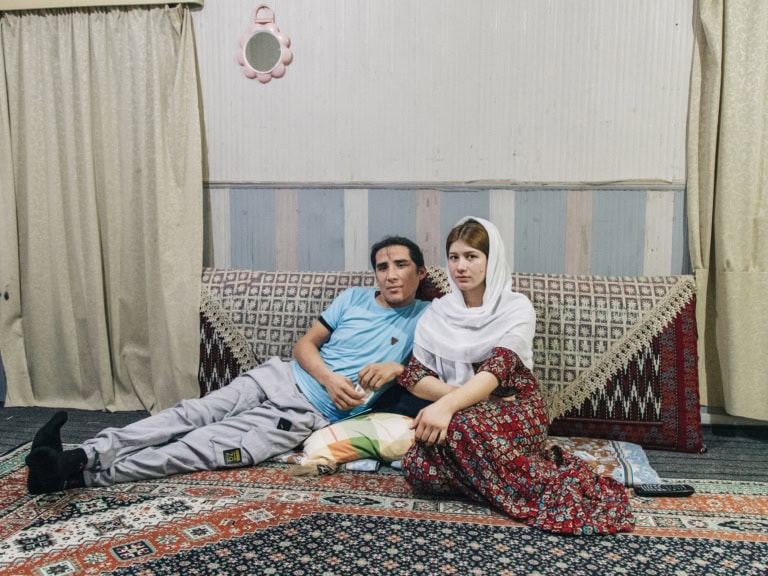 Gomishan (Golestan Province), Iran.
Adeleh and her husband Ali after iftar during Ramadan. The Turkmens are Sunni Muslims, for whom Ramadan is a very important and spiritual month.
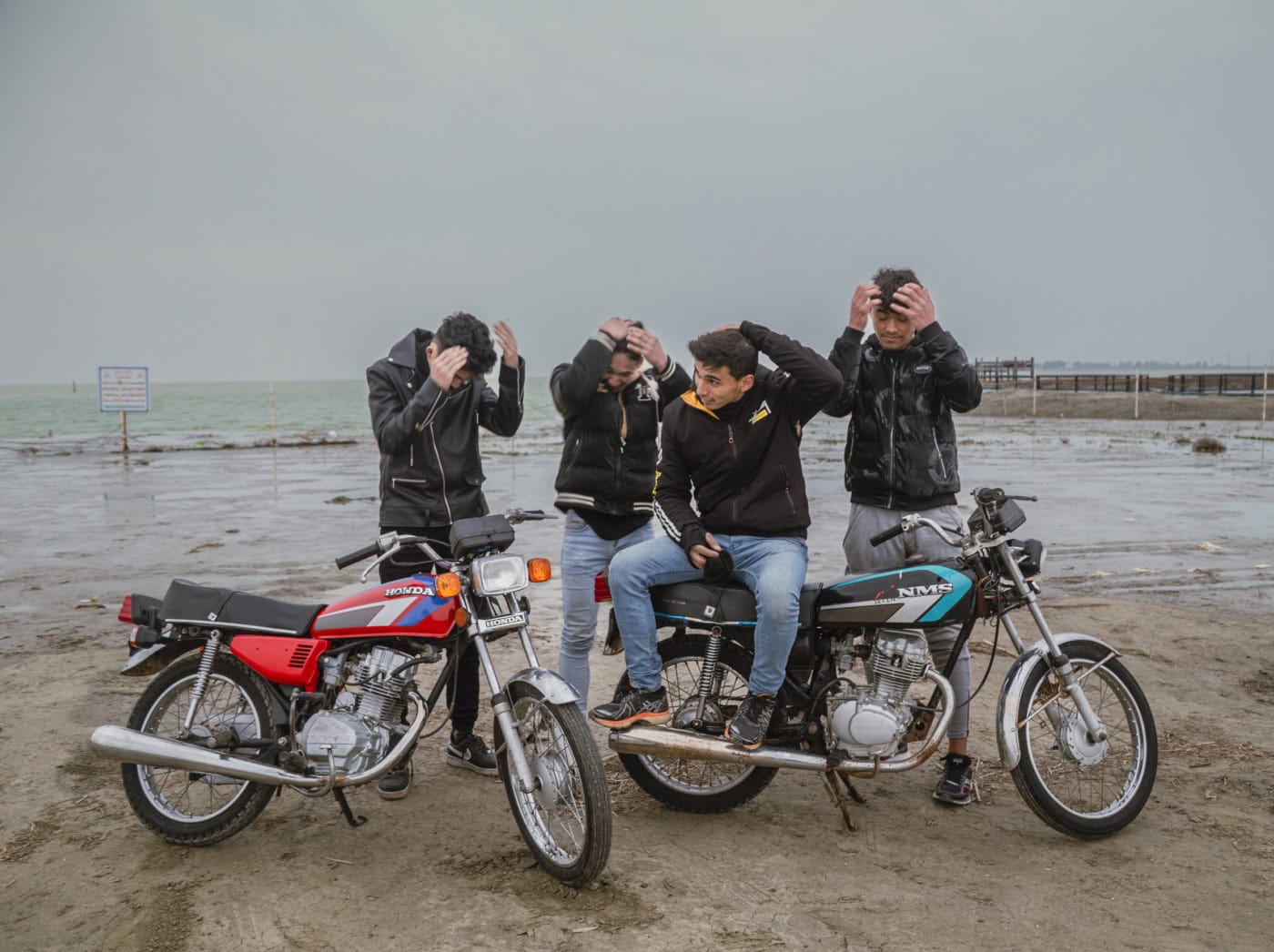 Port of Torkaman (Golestan Province), Iran.
Because of rising youth unemployment and weak economic conditions, more and more young Turkmens have migrated in recent years to work in larger cities or in neighbouring countries.
 Port of Torkaman (Golestan Province), Iran.
Children play next to the Turkmen border bazaar on the border between Iran and Turkmenistan. The bazaar attracts many visitors, especially at the beginning of the year, above all because of its low prices.
 Aghghala (Golestan Province), Iran.
Romisa, a Turkmen girl in traditional Turkmen dress.
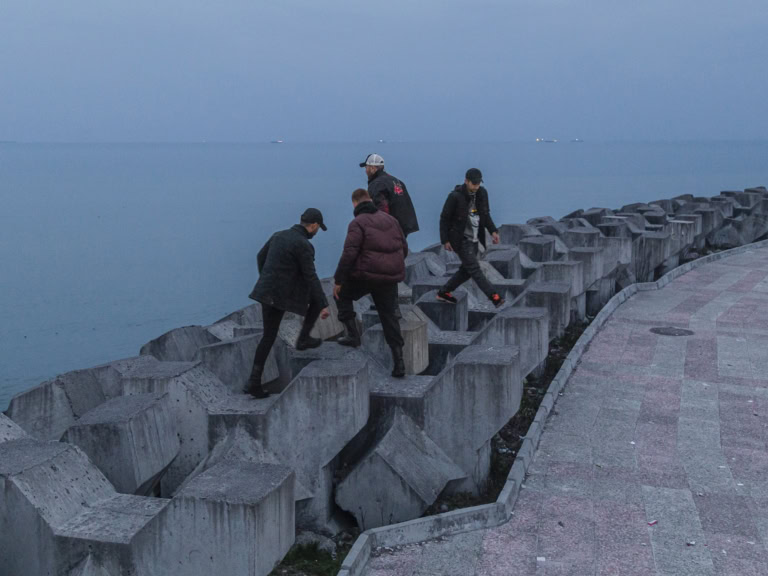 Port of Anzali (Gilan Province), Iran.
Four young soldiers on the breakwaters in the port of Anzali. Building these breakwaters has contributed significantly to sedimentation and to the drying-out of the Anzali Lagoon. According to reports, the Anzali Lagoon could dry up completely within the next 35 years.
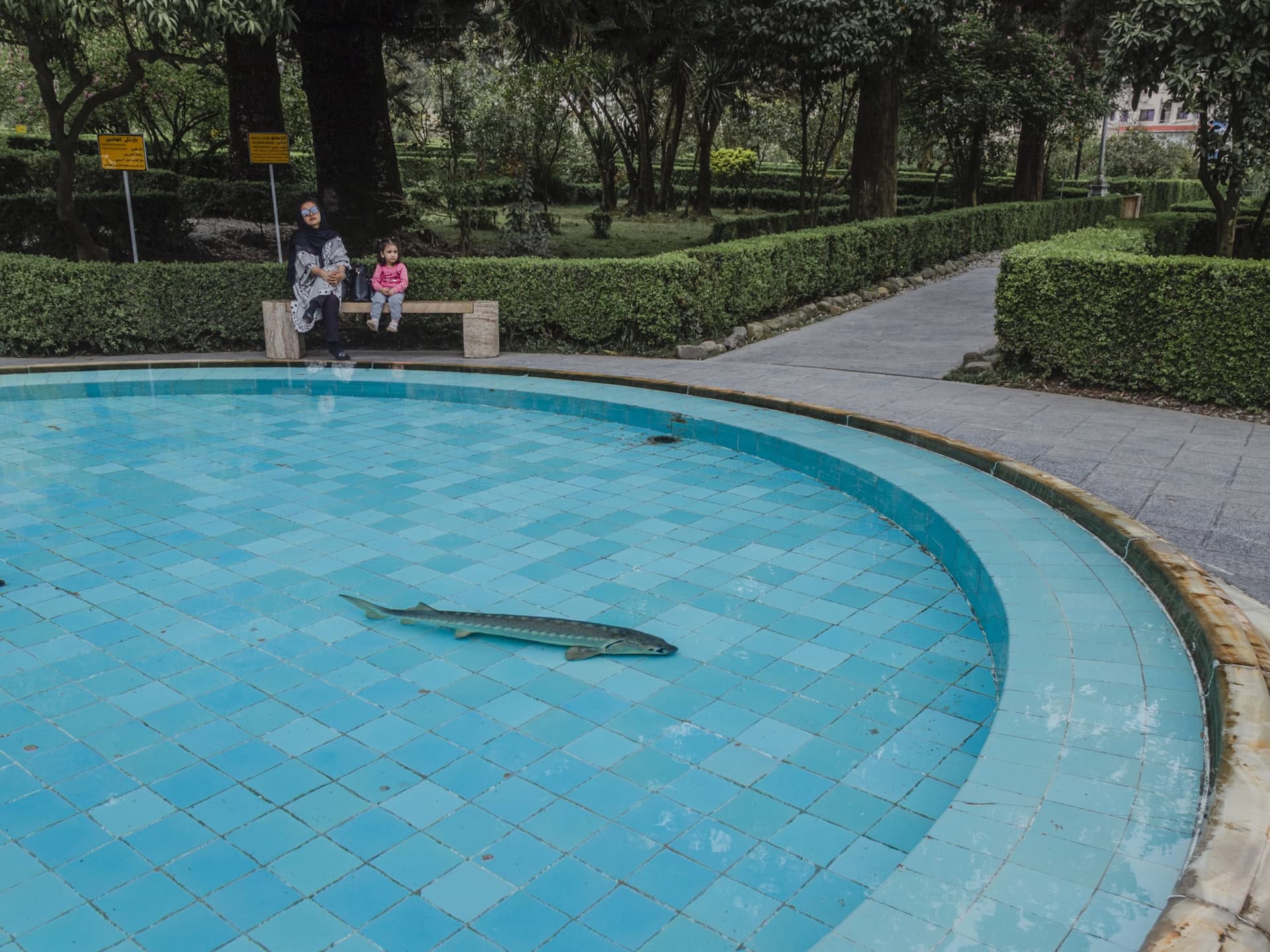
 Ramsar (Mazandaran Province), Iran.
A beluga sturgeon (Huso huso) in the pond of the Ramsar museum. The Caspian Sea used to be the world’s most important source of sturgeon, but today many sturgeon species are on the list of endangered species. Overfishing, the illegal caviar trade, pollution and dam building have caused their numbers to fall dramatically.
 Aghghala (Golestan Province), Iran.
A child plays at the Voshmgir dam. Repeated dam building, uncontrolled use of water resources in agriculture, lower rainfall and rising average temperatures are threatening the dam with drying out. After a four-year drought, it filled up again following heavy rain.
 Port of Torkaman (Golestan Province), Iran.
The waterway between the port of Torkaman and Ashuradeh Island, estimated to be about two kilometres long, is part of the Gulf of Gorgan. In recent years the area has changed increasingly as the sea has retreated and more sediment has been deposited. A large part of the shoreline on the Torkaman side has now dried out. Dredging work is currently under way to counter this process.
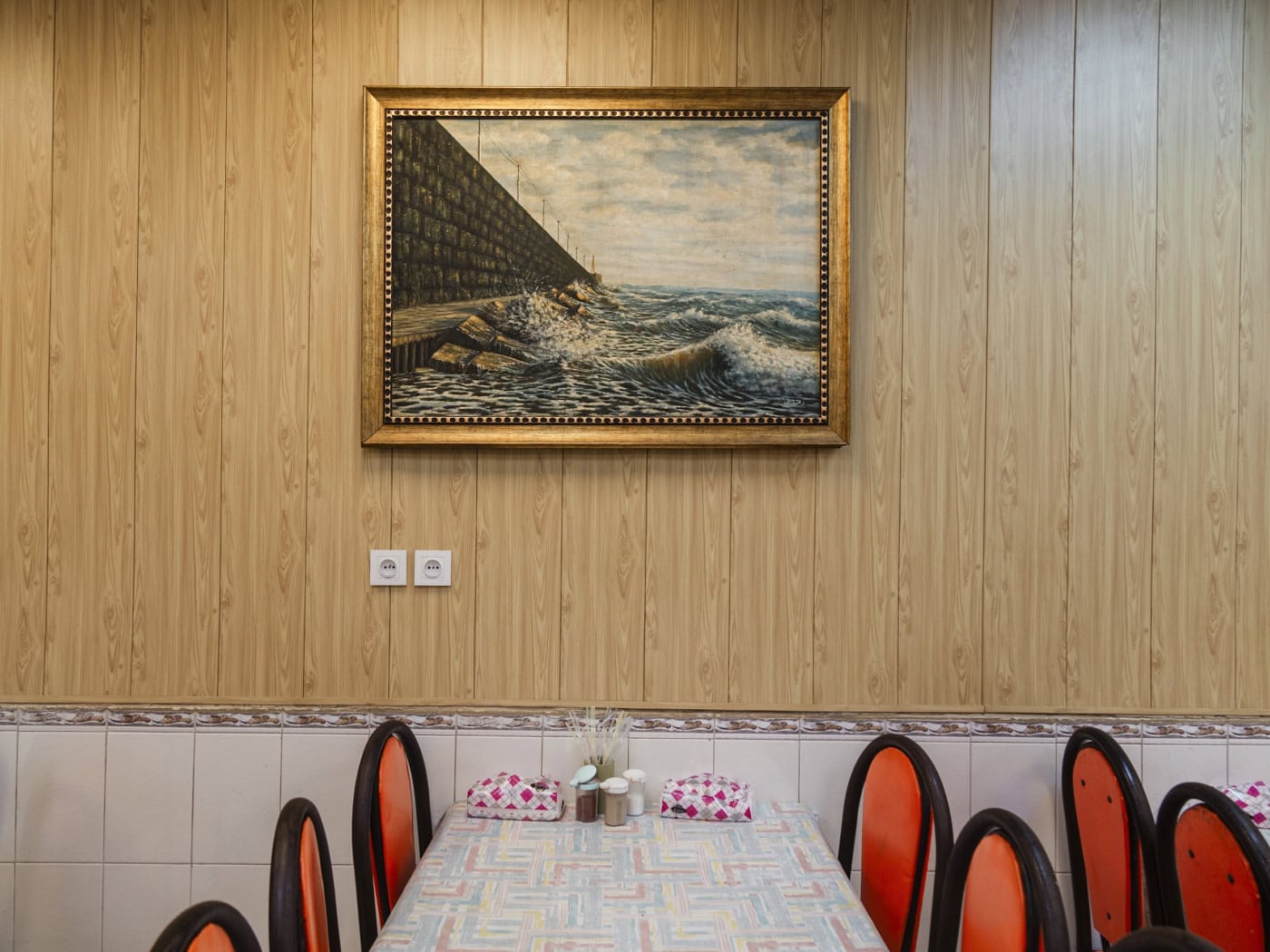 Port of Anzali (Gilan Province), Iran.
The Andranik restaurant is one of the few remaining Armenian restaurants in Anzali.
 Gomishan (Golestan Province), Iran.
The internationally important Gomishan Lagoon, which covers 20,000 hectares, has shrunk to less than half its original size in recent years. The threats to this ecosystem include inadequate allocation of water rights, falling rainfall, evaporation caused by high temperatures, water extraction by local communities for farming, and illegal fishing.
 Kelachay (Gilan Province), Iran.
Traditional ‘pareh’ fishing is one of the methods used to catch bony fish in the Caspian Sea: wooden boats pull the net out to sea. The tradition is several centuries old, but in recent years many ‘pareh’ cooperatives have had to stop working because of a lack of support for the fishing trade.
 Kelachay (Gilan Province), Iran.
My mother Rojan next to half-finished tourist buildings on the beach. For more than thirty years she has photographed the weddings of people from the coastal region and has taken countless portraits with the Caspian Sea in the background. Today the economic recession has also affected her work, but her deep personal connection to the sea – itself like a mother – remains.