Analogue large-format photography: why I love the heaviest camera in the world. Why would I voluntarily lug a camera as heavy as a sack of cement around the world? In this first-hand account, you’ll find out what still makes analogue large-format photography so special today.
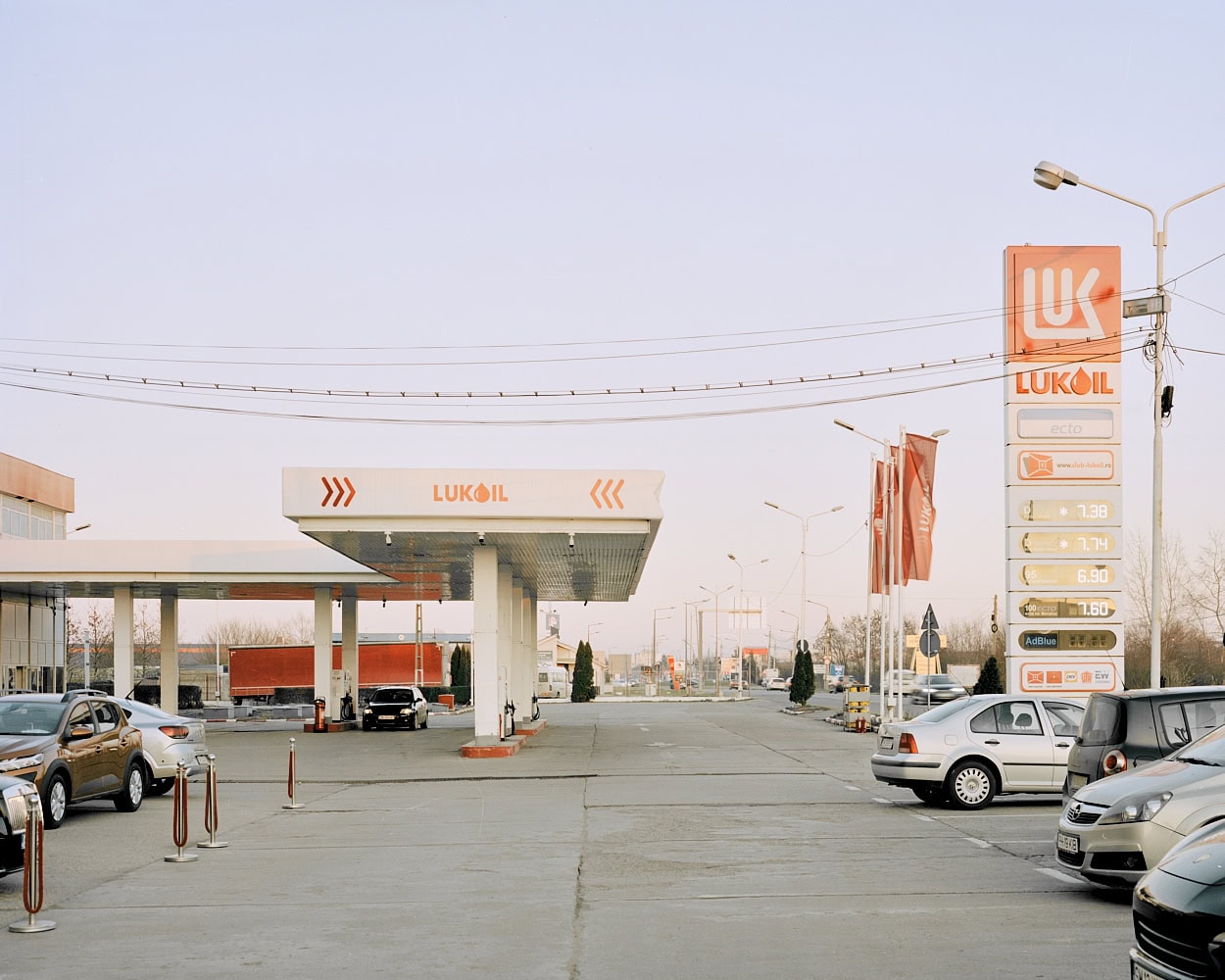 Photo: Ludwig Nikulski, petrol station in the evening light
Why would anyone spend minutes bent over a mirror-reversed, upside-down image until they feel dizzy? Lining everything up, nearly losing it, metering the light, calculating a mid-grey, watching every line – only to suspect you’ve accidentally knocked the camera and the framing is off. Back to square one.
In this incomplete guide, you’ll learn about the highs and lows of analogue large-format photography.
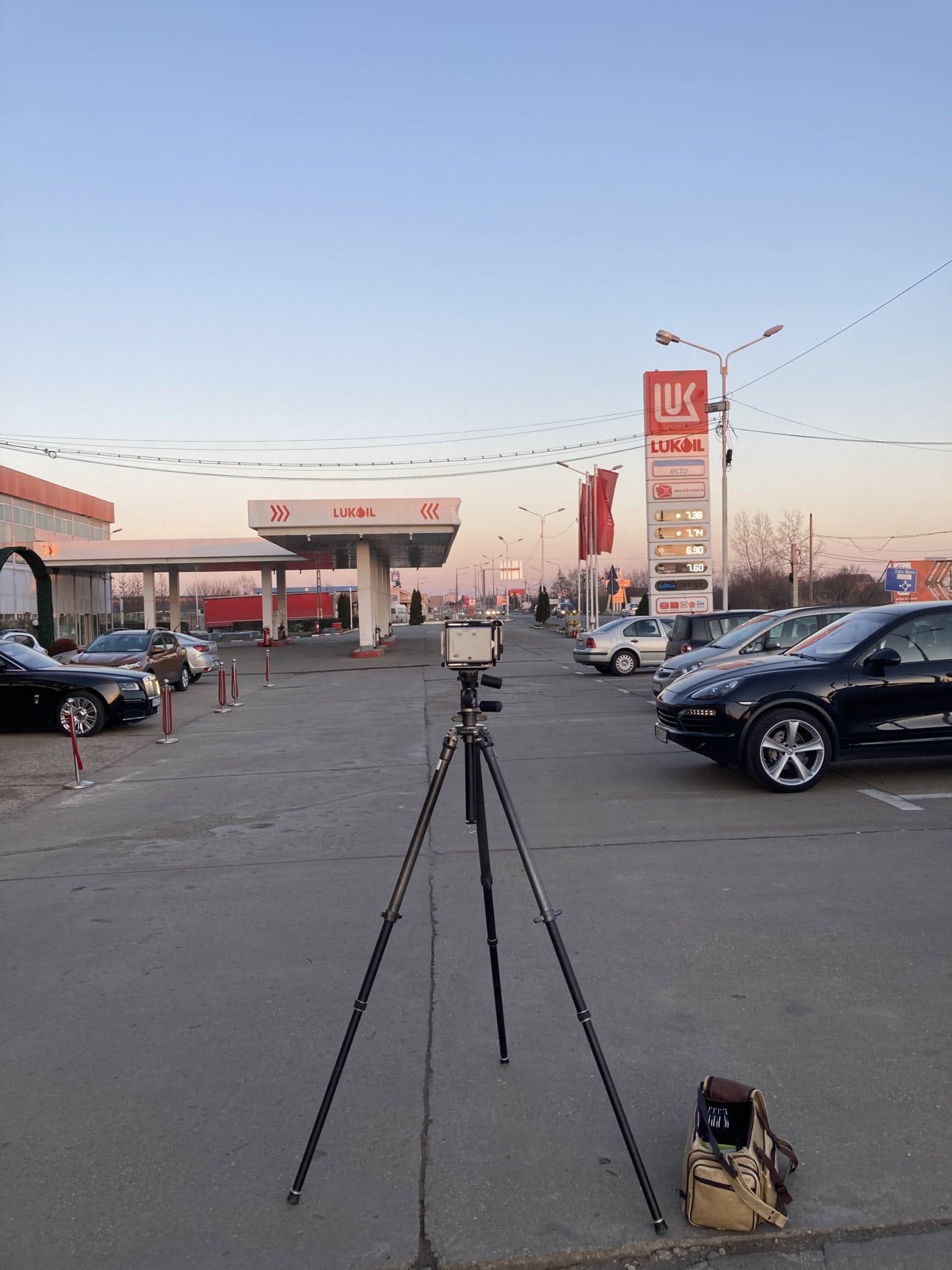 Photo: Ludwig Nikulski
I could explain that a 4 × 5″ negative is about 15 times larger than a 35 mm negative. And if medium format is the good china among negative formats, large format is the marble tabletop you serve the medium format on. If you drop it by accident, it sounds like a record hitting the floor. Just kidding – that would be a glass plate negative, and maybe that’s another article for later.
All you really need to know, though, is that large format is huge – much bigger than a standard photo print from the chemist’s. On hot summer days, you could fan yourself with a little cool air that smells faintly of chemicals.
 Photo: Ludwig Nikulski
The simple design of the Linhof Technika V can be pictured like this. Admittedly, I’ve never really understood what most of the parts are for. But let’s move on for now.
Large format is slow. You can’t just take a picture and run off quickly after once again photographing someone on the street without asking. And yes, it demands your attention too.
You are completely in the moment – this won’t be a snapshot. You have to look, I mean really look! You have to concentrate, you have to know what you’re doing, because you don’t have endless chances – large format is bloody expensive.
What does a colour photo cost?
1. A box of Kodak Portra 400 with 10 sheets currently costs €127.00 at Calumet.
2. So one negative costs €12.70.
3. If you want more than a latent – that is, invisible – image on your negative, you also have to get it developed. At Pixelgrain, for example, development costs €7.14 per negative.
4. That brings us to €19.84 per photo. We’ll leave it there and assume you have your own scanner to turn the negative into a (digital) positive.
It’s not quite that bad, though.
1. Maybe money simply doesn’t matter to you.
2. You could also find cheaper deals – go and do some research!
3. Or you shoot in black and white, which is also really great.
So what’s the point of it all?
In the endless whirlpool of digital possibilities, almost anything is doable today. Mistakes are almost impossible. Much of it happens automatically. You don’t really have to make an effort. It’s nice and comfortable. And anyone who wants to play it safe simply stays right there. From a capitalist point of view, that makes sense.
Large-format photography is anything but cosy and definitely not safe. Maybe the dark slide wasn’t closed properly? Is there a hole in the bellows? Was the film exposed wrongly? Did you forget to clean the film holder, and now there’s loads of dust on your negative? These are just a few of the many destructive possibilities that can turn your next large-format project into hell.
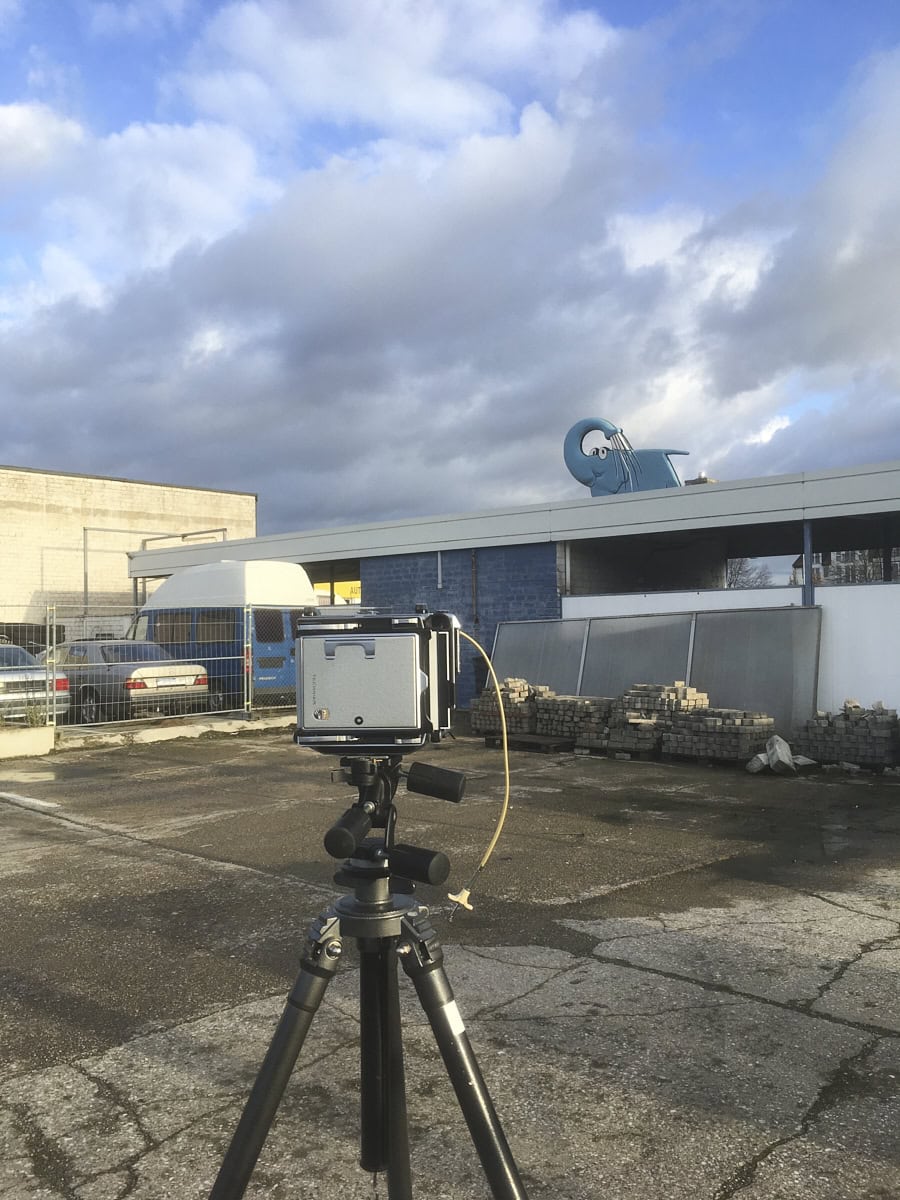 Photo: Ludwig Nikulski
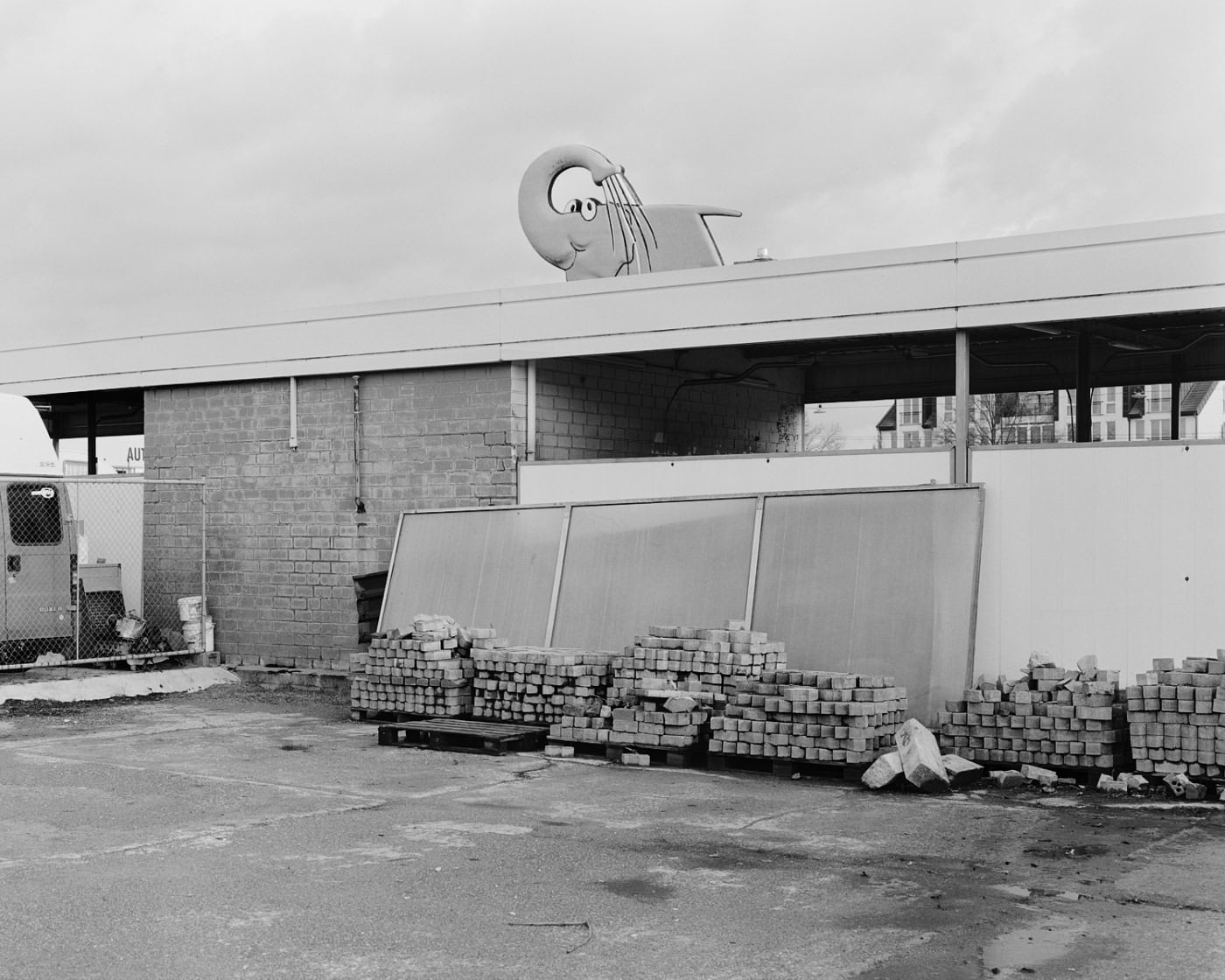 Photo: Ludwig Nikulski, car wash, Hannover, 2022
Suddenly you have to think!
But that can be an advantage. Difficulties activate the brain. The challenges we face can act as a catalyst for creative processes and force us to use ways of thinking we haven’t tapped before. If you only have twenty, ten or even just two sheets, you ideally don’t want to cock it up.
You start to think differently: what exactly do you want to photograph? What subject are you even looking for? How does the light fall? What framing will you choose? What pose should a person strike, and where are they in the space? You start asking yourself questions before you press the shutter – and that changes everything.
Sometimes I want to preserve what’s real – the chaos of this world and its unpredictability – through large-format photography.
 Ludwig Nikulski
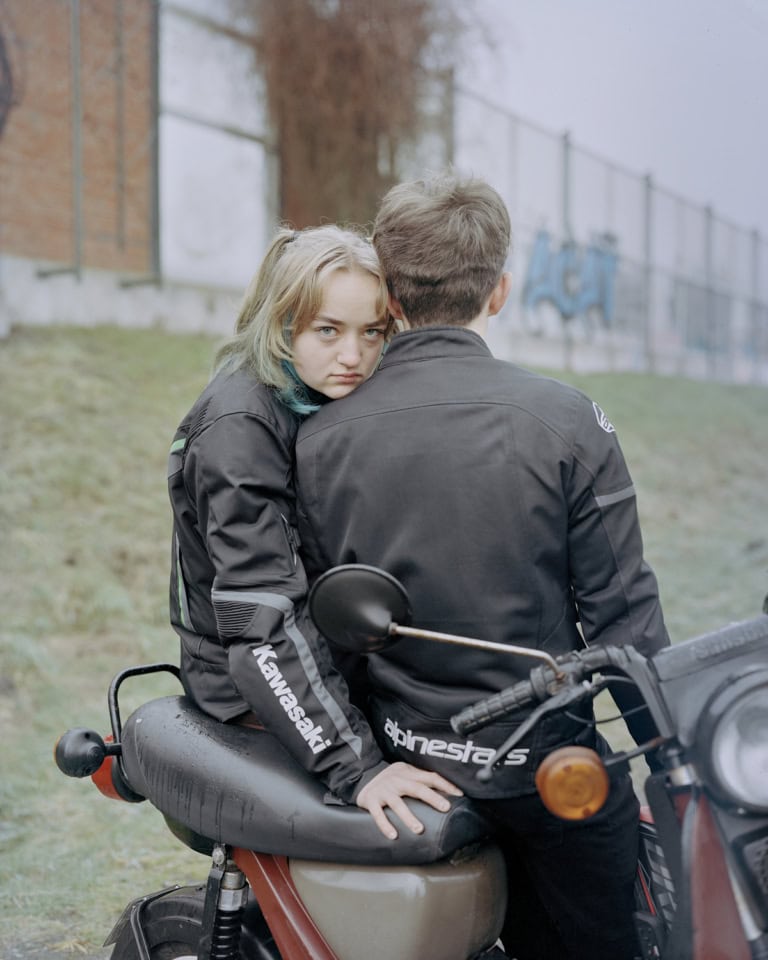 Photo: Ludwig Nikulski, Mathilda and Theo on the moped. Greifswald, December 2022
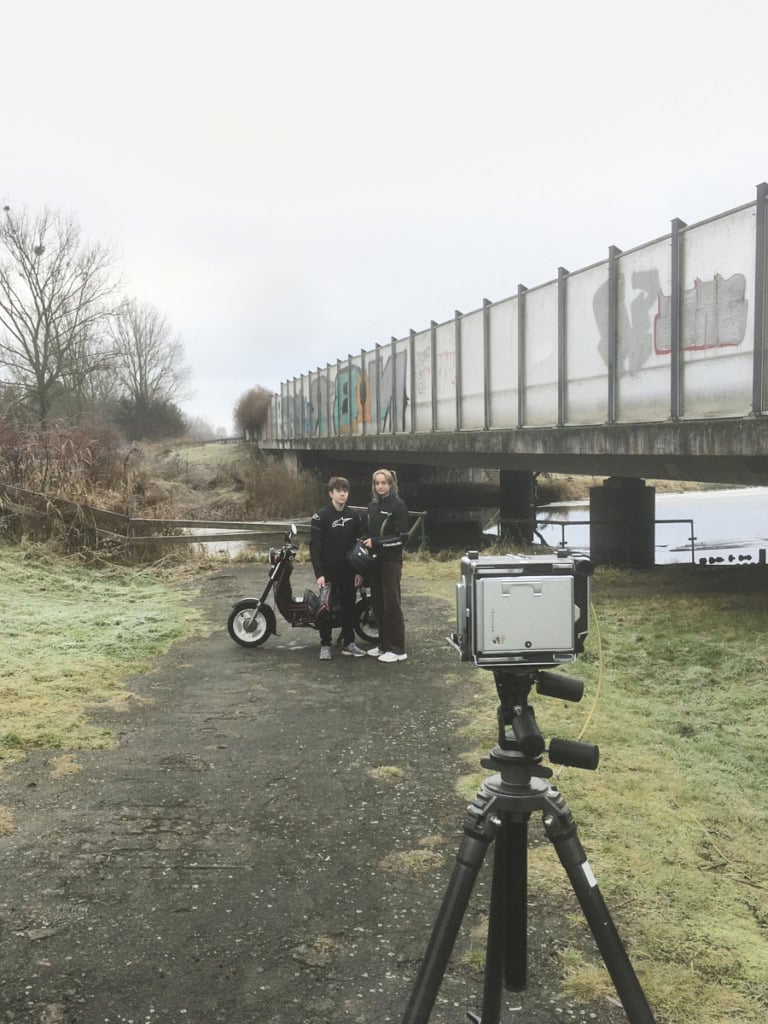
You don’t have to do anything!
But to be honest, you don’t need to know exactly what you’re photographing. You’re also allowed to just experiment and enjoy an old, brilliant technique. And a C-print, a real hand print? It just looks incredibly good. Because somewhere in the world, light flew through a lens and exposed a negative, and later light flies through the same frame again, this time in the enlarger, straight onto photographic paper.
No sensors, no software. Just physics and chemistry. And suddenly a real image of the world appears without a single digital step in between. Looking at it for a while has something meditative about it – which, by the way, is true of all analogue techniques.
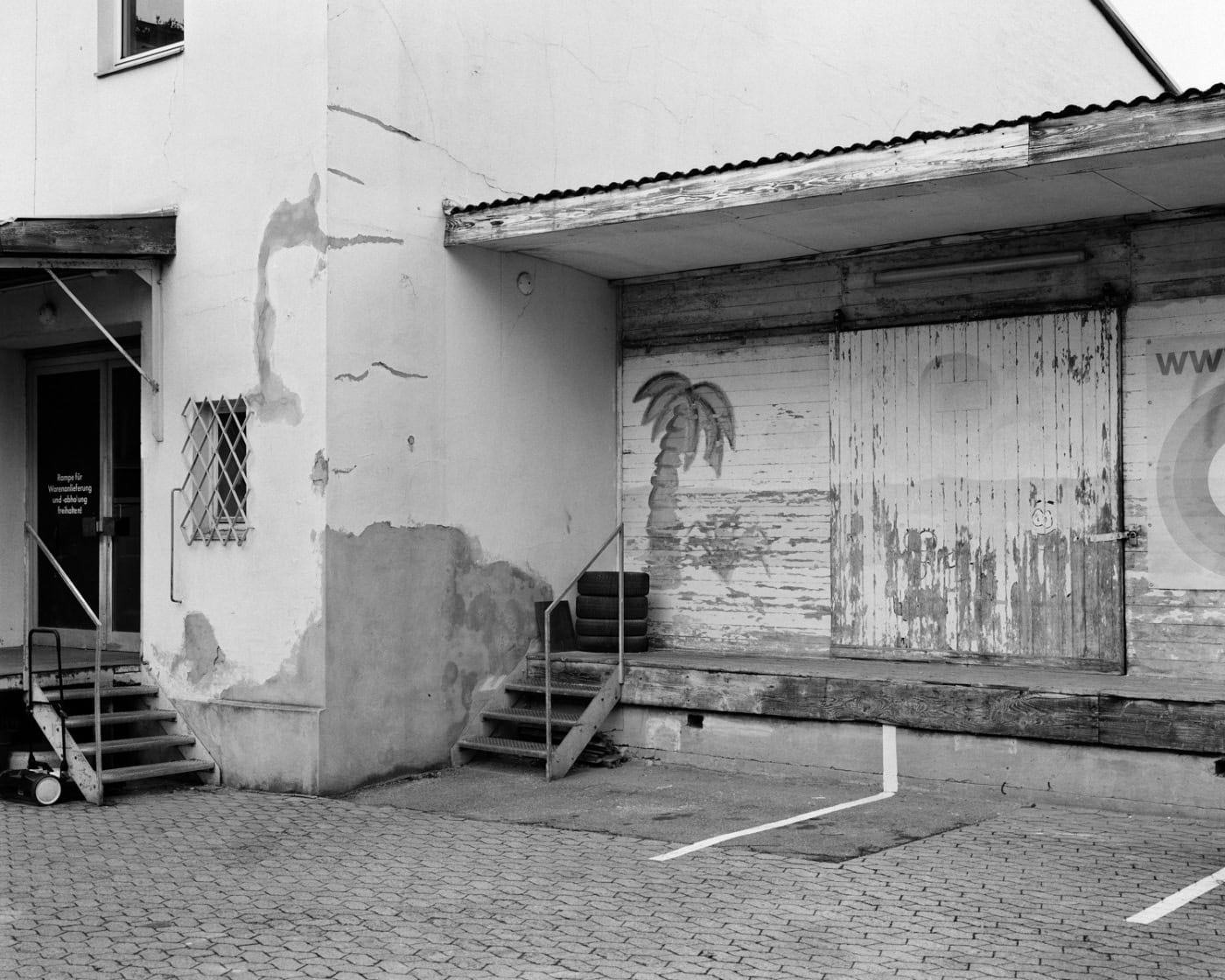 Photo: Ludwig Nikulski, Weidendamm. Hannover, 2021
Large-format photography changes a lot. Above all, how you work – but also how you are perceived. People look at you. Maybe they come up and ask if you’re a speed camera, or whether you could take their portrait. They think you’re taking ‘really cool vintage photos’.
What they don’t know is that what they call ‘vintage’ is really just very good quality. No retro filter, no top hat, bowler or braces. Just detailed, deep and sharp. You could even say large format is up to date.
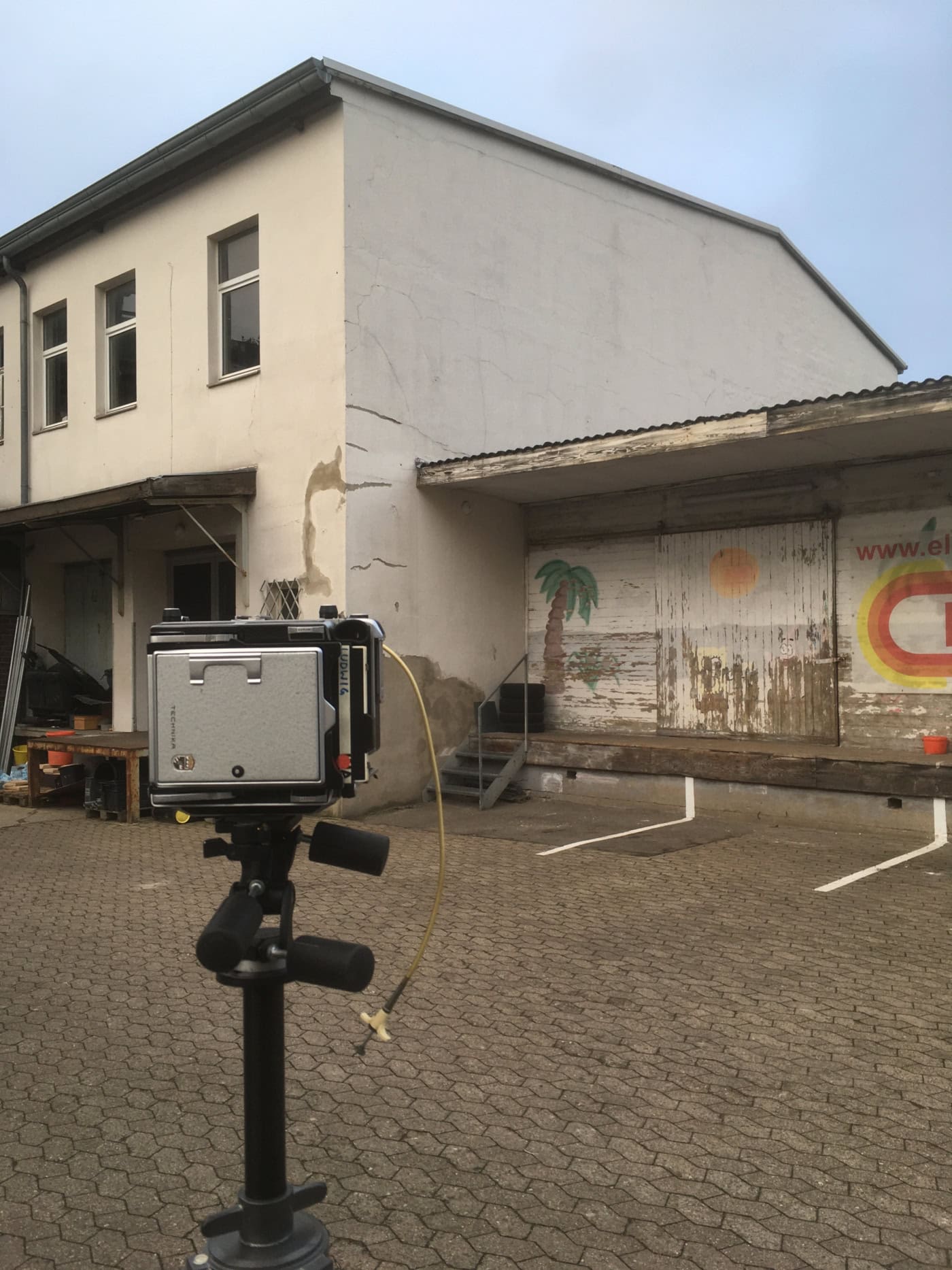 Photo: Ludwig Nikulski
It is a technique with which you consciously set yourself apart from the flood of images, from the ever more and ever faster. Here, quality counts rather than quantity. And with a bit of practice, it will show in your pictures. Used properly, the effect is simply amazing.
Large format is also a technique that serves concentration rather than distraction: no display, no autofocus. Large format reminds us that seeing, thinking and deciding are all part of photography.
A lot of things are smart and automatic today, and that’s a good thing, because it helps many people. Still, there is a growing longing to return to craft, to calm and concentration, to things you can touch and smell. Large format could fill that gap.
 Photo: Ludwig Nikulski
Just gushing and nostalgia?
Maybe a bit of both. But behind it all there is also something very real. An analogue image is created physically: countless tiny points of light that hit your negative randomly and in no particular order form an image that is anything but random.
A digital sensor works quite differently. It has a grid of photodiodes, strictly ordered, accurate to the pixel. The image is calculated cleanly. And that is exactly why a digital photo sometimes looks so smooth.
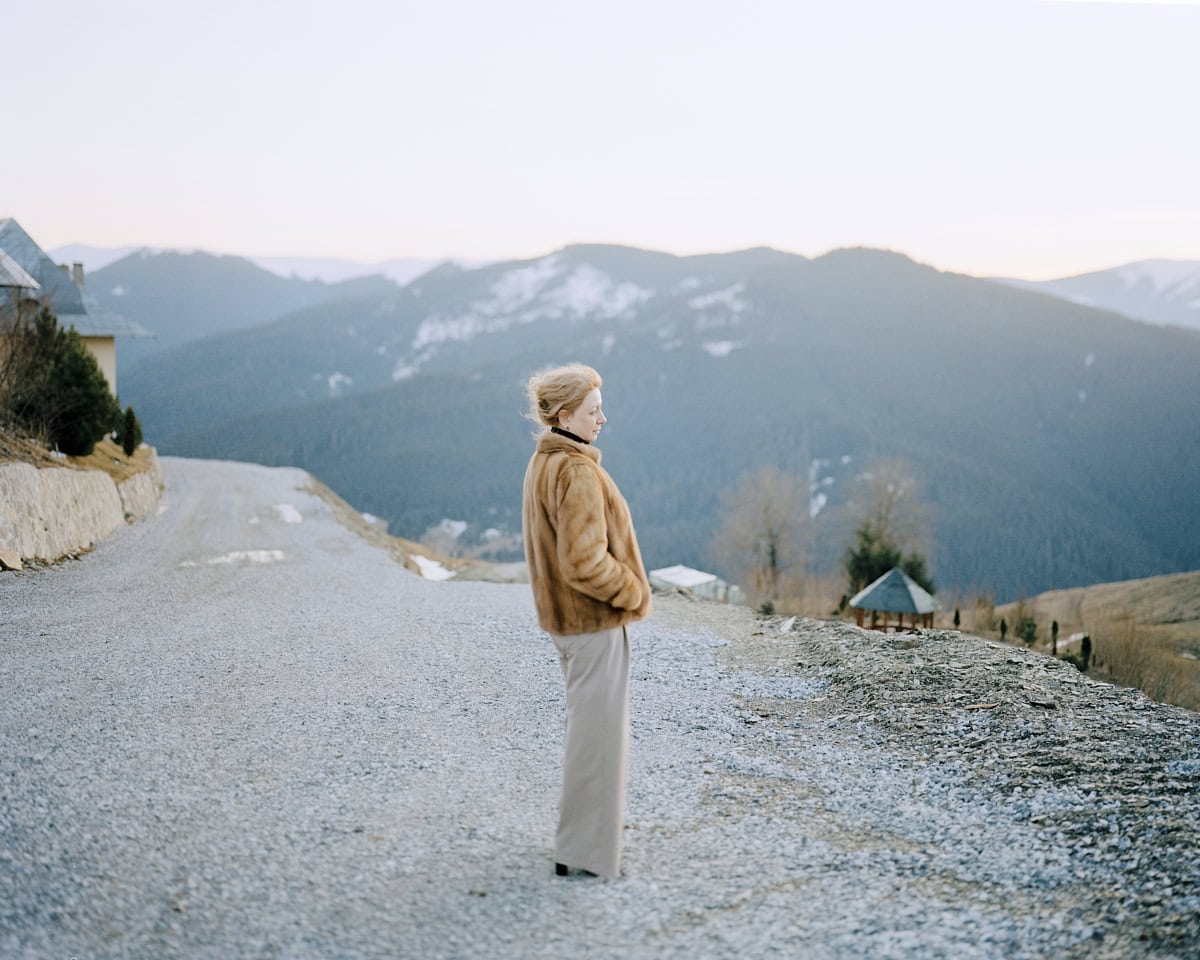 Botoș, Romania, 2024. Photo: Ludwig Nikulski
Liliana at the monastery in the Carpathians. For his series ‘Unter den Palmen’ (Under the palm trees), Ludwig Nikulski travels along Ukraine’s western borders.
Sometimes I think that the world isn’t orderly and geometric. It is total chaos, and we are taught to always strive for a supposed security. Sometimes I want to preserve what’s real – the chaos and the uncertainty – through large-format photography. That’s when I feel alive.
So maybe just make a start, experiment a little, make mistakes or don’t, take part in a workshop if you like – and then decide whether it’s for you.
Who still shoots large format like this?
Ute and Werner Mahler, Elliot Verdier, Vanessa Winship, Heiner Beisert, Julius Schien and many more.