Portrait photography: 9 expert tips for expressive portraits. Renowned portrait photographers share their tips: how they deal with problems during a shoot, how they put people at ease and why posing is often more honest than you might think.
 Photo: Robin Simeon Tielker
A full hour before her meeting with the journalist Roberto Saviano, Franziska Gilli walks into the park. Saviano’s team chose the location to attract as little attention as possible. Ever since he published his book ‘Gomorrah’ about the mafia structures in his home city of Naples, he has received death threats. That is why Saviano now only appears in public with bodyguards. Gilli has been commissioned to take suitable portraits for a newspaper feature about his life.
While she waits for the escort, she is already scanning the surroundings. She is looking for graphic elements, architecture or nature that could give the picture structure. Her gaze settles on a palm tree.
I had no idea beforehand: would he even go along with it?
 Franziska Gilli
An intuitive idea takes shape: she wants to place him right in the middle of the palm’s spiky fronds. But Gilli is unsure: ‘Would he even go along with it?’ Would a man whose life is overshadowed by a very real threat stand in a bush for a photo?
When Saviano arrives in the park, Gilli makes her suggestion. Saviano, used to cameras after years in the media spotlight, agrees. At first the resulting picture seems contrived, almost surreal.
But this deliberate staging gives rise to a visual metaphor: the spiky confinement of the plant merges with the reality of his life. ‘I just try it out and see whether it gains a second layer,’ says Gilli, explaining her approach. Only when that second layer appears does the heavy staging break open and reveal something that goes beyond a mere likeness.
 Photo: Franziska Gilli
Journalist Roberto Saviano can only move around in public under heavy security.
The story of Saviano in the palm tree illustrates a great paradox of portrait photography: it is often deliberate intervention that paves the way to a deeper truth. In this context, authenticity is not a happy accident but the result of a targeted strategy and a collaboration between everyone involved.
In the following six practical steps, Franziska Gilli and Florian Müller show how to walk this fine line between staging and honesty in everyday work. They offer a look into their toolbox and reveal how they help their subjects overcome their inner distance from the camera.
Franziska Gilli was born in Bolzano, Italy, in 1987 and is a freelance photographer based in Hannover. Her wide-ranging portfolio deals with social, cultural and economic issues, which she explores both in independent photojournalism projects and in commissioned work.
Thorough research is key to how she approaches such subjects, as is her passionate interest in how people shape social systems and are shaped by them at the same time. She sees her camera as a political and cultural tool that allows her to convey a new understanding and a new experience of a subject.
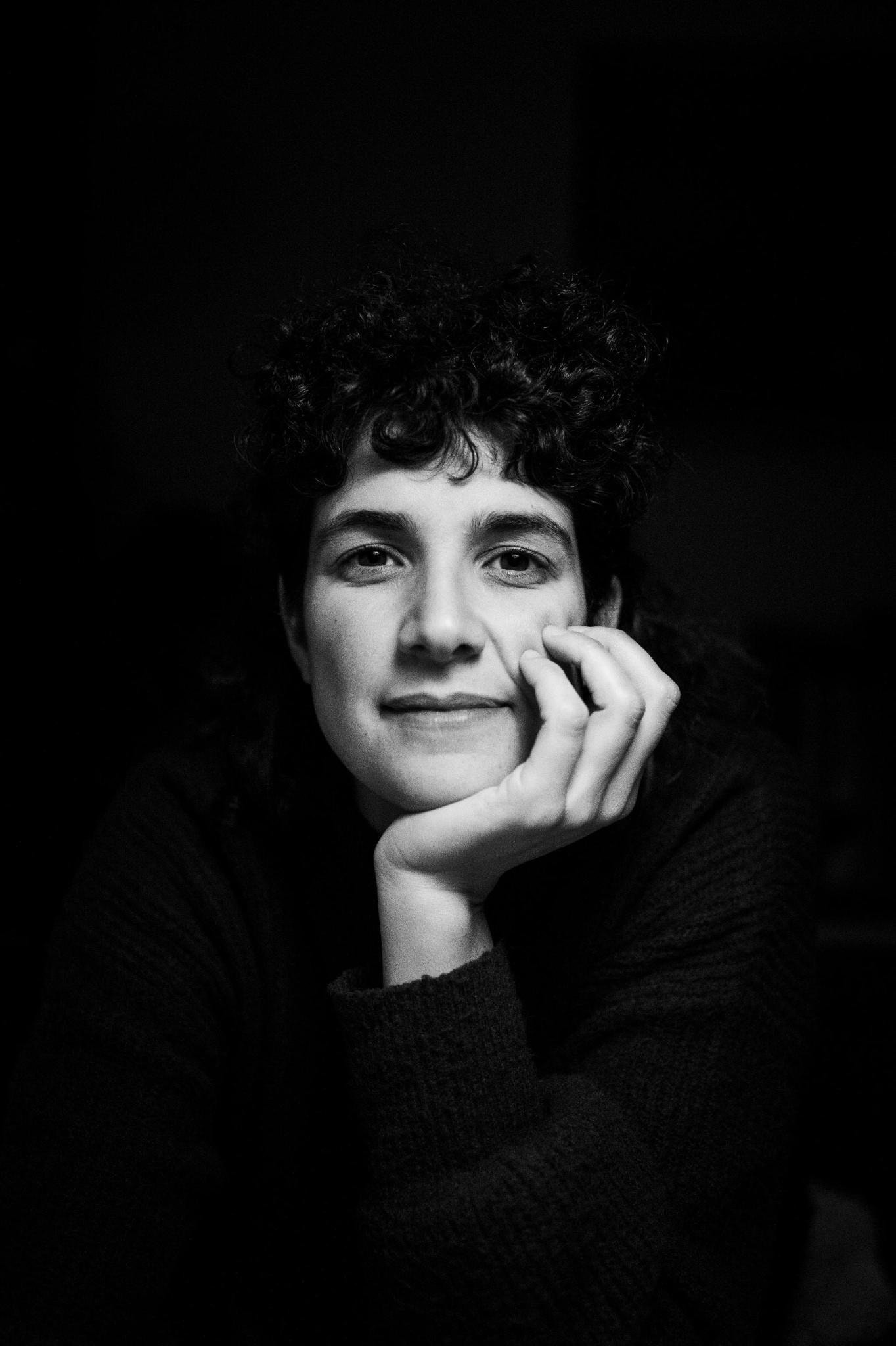 Photo: Daniel Pilar
Franziska Gilli was born in Bolzano, Italy, in 1987. She completed her bachelor’s degree in Visual Journalism and Documentary Photography at Hochschule Hannover, writing her final project on the image of women in Italian entertainment TV. In 2021, together with Barbara Bachmann, she published the book ‘Hure oder Heilige – Frau sein in Italien’ (Whore or saint – being a woman in Italy). For it, the two travelled through Italy for several years, conducting interviews and portraying women and men. In seven chapters, the book shows how strongly the image of women in Italy is still shaped by the Church, the media and stereotypes.
Six steps to a strong portrait of your own!
The photojournalists Franziska Gilli and Florian Müller share their experience of portrait photography. In six concrete steps, they help you master your next shoot.
1. Research and preparation
A strong picture begins in your head. For Florian Müller, research first has practical reasons – knowing whether he will need a ladder to stay at eye level with a very tall person, for example. Above all, though, prior knowledge helps him avoid repetition. If you don’t know how someone has already been portrayed in the media, you risk simply reproducing familiar clichés.
Franziska Gilli also uses her preparation to gather basic information. But she warns against going into a shoot with too fixed an image in mind. The aim is balance: be informed enough to take the person seriously, but stay open enough to see them without preconceptions when you meet.
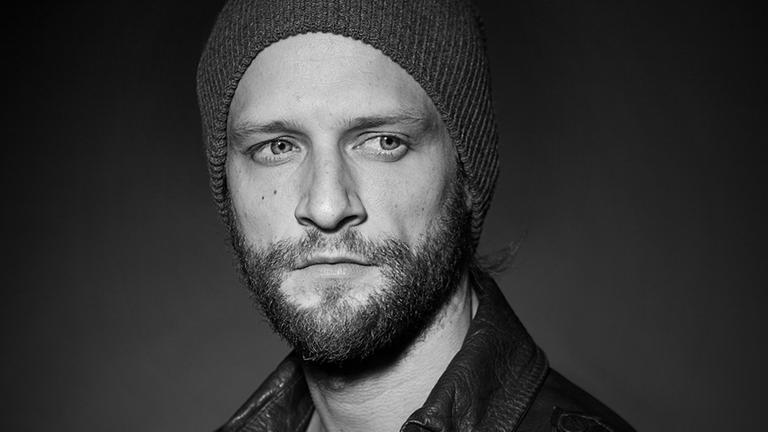 Photo: Rafael Gruber
Florian Müller is a documentary photographer who works mainly on large long-term projects. As a photographer, he feels committed to the tradition of social documentary photography, but at the same time tries to push its boundaries by bringing additional media such as found objects or screenshots into his work, in search of new visual approaches to relevant issues.
Alongside his own photographic practice, he works for magazines, foundations and NGOs as well as corporate clients, and teaches photographic storytelling in workshops and as a guest lecturer at Hochschule Hannover.
2. Location and time management
The surroundings set the frame. One principle applies to both photographers: you have to get to know the location before your subject arrives. Franziska Gilli is usually on site half an hour before the appointment to check the light and prepare possible scenarios. When time is short – with politicians, for example – Florian Müller falls back on concepts he has prepared in advance. They guarantee technical and aesthetic confidence even at very short notice. When the subject enters the room, the parameters for the picture should already be set.
3. The encounter
Standing in front of a camera for the first time can quickly make people feel insecure. Florian Müller therefore sees it as his job to radiate calm himself and give the person something to hold on to. Franziska Gilli often chooses conversation, meeting people where they are emotionally before the camera comes between them. What matters is honest communication.
Müller advises against assuring subjects that they ‘will look good’. That often just triggers a desire to control how they come across – and it is precisely this desire for control that leads to the very stiffness you want to avoid.
A portrait is always staged.
Franziska Gilli
4. Posing and direction
The debate about whether a pose can be authentic also plays out in practice. Franziska Gilli regards the portrait as an act that is inherently unnatural anyway: ‘A portrait is always staged.’
For both photographers, staging does not contradict authenticity. Gilli often uses posing to find a second layer: the instruction is meant to provoke a reaction. Florian Müller frequently uses posing to reveal the context or the person’s role in the space. Directing is therefore not a flaw but a tool for expressing your own idea for the picture precisely.
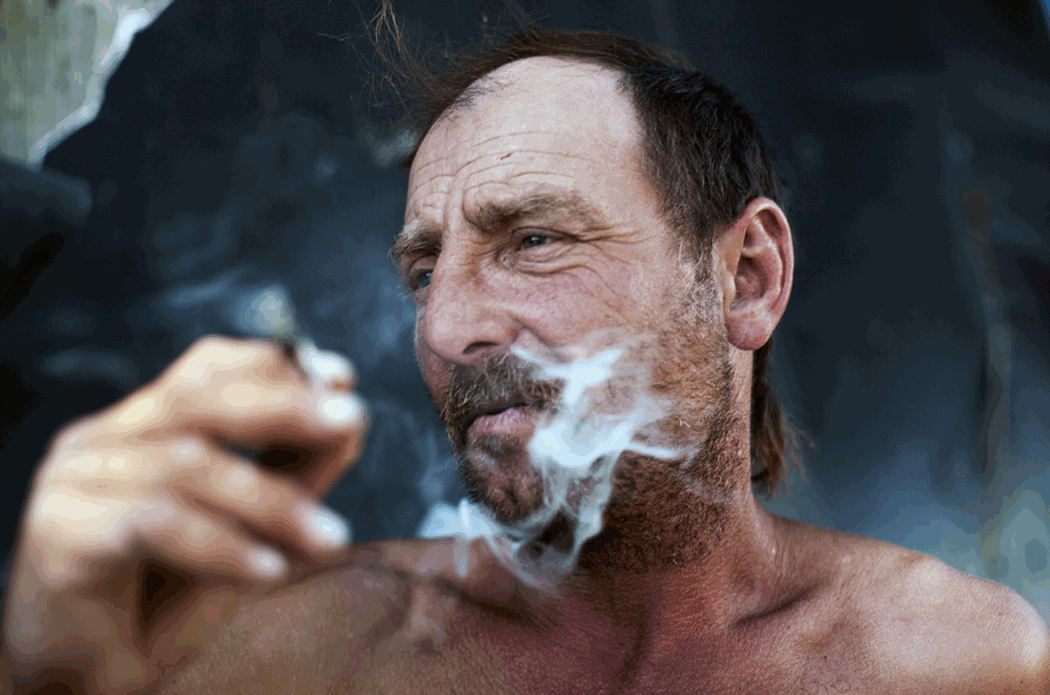 Photo: Florian Müller
A moment beyond routine: Florian Müller deliberately uses the length of a shoot to go beyond rehearsed poses.
5. Patience and persistence
When does the moment come that shows more than just the surface? Often only when the subject’s conscious control begins to slip. Florian Müller deliberately uses time for this. ‘I find it charming to push their powers of concentration a little and keep photographing until their mind wanders,’ he explains.
When their focus on the camera fades, that fleeting look often appears which escapes conscious staging. Franziska Gilli, too, makes full use of the time available and is never satisfied with the first picture that works. Persistence is often the key to seeing behind the façade of the first few minutes.
I’m a photographer, not a magician.
 Florian Müller
6. Your own attitude
Finally, it is important to let go of any claim to absolute objectivity. A portrait never shows the whole truth about a person, only the photographer’s view of them. Franziska Gilli therefore describes her aim as showing people the way she perceives them. That includes accepting that you are not responsible for the other person’s self-image. Florian Müller sums up the gap between how others see us and how we see ourselves:
You can provide good light, give people confidence and look for an honest moment. But how the person sees themselves in the picture is beyond your control. As he says of himself:
‘I’m a photographer, not a magician.’
Digression: the theory behind the portrait
Behind the practical work in the studio or on location lies a fundamental question: when is a picture ‘true’? To grasp the interplay of staging and honesty in theory, two philosophical concepts come together. They form the backbone of what can be understood as authentic portrait photography.
Bernard Williams
With his concept of ‘truthfulness’, the philosopher Bernard Williams provided two terms that help us understand how to capture complexity in a portrait:
Accuracy: This is about the photographer’s serious attempt to really understand the subject in all their complexity. That requires careful research and a critical attitude towards your own wishful thinking, self-deception or hasty fantasies.
Sincerity: This describes honestly depicting the beliefs you have formed about the person. It is about more than just avoiding lies – it concerns the photographer’s relationship to the trust placed in them by the subject and, ultimately, by the viewer.
Cynthia Freeland
The philosopher Cynthia Freeland builds on this and shows that a portrait is always more than a depiction of the surface. She divides the self into four dimensions:
1. The physical dimension: pure physical appearance and likeness.
2. The reflective dimension: inner life, character, emotions and thoughts.
3. The relational dimension: the social roles a person represents (e.g. politician, student, musician).
4. The moral dimension: attitude, values and ethical make-up.
Authenticity as a result, not an accident
In the end, it becomes clear that a strong portrait is far more than pressing the shutter at the right moment. It is the result of careful preparation, an honest engagement with the other person and a willingness to hand control over to intuition at the decisive moment.
The experiences of Franziska Gilli and Florian Müller show that posing need not be an obstacle to truth; it can be a tool for making a person’s complexity visible in the first place. Anyone who takes journalistic due diligence seriously uses staging not to deceive but to distil reality. In the end, the photo becomes what it should ideally be: a sincere encounter on equal terms that lets the viewer sense a second layer too.